These practices are open and accessible to all, regardless of experience.
*NOTE: In previous years, the evening practice has been Yin Yoga.
Please wear loose, comfortable clothing and make sure you are well hydrated before the practice. It is best to practice on an empty stomach (especially for the 108 ajapa-japa mala), but if you must eat less than 1 hour before the practice, make sure to keep it light. Make sure to have a towel (at the very least) for the 108 practice. For Restorative Yoga, a pillow/cushion or two, blocks or (hardcover) books, and a blanket or towel will be useful. I always recommend having something handy (pen and paper) that you can use to note any reflections (and will have some supplies handy).
IN-PERSON IS FULL! Use the link above for login information (or click here for more details about these practices and other practice opportunities related to the New Year).
The 108 playlist is available on YouTube and Spotify. [Look for “New Year’s Day 108 Ajapa-Japa Mala.”] NOTE: This playlist was revised for 2024, but should still sync up with the 2021 — 2023 recordings.
The Restorative playlist is available on YouTube and Spotify. [Look for “01072022 A Reflective Moment”]
Both practices are available in-person (if you are registered) and online. They are also donation based. If you don’t mind me knowing your donation amount you can donate to me directly. You can also email me to request my Venmo or Ca$hApp ID. If you want your donation to be anonymous (to me) and/or tax deductible, please donate through Common Ground Meditation Center (type my name under “Teacher”).
Please note that there is still no late admittance and you must log in before the beginning of the practice (so, by 9:45 AM for the 108 or by 4:45 PM for the Restorative Yoga+Meditation). You will be re-admittance if you get dumped from the call.)
Part of the 6-piece “Monumental Moments” series
by Anthony Shumate, 2015
(located in Buffalo Bayou Park, along the Kinder Footpaths)
Part of the 6-piece “Monumental Moments” series
by Anthony Shumate, 2015
(located in Buffalo Bayou Park, along the Kinder Footpaths)
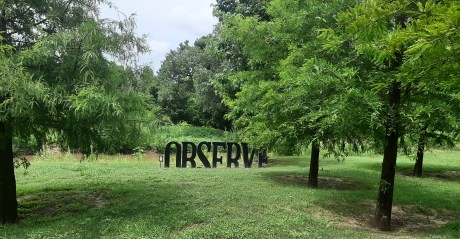
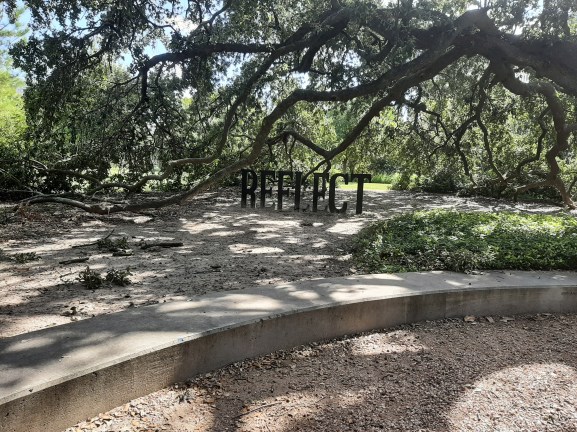
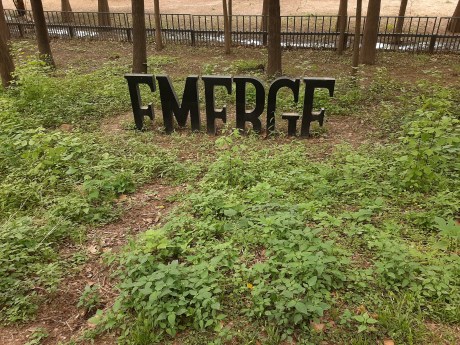
*Anthony Shumate’s “Monumental Moments” sculptures are located in Buffalo Bayou Park, along the Kinder Footpaths in Houston, Texas. They are unexpected reminders to “Explore,” “Pause,” “Reflect,” “Listen,” “Emerge,” and “Observe” – all things we do in our practice!
Peace and good will!” to all. “Happy Holidays!” and “Merry Christmas!” to all who are celebrating.
For Those Who Missed It: The following is the slightly revised version of a post from December 23, 2020. Some formatting, musical credits, and dates have been adjusted accordingly.
“Why me, I’m just a simple man of trade Why Him with all the rulers in the world Why here inside this stable filled with hay Why her, she’s just an ordinary girl Now I’m not one to second guess What angels have to say But this is such a strange way to save the World”
— quoted from the song “What a Strange Way to Save the World” by 4Him (written by Mark R. Harris, Donald A. Koch, David Allen Clark)
Almost everyone has a favorite Christmas carol — even if they don’t celebrate Christmas! And the carols not only tell the story of Christmas, they are a great way to tell the story. For a little over a decade, I have used a variation of today’s playlist to do just that: tell the story of Christmas. Sometimes, Christmastide overlaps Chanukah and the playlist expands accordingly. It’s not that hard, really. After all, they are both celebrations of light that focus us on the 25th.
This year’s variation, as it appears on YouTube and Spotify, is a little different. There’s no Garth; however, my favorite Garth “carol” makes an appearance in a surprisingly endearing format — and delivered by someone dearly loved. Both formats include an a cappella version of “The Little Drummer Boy” (which holds a special place in my heart), but they are different versions. Another variation on a theme: the two different versions of “Hark! The Herald Angels Sing!” The version on YouTube includes an introduction to a live performance by a choir in London (and concludes with a prayer). The version on Spotify is the one I used to play in my (in-person) classes just before we start the practice.
Which brings me to another change: the beginning of the playlist. Just as so many set the tone this time of year by playing holiday music, I usually have two or three tracks at the beginning of the playlist that are not actually intended for the practice. They are simply to establish a feeling of reverence and celebration consistent with the time. The version of “Hark! The Herald Angels Sing!” (by Carola) that I typically use is amazing and makes every space feel a little like a cathedral. But, since there is no way to really time things out the way I normally would, you can enjoy the music after the practice.
“Mary nodded Pa rum pum pum pum The ox and lamb kept time Pa rum pum pum pum
I played my drum for him Pa rum pum pum pum I played my best for him Pa rum pum pum pum, Rum pum pum pum, Rum pum pum pum
Then he smiled at me Pa rum pum pum pum Me and my drum”
— quoted from the song “The Little Drummer Boy” (originally written as “”Carol of the Drum” by Katherine Kennicott Davis)
Please join me today (Tuesday, December 23rd) at 12:00 PM or 7:15 PM for a yoga practice on Zoom. You can use the link from the “Class Schedules” calendar if you run into any problems checking into in the class.You can request an audio recording of this practice via a comment below or by emailing myra(at) ajoyfulpractice.com.
Tuesday’s playlist is available on YouTube and Spotify. [Look for “12232020 A Christmas Prelude”]
*2025 Music Note: I updated the playlist for the longer (evening practice). The Spotify playlist includes extra tracks, since the longer Winter Solstice track was not yet available.
If you are thinking about suicide, worried about a friend or loved one, or would like emotional support, you can dial 988 (in the US) or call 1-800-273-TALK (8255)for the Suicide and Crisis Lifeline. You can also call this TALK line if you are struggling with addiction or involved in an abusive relationship. The Lifeline network is free, confidential, and available to all 24/7. YOU CAN TALK ABOUT ANYTHING.
White Flag is an app, which I have not yet researched, but which may be helpful if you need peer-to-peer (non-professional) support.
In the spirit of generosity (“dana”), the Zoom classes, recordings, and blog posts are freely given and freely received. If you are able to support these teachings, please do so as your heart moves you. (NOTE: You can donate even if you are “attending” a practice that is not designated as a “Common Ground Meditation Center” practice, or you can purchase class(es).
Donations are tax deductible; class purchases are not necessarily deductible. Check out the “Class Schedules” calendar for upcoming classes.
CHECK OUT THE CALENDAR! You can kick off New Year’s Day 2026 in two ways (and in two spaces): with the very active practice of 108 Sun Salutations at 10:00 AM or with the very “chill” practice of a Restorative Yoga+Meditation practice beginning at 5:00 PM. All times are Central Standard.
“Feliĉan Zamenhof-tagon!” “Feliĉan Ĥanukoan!” “Feliĉan Feriojn!” (“Happy Zamenhof Day!” “Happy Chanukah!” “Happy Holidays!”) Many blessings to everyone and especially to anyone sustaining kindness, friendship, peace, freedom, understanding, gratitude, and wisdom during Advent and the Nativity / St. Philip’s Fast.
May you be safe and protected / May you be peaceful and happy / May you be healthy and strong! May you be nourished!
This is the “missing” post-practice post for Monday, December 15th. It includes new and re-posted content. The 2025 prompt question was, “For what or for whom are you holding space?” The 2025 BONUS question was, “What is something from your culture you would like to share with others?” You can request an audio recording of this practice or a previous practice via a comment below or (for a slightly faster reply) you can email myra(at) ajoyfulpractice.com.
In the spirit of generosity (“dana”), the Zoom classes, recordings, and blog posts are freely given and freely received. If you are able to support these teachings, please do so as your heart moves you. (NOTE: You can donate even if you are “attending” a practice that is not designated as a “Common Ground Meditation Center” practice, or you can purchase class(es).
Donations are tax deductible; class purchases are not necessarily deductible.
— Genezo – Bereishit – Genesis (1:3), quoted from La Sankta Biblio 1926 (Esperanto Londona Biblio), translated by L. L. Zamenhof1 [Most commonly translated into English as “And God said, ‘Let there be light,’ and there was light.” Transliteration of the Hebrew is “And God said, ‘Light will be,’ and light was.”]
The “bonus question” (above) came at the end of Monday night’s practice, because I think it’s a question that requires a little more thought than the few seconds I offer at the beginning of the practice. Of course, there are always questions I consider — and hope others consider — long after the practice. Some are even questions that, perhaps, we haven’t given much thought to before they are asked — like the questions about culture that have been popping up around me.
You may have also heard these conversations about culture over the last few weeks (or years) and you may or may not have noticed how little we think about culture if we are not studying it. Culture, however, is very much at the heart of story of Chanukah (which started at sunset on Sunday night this year) and Zamenhof Day (which is celebrated annually on December 15th).
“Lundo estis la unua tago kaj dua nokto de Ĥanuka — kaj mi deziras al vi pacon en Esperanto.”
— “Monday was the first day and second night of Chanukah — and I’m wishing you peace in Esperanto.”
For Those Who Missed It: The following was originally posted in 2021 and updated in 2024.
“La okulisto skribis post noktmezo. Kiam la homa gefrataro pacos? Kia mistera manko, kia lezo duonblindigas? Kiu ĝin kuracos? Kaj kion povas fari unuopa malriĉa homo por homar’ miopa?”
“The ophthalmologist wrote after midnight. When will the human brotherhood be at peace? What a mysterious lack, what an injury half blind? Who will cure it? And what can be done individually poor man for myopic humanity?”
— quoted (in Esperanto and English) from the poem “La Okulisto” (“The Ophthalmologist”) in Eroj (Items) by Marjorie Boulton
What does culture mean to you? Specifically, what does your culture mean to you? And, when I speak of “your culture,” do you think of how you identify yourself or how others identify you (even if certain things don’t apply to you)? Do you think of something specific and personal to you or something related to the dominant culture around you? Of course, it could be all of the above — because, let’s be real, most of us live bi-cultural (or multi-cultural) lives. Most of us exist in a place where cultures overlap. We move in and out of corporate and other institutional cultures — including school and religious cultures – as well as the cultures of our people and our nations or states.
But, again, what do I mean by culture?
Modern dictionaries include the following definitions (for the noun):
the arts and other manifestations of human intellectual achievement regarded collectively.
the customs, arts, social institutions, and achievements of a particular nation, people, or other social group.
the cultivation of bacteria, tissue cells, etc. in an artificial medium containing nutrients.
the cultivation of plants.
Noah Webster’s (intentionally American) 1828 dictionary focuses on the word as it’s related to agriculture and physical labor, with the second definition highlighting that it can be “The application of labor or other means to improve good qualities in, or growth; as the culture of the mind; the culture of virtue.”
So, culture could be work intended to improve what it means to be a good human. Got it. Except…it still doesn’t completely answer the question. It also doesn’t explain why “culture” seems to create so much conflict.
“La okulisto verkis kaj parolis, tradukis, organizis. Kaj la skvamoj de kelkaj okulparoj jam forfalis, la antaŭjuĝoj, timoj kaj malamoj.”
“The ophthalmologist wrote and spoke, translated, organized. And the scales [of] some eyes have already fallen off, the prejudices, fears and hatreds.”
— quoted (in Esperanto and English) from the poem “La Okulisto” (“The Ophthalmologist”) in Eroj (Items) by Marjorie Boulton
When most people think about “culture,” they think about behavior. They think about rituals, traditions, laws, expectations, and belief systems. They think about celebrations and the way people mark milestones. They think about clothes, music, and food. All the things that might seem strange to an outsider (or even an insider who has forgotten, or never learned, the underlying meanings of their customs). Focusing on that sense of strangeness can become a form avidyā (“ignorance”) that leads to suffering.
When we focus on the strangeness of something (or someone) we sometimes miss the things we have in common. When we miss our commonalities, we may all miss out on the opportunity to appreciate what makes us unique. That’s one of the reasons it’s so important to share experiences. Shared experiences can become part of our culture and part of our cultural understanding. For instance, when we break bread with people — especially people we view as (culturally) different from us — we gain some awareness and appreciation of the things we have in common. As David Chang has pointed out in his Netflix series Ugly Delicious, every culture has some kind of dumpling… stir fry… casserole (even if they call it hot dish). People from different cultures may even use similar spices, just in different ways. Or, maybe we just call the spice something different.
Which brings me to one aspect of culture that I left out: language (and how we think, based on the language we use).
Many of the world’s languages share roots. However, those shared roots are not on the mind of the average person when they encounter a language that is foreign to them. If someone doesn’t speak a certain language, they may not take the time to figure out what they can understand based on what they know about their own language. They may not consider that their brain actually has the ability to glean some meaning, based on context, because it’s been cultured (i.e., cultivated). In doing so, they may miss out on the opportunity to make a friend or clear up a misunderstanding.
“Tio, kio malamas vin, ne faru al via ulo. Tio estas la tuta Torao; la resto estas la klarigo. Nun iru studi.”
“That which is hateful to you, do not do to your fellow. That is the whole Torah; the rest is the explanation. Now go and study.”
— quoted from the story of Hillel the Elder “[teaching] the meaning of the whole Torah while standing on one foot,” in Esperanto and in English
Because it is Zamenhof-tagon (Zamenhof Day), mi deziras al vi pacon en Esperanto. (I wish you peace in Esperanto.)
Born December 15, 1859, in a part of the Russian Empire that is now Poland, Dr. L. L. Zamenhof was a Polish-Jewish ophthalmologist and polyglot. He was born into a Lithuanian-Jewish family that spoke Russian and Yiddish, but his father taught German and French — so he learned those languages, as well as Polish, at a young age. Eventually, he would also master German; have a good understanding of Latin, Hebrew, French, and Belarusian; and basic knowledge of Greek, English, Italian, Lithuanian, and Aramaic. At some point, he also studied Volapük, a constructed language created by Johann Martin Schleyer (a German Catholic priest).
The diverse population in his hometown and his love of language exposed Dr. Zamenhof to different cultures and also to the schisms (and wars) that developed between cultures. He imagined what the world would be like without conflict, especially conflict that arose from misunderstandings that he saw were the result of miscommunication. He thought that if people could more easily understand each other they would have a better chance of avoiding and/or resolving conflict. In 1873, while he was still a schoolboy, the future eye doctor started developing Esperanto, a constructed language that he called “Lingvo internacia” (“international language”).
Dr. Zamenhof continued his work even as he studied medicine and began working as a doctor. Eventually, he self-published his work (with a little help from his then future father-in-law) under the pseudonym “Doktoro Esperanto” or Doctor Hopeful. He continued to write and translate grammar books in various languages, including Esperanto, and also to look for solutions to oppression and nationalism. He explored various religions and social movements — he even wrote about humanitarianism or humanism (“homaranismo” in Esperanto), based on the teachings of Hillel the Elder. But, he kept coming back to the concept of language as a unifier.
Promoting the language and the idea behind the language would be Dr. Zamenhof’s legacy — a legacy that lived on through his wife (Klara) and their children. Even though the Zamenhof children, as adults, were killed during the Holocaust, along with millions of others, the language lived on. There are currently at least a thousand native speakers of Esperanto, worldwide, and millions who have some working knowledge of the language.
Ni ne estas tiel naivaj, kiel pensas pri ni kelkaj personoj; ni ne kredas, ke neŭtrala fundamento faros el la homoj anĝelojn; ni scias tre bone, ke la homoj malbonaj ankaŭ poste restos malbonaj; sed ni kredas, ke komunikiĝado kaj konatiĝado sur neŭtrala fundamento forigos almenaŭ la grandan amason de tiuj bestaĵoj kaj krimoj, kiuj estas kaŭzataj ne de malbona volo, sed simple de sinnekonado kaj de devigata sinaltrudado.”
“We are not as naive as some people think of us; we do not believe that a neutral foundation will make men angels; we know very well that bad people will stay bad even later; but we believe that communication and acquaintance based on a neutral basis will remove at least the great mass of those beasts and crimes which are caused not by ill will, but simply by [misunderstandings and forced coercion.]”
— quoted from a speech by Dr. L. L. Zamenhof to the Second World Congress of Esperanto, August 27, 1906
There is no playlist for the Common Ground Meditation Center practices.
An Esperanto-inspired playlist is available on YouTube and Spotify. [Look for “12152021 Feliĉan Zamenhof-tagon!”]
Esperanto music can be found in a lot of different genres, including folk music, rap, reggae, rock, rap, and orchestral music. This playlist features music by David Gaines, an American classical composer and Esperantist. He has served on the advisory board of the Esperantic Studies Foundation; is the Honorary President of the Music Esperanto League; and “won First Prize at the 1995 World Esperanto Association’s Belartaj Konkursoj (competitions in the field of Belles lettres).” His work incorporates Esperanto poetry and the quest for peace.
If you are thinking about suicide, worried about a friend or loved one, or would like emotional support, you can dial 988 (in the US) or call 1-800-273-TALK (8255)for the Suicide and Crisis Lifeline. You can also call this TALK line if you are struggling with addiction or involved in an abusive relationship. The Lifeline network is free, confidential, and available to all 24/7. YOU CAN TALK ABOUT ANYTHING.
White Flag is an app, which I have not yet researched, but which may be helpful if you need peer-to-peer (non-professional) support.
NOTE: 1Dr. L. L. Zamenhof completed his translation of the Hebrew Bible (Masoretic Text) in March 1915; however, publication was delayed because of World War I and Dr. Zamenhof ’s death in 1917. Priscilla Hannah Peckover and Algerina Peckover, two English Quaker sisters, financed the publication of the 1926 (Esperanto) Londona Biblio, which combined Dr. Zamenhof’s translation of the (Christian) Old Testament with a revised version of the (Christian) New Testament, previously translated by a British team of scholars (in 1910, published in 1912).
“Happy New Year!” “Kwanzaa, yenu iwe na heri!” – “May your Kwanzaa be happy!” to everyone who is celebrating! “Happy Chanukah!” to all who are celebrating!
Many blessings to all!
Part of the 6-piece “Monumental Moments” series by Anthony Shumate, 2015 (located in Buffalo Bayou Park, along the Kinder Footpaths)
TRANSFORM • RENEW • HEAL • ENERGIZE
Celebrate the New Year with 108 Sun Salutations 10:00 AM – 1:00 PM CST!
AND/OR
RELAX • RELEASE • REST • RENEW • HEAL
Celebrate the New Year with Restorative Yoga+Meditation
*NOTE: In previous years, the evening practice has been Yin Yoga.
Please wear loose, comfortable clothing and make sure you are well hydrated before the practice. It is best to practice on an empty stomach (especially for the 108 ajapa-japa mala), but if you must eat less than 1 hour before the practice, make sure to keep it light. Make sure to have a towel (at the very least) for the 108 practice. For Restorative Yoga, a pillow/cushion or two, blocks or (hardcover) books, and a blanket or towel will be useful. I always recommend having something handy (pen and paper) that you can use to note any reflections (and will have some supplies handy).
IN-PERSON IS FULL! Use the link above for login information (or click here for more details about these practices and other practice opportunities related to the New Year).
The 108 playlist is available on YouTube and Spotify. [Look for “New Year’s Day 108 Ajapa-Japa Mala.”] NOTE: This playlist was been revised for 2024, but should still sync up with the 2021 — 2023 recordings.
The Restorative playlist is available on YouTube and Spotify. [Look for “01072022 A Reflective Moment”]
Both practices are available in-person (if you are registered) and online. They are also donation based. If you don’t mind me knowing your donation amount you can donate to me directly. You can also email me to request my Venmo or Ca$hApp ID. If you want your donation to be anonymous (to me) and/or tax deductible, please donate through Common Ground Meditation Center (type my name under “Teacher”).
Please note that there is still no late admittance and you must log in before the beginning of the practice (so, by 9:45 AM for the 108 or by 4:45 PM for the Restorative Yoga+Meditation). You will be re-admittance if you get dumped from the call.)
Part of the 6-piece “Monumental Moments” series by Anthony Shumate, 2015 (located in Buffalo Bayou Park, along the Kinder Footpaths)
Part of the 6-piece “Monumental Moments” series by Anthony Shumate, 2015 (located in Buffalo Bayou Park, along the Kinder Footpaths)
*Anthony Shumate’s “Monumental Moments” sculptures are located in Buffalo Bayou Park, along the Kinder Footpaths in Houston, Texas. They are unexpected reminders to “Explore,” “Pause,” “Reflect,” “Listen,” “Emerge,” and “Observe” – all things we do in our practice!
“Feliĉan Zamenhof-tagon!” “Feliĉan Feriojn!” (“Happy Zamenhoff Day!” “Happy Holidays!”) Many blessings to everyone and especially to anyone sustaining kindness, friendship, peace, freedom, understanding, gratitude, and wisdom.
May you be safe and protected / May you be peaceful and happy / May you be healthy and strong! May you be nourished!
For Those Who Missed It: The following was originally posted in 2021. Some formatting, links, and class details have been updated or added.
“La okulisto skribis post noktmezo. Kiam la homa gefrataro pacos? Kia mistera manko, kia lezo duonblindigas? Kiu ĝin kuracos? Kaj kion povas fari unuopa malriĉa homo por homar’ miopa?”
“The ophthalmologist wrote after midnight. When will the human brotherhood be at peace? What a mysterious lack, what an injury half blind? Who will cure it? And what can be done individually poor man for myopic humanity?”
— quoted (in Esperanto and English) from the poem “La Okulisto” (“The Ophthalmologist”) in Eroj (Items) by Marjorie Boulton
What does culture mean to you? Specifically, what does your culture mean to you? And, when I speak of “your culture,” do you think of how you identify yourself or how others identify you (even if certain things don’t apply to you)? Do you think of something specific and personal to you or something related to the dominant culture around you? Of course, it could be all of the above — because, let’s be real, most of us live bi-cultural (or multi-cultural) lives. Most of us exist in a place where cultures overlap. We move in and out of corporate and other institutional cultures — including school and religious cultures – as well as the cultures of our people and our nations or states.
But, again, what do I mean by culture?
Modern dictionaries include the following definitions (for the noun):
the arts and other manifestations of human intellectual achievement regarded collectively.
the customs, arts, social institutions, and achievements of a particular nation, people, or other social group.
the cultivation of bacteria, tissue cells, etc. in an artificial medium containing nutrients.
the cultivation of plants.
Noah Webster’s (intentionally American) 1828 dictionary focuses on the word as it’s related to agriculture and physical labor, with the second definition highlighting that it can be “The application of labor or other means to improve good qualities in, or growth; as the culture of the mind; the culture of virtue.”
So, culture could be work intended to improve what it means to be a good human. Got it. Except…it still doesn’t completely answer the question. It also doesn’t explain why “culture” seems to create so much conflict.
“La okulisto verkis kaj parolis, tradukis, organizis. Kaj la skvamoj de kelkaj okulparoj jam forfalis, la antaŭjuĝoj, timoj kaj malamoj.”
“The ophthalmologist wrote and spoke, translated, organized. And the scales [of] some eyes have already fallen off, the prejudices, fears and hatreds.”
— quoted (in Esperanto and English) from the poem “La Okulisto” (“The Ophthalmologist”) in Eroj (Items) by Marjorie Boulton
When most people think about “culture,” they think about behavior. They think about rituals, traditions, laws, expectations, and belief systems. They think about celebrations and the way people mark milestones. They think about clothes, music, and food. All the things that might seem strange to an outsider (or even an insider who has forgotten, or never learned, the underlying meanings of their customs). Focusing on that sense of strangeness can become a form avidyā (“ignorance”) that leads to suffering.
When we focus on the strangeness of something (or someone) we sometimes miss the things we have in common. When we miss our commonalities, we may all miss out on the opportunity to appreciate what makes us unique. That’s one of the reasons it’s so important to share experiences. Shared experiences can become part of our culture and part of our cultural understanding. For instance, when we break bread with people — especially people we view as (culturally) different from us — we gain some awareness and appreciation of the things we have in common. As David Chang has pointed out in his Netflix series Ugly Delicious, every culture has some kind of dumpling… stir fry… casserole (even if they call it hot dish). People from different cultures may even use similar spices, just in different ways. Or, maybe we just call the spice something different.
Which brings me to one aspect of culture that I left out: language (and how we think, based on the language we use).
Many of the world’s languages share roots. However, those shared roots are not on the mind of the average person when they encounter a language that is foreign to them. If someone doesn’t speak a certain language, they may not take the time to figure out what they can understand based on what they know about their own language. They may not consider that their brain actually has the ability to glean some meaning, based on context, because it’s been cultured (i.e., cultivated). In doing so, they may miss out on the opportunity to make a friend or clear up a misunderstanding.
“Tio, kio malamas vin, ne faru al via ulo. Tio estas la tuta Torao; la resto estas la klarigo. Nun iru studi.”
“That which is hateful to you, do not do to your fellow. That is the whole Torah; the rest is the explanation. Now go and study.”
— quoted from the story of Hillel the Elder “[teaching] the meaning of the whole Torah while standing on one foot,” in Esperanto and in English
Because it is Zamenhof-tagon (Zamenhoff Day), mi deziras al vi pacon en Esperanto. (I wish you peace in Esperanto.)
Born December 15, 1859, in a part of the Russian Empire that is now Poland, Dr. L. L. Zamenhof was a Polish-Jewish ophthalmologist and polyglot. He was born into a Lithuanian-Jewish family that spoke Russian and Yiddish, but his father taught German and French — so he learned those languages, as well as Polish, at a young age. Eventually, he would also master German; have a good understanding of Latin, Hebrew, French, and Belarusian; and basic knowledge of Greek, English, Italian, Lithuanian, and Aramaic. At some point, he also studied Volapük, a constructed language created by Johann Martin Schleyer (a German Catholic priest).
The diverse population in his hometown and his love of language exposed Dr. Zamenhof to different cultures and also to the schisms (and wars) that developed between cultures. He imagined what the world would be like without conflict, especially conflict that arose from misunderstandings that he saw were the result of miscommunication. He thought that if people could more easily understand each other they would have a better chance of avoiding and/or resolving conflict. In 1873, while he was still a schoolboy, the future eye doctor started developing Esperanto, a constructed language that he called “Lingvo internacia” (“international language”).
Dr. Zamenhof continued his work even as he studied medicine and began working as a doctor. Eventually, he self-published his work (with a little help from his then future father-in-law) under the pseudonym “Doktoro Esperanto” or Doctor Hopeful. He continued to write and translate grammar books in various languages, including Esperanto, and also to look for solutions to oppression and nationalism. He explored various religions and social movements — he even wrote about humanitarianism or humanism (“homaranismo” in Esperanto), based on the teachings of Hillel the Elder. But, he kept coming back to the concept of language as a unifier.
Promoting the language and the idea behind the language would be Dr. Zamenhof’s legacy — a legacy that lived on through his wife (Klara) and their children. Even though the Zamenhof children, as adults, were killed during the Holocaust, along with millions of others, the language lived on. There are currently at least a thousand native speakers of Esperanto, worldwide, and millions who have some working knowledge of the language.
Ni ne estas tiel naivaj, kiel pensas pri ni kelkaj personoj; ni ne kredas, ke neŭtrala fundamento faros el la homoj anĝelojn; ni scias tre bone, ke la homoj malbonaj ankaŭ poste restos malbonaj; sed ni kredas, ke komunikiĝado kaj konatiĝado sur neŭtrala fundamento forigos almenaŭ la grandan amason de tiuj bestaĵoj kaj krimoj, kiuj estas kaŭzataj ne de malbona volo, sed simple de sinnekonado kaj de devigata sinaltrudado.”
“We are not as naive as some people think of us; we do not believe that a neutral foundation will make men angels; we know very well that bad people will stay bad even later; but we believe that communication and acquaintance based on a neutral basis will remove at least the great mass of those beasts and crimes which are caused not by ill will, but simply by [misunderstandings and forced coercion.]”
— quoted from a speech by Dr. L. L. Zamenhof to the Second World Congress of Esperanto, August 27, 1906
Please join me for a 65-minute virtual yoga practice on Zoom today (Sunday, December 15th) at 2:30 PM.Use the link from the “Class Schedules” calendar if you run into any problems checking into the class. You can request an audio recording of this practice via a comment below or by emailing myra(at) ajoyfulpractice.com.
Sunday’s playlist is available on YouTube and Spotify. [Look for “12152021 Feliĉan Zamenhof-tagon!”]
Esperanto music can be found in a lot of different genres, including folk music, rap, reggae, rock, rap, and orchestral music. This playlist features music by David Gaines, an American classical composer and Esperantist. He has served on the advisory board of the Esperantic Studies Foundation; is the Honorary President of the Music Esperanto League; and “won First Prize at the 1995 World Esperanto Association’s Belartaj Konkursoj (competitions in the field of Belles lettres).” His work incorporates Esperanto poetry and the quest for peace.
If you are thinking about suicide, worried about a friend or loved one, or would like emotional support, you can dial 988 (in the US) or call 1-800-273-TALK (8255)for the Suicide and Crisis Lifeline. You can also call this TALK line if you are struggling with addiction or involved in an abusive relationship. The Lifeline network is free, confidential, and available to all 24/7. YOU CAN TALK ABOUT ANYTHING.
White Flag is a new app, which I have not yet researched, but which may be helpful if you need peer-to-peer (non-professional) support.
In the spirit of generosity (“dana”), the Zoom classes, recordings, and blog posts are freely given and freely received. If you are able to support these teachings, please do so as your heart moves you. (NOTE: You can donate even if you are “attending” a practice that is not designated as a “Common Ground Meditation Center” practice, or you can purchase class(es).
Donations are tax deductible; class purchases are not necessarily deductible.
Please wear loose, comfortable clothing and make sure you are well hydrated before the practice. It is best to practice on an empty stomach (especially for the 108 ajapa-japa mala), but if you must eat less than 1 hour before the practice, make sure to keep it light. Make sure to have a towel (at the very least) for the 108 practice. For Yin Yoga, a pillow/cushion or two, blocks or (hardcover) books, and a blanket or towel will be useful. I always recommend having something handy (pen and paper) that you can use to note any reflections.
IN-PERSON IS FULL! Use the link above for login information (or click here for more details about these practices and other practice opportunities related to the New Year).
The 108 playlist is available on YouTube and Spotify. [Look for “New Year’s Day 108 Ajapa-Japa Mala.”] NOTE: This playlist has been revised for 2024, but should still sync up with the 2021 — 2023 recordings.
Friday’s playlist is available on YouTube and Spotify. [Look for “01072022 A Reflective Moment”]
Both practices are available in-person (if you are registered) and online. They are also donation based. If you don’t mind me knowing your donation amount you can donate to me directly. You can also email me to request my Venmo or Ca$hApp ID. If you want your donation to be anonymous (to me) and/or tax deductible, please donate through Common Ground Meditation Center (type my name under “Teacher”).
Please note that there is still no late admittance and you must log in before the beginning of the practice (so, by 9:45 AM for the 108 or by 4:45 PM for the Yin+Meditation). You will be re-admittance if you get dumped from the call.)
Part of the 6-piece “Monumental Moments” series by Anthony Shumate, 2015 (located in Buffalo Bayou Park, along the Kinder Footpaths)
Part of the 6-piece “Monumental Moments” series by Anthony Shumate, 2015 (located in Buffalo Bayou Park, along the Kinder Footpaths)
*Anthony Shumate’s “Monumental Moments” sculptures are located in Buffalo Bayou Park, along the Kinder Footpaths in Houston, Texas. They are unexpected reminders to “Explore,” “Pause,” “Reflect,” “Listen,” “Emerge,” and “Observe” – all things we do in our practice!
Please wear loose, comfortable clothing and make sure you are well hydrated before the practice. It is best to practice on an empty stomach (especially for the 108 ajapa-japa mala), but if you must eat less than 1 hour before the practice, make sure to keep it light. Make sure to have a towel (at the very least) for the 108 practice. For Yin Yoga, a pillow/cushion or two, blocks or (hardcover) books, and a blanket or towel will be useful. I always recommend having something handy (pen and paper) that you can use to note any reflections.
Use the link above for login information (or click here for more details about these practices and other practice opportunities related to the New Year).
The 108 playlist is available on YouTube and Spotify. [Look for “New Year’s Day 108 Ajapa-Japa Mala.”] NOTE: This playlist has been revised for 2022, but should still sync up with the 2021 recordings.
The Yin+Meditation playlist is part of the “12042020 Bedtime Yoga” available on YouTube and Spotify.
Please note that there is still no late admittance and you must log in before the beginning of the practice (so, by 9:45 AM for the 108 or by 4:45 PM for the Yin+Meditation). You will be re-admittance if you get dumped from the call.)
Part of the 6-piece “Monumental Moments” series by Anthony Shumate, 2015 (located in Buffalo Bayou Park, along the Kinder Footpaths)
Part of the 6-piece “Monumental Moments” series by Anthony Shumate, 2015 (located in Buffalo Bayou Park, along the Kinder Footpaths)
*Anthony Shumate’s “Monumental Moments” sculptures are located in Buffalo Bayou Park, along the Kinder Footpaths in Houston, Texas. They are unexpected reminders to “Explore,” “Pause,” “Reflect,” “Listen,” “Emerge,” and “Observe” – all things we do in our practice!
Please wear loose, comfortable clothing and make sure you are well hydrated before the practice. It is best to practice on an empty stomach (especially for the 108 ajapa-japa mala), but if you must eat less than 1 hour before the practice, make sure to keep it light. Make sure to have a towel (at the very least) for the 108 practice. For Yin Yoga, a pillow/cushion or two, blocks or (hardcover) books, and a blanket or towel will be useful. I always recommend having something handy (pen and paper) that you can use to note any reflections.
Use the link above for login information (or click here for more details about these practices and other practice opportunities related to the New Year).
The 108 playlist is available on YouTube and Spotify. [Look for “New Year’s Day 108 Ajapa-Japa Mala.”] NOTE: This playlist has been revised for 2022, but should still sync up with the 2021 recordings.
The Yin+Meditation playlist is part of the “12042020 Bedtime Yoga” available on YouTube and Spotify.
Please note that there is still no late admittance and you must log in before the beginning of the practice (so, by 9:45 AM for the 108 or by 4:45 PM for the Yin+Meditation). You will be re-admittance if you get dumped from the call.)
Part of the 6-piece “Monumental Moments” series by Anthony Shumate, 2015 (located in Buffalo Bayou Park, along the Kinder Footpaths)
*Anthony Shumate’s “Monumental Moments” sculptures are located in Buffalo Bayou Park, along the Kinder Footpaths in Houston, Texas. They are unexpected reminders to “Explore,” “Pause,” “Reflect,” “Listen,” “Emerge,” and “Observe” – all things we do in our practice!
Please wear loose, comfortable clothing and make sure you are well hydrated before the practice. It is best to practice on an empty stomach (especially for the 108 ajapa-japa mala), but if you must eat less than 1 hour before the practice, make sure to keep it light. Make sure to have a towel (at the very least) for the 108 practice. For Yin Yoga, a pillow/cushion or two, blocks or (hardcover) books, and a blanket or towel will be useful. I always recommend having something handy (pen and paper) that you can use to note any reflections.
You can scroll down (or click here) for more details about these practices and other practice opportunities related to the New Year.
Please note that there is still no late admittance and you must log in before the beginning of the practice (so, by 9:45 AM for the 108 or by 4:45 PM for the Yin+Meditation). You will be re-admittance if you get dumped from the call.)


 A Joyful Practice