A Quick Note & EXCERPT: “Sailing Into New Beginnings” January 3, 2026
Posted by ajoyfulpractice in Art, Books, Changing Perspectives, Faith, Healing Stories, Hope, Life, Mysticism, New Year, One Hoop, Peace, Philosophy, Religion, Wisdom, Writing, Yoga.Tags: 12 Days of Christmas, 988, Animalic, Books, fantasy, Herman Melville, Hobbits, J. R. R. Tolkien, Lord of the Rings, lotr, mental health, Moby-Dick, The Hobbit, The Inklings, tolkien, yoga, yoga philosophy
add a comment
“Happy New Year!” to everyone. Many blessings to everyone, and especially to anyone observing the Nativity Fast / St/ Philip’s Fast and/or Twelvetide.
May you be safe and protected / May you be peaceful and happy / May you be healthy and strong!
“‘Nobody else calls us hobbits; we call ourselves that,’ said Pippin….
‘I’ll call you Merry and Pippin, if you please – nice names. For I am not going to tell you my name, not yet at any rate.’ A queer half-knowing, half-humorous look came with a green flicker into his eyes. ‘For one thing it would take a long while: my name is growing all the time, and I’ve lived a very long, long time; so my name is like a story. Real names tell you the story of things they belong to in my language, in the Old Entish as you might say. It is a lovely language, but it takes a very long time saying anything in it, because we do not say anything in it, unless it is worth taking a long time to say, and to listen to.’”
— Pippin and Merry meeting “Treebeard” in “Book 4, Chapter 4: Treebeard” in The Two Towers (Volume 2 of the Lord of the Rings) by J. R. R. Tolkien
A new year means a new (and/or continuing adventure). Yesterday, I suggested that it could also mean a new name. Just as the name you choose for yourself, your business, and/or another person can tell a story, so too can the name chosen for a boat… and/or a book.
CLICK ON THE EXCERPT TITLE BELOW FOR MORE ABOUT NEW ADVENTURES!
(Plus there’s a little nod to Herman Melville, who set sail today in 1841, and J. R. R. Tolkien, who was born today in 1892.)
So, hoist your sails, bring your friends, and…
“Call me Ishmael”
— quoted from “Chapter I. Loomings” in Moby Dick, or The Whale by Herman Melville
Please join me for a (virtual or in-person) yoga practice, today (Saturday, January 3rd) at 12:00 PM. You must be registered and confirmed to attend in person. You can use the link from the “Class Schedules” calendar if you run into any problems checking into the Zoom class. You can request an audio recording of this practice via a comment below or (for a slightly faster reply) you can email me at myra (at) ajoyfulpractice.com.
Saturday’s playlist is available on YouTube and Spotify. [Look for “01032021 Melville Sails Tolkien Beginnings”]
If you are thinking about suicide, worried about a friend or loved one, or would like emotional support, you can dial 988 (in the US) or call 1-800-273-TALK (8255) for the Suicide and Crisis Lifeline. You can also call this TALK line if you are struggling with addiction or involved in an abusive relationship. The Lifeline network is free, confidential, and available to all 24/7. YOU CAN TALK ABOUT ANYTHING.
White Flag is an app, which I have not yet researched, but which may be helpful if you need peer-to-peer (non-professional) support.
If you are a young person in crisis, feeling suicidal, or in need of a safe and judgement-free place to talk, you can also click here to contact the TrevorLifeline (which is staffed 24/7 with trained counselors).
In the spirit of generosity (“dana”), the Zoom classes, recordings, and blog posts are freely given and freely received. If you are able to support these teachings, please do so as your heart moves you. (NOTE: You can donate even if you are “attending” a practice that is not designated as a “Common Ground Meditation Center” practice, or you can purchase class(es).
Donations are tax deductible; class purchases are not necessarily deductible.
Check out the “Class Schedules” calendar for upcoming classes.
### ARE YOU LISTENING? (& TO WHAT or WHOM?) ###
First Friday Night Special #63 — Invitation & EXCERPTS: “The Purpose of Naming [the Business]” & “Nom de Destiné” January 2, 2026
Posted by ajoyfulpractice in 7-Day Challenge, Buddhism, Changing Perspectives, Dharma, Faith, Healing Stories, Hope, Life, Mantra, Meditation, Mysticism, New Year, One Hoop, Peace, Philosophy, Poetry, Religion, Wisdom, Yoga.Tags: 12 Days of Christmas, 988, Art, Books, Cornelius Eady, James Baldwin, Jhumpa Lahiri, Johannes Mercurius, mantra, New Year, Oscar Hammerstein II, Pope John II, Richard Rodgers, sankalpa, shabda, Swami Vivekananda, travel, Twelvetide, William Shakespeare, Yoga Sutra 3.17, Yoga Sutra 4.1
add a comment
Happy 2026 to Everyone!
May you be safe and protected / May you be peaceful and happy / May you be healthy and strong!
“The power of words. There are certain sacred words called Mantras, which have power, when repeated under proper conditions, produce these extraordinary powers. We are living in the midst of such a mass of miracles, day and night, that we do not think anything of them. There is no limit to man’s power, the power of words and the power of mind.”
— commentary on Yoga Sūtra 4.1 from Raja Yoga by Swami Vivekananda
Shabda (“Word”) is one of the six siddhis (“powers” or “abilities”) described in Yoga and Sankhya as “unique to being human”. According to the Yoga Sūtras, our words have an external vibration and an internal vibration that leads to internal/external reaction — meaning their power is layered. They are also described as one of the things that can lead to someone attaining great powers. For instance, we can focus/concentrate/meditate on a word to gain insight and a deeper understanding of words and language in general. In fact, there is a practice — and a sūtra (YS 3.17) — for that. However, when we talk about the power of words, we don’t always recognize or appreciate that a name is a word that has power.
Oh, sure, we may consider a (surface level) meaning of a name if we are naming a child or a pet and/or a business. People who choose a new name or nickname for themselves may, naturally, choose something that sends a message. However, most of us don’t deliberately and intentionally choose a name to send a message. Most of us are not like Johannes Mercurius — even though we are living in a time that is as interesting as his time.
Today in 533 AD, Johannes Mercurius quite literally made a name for himself. He changed his name to John II and, in doing so, became the first pope to change his name at the beginning of his papacy. Pope John II was very deliberate in his decision to change his name and in the name he chose. He understood the power of words and was sending a message about how he was planning to move forward as a leader. He was also sending a message about what he would not tolerate.
CLICK ON THE EXCERPT TITLE FOR MORE.
Nom de Destiné (the “missing” Sunday post *with and update*)
“Me, a name I call myself”
— quoted from the song “Do-Re-Mi” by Richard Rodgers and Oscar Hammerstein II
Today is a day when I usually suggest you contemplate a name you would use to indicate how you plan to show up in this new year. Normally, the suggestion focuses on a personal name. This year, however, I want you to (also) consider a business name. As you go about your business this year — the business of living your life, what is a name that reflects the alignment of your deepest desires, beliefs, and actions? What is a name that sends the message, as Pope John II sent, about what no longer serves a purpose?
Just imagine the name that is proof of what you will do this year.
“You have to imagine it.
Who said you must keep quiet?
Who heard your story, then rolled their eyes?
Who tried to change your name to invisible?
You’ve got to imagine.
Who heard your name and refused to pronounce it?
Who checked their watch and said, ‘Not now’?
James Baldwin wrote,
‘The place in which I’ll fit will not exist until I make it.’”
— quoted from the poem “Proof” by Cornelius Eady, recited at the New York mayoral inauguration of Zohran Mamdani (01/01/2026) and dedicated to the poet’s “…trans, queer, foreign, students of color at the University of Tennessee, Knoxville. So they have, so they can see this is possible.”
Please join me (tonight) Friday, January 2, 2025, 7:15 PM – 8:20 PM (CST) for “The Purpose of Naming [the Business]” for a (virtual or in-person) yoga practice. You must be registered and confirmed to attend in person.
You can use the link from the “Class Schedules” calendar if you run into any problems checking into the class. You can request an audio recording of this practice via a comment below or (for a slightly faster reply) you can email myra (at) ajoyfulpractice.com.
This practice is scheduled as a Yin Yoga practice. If the room is heated (as it was last night), it will be a Restorative Yoga practice. Either is accessible and open to all.
Friday’s playlist is available on YouTube and Spotify.
Music Note: You can start with Track #1, #2, or #3 (which will include #4). Track #24 is also an option.
Prop wise, this is a kitchen sink practice. You can practice without props or you can use “studio” and/or “householder” props. Example of “Studio” props: 1 – 2 blankets, 2 – 3 blocks, a bolster, a strap, and an eye pillow. Example of “Householder” props: 1 – 2 blankets or bath towels, 2 – 3 books (similar in size), 2 standard pillows (or 1 body pillow), a belt/tie/sash, and a face towel.
You may want extra layers (as your body may cool down during this practice). Having a wall, chair, sofa, or coffee table may be handy.
“In Bengali the word for pet name is daknam, meaning, literally, the name by which one is called , by friends, family, and other intimates, at home and in other private, unguarded moments. Pet names are a persistent remnant of childhood, a reminder that life is not always so serious, so formal, so complicated. They are a reminder, too, that one is not all things to all people.”
— quoted from The Namesake by Jhumpa Lahiri
If you are thinking about suicide, worried about a friend or loved one, or would like emotional support, you can dial 988 (in the US) or call 1-800-273-TALK (8255) for the Suicide and Crisis Lifeline. You can also call this TALK line if you are struggling with addiction or involved in an abusive relationship. The Lifeline network is free, confidential, and available to all 24/7. YOU CAN TALK ABOUT ANYTHING.
White Flag is an app, which I have not yet researched, but which may be helpful if you need peer-to-peer (non-professional) support.
If you are a young person in crisis, feeling suicidal, or in need of a safe and judgement-free place to talk, you can also click here to contact the TrevorLifeline (which is staffed 24/7 with trained counselors).
In the spirit of generosity (“dana”), the Zoom classes, recordings, and blog posts are freely given and freely received. If you are able to support these teachings, please do so as your heart moves you. (NOTE: You can donate even if you are “attending” a practice that is not designated as a “Common Ground Meditation Center” practice, or you can purchase class(es).
Donations are tax deductible; class purchases are not necessarily deductible.
Check out the “Class Schedules” calendar for upcoming classes.
### Trusting, Aligning, Releasing ###
HAPPY New Year 2026! ** UPDATED** January 1, 2026
Posted by ajoyfulpractice in Bhakti, Changing Perspectives, Donate, Faith, Healing Stories, Health, Hope, Japa, Japa-Ajapa, Karma Yoga, Life, Love, Mala, Mantra, Meditation, Mysticism, New Year, One Hoop, Peace, Philosophy, Traditional Chinese Medicine, Vipassana, Wisdom, Writing, Yin Yoga, Yoga.Tags: 108 Sun Salutations, Anthony Shumate, Kwanzaa, New Year's Day, Nguzo Saba, Nia, Sun Salutations, Surya Namaskar
add a comment
“Happy New Year!” “Kwanzaa, yenu iwe na heri!” – “May your Kwanzaa be happy!” to everyone who is celebrating!
Many blessings to all!
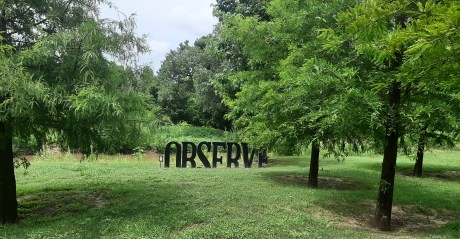
Part of the 6-piece “Monumental Moments” series
by Anthony Shumate, 2015
(located in Buffalo Bayou Park, along the Kinder Footpaths)
TRANSFORM • RENEW • HEAL • ENERGIZE
Celebrate the New Year with 108 Sun Salutations 10:00 AM – 1:00 PM CST!
AND/OR
RELAX • RELEASE • REST • RENEW • HEAL
Celebrate the New Year with Restorative Yoga+Meditation
5:00 PM – 7:00 PM CST!
The New Year is a beginning and an ending… and it is also a middle. On New Year’s Day we honor and celebrate transition with 108 Sun Salutations in the morning (10 AM – 1 PM, CST) and/or a Restorative* Yoga plus Meditation practice in the evening (5 – 7 PM, CST). We also put things in perspective.
These practices are open and accessible to all, regardless of experience.
*NOTE: In previous years, the evening practice has been Yin Yoga.
Please wear loose, comfortable clothing and make sure you are well hydrated before the practice. It is best to practice on an empty stomach (especially for the 108 ajapa-japa mala), but if you must eat less than 1 hour before the practice, make sure to keep it light. Make sure to have a towel (at the very least) for the 108 practice. For Restorative Yoga, a pillow/cushion or two, blocks or (hardcover) books, and a blanket or towel will be useful. I always recommend having something handy (pen and paper) that you can use to note any reflections (and will have some supplies handy).
IN-PERSON IS FULL! Use the link above for login information (or click here for more details about these practices and other practice opportunities related to the New Year).
The 108 playlist is available on YouTube and Spotify. [Look for “New Year’s Day 108 Ajapa-Japa Mala.”] NOTE: This playlist was revised for 2024, but should still sync up with the 2021 — 2023 recordings.
The Restorative playlist is available on YouTube and Spotify. [Look for “01072022 A Reflective Moment”]
Both practices are available in-person (if you are registered) and online. They are also donation based. If you don’t mind me knowing your donation amount you can donate to me directly. You can also email me to request my Venmo or Ca$hApp ID. If you want your donation to be anonymous (to me) and/or tax deductible, please donate through Common Ground Meditation Center (type my name under “Teacher”).
Please note that there is still no late admittance and you must log in before the beginning of the practice (so, by 9:45 AM for the 108 or by 4:45 PM for the Restorative Yoga+Meditation). You will be re-admittance if you get dumped from the call.)
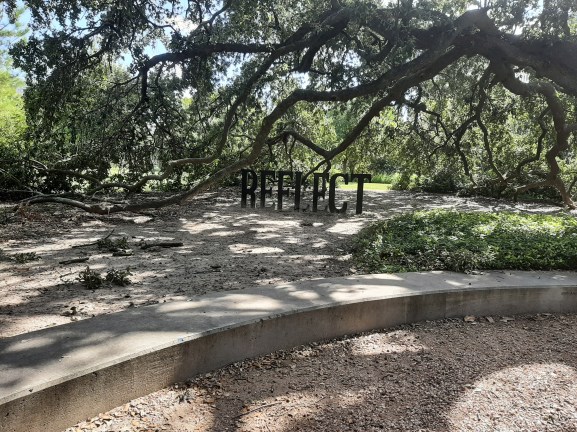
Part of the 6-piece “Monumental Moments” series
by Anthony Shumate, 2015
(located in Buffalo Bayou Park, along the Kinder Footpaths)
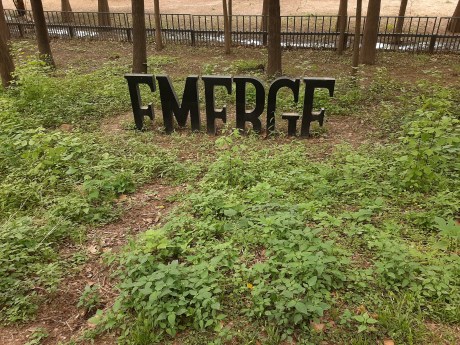
Part of the 6-piece “Monumental Moments” series
by Anthony Shumate, 2015
(located in Buffalo Bayou Park, along the Kinder Footpaths)
*Anthony Shumate’s “Monumental Moments” sculptures are located in Buffalo Bayou Park, along the Kinder Footpaths in Houston, Texas. They are unexpected reminders to “Explore,” “Pause,” “Reflect,” “Listen,” “Emerge,” and “Observe” – all things we do in our practice!
### NAMASTE ###
A Quick Note & EXCERPT: “Purpose Driven” (a Tuesday post, that’s also for Wednesday and Thursday!) December 30, 2025
Posted by ajoyfulpractice in 7-Day Challenge, Changing Perspectives, Christmas, Faith, Healing Stories, Health, Hope, Japa, Japa-Ajapa, Life, Loss, Meditation, Mysticism, New Year, One Hoop, Peace, Philosophy, Religion, Science, Wisdom, Yoga.Tags: 12 Days of Christmas, 988, catechism, Christmas, Dr. Nick Hobson, holidays, Imani, Kuumba, Kwanzaa, New Year's, Nguzo Saba, Nia, Sita (Joan Weiner) Bordow, Surya Namaskar, Swami Satchidananda, Twelvetide, Yoga Sutras 1.12-1.14
add a comment
“Kwanzaa, yenu iwe na heri!” – “May your Kwanzaa be happy!” to everyone who is celebrating!
“My research over the last decade has helped understand why rituals in particular (and not any other behaviors like habits, for instance) are effective at battling negative emotions. Be it anxiety, stress, fear, doubt, sadness, grief – you name it. Rituals are there to save the day. The dread we feel after experiencing a loss happens because it feels like the situation is outside our control (and it usually is). Rituals reinstate that control.”
— quoted from “The emerging science of ritual – a new look on an ancient behavior: And how you can use it to live life to the fullest” by Dr. Nick Hobson (contributing to the ThriveGlobal.com, Dec. 7, 2017)
There is something to be said for a good ritual. I don’t just mean a habit, something you do repeatedly — even if it’s something you are in the habit of doing at a particular time. Neither am I just referring to a tradition — which could be a group habit and/or a ritual that has been passed down through generations, but has lost some of it’s deeper meaning. No, I am referring to something that is more like a ceremony; something infused with purpose and meaning.
Consider your exercise routine. You may be in the habit of doing a certain kind of physical activity at a certain time on certain day(s). Changes in your routine (and the resulting cancellations during the holidays) may leave you feeling off kilter. However, you know you will return to that routine (or something similar) because it serves a purpose and you value the experience. It may even connect you to a community.
No matter what you do, if you have that regular routine, you probably experience something more than physical well-being. You may notice mental and emotional benefits that serve you on multiple levels of your life. You may even do the thing you do for those specific benefits. In this way, what you do could be considered abhyasa (“[continuous and deliberate] practice, [engaged with sincere devotion]”) (YS. 1.12-1.14) However, those extra benefits are just that — lagniappe (“a little (something) extra”). They are gifts that are not intentionally part of the exercise.
Now, consider the physical practice of yoga, which you could consider a ritual within a ritual. It is part of a larger practice, and that larger practice intentional includes benefits beyond the physical. If you go to a different class; use one of my videos or recordings; and/or practice on your own, the ritual of the practice — i.e., the order in which we do the practice and the meaning behind the order and what we do within the sequences — still includes the deeper meaning and serves a deeper purpose, one that is beyond the physical-mental. One of my teachers once argued that this is true even if/when the meaning and purpose are not explicitly stated.
The meaning and purpose are baked in; they were part of the creation process.
Click on the excerpt title below for more about these holidays and our New Year’s Day tradition that is also a ritual!
Updated & Revised! Purpose Driven (a Friday post, that’s also for Saturday and Sunday!)
“Nia (purpose) — To make our collective vocation the building and development of our community in order to restore our people to their traditional greatness.”
— The fifth of the Nguzo Saba (or “Seven Essential Pillars”) of Kwanzaa
For people celebrating Kwanzaa, “Nia (Purpose)” is the focus for the fifth day (today, Tuesday); “Kuumba (creativity)” is the focus for the sixth day; and “Imani (faith)” is the focus for the sixth day. These final three days of Kwanzaa coincide with the fifth, sixth, seventh (or eighth) days of the “12 Days of Christmas” (depending on when you start counting).
If you are following along with the symbolic meaning of the gifts in the song, you will notice that the 5th, 6th, and 7th gifts are infused with purpose, meaning, creativity, and (of course) faith: “five gold rings” are the first Five Books of the Hebrew Bible and the Christian Old Testament (which provide the back story for the three Abrahamic religions); “six geese a-laying” for the six days of creation; and “seven swans a-swimming”, the consistently most expensive gift, stand for the seven gifts of the Holy Spirit (wisdom, understanding, knowledge, counsel, fortitude, piety, and fear of the Lord) or the seven sacraments (Baptism, Eucharist, Confirmation, Reconciliation, Anointing of the Six, Marriage, and Ordination). As for the eighth day, those could be considered extra (spiritual) gifts: “eight maids a-milking” for the eight beatitudes (or blessings).
“Kuumba (creativity) — To do always as much as we can, in the way we can, in order to leave our community more beautiful and beneficial than we inherited it.
Imani (faith) — To believe with all our heart in our people, our parents, our teachers, our leaders, and the righteousness and victory of our struggle.”
— The sixth and seventh of the Nguzo Saba (or “Seven Essential Pillars”) of Kwanzaa
Online (Zoom) classes are cancelled today through Wednesday, December 31st.
People on the recording email list(s) receive backup recordings. There are also some practice videos on my YouTube channel. You can check the “Class Schedules” calendar for upcoming classes. You can also request an audio recording of this practice via a comment below or (for a slightly faster reply) you can email me at myra (at) ajoyfulpractice.com.
The playlist for the fifth day of Kwanzaa is available on YouTube and Spotify. [Look for “12302020 Purpose Driven”]
“Consider, for instance, in moments of grief, rituals help ease our pain and suffering. But, again I ask, how do they do this, and why rituals in particular? As my collaborators Mike Norton and Francesca Gino have shown, rituals alleviate feeling of grief and loss by increasing a feelings of control.”
— quoted from “The emerging science of ritual – a new look on an ancient behavior: And how you can use it to live life to the fullest” by Dr. Nick Hobson (contributing to the ThriveGlobal.com, Dec. 7, 2017)
If you are thinking about suicide, worried about a friend or loved one, or would like emotional support, you can dial 988 (in the US) or call 1-800-273-TALK (8255) for the Suicide and Crisis Lifeline. You can also call this TALK line if you are struggling with addiction or involved in an abusive relationship. The Lifeline network is free, confidential, and available to all 24/7. YOU CAN TALK ABOUT ANYTHING.
White Flag is an app, which I have not yet researched, but which may be helpful if you need peer-to-peer (non-professional) support.
If you are a young person in crisis, feeling suicidal, or in need of a safe and judgement-free place to talk, you can also click here to contact the TrevorLifeline (which is staffed 24/7 with trained counselors).
In the spirit of generosity (“dana”), the Zoom classes, recordings, and blog posts are freely given and freely received. If you are able to support these teachings, please do so as your heart moves you. (NOTE: You can donate even if you are “attending” a practice that is not designated as a “Common Ground Meditation Center” practice, or you can purchase class(es).
Donations are tax deductible; class purchases are not necessarily deductible.
Check out the “Class Schedules” calendar for upcoming classes.
“You can perform japa, repetition of a mantra or Sacred Word, in the midst of your day-to-day work. Then, when it becomes a habit, even when you are working intensely a portion of the mind will keep repeating the mantra always. That means you have locked one end of your chain to a holy place, while the rest of the chain remains still in the outside world.”
— a note written by Swami Satchidananda, quoted in Sri Swami Satchidananda: Apostle of Peace by Sita (Joan Weiner) Bordow
I am offering in-person classes during January 2026. Click here for more details and to reserve your spots now. Let’s start the 2026 together!
### OM AUM ###
A Quick Note & UPDATED EXCERPTS Regarding Social Economics (the post-practice Monday post, revised for 2026) December 29, 2025
Posted by ajoyfulpractice in Bhakti, Changing Perspectives, Christmas, Faith, Healing Stories, Hope, Life, Loss, Love, Music, Mysticism, One Hoop, Pain, Peace, Religion, Suffering, Tragedy, Wisdom, Yoga.Tags: 12 Days of Christmas, 988, Bobby Ray Simmons Jr., Christmas, Claude Kelly, faith, family, Feast of Saint Thomas of Canterbury, holidays, Jessica Cornish, Jessie J, Kwanzaa, Lukasz Gottwald, Mishlei, New Year's, Nguzo Saba, Proverbs, Twelvetide, Ujamaa, Wisdom
add a comment
“Kwanzaa, yenu iwe na heri!” – “May your Kwanzaa be happy!” to everyone who is celebrating! May you have a meaningful observation no matter if your focus is on the Nativity Fast / St. Philip’s Fast or the Feast Day of Saint Thomas of Canterbury (and London). Many blessings to everyone!
This is the post-practice post for Monday, December 29th. It includes new and re-posted content. The 2025 prompt question was, “What is your love language?” You can request an audio recording of this practice or a previous practice via a comment below or (for a slightly faster reply) you can email myra (at) ajoyfulpractice.com.
In the spirit of generosity (“dana”), the Zoom classes, recordings, and blog posts are freely given and freely received. If you are able to support these teachings, please do so as your heart moves you. (NOTE: You can donate even if you are “attending” a practice that is not designated as a “Common Ground Meditation Center” practice, or you can purchase class(es).
Donations are tax deductible; class purchases are not necessarily deductible.
I am offering in-person classes at the beginning of January 2026. Click here for more details and to reserve your spots now. Let’s start the 2026 together!
Check out the “Class Schedules” calendar for upcoming classes (and holiday cancellations).
“We’re paying with love tonight
It’s not about the money, money, money
We don’t need your money, money, money
We just wanna make the world dance
Forget about the price tag
Ain’t about the, uh, cha-ching, cha-ching
Ain’t about the, yeah, ba-bling, ba-bling”
— quoted from the song “Price Tag” by Jessie J (written by Lukasz Gottwald / Claude Kelly / Jessica Cornish / Bobby Ray Simmons Jr.)
Some things (like people) are priceless. Yet, even when we know that, it is so easy to get distracted by the price tag. It is especially easy to get distracted this time of year, because of all the gift giving and receiving (and, for some, the possibility of a Christmas bonus).
On the fourth day of Kwanzaa — which is also the the fourth or fifth day of the “12 Days of Christmas” (depending on when you start counting) — we focus on “Ujamaa (Cooperative Economics)” and go a little deeper into how we value and appreciate people and things. We also touch on the struggles that arise in a society that has never found a good balance between the material and the spiritual.
Even though “it’s not about the money,” I do talk about the money.
The following (revised) excerpt, from the 2022 “Social Economics” post, includes a 2025 update:
“The actual cost of ‘The 12 Days of Christmas’ varies, depending on if you are giving a single set of each gift (i.e. only one set of five gold rings) or if you are going the cumulative route. According to PNC Financial Services Group’s annual ‘Christmas Price Index’ (which they have issued for
4142 years), the cost for one set of each gift in 2019 was $38,993.59; with a cumulative price tag of $170, 298.03, which was just barely more than the 2018 cost. In 2020, however, the cost was $16,168.10 – $105, 561.80. In 2021, the cost for a single set of gifts was $41,205.58; with a cumulative total of $179,454.19. In 2022, the overall cost went up 10.5%, putting the single set of gifts at $45,523.27 and the cumulative total at $197,071.09.”2025 UPDATE: This year, the overall costs for a single set of gifts went up (4.5%, from 2024, which was already up 5.4%, from 2023) to $51,476.12 and the cumulative total went up (4.4%) to $218,542.98. Last year, the highest percentage increase was for the partridge in a pear tree — because the cost of the tree (in particular the fertilizer for the tree) has steadily increased over the last few years. This year, however, the highest percentage increase — by far, at 32.5% — was the gift of the Five Gold Rings. (Unfortunately, the increase in the price of gold is a sign of not so good things to come as far as the U. S. economy is concerned.) NOTE: The Lords-A-Leaping also went up (again) and remains the most expensive gift (even more than the swans)!
CLICK ON THE EXCERPT TITLE BELOW FOR MORE.
Ujamaa (cooperative economics)—To build and maintain our own stores, shops, and other businesses and to profit from them together.
— The fourth of the Nguzo Saba (or “Seven Essential Pillars”) of Kwanzaa
There is no playlist for the Common Ground Meditation Center practices.
A playlist inspired by the 4th day of Kwanzaa is available on YouTube and Spotify. [Look for “12292021 Social Economics”]
If you are thinking about suicide, worried about a friend or loved one, or would like emotional support, you can dial 988 (in the US) or call 1-800-273-TALK (8255) for the Suicide and Crisis Lifeline. You can also call this TALK line if you are struggling with addiction or involved in an abusive relationship. The Lifeline network is free, confidential, and available to all 24/7. YOU CAN TALK ABOUT ANYTHING.
White Flag is an app, which I have not yet researched, but which may be helpful if you need peer-to-peer (non-professional) support.
If you are a young person in crisis, feeling suicidal, or in need of a safe and judgement-free place to talk, you can also click here to contact the TrevorLifeline (which is staffed 24/7 with trained counselors).
I am offering in-person classes during January 2026. Click here for more details and to reserve your spots now. Let’s start the 2026 together!
### MISHLEI / PROVERBS 3:13 – 3:15 ###
A (revised) Note & Excerpt RE: Children, Heroes, Responsibility, & Power *UPDATED* December 28, 2025
Posted by ajoyfulpractice in "Impossible" People, 7-Day Challenge, Art, Books, Changing Perspectives, Christmas, Dharma, Faith, Healing Stories, Hope, Karma, Life, Movies, Music, Mysticism, One Hoop, Peace, Philosophy, Religion, Super Heroes, Wisdom, Yoga.Tags: 12 Days of Christmas, 988, Art, Childermas, Christmas, Feast Day of the Holy Family, Feast of the Holy Innocents, Innocents Day, Kwanzaa, Nativity Fast, Neil Ellis Orts, New Year's, Nguzo Saba, siddhis, St. Philip's Fast, Stan Lee, Twelvetide, Ujima
add a comment
“Kwanzaa, yenu iwe na heri!” – “May your Kwanzaa be happy!” to everyone who is celebrating! May you have a meaningful observation if you are observing the Nativity / St. Philip’s Fast and/or your focus is on the Innocents and/or Family. Many blessings to everyone!
“All six of these stories – nearly half the stories in the book – speak to me of a longing in our human condition, a desire for more life (either here or in the hereafter) or a desire to turn regrets around to something joyous….
None of the characters in this collection are more powerful than a locomotive, none are faster than a speeding bullet, but what they are able to do, I believe, reveals something of our desires, something of our humanity – the best and worst in us.”
— quoted from the introduction to able to…: a literary look at super powers by…, edited by Neil Ellis Orts
There is a lot going on. Today is the third day of Kwanzaa, which always corresponds with the third or fourth day of the “12 Days of Christmas” (depending on when you start counting). For some it is also the Feast of the Holy Innocents, also known as Childermas or Innocents Day. There are also people who spend the first Sunday after Christmas observing the Feast Day of the Holy Family. Finally, there are some Christians observing the Nativity (or St. Philip’s) Fast in preparation for Christmas. Each of these observations comes with a story and each story comes with a message.
The stories and messages associated with this day are all about children (i.e., future generations), heroes, responsibility, and power. More importantly, these stories and messages are for and about regular people. Fortunately, today is also the anniversary of the birth of a person who told stories with these same messages… and with these same types of heroes.
“…aware at last that in this world, with great power there must also come — great responsibility!”
— quoted from Amazing Fantasy #15 by Stan Lee (b. 1922), et al (August 1962)
CLICK ON THE EXCERPT TITLES BELOW FOR MORE.
“Ujima (collective work and responsibility) — To build and maintain our community together and make our brother’s and sister’s problems our problems and to solve them together.”
— the third of the Nguzo Saba (or “Seven Essential Pillars”) of Kwanzaa
Please join me today (Sunday, December 28th) at 2:30 PM for a yoga practice on Zoom. You can use the link from the “Class Schedules” calendar if you run into any problems checking into the class. You can request an audio recording of this practice via a comment below or (for a slightly faster reply) you can email myra (at) ajoyfulpractice.com.
Sunday’s playlist is available on YouTube and Spotify. [Look for “12282021 Power, Responsibility, & Children”]
If you are thinking about suicide, worried about a friend or loved one, or would like emotional support, you can dial 988 (in the US) or call 1-800-273-TALK (8255) for the Suicide and Crisis Lifeline. You can also call this TALK line if you are struggling with addiction or involved in an abusive relationship. The Lifeline network is free, confidential, and available to all 24/7. YOU CAN TALK ABOUT ANYTHING.
White Flag is an app, which I have not yet researched, but which may be helpful if you need peer-to-peer (non-professional) support.
If you are a young person in crisis, feeling suicidal, or in need of a safe and judgement-free place to talk, you can also click here to contact the TrevorLifeline (which is staffed 24/7 with trained counselors).
In the spirit of generosity (“dana”), the Zoom classes, recordings, and blog posts are freely given and freely received. If you are able to support these teachings, please do so as your heart moves you. (NOTE: You can donate even if you are “attending” a practice that is not designated as a “Common Ground Meditation Center” practice, or you can purchase class(es).
Donations are tax deductible; class purchases are not necessarily deductible.
Check out the “Class Schedules” calendar for upcoming classes.
CHECK OUT THE CALENDAR! You can kick off New Year’s Day 2026 in two ways (and in two spaces): with the very active practice of 108 Sun Salutations at 10:00 AM or with the very “chill” practice of a Restorative Yoga+Meditation practice beginning at 5:00 PM. All times are Central Standard.
Register to practice in-person (or join us via Zoom). Details are posted on the “Class Schedules” calendar.
12/29/2025 Update: I neglected to mention the Feast Day of the Holy Family (mostly because I forgot that it is a “moveable feast”).
### FOCUS ON WHAT YOU’RE ABLE TO… ###
A Quick Note & EXCERPT: “Celebrating What Supports the Practice” December 27, 2025
Posted by ajoyfulpractice in 7-Day Challenge, Art, Bhakti, Changing Perspectives, Christmas, Faith, Healing Stories, Hope, Life, Love, Music, Mysticism, One Hoop, Peace, Philosophy, Religion, Science, Suffering, Yoga.Tags: 12 Days of Christmas, 988, Charles Darwin, Christmas, holidays, Kujichagulia, Kwanzaa, Nativity Fast, Nguzo Saba, psychology, Saint John the Apostle, Saint Stephen, Sammy Davis Jr., social science, St. Philip's Fast
add a comment
“Kwanzaa, yenu iwe na heri!” — “May your Kwanzaa be happy!” to everyone who is celebrating! May you have a good observation if your focus is the Feast Day of Saint Stephen or Saint John or the Nativity Fast / St. Philip’s Fast.
“nguzo (Swahili)
Noun
nguzo
-
prop, pillar (an object placed against or under another, to support it)
-
column, supporting pole
-
pillar (an essential supporting part of something)
-
(figuratively) a support or comfort”
— definition from WordSense.eu (and English dictionary based on Wiktionary)
Today is the second day of Kwanzaa and the second or third day of “The 12 Days of Christmas” (depending on when you start counting). While some (Orthodox) Christian traditions are still getting ready for Christmastide, some (Western) Christian traditions are celebrating the Feast Day of Saint John, while others (in some Orthodox traditions) are focused on Saint Stephen.
Even though the rituals and traditions may seem different from the outside, they share similar practices (see excerpt below). They also have similar effects on the inside: They keep people focused on their foundations.
CLICK ON THE EXCERPT BELOW FOR MORE.
“I gotta be me, I’ve gotta be me
What else can I be but what I am
I want to live, not merely survive
And I won’t give up this dream
Of life that keeps me alive
I gotta be me, I gotta be me
The dream that I see makes me what I am”
— quoted from the song “I Gotta Be Me” by Sammy Davis, Jr. (written by Walter Marks)
Please join me for a virtual yoga practice on Zoom, today (Saturday, December 27th) at 12:00 PM. You can use the link from the “Class Schedules” calendar if you run into any problems checking into the class. You can request an audio recording of this practice via a comment below or (for a slightly faster reply) you can email me at myra (at) ajoyfulpractice.com.
Saturday’s playlist is available on YouTube and Spotify. [Look for “12272020 Will, Determination, & John”]
If you are thinking about suicide, worried about a friend or loved one, or would like emotional support, you can dial 988 (in the US) or call 1-800-273-TALK (8255) for the Suicide and Crisis Lifeline. You can also call this TALK line if you are struggling with addiction or involved in an abusive relationship. The Lifeline network is free, confidential, and available to all 24/7. YOU CAN TALK ABOUT ANYTHING.
White Flag is an app, which I have not yet researched, but which may be helpful if you need peer-to-peer (non-professional) support.
If you are a young person in crisis, feeling suicidal, or in need of a safe and judgement-free place to talk, you can also click here to contact the TrevorLifeline (which is staffed 24/7 with trained counselors).
“Umoja (unity) — To strive for and maintain unity in the family, community, nation, and race.
Kujichagulia (self-determination) — To define ourselves, name ourselves, create for ourselves, and speak for ourselves.
Ujima (collective work and responsibility) — To build and maintain our community together and make our brother’s and sister’s problems our problems and to solve them together.
Ujamaa (cooperative economics) — To build and maintain our own stores, shops, and other businesses and to profit from them together.
Nia (purpose) — To make our collective vocation the building and development of our community in order to restore our people to their traditional greatness.
Kuumba (creativity) — To do always as much as we can, in the way we can, in order to leave our community more beautiful and beneficial than we inherited it.
Imani (faith) — To believe with all our heart in our people, our parents, our teachers, our leaders, and the righteousness and victory of our struggle.”
— The Nguzo Saba (or “Seven Essential Pillars”) of Kwanzaa
In the spirit of generosity (“dana”), the Zoom classes, recordings, and blog posts are freely given and freely received. If you are able to support these teachings, please do so as your heart moves you. (NOTE: You can donate even if you are “attending” a practice that is not designated as a “Common Ground Meditation Center” practice, or you can purchase class(es).
Donations are tax deductible; class purchases are not necessarily deductible.
Check out the “Class Schedules” calendar for upcoming classes.
CHECK OUT THE CALENDAR! You can kick off New Year’s Day 2026 in two ways (and in two spaces): with the very active practice of 108 Sun Salutations at 10:00 AM or with the very “chill” practice of a Restorative Yoga+Meditation practice beginning at 5:00 PM. All times are Central Standard.
Register to practice in-person (or join us via Zoom). Details are posted on the “Class Schedules” calendar.
Updated for clarity. 12/28/2025
### You Are Supported! ###
The Day (& the Night) Before Christmas (w/excerpts) December 24, 2025
Posted by ajoyfulpractice in Books, Christmas, Healing Stories, Hope, Life, One Hoop, Peace, Philosophy, Religion, Wisdom, Writing, Yoga.Tags: 988, Charles Dickens, Christmas, Christmas 1914, Christmas Truce, Clement Clarke Moore, family, Frank Capra, Henry Livingston Jr., holiday, holidays, Johann Pachelbel, New Year, Peter Hooton, Philip Van Doren Stern, Richard Rohr, Steve Grimes, The Farm, World War I, Writing
add a comment
“Peace and good will!” to all. “Happy Holidays!” and “Merry Christmas!” to all who are celebrating.
May you be safe and protected / May you be peaceful and happy / May you be healthy and strong! May you be nourished!
“I know because it’s Christmas, you’re surely hoping for some very special sermon. I don’t think I have one, really, [because] there’s really only one message. And there’s nothing new to tell you. It’s the same message that if you’re praying (and that isn’t always true of Christians), it goes deeper and deeper and deeper. If you’re quiet once in a while (and that isn’t always true of Americans), it goes deeper and deeper and deeper.”
— quoted from “Christmas 2016: Really only One Message” homily by Richard Rohr, OFM (delivered on Sunday, December 25, 2016)
For many people around the world, it is the day — and soon will be the night — before Christmas. This is a time immortalized by the stories, songs, poems, ballets, and movies I have referenced over the last few days. Just like all of the protagonists in the stories, we have no idea who may visit us (in person or in our dreams). Just like the narrator in “A Visit from St. Nicholas” (also known as “’Twas the Night Before Christmas”), which was originally published as “Account of a Visit from St. Nicholas” on December 23, 1823, we may have expectations and little something extra to do before we settle in for “long winter’s nap”; but, we have no idea what will happen next.
In telling the story of Christmas during yesterday’s practices, I mentioned that, the actual night before Jesus was born was not significant to everyone around Mary and Joseph. No one knew it was “the night before Christmas”. It seems obvious, I know: There was no “Christ” and therefore there was “mass for Christ”. But, really think about for a moment. Think about the fact that, even though some of them had received messages from the Angel Gabriel, Mary, Joseph, the Magi, and the unnamed people around them had no idea how lives would change… how the world would change.
Even if you look at the story historically (or allegorically) instead of spiritually and religiously, most people involved would not have imagined that the story would still be celebrated and told centuries later.
Similarly, soldiers fighting along the Western Front in World War I, today in 1914, would not have imagined that people living over a hundred years later, would still remember their Christmas Truce. They could not have imagined that there would be stories and songs and movies about their football games, their exchange of gifts, and their caroling. Stuck in their present moment, and all it entailed, they could not have known how so many would find inspiration in their actions of peace and human solidarity.
“The boys had their say, they said no (all together now)
Stop the slaughter, let’s go home
Let’s go, let’s go (all together now)
Let’s go (all together now), let’s go home
All together now (together, together)
In no man’s land (together, together)”
— quoted from the song “All Together Now” by The Farm (composed by Johann Pachelbel, lyrics by Peter Hooton and Steve Grimes)
Even if you are not in the middle of a war or a conflict, you have something in common with those World War I soldiers. Even if you are not an immigrant and/or expecting a child during (these) uncertain times, you have something in common with Mary and Joseph. Even if you do not have Ebenezer Scrooge’s “bah humbug” attitude, George Bailey’s despair, or the the Christmas cheer of the characters around them, you have something in common with them and the papa who is visited by St. Nicholas. Even if you do not celebrate Christmas as a religious holiday and/or a cultural holiday — and even if you do, just at a different time — you have something in common with those who do celebrate (and those who do not).
We all have doubts and fears mixed in with hopes and dreams and wishes and prayers. We all have expectations mixed with an awareness — even if it is just a tiny bit of awareness at the very back of our minds — that we cannot know all of the wonderful things (and people) to come. Neither can we know what a difference we will make in the world and in the lives of those around us. And that, finally, is the thing we also all have in common with everyone mentioned above:
Every single one of us can do something that brings a little more peace and a little more joy into the world.
“‘Happy Christmas to all, and to all a good-night.’”
— quoted the poem “A Visit from St. Nicholas”1
CLICK ON THE EXCERPT TITLES BELOW FOR MORE.
Here’s A Little “something, something” for the Holi-daze (the “missing” Sunday post)
A Quick Note & EXCERPTS RE: Light & Living “A (SAD) Wonderful Life” (the “missing” Saturday post)
CLICK ON THE EXCEPTS BELOW FOR THE STORIES.
“The woods are lovely, dark and deep,
But I have promises to keep,
And miles to go before I sleep,
And miles to go before I sleep.”
— quoted from the poem “Stopping by Woods on a Snowy Evening” by Robert Frost
Zoom classes are cancelled today. I have sent audio recordings to people on the Wednesday class list. You can check the “Class Schedules” calendar for upcoming classes. You can also request an audio recording of this practice via a comment below or (for a slightly faster reply) you can email me at myra (at) ajoyfulpractice.com.
For those who are interested, the December 24th playlist is available on YouTube and Spotify. [Look for “12242023 Christmas 1914”]
If you are thinking about suicide, worried about a friend or loved one, or would like emotional support, you can dial 988 (in the US) or call 1-800-273-TALK (8255) for the Suicide and Crisis Lifeline. You can also call this TALK line if you are struggling with addiction or involved in an abusive relationship. The Lifeline network is free, confidential, and available to all 24/7. YOU CAN TALK ABOUT ANYTHING.
White Flag is an app, which I have not yet researched, but which may be helpful if you need peer-to-peer (non-professional) support.
If you are a young person in crisis, feeling suicidal, or in need of a safe and judgement-free place to talk, you can also click here to contact the TrevorLifeline (which is staffed 24/7 with trained counselors).
In the spirit of generosity (“dana”), the Zoom classes, recordings, and blog posts are freely given and freely received. If you are able to support these teachings, please do so as your heart moves you. (NOTE: You can donate even if you are “attending” a practice that is not designated as a “Common Ground Meditation Center” practice, or you can purchase class(es).
Donations are tax deductible; class purchases are not necessarily deductible.
Check out the “Class Schedules” calendar for upcoming classes.
CHECK OUT THE CALENDAR! You can kick off New Year’s Day 2026 in two ways (and in two spaces): with the very active practice of 108 Sun Salutations at 10:00 AM or with the very “chill” practice of a Restorative Yoga+Meditation practice beginning at 5:00 PM. All times are Central Standard.
Register to practice in-person (or join us via Zoom). Details are posted on the “Class Schedules” calendar.
1NOTE: “A Visit from St. Nicholas” was originally published anonymously. It has been since been credited to Henry Livingston Jr. or Clement Clarke Moore.
### PEACE ON EARTH! ###
FTWMI: “A Christmas Prelude” (revised*) December 23, 2025
Posted by ajoyfulpractice in Bhakti, Christmas, Faith, Healing Stories, Hope, Music, One Hoop, Peace, Poetry, Religion, Wisdom, Writing, Yoga.Tags: 4Him, 988, Carola, Christmas carols, David Allen Clark, Donald A. Koch, healing, Healing Stories, Katherine Kennicott Davis, Mark R. Harris, New Year's Day, story, yoga
add a comment
Peace and good will!” to all. “Happy Holidays!” and “Merry Christmas!” to all who are celebrating.
For Those Who Missed It: The following is the slightly revised version of a post from December 23, 2020. Some formatting, musical credits, and dates have been adjusted accordingly.
“Why me, I’m just a simple man of trade
Why Him with all the rulers in the world
Why here inside this stable filled with hay
Why her, she’s just an ordinary girl
Now I’m not one to second guess
What angels have to say
But this is such a strange way to save the
World”
— quoted from the song “What a Strange Way to Save the World” by 4Him (written by Mark R. Harris, Donald A. Koch, David Allen Clark)
Almost everyone has a favorite Christmas carol — even if they don’t celebrate Christmas! And the carols not only tell the story of Christmas, they are a great way to tell the story. For a little over a decade, I have used a variation of today’s playlist to do just that: tell the story of Christmas. Sometimes, Christmastide overlaps Chanukah and the playlist expands accordingly. It’s not that hard, really. After all, they are both celebrations of light that focus us on the 25th.
This year’s variation, as it appears on YouTube and Spotify, is a little different. There’s no Garth; however, my favorite Garth “carol” makes an appearance in a surprisingly endearing format — and delivered by someone dearly loved. Both formats include an a cappella version of “The Little Drummer Boy” (which holds a special place in my heart), but they are different versions. Another variation on a theme: the two different versions of “Hark! The Herald Angels Sing!” The version on YouTube includes an introduction to a live performance by a choir in London (and concludes with a prayer). The version on Spotify is the one I used to play in my (in-person) classes just before we start the practice.
Which brings me to another change: the beginning of the playlist. Just as so many set the tone this time of year by playing holiday music, I usually have two or three tracks at the beginning of the playlist that are not actually intended for the practice. They are simply to establish a feeling of reverence and celebration consistent with the time. The version of “Hark! The Herald Angels Sing!” (by Carola) that I typically use is amazing and makes every space feel a little like a cathedral. But, since there is no way to really time things out the way I normally would, you can enjoy the music after the practice.
“Mary nodded
Pa rum pum pum pum
The ox and lamb kept time
Pa rum pum pum pum
I played my drum for him
Pa rum pum pum pum
I played my best for him
Pa rum pum pum pum,
Rum pum pum pum,
Rum pum pum pum
Then he smiled at me
Pa rum pum pum pum
Me and my drum”
— quoted from the song “The Little Drummer Boy” (originally written as “”Carol of the Drum” by Katherine Kennicott Davis)
Please join me today (Tuesday, December 23rd) at 12:00 PM or 7:15 PM for a yoga practice on Zoom. You can use the link from the “Class Schedules” calendar if you run into any problems checking into in the class. You can request an audio recording of this practice via a comment below or by emailing myra (at) ajoyfulpractice.com.
Tuesday’s playlist is available on YouTube and Spotify. [Look for “12232020 A Christmas Prelude”]
*2025 Music Note: I updated the playlist for the longer (evening practice). The Spotify playlist includes extra tracks, since the longer Winter Solstice track was not yet available.
If you are thinking about suicide, worried about a friend or loved one, or would like emotional support, you can dial 988 (in the US) or call 1-800-273-TALK (8255) for the Suicide and Crisis Lifeline. You can also call this TALK line if you are struggling with addiction or involved in an abusive relationship. The Lifeline network is free, confidential, and available to all 24/7. YOU CAN TALK ABOUT ANYTHING.
White Flag is an app, which I have not yet researched, but which may be helpful if you need peer-to-peer (non-professional) support.
If you are a young person in crisis, feeling suicidal, or in need of a safe and judgement-free place to talk, you can also click here to contact the TrevorLifeline (which is staffed 24/7 with trained counselors).
In the spirit of generosity (“dana”), the Zoom classes, recordings, and blog posts are freely given and freely received. If you are able to support these teachings, please do so as your heart moves you. (NOTE: You can donate even if you are “attending” a practice that is not designated as a “Common Ground Meditation Center” practice, or you can purchase class(es).
Donations are tax deductible; class purchases are not necessarily deductible.
Check out the “Class Schedules” calendar for upcoming classes.
CHECK OUT THE CALENDAR! You can kick off New Year’s Day 2026 in two ways (and in two spaces): with the very active practice of 108 Sun Salutations at 10:00 AM or with the very “chill” practice of a Restorative Yoga+Meditation practice beginning at 5:00 PM. All times are Central Standard.
Register to practice in-person (or join us via Zoom). Details are posted on the “Class Schedules” calendar.
### “AND HAVE YOURSELF A MERRY LITTLE CHRISTMAS, NOW” ###
Just A Little Bit More Light (a note w/excerpts) December 21, 2025
Posted by ajoyfulpractice in Chanukah, Faith, Healing Stories, Life, Music, One Hoop, Philosophy, Religion, Science, Wisdom, Yoga.Tags: 988, anonymous, Chanukah, MJ, Nativity Fast, Nature, Solstice, St. Philip's Fast, Summer Solstice, Whakataukī (Māori proverb), Winter Solstice, yule
add a comment
Happy Winter (and Summer) Solstice! Happy Holidays! Many blessings to everyone and especially to to anyone observing Advent, observing the Nativity Fast / St. Philip’s Fast; and/or letting their light shine with kindness, friendship, peace, freedom, understanding, gratitude, and wisdom (no matter how much you struggle).
May you be safe and protected / May you be peaceful and happy / May you be healthy and strong! May you be nourished!
“To be a star, you must shine your own light, follow your path, and don’t worry about the darkness, for that is when the stars shine brightest.”
— Source unverified
As I mentioned yesterday, this is a strange time full of (what can feel like) opposing energy. However, if we look to nature, we see the moment(s) when everything comes together. This is a liminal moment, a transitional moment, that is more a convergence than a coalescence. Today — Winter Solstice in the Northern Hemisphere and Summer Solstice in the Southern Hemisphere — is when we all go through the doorway that marks a change in seasons.
For those of us in the Northern Hemisphere, this seventh day and eight night of Chanukah means we start getting just a little bit — just a teensy, tiny, little bit — more light. We may or may not notice it; but, we can still turn towards it.
“Turn your face to the sun, let the shadows fall behind you.”
— Whakataukī (Māori proverb)*
CLICK ON THE EXCERPT TITLES BELOW FOR MORE.
A Quick Note & EXCERPTS RE: Light & Living “A (SAD) Wonderful Life” (the “missing” Saturday post)
*NOTE: The Whakataukī (Māori proverb) quoted above was shared with me at the beginning of 2025 for this exact date! Thank you to MJ. You are a light in the world!
Please join me today (Sunday, December 21st) at 2:30 PM for a yoga practice on Zoom. You can use the link from the “Class Schedules” calendar if you run into any problems checking into the class. You can request an audio recording of this practice via a comment below or (for a slightly faster reply) you can email myra (at) ajoyfulpractice.com.
Sunday’s playlist is available on YouTube and Spotify. [Look for “Chanukah & Winter Solstice 2022”]
If you are thinking about suicide, worried about a friend or loved one, or would like emotional support, you can dial 988 (in the US) or call 1-800-273-TALK (8255) for the Suicide and Crisis Lifeline. You can also call this TALK line if you are struggling with addiction or involved in an abusive relationship. The Lifeline network is free, confidential, and available to all 24/7. YOU CAN TALK ABOUT ANYTHING.
White Flag is an app, which I have not yet researched, but which may be helpful if you need peer-to-peer (non-professional) support.
If you are a young person in crisis, feeling suicidal, or in need of a safe and judgement-free place to talk, you can also click here to contact the TrevorLifeline (which is staffed 24/7 with trained counselors).
In the spirit of generosity (“dana”), the Zoom classes, recordings, and blog posts are freely given and freely received. If you are able to support these teachings, please do so as your heart moves you. (NOTE: You can donate even if you are “attending” a practice that is not designated as a “Common Ground Meditation Center” practice, or you can purchase class(es).
Donations are tax deductible; class purchases are not necessarily deductible.
Check out the “Class Schedules” calendar for upcoming classes.
I will offering in-person classes during January 2026. Click here for more details and to reserve your spots now. Let’s start the 2026 together!
 A Joyful Practice