Posted by ajoyfulpractice in Music.
Tags: Carlos Santana, Special Olympics
“Eid al-Adha Mubarak!” “Blessed Eid!” to those who are observing. May your faith and love bring peace.
“‘Some songs are just like tattoos for your brain… you hear them and they’re affixed to you.’
The image of the tattoo is telling…. But looking beyond the literal change in the ubiquity of tattoos across generations, the metaphor Carlos chose, songs equaling ‘tattoos for your brain’ is telling. It reinforces the status of Carlos as a master of formulaic and ‘hooky’ pop songs with highly memorable melodies.”
– quoted from “Chapter 9: Carlos Speaks: Interpretations and Rebounding Questions” in Carlos Santana: A Biography by Norman Weinstein
Please join me today (Tuesday, July 20th) at 12:00 PM or 7:15 PM for a yoga practice on Zoom. Use the link from the “Class Schedules” calendar if you run into any problems checking into the class. Give yourself extra time to log in if you have not upgraded to Zoom 5.0. You can request an audio recording of this practice via a comment below or by emailing myra (at) ajoyfulpractice.com.
Tuesday’s playlist is available on YouTube and Spotify.
Click here for a 2020 blog post that corresponds to part of this practice. Click here for the 2021 blog post.
In the spirit of generosity (“dana”), the Zoom classes, playlists, and blog posts are freely given and freely received. If you are able to support these teachings, please do so as your heart moves you. (NOTE: You can donate even if you are “attending” a practice that is not designated as a “Common Ground Meditation Center” practice, or you can purchase class(es). If you don’t mind me knowing your donation amount you can also donate to me directly. Donations to Common Ground are tax deductible; class purchases and donations directly to me are not necessarily deductible.)
### 🎶 ###
Posted by ajoyfulpractice in Books, Buddhism, Changing Perspectives, Dharma, Faith, Healing Stories, Hope, Japa-Ajapa, Mantra, Meditation, Music, Mysticism, Pain, Pema Chodron, Philosophy, Religion, Science, Suffering, Wisdom, Writing, Yoga.
Tags: 108, Caroline Myss, Eid al-Adha, Nada Yoga, Pema Chödrön, The Special AKA, vedanā, yoga philosophy, yoga practice
“Eid al-Adha Mubarak!” “Blessed Eid!” to those who are observing. May your faith and love bring peace.
[This is a “missing” post related to Sunday, July 18th – with a reference to the practice on Monday, July 19th. You can request an audio recording of either practice via a comment below or (for a slightly faster reply) you can email me at myra (at) ajoyfulpractice.com.
In the spirit of generosity (“dana”), the Zoom classes, recordings, and blog posts are freely given and freely received. If you are able to support these teachings, please do so as your heart moves you. (NOTE: You can donate even if you are “attending” a practice that is not designated as a “Common Ground Meditation Center” practice, or you can purchase class(es). Donations are tax deductible; class purchases are not necessarily deductible.
Check out the “Class Schedules” calendar for upcoming classes. If you are using an Apple device/browser and the calendar is no longer loading, please email me at myra (at) ajoyfulpractice.com at least 20 minutes before the practice you would like to attend.]
“Somebody says a mean word to you and then something in you tightens — that’s the shenpa. Then it starts to spiral into low self-esteem, or blaming them, or anger at them, denigrating yourself. And maybe if you have strong addictions, you just go right for your addiction to cover over the bad feeling that arose when that person said that mean word to you. This is a mean word that gets you, hooks you. Another mean word may not affect you but we’re talking about where it touches that sore place — that’s a shenpa. Someone criticizes you — they criticize your work, they criticize your appearance, they criticize your child — and, shenpa: almost co-arising.”
– Pema Chödrön
Last week, as I started talking about Ani Pema Chödrön’s teachings on shenpa, I started thinking about vibration. Remember that shenpa can be translated as hook, urge, impulse, charge, or attachment. It is simultaneously a feeling, a thought, and the impetus to do something. It is vedanā – and this is why I’ve been thinking about vibration.
Vedanā is a Sanskrit word that has many different English translations. Without any subtext or cultural context (which is actually quite interesting), it can be translated as “sensation” or “feeling.” However, in Buddhist traditions it is also translated as “pain.” One ancient text even points out that we are sensational beings in that “Feeling accompanies every citta [mind-stuff], there is no moment without feeling.” When the word appears in ancient yoga texts, it has been translated into English as “divine [or transcendental] touch,” “supernatural touch,” and “sensation springing from contact of the six senses of the world.” When I first learned of the word, it was translated as “sensation,” “feeling,” or “vibration.”
I know, I know; that’s a lot of different meanings. While we may have different feelings or understandings of the English words, the common thread between the different translations is that they all refer to embodied experiences that simultaneously arise with thoughts (and thoughts that simultaneously arise with embodied experiences). When we get down to the nitty-gritty, they also all refer to things that create a reaction in the mind-body. In other words, vedanā is a physiological, mental, and emotional reaction to something – or, more specifically, to everything.
In the yoga philosophy and other Indian philosophies, vedanā may manifest in 108 different ways. The 108 is achieved by the equation 2x6x3x3, which breaks down as follows:
- 2 methods of perception (We experience things mentally or physically.)
- 6 senses (We collect information via the senses of scent, taste, sight, touch, sound, and mind.)
- 3 attitudes (We experience everything as positive, negative, or neutral.)
- 3 tenses (We experience things as part of our past, present, or future.)
Keep in mind that our thoughts can be afflicted or not afflicted (klişțāklişțāh) – or, if you think of it in the psychological sense: dysfunctional or functional. Therefore, our perception and/or feelings about something can be magnified by our thoughts and our thoughts can be magnified by our perceptions and/or feelings.
I know, I know; it can get a little chicken-or-the-egg and. To be honest, though, the practice isn’t really about identifying the ultimate source of a particular sensation or vibration – because we already know the (ultimate) source. The real practice begins by recognizing sensation, thoughts/feelings, and vibrations as they arise and then bringing awareness to how we react to what’s arising. As we move through our practice – on or off the mat or cushion – we also have the opportunity to notice that because our mind-body reacts and responds to vibration, we can change our mood, demeanor, and even our thoughts by changing the vibrations or sensations within us and around us.
“Our emotional energy converts into biological matter through a very highly complex process. Just as radio stations operate according to specific energy wavelengths, each organ in the body is calibrated to absorb and process specific emotional and psychological energies. That is, each area of the body transmits energy on a specific, detailed frequency and when we are healthy, all are ‘in tune.’ An area of the body that is not transmitting at its normal frequency indicates the location of a problem. A change in intensity of the frequency indicates a change in the nature and seriousness of the illness and reveals the stress pattern that has contributed to the development of the illness.”
– quoted from “Chapter 1 – Energy Medicine and Intuition: Reading the Field” in Anatomy of the Spirit: The Seven Stages of Power and Healing by Caroline Myss, Ph.D.
We can, and do, change the vibrations around and within us when we move our bodies and “get our juices flowing.” We can, and do, change the vibrations around and within us when we decide we don’t want to be around someone’s “negative energy” or we do want to be around someone because “they’re so positive.” We can, and do, change the vibrations around and within us when we find a quiet spot to be still – maybe to meditate, maybe to pray. We can, and do, change the vibrations around and within us when we play music, “sweet music.”
There have been lots of studies around the vibrational effects of sound and the benefits of music therapy. There are even on-going debates about frequencies and which ones are best for optimal health versus which ones are best to incite a riot. There’s even Nada Yoga – union achieved through sound – which is a practice that predates Western research. Mantra, kirtan, and spiritual chanting from a variety of cultures and religious communities all utilize sound as a way to connect to a higher power – and, in doing so, change the physical-mental experience of the person engaged in the practice. Even if we do not engage in the aforementioned spiritual and/or religious, we have experienced the power of music. So, recently, when thinking about things that get us hooked and unhooked, I started thinking about music.
“Music is a great blessing. It has the power to elevate and liberate us. It sets people free to dream. It can unite us to sing with one voice. Such is the value of music.”
– Nelson Mandela speaking to musicians at a Freedom Day concert in London
As I mentioned last year, Nelson Mandela (born July 18, 1918) lived more than four lives in one lifetime. While his overall fortitude was inspirational, it is interesting to note that one of the things that inspired him and kept him going, especially in prison, was music. Apparently, he was such a fan of music that people spent a great deal of time and energy trying to figure out his favorite songs and his favorite musicians. While the award-winning South African journalist Charl Blignaut reported, in 2013, that “Mandela didn’t want to show favouritism[,]” Madiba clearly had eclectic taste ranging from classical music to rock and jazz music, to fusion music and “the traditional Xhosa songs he heard as he was growing up.”
In 1984, the British 2 Tone and ska band The Specials (also known as “The Special AKA”) released the song “Free Nelson Mandela,” which peaked at number 9 on UK Singles chart, number 1 on the New Zealand chart, and became a popular anti-apartheid anthem in South Africa and the United Kingdom. The song was re-recorded in 1988 and immediately made its way back on the charts – as it did again in 2013. Similar to Stevie Wonder’s 1980 gold-certified “Happy Birthday” – which got people rallied around the idea that there should be a national holiday honoring Martin Luther King, Jr. – “Free Nelson Mandela” was a catchy, highly danceable tune that felt more like a celebration than a protest. Both songs raised awareness and created movement that energized and heightened the power of preexisting movements.
Even though a holiday had been proposed in the U. S. soon after King’s death in 1968, and even though it came up again and again over the years, within two years of the song’s release (and a petition driven by the song) President Ronald Reagan signed the bill into law that created a federal holiday. While it took longer than a couple of years for Nelson Mandela to be released from prison and more than a couple of years before apartheid ended in South Africa, it only took a few weeks for it to be a regular part of dance parties at Oxford and rallies in places like Germany.
The success of “Free Nelson Mandela” inspired the creation of other songs. In 1987, Hugh Masekela released “Bring Him Back Home (Nelson Mandela), another up tempo song. That same year, the racially integrated (and multi-culturally inspired) band Savuka released Johnny Clegg’s “Asimbonanga (Mandela)” – which was a bit of an elegy that honored several anti-apartheid activists. Both songs were taken up as rallying cries by activists, but Mr. Masekela’s song – with its imagery of Nelson Mandela “walking down the streets of South Africa” without a walk zone or a war zone – was banned by the South African government until the end of apartheid.
While he was in prison, the future president of South Africa often smuggled out messages of appreciation to people like Hugh Masekela. Once he was released, Nelson Mandela had the opportunity to publicly dance to the songs that had inspired him and the world. Think, for a moment, how that must have felt for him – and for the musicians, not mention all the people witnessing that exchange of sensation.
I can’t help but wonder if Nelson Mandela imagined those moments – conjured up the sensations of those moments – before he was freed. I wonder if he sat in prison and imagined himself drinking a little something associated with celebrations, and rites of passages (like a young man’s home-coming) while he listened to one of his favorite musicians sing about that “magic beer.” Can you imagine what that would feel like?
Can you imagine how such feelings could keep a person going in the middle of hardship?
“During apartheid, Winnie Madikizela-Mandela once summoned Yvonne Chaka Chaka to her Soweto home to deliver a note and a message from her husband in prison on Robben Island.
‘It was just a note to say “your music keeps us, your fathers, alive in jail”,’ the Princess of Africa told me earlier this year. I asked her if Madiba ever told her what song of hers he enjoyed most.
‘Umqombothi,’ she replied. It remains her most popular track.”
– quoted from the 12 Dec 2013 City Press article, “Who was Mandela’s favourite singer?” by Charl Blignaut
Sunday’s playlist is available on YouTube and Spotify.
“As they have dared, so shall I dare. Dare to tell the truth, as I have pledged to tell it, in full, since the normal channels of justice have failed to do so. My duty is to speak out; I do not wish to be an accomplice in this travesty. My nights would otherwise be haunted by the spectre of the innocent man, far away, suffering the most horrible of tortures for a crime he did not commit.”
– quoted from the January 13, 1898 L’Aurore essay, “J’Accuse” by Emile Zola (who fled France on July 19, 1898)
You can read more about Nelson Mandela, from a philosophical perspective, in last year’s post. You could also check out the post from July 19, 2020 and consider what music would keep you centered, grounded, and focused if you were accused of something quite horrible.
### WHAT ARE YOU FEELING – & HOW DOES IT MAKE YOU FEEL? ###
Posted by ajoyfulpractice in Music.
Tags: #46664, Madiba, Nelson Mandela, yoga philosophy, yoga practice
“Music is a great blessing. It has the power to elevate and liberate us. It sets people free to dream. It can unite us to sing with one voice. Such is the value of music.”
– Nelson Mandela speaking to musicians at a festival
Please join me for a 65-minute virtual yoga practice on Zoom today (Sunday, July 18th) at 2:30 PM. You can use the link from the “Class Schedules” calendar if you run into any problems checking into the class. You can always request an audio recording of this practice (or any practice) via email or a comment below.
Sunday’s playlist is available on YouTube and Spotify.
In the spirit of generosity (“dana”), the Zoom classes, recordings, and blog posts are freely given and freely received. If you are able to support these teachings, please do so as your heart moves you. (NOTE: You can donate even if you are “attending” a practice that is not designated as a “Common Ground Meditation Center” practice, or you can purchase class(es). Donations are tax deductible; class purchases are not necessarily deductible.)
You can find last year’s post here. You can find this year’s post here.
### Peace In, Peace Out ###
Posted by ajoyfulpractice in Abhyasa, Books, Buddhism, Changing Perspectives, Confessions, Dharma, Faith, Fitness, Gratitude, Healing Stories, Hope, Life, Meditation, Music, One Hoop, Pain, Peace, Pema Chodron, Philosophy, Religion, Suffering, Vairagya, Vipassana, Wisdom, Women, Writing, Yoga.
Tags: Anushka Fernandopulle, Bramaviharas, Buddhism, compassion, Dalai Lama, Elephant Journal, Ernő Rubik, Four R's, lojong, loving-kindness, Matt Caron, peace, Pema Chodron, santosha, Shenpa & The Practice of Getting Unhooked, shoshin, yoga
[This is the “missing” post for Wednesday, July 14th. You can request an audio recording of Monday’s practice via a comment below or (for a slightly faster reply) you can email me at myra (at) ajoyfulpractice.com.
In the spirit of generosity (“dana”), the Zoom classes, recordings, and blog posts are freely given and freely received. If you are able to support these teachings, please do so as your heart moves you. (NOTE: You can donate even if you are “attending” a practice that is not designated as a “Common Ground Meditation Center” practice, or you can purchase class(es). Donations are tax deductible; class purchases are not necessarily deductible.
Check out the “Class Schedules” calendar for upcoming classes. If you are using an Apple device/browser and the calendar is no longer loading, please email me at myra (at) ajoyfulpractice.com at least 20 minutes before the practice you would like to attend.]
Q: What’s the perfect gift to give a Tibetan Buddhist nun on her birthday?
A: Nothing.
I have more “punny” Buddhist jokes where that came from; however, since some people appreciate seriousness in their practice, I will move it along.
Wednesday was the 85th birthday of the American Tibetan Buddhist nun Pema Chödrön. About eight years ago, Ani Pema Chödrön, who was born in New York City on July 14, 1936, asked that people observe her birthday by practicing peace. Of course, even if we were to practice in a vacuum, peace requires some compassion and loving-kindness. The practice also requires going a little deeper into our sore spots, our tender spots, our tight and raw spots. You know the spots I mean: those spots people poke and push to get us “hooked.”
“Somebody says a mean word to you and then something in you tightens — that’s the shenpa. Then it starts to spiral into low self-esteem, or blaming them, or anger at them, denigrating yourself. And maybe if you have strong addictions, you just go right for your addiction to cover over the bad feeling that arose when that person said that mean word to you. This is a mean word that gets you, hooks you. Another mean word may not affect you but we’re talking about where it touches that sore place — that’s a shenpa. Someone criticizes you — they criticize your work, they criticize your appearance, they criticize your child — and, shenpa: almost co-arising.”
– Pema Chödrön
We begin each practice with what some might call a prayer, a wish, or a plea for peace. We also begin with a personal intention. Sometimes we breathe peace in and breathe peace out. Every once in a while I remind you to remember your personal intention. Sometimes we even end with a reminder that peace begins within. However, it can be hard to find peace when someone is continuously doing something (to us or around us) that doesn’t feel very peaceful – or loving and kind. Perhaps we can cultivate some softness, some compassion even, when we recognize that the other person is doing their best. But, even then, there are times when we just feel ourselves getting hot under the collar and losing our awareness. That’s what happens when our buttons get pushed: we lose awareness of who we are and what we’re all about. To borrow a metaphor from Anushka Fernandopulle, we get on the “Peace” Train and suddenly find ourselves headed towards, “OMG, I’m So Pissed”ville.
In the process of that journey, we forget our original intention and we forget all about that “peace within us” (let alone that “peace all around us”).
For almost ten years now, I have spent the month of July sharing Pema Chödrön’s teachings around shenpa and the four R’s: Recognize, Refrain, Relax, and Resolve. I like to also add a fifth R: Remember. This is not the only time I share these teachings; however, it is nice to have a dedicated period of time to really focus-concentrate-mediate on the ways we can get “unhooked.” It also coincides nicely with the Dalai Lama’s birthday and, since it’s midway through the year, it’s also a nice time to remind people that what we do on the mat, can translate into practices off the mat.
A lot of times I use examples similar to the very obvious ones in the quote above. However, since we are usually hooked by our ego – and since I recently mentioned the power of familiarity – this week I pointed out that sometimes the really pretty, shiny lure that hides the sharp hook of suffering is actually our habit of doing things a certain way.
Yes, big surprise (and another Buddhist joke in the making) – we get hooked by our attachments.
“If you are curious, you’ll find the puzzles around you. If you are determined, you will solve them.”
– Ernő Rubik
Both Buddhism and the Yoga Philosophy have practices around attachment that involve our belief (sometimes our mistaken belief) that we know something. Maybe we know something is right; maybe we know something is wrong. It doesn’t matter. The bottom line is that we have the belief, we’re attached to the belief, and (therefore) the belief can cause suffering.
Both philosophies encourage us to not only question what we believe, but also to be curious about what we believe, why we believe it, and what’s on the other side of our beliefs. In Zen Buddhism, shoshin (“beginner’s mind”) is the practice of approaching a subject as if for the first time. In Yoga, the second niyamā (internal “observation”) is santoşa which is “contentment.” Both practices require the openness and eagerness to learn that we observe in small children. Both practices cultivate an open-heartedness that, when applied in our relationships, can allow us to be more generous with the attributes of our hearts and less generous with our judgement. Both practices require us to show-up and be present with what is – and both practices give us insight into ourselves.
Imagine, for a moment, that you go to a new yoga class with a new teacher. You’ve been practicing for a while, maybe you even teach or have been through a teacher training – either way, you “know your stuff.” The practice starts in a pose that you would normally practice after you’ve warmed up a bit and the teacher offers no other options. So, depending on the day you’re having, maybe you just go into a modification you know; maybe you struggle to get into the pose the way would if you were warmed up; maybe you ignore the suggestion and go into something else; or maybe you are already so fed up that you leave and that’s the end of that.
But, let’s say you stay. You breathe in. You breathe out. Your body is starting to warm up; your mind is starting to focus and – BOOM, they do it again! They cue something different from what you were expecting (and had already started doing) or something that you and the people around you clearly aren’t safely in a position to practice. And, again, they offer no other options. What do you do?
This could continue through a whole practice. And, to be clear, maybe it’s not the sequence that’s the problem. Maybe they just say things in a way that really grates on your nerves. Maybe they consistently call Downward Facing Dog a resting pose (but it’s a pose you recognize is really challenging). Maybe it’s the fact that they never offer alternative options even though most of the people in the practice are not doing what they are suggesting. Maybe there’s too much philosophy for you, maybe there’s not enough. Maybe their voice reminds you of the person with whom you just had an argument. Ultimately, the nature of the issue doesn’t matter.
What matters is what you do when you’re getting annoyed.
Do you RECOGNIZE that something was happening that didn’t meet your expectations? In other words, do you Recognize that you are getting hooked? If so, do you pause for a moment and – instead of doing the thing you would normally do – REFRAIN from doing anything? Do you just take a breath and RELAX? If so, do you RESOLVE to continue with that relaxation, with that mindfulness, and with that intentionality? Do you REMEMBER why you decided to attend the practice in the first place?
Or do you leave the space, completely annoyed, frustrated, angry, and not at all peaceful?
“The peace that we are looking for is not peace that crumbles as soon as there is difficulty or chaos. Whether we’re seeking inner peace or global peace or a combination of the two, the way to experience it is to build on the foundation of unconditional openness to all that arises. Peace isn’t an experience free of challenges, free of rough and smooth—it’s an experience that’s expansive enough to include all that arises without feeling threatened.”
– quoted from “Unlimited Friendliness: Three steps to genuine compassion” (Winter 2009 issue of Tricycle) by Pema Chödrön
Years ago, I think it was on my 45th birthday, I had plans for a whole day of “wise women.” Even though it wasn’t part of my original plan, it turned out that I was going to be the first “wise woman” in my day, because I agreed to be a guest teacher at a university class on mindfulness. Then I had plans to attend a yoga practice led by one of my favorite teachers, a teacher whose practice inspires me to this day. Finally, I was going to have dinner with a group of some of the wisest women I knew at the time. The university class turned out to be an awesome way to start the day. Then I headed across town for some yoga and encountered a problem; my favorite yoga teacher was nowhere in sight. I figured she just wasn’t at the front desk; so I signed in and got settled, trying not to be too annoyed at the music that was clearly not what my favorite teacher would be playing. I was having one of my best birthdays ever… until the class started and it was being led by someone I wasn’t expecting.
Without going into a lot of detail, I’ll just say that I was “hooked” from the minute the sub said their hello. If you’ve heard me tell this story before you also know that instead of settling in during the integration, I was getting riled up. But then I took a deep breath and reminded myself that there had to be a reason this teacher was at the front of the room. They had to have something to offer. And, if I could let go of my expectations, maybe I would learn something.
Ultimately, the day goes down as one of my favorite days with some of my favorite memories and the birthday rates as one of my favorite celebrations. While I never took from that (substitute) teacher again – and part of me wants to rate it as one of my least favorite classes in almost twenty years of yoga – I definitely got something out of the practice… and it’s something that continues to serve me.
“Always maintain only a joyful mind.”
“Sending and taking should be practiced alternately. These two should ride the breath.
Begin the sequence of sending and taking with yourself.”
– quoted from Always Maintain A Joyful Mind: And Other Lojong Teachings on Awaking Compassion and Fearlessness by Pema Chödrön
Every culture and tradition around the world places a certain level of value on the virtues of the heart. In yoga, we find instructions to meditate on the various attributes of the heart. We can also view at least three of the “powers unique to being human” as heart practices. I even think of the physical practice of yoga as a way to prepare the mind-body for those heart practices. In Buddhism, four of the “heart” practices are referred to as the “Divine Abodes” (Brahmavihārās): loving-kindness (maitrī or “mettā), compassion (karuņā), sympathetic or empathetic joy (muditā), and equanimity (upekşā or upekkhā). Again, you find these virtues all over the world; however, what you find in contemplative traditions are the practices to cultivate these innately human powers.
Pema Chödrön’s teachings around the concept of shenpa are just one set of many practices found in Buddhism. In Zen Buddhism, for instance, kōans are statements or stories (sometimes considered riddles or puzzles in a Western mind) used as a form of contemplation (although not always of meditation). Similarly, in Tibetan Buddhism, people use lojong or “mind training” techniques which can be held in the heart and mind during contemplation. To “sit” or even live with a phrase does not require a great deal of “thinking,” but it does require a certain amount of patience and openness. One of the goals, in practicing with such statements, is to let the teaching unfold in the same way the heart opens… in the same way a fist unclenches or a flower unfurls. In the process of these practices, one also discovers more and more about themselves, as well as about the world.
“There’s a common misunderstanding among all human beings who have ever been born on the earth that the best way to live is to try to avoid pain and just try to get comfortable….
A much more interesting, kind, adventurous, and joyful approach to life is to begin to develop our curiosity, not caring whether the object of our inquisitiveness is bitter or sweet. To lead a life that goes beyond pettiness and prejudice and always wanting to make sure that everything turns out on our own terms, to lead a more passionate, full, and delightful life than that, we must realize that we can endure a lot of pain and pleasure for the sake of finding out who we are and what this world is, how we tick and how our world ticks, how the whole thing just is.”
– quoted from “1. Loving-Kindness” in The Wisdom of No Escape and the Path of Loving-Kindness by Pema Chödrön
Wednesday’s playlist is available on YouTube and Spotify. [Look for “07142020 Compassion & Peace for Pema”]
“Prince Guatama, who had become Buddha, saw one of his followers meditating under a tree at the edge of the Ganges River. Upon inquiring why he was meditating, his follower stated he was attempting to become so enlightened he could cross the river unaided. Buddha gave him a few pennies and said: “Why don’t you seek passage with that boatman. It is much easier.”
– quoted from Matt Caron and from Elephant Journal
Check out last year’s post on this date (and follow the dates for more on the practice)!
### WHY ARE YOU HERE, AGAIN? ###
Posted by ajoyfulpractice in Changing Perspectives, Healing Stories, Kundalini, Life, Mathematics, One Hoop, Philosophy, Science, Tantra, Vairagya, Wisdom.
Tags: anatomy, chakras, Ernő Rubik, hatha yoga, kinesiology, Rubik's Cube, Rubik's Magic, Tantra, vinyasa, vinyasa krama, yoga
[This is the “missing” post for Tuesday, July 13th. You can request an audio recording of Monday’s practice via a comment below or (for a slightly faster reply) you can email me at myra (at) ajoyfulpractice.com.
In the spirit of generosity (“dana”), the Zoom classes, recordings, and blog posts are freely given and freely received. If you are able to support these teachings, please do so as your heart moves you. (NOTE: You can donate even if you are “attending” a practice that is not designated as a “Common Ground Meditation Center” practice, or you can purchase class(es). Donations are tax deductible; class purchases are not necessarily deductible.
Check out the “Class Schedules” calendar for upcoming classes. If you are using an Apple device/browser and the calendar is no longer loading, please email me at myra (at) ajoyfulpractice.com at least 20 minutes before the practice you would like to attend.]
“How is life like a puzzle? Or not like a puzzle?”
– quoted from the beginning of the practices on May 19th and July 13th
If we really think about it, it is not just our lives that are like puzzles. Our practice, our mind-body, even our relationships are like puzzles. There are all these different shaped pieces that sometimes fit together and sometimes don’t fit together. There are all these pieces that look like they could fit together, but don’t actually fit. Then there are all those little clues – like hard edges and different color schemes or patterns – that indicate what fits and what doesn’t fit.
When you are solving a puzzle (especially if it has a lot of pieces and/or it has an intricate design), it’s always helpful to have a picture of the finished product. It’s also nice to know that you have all the pieces (or, at the very least, that you know what pieces you have and which pieces are missing). In this way, our physical bodies – and, therefore, our physical practice of yoga are very much like a puzzle. We know the ankle bone is connected to the shin bone; the shin bone is connected to the knee bone; the knee bone is connected to the thigh bone; the thigh bone is connected to the hip bone; the hip bone is connected to the back bone; and that this construction is duplicated in the upper body. We also know that the muscles, nerves, tendons, and other connecting tissues fit together (and work together) in certain ways.
For instance, we know that the hamstrings and quadriceps work together to extend and flex the knee when we walk. We also know that if one leg is shorter (or stronger) than the other that that difference will affect the way we walk and will affect other parts of our bodies – even parts we don’t automatically recognize as being connected. The same is true if we are missing all or part of one leg or if all or part of one leg isn’t mobile. Even if you consider yourself “able-bodied,” you have probably had an injury that affected your mobility – or maybe you went hiking and messed up your shoe in a way that affected your gait. Or, maybe, you just got a rock in your shoe. Either way, take a moment to think back and consider how the change in one area affected all your other areas as you moved.
“The Cube is an imitation of life itself – or even an improvement on life.”
– Ernö Rubik
When it comes to our physical practice of yoga, our sequencing considers how the mind-body is mentally and physically connected and we also consider the energetic aspects of how we are connected. By building each āsana (“seat” or pose) from the ground up, we are able to ensure maximum amount of stability so that we can stretch and/or strengthen with intention and integrity. Similarly, we build the sequence from the ground up so that the mind-body is prepared to do each subsequent set of āsanas. This awareness of how things are connected is particularly important when we are practicing vinyāsa and/or implementing vinyāsa karma in order to achieve a “peak pose.”
While vinyāsa is often translated into English as “flow,” it literally means “to place in a special way.” Classically speaking, the poses are placed so that we exaggerate the body’s natural tendencies and, therefore, engage natural movement (even when moving in a way we might not normally move off the mat). When we forget the intention behind the movement we may find ourselves moving in a way that is counterintuitive and contraindicated by our basic anatomy and the fundamentals of kinesiology. Moving “in a way that is counterintuitive” can be subjective and is not always a bad thing. We definitely learn and grow when we play around with different types of movement. Also, while doing the same practice over and over again can be a great way to gauge progress and master a certain skill, getting “outside of the box” can also highlight bad habits that we’ve been “practicing.” Ultimately, one should always listen to the teacher within and consider if they are really ready to do certain things – especially since, not being mentally ready to do something can be just as dangerous as not being physically ready to do something.
On the flip side, movement that is contraindicated may not always be obvious – especially if we move fast enough and use momentum, rather than alignment and breath, to “muscle” into a pose. However, moving too much and too fast often results in injury. This can be a problem with some “flow” (or even “vinyasa”) practices that are not alignment and breath-based. Remember, just because we can do something (if we do it fast enough and with enough muscular force), doesn’t mean we it’s a good idea. Ideally, a practice works its way towards a “peak.” Maybe that peak is Śavāsana and a deep-seated meditation or maybe it’s a “peak pose” – i.e., something that a random person couldn’t walk into a room and do without being warmed up. Either way, this is where vinyāsa karma comes in handy. Vinyāsa karma literally means “to place the step in a special way.” In other words, it is a step by step progression towards a goal and it is a practice that can be utilized even in sequences where there is no “flow.”
Naturally, we can come at the physical practice of yoga (hatha yoga, regardless of the style or tradition) from a purely physical viewpoint and sequence accordingly. However, the system of yoga includes a mental and subtle body awareness which can also be accessed and harnessed through the poses and movement. Kundalini, Tantra, and Svaroopa are some of the yoga systems that specifically engage the energetic and subtle body through the practice of āsana; however, there can be tantric elements in any yoga practice that considers the way the mind-body-spirit is “woven” together. For instance, when I mention how the energy of our “first family, tribe, and community of birth” contributes to how we cultivate friendships with people we may perceive as “Other,” that is an element of tantra. When we warm up the core in order to have more stability in balancing poses, that is an element of tantra. When we open up the body in order to loosen up areas that may be holding stagnant energy, that also is an element of tantra. Notice, (especially as it relates to the last example) that any of these examples can happen outside of a “vinyasa” practice. Notice, also, that there is no reference to balancing the different types of energy associated the difference sides of the body… although, that too is tantra.
“The problems of puzzles are very near the problems of life.”
– Ernö Rubik
So, you can see how our mind-bodies and, therefore our practice, are like puzzles – like a giant Rubik’s Cubes. On a certain level, however, our lives – and relationships – are different from a physical puzzle; because we don’t start with a picture of the finished product and we don’t know if we have all the pieces. Let’s be honest, we don’t even know if all the pieces we have are for a single puzzle. Despite these differences, we can take a page from the life of the creator of one of the most popular toys of the 80’s: we can visualize the picture we want; see what fits and what doesn’t fit; be open to the possibilities that are around us and inside of us; and use the tools at hand.
Born in Budapest, Kingdom of Hungary on July 13, 1944, Ernö Rubik started off as an architect and architect professor. He studied at the Secondary School of Fine and Applied Arts, the Budapest University of Technology and Economics (where he joined the architecture faculty), and the Hungarian Academy of Applied Arts and Design, also known as the Moholy-Nagy University of Art and Design (where was a member of the Faculty of Interior Architecture and Design). As a professor, he wanted to build a three dimensional model he could use to help his architecture students develop spatial awareness and solve design problems. He started off with 27 wooden blocks, which would have worked great if he just wanted a static three dimensional model. But, Rubik wanted something he could easily move into a variety of shapes. That was his vision.
Now, one thing to keep in mind is that this particular creator didn’t just have a background in architecture (with an emphasis on sculpture). He was also the son of two parents who were themselves creators: his father being a world-renowned engineer of gliders and his mother being a poet. Although, Rubik is quick to credit his father as one of his inspirations, it’s best not to ignore the fact that he grew up watching both of his parents creating things that delighted others.
So, he had a vision and he had pieces to his “puzzle.” He even knew how everything fit together. He just didn’t know how everything would move together. Then one day, while walking on a cobblestone bridge in Budapest, he looked down and realized if the core of his model resembled the cobblestones he could twist and turn the pieces accordingly. Violá!
Ernö Rubik had the vision (a “picture” of the final product); the pieces and how they fit together; and he was open to different possibilities so that when (metaphorically speaking) he stumbled on the cobblestone, he recognized the opportunity. Finally, because of his father’s experience as an inventor, he knew how to apply for a patent and what was needed to take something to market. Even though he ran into a few problems along the way – after all, he was doing all of this under a communist regime – he eventually licensed his invention, the “Magic Cube” to the U. S. based Ideal Toys. Invented on May 19, 1974 and renamed “Rubik’s Cube” in 1979, the toy was introduced to the world in 1980. The toy was so popular that it led Ernö Rubik to create more three dimensional puzzles, including Rubik’s Magic, Rubik’s Snake, and Rubik’s 360.
“If you are curious, you’ll find the puzzles around you. If you are determined, you will solve them.”
– Ernö Rubik
Even though all of Ernö Rubik’s puzzles can be viewed through a geometric and mathematical lens – and even though they mostly rely on the engagement of a central core – there are some differences between the puzzles. Rubik’s 360 requires a certain amount of manual dexterity that is not required to manipulate the other toys and Rubik’s Snake can be a bit like origami, in that the toy can be made into different shapes. But, perhaps the most puzzling of all is the original Rubik’s Magic.
The original Rubik’s Magic has eight interwoven black tiles with rainbow rings painted on the front and the back. In its “unsolved” (flat, rectangular) state, the front of the tiles show three rings side-by-side and the back of the tiles show pieces of three rings that will be interlocking when the puzzle is solved. The puzzle can be manipulated to make a ton of different shapes, like a star, a box, a bench, and even a toy chest. In fact, in the “solved” position, the rectangle becomes heart-shaped. The tiles fold and unfold horizontally and vertically, in tandem and individually – which means they flip into each other, over each other, twist, and can be rolled like a wheel. Later iterations of the puzzle featured images (like the Simpsons going to the beach, Harry Potter playing quidditch, and dinosaurs) that create a bit of a story.
Take a moment to consider what happens if your life is like the images on a Rubik’s Magic. Yes, you might see your life as disconnected circles or you might see yourself as separate from the other people around you. Consider, however, what twists and turns, flips and rolls, get you connected. Or, more accurately, get you to recognize that you are already connected. If you see one side of you Magic as the image of how your life is at this moment, consider that the other side is the image of some goal, desire, or experience you’d like to achieve. The pieces are there, again, you just have to flip, twist, turn, and roll things so that you’re relaxing on the beach or grabbing the golden snitch.
Again, the pieces are already there; it’s all just a matter of “placing things in a special way.” When we look at our lives – or even other people’s lives (if you check out the link above) – through the energetic system of our practice, we start to develop more awareness about the puzzle. We even might start to realize that we are the center of the puzzle.
“Our whole life is solving puzzles.”
– Ernö Rubik
Tuesday’s playlist available on YouTube and Spotify. [Look for the “06032020 How Can We See, Dr. Wiesel” playlist.]
“A good puzzle, it’s a fair thing. Nobody is lying. It’s very clear, and the problem depends just on you.”
– Ernö Rubik
### Only A Little Puzzling ###
Posted by ajoyfulpractice in Music, Yoga.
Tags: David McCullough, Galileo Galilei, George Frideric Handel, Harry S. Truman, Joseph Stalin, Potsdam Conference, Water Music, Winston Churchill, Yoga Sutra 3.25, Yoga Sutra 3.26, Yoga Sutra 3.27, Yoga Sutra 3.28, Yoga Sutra 3.29
“Boys [to the reporters], if you ever pray, pray for me now. I don’t know if you fellas ever had a load of hay fall on you, but when they told me what happened yesterday, I felt like the moon, the stars, and all the planets had fallen on me.”
– newly appointed-President Harry S. Truman, quoted from Truman by David McCullough
“I am getting ready to go see Stalin and Churchill…. I have a briefcase filled up with information on past conferences and suggestions on what I’m to do and say. Wish I didn’t have to go, but I do and it can’t be stopped now.”
– quoted from a letter dated July 3, 1945 addressed to his mother (Martha) and sister (Mary) by President Harry S. Truman
Please join me for a 90-minute virtual yoga practice on Zoom today (Saturday, July 17th) at 12:00 PM. Use the link from the “Class Schedules” calendar if you run into any problems checking into the class. You can request an audio recording of this practice via a comment below or by emailing myra (at) ajoyfulpractice.com.
If you are using an Apple device/browser and the calendar is no longer loading, please email me at myra (at) ajoyfulpractice.com at least 20 minutes before the practice you would like to attend.
Saturday’s playlist is available on YouTube and Spotify.
In the spirit of generosity (“dana”), the Zoom classes, recordings, and blog posts are freely given and freely received. If you are able to support these teachings, please do so as your heart moves you. (NOTE: You can donate even if you are “attending” a practice that is not designated as a “Common Ground Meditation Center” practice, or you can purchase class(es). Donations are tax deductible; class purchases are not necessarily deductible.)
### 🎶 ###
Posted by ajoyfulpractice in Buddhism, Pema Chodron, Yoga.
Tags: Buddhism, Ernő Rubik, Pema Chodron, yoga
“If you are curious, you’ll find the puzzles around you. If you are determined, you will solve them.”
– Ernő Rubik
“There’s a common misunderstanding among all human beings who have ever been born on the earth that the best way to live is to try to avoid pain and just try to get comfortable….
A much more interesting, kind, adventurous, and joyful approach to life is to begin to develop our curiosity, not caring whether the object of our inquisitiveness is bitter or sweet. To lead a life that goes beyond pettiness and prejudice and always wanting to make sure that everything turns out on our own terms, to lead a more passionate, full, and delightful life than that, we must realize that we can endure a lot of pain and pleasure for the sake of finding out who we are and what this world is, how we tick and how our world ticks, how the whole thing just is.”
– quoted from “1. Loving-Kindness” in The Wisdom of No Escape and the Path of Loving-Kindness by Pema Chödrön
Please join me today (Wednesday, July 14th) at 4:30 PM or 7:15 PM for a yoga practice on Zoom. Use the link from the “Class Schedules” calendar if you run into any problems checking into the class. You will need to register for the 7:15 PM class if you have not already done so. Give yourself extra time to log in if you have not upgraded to Zoom 5.0. You can request an audio recording of this practice via a comment below or by emailing myra (at) ajoyfulpractice.com.
Wednesday’s playlist is available on YouTube and Spotify. [Look for “07142020 Compassion & Peace for Pema”]
In the spirit of generosity (“dana”), the Zoom classes, playlists, and blog posts are freely given and freely received. If you are able to support these teachings, please do so as your heart moves you. (NOTE: You can donate even if you are “attending” a practice that is not designated as a “Common Ground Meditation Center” practice, or you can purchase class(es). (Donations to Common Ground and Mind Body Solutions are tax deductible; class purchases and donations directly to me are not necessarily deductible.)
Check out last year’s post on this date (and follow the dates)!
### “Recognize, Refrain, Relax, Resolve, [Remember]” ###
Posted by ajoyfulpractice in Art, Books, Changing Perspectives, Confessions, Healing Stories, Life, Love, Men, Philosophy, Science, Wisdom, Writing, Yoga.
Tags: Bradford Torrey, Common Ground Meditation Center, confirmation bias, David McRaney, film, Franklin Benjamin Sanborn, George Eastman, Henry David Thoreau, Madeleine A. Fugère Ph.D, Mere Exposure Effect, Mere-Exposure Effect, photography, psychology, Psychology Today, sound, svadyaya, The Decision Lab, vision, Walden, yoga
[This is the “missing” post for Monday, July 12th. You can request an audio recording of Monday’s practice via a comment below or (for a slightly faster reply) you can email me at myra (at) ajoyfulpractice.com.
In the spirit of generosity (“dana”), the Zoom classes, recordings, and blog posts are freely given and freely received. If you are able to support these teachings, please do so as your heart moves you. (NOTE: You can donate even if you are “attending” a practice that is not designated as a “Common Ground Meditation Center” practice, or you can purchase class(es). Donations are tax deductible; class purchases are not necessarily deductible.
Check out the “Class Schedules” calendar for upcoming classes. If you are using an Apple device/browser and the calendar is no longer loading, please email me at myra (at) ajoyfulpractice.com at least 20 minutes before the practice you would like to attend.]
“The question is not what you look at, but what you see.”
– quoted from a journal entry dated August 5, 1851, as printed in The Writings of Henry David Thoreau: Journal, Walden Edition by Henry David Thoreau, compiled and edited by Franklin Benjamin Sanborn and Bradford Torrey
At the beginning of the Common Ground Meditation Center practices, before I start the recording, we do a little round robin of introductions that includes people’s names, pronouns, any requests they might have, and a prompt question (that people may or may not choose to answer). Even when the prompt question is, “How are you feeling today?” it is somehow (secretly) connected to the theme of the practice.
Sometimes, as I did this week, I ask a question that I couldn’t have asked 200 years ago; a question the answer to which would have been very different if asked 100 years ago or even 20 or 30 years ago. This week’s question: Are you a mental picture taker or an actual picture taker? The answer to that question has changed as photographic technology has, umm… developed.
Ten years ago, there was no Instagram. Twenty years ago there was no Facebook or YouTube. One hundred years ago, no one was going into the woods as Henry David Thoreau (born July 12, 1817) did and posting selfies or videos of how they lived deliberately and sucked out all the marrow of life. Two hundred years ago, one of the leading film innovators, George Eastman wasn’t even born yet. (He was born July 12, 1854.)
Monday’s class was all about Thoreau and Eastman, but it was also about taking mental snapshots – of ourselves, our bodies, our circumstances, and even people and things around us. Our memories are far from perfect and, even when our senses are taking everything in, we are not always consciously aware of what we are observing/sensing. Photographs and videos can do a better job of preserving a moment, but they aren’t perfect either. Even with the right lighting, the right angle, and panoramic camera feature, these recordings are only capture a reflection of a moment – which is not the same as the moment.
Sure, a picture can show us something we had forgotten or something we didn’t observe/sense in the moment. However, there can also be optical illusions created by the lighting, the angle, and the camera’s mechanisms. As much as we’d like to believe otherwise, we are only given a moment in that moment.
“I wanted to live deep and suck out all the marrow of life, to live so sturdily and Spartan-like as to put to rout all that was not life, to cut a broad swath and shave close, to drive life into a corner, and reduce it to its lowest terms, and, if it proved to be mean, why then to get the whole and genuine meanness of it, and publish its meanness to the world; or if it were sublime, to know it by experience, and be able to give a true account of it in my next excursion.”
– quoted from “Where I Lived, and What I Lived For” in Walden, or Life in the Woods by Henry David Thoreau
“What we do during our working hours determines what we have; what we do in our leisure hours determines what we are.”
– George Eastman
If you haven’t noticed, I’m a mental picture kind of person. Yes, pictures of me, places that I’ve been, and the people with whom I spend my time exist. However, I’m more likely to soak up a moment, in the moment, than I am to take an actual picture of the moment. I’m more likely to remind myself to “remember this” even as I recognize that I’m already in the process of “forgetting this.” And, even when I take a picture, I rarely go back and look at it.
My tendency to eschew photos has not always been my personal trend. One of my maternal great-uncles was an avid photographer and when one of my brothers and I lived near him he was constantly taking us around the Washington, D. C. area and photographing us at area landmarks. These photos are amazing and look like the kinds of pictures you would find in an advertisement. In fact, for many years, those photos and the experience of those “photo shoots” had me considered modeling. I actually did some modeling in my preteens and early teens – you know, back when I was a kid and my height was not considered an obstacle. But, overall, I wasn’t (and still am not) a fan of candid shots or random selfies.
Don’t get me wrong – I love photographs… of other people (and landscapes). But, like a lot of people, I’m not overly fond of pictures of myself. They almost always seem to catch me with my eyes closed, a funny expression on my face, and/or they just don’t look like I think I look. As I highlighted in last year’s post, there’s a little history behind the science of film that relates to this. There’s also a little science, similar to the reason why very few people like to hear recordings of themselves, behind why people may not like the way they look in photos.
“We are repeatedly exposed to ideas in the media that support social norms and stereotypes. This can facilitate our own adoption of these ideas, which can sometimes be harmful. A 2008 study found that exposure to faces of an Asian ethnicity led participants to develop positive attitudes towards other Asian faces shown to them. This indicates that the amount and nature of exposure different ethnicities receive influences their popular perception in society. It is commonly understood that minority populations are shown less in western media, and are often shown in ways that support racial prejudice.”
– quoted from The Decision Lab’s “Why do we prefer things that we are familiar with? The Mere Exposure Effect, explained.”
According to the “mere-exposure effect” (also known as the familiarity principle), people develop a preference for things with which they are most familiar. Psychologists have conducted studies about this phenomenon using words, Hanzi (Chinese characters), paintings, geometric figures, and even sounds (played for chicks before and after they hatched). Similar research has also been conducted with actual people and photographs of people. Time and time again, the research shows a preference for things with which we are familiar and a tendency to avoid things that are unfamiliar. The familiar brings “warmth,” a feeling of affection – even when we don’t recognize it as such. The unfamiliar brings confusion, sometimes fear and a strong desire to disassociate and/or avoid.
If you are thinking, “Wait, I look in the mirror and see myself every day. Wouldn’t the ‘mere-exposure effect’ support me liking pictures of myself?” As it turns out, the answer is no; because what you see in the mirror is not what you see in the photo. What we see in a picture is the version of us with which our friends, family, colleagues, and acquaintances are familiar. But, it’s the reverse of what we see in the mirror. Remember, we are mostly asymmetrical and our reflection is not our true image.
So, looking at pictures of ourselves is akin to what happens when someone listening to a recording of us hears us, but we hear something completely different. With sound, we often talk about “air conduction” and how our own voice reaches our inner ear in a different manner than external voices – and, therefore, the vibration that reaches the brain is different. However, studies have shown that physiology is only part of the reason we don’t like our own voices when we hear a recording. The other part is psychological: familiarity. In fact, studies have shown that if we hear a recording of our voice mixed in with unknown voices, we are likely to express a preference for our own voice (even if we don’t automatically recognize it as ours).
“If you drive, you probably see yourself as a competent, considerate, skillful driver, especially compared with the morons and [others] you face on the road on a daily basis. If you are like the typical subject, you believe you are slightly more attractive than the average person, a bit smarter, a smidgen better at solving puzzles and figuring out riddles, a better listener, a cut above when it comes to leadership skills, in possession of paramount moral fiber, more interesting than the people passing you on the street, and on and on it goes.”
– quoted from You Are Now Less Dumb: How to Conquer Mob Mentality, How to Buy Happiness, and All the Other Ways to Outsmart Yourself by David McRaney
Our voice and image are all tied to our sense of self and, on a certain level, our self esteem. According to a 2017 Psychology Today article by Madeleine A. Fugère Ph.D., one of the reasons we may not like our own pictures is because of self-enhancement bias, which is a psychological cocktail that results in people having a mental picture of themselves that is not 100% accurate. Self-enhancement bias is primarily a combination of “illusory superiority bias” (whereby we judge others harsher than we judge ourselves and view ourselves as special); the illusion of control (believing that we are more responsible for our successes than our failures); and “optimism bias” (the belief in the back of our minds that things will work out for the best).
Obviously, some people are more optimistic than others and – due to social and psychological conditioning – some people have more of each of these attributes than others. However, the bottom line is that, in the base case, a healthy human being believes they are slightly more attractive than others may find them. When we look in a mirror, we can move around and adjust things to engage our “confirmation bias.” But, there’s no changing a recording. Additionally, if we are already prone to disliking a picture – before it’s even taken – our “hindsight bias” kicks in along with our “confirmation bias.”
Of course, as Dr. Fugère points out, we can use these same psychological tendencies to become more familiar with images of ourselves. And, similar studies show that this also works with recordings. First, we can take and look at our pictures more often. Some people even suggest looking at older pictures of ourselves (which may actually fit our mental picture). Also, some research has shown that while other people may like regular pictures of us, we may prefer selfies. (Even though I didn’t come across evidence of this, it may be because the camera is flipped in reverse when we take our own picture.) Finally, the best pictures are, of course, the pictures we associate with a positive memory and emotional experience – and studies show that happy people are attractive people.
All of which contributes to why influencers may be inflating their self esteem – sometimes in a way that is healthy (but, sometimes in a way that becomes really unrealistic and, therefore, detrimental to themselves and their followers).
All of which also means that my tendency to avoid pictures, may not be serving me in every moment.
“A report in 2010 published in the British Journal of Social Psychology suggests that you even see yourself as more human than other people. The findings predict that no matter what country you come from, no matter your culture, if aliens chose you to represent the entire species as Earth’s ambassador, you would feel as though you could fulfill that role better than most. When asked, most people believed they exhibited the traits that make humans unique in the animal kingdom more than the average person. In 2010, UCLA researchers conducted a survey of more than 25,000 people ages 18 – 75 and found that the majority rated their own attractiveness as about a seven out of ten. This suggests that the average person thinks that he is better looking than the average person. About a third of the people under 30 rated themselves as somewhere around a nine. That sort of confidence is fun to think about considering that it is impossible for everyone to be better-looking than half the population.”
– quoted from You Are Now Less Dumb: How to Conquer Mob Mentality, How to Buy Happiness, and All the Other Ways to Outsmart Yourself by David McRaney
There is no playlist for the Common Ground practice.
[You can find last year’s blog post on Thoreau and Eastman’s birthday in the bolded links above.]
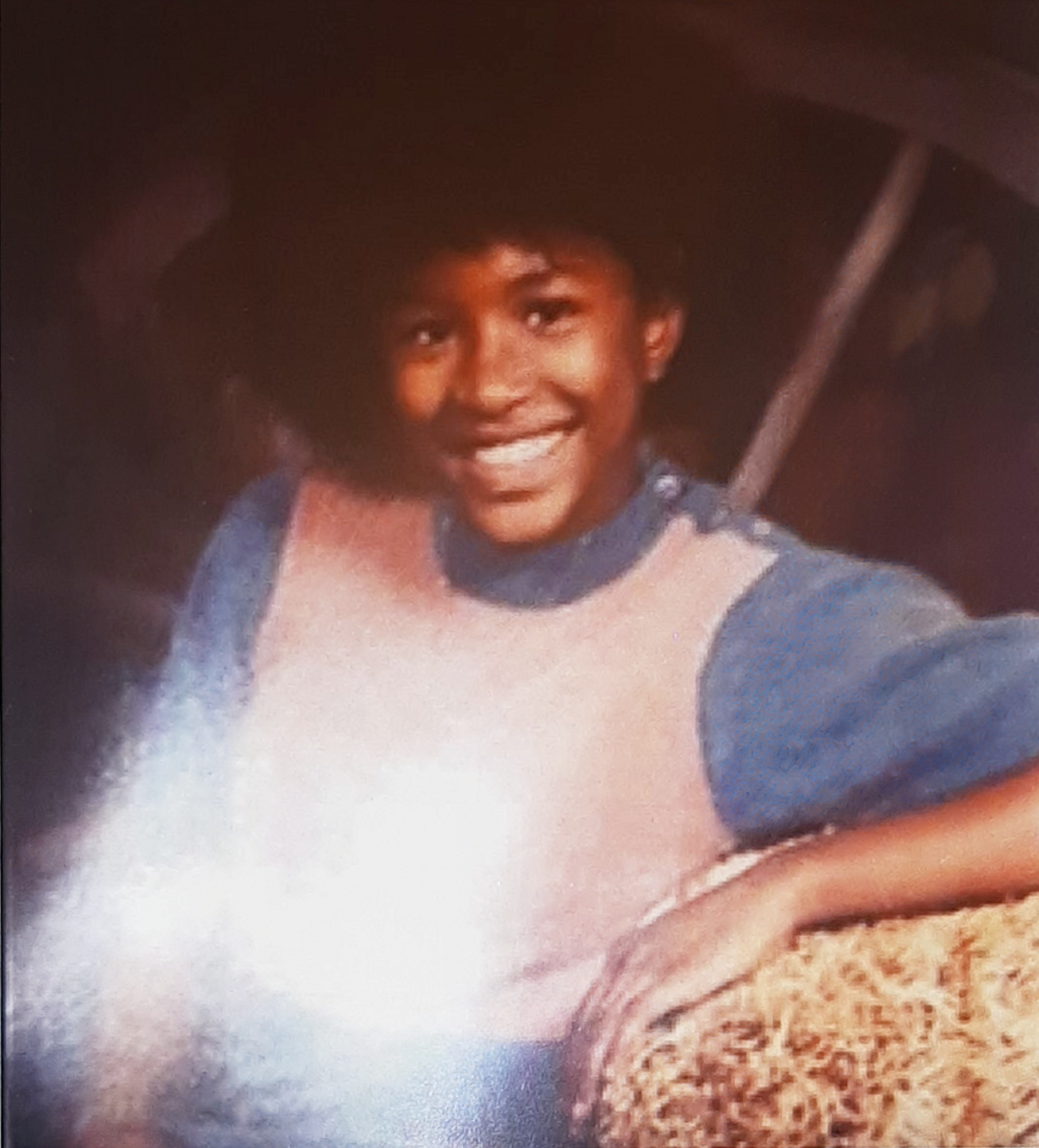
Back in the modeling days!
### “Light makes photography. Embrace light. Admire it. Love it. But above all, know light. Know it for all you are worth….” GE ###
Posted by ajoyfulpractice in Books, Changing Perspectives, Healing Stories, Life, Movies, Philosophy, William Shakespeare, Wisdom, Writing, Yoga.
Tags: 8-Limbs, Bob Minzesheimer, Charlotte's Web, Cicero, Diogenes, E. B. White, Jhumpa Lahiri, Minke, Nathaniel Hawthorne, Nikolai Gogol, Pope John II, Rynx, samskaras, Socrates, svadyaya, Teresa Wiltz, The Elements of Style, The Namesake, Ursula Nordstrom, William Strunk Jr., yoga philosophy, yoga practice, Yoga Sutra, Yoga Sutra 2.28
[This is the “missing” post for Sunday, July 11th. You can request an audio recording of Sunday’s practice via a comment below or (for a slightly faster reply) you can email me at myra (at) ajoyfulpractice.com.
In the spirit of generosity (“dana”), the Zoom classes, recordings, and blog posts are freely given and freely received. If you are able to support these teachings, please do so as your heart moves you. (NOTE: You can donate even if you are “attending” a practice that is not designated as a “Common Ground Meditation Center” practice, or you can purchase class(es). Donations are tax deductible; class purchases are not necessarily deductible.
Check out the “Class Schedules” calendar for upcoming classes. If you are using an Apple device/browser and the calendar is no longer loading, please email me at myra (at) ajoyfulpractice.com at least 20 minutes before the practice you would like to attend.]
“Saepe est etiam sub pallĭolo sordĭdo sapientia.
[English translation: Wisdom often is under a filthy cloak.]”
– Latin proverb (associated with Socrates, Diogenes, and Cicero)
Imagine, for a moment, that you are meeting someone for the first time. It is also the very first time you’ve seen them – and maybe you are meeting them in a cold place during winter or a rainy place during the rainy season. Either way, you are both wearing overcoats. You’re also both of a certain age, whatever that means to you at this moment. So, you’re meeting not at the beginning of your stories but in the middle, maybe even at the end.
We may not think about it, but this is how we most often meet – in the middle of our stories and without being able to see what’s inside.
We exchange names and, if we know someone else with said name, we start seeing this new person through the layers and layers of previously formed ideas, impressions, and opinions. That’s just the way the mind-body works. If, however, we are each the first person either of us has met with said names, we start forming ideas, impressions, and opinions about a person with said name. That’s just the way the mind-body works.
We may not even be consciously aware of it, but there it is. Our first sense of someone is based on an overcoat, samskaras (mental impressions), whatever is happening in the middle of the story, and a name – that may or may not be their given name (or, under certain circumstances, may or may not be the name by which most people know them). The overcoat in this case is, literally, an article of clothing – and also all the external factors like the samskaras, the name, and anything else we may know or assume based on the situation (like occupation, vocation, race, ethnicity, gender, and age range).
Over time, the overcoat comes off, literally and figuratively. We make more mental impressions, maybe we learn another name, and as we move through the rest of the story we also learn (in a backwards sense) about the beginning of a person’s story: why they are the way they are; think and do the things they think and do. Over time, we go deeper.
“Pleased to meet you
But I’m quick to judge
I hope you drop the grudge
I know I’m not what you want from me”
– quoted from the song “Pleased to Meet You” by Rynx (featuring Minke)
Every practice is an opportunity to introduce (or reintroduce) you to yourself. Every pose, every sequence, allows you to remove the layers and layers of overcoats until you reach the heart and core of who you are. That’s svādhyāya, “self-study.”
Sometimes, I also use the practice to introduce (or reintroduce) people to different philosophical aspects of the practice – as I did this time last year – and/or to various rituals and traditions. I also use the practice to introduce (or reintroduce) people to some of my favorite people. People like two writers who share a birthday and, obviously, an occupation. Both of these writers just happen to be Pulitzer Prize winners; have ties to The New Yorker magazine; and are mostly recognized by (first) names that are not on their passports and birth certificates.
Remember, their names are part of their overcoats.
Elwyn Brooks White was born July 11, 1899, in Mount Vernon, New York. Nilanjana Sudeshna Lahiri was born July 11, 1967, in London, England. While very different in some ways, their books prove that anyone can be the hero (or heroine) of a great story; that situations we’ve never personally encountered can be highly relatable when related by a good storyteller; and that fiction (like yoga) can be a great way to process difficult emotions.
“That’s the thing about books. They let you travel without moving your feet.”
– quoted from The Namesake by Jhumpa Lahiri
“Place yourself in the background; do not explain too much; prefer the standard to the offbeat.”
– quoted from “An Approach to style” by E. B. White published in The Elements of Style by William Strunk Jr. and E. B. White
Even though most readers know him by his initials, E. B. White was known to friends and professional colleagues as “Andy.” Ostensibly, the nickname came about because of a tradition at Cornell University whereby students with the last name “White” are renamed after the university’s co-founder Andrew Dickson White.
Jhumpa Lahiri’s birth name is not known to many of her readers – and for a similar reason: her name was also “changed” at school. However, in her case, the change came because her name was unfamiliar (rather than so familiar). Dr. Lahiri’s parents migrated from West Bengal, India to the United Kingdom. When the author was three, the family migrated to Kingston, Rhode Island – where at least one teacher was unfamiliar Bengali names and unwilling to learn how to pronounce them. According to an August 19, 2003, USA Today article by Bob Minzesheimer, “[A kindergarten teacher] said something like ‘That’s kind of a long name’ and decided it was easier to pronounce ‘Jhumpa’” – her nickname.
Remember, names are part of our overcoats. What we call each other makes a difference in how we see and understand each other.
“SOME PIG”
“TERRIFIC”
“RADIANT”
“HUMBLE”
– quoted from the messages in the web in Charlotte’s Web by E. B. White (illustrated by Garth Williams)
When Charlotte (the spider) comes up with her plan to save Wilbur, she says, “Why, how perfectly simple.” She then goes on to use her experience (as a master weaver) to introduce (and reintroduce) her friend (the pig) in a way that makes him more valuable alive, rather than dead. Her plan is, in fact, perfectly simple: write what you know… and change the overcoat. Even through their details are different, the stories written by both E. B. White and Jhumpa Lahiri are about their own personal experiences… and what happens when we get underneath the outer layers.
E. B. White is remembered as the author of beloved (and sometimes banned) children’s books like Stuart Little and Charlotte’s Web, but he started off as a journalist. He also worked for an advertising agency (and in some non-literary jobs) before submitting manuscripts for the then newly-founded The New Yorker. He eventually became a writer and contributing editor for the magazine. It was during his tenure at The New Yorker that he got a blast from his (Cornell University) past when he was asked to update work by one of his former professors.
The Elements of Style (sometimes called White & Strunk’s Elements of Style) was originally composed and self-published by William Strunk Jr. for his English students at Cornell University. It contained what Dr. Strunk Jr. considered the fundamentals: “Seven rules of usage, eleven principles of composition, a few matters of form, and a list of words and expressions commonly misused [and/or misspelled]….” When it was published by Harcourt, Brace & Howe in 1920, it included eight “elementary rules of usage,” ten “elementary principles of composition,” “a few matters of form,” a list of 49 “words and expressions commonly misused,” and a list of 57 “words often misspelled.” In the late 1950’s, Macmillan Publishers commissioned Mr. White to expand and modernize “the little book” (partially based on a 1935 edition by William Strunk Jr. and Edward A. Tenney). Since its 1959 publication, White & Strunk’s Elements of Style has been reprinted three times, illustrated, and served as the inspiration for an opera and a comprehensive history.
Mr. White won a Newberry Award, an American Academy of Arts and Letters Gold Medal, a Presidential Freedom Award, a Laura Ingalls Wilder Award, a National Medal for Literature, and a L. L. Winship/PEN New England Award. He was also awarded a Pulitzer Prize Special Citation for Letters, an award that actually recognized all of his work. In 2004, the Association of Booksellers for Children (ABC) even established an award in his honor for books that “embodied the universal read aloud standards that were created by [his work].” You might think all of those accolades meant that Mr. White always followed his own advice. But, let’s be real: talking farm animals, airplane-flying mice, and Public Relations specialists who just happen to be spiders wasn’t very standard in 1945 and 1952.
“No, I have never encountered any story plot like Charlotte’s Web. I do not believe that any other writer has ever told about a spider writing words in its web. Perhaps I should ask some of the children’s book ladies who go back even further in time than I do, but I am sure nothing even remotely like this has been written.”
– quoted from a letter addressed to “Andy” (E. B. White), from Ursula Nordstrom, Harper & Row publisher and editor-in-chief, Department of Books for Boys and Girls (dated April 2, 1952, as it appears in Dear Genuis: The Letters of Ursula Nordstrom)
“It used to be clear to me, slopping a pig, that as far as the pig was concerned I could not be counted on, and this, as I say, troubled me. Anyway, the theme of “Charlotte’s Web” is that a pig shall be saved, and I have an idea that somewhere deep inside me there was a wish to that effect.
As for Charlotte herself, I had never paid much attention to spiders until a few years ago…. Spiders are skilful [sic], amusing and useful, and only in rare instances has anybody ever come to grief because of a spider.”
“I haven’t told why I wrote the book, but I haven’t told you why I sneeze, either. A book is a sneeze”.
– quoted from a letter addressed to Ursula Nordstrom, Harper & Row publisher and editor-in-chief (Department of Books for Boys and Girls), from E. B. White (dated September 29, 1952)
The January 1948 issue of The Atlantic contained an essay by E. B. White entitled, “Death of a Pig,” which described the short life and “premature expiration of a pig” – as well as the burial and how the whole community mourned the occasion. In the essay, Mr. White said, “I have written this account in penitence and in grief, as a man who failed to raise his pig, and to explain my deviation from the classic course of so many raised pigs.“ While there is no mention of a spider in the essay – and he doesn’t specifically mention a pig dying in his September 29, 1952 letter to Ursula Nordstrom, his publisher / editor – many believed that the essay wasn’t enough and that he felt the need to write more in order to express his sorrow and regret, to process his feelings about his experiences. On the other hand, it doesn’t take a letter to an editor (or a fan) to see how Jhumpa Lahiri has also used fiction to process personal experiences.
“In Bengali the word for pet name is daknam, meaning, literally, the name by which one is called, by friends, family, and other intimates, at home and in other private, unguarded moments. Pet names are a persistent remnant of childhood, a reminder that life is not always so serious, so formal, so complicated. They are a reminder, too, that one is not all things to all people.”
– quoted from The Namesake by Jhumpa Lahiri
Despite having conflicted feelings associated with her name and schooling, Jhumpa Lahiri went on to earn a B. A. in English literature from Barnard College of Columbia University and four degrees from Boston University. A few years after completing her doctorial thesis, Jhumpa Lahiri’s Interpreter of Maladies became the seventh collection of short stories (in 82 years) to win the Pulitzer Prize in Fiction. (There have now been only nine collections to win the award in over 100 years.) Several years after her award-winning debut, The New Yorker published her short story entitled, “The Namesake.” It was the story of a Bengali boy living in a strange land with a strange name.
The story became a book and then a movie and, in the process, “Jhumpa Lahiri” became a household name.
In addition to winning a Pulitzer Prize, Jhumpa Lahiri’s accolades include a PEN/Hemingway Award, a Frank O’Connor International Story, and the National Humanities Award. She has also been a finalist for the Man Booker Prize and the National Book Award for Fiction. Her second collection of short stories, Unaccustomed Earth, debuted at number one on The New York Times best seller list – an achievement one book editor associated with her “newfound commercial clout,” but an achievement (I would humbly suggests) actually rests on the beauty and clarity of her storytelling. As one critic put it, “There is nothing accidental about her success; her plots are as elegantly constructed as a fine proof in mathematics.”
Unaccustomed Earth was also named number one by the editors of The New York Times Book Review’s “10 Best Books of 2008.” Perhaps, even more telling is the fact that when the collection won the Frank O’Connor International Story award that same year, there was no shortlist because, as reported by The Guardian on July 4, 2008, “The jurors decided that Unaccustomed Earth was so plainly the best book that they would jump straight from longlist to winner….” The Frank O’Connor award was one of the world’s richest awards for short story collections and normally had a longlist of approximately 60 books and a short list of three or four.
“In so many ways, his family’s life feels like a string of accidents, unforeseen, unintended, one incident begetting another…They were things for which it was impossible to prepare but which one spent a lifetime looking back at, trying to accept, interpret, comprehend. Things that should never have happened, that seemed out of place and wrong, these were what prevailed, what endured, in the end.”
― quoted from The Namesake by Jhumpa Lahiri
Jhumpa Lahiri is a polyglot who speaks Bengali, English, and Italian. She, undoubtedly, also understands a little bit of Spanish (and maybe Greek). Not only has she written and translated work in (and out) of all three of the languages she speaks, in 2015 she wrote an essay for The New Yorker stating that she was now only writing in Italian. Since 2015, she has published two books in Italian and edited and translated at least two collections of work by Italian writers.
Dr. Lahiri’s love of language is obvious not only in the languages she speaks and writes, but also in the connections that she makes through her writing. Both The Namesake and Unaccustomed Earth have ties to two of her literary predecessors: Nikolai Gogol and Nathaniel Hawthorne. Some people might be confused by her success with the “masses,” because she is so clearly erudite. However, above and beyond anything else, what a reader finds in Jhumpa Lahiri’s books are regular, everyday people navigating the spaces between two worlds and two identities – just like she does. (Just like E. B. White’s characters do.)
“Writing was also an escape [for Jhumpa Lahiri]. Growing up brown and ‘foreign’ in a town where white was the predominant theme had its challenges. There was the persistent feeling of other, not American enough, not Indian enough, of constantly straddling fences, stretching identities. She is amused, and slightly annoyed, by Indians who immigrate to the United States and eagerly embrace a Caucasian identity, excitedly reporting to their Indian friends that they’d moved into an all-white neighborhood, where there were no blacks. Thanks to her parents — her mother would often retort to these friends, ‘What do you think you are?’ — she said, ‘I was never into any sort of denial.’”
– quoted from The Washington Post article entitled, “The Writer Who Began with a Hyphen” by Teresa Wiltz (dated October 8, 2003)
Sunday’s playlist is available on YouTube and Spotify. [Look for “07112020 An Introduction”]
”His family name was Bashmachkin. It is evident from the name, that it originated in bashmak (shoe); but when, at what time, and in what manner, is not known. His father and grandfather, and even his brother-in-law, and all the Bashmachkins, always wore boots, and only had new heels two or three times a year. His name was Akakii Akakievich. It may strike the reader as rather singular and far-fetched; but he may feel assured that it was by no means far-fetched, and that the circumstances were such that it would have been impossible to give him any other name; and this was how it came about.”
– quoted from “The Overcoat” (as it appears in The Overcoat & Other Short Stories, Dover Thrift Editions) by Nikolai Gogol (story translation by Isabel F. Hapgood)
[Last year’s post for July 11th is linked above. Here’s different post related to the naming of things.]
### “Juliet: ‘Tis but thy name that is my enemy;” WS ###
Posted by ajoyfulpractice in Music.
Please join me today (Tuesday, July 13th) at 12:00 PM or 7:15 PM for a yoga practice on Zoom. Use the link from the “Class Schedules” calendar if you run into any problems checking into the class. Give yourself extra time to log in if you have not upgraded to Zoom 5.0. You can request an audio recording of this practice via a comment below or by emailing myra (at) ajoyfulpractice.com.
Tuesday’s playlist is available on YouTube and Spotify. [Look for the “06032020 How Can We See, Dr. Wiesel” playlist.]
Click here for the blog post that corresponds to this practice.
In the spirit of generosity (“dana”), the Zoom classes, playlists, and blog posts are freely given and freely received. If you are able to support these teachings, please do so as your heart moves you. (NOTE: You can donate even if you are “attending” a practice that is not designated as a “Common Ground Meditation Center” practice, or you can purchase class(es). If you don’t mind me knowing your donation amount you can also donate to me directly. Donations to Common Ground are tax deductible; class purchases and donations directly to me are not necessarily deductible.)
### 🎶 ###
 A Joyful Practice