Trust & EXCERPT: “What We Need to Live Well” (the “missing” Saturday post) January 17, 2026
Posted by ajoyfulpractice in Books, Changing Perspectives, Faith, First Nations, Healing Stories, Hope, Japa, Japa-Ajapa, Life, Mantra, Meditation, One Hoop, Philosophy, Vairagya, Wisdom, Writing, Yoga.Tags: 988, Benjamin Franklin, Dakota, Diné, Japa-Ajapa, Navajo, Noah Webster, Ojibwe, sankalpa, Sanskrit, Sebastian Junger, trust, trustful surrender, Webster's 1828, Yoga Sutra 1.23, Yoga Sutra 2.45
2 comments
Many blessings to everyone, and especially to anyone celebrating the Forefeast of the Theophany.
May all beings everywhere experience a trustful surrender. May all beings everywhere feel a sense of belonging!
This is the “missing” post for Saturday, January 17th. The practice and the first post excerpted below include references to mental health issues and connected traumas. There are no graphic descriptions. You can request an audio recording of this practice or a previous practice via a comment below or (for a slightly faster reply) you can email myra (at) ajoyfulpractice.com.
In the spirit of generosity (“dana”), the Zoom classes, recordings, and blog posts are freely given and freely received. If you are able to support these teachings, please do so as your heart moves you. (NOTE: You can donate even if you are “attending” a practice that is not designated as a “Common Ground Meditation Center” practice, or you can purchase class(es).
Donations are tax deductible; class purchases are not necessarily deductible.
Check out the “Class Schedules” calendar for upcoming classes.
“TRUST, noun
-
Confidence; a reliance or resting of the mind on the integrity, veracity, justice, friendship or other sound principle of another person.
He that putteth his trust in the Lord shall be safe. Proverbs 29:25.
-
He or that which is the ground of confidence.
O Lord God, thou art my trust from my youth. Psalms 71:1.
-
Charge received in confidence.
Reward them well, if they observe their trust
-
That which is committed to one’s care. Never violate a sacred trust….”
— quoted from Webster’s Dictionary 1828: American Dictionary of the English Language
The root words of the Sanskrit word sankalpa are “truth” and “vow” and the word itself is often translated into English as “vow or highest vow”, “will”, or “determination”. In various religious and philosophical traditions, it has additional meanings, including (in the Yoga Philosophy) “intentional thought”. It can also be considered a “ritual intention” (in religious law). During the Saturday practices, I often explain it as “a positive, active statement, in the present tense, that comes from the heart.” It is a mantra or “tool”; although, not every mantra is a sankalpa.
While I usually just incorporate the group sankalpa into the last portion of the practice — as a form of japa-ajapa (“repeat and repeat” or “repeat and remember”) that integrates the idea into our being — this year is a little different. This year, I plan to use the (2026) Saturday practices to breakdown the group sankalpa, which begins with something you might find hard to do during these challenging times: “I trust….”
“TRUST, verb transitive To place confidence in; to rely on. We cannot trust those who have deceived us.
He that trusts every one without reserve, will at last be deceived.
-
To believe; to credit.”
— quoted from Webster’s Dictionary 1828: American Dictionary of the English Language
In the 1828 version of his American Dictionary of the English Language, Noah Webster included 12 definitions of the word “trust” as a noun and five (5) definitions for verb forms, plus examples of how the word can be used in a sentence (based on each definition). Some of these definitions relate to legal entities, which I’m not getting into just yet. Neither am I going to spend a lot of time on these 17 different definitions, since most are still understood and used by modern audiences. You may remember, however, that Noah Webster studied (and incorporated) a variety of languages, including Sanskrit and Indigenous / Native / First Nation languages in order to create a dictionary and spelling and grammar tools that were uniquely American — and it is interesting to note how some words in other languages are translated into English as things other than “trust”.
For instance, apenimowin+an (in Ojibwe) can also mean “confidence”, “esteem”, “hope”, “optimism”, and “reliance”. Similarly, wac̣iƞye (in one of the Dakota Languages) can also be used to mean “depend on something” and “appreciate someone”. In Navajo (the language of Diné), one of the words used for “trust” can also be translated as “responsibility” or “duty”.
Whether you consciously realize it or not, these meanings underlie your ability to trust yourself and your skills — especially when you endeavor to do something “‘…of use to Mankind’”, as encouraged by Benjamin Franklin (born today in 1706, according to the Gregorian calendar).
While they may not have used these exact words, this multi-faceted understanding of “trust” is also integral to observations about community made by Mr. Franklin and by Sebastian Junger (born today in 1962).
Click on the excerpt title below for more about Benjamin Franklin and Sebastian Junger.
The post excerpted below references mental health issues and connected traumas. There are no graphic descriptions.
Yoga Sūtra 1.23: īśvarapraņidhānādvā
— “[A perfectly still, pristine state of mind] also comes from trustful surrender to Ishvara [the Divine],”
Yoga Sūtra 2.45: samādhisiddhirīśvarapraņidhānāt
— “From trustful surrender to Ishvara [the Divine], [a perfectly still, pristine state of mind] comes.”
Saturday’s playlist is available on YouTube and Spotify. [Look for “01172021 Franklin Junger”]
If you are thinking about suicide, worried about a friend or loved one, or would like emotional support, you can dial 988 (in the US) or call 1-800-273-TALK (8255) for the Suicide and Crisis Lifeline. You can also call this TALK line if you are struggling with addiction or involved in an abusive relationship. The Lifeline network is free, confidential, and available to all 24/7. YOU CAN TALK ABOUT ANYTHING.
White Flag is an app, which I have not yet researched, but which may be helpful if you need peer-to-peer (non-professional) support.
If you are a young person in crisis, feeling suicidal, or in need of a safe and judgement-free place to talk, you can also click here to contact the TrevorLifeline (which is staffed 24/7 with trained counselors).
### FAITH ###
2026 EXCERPT: “What You Will See” January 5, 2026
Posted by ajoyfulpractice in Art, Books, Changing Perspectives, Christmas, Faith, Healing Stories, Mantra, Meditation, Music, Mysticism, One Hoop, Philosophy, Religion, William Shakespeare, Wisdom, Writing, Yoga.Tags: 12 Days of Christmas, 988, Art, Books, entertainment, Epiphanytide, Forefeast of the Nativity of Christ, Nativity Fast, New Year, St. Philip's Fast, Theophany, Twelfth Night, Twelvetide, William Shakespeare, Yoga Sutra 1.28, Yoga Sutras 1.32-1.39
add a comment
“Happy New Year!” to everyone. “Merry Christmastide/Twelvetide!” to anyone observing. Many blessings to everyone and especially to anyone observing the Nativity Fast / St. Philip’s Fast and the Forefeast of the Nativity of Christ.
May you be safe and protected / May you be peaceful and happy / May you be healthy and strong!
“If this were played upon a stage now, I could condemn it as an improbable fiction.”
— Fabian (a servant for the Countess Olivia) in Act III, scene iv of Twelfth Night, or What You Will by William Shakespeare
Click on the excerpt title below for more.
Please join me for a 75-minute (virtual or in-person) yoga practice today (Monday, January 5th) at 5:00 PM**. You must be registered and confirmed to attend in person. Use the link from the “Class Schedules” calendar if you run into any problems checking into the class. You can request an audio recording of this practice via a comment below or by emailing myra (at) ajoyfulpractice.com.
Monday’s playlist is available on YouTube and Spotify. [Look for “01052021 and Twelfth Night” or “01052021 aka Twelfth Night”]
“I’ll do my best”
— Viola (a twin in disguise) in Act I, scene iv of Twelfth Night, or What You Will by William Shakespeare
If you are thinking about suicide, worried about a friend or loved one, or would like emotional support, you can dial 988 (in the US) or call 1-800-273-TALK (8255) for the Suicide and Crisis Lifeline. You can also call this TALK line if you are struggling with addiction or involved in an abusive relationship. The Lifeline network is free, confidential, and available to all 24/7. YOU CAN TALK ABOUT ANYTHING.
White Flag is an app, which I have not yet researched, but which may be helpful if you need peer-to-peer (non-professional) support.
If you are a young person in crisis, feeling suicidal, or in need of a safe and judgement-free place to talk, you can also click here to contact the TrevorLifeline (which is staffed 24/7 with trained counselors).
In the spirit of generosity (“dana”), the Zoom classes, recordings, and blog posts are freely given and freely received. If you are able to support these teachings, please do so as your heart moves you. (NOTE: You can donate even if you are “attending” a practice that is not designated as a “Common Ground Meditation Center” practice, or you can purchase class(es).
Donations are tax deductible; class purchases are not necessarily deductible.
Check out the “Class Schedules” calendar for upcoming classes.
**NOTE: This practice is at a special time!
### Yoga Sūtra 1.39 ###
First Friday Night Special #63 — Invitation & EXCERPTS: “The Purpose of Naming [the Business]” & “Nom de Destiné” January 2, 2026
Posted by ajoyfulpractice in 7-Day Challenge, Buddhism, Changing Perspectives, Dharma, Faith, Healing Stories, Hope, Life, Mantra, Meditation, Mysticism, New Year, One Hoop, Peace, Philosophy, Poetry, Religion, Wisdom, Yoga.Tags: 12 Days of Christmas, 988, Art, Books, Cornelius Eady, James Baldwin, Jhumpa Lahiri, Johannes Mercurius, mantra, New Year, Oscar Hammerstein II, Pope John II, Richard Rodgers, sankalpa, shabda, Swami Vivekananda, travel, Twelvetide, William Shakespeare, Yoga Sutra 3.17, Yoga Sutra 4.1
add a comment
Happy 2026 to Everyone!
May you be safe and protected / May you be peaceful and happy / May you be healthy and strong!
“The power of words. There are certain sacred words called Mantras, which have power, when repeated under proper conditions, produce these extraordinary powers. We are living in the midst of such a mass of miracles, day and night, that we do not think anything of them. There is no limit to man’s power, the power of words and the power of mind.”
— commentary on Yoga Sūtra 4.1 from Raja Yoga by Swami Vivekananda
Shabda (“Word”) is one of the six siddhis (“powers” or “abilities”) described in Yoga and Sankhya as “unique to being human”. According to the Yoga Sūtras, our words have an external vibration and an internal vibration that leads to internal/external reaction — meaning their power is layered. They are also described as one of the things that can lead to someone attaining great powers. For instance, we can focus/concentrate/meditate on a word to gain insight and a deeper understanding of words and language in general. In fact, there is a practice — and a sūtra (YS 3.17) — for that. However, when we talk about the power of words, we don’t always recognize or appreciate that a name is a word that has power.
Oh, sure, we may consider a (surface level) meaning of a name if we are naming a child or a pet and/or a business. People who choose a new name or nickname for themselves may, naturally, choose something that sends a message. However, most of us don’t deliberately and intentionally choose a name to send a message. Most of us are not like Johannes Mercurius — even though we are living in a time that is as interesting as his time.
Today in 533 AD, Johannes Mercurius quite literally made a name for himself. He changed his name to John II and, in doing so, became the first pope to change his name at the beginning of his papacy. Pope John II was very deliberate in his decision to change his name and in the name he chose. He understood the power of words and was sending a message about how he was planning to move forward as a leader. He was also sending a message about what he would not tolerate.
CLICK ON THE EXCERPT TITLE FOR MORE.
Nom de Destiné (the “missing” Sunday post *with and update*)
“Me, a name I call myself”
— quoted from the song “Do-Re-Mi” by Richard Rodgers and Oscar Hammerstein II
Today is a day when I usually suggest you contemplate a name you would use to indicate how you plan to show up in this new year. Normally, the suggestion focuses on a personal name. This year, however, I want you to (also) consider a business name. As you go about your business this year — the business of living your life, what is a name that reflects the alignment of your deepest desires, beliefs, and actions? What is a name that sends the message, as Pope John II sent, about what no longer serves a purpose?
Just imagine the name that is proof of what you will do this year.
“You have to imagine it.
Who said you must keep quiet?
Who heard your story, then rolled their eyes?
Who tried to change your name to invisible?
You’ve got to imagine.
Who heard your name and refused to pronounce it?
Who checked their watch and said, ‘Not now’?
James Baldwin wrote,
‘The place in which I’ll fit will not exist until I make it.’”
— quoted from the poem “Proof” by Cornelius Eady, recited at the New York mayoral inauguration of Zohran Mamdani (01/01/2026) and dedicated to the poet’s “…trans, queer, foreign, students of color at the University of Tennessee, Knoxville. So they have, so they can see this is possible.”
Please join me (tonight) Friday, January 2, 2025, 7:15 PM – 8:20 PM (CST) for “The Purpose of Naming [the Business]” for a (virtual or in-person) yoga practice. You must be registered and confirmed to attend in person.
You can use the link from the “Class Schedules” calendar if you run into any problems checking into the class. You can request an audio recording of this practice via a comment below or (for a slightly faster reply) you can email myra (at) ajoyfulpractice.com.
This practice is scheduled as a Yin Yoga practice. If the room is heated (as it was last night), it will be a Restorative Yoga practice. Either is accessible and open to all.
Friday’s playlist is available on YouTube and Spotify.
Music Note: You can start with Track #1, #2, or #3 (which will include #4). Track #24 is also an option.
Prop wise, this is a kitchen sink practice. You can practice without props or you can use “studio” and/or “householder” props. Example of “Studio” props: 1 – 2 blankets, 2 – 3 blocks, a bolster, a strap, and an eye pillow. Example of “Householder” props: 1 – 2 blankets or bath towels, 2 – 3 books (similar in size), 2 standard pillows (or 1 body pillow), a belt/tie/sash, and a face towel.
You may want extra layers (as your body may cool down during this practice). Having a wall, chair, sofa, or coffee table may be handy.
“In Bengali the word for pet name is daknam, meaning, literally, the name by which one is called , by friends, family, and other intimates, at home and in other private, unguarded moments. Pet names are a persistent remnant of childhood, a reminder that life is not always so serious, so formal, so complicated. They are a reminder, too, that one is not all things to all people.”
— quoted from The Namesake by Jhumpa Lahiri
If you are thinking about suicide, worried about a friend or loved one, or would like emotional support, you can dial 988 (in the US) or call 1-800-273-TALK (8255) for the Suicide and Crisis Lifeline. You can also call this TALK line if you are struggling with addiction or involved in an abusive relationship. The Lifeline network is free, confidential, and available to all 24/7. YOU CAN TALK ABOUT ANYTHING.
White Flag is an app, which I have not yet researched, but which may be helpful if you need peer-to-peer (non-professional) support.
If you are a young person in crisis, feeling suicidal, or in need of a safe and judgement-free place to talk, you can also click here to contact the TrevorLifeline (which is staffed 24/7 with trained counselors).
In the spirit of generosity (“dana”), the Zoom classes, recordings, and blog posts are freely given and freely received. If you are able to support these teachings, please do so as your heart moves you. (NOTE: You can donate even if you are “attending” a practice that is not designated as a “Common Ground Meditation Center” practice, or you can purchase class(es).
Donations are tax deductible; class purchases are not necessarily deductible.
Check out the “Class Schedules” calendar for upcoming classes.
### Trusting, Aligning, Releasing ###
HAPPY New Year 2026! ** UPDATED** January 1, 2026
Posted by ajoyfulpractice in Bhakti, Changing Perspectives, Donate, Faith, Healing Stories, Health, Hope, Japa, Japa-Ajapa, Karma Yoga, Life, Love, Mala, Mantra, Meditation, Mysticism, New Year, One Hoop, Peace, Philosophy, Traditional Chinese Medicine, Vipassana, Wisdom, Writing, Yin Yoga, Yoga.Tags: 108 Sun Salutations, Anthony Shumate, Kwanzaa, New Year's Day, Nguzo Saba, Nia, Sun Salutations, Surya Namaskar
add a comment
“Happy New Year!” “Kwanzaa, yenu iwe na heri!” – “May your Kwanzaa be happy!” to everyone who is celebrating!
Many blessings to all!
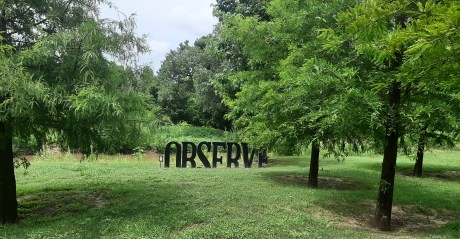
Part of the 6-piece “Monumental Moments” series
by Anthony Shumate, 2015
(located in Buffalo Bayou Park, along the Kinder Footpaths)
TRANSFORM • RENEW • HEAL • ENERGIZE
Celebrate the New Year with 108 Sun Salutations 10:00 AM – 1:00 PM CST!
AND/OR
RELAX • RELEASE • REST • RENEW • HEAL
Celebrate the New Year with Restorative Yoga+Meditation
5:00 PM – 7:00 PM CST!
The New Year is a beginning and an ending… and it is also a middle. On New Year’s Day we honor and celebrate transition with 108 Sun Salutations in the morning (10 AM – 1 PM, CST) and/or a Restorative* Yoga plus Meditation practice in the evening (5 – 7 PM, CST). We also put things in perspective.
These practices are open and accessible to all, regardless of experience.
*NOTE: In previous years, the evening practice has been Yin Yoga.
Please wear loose, comfortable clothing and make sure you are well hydrated before the practice. It is best to practice on an empty stomach (especially for the 108 ajapa-japa mala), but if you must eat less than 1 hour before the practice, make sure to keep it light. Make sure to have a towel (at the very least) for the 108 practice. For Restorative Yoga, a pillow/cushion or two, blocks or (hardcover) books, and a blanket or towel will be useful. I always recommend having something handy (pen and paper) that you can use to note any reflections (and will have some supplies handy).
IN-PERSON IS FULL! Use the link above for login information (or click here for more details about these practices and other practice opportunities related to the New Year).
The 108 playlist is available on YouTube and Spotify. [Look for “New Year’s Day 108 Ajapa-Japa Mala.”] NOTE: This playlist was revised for 2024, but should still sync up with the 2021 — 2023 recordings.
The Restorative playlist is available on YouTube and Spotify. [Look for “01072022 A Reflective Moment”]
Both practices are available in-person (if you are registered) and online. They are also donation based. If you don’t mind me knowing your donation amount you can donate to me directly. You can also email me to request my Venmo or Ca$hApp ID. If you want your donation to be anonymous (to me) and/or tax deductible, please donate through Common Ground Meditation Center (type my name under “Teacher”).
Please note that there is still no late admittance and you must log in before the beginning of the practice (so, by 9:45 AM for the 108 or by 4:45 PM for the Restorative Yoga+Meditation). You will be re-admittance if you get dumped from the call.)
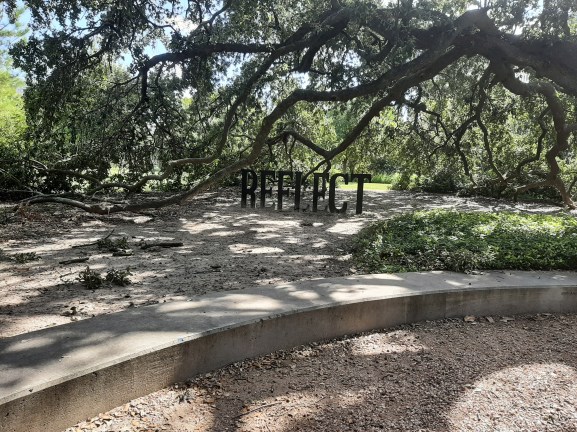
Part of the 6-piece “Monumental Moments” series
by Anthony Shumate, 2015
(located in Buffalo Bayou Park, along the Kinder Footpaths)
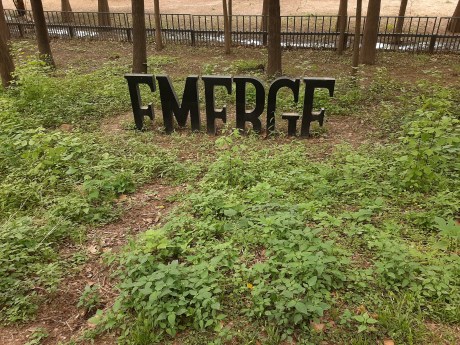
Part of the 6-piece “Monumental Moments” series
by Anthony Shumate, 2015
(located in Buffalo Bayou Park, along the Kinder Footpaths)
*Anthony Shumate’s “Monumental Moments” sculptures are located in Buffalo Bayou Park, along the Kinder Footpaths in Houston, Texas. They are unexpected reminders to “Explore,” “Pause,” “Reflect,” “Listen,” “Emerge,” and “Observe” – all things we do in our practice!
### NAMASTE ###
First Friday Night Special #61 — Invitation for “… and Breathe Peace In & Breathe Peace Out….” (the “missing” invitation w/excerpts) November 7, 2025
Posted by ajoyfulpractice in Buddhism, Changing Perspectives, Healing Stories, Hope, Life, Mantra, Meditation, Music, One Hoop, Peace, Philosophy, Suffering, Wisdom, Yoga.Tags: mantra, meditation, Mindfulness, Pandit Rajmani Tigunait, peace, Peace of the Pyrenees, Restorative Yoga, yoga, Yoga Sutra 2.33, Yoga Sutra 2.46
add a comment
Many blessings to everyone and especially to anyone gathering friendship, peace, freedom, understanding, and wisdom.
May you be peaceful and happy / May you be healthy and strong!
This (backdated) “missing” invitation for the “First Friday Night Special” on November 7th, includes some related excerpts. You can request an audio recording of this Restorative Yoga practice (with a little SYE) via a comment below or (for a slightly faster reply) you can email myra (at) ajoyfulpractice.com.
In the spirit of generosity (“dana”), the Zoom classes, recordings, and blog posts are freely given and freely received. If you are able to support these teachings, please do so as your heart moves you. (NOTE: You can donate even if you are “attending” a practice that is not designated as a “Common Ground Meditation Center” practice, or you can purchase class(es).
Donations are tax deductible; class purchases are not necessarily deductible.
Check out the “Class Schedules” calendar for upcoming classes.
“SECTION I
CONTAINING THE PRELIMINARY ARTICLES FOR PERPETUAL PEACE AMONG STATES
1. ‘No Treaty of Peace Shall Be Held Valid in Which There Is Tacitly Reserved Matter for a Future War’
Otherwise a treaty would be only a truce, a suspension of hostilities but not peace, which means the end of all hostilities–so much so that even to attach the word ‘perpetual’ to it is a dubious pleonasm.”
— quoted from the 1795 essay “Perpetual Peace: A Philosophical Sketch” by Immanuel Kant
Signed today (November 7th) in 1659, on the Isle of Pheasants, the “Peace of the Pyrenees” was a peace treaty that ended 24 years of warfare between France and Spain. The warfare was part of the 30 Years War, which started as a religious conflict between Catholic and Protestants. The treaty required the personal compromise and sacrifice of some country leaders and some members of the general populace. The treaty did not, however, fit Immanuel Kant’s definition of a true treaty; because, at its very foundation we find the seeds for more conflict and hostility.
The Yoga Sūtras outline several ways to uproot the seeds (and roots) of conflict, hostility, and suffering. Those methods include the practice of “codes of self-regulation or restraint (yamas) and observances or practices of self-training (niyamas)”. In Yoga Sūtra 2.33, Patanjali acknowledged that we may not always be able to practice the ethical components perfectly (or at all). In such situations, we are instructed to “cultivate the opposite [thought or action]” — a practice which we also find in Buddhism. The key to this type of practice is to build on a foundation of peace and infuse every thought, word, and deed with peace.
In other words, “To Have Peace In The World / True Peace / We Must Work for Peace in the World / and Breathe Peace In & Breathe Peace Out….”
“However, if the process of non-violence is to be effective in counteracting violence, we must first describe and outline it clearly and methodically. Because violent thoughts always precede a violent act, an act of non-violence will be effective only if it is preceded by non-violent thoughts. Violence is an active phenomenon, whereas non-violence is mistakenly thought to be passive – simply the absence of violence. But passive non-violence has no power to extinguish the fire if violence. Non-violence must be as active as violence itself.”
— commentary on Yoga Sūtra 2.33, from The Practice of the Yoga Sutra: Sadhana Pada by Pandit Rajmani Tigunait, PhD
CLICK ON THE EXCERPT TITLE BELOW FOR MORE.
“In the conventional practice of non-violence we are not led to entertain a stream of structured, organized non-violent thoughts. For example, when someone slaps us on the right cheek, we are told to offer the left one also—this is said to be practicing non-violence. But this approach to non-violence does not free us from pain, nor does it purify our mind. According to Vyasa, we must design a system of practice that neutralizes the force of violence, step-by-step and point-by-point.”
— quoted from the commentary on Yoga Sūtra 2.33, from The Practice of the Yoga Sutra: Sadhana Pada by Pandit Rajmani Tigunait, PhD
This Restorative Yoga practice is accessible and open to all.
(NOTE: There will be a little bit of quiet space in this practice.)
Friday’s playlist is available on YouTube and Spotify. [Look for “Movember / November Friday 2025”]
NOTE: Start with Track 1; Track 10; Track 11; Track 12; or Track 13 on either platform or Track 14 on the YouTube version.
Prop wise, we will start with a chair, sofa, or coffee table and this is a kitchen sink practice. You can practice without props or you can use “studio” and/or “householder” props. Example of “Studio” props: 1 – 2 blankets, 2 – 3 blocks, a bolster, a strap, and an eye pillow. Example of “Householder” props: 1 – 2 blankets or bath towels, 2 – 3 books (similar in size), 2 standard pillows (or 1 body pillow), a belt/tie/sash, and a face towel.
You may want extra layers (as your body may cool down during this practice). Having a wall, chair, sofa, or coffee table will also be handy.
If you are thinking about suicide, worried about a friend or loved one, or would like emotional support, you can dial 988 (in the US) or call 1-800-273-TALK (8255) for the Suicide and Crisis Lifeline. You can also call this TALK line if you are struggling with addiction or involved in an abusive relationship. The Lifeline network is free, confidential, and available to all 24/7. YOU CAN TALK ABOUT ANYTHING.
White Flag is an app, which I have not yet researched, but which may be helpful if you need peer-to-peer (non-professional) support.
If you are a young person in crisis, feeling suicidal, or in need of a safe and judgement-free place to talk, you can also click here to contact the TrevorLifeline (which is staffed 24/7 with trained counselors).
### OM SHANTI, SHANTI, SHANTIHI OM ###
Even More Light [especially for siblings] (the “missing” compilation post w/excerpts for Wednesday) October 22, 2025
Posted by ajoyfulpractice in Art, Baha'i, Books, Faith, Healing Stories, Health, Hope, Life, Mantra, Meditation, Music, One Hoop, Philosophy, Religion, Science, Wisdom, Yoga.Tags: 988, Babi, Baha'i, Baha’u’llah, bahai-faith, Baháʼí, Bábism, Birth of Baháʼu'lláh, Birth of the Báb, Committee at the Bahá’í World Centre, Diwali, Festival of the Twin Birthdays, Franz Liszt, Gāyatrī Mantra, Habib Taherzadeh, Kali Puja, Katha Upanishad, light, Love, Poetry, Qayyúmu’l-Asmá’, Shoghi Effendi, siblings, Swami Nikhilananda, the Báb, Thomas Edison, Yoga Sutra 1.36, Yoga Sutras 2.46-2.53
add a comment
Happy Diwali and Kali Puja! Happy Festival of the Twin Birthdays! Blessings, light, love, and peace to everyone, everywhere!
May you be healthy, wealthy, and wise!
This “missing” compilation post for Wednesday, October 22nd, features some new and previously posted content, plus related excerpts. Please note that linked excerpts direct you to posts that will include content related to a specific year and, therefore, may include references to different holidays/events. You can request an audio recording of this practice or a previous practice via a comment below or (for a slightly faster reply) you can email myra (at) ajoyfulpractice.com.
In the spirit of generosity (“dana”), the Zoom classes, recordings, and blog posts are freely given and freely received. If you are able to support these teachings, please do so as your heart moves you. (NOTE: You can donate even if you are “attending” a practice that is not designated as a “Common Ground Meditation Center” practice, or you can purchase class(es).
Donations are tax deductible; class purchases are not necessarily deductible.
Check out the “Class Schedules” calendar for upcoming classes.
“Yama said: ‘The goal which all the Vedas declare, which all austerities aim at and which men desire when they lead the life of continence, I will tell you briefly: it is Om.’”
— quoted from Katha Upanishad (Part I – Chapter II, Verse 15) translated by Swami Nikhilananda
Since Diwali, the Indian festival of lights, is a lunar calendar-based holiday, it falls at different times on the Gregorian calendar. In 2025, the fifth day of Diwali — which continues the focus on relationships, this time between siblings — overlaps the Festival of the Twin Birthdays (on the Baháʼí Faith calendar); the anniversary of the birth of Franz Listz (b. 1811)1; and a successful lightbulb moment (for Thomas Edison, in 1879).
Click on the excerpt title below for more about how the fifth day of Diwali shines light on siblings.
“Brighten our hearts, O my Lord, with the splendor of Thy knowledge, and illumine our sight with the light of such eyes as are fixed upon the horizon of Thy grace and the Dayspring of Thy glory.”
— quoted from “– XXXI –” in Prayers and Meditations by Bahá’u’lláh (Translated by Shoghi Effendi from the original Persian and Arabic)
As I mentioned earlier in the year, the Baháʼí Faith is a monotheistic faith that believes in the oneness of God and religion, as well as the oneness and nobility of humanity. The community believes that, historically, there has been a “progressive revelation of religious truth” which has been shared with the world through the voices of the prophets or Divine Messengers, known as “Manifestations of God” (which include “Braham, Krishna, Zoroaster, Moses, Buddha, Jesus Christ, Muhammad, and, in more recent times, the Báb and Bahá’u’lláh”). People within the faith are taught to honor the value of different religious and philosophical traditions as well as the value of education, especially in science (which is viewed by some faiths as being contrary to religion).
The Bahá’í calendar begins around the Vernal (Spring) Equinox in the Northern Hemisphere and has 19 months with 19 days — each named for one of the 19 names/manifestations/attributes of God. For example, “Knowledge” is the English translation for ‘Ilm, the current month of this solar calendar.2 The fact that light can represent knowledge is one of the reasons I find this year’s overlap with Diwali particularly auspicious.
This last two days of Diwali (2025) overlap two of the nine Bahá’í Holy Days: the birthdays of the twin founders of the faith. Known as the Festival of the Twin Birthdays (or the Twin Holy Birthdays), the birthdays of the the Báb and Bahá’u’lláh started at sunset on Tuesday night and continue through sunset on Thursday night. The birthdays are celebrated as one continuous 48-hour “day” — even though the two prophets were born two years apart.
Born in Shiraz, Iran, on October 20, 1819,3 the Báb founded the Babi faith (or Bábism), which evolved into the Bahá’í Faith. While there are still people who follow the original messianic tradition, most people within the Babi community converted to the Bahá’í Faith. The Báb is sometimes compared to John the Baptist, in that he is seen as the herald or messenger born to announce the importance of Bahá’u’lláh.
Recognized as the founder of the Bahá’í Faith, Bahá’u’lláh was actually born two years earlier than his religious predecessor, in Tehran, Iran, on November 12, 1817.4 He outlined the laws, practices, and holy days of the Bahá’í Faith in the Kitáb-i-Aqdas (the “Most Holy Book”) and later explained that the Twin Holy Birthdays were seen as one (by God) and that “… two great festivals have been joined into one, auguring a brilliant future.” These are work-free feast days full of joy and considered a celebration of the twin founders as well as of the unity of community.
“O peoples of the earth! Verily the resplendent Light of God hath appeared in your midst, invested with this unerring Book, that ye may be guided aright to the ways of peace and, by the leave of God, step out of the darkness into the light and onto this far-extended Path of Truth.”
— quoted from the Qayyúmu’l-Asmá’ (cf. Qur’án 5:15–18), as printed in Selections From the Writings of the Báb by the Báb (Compiled by the Research Department of the Universal House of Justice and translated by Habib Taherzadeh with the assistance of a Committee at the Bahá’í World Centre)
Click on the excerpt below for more about Thomas Edison’s 1879 “lightbulb moment”.
“However, the fact is that during the night season everyone perceiveth the light which he himself, according to his own capacity, giveth out, oblivious that at the break of day this light shall fade away and be reduced to utter nothingness before the dazzling splendor of the sun.
The light of the people of the world is their knowledge and utterance….”
— quoted from the Persian Bayán (VIII, 1.), as printed in Selections From the Writings of the Báb by the Báb (Compiled by the Research Department of the Universal House of Justice and translated by Habib Taherzadeh with the assistance of a Committee at the Bahá’í World Centre)
Wednesday’s playlist is available on YouTube and Spotify. [Look for “Diwali (Day 5) for 10222025”]
NOTES:
1My only commentary about Franz Listz was that his music and biography brought a little light to Anne Frank (and her family) during the darkness that was the Holocaust.
2Since it is a moveable feast, the Festival of the Twin Birthdays can fall a month earlier or later, during Mashíyyat (“Will”) or Qudrat (“Power”). Bahá’u’lláh originally indicated that if the festival coincided with a fast, the feast would take precedent.
3The birthdays of the Báb and Bahá’u’lláh occur on the first and second days of Muharram, the first month on the Islamic calendar.
4Prior to 2015, Baháʼí living in the Middle East celebrated the Twin Holy Birthdays according to the Islamic calendar (as noted above), while members of the community in other parts of the world used the Gregorian calendar dates.
Yoga Sūtra 1.36: viśokā vā jyotişmatī
— “Or [fixing the mind] on the inner state free of sorrow and infused with light, anchors the mind in stability and tranquility.”
If you are thinking about suicide, worried about a friend or loved one, or would like emotional support, you can dial 988 (in the US) or call 1-800-273-TALK (8255)for the Suicide and Crisis Lifeline. You can also call this TALK line if you are struggling with addiction or involved in an abusive relationship. The Lifeline network is free, confidential, and available to all 24/7. YOU CAN TALK ABOUT ANYTHING.
White Flag is an app, which I have not yet researched, but which may be helpful if you need peer-to-peer (non-professional) support.
If you are a young person in crisis, feeling suicidal, or in need of a safe and judgement-free place to talk,you can also click here to contact the TrevorLifeline (which is staffed 24/7 with trained counselors).
### Put Your Lights On ###
Even More Light [especially for siblings] (just the music & blessings) *UPDATED w/excerpt* October 22, 2025
Posted by ajoyfulpractice in Art, Baha'i, Books, Faith, Healing Stories, Health, Hope, Life, Mantra, Meditation, Music, One Hoop, Philosophy, Religion, Science, Wisdom, Yoga.Tags: 988, Bahá’u’lláh, Baháʼí, Birth of Baháʼu'lláh, Birth of the Báb, Diwali, Festival of the Twin Birthdays, Franz Liszt, Gāyatrī Mantra, Kali Puja, light, Love, siblings, the Báb, Thomas Edison, Yoga Sutra 1.36, Yoga Sutras 2.46-2.53
add a comment
Happy Diwali and Kali Puja! Happy Festival of the Twin Birthdays! Blessings, light, love, and peace to everyone, everywhere!
May you be healthy, wealthy, and wise!
Even More Light [especially for siblings] (the “missing” compilation post w/excerpts for Wednesday)
Click on excerpt title above for more.
Please join me today (Wednesday, October 22nd) at 4:30 PM or 7:15 PM for a yoga practice on Zoom. You can use the link from the “Class Schedules” calendar if you run into any problems checking into the class. You can request an audio recording of this practice via a comment below or (for a slightly faster reply) you can email myra (at) ajoyfulpractice.com.
Wednesday’s playlist is available on YouTube and Spotify. [Look for “Diwali (Day 5) for 10222025”]
If you are thinking about suicide, worried about a friend or loved one, or would like emotional support, you can dial 988 (in the US) or call 1-800-273-TALK (8255) for the Suicide and Crisis Lifeline. You can also call this TALK line if you are struggling with addiction or involved in an abusive relationship. The Lifeline network is free, confidential, and available to all 24/7. YOU CAN TALK ABOUT ANYTHING.
White Flag is an app, which I have not yet researched, but which may be helpful if you need peer-to-peer (non-professional) support.
If you are a young person in crisis, feeling suicidal, or in need of a safe and judgement-free place to talk, you can also click here to contact the TrevorLifeline (which is staffed 24/7 with trained counselors).
In the spirit of generosity (“dana”), the Zoom classes, recordings, and blog posts are freely given and freely received. If you are able to support these teachings, please do so as your heart moves you. (NOTE: You can donate even if you are “attending” a practice that is not designated as a “Common Ground Meditation Center” practice, or you can purchase class(es).
Donations are tax deductible; class purchases are not necessarily deductible.
Check out the “Class Schedules” calendar for upcoming classes.
###  ###
###
Getting [Double, Maybe Triple] The Light On (a quick note w/excerpts) October 21, 2025
Posted by ajoyfulpractice in Changing Perspectives, Faith, Healing Stories, Hope, Life, Love, Mantra, Meditation, One Hoop, Philosophy, Religion, Science, Wisdom, Yoga.Tags: 988, Alfred Nobel, Atharva Veda, Birth of the Báb, Diwali, Gayatri Mantra, Gāyatrī Mantra, Kali Puja, light, Love, Thomas Edison, Yoga Sutra 1.36, Yoga Sutras 2.46-2.53
add a comment
Happy Diwali and Kali Puja! Blessings, light, love, and peace to everyone, everywhere (and especially for those preparing to celebrate the Birth of the Báb !
“I go around your mind just as the sun[light] goes around heaven and earth
May you be the one loving me only, not another
may you not go away from me”
— Atharva Veda 6.8 (translated by Dr. R. L. Kashyap)
In addition to being the fourth day of Diwali, which is a day that shines light on love and devotion — especially between husbands and wives — October 21, 2025, is the anniversary of the birth of Alfred Nobel (b. 1833) and (may be) the anniversary of a successful moment in the life of Thomas Edison.
Click on the excerpt title below for more about the fourth day of Diwali.
“I have not failed 10,000 times. I have not failed once. I have succeeded in proving that those 10,000 ways will not work. When I have eliminated the ways that will not work, I will find the way that will work.”
— (attributed to) Thomas Edison
At some point, late on the evening of October 21st, or sometime in the wee early morning hours of October 22nd, 1879, Thomas Edison, age 32, tested what we now consider the first successful (commercially viable) electric light bulb.
Click on the excerpt title below to discover more about Thomas Edison and Dr. Alfred Nobel.
“If I have a thousand ideas and only one turns out to be good, I am satisfied.”
— Dr. Alfred Nobel
Please join me today (Tuesday, October 21st) at 12:00 PM or 7:15 PM for a yoga practice on Zoom. You can use the link from the “Class Schedules” calendar if you run into any problems checking into in the class. You can request an audio recording of this practice via a comment below or by emailing myra (at) ajoyfulpractice.com.
Tuesday’s playlist is available on YouTube and Spotify. [Look for “Diwali (Day 4) 2020”]
If you are struggling, thinking about suicide, worried about a friend or loved one, or would like emotional support, you can dial 988 (in the US) or call 1-800-273-TALK (8255) for the Suicide and Crisis Lifeline. You can also call this TALK line if you are struggling with addiction or involved in an abusive relationship. The Lifeline network is free, confidential, and available to all 24/7. YOU CAN TALK ABOUT ANYTHING.
White Flag is an app, which I have not yet researched, but which may be helpful if you need peer-to-peer (non-professional) support.
If you are a young person in crisis, feeling suicidal, or in need of a safe and judgement-free place to talk, you can also click here to contact the TrevorLifeline (which is staffed 24/7 with trained counselors).
In the spirit of generosity (“dana”), the Zoom classes, recordings, and blog posts are freely given and freely received. If you are able to support these teachings, please do so as your heart moves you. (NOTE: You can donate even if you are “attending” a practice that is not designated as a “Common Ground Meditation Center” practice, or you can purchase class(es).
Donations are tax deductible; class purchases are not necessarily deductible.
Check out the “Class Schedules” calendar for upcoming classes.
10/23/2025 Revised: Updated the second excerpt.
### KEEP LETTING YOUR LIGHT & YOUR LOVE SHINE! ###
Quick Notes & Excerpts RE: Light, Love, & Bones (the post-practice compilation for Monday) October 20, 2025
Posted by ajoyfulpractice in Books, Faith, Food, Healing Stories, Health, Hope, Life, Love, Mantra, One Hoop, Pain, Philosophy, Poetry, Religion, Science, Suffering, Wisdom, Yoga.Tags: 988, Atharva Veda, Bones, Bruce H. Kramer, Cathy Wurzer, Diwali, Gayatri Mantra, Gāyatrī Mantra, International Osteoporosis Foundation, Kali Puja, light, Love, Matthew Sanford, Mishlei, Proverbs, World Osteoporosis Day, Yoga Sutra 1.36, Yoga Sutras 2.46-2.53
add a comment
Happy Diwali and Kali Puja! Blessings, light, love, and peace to everyone, everywhere on World Osteoporosis Day!
This post-practice post for Monday, October 20th, is a compilation post featuring some quick notes and excerpts. Please note that linked excerpts direct you to posts that will include content related to a specific year and, therefore, may include references to different holidays/events. The 2025 prompt question was, “How do you let your little light shine?” You can request an audio recording of this practice or a previous practice via a comment below or (for a slightly faster reply) you can email myra (at) ajoyfulpractice.com.
In the spirit of generosity (“dana”), the Zoom classes, recordings, and blog posts are freely given and freely received. If you are able to support these teachings, please do so as your heart moves you. (NOTE: You can donate even if you are “attending” a practice that is not designated as a “Common Ground Meditation Center” practice, or you can purchase class(es).
Donations are tax deductible; class purchases are not necessarily deductible.
Check out the “Class Schedules” calendar for upcoming classes.
“The light of the eyes makes the heart happy; good news fattens the bone.”
— Mishlei — Proverbs (15:30)
Monday, October 20, 2025 was the the third day — and, for some, the biggest day — of Diwali. In some areas, this celebration is also known as Kali Puja. Since the five-day celebration of Diwali is based on a lunar calendar, it falls at a slightly different on the Gregorian calendar each year. This year, the biggest celebrations fell on the same day as World Osteoporosis Day!
Click on the excerpt title below for more about the first three days of Diwali.
Click on the excerpt title below for more about how relationships are highlighted on the third and fourth days of Diwali.
“It’s Unacceptable!”
— the 2025 theme for World Osteoporosis Day
According to the International Osteoporosis Foundation, “osteoporosis remains severely underdiagnosed and undertreated—especially among those who have already sustained fragility fractures. Shockingly, up to 80% of patients with osteoporotic fractures receive no follow-up diagnosis or treatment. The consequences are devastating: chronic pain, disability, loss of independence, increased risk of future fractures, and premature death. Families, healthcare systems, and economies also shoulder the heavy burden of this neglect.” The 2025 theme highlights the fact that it is unacceptable for over 500 million people, worldwide, to live with a condition that is underdiagnosed, undertreated, and preventable.
Click on the excerpt title below for more about World Osteoporosis Day and how our practice helps our bones.
“Those who practice yoga say it is life changing. Those of us who are as flexible as a piece of lumbar are not so sure. I admire yoga’s rich history, more than five thousand years old, but I run into a few mental roadblocks in understanding concepts like grounding and spinal energy. In fact, I was sitting in my slumped-over and crooked version of the lotus position during a special yoga class taught by Bruce’s mentor Matthew Sanford, when Matthew said to a student, ‘Breathe into your spine for God’s sake!’ I had no idea what that meant. The student understood though, and he made proper adjustments. What was remarkable was that both teacher and student were in wheelchairs.”
— quoted from “24. Dis Ease Yoga” in When Know How This Ends: Living while Dying by Bruce H. Kramer with Cathy Wurzer
There is no playlist for the Common Ground Meditation Center practices.
NOTE: I reference the Gāyatrī Mantra and Atharva Veda (6.8) during this practice, both of which are on the playlist available on YouTube and Spotify. [Look for “Diwali (Day 3-4) 2022”]
If you are thinking about suicide, worried about a friend or loved one, or would like emotional support, you can dial 988 (in the US) or call 1-800-273-TALK (8255) for the Suicide and Crisis Lifeline. You can also call this TALK line if you are struggling with addiction or involved in an abusive relationship. The Lifeline network is free, confidential, and available to all 24/7. YOU CAN TALK ABOUT ANYTHING.
White Flag is an app, which I have not yet researched, but which may be helpful if you need (non-professional) support.
If you are a young person in crisis, feeling suicidal, or in need of a safe and judgement-free place to talk, you can also click here to contact the TrevorLifeline (which is staffed 24/7 with trained counselors).
### Light On Dem Bones! ###
FTWMI: “Have Light, Let It Shine” October 19, 2025
Posted by ajoyfulpractice in Art, Bhakti, Books, Changing Perspectives, Dharma, Faith, Food, Healing Stories, Hope, Japa, Japa-Ajapa, Kirtan, Life, Mantra, Meditation, Music, Mysticism, One Hoop, Philosophy, Religion, Wisdom, Women, Yoga.Tags: 988, Babul Sharma, Choti Diwali, Diwali, Elizabeth Cady Stanton, Garth Brooks, Gayatri Mantra, Gāyatrī Mantra, Kali Puja, light, Mahābhārata, mantra, puja, Rig Veda, Rāmāyaņa, The Ramayana, Tom Walker, Yoga Sutra 1.36, Yoga Sutras 2.46-2.53
add a comment
Happy Choti Diwali, Diwali, and Kali Puja! Blessings, light, love, and peace to everyone, everywhere!
For Those Who Missed It: The following is the 2024 version of a 2023 post. Date related details and links have been updated/revised.
“oṃ bhūr bhuvaḥ svaḥ
tat savitur vareṇyaṃ
bhargo devasya dhīmahi
dhiyo yo naḥ pracodayāt”
[Conscious, subconscious, unconscious mind, and every plane of existence, we meditate on the (adorable) Light, that it may inspire us, enlighten us, and remove our obstacles.]
— “Gāyatrī Mantra” from the Rig Veda (from Mandala 3.62.10)
During the darkest times of the year, people all over the world celebrate light. In each culture’s stories and traditions, light overcoming darkness is a metaphor for good overcoming evil; life overcoming death, wisdom overcoming fear; love overcoming hate; hope overcoming despair, and knowledge overcoming ignorance. Once again, the celebrations kick off with Diwali, the Indian festival of lights.
Diwali is a five-day celebration which takes its name from Deepavali, which are rows and rows of lamps. It is a lunar calendar based holiday observed throughout India, parts of Southeast Asia, and the diaspora by Hindus, Sikhs, Jains, and Newar Buddhists. Each day has different rituals and customs, which may vary between religious, cultural, and regional traditions. But, the common threads are the (clay) lamps and other great displays of light; pujas (“offerings”); feasts and sweets; epic tales of heroes and heroines prevailing; and a focus on relationships and also on wealth.
While some communities start earlier, most people’s Diwali celebrations begin with Dhanteras (October 18, 2025), a day that the Indian ministry of Ayurveda, Yoga and Naturopathy, Unani, Siddha and Homeopathy designated as “National Ayurveda Day” (in 2016). Many pujans (“offering ceremonies”) are dedicated to Lakshmi, the goddess of wealth and prosperity, fertility and abundant crops, and overall good fortunate. People also create decorations, including rangolas, which are associated with Lakshmi; clean their homes; and buy something new — usually gold, silver, clothes, and gadgets.
The second day of Diwali (which is today in 2025) is known as Choti (“little”) Diwali and, also, as Naraka Chaturdasi. Naraka is a Sanskrit word for “hell” and the day is associated with the story of Krishna defeating the asura (“demon”) Narakasura. Again, the elements of the story — as well as the rituals and traditions of the day — have symbolic significance related to the ways people live their lives and the ways their souls can be liberated from suffering (i.e., hell). Some people spend the day praying to the souls of their ancestors, sending light for their afterlife journey. In some regions (e.g., Tamil Nadu, Goa, and Karnataka), Choti Diwali is the main Diwali day. People get oil massages and take ritual baths. Some people also spend part of the day visiting their temple. For people celebrating the “little” Diwali, the second day is a day to visit friends and family and share sweets and gifts.
“Fiery-eyed Durga astride a golden lion; Saraswati resplendent in white along with her swan; a glowing Lakshmi seated on a lotus in bloom; and Kali with her frightening garland of skulls. The legends that surround them are told over and over again and soon the children know them by heart. For them, as it is for me, these beautiful lotus-eyed goddesses are not just religious icons but part of one’s family. They laugh and cry, quarrel with each other over petty things, they have fragile natures despite their powerful forms. They are often jealous, angry, greedy and plot deviously against their enemies but still they need to be loved by their devotees, Then they appear, splendid, glorious and benevolent, to dazzle us with their all-pervading light.”
— quoted from the “Introduction” to The Book of Devi by Bubul Sharma
The third day (tomorrow, October 20, 2025) is the biggest day for most: Diwali! It coincides with the darkest night of the festival and is normally marked by people getting together, feasting and celebrating. In fact, this is a time when the youngest members of the family visit their elders; businesses owners give gifts to their employees; and, instead of the fasts that are commonly associated with some Indian religious rituals, there are great feasts. Pujas are again made to Lakshmi. For some people, however, pujans are dedicated to Kali, the goddess of time and change, creation, power, war, destruction, and death. In many ways, making an offering to Kali highlights the fact that Diwali is a day of renewal, new beginnings, and starting over.
The stories in the Rāmāyaņa highlight all of the themes associated with Diwali — and the end is particularly pertinent to the third day. In the epic poem (which is part of the Mahābhārata), Rāma, his wife Sītā, and his brother Lakshmana are exiled by the brothers’ father. Their great adventure includes Sītā being kidnapped by the demon king Ravana (and rescued with help from Hanuman, the monkey king); a great battle where an entire army gets sick (and ultimately healed, thanks to Hanuman); the defeat of Ravana; and the revelation that Hanuman overcame his doubts, insecurities, and fears by focusing on the love and devotion for Lord Rama that shined (like a bright light) in his heart. Finally, after 14 years of exile, Rāma, Sītā, and Lakshmana returned home to Ayodhya — on the day that is now celebrated as Diwali. According to the legends, people lit up the city in order to guide the travelers home and also to celebrate their return. So, every year, people from all of the different religions light up their homes, businesses, and temples to commemorate this auspicious homecoming.
SIDE NOTE: As they travelled home, Sītā requested a pit stop in Kishkindha, because she wanted to enter Ayodhya with a company of women as her escorts. The request and fulfillment are conveyed in just a few lines, making up a minuscule portion of the epic poem. Normally, I would not mention this tiny passage — even though, if you think about it, it is a powerful moment when a woman who has suffered trauma and drama asks for (and receives) what she needs before facing what could be more trauma, drama, and judgement.
It also highlights the power of a group of women standing up for each other — which I highlighted in 2023, because Diwali fell on the anniversary of the birth of the birth of Elizabeth Cady Stanton (the social activist, abolitionist, and suffragist who was born on November 12, 1815, in Johnstown, New York). I’m mentioning here it again, in 2025, just in case someone needs the subliminal message.
“The moment we begin to fear the opinions of others and hesitate to tell the truth that is in us, and from motives of policy are silent when we should speak, the divine floods of light and life no longer flow in our souls. Every truth we see is ours to give the world, not to keep to ourselves alone, for in so doing we cheat humanity out of their rights and check our own development.”
— quoted from Elizabeth Cady Stanton’s speech at the National American Woman Suffrage Association convention (and birthday celebration for Susan B. Anthony), February 18, 1890
Please join me today (Sunday, October 19th) at 2:30 PM for a yoga practice on Zoom. You can use the link from the “Class Schedules” calendar if you run into any problems checking into the class. You can request an audio recording of this practice via a comment below or (for a slightly faster reply) you can email myra (at) ajoyfulpractice.com.
Sunday’s playlist is available on YouTube and Spotify. [Look for “Diwali (2-3) 2022”]
If you are thinking about suicide, worried about a friend or loved one, or would like emotional support, you can dial 988 (in the US) or call 1-800-273-TALK (8255) for the Suicide and Crisis Lifeline. You can also call this TALK line if you are struggling with addiction or involved in an abusive relationship. The Lifeline network is free, confidential, and available to all 24/7. YOU CAN TALK ABOUT ANYTHING.
White Flag is an app, which I have not yet researched, but which may be helpful if you need peer-to-peer (non-professional) support.
If you are a young person in crisis, feeling suicidal, or in need of a safe and judgement-free place to talk, you can also click here to contact the TrevorLifeline (which is staffed 24/7 with trained counselors).
In the spirit of generosity (“dana”), the Zoom classes, recordings, and blog posts are freely given and freely received. If you are able to support these teachings, please do so as your heart moves you. (NOTE: You can donate even if you are “attending” a practice that is not designated as a “Common Ground Meditation Center” practice, or you can purchase class(es).
Donations are tax deductible; class purchases are not necessarily deductible.
Check out the “Class Schedules” calendar for upcoming classes.
 A Joyful Practice