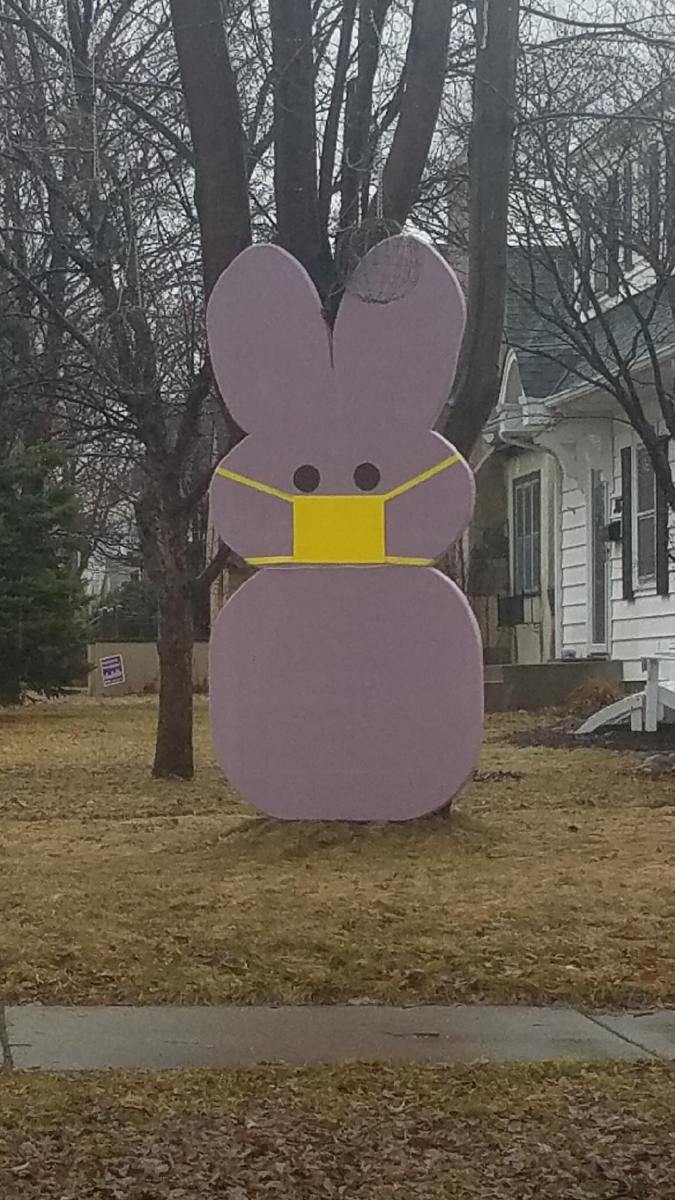
[This is the post for Tuesday, January 19th. You can request an audio recording of Tuesday’s practices via a comment belowor (for a slightly faster reply) you can email me at myra (at) ajoyfulpractice.com.
In the spirit of generosity (“dana”), the Zoom classes, recordings, and blog posts are freely given and freely received. If you are able to support these teachings, please do so as your heart moves you. (NOTE: You can donate even if you are “attending” a practice that is not designated as a “Common Ground Meditation Center” practice, or you can purchase class(es). Donations are tax deductible; class purchases are not necessarily deductible.]
“Find out who you are and do it on purpose.”
– Dolly Parton
“When I’m inspired, I get excited because I can’t wait to see what I’ll come up with next.”
– Dolly Parton
There are certain puns, specifically homonym puns, that work really well in class but don’t work at all when read. For instance, when you read “the Dolly Lama,” you might think it’s a type-o and that I meant “Llama” – and that I somehow got confused when talking about the famous cloned sheep. However, when I explain that “Lama” is a term for “teacher” and an honorific specifically used in Tibetan Buddhism things become a little clearer. Hearing it, you might think I’m saying “Dalai Lama,” but, when you read it – and I refer to her as she – there’s no confusion about the identity of this famous teacher.
Born today in 1946, Dolly Parton is a seeker, a dreamer, a reader, a writer, a producer, an entrepreneur, a shopper, a philanthropist, a healer, and a teacher – although she has referred to herself as “A poor sinful creature.” Reading that list, you might think, “Oh, Myra, you left out that she’s a musician, a singer.” But, honestly, when I read about the life of Dolly Parton – the well lived life of the “Dolly Lama” – I feel like her being a singer and a musician is one of the list interesting things about her.
“We cannot direct the wind, but we can adjust the sails.”
– Dolly Parton
“If you don’t like the road you’re walking, start paving another one.”
– Dolly Parton
Saying that her music is the least interesting thing about her does not, in any way, take away or dimension her accomplishments as a musician. Dolly Parton and her fans have assured that nothing can do that!
She has written over 3,000 songs and sold more than 100 million records worldwide. She has won ten Grammys (including a Lifetime Achievement Award) and received 50 Grammy nominations. She has also won ten Country Music Awards (CMA) and is one of only seven women to win the CMA’s Entertainer of the Year Award. Plus, she has five Academy of Country Music Awards, four People’s Choice Awards, three American Music Awards, and was inducted into the Country Music Hall of Fame in 1999. While she is not an EGOT (a winner of an Emmy, Grammy, Oscar and Tony), she has been nominated at least once for all four awards. She’s the focus of a podcast, Dolly Parton’s America, but for anyone thinking she’s just an American Country music star, keep in mind that her biggest audience (170,000 people) was in Scotland. Also, keep in mind that she’s not done yet! She’s still living and still writing.
She’s also still married, which might be a surprise for people who just know a song or two. Dolly Parton married Carl Thomas Dean on May 30, 1966. He’s not much for the spotlight and, last time I checked, had only seen her perform live once, but they’ve made it work for 55 years… and counting. She has said that he’s very romantic and that it’s their first marriage; then – with her customary twang – explained that it’s also their LAST marriage. And that right there, his romance combined with her humor (and twang), might be part of the reason their marriage works.
“I’m more successful now than I was then, but I still feel like the same girl. I’m just a working girl. I never think of myself as a star because, as somebody once said, ‘A star is nothing but a big ball of gas,’ – and I don’t want to be that.”
– Dolly Parton’s response when asked how different she was from 1964 when she first arrived in Nashville, in an October 24,2014, billboard article entitled, “Dolly Parton Q & A: The Country Legend on 50 Years in Nashville and Why She Supports Her Gay Fans” by Deborah Evans Price
Another reason behind her successful marriage might be that Dolly Parton has never forgotten where she came from and has a heart that is, metaphysically speaking, bigger than her whole body. Through her Dollywood Foundation, she has raised money and awareness for disaster relief (close to her home in Tennessee and overseas); HIV/AIDS related charities; cancer treatment; the ethical treatment of animals; and bald eagle conservation. She has also donated her time, energy, and considerable talent to these causes. Not to mention the fact that she has used her considerable wealth and clout to create jobs in economically-depressed areas. In 2020, she donated $1 million towards COVID-19 research and encouraged others (if they could afford it) to do the same. A few months later, Vanderbilt University announced that her donation helped fund the research that produced the Moderna vaccine.
“It was [ahead of its time]; and it did a lot of good. But, it evidently didn’t do enough good because we’re going to always have the same problems in the workplace with women and men….and there’s still work to be done. I still believe that women should get paid equal and should be treated with respect. I’m all about that, you know, and I don’t get out and have to preach it or march in the streets, I write about it.”
– Dolly Parton talking about the importance of the movie 9 to 5, in a 2019 ABC News Special entitled “Dolly Parton: Here She Comes Again!” with Robin Roberts
It is Dolly Parton’s imagination and hard work that have driven her to create so much wonder, beauty, and fun in the world. In addition to everything else – including helping to raise several of her 11 siblings (she is the fourth of 12) – Dolly Parton has written seven books (including a cookbook); appeared in eight films; and created a theme park, a water park, multiple entertainment centers, and a production company.
“You’d be surprised how much it costs to look this cheap!”
– Dolly Parton
“People say, ‘How you stay looking so young?’ I say, ‘Well, good lighting, good doctors, and good makeup.’”
– Dolly Parton in a February 2019 BBC “Newsnight” interview with Stephen Smith
Given all of the above – not to mention the fact that I’ve left some things out – you may be thinking, “What hasn’t Dolly Parton done?” Well, glad you asked. She has never posed nude for Playboy (or anybody else) – despite being asked repeatedly. She did, however, appear on the October 1978 cover… completely covered by a Playboy bunny outfit. She has also, as I previously alluded, had a cloned sheep named in her honor (because it was created using the breast tissue of an adult sheep).
“The way I see it, if you want the rainbow, you gotta put up with the rain.”
– Dolly Parton
“When the big things in your life get messy, you need to get up and get out. I make a point to appreciate all the little things in my life. I go out and smell the air after a good, hard rain. I re-read passages from my favorite books. I hold the little treasures that somebody special gave me. These small actions help remind me that there are so many great, glorious pieces of good in the world.”
– quoted from Dream On: Celebrate the Dreamer in You by Dolly Parton
Please wear loose, comfortable clothing and make sure you are well hydrated before the practice. It is best to practice on an empty stomach (especially for the 108 ajapa-japa mala), but if you must eat less than 1 hour before the practice, make sure to keep it light. Make sure to have a towel (at the very least) for the 108 practice. For Yin Yoga, a pillow/cushion or two, blocks or (hardcover) books, and a blanket or towel will be useful. I always recommend having something handy (pen and paper) that you can use to note any reflections.
You can scroll down (or click here) for more details about these practices and other practice opportunities related to the New Year.
Please note that there is still no late admittance and you must log in before the beginning of the practice (so, by 9:45 AM for the 108 or by 4:45 PM for the Yin+Meditation). You will be re-admittance if you get dumped from the call.)
[“Kwanzaa, yenu iwe na heri!” – “May your Kwanzaa be happy!” to everyone who is celebrating!]
[This post includes information about the practice on Wednesday AND ALSO includes information about Friday (New Year’s Day)! You can request an audio recording of Wednesday’s practices via a comment below or (for a slightly faster reply) you can email me at myra (at) ajoyfulpractice.com.
Wednesday’s playlist is available on YouTube and Spotify.
In the spirit of generosity (“dana”), the Zoom classes, recordings, and blog posts are freely given and freely received. If you are able to support these teachings, please do so as your heart moves you. (NOTE: You can donate even if you are “attending” a practice that is not designated as a “Common Ground Meditation Center” practice, or you can purchase class(es). Donations are tax deductible; class purchases or donations for New Year’s Day are not necessarily deductible.]
“There are, of course, inherent tendencies to repetition in music itself. Our poetry, our ballads, our songs are full of repetition; nursery rhymes and the little chants and songs we use to teach young children have choruses and refrains. We are attracted to repetition, even as adults; we want the stimulus and the reward again and again, and in music we get it.”
– quoted from Musicophilia: Tales of Music and the Brain by Dr. Oliver Sacks
For those of you keeping count, Wednesday and Thursday make up the 5th, 6th, and or 7th “Days of Christmas” (depending on when you start counting). According to the catechism myth attached to the “12 Days of Christmas” song, the gifts for these days translates to: “a partridge in a pear tree” for Jesus (and the cross); “two turtle doves” representing the Old and New Testament; “three French Hens” for the theological virtues of Faith, Hope, and Charity (Love); “four calling birds” for the four canonical New Testament Gospels (or their corresponding evangelicals, Matthew, Mark, Luke, and John); “five gold rings” are the first Five Books of the Hebrew Bible and the Christian Old Testament (which provide the back story for the three Abrahamic religions); “six geese a-laying” for the six days of creation; and “seven swans a-swimming,” the consistently most expensive gift, stand for the seven gifts of the Holy Spirit (wisdom, understanding, knowledge, counsel, fortitude, piety, and fear of the Lord) or the seven sacraments (Baptism, Eucharist, Confirmation, Reconciliation, Anointing of the Six, Marriage, and Ordination).
Given the Oliver Sacks quote above, you might wonder if that musical “stimulus and reward” are the only reason I keep repeating aspects of this myth (that even advocates accept is not historically true). The truth is that while there is something truly appealing, on a musical level, to the whole idea, the main reason I keep referring back to myth is because it serves a purpose. And, if we’re going to talk about faith, we have to talk about purpose.
There was a time when everything people did had purpose, had meaning. Rituals were the way people made sense of the world and the way people stayed connected to each other and to what they valued. This is another reason why I like the “12 Days of Christmas” catechism idea. Over time, however, some rituals lost their meaning – or people became separated from the meaning. Rituals separated from their meaning became traditions; behavior people did because their elders taught them the ways of their ancestors… but without the deeper connection. In some cases, people lost so much of the meaning, became so separated from the meaning, that they were just things people said. I could be wrong about this, but I partially blame the Age of Enlightenment / Age of Reason for some of that lost / disconnected meaning.
The 18th Century Age of Enlightenment / Age of Reason, which was preceded by the emergence of the modern sciences, was a time when people started feeling confident in their ability to find the reason behind all the mysteries in the world. Don’t get me wrong; there were, and are, still great unknowns / mysteries in the world. But, as the Western world (in particular) started moving out of the Middle Ages, there was a steadfast belief that the answers to everything were available to the human mind. As more and more people focused on “finding the truth,” some moved away from mysticism – and, when as there was less acceptance of mystery and less acceptance of the unknown, there was less “need” for ritual. Or so it would seem. The truth, however, is that even as we gained knowledge and lost mystery, humans craved ritual. In fact, some would say that our brains are wired for ritual.
“And I actually think one of the great things about getting older, about being in my 50s, they say that when we’re younger our brains are tuned to novelty, to be animated by novelty. But as you get older, you’re less tuned to novelty and I would say more naturally attuned to kind of take pleasure in what is ordinary and habitual. And I think that’s a great gift.”
– Krista Tippett, being interviewed by Pico Iyer, about her book Becoming Wise: An Inquiry into the Mystery and Art of Living, on “The Mystery & Art if Living” episode of On Being (with Krista Tippett (July 10, 2016)
In the 19th and 20th centuries, the social pendulum swung back and people started seeking ritual, returning to mystery and mysticism as well as the comfort that can be found in repeated behavior. We see this in the resurgence of the physical practice of yoga in India and to the way the practice eventually spread into the Western world. We also see this in the emergence of mega churches and the wave of young women considering the convent. We even see this in the fact that some atheists have “church.” The only problem with this swing back to ritual was that sometimes people overlooked what was gained during the Age of Enlightenment / Age of Reason and focused on the outer (superficial) aspects of rituals rather than the inward (meaning-filled) experience. Moving into the end of the 20th century and the beginning of the 21st century, this trend led people to spend copious amounts of money trying to recreate ancient rituals that were previously free – all to get that deeper feeling of connection. The problem was the lasting connection people were seeking doesn’t come from the outside. Yes, we can see it on the outside. Absolutely! But, deep, lasting, sustainable connection starts with an internal purpose.
A key aspect to ritual is the purpose behind what is done, how it is done, and when (i.e., the order in which it is done). Again, everything has a purpose and that purpose reinforces the repeated behavior which, in turn, reinforces the connection to others observing the ritual. In fact, that reinforcement of connection is another purpose found in ritual. A perfect example of this is the repetition of prayer or chanting, especially when there is an embodied component. The embodied component could be someone praying with a rosary, chanting with mala beads, whirling (in the Sufi tradition), or practicing 108 Sun Salutations; either way, there are very specific ways that the words are uttered or thought and very specific ways the body moves – even when it is just the fingers and the hands moving.
In Sanskrit, such a ritual is referred to as ajapa-japa, “without (mental effort) effort repeat-repeat” or “repeat and remember”. Over time, the practice reinforces itself in such a way that it turns into itself and, in doing so, turns the practitioner inward. Over time, the meaning of the words and/or movement is completely embodied so that there is seamlessness between the doer and the doing. The practice becomes ingrained. It becomes like breathing, which can be another form of ajapa-japa.
I could go into all kinds of scientific detail about how this happens and why it works. But, just for a moment, be open to the mystery… and just focus on the purpose.
“You can perform japa, repetition of a mantra or Sacred Word, in the midst of your day-to-day work. Then, when it becomes a habit, even when you are working intensely a portion of the mind will keep repeating the mantra always. That means you have locked one end of your chain to a holy place, while the rest of the chain remains still in the outside world.”
– a note written by Swami Satchidananda, quoted in Sri Swami Satchidananda: Apostle of Peace by Sita (Joan Weiner) Bordow
Feast / Holy Days are celebrations of sacred mysteries and significant events. Note that even when the focus is tied to a specific person (martyr or saint, including Jesus and the Virgin Mary), there is a connection to miracles, which are beyond science – in other words, more mystery). In addition to serving the purpose of commemoration / remembrance, feast days stimulate excitement around spirituality and help people embody the stories and history of their faith. In Christianity, particularly in the Catholic tradition, the order of the feast / holy days (throughout the year) is its own ritual storytelling. In fact, the Roman Catholic Church has a history of calendar reforms that have served the purpose of reinforcing the liturgical aspects of their rituals, thereby bringing faith into the foreground of people’s lives. Keep in mind, however, that this tradition did not start with the Christianity. The Hebrew Bible is full of commands from God about what to do, when to do it, and how to do it.
“The philosopher Abraham Kaplan calculated that over 60 percent of Judaism’s 613 commandments involve physical ritual: lighting candles, ritual baths, etc. These deeds are a kind of language, a way of expressing things that are too deep for words.”
– quoted from a New York Times letter to the editor entitled, “There Should Be More Rituals” by David Brooks (dated April 22, 2019)
Kwanzaa, the African-American holiday of light, incorporates rituals and traditions from several different faiths and several different cultures. As is often the case, these rituals are centered around symbolic objects: a mkeka (“mat”); kinara (“candelabra”); Mishumaa Saba (“seven candles,” one black, three red, and three green which symbolize the Black community, the historical struggles faced by the community, and the future possibilities of the community); mazao (“crops”); Muhindi (decorative as well as edible “corn”); a Kikombe a cha Umoja (“unity cup”); and Zawadi (ceremonial “gifts”). People often incorporate kente cloth and other Afrocentric decorations, such as black, red, and green Pan-African flag.
During Kwanzaa celebrations, people take a moment to pause and reflect, focus, concentrate, meditate, and contemplate one of the Nguzo Saba (“seven essential pillars”). On December 30th, the fifth day of Kwanzaa, people focus on the principle of Nia (“purpose”): To make our collective vocation the building and development of our community in order to restore our people to their traditional greatness. In other words, there is a reminder, in the middle of the week, that this is a purpose driven festival and that the future of the community depends on people being purpose driven in a way that brings about individual and collective healing.
When I started thinking about the posts and classes for this week, and in particular about how to address the fifth principle of Kwanzaa, I wanted to offer little bits of purpose about everything we were doing in the physical practice and also bits of purpose about various celebrations happening around the world. In considering all the different celebrations that fit under the rubric of ritual, and all the purposes behind the ways people are currently celebrating their holidays, it occurred to me that all these rituals share two common purposes: they bring people together (in peace) and they bring people closer to something bigger than themselves, something Universal, something Divine (whatever that means to you at this moment).
“My research over the last decade has helped understand why rituals in particular (and not any other behaviors like habits, for instance) are effective at battling negative emotions. Be it anxiety, stress, fear, doubt, sadness, grief – you name it. Rituals are there to save the day. The dread we feel after experiencing a loss happens because it feels like the situation is outside our control (and it usually is). Rituals reinstate that control.
Consider, for instance, in moments of grief, rituals help ease our pain and suffering. But, again I ask, how do they do this, and why rituals in particular? As my collaborators Mike Norton and Francesca Gino have shown, rituals alleviate feeling of grief and loss by increasing a feelings of control.”
– quoted from “The emerging science of ritual – a new look on an ancient behavior: And how you can use it to live life to the fullest” by Dr. Nick Hobson (contributing to the ThriveGlobal.com, Dec. 7, 2017)
For the last six (going on seven years), I have started the New Year by leading at least one 3-hour japa-ajapa mala of 108 Sun Salutations. For the last several years, I have wrapped up New Year’s Day with a 2-hour Yin+Meditation practice. The practices are very, very different. Although we do mix it up and break it down a little (so that it is accessible to everyone), the 108 mala is very vigorous and repeats 12 poses in a very specific sequence. (You can see some of the reasons for that number here and here.) The Yin+Mediation combines the meditative aspects of deep seated mediation with specific poses held 3 – 5 minutes in order to address the deep tissue, joints, and connective tissue. Props are useful for both practices, but are definitive part of the Yin Yoga practice – and you can use some household items as props.
So, the practices are very different and yet they both help us to move through this liminal or “threshold” time between the old and the new years. Also, they each incorporate key elements of ritual and allow us to tap into the power of intention as well as community.
This year is different, obviously. Because of the pandemic we are on Zoom for both events (which means that there is no limit to the number of participants). It will feel different as we won’t be so close together and, unless you have your heat turned up, the 108 might not steam up the windows or get your walls all slimy.
However, for all that is different, there are some things that stay the same. I will still keep count and guide you through the experience. We will still set intentions and dedications for each round and plant some karmic seeds. We will still have the opportunity to “burn some karma” in the 108 and release some tension (in both practices). We will still have moments of reflection and insight – and, whatever comes, we will still begin and end and move through it all together.
Please note that there is still no late admittance and you must log in before the beginning of the practice (so, by 9:45 AM for the 108 or by 4:45 PM for the Yin+Meditation). You will be re-admitted if you get dumped from the call.)
Here are some of the many ways to mindfully start the New Year. Please note that this list includes a variety of practices, styles, and traditions (and it is only a sample of what’s available).
Thursday, December 31st – New Year’s Eve
7:00 PM – 9:00 PM Common Ground Meditation Center Annual New Year’s Eve Celebration (Please register here.)
Umoja (unity)—To strive for and maintain unity in the family, community, nation, and race.
Kujichagulia (self-determination)—To define ourselves, name ourselves, create for ourselves, and speak for ourselves.
Ujima (collective work and responsibility)—To build and maintain our community together and make our brother’s and sister’s problems our problems and to solve them together.
Ujamaa (cooperative economics)—To build and maintain our own stores, shops, and other businesses and to profit from them together.
Nia (purpose)—To make our collective vocation the building and development of our community in order to restore our people to their traditional greatness.
Kuumba (creativity)—To do always as much as we can, in the way we can, in order to leave our community more beautiful and beneficial than we inherited it.
Imani (faith)—To believe with all our heart in our people, our parents, our teachers, our leaders, and the righteousness and victory of our struggle.”
– The Nguzo Saba (or “Seven Essential Pillars”) of Kwanzaa
[This is the post for Saturday, December 19th (and a prelude for Sunday the 20th). You can request an audio recording of Saturday’s practice via a comment belowor (for a slightly faster reply) you can email me at myra (at) ajoyfulpractice.com.
In the spirit of generosity (“dana”), the Zoom classes, recordings, and blog posts are freely given and freely received. If you are able to support these teachings, please do so as your heart moves you. (NOTE: You can donate even if you are “attending” a practice that is not designated as a “Common Ground Meditation Center” practice, or you can purchase class(es). Donations are tax deductible; class purchases are not necessarily deductible.)]
– “The fourth [prāņāyāma] goes beyond, or transcends, the internal and external objects.”
Yoga Sūtra 2.52: tatah kşīyate prakāśāvaraņam
– “Then the veil over the [Inner] Light deteriorates.”
Patanjali spends a good portion of the Yoga Sūtras extolling the benefits of focusing on the breath and breathing in a way that balances (and calms) the mind-body. The benefits mentioned include physical vitality and clarity of mind. Another, connected, benefit is accessing the part of our mind-body that is “free of sorrow and [always] full of light.” Ultimately, he also points to the powers (siddhis) experienced by those who achieve clarity and luminosity. One such power is the ability to clear see (and understand) past, present, and future.
The ability to see (and understand) past, present, and future is the power of cause-and-effect. It is a power we all have; however it is a power often shrouded under the veil of avidyā (“ignorance”) and illusion. Such ignorance and illusion is part of our lived experience and is further enhanced by experiences that reinforce the ignorance and illusion. Patanjali very clearly indicates that everything in the perceivable world “has a twofold purpose: fulfillment and freedom” (YS 2.18), but that we can only see (and understand) what our mind is ready to see and understand (YS 2.20).
It seems like a circle of confusion (or ignorance) out of which we cannot escape. Yet, if we take a breath, things can become a little clearer. We start to see how we are tied – shackled or fettered – to what we know, based on what was previously known.
“‘You are fettered,’ said Scrooge, trembling. ‘Tell me why?’ ‘I wear the chain I forged in life,’ replied the Ghost. ‘I made it link by link, and yard by yard; I girded it on of my own free will, and of my own free will I wore it.’”
– quoted from A Christmas Carol by Charles Dickens
A year or two ago, if someone had said that people all over the world would be rushing around less and spending more time at home with their family (and occasionally mingling with a small bubble of close friends), most of us would have (unequivocally) thought it was a good thing. If someone had said people would be as focused – if not more focused – on how they could celebrate the holidays and observe traditions as opposed to working, I might have even applauded. After all, I have spent a lot of winters talking about the benefits of slowing down (like everything else in nature) instead of speeding up and have spent many a holiday emphasizing the importance of ritual and tradition.
Those hypothetical conversations, however, would have occurred in another time and place…. a time and place “before.” They would have occurred without the circumstances we face today – circumstances that actually make it easier to be a bit of a Scrooge and/or experience a little SADness. I say “and/or,” but I’m really not sure, when you think about it that there’s always a difference. After all, as much as we see Ebenezer Scrooge as a curmudgeonly miser, who is to say he didn’t have SAD?
“‘Uncle!’ pleaded the nephew.
‘Nephew!’ returned the uncle sternly, ‘keep Christmas in your own way, and let me keep it in mine.’
‘Keep it!’ repeated Scrooge’s nephew. ‘But you don’t keep it.’”
– quoted from A Christmas Carol by Charles Dickens
Seasonal Affective Disorder (SAD) is a form of clinical depression that affects about 3 million people in the United States each year. About 5% of adults with SAD experience it for 40% of the year and people with bipolar disorder may notice huge mood shifts based on the change in season. Symptoms can include lack of energy, moodiness, changes in eating habits, weight fluctuation, changes in sleeping habits, loss of interest in social engagement or work, difficulty concentrating, and thought of self harm. Most people associate SAD with the “winter blues” or the “winter blahs” – and it is definitely linked to a chemical imbalance in the brain that is related to shorter days and a lack of sunlight in the Fall/Winter. However, people can also experience SAD (sometimes referred to, in layman’s terms, as “Reverse SAD”) in the Spring/Summer.
An old friend of mine who lives with “Reverse SAD” (we’ll call her “Christmas Past”) said that one of the hardest parts for her is the lack of awareness – and that fact that people think you can “just get over it.” That last part is an all too common misconception based on the following facts:
(a) Everyone experiences a shift in their biological clock (or circadian rhythms) as the seasons change, and that shift affects our brains;
(b) A lot of people struggle during the holidays;
(c) For most, symptoms will change as the seasons change; and
(d) When we are experience general sadness we can still feel some level of joy or happiness, but depression can mute people’s overall experience of life.
Furthermore, while symptoms can pass, in the base case, the longer the brain spirals down – and is left chemically out of balance – the harder it is for the mind-body to shift back into balance. When you add in the fact that depression is often accompanied by thoughts of self harming, there is sometimes not enough time for “time” to be the healer.
Unless, of course, “time” is a metaphor.
“‘But you were always a good man of business, Jacob’ faltered Scrooge, who now began to apply this to himself. ‘Business!’ cried the Ghost, wringing its hands again. ‘Mankind was my business. The common welfare was my business; charity, mercy, forbearance, benevolence, were all my business. The dealings of my trade were but a drop of water in the comprehensive ocean of my business!’”
– quoted from A Christmas Carol by Charles Dickens
A Christmas Carol, the novella by Charles Dickens, features a grouchy old business man who is visited by ghosts of Christmas Past, Present, and Yet to Come (often referred to in theatrical productions as “Christmas Future”). First published today in 1843, it was the fourth Christmas story the author had written and, like his others, it was influenced by what people were experience at the time and Dickens’s own experiences. First, as a child, Dickens had experienced a change of fortune and ended up, as an adult, having to work his way up from poverty. However, just before writing A Christmas Carol he had visited one of the Raggedy Schools (for destitute children) and was appalled at the conditions. He felt that people who were in the position to do something – not only to improve the children’s living and working conditions, but also their future prospects – should be encouraged to do what they could and that the holiday season was a good time for that encouragement. Finally, people were changing their engagement with the holiday. There were new additions to the celebrations (like the Christmas tree) and people were fluctuating between emphasizing the religious aspects of Christmas and the more secular traditions.
Dickens definitely portrays Scrooge as a bad guy who is redeemable; he just needs a push in the right direction. Various people, including Scrooge’s nephew try to push him into the holiday spirit, but he doesn’t feel it and doesn’t see the value in it. He needs more than a “Happy Holidays” or “Merry Christmas” to counteract his “Bah Humbug.” He needs something to change his engagement of spirit. The ghosts of Christmas Past, Present, and Yet to Come facilitate this change by talking to him and showing him different perspectives of his own life.
“‘Let me leave it alone, then,’ said Scrooge. ‘Much good may it do you! Much good it has ever done you!’
‘There are many things from which I might have derived good, by which I have not profited, I dare say,’ returned the nephew. ‘Christmas among the rest. But I am sure I have always thought of Christmas time, when it has come round – apart from the veneration due to its sacred name and origin, if anything belonging to it can be apart from that – as a good time; a kind, forgiving, charitable, pleasant time; the only time I know of, in the long calendar of the year, when men and women seem by one consent to open their shut-up hearts freely, and to think of people below them as if they really were fellow-passengers to the grave, and not another race of creatures bound on other journeys. And therefore, uncle, though it has never put a scrap of gold or silver in my pocket, I believe that it has done me good, and will do me good; and I say, God bless it!’”
– quoted from A Christmas Carol by Charles Dickens
One perspective is that, left to his own devices, Scrooge would have kept spiraling down. In the process of spiraling down (all the while thinking about the ways he could spiral his bank account up), Scrooge would have continued to make himself and the people around him miserable. Then there is the possibility that he could make the world around him a better place – and that, ultimately, it wouldn’t really cost him much. But, first, he had to be able to see the possibility.
Some people view A Christmas Carol as a secular holiday tale; others see it as Christian allegory. I see both sides of that coin, but also consider that there is a mental health message within the text. Even if Scrooge is a “scrooge,” he also exhibits all the characteristics of someone who is unhappy because his mind-body is out of balance. (When you think about it, it’s not surprising given how much he works, and how little work-life balance Dickens gives him!) All that said, anyone of us can be scrooge. So, it’s important to note that there is a lot we can do to help our mind-bodies find balance. It is equally important to know when we need some external intercession. SAD treatment can include light therapy, talk therapy, changes in diet and exercise, antidepressants, and/or a combination of the above.
“He went to the church, and walked about the streets, and watched the people hurrying to and for, and patted the children on the head, and questioned beggars, and looked down into the kitchens of homes, and up to the windows, and found that everything could yield him pleasure. He had never dreamed of any walk, that anything, could give him so much happiness.”
– quoted from A Christmas Carol by Charles Dickens
Saturday’s playlist is available on YouTube and Spotify.
If you are thinking about suicide, worried about a friend or loved one, or would like emotional support, you can call 1-800-273-TALK (8255). You can also call the TALK line if you are struggling with addiction or involved in an abusive relationship. The Lifeline network is free, confidential, and available to all 24/7. YOU CAN TALK ABOUT ANYTHING.
“‘I will honour Christmas in my heart, and try to keep it all the year. I will live in the Past, the Present, and the Future. The Spirits of all Three shall strive within me. I will not shut out the lessons that they teach.’”
– quoted from A Christmas Carol by Charles Dickens
### “‘…as Tiny Tim observed, God bless Us, Every One!’” ###
“We repeat, there is nothing that we can do but love, and dear God – please enlarge our hearts to love each other, to love our neighbor, to love our enemy as well as our friend.”
– quoted from “Love Is The Measure” printed in The Catholic Worker (June 1946, 2) by Dorothy Day (b. today 1897)
Maybe it’s just me; but have you noticed that this year (in particular) there seems to be more awareness around the fact that there’s a “wrong” way to ask someone how they are doing? Don’t get me wrong – I think we all appreciate when someone cares enough to ask about our overall well-being (and then sticks around to listen). And anyone who is over the age of five knows that there are levels of “Fine” and “OK” that either hold a wealth of subtext or a complete lack of context.
Earlier this year, after the world watched George Floyd being killed, there were articles (like this one) about how to check in with POC – in particular, Black people – and I had more than one people say to me, “I’m not going to ask how you’re doing, because….” To some, especially my white male friends, I explained that if they would ask me how I was doing at any other time in our kinship (anthropologically speaking), they could ask me during a time when pretty much everyone in the world was horrified, terrified, exhausted, angry, and sad.
That said; I appreciated the awareness that the question (and the opportunity to ask it) were not simple and perfunctory. Similarly, I appreciated the friends, especially my close white friends, who might have done some soul searching before calling me, but were also quite aware of the fact that they could call me, “should” call me, and ask, “How are you today?” Simple as that – with no other explanations or apologies needed. I also loved that before one of my Tuesday night Zoom classes, when we were all checking in (and basically saying, we were doing “OK”), someone called out the fact that none of us was really doing “OK.” Because while checking in with each other, and ourselves, is important, being honest about how we’re doing in any given moment is also important to our overall well-being.
“And there are Father Zossima’s unforgettable words in The Brothers Karamazov – ‘Love in practice is a harsh and dreadful thing compared to love in dreams.’ What does the modern world know of love, with its divorces, with its light touching of the surface of love. It has never reached down into the depths, to the misery and pain and glory of love which endures to death and beyond it. We have not yet begun to learn about love. Now is the time to begin, to start afresh, to use this divine weapon.’”
– quoted from “Love Is The Measure” printed in The Catholic Worker (June 1946, 2) by Dorothy Day (b. today 1897)
This morning I came across an article entitled “6 Questions to Ask Instead of ‘How Are You?’, According to Therapists.” And, I’ll be honest, when I first saw the headline; I wasn’t going to open it. But once I did, I realized how fortunate I am to have people in my life who ask questions like, “But how are you, really, really?” (Which is not on the list, by the way.) I also noticed that the 6 ways reference can actually lead to dialogue and honesty – and that those are two parts of “sharing and caring” that can also lead to improved physical, mental, and emotional well-being.
In an earlier Movember post, I mentioned information on the (US) Movember website that always strikes me as off – but also oddly accurate: “70% of men say their friends can rely on them for support, but only 48% say that they rely on their friends.” I feel like this year, with everything that’s been going on, there might be more people checking in with each other, but not really, really checking in with each other. Which brings me to Alec (and Brendan Maher)
Brendan Maher is a “Mo Bro” and the Global Director of Mental Health and Suicide Prevention, Movember. If you go to the (US) Movember Foundation’s “Men’s Health – Mental Health and Suicide Prevention” website you will find a picture of Mr. Maher. He’s smiling gently, and looks like the kind of guy you could talk to about almost anything. At first, I thought he was “Alec.” It turns out, however, that ALEC is actually an acronym for four simple steps a person can take when checking on someone who is going through a hard time:
Ask
Listen
Encourage Action
Check (Back) In
If you check out the website for more details about ALEC (a model developed by “R U OK?”) and you compare it to the six questions referenced in the aforementioned Huffington Post article, you will find that each and every one of us can be Alec… and Alec’s friend. Each and every one of us has the ability to identify and (help) eliminate three-fold sorrow. It’s one of six our “super” human powers after all!
One of the reasons why checking in about how someone is feeling in the present moment, is that things change and the way we feel changes – physically, mentally, emotionally, and energetic/spiritually – moment to moment. As the world changes around us, it’s OK – more than OK – to be happy about certain things while simultaneously angry and frustrated (sometimes about the same things). We can simultaneously hold gratitude and sadness about a lost loved one – gratitude that they were in our lives and sadness that they are no longer with us on physical plane. We can be confused about which way to go moving forward, while also very confident about our desire not to go backwards.
One thing it is important to remember is that we embody all of the sensations, thoughts, and emotions we experience. So, as we are checking in with each other, be sure to check in with your own self. The physical practice of yoga (hatha yoga, regardless of the style or tradition) is a great opportunity to tune in and tune up. Also, take some time – maybe while you walk or sit or write – to ask yourself, “How YOU Doin’?”
“What’s happening now is impacting us all in different ways. Sometimes it’s hard to know what to do, where to start or what to say. As we push through this together, we hope we can empower people to connect with others who are struggling and find the help they need now.”
– Brendan Maher, Global Director of Mental Health and Suicide Prevention, Movember
Please join me for a 65-minute virtual yoga practice on Zoom today (Sunday, Movember 8th) at 2:30 PM. I am in the process of updating the links from the “Class Schedules” calendar; however, the Meeting IDs in the calendar are the same and are correct. PLEASE NOTE: Zoom 5.0 is in effect. If you have not upgraded, you will need to give yourself extra time to log into Zoom. You can always request an audio recording of this practice (or any practice) via email or a comment below.
Today’s playlist is available on YouTube and Spotify. [“Look for Movember 3rd 2020”]
In the spirit of generosity (“dana”), the Zoom classes, recordings, and blog posts are freely given and freely received. If you are able to support these teachings, please do so as your heart moves you. (NOTE: You can donate even if you are “attending” a practice that is not designated as a “Common Ground Meditation Center” practice, or you can purchase class(es). Donations are tax deductible; class purchases are not necessarily deductible.)
“What we would like to do is change the world–make it a little simpler for people to feed, clothe and shelter themselves as God intended them to do. And to a certain extent, by fighting for better conditions, by crying out unceasingly for the rights of the workers, of the poor, of the destitute–the rights of the worthy and the unworthy poor in other words, we can to a certain extent change the world; we can work for the oasis, the little cell of joy and peace in a harried world. We can throw our pebble in the pond and be confident that its ever widening circle will reach around the world. We can give away an onion.”
– quoted from “Love Is The Measure” printed in The Catholic Worker (June 1946, 2) by Dorothy Day (b. today 1897)
If you are thinking about suicide, worried about a friend or loved one, or would like emotional support, you can call 1-800-273-TALK (8255). You can also call the TALK line if you are struggling with addiction or involved in an abusive relationship. The Lifeline network is free, confidential, and available to all 24/7. YOU CAN TALK ABOUT ANYTHING.
Today is a big day. Not just in the United States, but all over the world, today is a day for changing and also for gaining insight. Today is Movember 3rd – also known as the 3rd day of No(shave)mber, a month dedicated to “changing the face of men’s health.” This month of awareness started in Melbourne, Australia in 2004, but has its origins in a 1999 story about a group in Adelaide, South Australia who were coined the word “Movember.” The Adelaide group of about 80 spent the month “growing whiskers for whiskers” (possibly while drinking whiskey since they started in a pub) while also raising money for the Royal Society for the Prevention of Cruelty to Animals (RSPCA) by selling Movember t-shirts.
When Adam Garone, Travis Garone, Luke Slattery, and Justin (JC) Coughlin started the Melbourne group, of 30 “Mo bros” raising awareness for prostate cancer and men’s mental health (specifically depression), they didn’t realize that they were starting a movement. In 2005, almost 500 people joined the original 30 and raised over $40,000 for the Prostate Cancer Foundation of Australia, the PCFA’s largest donation at the time. Today the Movember Foundation is an official charity in Australia and the movement has spread all over the world. Furthermore, the movement no includes “Mo sistahs”and other “Mo folks” and the focus has shifted to all aspects of men’s health and the discrepancies between men’s health and women’s health.
“Globally, men die an average of six years earlier than women, and for reasons that are largely preventable. Which means that it doesn’t have to be that way: we can take action to live healthier, happier and longer lives.”
“Mo your own way….”
– quoted from the (US) Movember website
Statistics show that the average life expectancy for men is 76.2 years, versus 81 years for women. This year, 1 in 2 men will be diagnosed with cancer (versus 1 in 3 women) and that a third of all cancers are preventable through diet, exercise, and other lifestyle choices. Those same lifestyle choices benefit everyone’s cardiovascular systems, digestive systems, and mental health. Yet, a large percentage of men are overweight (with 34.9% of Americans, in general, considered obese).
The term “obese” is tricky, especially in the United States, because our metrics can diagnose a very fit and muscular person as “obese.” Consider this then: 12.1% of men over the age of 18 are in fair to poor health – and suffer from diabetes and heart disease without even knowing it.
Globally, around 9.9 million men (1 in 7) are diagnosed with prostate cancer – which is treatable and recoverable – while testicular cancer (which is also treatable and recoverable) is the most common cancer in men between the ages of 15 and 35. There’s about 70,000 new cases of testicular cancer every year, with a little over half a million men (worldwide) living with (or beyond) it. The risk of both prostate cancer and testicular cancer increase if someone has a brother or father who has had that particular cancer; if a person has African-American ancestry; and (in the case of testicular cancer) if they have previously had that type of cancer. To make matters worse, men can also get breast cancer – which also has a genetic component.
All of the physical aspects of poor health take a mental health toll in a typical year. Keep in mind, however that 2020 has been anything but typical – especially when it comes to mental health. Then consider that earlier this year about 51.5 million Americans adults reported experiencing mental health issues within previous 12 months and that that was an increase from previous years. In previous years, 15 million Americans (in general) were specifically diagnosed with depression. In 2018, an estimated 11.4 million people attempted suicide – with 48,344 Americans reported as dying from suicide. However, men die by suicide almost 4 times more than in women, and the highest rate of suicide is in middle-ages white men (who accounted for 69.67% of the suicides indicated above). Veterans are also at a high risk for suicide, regardless of gender.
And, let’s talk about the elephant in the room: gender. One set of stats that is only recently being tracked is the physical and mental health of transgender people. Just as diet and exercise affect physical and mental, so too does everyone’s level of hormones – which means hormone treatments could increase or decrease risk of certain illnesses. Additionally, physical and mental health improves when people have emotional support on their life’s journey. In my opinion, the high rate of suicide within the transgender community – as well as the high rate of violence against transgender people – indicates a lack of support and awareness. Thankfully, this is changing; however, as our perceptions change we need to make sure we do not leave transgender (or even non-binary) people out of the conversation.
Spend time with people who make you feel good.
Talk, more.
Know the numbers. (If you are male and over 45, ask your doctor if you need a PSA test.)
Know thy nuts. Simple.
Move, more.”
– quoted from the (US) Movember website
According to the (US) Movember website, “70% of men say their friends can rely on them for support, but only 48% say that they rely on their friends.” This is always a wild (and frankly ridiculous) static to me – but it points directly to the stigma and social mores or norms that make it challenging to be a healthy man in today’s society. Don’t get me wrong, as Dr. M. Scott Peck pointed out, “Life is difficult” for everyone. The individual aspects of each person’s life comes with distinct physical and mental health risks; however, life is easier and people are healthier when we pay attention to what we’re feeling and also share what we’re feeling with people who respect us and treat us well. If you can’t count five people (or even three people) with whom you can have a mutually beneficial conversation – and between those five or three conversations cover every subject under the sun – you might want to consider how that lack of support translates into your quality of life and general well-being.
Get your annual physical.
Don’t smoke.
Stay active.
Eat heart healthy foods.
Manage your stress.
Drink in moderation.
Know your family history.”
– Tips printed in Men’s Health
Please join metoday (Tuesday, Movember 3rd) at 12 Noon or 7:15 PMfor a virtual yoga practice on Zoom, where will get our mou(ve) on. Use the link from the “Class Schedules” calendar if you run into any problems checking into the class. Give yourself extra time to log in if you have not upgraded to Zoom 5.0. You can request an audio recording of this practice via a comment below.
Tuesday’s playlist is available on YouTube and Spotify. [Look for “Movember 3rd 2020”]
In the spirit of generosity (“dana”), the Zoom classes, recordings, and blog posts are freely given and freely received. If you are able to support these teachings, please do so as your heart moves you. (NOTE: You can donate even if you are “attending” a practice that is not designated as a “Common Ground Meditation Center” practice, or you can purchase class(es). Donations are tax deductible; class purchases are not necessarily deductible.)
If you are thinking about suicide, worried about a friend or loved one, or would like emotional support, you can call 1-800-273-TALK (8255). You can also call the TALK line if you are struggling with addiction or involved in an abusive relationship. The Lifeline network is free, confidential, and available to all 24/7. YOU CAN TALK ABOUT ANYTHING.
“The idea came from the idea of escaping the world, actually. For me, there’s definitely days where I feel like I’ve been overwhelmed by people, and I need to get away. So Bob Peterson, who is the lead writer and co-director, he and I were just sitting in a room thinking of ideas. And we were experimenting with this visual idea of a guy in floating house, and it just seemed really intriguing.”
– Pete Docter (b. 10/09/1968), quoted from an AV Club interview (dated 05/28/2009)
Today started with something that wasn’t magic, but it was magical. For reasons unknown to me, David Blaine and his team picked today for his YouTubes Original special Ascension. The stunt, to soar up thousands of feet with helium balloons and then parachute down, took years and planning and even more years of dreaming. Blaine kept saying he was doing it for his 9-year old daughter Dessa, but he was also doing it for everyone who has ever dreamed of flying, soaring, and floating above it all. He said it was amazing. I say that despite all the technology, and maybe because of it, it was magical – and it couldn’t have happened on a better day. Because, to me, September 2nd is all about magical dreams and the inspiring people who make them come true.
“I want to see how life can triumph.”
– Romare Bearden, Artist and Activist
The artist, author, and song writer Romare Bearden was born today in 1911. Perhaps best known for his collages, photomontages, and abstract and Cubist paintings, he originally aspired to be a cartoonist (and even supported himself, for a brief period, as a political cartoonist). While serving in the United States Army during World War II, Sergeant Bearden was part of the all-Black 372nd Infantry Division of the 15th Regiment. While I have read accounts that spent his service in the United States and other accounts saying that he served on the Western Front, one thing is not disputed: during the war, he saw mankind at its worst and he wanted, through his art, to express the humanity he felt was lacking in his wartime experiences.
“There are roads out of the secret place within us which we must all move as we go to touch others.”
– Romare Bearden, Artist and Activist
Of course, it is easy to imagine the atrocities one might have witnessed on the Western Front, but what would an all-Black infantry member experience if they served in the United States? Segregation, prejudice, racism – and this was experienced more by the domestic soldiers than those on the battlefield. While the enlisted men were Black, the officers were primarily white. In addition to the things we normally think of as being segregated during the 1940’s (housing, transportation, food service, church), especially in the South, parades and other ways people in the service were honored were also done separately. The separation and hostility included people who were part of the Officer’s Candidate School in North Carolina (like Sergeant Bearden) and meant that the Black soldiers were sometimes restricted to their bases even when they had time off.
When his service ended, Romare Bearden spent time in New York City and in Paris, where he studied philosophy and the history behind the art he had, primarily, taught himself to create. His work didn’t just depict African-American people; it showed the unity, cooperation, and collaboration within the African-American community. Along with his cousin, Private Charles H. Alston (with whom he also served in the U. S. Army), Emma Amos, Hale Woodruff, and 11 other artists of color, Sergeant Bearden founded the “Spiral” group, which discussed the responsibility of African-American artists to the Civil Rights Movement and “to consider common aesthetic problems.” It was during this same period that he began his collage work and started experiencing great success and recognition through exhibitions in major galleries and museums.
In 1984, four years before his bone cancer-related death, he was paid $90,000 for a 60×13-foot mural, entitled “Pittsburgh Recollections,” which was installed in a Pittsburgh subway station. In 2008, the mural’s value was estimated at $15 million. Two years after his death, the Romare Bearden Foundation was founded “to preserve and perpetuate the legacy of this preeminent American artist.” The non-profit foundation serves as the artist’s estate and has developed grants supporting children, young (emerging) artists, and scholars.
“If you’re offered a seat on a rocket ship, don’t ask what seat. JUST GET ON!”
– Teacher and Astronaut S Christa McAuliffe
Born today in 1948, S Christa McAuliffe was a teacher who became an astronaut – because she was a teacher. At an early age, she was inspired by the “Space Age” astronauts like John Glen. As an adult, she was chosen from over 11,000 applicants to participate in NASA’s 1985 “Teacher in Space” project. She trained to become the first teacher in space and planned to conduct experiments and teach two lesson plans on her first mission aboard the Space Shuttle Challenger. Tragically, the shuttle broke apart 73 seconds after launch killing all seven crew members on January 28, 1986. This American of Irish and Lebanese descent, who was also a mother and wife, was posthumously awarded the Congressional Space Medal of Honor (in 2004). Schools and scholarships have been named in her honor; however, her students remember her for her advice on life:
“Reach for the stars. Reach for it! Push yourself as far as you can.”
– Teacher and Astronaut S Christa McAuliffe
Canada’s first “space tourist” was born today in 1959. Known for reaching for a different kind of stars and pushing himself (and others), Cirque du Soleil co-founder and former CEO Guy Laliberté turned 61 today. He believes in having a greater purpose and in taking risks, which probably explains his penchant for poker playing, but also his success as an entertainer and producer. While he is now billionaire and one of the wealthiest Canadians in the world, he started off as just another kid inspired by the circus. He started off as a busker, a stiltwalker, and a fire-eater, but eventually became a producer.
In addition to curating one of the most innovative and entertaining performing arts companies in the world, he is one of the founders of the non-profit One Drop Foundation, which aims “to ensure sustainable access to safe water and sanitation for the most vulnerable communities through innovative partnerships, creativity and the power of art.” He called his venture into space a “poetic social mission” designed to raise awareness about water issues addressed by One Drop. The foundation’s values are respect, integrity, collaboration, innovation, and fun – the same elements you need for a good circus. Mr. Laliberté said, “Inside every adult there’s still a child that lingers. We’re happiness merchants giving people the opportunity to dream like children.” Of course, to encourage others to dream, one has to dream big; always, always, always, believe in the dream; and have the resources to make it so.
“I am blessed for what I have, but I believed in it from the beginning. Today the dream is the same: I still want to travel, I still want to entertain, and I most certainly want to have fun.”
– Guy Laliberté, Cirque du Soleil co-founder, polker player, and Activist
“Life is tough, and if you have the ability to laugh at it, you have the ability to enjoy it.”
– Salma Hayek, Actor, Director, Producer, and Activist
If I didn’t have all the other birthday people to honor, but I wanted to get across the same advice and inspiration, I would defer to a Mexican-American woman who stands not quite two inches taller than me. Born today in 1966, Salma Valgarma Hayek Jiménez, now Salma Hayak Pinault began her career in the award-winning telenovela Teresa. By 25, she had won an Ariel Award (the Mexican equivalent of an Academy Award) and was ready to take on Hollywood, where she would receive more accolades and critical acclaim. She has appeared in sitcoms, children’s specials, and every imaginable genre of movies.
In 2002, Salma Hayek produced and starred in Frida, a biography of Mexican artist Frida Kahlo, which was directed by Julie Taymor. In addition to paying tribute to her Mexican heritage with Frida, honored her Lebanese heritage by producing (and voicing the character Kamila) the animated movie Kahlil Gibran’s The Prophet. As she continuously racks up awards and nominations for her work as an actor and producer, she has also modeled; worked as an official spokeswoman for Avon and Revlon cosmetics; and worked with Proctor & Gamble Company, in collaboration with UNICEF, to promote the funding of maternal and neonatal tetanus vaccines. She practices yoga and has developed a juice delivery program and her own brand of cosmetics.
In addition to all this and more, Ms. Hayek has had overcome dyslexia, navigated America’s immigration system to become a naturalized citizen, and overcame sexual assault and harassment during one of the high points of her career. Her personal experiences are part of the reason she works to increase awareness about violence against women (even testifying before the United States Senate to support the Violence Against Women Act), donates to anti-domestic abuse shelters and groups (in the United States and Mexico), and is a breastfeeding advocate who once breastfeed a newborn in Sierra Leone when the baby’s mother could not produce milk. She once said, “What is important is to believe in something so strongly that you’re not discouraged.” Inspiring words, for sure! However, I always follow another bit of her advice….
“I act tall!”
– Salma Hayek, Actor, Director, Producer, and Activist
Please join me today (Wednesday, September 2nd) at 4:30 PM or 7:15 PM for a magical-birthday inspired yoga practice on Zoom. Use the link from the “Class Schedules” calendar if you run into any problems checking into the class. You will need to register for the 7:15 PM class if you have not already done so. Give yourself extra time to log in if you have not upgraded to Zoom 5.0. You can request an audio recording of this practice via a comment below.
Wednesday’s playlist is available is available on YouTube and Spotify. (The practice music is the same, but one playlist includes David Blaine’s Ascension and the other includes Romare Bearden’s “Sea Breeze.”)
“People often say that ‘beauty is in the eye of the beholder,’ and I say that the most liberating thing about beauty is realizing that you are the beholder. This empowers us to find beauty in places where others have not dared to look, including inside ourselves.”
– Salma Hayek, Actor, Director, Producer, and Activist
Format updated and quote added 09/2023.
### REACH FOR THE STARS! HAVE FUN. ACT TALL. BEHOLD… & LIFE WILL TRIUMPH ###
“‘Keep, ancient lands, your storied pomp!’ cries she
With silent lips. ‘Give me your tired, your poor,
Your huddled masses yearning to breathe free,
The wretched refuse of your teeming shore.
Send these, the homeless, tempest-tost to me,
I lift my lamp beside the golden door!’”
– from the poem “The New Colossus” by Emma Lazarus
Today (August 5th) in 1884, when the cornerstone of the Statue of Liberty’s pedestal was placed on a rainy Bedloe’s Island, it seemed impossible to complete the project meant to be a testament to freedom, friendship, and the spirit of the people. People in France provided the funds for the statue designed by the sculptor Frédéric-Auguste Bartholdi (with scaffolding created by Gustave Eiffel), while people in the United States were meant to pay for the base and pedestal designed by Richard Morris Hunt. The only problem was that the Americans were short…about $100,000 short.
Hunt’s design for the pedestal and base incorporated the eleven-point star foundation of the army fort (Fort Wood) which had been built in 1807 and abandoned during the Civil War. He always intended his design to be simple, so as not to take away from the statue itself, but raising money for his design turned out to be such a challenge that he scrapped twenty-five feet from the height of his original design. He also cut back on materials so that instead of the pedestal and base being constructed entirely out of granite, he had to make do with concrete walls covered with a granite-block face. His cost cutting measures still might not have been enough if a certain newspaper man hadn’t decided to tap into the spirit of the people and, in doing so, overcame what some viewed as an impossible obstacle. That newspaper man was Joseph Pulitzer and on March 16, 1885 he implored people in the United States to give what they could, even if it was a penny, in order to pay for the base and pedestal of the Statue of Liberty. Starting with an ad and a series of front page editorials, he was able to crowd fund over $100,000 in about 5 months.
“We must raise the money! The World is the people’s paper, and now it appeals to the people to come forward and raise the money. The $250,000 that the making of the Statue cost was paid in by the masses of the French people – by the working men, the tradesmen, the shop girls, the artisans – by all, irrespective of class or condition. Let us respond in like manner. Let us not wait for the millionaires to give us this money. It is not a gift from the millionaires of France to the millionaires of America, but a gift of the whole people of France to the whole people of America.
Take this appeal to yourself personally. It is meant for every reader of The World. Give something, however little. Send it to us. We will receive it and see that it is properly applied.”
– quoted from The New York World editorial by Joseph Pulitzer, 1885
Joseph Pulitzer offered people a six inch metal replica of Lady Liberty (described as a “perfect fac-simile”) if they donated a dollar to the “Pedestal Fund” established by Pulitzer’s paper the New York World and a twelve inch replica if they donated $5. While that may not seem like a lot today, keep in mind that this was after the Financial Panic of 1873 (which created a depression in the United States and Europe). Also, interest seemed to be in short supply since the United States was still trying to recover from the Civil War – which left many Americans desiring heroic public art rather than allegorical public art. But, Joseph Pulitzer had a way with words and there were a group of people – immigrants – who were inspired to donate specifically because of the symbolism of the statue. Ultimately, over 125,000 people donated – most donating a dollar or less. They not only donated to receive the replicas, they donated via auctions, lotteries, and boxing matches. They donated by depriving themselves of things they needed or things they wanted. Some kids donated by pooling their “circus” and candy money. Some adults donated what they would normally spend on drinks. At the end of the fundraising, Joseph Pulitzer printed every donor’s name in the New York World – regardless of how little or how much they donated.
The cornerstone is the first stone set in the foundation of a building or structure. All other stones are set in reference to the cornerstone; thereby making it the very foundation of the foundation. It determines the overall position of the structure and is often placed with a certain amount of pomp and circumstance. It is usually inscribed with the date of its placement and often includes a time capsule, which includes some clues as to what was important to the people who attended the ceremony. Such was the case with Lady Liberty’s pedestal cornerstone, which was placed over a square hole dug for a copper time capsule. The time capsule contained a number of articles, including the Declaration of Independence and the Constitution of the United States – both documents considered to be the cornerstones of the United States and the ultimate law of the land.
Although we don’t always think of it this way, one of the cornerstones of the legal system in a commonwealth is a bar. It might be wooden railing, it might be metal railing; however, historically, this bar separated those within the legal profession (specifically the judge and those who had business with the court) from everyone else. In particular, “everyone else” referred to law students whose aspirations were to “pass the bar” – meaning they would be on the other side of the symbolic railing. This symbolic railing is also used to refer to professional organizations, membership in which is sometimes required in order for an attorney to practice law in a particular jurisdiction. Let’s skip “state bars” for a second and just focus on “voluntary” bar associations – which, in the United States are private organizations which serve as social, educational, and lobbying organizations. Legal professionals can not only use these bar associations to network with other professionals and the general public (hence expanding their practice), they can also advocate for law reform. I place “voluntary” in quotes, because I’m not sure how possible it is to practice law in the United States without being a member of a “bar association” (not to be confused with a state bar).
Even if it’s possible to practice without being a member of a bar association – and I trust one of you lawyer yogis will educate me with a comment below – I imagine it would be quite challenging (maybe even impossible) to successfully practice. Especially, back when there was only one major bar association in the United States. And, especially back in the 1920’s when your race and gender prevented you from joining said association. Such was the plight of Gertrude Rush (née Durden), born today (August 5th) in 1880 in Navasota, Texas. Ms. Rush not only became the first African-American woman to be admitted to the Iowa (state) bar, for about 32 years she was (sometimes) the ONLY female attorney practicing in the state of Iowa (1918 – 1950). She placed a particular emphasis on women’s (legal) rights in estate cases and had a passion for religion, extensively studying the 240 women whose stories are featured in the Bible. Many within the local court referred to her as the “Sunday school lawyer.” She took over her husband’s law practice and, in 1921 (just a year after women’s right to vote was ratified by the United States Congress) she was elected the president of the Colored Bar Association; however, it was impossible for her to be admitted to the American Bar Association. She tried. So, did several other African-American lawyers. They tried because the ABA had one Black lawyer and was, therefore “integrated.” Eventually, however, they stopped trying to join an organization that didn’t want them and started their own organization.
“…a very worn Bible is almost as prominent as the well-thumbed Iowa code on the desk of Mrs. Gertrude E. Rush.”
– quoted from “Iowa’s Only Negro Woman Lawyer Firmly on the Golden Rule” article about Gertrude Rush, located in Iowa Public Library (excerpt printed in Notable Black American Women, Book 2 by Jessie Carney Smith
Gertrude Rush was one of the founding members of the Negro Bar Association, which was incorporated on August 1, 1925 with 120 members (which was about 11 – 12% of the Black lawyers in the US at the time). Eventually renamed, the National Bar Association, the NBA ” addressed issues such as professional ethics, legal education, and uniform state laws, as well as questions concerning the civil rights movement in transportation discrimination, residential segregation, and voting rights.” The NBA supported civil rights groups by providing legal information, filing outside legal briefs (amicus curiae), and blocking federal court nominees who opposed racial equality. As a bar association, however, the NBA did not directly participate in civil rights activities. Instead, NBA members like Gertrude Rush and (eventual) Supreme Court Justice Thurgood Marshall became members of the NAACP (National Association for the Advancement of Colored People).
It was as part of the NAACP’s legal team that Justice Marshall argued cases like Donald Gaines Murray in Murray v. Pearson, 169 Md. 478, 182 A. 590 (1936) and Brown v. Board of Education of Topeka, 347 U.S. 483 (1954). Raymond Pace Alexander founded the National Bar Journal (1941), which became a way for Black lawyers to challenge legal principles which conflicted with the interest of African-Americans. The Rev. W. Harold Flowers, a co-founder with Ms. Rush and a former president of the NBA (who would eventually be appointed as an associate justice of the state Court of Appeals), was the attorney whose motions in 1947 resulted in a reconfigured jury after he pointed out that the Arkansas court had not had a Black juror in 50 years. Additionally, the NBA established free legal clinics in 12 states, thereby creating the foundational cornerstone for the poverty law and legal clinics of today.
Gertrude Rush was also one of the organizers of the Charity League, which coordinated the hiring of a Black probation officer for the Des Moines Juvenile Court; created the Protection Home for Negro Girls, a shelter; and served on the boards of a host of other women’s organizations.
Stay tuned for news about when I will resume classes. If you want to practice with one of the previously recorded classes, I would suggest June 17th (a Lady Liberty class with a lot of arm movement, good for the brain and shoulders – some of you call it a “sobriety test”). The playlist is available on YouTube and Spotify. (The playlist starts with instrumental music. If your Spotify is on shuffle, you will want your music volume low at the beginning of the practice.)
Feel free to email me at Myra (at) ajoyfulpractice.com if you would like a copy of the recordings from Wednesday, June 17th.
As I running late, this August 5th post is actually being published on August 6th, which the anniversary of President Lyndon B. Johnson signing the Voting Rights Act of 1965 into law. The act has been amended at least five times, to close legal loopholes and reinforce the rule of law.
Today, August 6th, is also the anniversary of President Abraham Lincoln signing the Confiscation Act of 1861 and the U. S. bombing of Hiroshima in 1945. President Lincoln wasn’t sure of the legality and effects of the Confiscations Acts of 1861 and 1862, he signed them into law anyway. To this day, people are still debating the effects of the bombings on August 6th and 9th (Nagasaki), both of which clearly broke the Golden Rule (and the not then established Geneva Convention).
As you practice today, hold a neighbor in your hearts and minds with friendship and kindness. Offer your efforts, no matter how small, as a token of that friendship and kindness. As so many people suffer due to current events, may we take a moment to remember those who are still suffering due to our shared past. Let us not forget those who are still grieving and healing from past wounds. May our efforts bring us all closer to peace, harmony, and benevolence.
ERRATA: The original post listed the wrong year for the Statue of Liberty’s cornerstone placement.
“First and foremost, we believe creation of the world, G-d created a world in which he wanted the human being to actually be able to do something – that is to say, to exercise free will, to be like G-d, meaning to be a creator, not to be lab rats…. He wants us to have a relationship with Him. But to have a relationship with G-d requires that I have an exercise of my free will…. Free will means an environment in which not necessarily do I always have pleasure when I make the right decisions and not necessarily does someone always suffer when they make the wrong decision. Free will is having real power to create stuff. Free will is having real power to alleviate suffering.”
– Rabbi Mordechai Becher, in vlog explaining one of several reasons why suffering exists
If you look back over this last week of blog posts, you will see a lot of different takes on suffering. So much suffering, in the midst of so much that is holy. I could point back to any number of quotes from this week’s post, any number of quotes from various traditions and belief systems. But, just focus on something simple…a simple list, the Four Noble Truths from Buddhism:
Suffering exists
Suffering is caused by attachment, clinging, craving
There is an end to suffering
The Noble Eight-fold Path is the way to end suffering
In the Passover story, Moses has similar experiences and a similar journey as Prince Siddhartha has in relation to Buddhism. (Both also have parallels to Arjuna’s experience at the center of the battlefield during The Bhagavad Gita.) There are some obvious differences, but let’s focus on the similarities for a moment. Both were raised in wealthy households, lived lives of privilege, experienced the suffering of others, and – instead of turning away, as some would do – both took the opportunity to alleviate themselves and others from suffering.
According to an oft quoted proverb, G-d is in the details – or, in the detail. And, it turns out, that the element of G-d is one of the big differences between the two stories. Another big difference is that while both heroes were raised in wealth, Moses was born a slave – and knew his connection to the Jewish people, people who were suffering. Prince Siddhartha, who becomes the Buddha (or “Enlightened One”) was 29 years old when he left the palace gates and saw suffering for the first time. At 35, when he became enlightened, the Buddha codified the 4 Noble Truths and began teaching. He died at the age of 80. This all happened in India, during the 6th Century (~563) BCE.
On the other hand, Moses was born into suffering during the 14th Century (placing Exodus between 1446 – 1406) BCE. Not only are the Jewish people, his people, enslaved when he is born, but because Pharaoh declared that all baby boys should be killed, Moses was born during greater than normal suffering. Theoretically, he always knew some amount of suffering existed. He was 40 years old when he had to flee his home after stepping in to protect a Jewish man was being beaten; he was 80 when G-d in the form of the burning bush commanded him to return to Egypt and speak to Pharaoh about freeing the Jewish people; and, subsequently, when he received the Torah, G-d’s truth for his people. He was 120 when he died.
– “Ignorance (or lack of knowledge), false sense of identity, attachment (rooted in pleasure), aversion (attachment rooted in pain), and fear of death or loss are the afflictions.”
In the Yoga Sutras Patanjali outlined how the mind works and how to work the mind. The mind, he explained, has a tendency to wander, move around, and get caught up in those fluctuations. Those fluctuations are either afflicted or not afflicted – meaning some thoughts bring us pain/suffering and others alleviate or don’t cause pain/suffering. He goes on to describe how to afflicted thoughts cause nine obstacles, which lead to five conditions (or states of suffering). Eventually, he describes exactly what he means by “afflicted thoughts.” Throughout these first two chapters of the text, he gives examples on how to overcome the afflicted thoughts; on how to alleviate the suffering they cause; and on how to overcome the obstacles and painful states of suffering. His recommendation: Various forms of meditation.
One technique Patanjali suggests (YS 1.33) is to offer loving-kindness/friendliness to those who are happy, compassion to those who are sad, happiness to those who are virtuous, and indifference to those who are non-virtuous. (Metta meditation is a great way to start this practice.) Knowing, however, that everyone can’t just drop into a deep seated meditation, Patanjali offers physical techniques to prepare the mind-body for meditation; this is the physical practice.
I find the yoga philosophy particularly practical. But then again, I tell my own stories.
Historically speaking, Patanjali was in India compiling the Yoga Sutras, which outlines the philosophy of yoga, during the Buddha’s lifetime. I have heard, that at some point in his life, the Buddha was aware of yoga – but that doesn’t mean he was aware of the yoga sutras, simply that he was aware of the lifestyle and the codes of that lifestyle. Perhaps he even had a physical practice. The Buddha, however, did not think the yoga philosophy was practical enough. In theory, this explains some of the parallels between yoga and Buddhism. It also may help explain why there are so many lists in Buddhism and why the Buddha taught in stories.
I have no knowledge of (and no reason to believe that) Moses knew anything about yoga, the yoga philosophy, or the sutras. However, he can be considered a “desert brother” or Jewish mystic for much of his adult life – meaning that he undoubtedly engaged in prayer, meditation, and contemplation. Even if he didn’t attribute certain aspects of the body to the aspects of the Divine that are found on the Tree of Life, and even if he didn’t physically move his body with the intention of connecting with G-d, Moses spent much of his adult life as a shepherd. As a shepherd, moving around the hills with his ship, Moses connected with nature and with G-d, which is the ultimate dream of some philosophers and truth seekers.
“Then Job stood up, and rent his robe and tore his hair; then he fell to the ground and prostrated himself. And he said, ‘From my mother’s womb, I emerged naked, and I will return there naked. The Lord gave and the Lord took; may the name of the Lord be blessed.'”
– Job, upon learning that how much he’s lost in a single moment (Iyov / Job 1.20-21)
Moses probably didn’t know the story of the Buddha. He would have, however, known the story of Job. The Book of Job takes place around the 6th Century BCE – the same time as Prince Siddhartha’s evolution into the Buddha. It is the story of a man who endures great suffering. From Job’s perspective, there is a point when it could even be considered pointless suffering. But only to a point, because eventually Job’s suffering is alleviated and the way in which he endures the suffering is rewarded.
Job clings to his faith, believes that G-d is always with him. Moses, as I mentioned in yesterday’s post, is told by the burning bush that G-d will always be with him and with the Jewish people. So the lesson is, “[we] are not alone in this. / As brothers [and sisters] we will stand and we’ll hold your hand.”
Sometimes, when I sing-along to the Mumford and Sons’ Timshel (even when I embellish the lyrics, see above) I don’t point out that the title of the song does not translate to “you are not alone in this.” There is a reference in John Steinbeck’s East of Eden that refers back to Beresh’t / Genesis 4:7 and the story of Cain and Abel. Steinbeck translates G-d’s words to Cain as “thou mayest.” In reality, if you’re going to use Steinbeck’s reference, it’s “thou mayest rule;” but it is sometimes translated as “you can rule/master” or “you will rule /master” and the object of this command or explanation is “sin.” As in: You can (or will, or mayest) rule (or overcome, or master) Sin.
I’m not going to get into the various understandings and meanings of sin. Suffice to say, anything one would categorize as a sin can also categorized as an affliction and therefore something which causes suffering. The key part here is that many translations of “timshel” reinforce the concept of free will. We choose how we deal with suffering. Even when we don’t realize we are choosing, our choice can alleviate or increase our suffering.
The Buddha’s parables about the second arrow and the poisoned arrow brilliantly illustrate how this works. So too, do the stories of Cain and Able, Job, and Moses and the Jewish people during Exodus. Even the story of the Passion of the Christ – the story of Jesus and his last week of life – illustrates this same principle.
Yesterday, I finished class by quoting Pope Francis’s Easter vigil homily. Even though this week marks the end of Passover and takes us into Vaisakhi (in the Sikh tradition) and Ridvan (in the Hindu tradition), this is also the Holy Week or Passion Week in the Orthodox Christian traditions and so I’m going to end with that same bit of the Easter vigil homily.
“This year however, we are experiencing, more than ever, the great silence of Holy Saturday. We can imagine ourselves in the position of the women on that day. They, like us, had before their eyes the drama of suffering, of an unexpected tragedy that happened all too suddenly. They had seen death and it weighed on their hearts. Pain was mixed with fear: would they suffer the same fate as the Master? Then too there was fear about the future and all that would need to be rebuilt. A painful memory, a hope cut short. For them, as for us, it was the darkest hour.
Yet in this situation the women did not allow themselves to be paralyzed. They did not give in to the gloom of sorrow and regret, they did not morosely close in on themselves, or flee from reality. They were doing something simple yet extraordinary: preparing at home the spices to anoint the body of Jesus. They did not stop loving; in the darkness of their hearts, they lit a flame of mercy. Our Lady spent that Saturday, the day that would be dedicated to her, in prayer and hope. She responded to sorrow with trust in the Lord. Unbeknownst to these women, they were making preparations, in the darkness of that Sabbath, for “the dawn of the first day of the week”, the day that would change history. Jesus, like a seed buried in the ground, was about to make new life blossom in the world; and these women, by prayer and love, were helping to make that hope flower. How many people, in these sad days, have done and are still doing what those women did, sowing seeds of hope! With small gestures of care, affection and prayer.”
– Homily of His Holiness Pope Francis, Easter Vigil, Holy Saturday, 11 April 2020
If you are interested and available, please join me for the virtual Common Ground Meditation Center yoga practice on Zoom, today (Monday, April 13th), 5:30 PM – 6:45 PM. Some of the new Zoom security protocols are definitely kicking in; so, please use the link from the “Class Schedules”calendar if you run into any problems. There is no music for this practice.
If you are following the Orthodox Christian calendar and would like a recording of last week’s classes, please comment or email me.
For more ways you can offer yourself “small gestures of care, affection and prayer,” please join me and a special guest for “Lung Health and How We Cope Right Now (viewing COVID-19 through Traditional Chinese Medicine and YIN Yoga),” a discussion on the importance of the lungs in our overall wellbeing as well as how to just friggin’ cope right now. The conversation will include a brief overview of Traditional Chinese Medicine and YIN Yoga, as well as a brief Q&A followed by a little YIN Yoga.
If you are struggling with your physical or mental health, if you’ve always been curious about “alternative” medicine, and/or if you are missing your yoga practice, this special one hour event is for you. Please join us on YouTube, Wednesday, April 15th, 3:00 PM to 4:00 PM,
Also, mark your calendar for April 25th – the beginning of Kiss My Asana!
Speaking of Kiss My Asana…
Founded by Matthew Sanford, Mind Body Solutions helps those who have experienced trauma, loss, and disability find new ways to live by integrating both mind and body. They provide classes, workshops, and outreach programs. They also train yoga teachers and offer highly specialized training for health care professionals. This year’s yogathon is only a week long. Seven days, at the end of the month, to do yoga, share yoga, and help others. By participating in the Kiss My Asana yogathon you join a global movement, but in a personal way. In other words, you practice yoga… for 7 days.
Kissing My Asana is definitely a small gesture of care, affection, and prayer!
You don’t need to wait until the end of the month, however, to consider how you might participate. Start thinking now about how you can add 5 minutes of yoga (or meditation) to your day, how you can learn something new about your practice, or even how you would teach a pose to someone close to you – or even to one of your Master Teachers/Precious Jewels.
To give you some ideas, consider that in past years my KMA offerings have included donation-based classes and (sometimes) daily postings. Check out one of my previous offerings dated April 13th (or thereabouts):
PLEASE NOTE: This post involves a theoretical discussion on non-COVID related death.”
“People ask me how I find hope. I answer that I don’t believe in hope, and I don’t believe in hopelessness. I believe in compassion and pragmatism, in doing what is right for its own sake. Hope can be lethal when you are fighting an autocracy because hope is inextricable from time. An enduring strategy of autocrats is to simply run out the clock.”
– from Hiding in Plain Sight by Sarah Kendzior
“As spring is nature’s season of hope, so Easter is the Church’s season of hope. Hope is an active virtue. It’s more than wishful thinking….. My hope in the Resurrection is not an idle hope like wishing for good weather but an active hope. It requires something on my part – work. Salvation is a gift from God for which I hope, but Saint Paul told the Philippians to ‘work out your salvation with fear and trembling’ (2:12). My hope in the resurrection and eternal life in heaven requires work on my part.”
– from A Year of Daily Offerings by Rev. James Kubicki
Serendipitously, I received two texts from the same Austin suburb last night. One was from a friend, sharing the quote above. The other was from my brother, asking why people were celebrating the same thing at different times. The quote sharpened my focus. The question brings me to you.
Even though he didn’t ask the question in an all encompassing way, I am going to answer his question here in a broader sense, and in a pretty basic way. On Sunday, April 12th, Western Christians are celebrating Easter, Orthodox Christians are celebrating Palm Sunday (the Sunday before Easter), the Jewish community is observing Passover and there are some people in the world celebrating both Easter (or Palm Sunday) and Passover. When you consider that this observations and celebrations are occurring all over the world – and keep in mind different time zone – it can get really confusing. Hence my brothers question.
As you remember, Passover is a commemoration of the Exodus story, which is the story of the Jewish people being freed from slavery in Egypt. The Jewish liturgical calendar is lunar-based and therefore Passover happens at a slightly different time each year on the Gregorian (i.e., secular) calendar. According to all four canonical Gospels of the New Testament, Jesus spent the last week of his life preparing for Passover (and what he knew was coming in terms of the Crucifixion and Resurrection). Three of the four indicate that what Christians (and artists) refer to as the “Last Supper” was actually a Passover Seder – so we are back to a lunar calendar, although it’s a different lunar calendar. Orthodox Christians operate under the old-school Julian calendar, so now we have a third timeline.
Just to add a little spice to the mix, consider that, dogmatically speaking, the concept of a Messiah originates within Judaism and includes specific qualifications for how the Messiah would be identified. According to the Christian paradigm, Jesus meets the qualifications. According to most Jews, he does not. Most modern Christians focus exclusively on the New Testament and observe holy times accordingly. Some Christians, however, also follow the observations commanded in Deuteronomy and Leviticus.
Got it? Be honest. If you need a scorecard, I’m happy to provide one – especially since I’m about to go down the (metaphorical) rabbit hole.
Whenever I think about Easter, the waiting that happens on the Saturday between Good Friday and Easter, and the moment when the rock is rolled away to reveal the empty tomb, I think of one thing: Wigner’s friend taking care of Schrödinger’s Cat.
For those of you not familiar with physicist Erwin Schrödinger’s thought experiment (or paradox), it goes like this. The (imaginary) cat is closed up in a box with an unstable radioactive element that has a 50-50 chance of killing the cat before the box is opened. According to quantum mechanics, there is a moment when the cat is simultaneously alive and dead. This is called superposition and it could be considered the scientific equivalent of non-duality. When the box is opened, revealing the state of the cat, the superposition collapses into a single reality. (There is also the possibility that opening the box changes the percentage, but that’s a whole different tunnel.)
Physicist Eugene Wigner took things a bit farther by adding a friend. According to the Wigner’s thought experiment, instead of doing the experiment, the scientist leaves it all in the hands of a friend and waits for a report. Now, there is the superposition inside of the box and there is a separate superposition inside the lab, which means the wave (or superposition) collapses into a single reality when the box is opened (creating reality as the friend knows it) and collapses again when the (imaginary) friend reports to the scientist (establishing the original scientist’s reality). Let’s not even get into what happens if the friend opens the box and leaves the lab without reporting back to the original scientist, but has a certain expectation – i.e., understanding of reality – about what the scientist will find in the lab. Through it all, the cat exists (and ceases to exist) within its own reality. It never experiences the superposition others experience. It just is.
That state of being, existing, takes us back to Passover, and eventually to the Resurrection of Jesus.
“’And know also, Arjuna, that as the Divinity in all creatures and all nature, I am birthless and deathless. And yet, from time to time I manifest Myself in worldly form and live what seems an earthly life. I may appear human but that is only my “mya” (power of illusion), because in truth I am beyond humankind; I just consort with nature, which is Mine.’”
– The Bhagavid Gita: A Walkthrough for Westerners (4:6), by Jack Hawley
“And He said, ‘For I will be with you, and this is the sign for you that it was I Who sent you. When you take the people out of Egypt, you will worship God on this mountain.’”
– Shemot / Exodus 3:12
“God said to Moses, ‘Ehyeh asher ehyeh (I will be what I will be),’ and He said, ‘So shall you say to the children of Israel, “Ehyeh (I will be) has sent me to you.’””
– Shemot / Exodus 3:14
In the Exodus story, the Jewish people are slaves in Egypt and G-d commands Moses to go to Pharaoh and demand they be released. Moses takes his brother Aaron along and then, when their show of power doesn’t convince Pharaoh of the authority of G-d, everyone is subject to nine plagues: blood, frogs, lice, wild beasts in the streets, pestilence, boils, hail, locusts, and day(s) of darkness. Remember it’s not only Pharaoh and the Egyptians who suffer. The Jews, who are already suffering the hardship of slavery, also have to endure these additional hardships. On the evening of the tenth plague, the death of the first born male child, the Jewish families are told they are to smear lambs blood on their doors – so their households will be passed over. They are also commanded to celebrate and give thanks for their freedom – even though they are still slaves.
Yes, it is a little mind boggling, but what passes as the first Passover Seder happens in Egypt and during a time of slavery. Considering Pharaoh had changed his mind before, they had no way of knowing (with any certainty) that they would be freed immediately after the tenth plague. See where this is going? In that moment, the Jewish people are simultaneously free and not free.
Furthermore, Rabbi David Fohrman, quoting Shlomo Yitzchaki, the medieval French rabbi known as Rashi, points out that when G-d initial speaks to Moses and Moses asks for G-d’s identity, Moses is told three times that the One who speaks is the One who will be with Moses and the Jewish people always. Regardless of what they are experiencing, Rashi explains, G-d will be with them. This is the very definition of compassion, which literally means “to suffer with.”
“’Whenever goodness and “dharma” (right action) weaken and evil grows stronger, I make Myself a body. I do this to uplift and transform society, reestablish the balance of goodness over wickedness, explain the sublime plan and purpose of life, and serve as the model for others to follow. I come age after age in times of spiritual and moral crisis for this purpose.’”
– The Bhagavid Gita: A Walkthrough for Westerners (4:7-8), by Jack Hawley
Jesus (during his time), and future Christians, are kind of in the same boat. In the last week of his life, he is betrayed, crucified, dead, buried, and resurrected – and he simultaneously is not. However, most of that is semantics. What is critical is the dead/buried, and resurrected part. In those moments, even right after the tomb is opened and there is some confusion about what has happened, Jesus is essentially Schrödinger’s Cat – and Christians, as well as non-believers, are either the original scientist or the friend.
Yet, when everything is said and done (stay with me here), this is all head stuff. What people are observing, commemorating, and/or celebrating right now, isn’t really about the head. Faith never is. It’s all about the heart. It’s all about love. Specifically, in these examples, it all comes back to G-d’s love expressed as compassion.
“For God so loved the world that he gave his one and only Son, that whoever believes in him shall not perish but have eternal life.”
– John 3:16 (NIV)
“’Strange? Yes. It is difficult for most people to comprehend that the Supreme Divinity is actually moving about in human form. But for those few who dare to learn the secret that is I, Divinity, who is the Operator within them, their own Self, My coming in human form is a rare opportunity to free themselves from the erroneous belief that they are their bodies.’”
– The Bhagavid Gita: A Walkthrough for Westerners (4:9), by Jack Hawley
Please join me today (April 12th)for my first every Easter Sunday service/practice, 2:30 PM – 3:35 PM, on Zoom. Some of the new security protocols are definitely kicking in so, please use the link from the “Class Schedules” calendar if you run into any problems. The playlist is available on YouTube and Spotify.
If you are following the Orthodox Christian calendar and would like a recording of last week’s classes, please comment or email me.
For more ways you can practice pragmatism and self-compassion, please join me and a special guest for “Lung Health and How We Cope Right Now ((viewing COVID-19 through Traditional Chinese Medicine and YIN Yoga),” a discussion on the importance of the lungs in our overall wellbeing as well as how to just friggin’ cope right now. The conversation will include a brief overview of Traditional Chinese Medicine and YIN Yoga, as well as a brief Q&A followed by a little YIN Yoga.
If you are struggling with your physical or mental health, if you’ve always been curious about “alternative” medicine, and/or if you are missing your yoga practice, this special one hour event is for you. Please join us on YouTube, Wednesday, April 15th, 3:00 PM to 4:00 PM,
Also, mark your calendar for April 25th – the beginning of Kiss My Asana!
Speaking of Kiss My Asana…
Founded by Matthew Sanford, Mind Body Solutions helps those who have experienced trauma, loss, and disability find new ways to live by integrating both mind and body. They provide classes, workshops, and outreach programs. They also train yoga teachers and offer highly specialized training for health care professionals. This year’s yogathon is only a week long. Seven days, at the end of the month, to do yoga, share yoga, and help others. By participating in the Kiss My Asana yogathon you join a global movement, but in a personal way. In other words, you practice yoga… for 7 days.
Kissing My Asana is pragmatic and compassionate!
You don’t need to wait until the end of the month, however, to consider how you might participate. Start thinking now about how you can add 5 minutes of yoga (or meditation) to your day, how you can learn something new about your practice, or even how you would teach a pose to someone close to you – or even to one of your Master Teachers/Precious Jewels.
To give you some ideas, consider that in past years my KMA offerings have included donation-based classes and (sometimes) daily postings. Check out one of my previous offerings dated April 12th (or thereabouts):