Compassion and Peace (with regards to Ralph Waldo Emerson) July 15, 2020
Posted by ajoyfulpractice in Books, Changing Perspectives, Faith, Healing Stories, Life, Meditation, One Hoop, Pain, Peace, Pema Chodron, Philosophy, Religion, Suffering, Wisdom, Writing, Yoga.Tags: Andrews Norton, hair, Harvard Divinity School, Henry Ware Jr, inspiration, John G. Palfrey, Oliver Wendell Holmes Sr, Pema Chodron, Phi Betta Kappa Society, politics, Ralph Waldo Emerson, Religion, sex, transcendentalism, yoga philosophy, yoga practice
add a comment
“Somebody says a mean word to you and then something in you tightens — that’s the shenpa. Then it starts to spiral into low self-esteem, or blaming them, or anger at them, denigrating yourself. And maybe if you have strong addictions, you just go right for your addiction to cover over the bad feeling that arose when that person said that mean word to you. This is a mean word that gets you, hooks you. Another mean word may not affect you but we’re talking about where it touches that sore place — that’s a shenpa. Someone criticizes you — they criticize your work, they criticize your appearance, they criticize your child — and, shenpa: almost co-arising.”
– Pema Chödön
When I was growing up, as a Black girl in the South, I got my hair done. You might say I was getting a permanent, getting a relaxer, or getting my hair processed. Either way, getting my hair done was a lengthy (and relatively expensive) endeavor which, as it did in the 70’s, involved lye. Lye, can refer to a variety of metal hydroxides; however, in this case I’m referring to sodium hydroxide (NaOH). The same chemical used in soaps, detergents, and drain cleaner (specifically because it can breakdown hair clogs) was included in most commercial hair straightening products for African Americans with a certain texture of hair. These products could, and often did, result in chemical burns on the skin of men, women, and children. Sometimes the physical scars were permanent; sometimes you were just left with the memory of the horror of feeling like your scalp was being burned off your head. Obviously, this was an experience people wanted to avoid – so, everyone had to keep their cool in the beauty shop. This made some subjects off limits. Specifically, we didn’t talk about sex, religion, and/or politics.
Talking about sex, religion, politics, and any subject that combines one or more of the three is a guaranteed way to “get a rise out of someone.” And, what is inevitably rising is your blood pressure, your body temperature, and your passion (“suffering”). Talking about sex, religion, politics, and any combination of the three is a great way to get “hooked” – which means conversations involving those subjects are great times to practice “compassionate abiding” and the Four R’s (Recognize, Relax, Refrain, Resolve). I would even suggest that if you have a way with words, or you are engaged in conversation with someone who has a way with words, it might be helpful to start the practice before you even start the conversation.
I know, I know, to some my suggestion sounds ridiculous. Yet, people who have a way with words have a way of getting a rise out of you. Words have power. Remember, words are related to the first two powers (siddhis) unique to being humans. People who have a way with words can be very powerful.
“A more secret, sweet, and overpowering beauty appears to man when his heart and mind open to the sentiment of virtue. Then he is instructed in what is above him. He learns that his being is without bound; that, to the good, to the perfect, he is born, low as he now lies in evil and weakness. That which he venerates is still his own, though he has not realized it yet. He ought. He knows the sense of that grand word, though his analysis fails entirely to render account of it.”
– quoted from the 1838 “Divinity School Address” by Ralph Waldo Emerson
Ralph Waldo Emerson had a way with words. He was one of the leaders of the Transcendental Movement of the 19th century and consistently encouraged poets, scholars, the clergy, and everyday people to turn inward, to take a look at themselves. He was a teacher of “Young Ladies” and influenced naturalists and pioneers of the environmental movement, like John Muir, and political and social theorists, like Karl Marx and Friedrich Nietzsche. He inspired people like Walt Whitman to write poetry, to properly capture the spirit of the United States. He supported abolitionists like John Brown and inspired people like Henry David Thoreau to go into the woods to live deliberately and to discover, through Nature, who/what they were and from whence they came. He believed all things were connected to God and, therefore, divine – radical religious thinking for a graduate of Harvard Divinity School. Yet, he was invited to speak to Harvard students twice, in 1837 and 1838.
Emerson’s 1836 essay “Nature” resulted in an invitation from Harvard College’s Phi Beta Kappa Society in 1837. By most accounts, “The American Scholar” went off without a hitch. It was an introduction to Transcendentalist and Romantic views on Nature, as well as the American scholar’s relationship with and responsibility to Nature. He talked about cause and effect, history, and the scholar’s role in writing history. Oliver Wendell Holmes, Sr. called the speech “the declaration of independence of American intellectual life” and, 95 years later, Phi Beta Kappa would name its newly established literary magazine after the speech. The speech also resulted in an invitation to deliver the commencement speech for his alma mater, Harvard Divinity School.
“The intuition of the moral sentiment is an insight of the perfection of the laws of the soul. These laws execute themselves. They are out of time, out of space, and not subject to circumstance. Thus; in the soul of man there is a justice whose retributions are instant and entire. He who does a good deed, is instantly ennobled. He who does a mean deed, is by the action itself contracted. He who puts off impurity, thereby puts on purity. If a man is at heart just, then in so far is he God; the safety of God, the immortality of God, the majesty of God do enter into that man with justice. If a man dissemble, deceive, he deceives himself, and goes out of acquaintance with his own being. A man in the view of absolute goodness, adores, with total humility. Every step so downward, is a step upward. The man who renounces himself, comes to himself.”
– quoted from the 1838 “Divinity School Address” by Ralph Waldo Emerson
Today in 1838, eleven months after receiving a lifetime of accolades for his “The American Scholar” speech, Ralph Waldo Emerson addressed six of the seven members of the Harvard Divinity School graduating class, Unitarian theologians like Andrews Norton and Henry Ware, Jr., and the Divinity School Dean John G. Palfrey. Keep in mind that, at the time, Harvard Divinity School was closely associated with the Unitarian church (having originally been established as a Unitarian school) and that Emerson was a former Unitarian minister. The fact that Emerson had left his position at a Unitarian church was no secret – in fact, some would say that “The American Scholar” speech was a reflection on his own spiritual crisis. Perhaps, the scholarly aspect of his relationship with Nature was so inspiring that no one paid much attention to the religious part. With the commencement speech, however, Emerson left no doubts about his beliefs.
He outlined how Transcendentalism and Unitarian theology didn’t fit together and proclaimed that moral intuition was a better guide than religious doctrine. Furthermore, he discounted the need to believe in the historical miracles of Jesus (who he defined as a great man, but not God); denied the need for a “personal God;” and basically declared that the clergy (including those in attendance) had killed God and killed the Church with ministry devoid of life.
“Meantime, whilst the doors of the temple stand open, night and day, before every man, and the oracles of this truth cease never, it is guarded by one stern condition; this, namely; it is an intuition. It cannot be received at second hand. Truly speaking, it is not instruction, but provocation, that I can receive from another soul. What he announces, I must find true in me, or wholly reject; and on his word, or as his second, be he who he may, I can accept nothing. On the contrary, the absence of this primary faith is the presence of degradation. As is the flood so is the ebb. Let this faith depart, and the very words it spake, and the things it made, become false and hurtful. Then falls the church, the state, art, letters, life. The doctrine of the divine nature being forgotten, a sickness infects and dwarfs the constitution.”
– quoted from the 1838 “Divinity School Address” by Ralph Waldo Emerson
Emerson expected his speech to inspire debate, maybe even a third invitation back to Harvard. Instead, today’s 1838 commencement speech pushed people’s buttons and got them so “hot” (or hooked) his critics started attacking him personally. He was called an atheist and someone who poisoned young men’s minds. It was implied, in print, that his speech was barely intelligible and “utterly distasteful.” Norton called Transcendentalism “the latest form of infidelity,” and Ware (who had been Emerson’s mentor during his time at Harvard) delivered a sermon a few months later that was seen as a point-by-point rebuttal to Emerson’s speech. Instead of an invitation to come back, the 35-year old Emerson was banned from Harvard for 27 years (and 6 days). When he returned to deliver the 1865 commencement speech, his words were a reflection of a country that had been at war with itself, as well as a reflection of a man whose spiritual community had been at war with him.
“MR. CHAIRMAN, AND GENTLEMEN : With whatever opinion we come here, I think it is not in man to see, without a feeling of pride and pleasure, a tried soldier, the armed defender of the right. I think that in these last years all opinions have been affected by the magnificent and stupendous spectacle which Divine Providence has offered us of the energies that slept in the children of this country, – that slept and have awakened. I see thankfully those that are here, but dim eyes in vain explore for some who are not.”
– quoted from the 1865 Harvard Divinity School commencement speech by Ralph Waldo Emerson
Please join me today (Wednesday, July 15th) at 4:30 PM or 7:15 PM for a yoga practice on Zoom, where I just might push your buttons. Use the link from the “Class Schedules” calendar if you run into any problems checking into the class. You will need to register for the 7:15 PM class if you have not already done so. Give yourself extra time to log in if you have not upgraded to Zoom 5.0. You can request an audio recording of this practice via a comment below.
Wednesday’s playlist is available on YouTube and Spotify.
“I look for the hour when that supreme Beauty, which ravished the souls of those eastern men, and chiefly of those Hebrews, and through their lips spoke oracles to all time, shall speak in the West also. The Hebrew and Greek Scriptures contain immortal sentences, that have been bread of life to millions. But they have no epical integrity; are fragmentary; are not shown in their order to the intellect. I look for the new Teacher, that shall follow so far those shining laws, that he shall see them come full circle; shall see their rounding complete grace; shall see the world to be the mirror of the soul; shall see the identity of the law of gravitation with purity of heart; and shall show that the Ought, that Duty, is one thing with Science, with Beauty, and with Joy.”
– quoted from the 1838 “Divinity School Address” by Ralph Waldo Emerson
### TRUTH BEAUTY RIGHTEOUSNESS ###
A Strenuous, Deliberate Life Photo July 12, 2020
Posted by ajoyfulpractice in Art, Books, Changing Perspectives, First Nations, Healing Stories, Hope, Life, Loss, One Hoop, Pain, Philosophy, Suffering, Tragedy, Wisdom, Writing, Yoga.Tags: Eastman Kodak, Florence McAnaney, George Eastman, HBCUs, Henry David Thoreau, In Search of Lost Time, Life in the Woods, Marcel Proust, Remembrance of Things Past, Swann's Way, The Captive, Walden, yoga philosophy
add a comment
“When from a long distance past nothing subsists, after the people are dead, after the things are broken and scattered, still, alone, more fragile, but with more vitality, more unsubstantial, more persistent, more faithful, the smell and taste of things remain poised a long time, like souls, ready to remind us, waiting and hoping for their moment, amid the ruins of all the rest; and bear unfaltering, in the tiny, and almost impalpable drop of their essence, the vast structure of recollection.”
*
– quoted from “Overture” in Swann’s Way, Volume 1 of Remembrance of Things Past (or In Search of Lost Time) by Marcel Proust
*
“We are able to find everything in our memory, which is like a dispensary or chemical laboratory in which chance steers our hand sometimes to a soothing drug and sometimes to a dangerous poison.”
*
– quoted from The Captive, Volume 5 of Remembrance of Things Past (or In Search of Lost Time) by Marcel Proust
It’s human to look back over your days. Sometimes we do it intentionally, deliberately – like the Emperor Marcus Aurelius, who would end each day by reviewing what he had done between rising and retiring. It’s a good reflection meditation, which can help us be more productive and (sometimes) can help us to sleep better by literally putting to bed unresolved issues that might have otherwise kept us awake. Sometimes, however, memories just kind of pop up.
We can be eating a madeleine or a biscuit, sitting by a moonlit lake, reading a book, listening to music, sitting down to take off or put on our shoes, or practicing on our mat and suddenly – out of nowhere it seems – we are bombarded with a very visceral memory. It seems as if it comes from nowhere, but it actually comes from inside of us. It is visceral because we not only feel it all the way to our bones it comes out of our bones, out of our tissues, out of our minds and bodies.
So, memories (and reflection) are things that happen to humans and things we humans do. The question is, how do you make remembering useful? How do you show up, in the present, when your mind transports you into the past? How do you remember with the intention of Thoreau and the eye of Eastman?
“I went to the woods because I wished to live deliberately, to front only the essential facts of life, and see if I could not learn what it had to teach, and not, when I came to die, discover that I had not lived.”
*
– quoted from “Where I Lived, and What I Lived For” in Walden, or Life in the Woods by Henry David Thoreau
Born today in 1817, in Concord Massachusetts, Henry David Thoreau was a teacher and a writer, who is remembered as a writer and naturalist. Thoreau self-published his first book, A Week on the Concord and Merrimack Rivers on May 30, 1849. It was the story of a trip he took with his brother John over 10 years before. I have heard that the brothers were close despite having different temperaments. Henry David was introverted and all about the books; John was out-going, extroverted, and fun-loving. John supported Henry David’s every endeavor – helping him pay for tuition at Harvard and even started a new school when Henry David was fired for objecting to corporal punishment. When John died, unexpectedly, in his brother’s arms, Henry David floundered. He lived with Ralph Waldo Emerson’s family for a period of time, as a teacher to the Emerson children, and (along with Edward Hoar) would accidentally burn several hundred acres of Walden Woods. Not long after the fire, Emerson allowed Thoreau to retreat to a cabin located on 14 acres of land 1.5 miles from Emerson House. Henry David Thoreau would live in the cabin, on the banks of Walden Pond, for two years, two months, and two days. He would spend that time writing the memorial to his brother and the work most people associate with the name Thoreau: a collection of essays entitled Walden, or Life in the Woods.
“I wanted to live deep and suck out all the marrow of life, to live so sturdily and Spartan-like as to put to rout all that was not life, to cut a broad swath and shave close, to drive life into a corner, and reduce it to its lowest terms, and, if it proved to be mean, why then to get the whole and genuine meanness of it, and publish its meanness to the world; or if it were sublime, to know it by experience, and be able to give a true account of it in my next excursion.”
*
– quoted from “Where I Lived, and What I Lived For” in Walden, or Life in the Woods by Henry David Thoreau
*
“What we do during our working hours determines what we have; what we do in our leisure hours determines what we are.”
*
– George Eastman
George Eastman, born today in 1854, in Waterville, New York, was an entrepreneur, inventor, and philanthropist who founded the Eastman Kodak Company. He and two older sisters (Ellen Maria and Katie) were initially raised on a 10-acre farm his parents purchased shortly before George was born, but their father – a successful entrepreneur himself – died of a brain disorder when Eastman was almost 8 years old. By then, living in Rochester, NY, the Eastman family’s life on the farm was but a memory. George, who had been self-taught until his father’s death, was sent to private school and his mother took in boarders in order to survive. By the time he was 15, the youngest of his sisters (Katie) had died of polio and (soon after) George left school and started a photography business. By the time he was 30 years old, George Eastman had patented the first practical “roll of film” and before the age of 35 he had developed the Kodak Black camera, designed to use roll film. George Eastman’s company would become the first, and the leading company, to supply film stock and he incorporated what would become a billion dollar company (with a made up name).
Henry David Thoreau was a transcendentalist and an abolitionist who read the Bhagavad Gītā and believed in civil disobedience. He spent a (very) short period of time in jail for “tax evasion” – which was not the first time he had refused to pay something he thought he should not have to pay – and possibly helped others escape tax liens. He was criticized for a number of things throughout his lifetime, including the decision to live alone with those regulated to the fringes of society (which some viewed as “unmanly”). His maternal grandfather, Asa Dunbar, led a student revolt at Harvard in 1766 (the first recorded in the United States) and Thoreau’s philosophy and viewpoints regarding “unjust laws” (like the Fugitive Slave Law, which he frequently attacked in lectures), would influence Leo Tolstoy, Mahatma Gandhi, and Martin Luther King, Jr. His legacy to the modern world includes over 20 volumes worth of articles, essays, journals, and poetry.
“Some have asked what I got to eat; if I did not feel lonesome; if I was not afraid; and the like. Others have been curious to learn what portion of my income I devoted to charitable purposes; and some, who have large families, how many poor children I maintained…. Unfortunately, I am confined to this theme by the narrowness of my experience.”
*
– quoted from “Economy” in Walden, or Life in the Woods by Henry David Thoreau
George Eastman also lived a solitary life (in that he never married or had children). He was considered a progressive in the social and political sense. He fought the labor union movement by offering worker benefit programs, which included employee profit-sharing for all employees. He also promoted Florence McAnaney to the top position in the personnel department – establishing her as one of the first women to hold an executive position in a major U. S. company. He also founded “an independent non-partisan agency for keeping citizens informed” in Rochester, which continues to this day.
“If a man has wealth, he has to make a choice, because there is the money heaping up. He can keep it together in a bunch, and then leave it for others to administer after he is dead. Or he can get it into action and have fun, while he is still alive. I prefer getting it into action and adapting it to human needs, and making the plan work.”
*
– George Eastman
As a philanthropist, Eastman donated (often anonymously, as Mr. Smith”) millions of dollars to a variety of organizations including the University of Rochester (which was also the beneficiary of his estate), the Rochester Institute of Technology (RIT), and the Massachusetts Institute of Technology (MIT). He established the Eastman School of Music and schools of dentistry and medicine at the University of Rochester, as well as the Eastman Dental Hospital in London, England. Low-income residents of London and other European cities also benefited from Eastman’s generosity as he provided funds for multiple clinics across the pond. Eastman also donated millions to Tuskegee University and Hampton University – historically black universities.
“Light makes photography. Embrace light. Admire it. Love it. But above all, know light. Know it for all you are worth….”
*
– George Eastman
Please join me for a 65-minute virtual yoga practice on Zoom today (Sunday, July 12th) at 2:30 PM. You can use the link from the “Class Schedules” calendar if you run into any problems checking into the class. PLEASE NOTE: Zoom 5.0 is in effect. If you have not upgraded, you will need to give yourself extra time to log into Zoom. You can always request an audio recording of this practice (or any practice) via email or a comment below.
Today’s playlist is available on YouTube and Spotify.
If you’re interested in another look at how things “develop,” check out my related 2021 post.
### YS: 1.36 VIŚOKĀ VĀ JYOTIŞMATĪ ###
Contemplating Death, Dying, and All the Living in Between July 8, 2020
Posted by ajoyfulpractice in "Impossible" People, Books, Changing Perspectives, Faith, Healing Stories, Health, Hope, Life, One Hoop, Pain, Peace, Philosophy, Science, Suffering, Tragedy, Vairagya, Wisdom, Women, Writing.Tags: Death, Elisabeth Kübler-Ross, Ken Ross, Life, meditation, On Death and Dying, On Grief and Grieving, Philosophy, psychiatry, psychoanalysis, The Miracle of Mindfulness, Thich Nhat Hanh, yoga
add a comment
“If we could raise one generation with unconditional love, there would be no Hitlers. We need to teach the next generation of children from Day One that they are responsible for their lives. Mankind’s greatest gift, also its greatest curse, is that we have free choice. We can make our choices built from love or from fear.”
– Elisabeth Kübler-Ross, M.D.
“I cannot leave out the problem of life and death. Many young people and others have come out to serve others and to labor for peace, through their love for all who are suffering. They are always mindful of the fact that the most important question is the question of life and death, but often not realizing that life and death are but two faces of one reality. Once we realize that we will have the courage to encounter both of them….
Now I see that if one doesn’t know how to die, one can hardly know how to live—because death is a part of life.”
– quoted from The Miracle of Mindfulness: An Introduction to the Practice of Meditation by Thích Nhất Hạnh
Today’s post and class will be tricky for some. Today’s theme is always tricky for some. Although, I would assert that it shouldn’t be. After all, death is part of life. That can come off glib and easy to say – specifically because it is a little glib, or shallow, because it belies the fact that loss is hard and that most of us haven’t/don’t really face the concept of death until we (or someone we love) is dying. The statement “death is part of life” is also shallow because it belies the fact that, even if we meditate on and prepare for death, loss is still hard. Yes, death and dying are something that we all have to deal with, but to just leave it at that is what makes the subject tricky. We have to, as Thích Nhất Hạnh instructs in The Miracle of Mindfulness, go deeper.
“The five stages – denial, anger, bargaining, depression, and acceptance – are a part of the framework that makes up our learning to live with the one[s] we lost. They are tools to help us frame and identify what we may be feeling. But they are not stops on some linear timeline in grief. Not everyone goes through all of them or goes in a prescribed order.”
– quoted from On Grief and Grieving: Finding the Meaning of Grief Through the Five Stages of Grief by Elisabeth Kübler-Ross and David Kessler
Born in Zürich, Switzerland today in 1926, Dr. Elisabeth Kübler-Ross was the oldest triplet in a family of Protestant Christians. Despite her father’s wishes, she grew up to be a psychiatrist known for her work on death and dying, life and death, and the five stages of grief. Her ultimate work was in part inspired by her work with refugees in Zürich during World War II. After the war, she participated in relief efforts in Poland and, at some point, visited the Maidanek concentration camp in Poland. As a young woman, standing in a place of destruction, she was struck by the compassion and human resilience that would inspire someone to carve hundreds of butterflies into the walls of the death camp.
Dr. Kübler-Ross originally planned on being a pediatrician. However, she married a fellow medical student (in New York in 1958) and became pregnant. The pregnancy resulted in the loss of her pediatrics residency, so she switched to psychiatry. Unfortunately, she also suffered two miscarriages before giving birth to two children. The loss of her residency and her miscarriages were not her first (or last) experiences with loss. Her marriage ended in divorce and, when she attempted to build a Virginia hospice for infants and children with HIV/AIDS, someone set fire to her home (in 1994). The house and all of the belongings inside were lost to arson.
When she started her psychiatry residency, Dr. Kübler-Ross was struck by the way hospitals in the United States treated patients who were dying. She began to host lectures where medical students were forced to meet and listen to dying people outside of a clinical setting. Her intention was to get medical students to “[react] like human beings instead of scientists…and be able to treat [terminal patients] with compassion the same compassion that you would want for yourself.” As she moved through her career, she continued hosting the series of seminars which used interviews with terminally ill patients. Her work was met with both praise and criticism – most of the latter was because she was so obviously questioning the traditional practices of psychiatry. In 1969, she released her seminal book On Death and Dying: What the Dying Have to Teach Doctors, Nurses, Clergy and Their Own Families, which provided a grief model for people who were dying and for those they were leaving behind.
“Those who have the strength and the love to sit with a dying patient in the silence that goes beyond words will know that this moment is neither frightening nor painful, but a peaceful cessation of the functioning of the body.”
– quoted from On Death and Dying: What the Dying Have to Teach Doctors, Nurses, Clergy and Their Own Families by Elisabeth Kübler-Ross
Dr. Kübler-Ross explained from the beginning that her outline was not intended to be linear and yet, people wanted to be able to step through the stages with grace and ease. The problem with that mindset is… life is messy and so is grieving. A perfect example of the messiness of life and death can be found in Dr. Kübler-Ross’s own life… and death. In 1995, after a series of strokes which left her partially paralyzed on her left side, she found herself confronted with the reality of her own death. Added to her grief was the closing of Shanti Nilaya (“Final Home of Peace”), a healing and growth center which she had established in the later 1970’s (shortly before her divorce) after convincing her husband to buy 40-acres of land in Escondido, California.
Despite a 2002 interview with The Arizona Republic, where she stated that she was ready to die, Dr, Kübler-Ross struggled with the fact that she could not choose her own time of death. He son Ken, Founder and President of the Elisabeth Kübler-Ross Foundation, served as her caregiver for the last decade of her life. In a 2019 interview with the hosts of ABC Radio’s Life Matters, Ken said, “A few weeks before she passed she said to me, ‘Kenneth, I don’t want to die.’”
“It is not the end of the physical body that should worry us. Rather, our concern must be to live while we’re alive – to release our inner selves from the spiritual death that comes with living behind a facade designed to conform to external definitions of who and what we are.”
– quoted from Death: The Final Stage of Growth by Elisabeth Kübler-Ross
Ken Ross admitted that he was taken aback by his mother’s statement that she did not want to die. It turned out, Dr. Kübler-Ross was not only physically paralyzed; she was also stuck in the anger stage of her own grief model. She caught flak in the media – as if she were somehow above being human simply because she had studied, taught, and spoken so openly and so frequently on the subject of death and dying. She did not stay there (in the anger stage), however, as her family and friends encouraged her to keep living and to keep processing the experience of dying. Her son even literally pushed her out of her comfort zone by assisting her in wheelchair marathons and in visiting her sisters in Europe.
“[She] let herself be loved and taken care of, then that was her final lesson — and then she was allowed to graduate. For years I thought about this and what I realized was that’s exactly what she teaches. [When] you learn your lessons you’re allowed to graduate.”
– Ken Ross in a 2019 “Life Matters” interview on ABC Radio National
“In Switzerland I was educated in line with the basic premise: work, work, work. You are only a valuable human being if you work. This is utterly wrong. Half working, half dancing – that is the right mixture. I myself have danced and played too little.”
– Elisabeth Kübler-Ross, M.D. in an interview
Please join me today (Wednesday, July 8th) at 4:30 PM or 7:15 PM for a yoga practice on Zoom, where there will be work, dance, and play. Use the link from the “Class Schedules” calendar if you run into any problems checking into the class. You will need to register for the 7:15 PM class if you have not already done so. Give yourself extra time to log in if you have not upgraded to Zoom 5.0. You can request an audio recording of this practice via a comment below.
Wednesday’s playlist is available on YouTube and Spotify.
“The most beautiful people we have known are those who have known defeat, known suffering, known struggle, known loss, and have found their way out of the depths. These persons have an appreciation, a sensitivity, and an understanding of life that fills them with compassion, gentleness, and a deep loving concern. Beautiful people do not just happen.”
“Strange though it may seem to you, one of the most productive avenues for growth is found through the study and experience of death. Perhaps death reminds us that our time is limited and that we’d better accomplish our purpose here on earth before our time runs out. Whatever the reason….Those who have been immersed in the tragedy of massive death during wartime, and who have faced it squarely, never allowing their senses and feelings to become numbed and indifferent, have emerged from their experiences with growth and humanness greater than that achieved through almost any other means.”
– quoted from Death: The Final Stage of Growth by Elisabeth Kübler-Ross
Revised 07/08/2023.
### “People are like stained glass windows. They sparkle and shine when the sun is out, but when the darkness sets in, their true beauty is revealed only if there is a light from within.” EKR ###
The Teacher In Me Honors The Teacher Also In You July 5, 2020
Posted by ajoyfulpractice in "Impossible" People, Books, Buddhism, Changing Perspectives, Dharma, Faith, Gratitude, Healing Stories, Hope, Life, Love, One Hoop, Pain, Philosophy, Religion, Suffering, Wisdom, Writing, Yoga.Tags: Abhyasa, Altramae Laverne McCarty, Caroline Myss, Dharma Day, Dianne Bondy, Dr. Hubert K. Rucker, full moon, Guru Purnima, Linda Woodrow, Matthew Sandord, permaculture, Rev. Angel Kyodo Williams, Robert Boustany, Sadhguru, Seane Corn, Ved Vyasa, yoga, yoga philosophy
add a comment
“Sir Isaac Newton said, If I have seen further than others, it is by standing upon the shoulders of giants”
– Hubert K. Rucker, PhD, eulogizing his mother (Altramae Laverne McCarty, a teacher)
Days like Teacher Appreciation Day or Administrative Assistant Day are a lot like a cultural appreciation day, or month, in that they make me wonder why there is only appreciation (or awareness) in this single moment of time. I mean, it’s not as if every Black, Asian, Hispanic, Woman, Mother, Dad, GLBTQIA+, or Service person was born on the same day or accomplished something great within the same month. It’s ridiculous thought, right? It’s especially ludicrous when you consider all the teachers in your life – not just the professional ones like my dad and paternal grandmother, but all the non-professional ones whose lives and instruction guide you throughout your life. It seems if you wanted to show your appreciation for those teachers – including the “master teachers / precious jewels” who give you a master class on yourself – you would live your life in accordance with their teachings.
“The best thing you can do is don’t poison yourself with all those things, that’s the best thing you can do for your guru … I want all of you to remember this… the best thing that you can ever do for you guru, if at all if you feel like you want to do is, that you drop your nonsense and grow. What’s the best thing a garden can do for a gardener? Hmm? To grow and bloom, isn’t it? ‘No, no, we want to do this to you, we want to do that to you,’ that’s not the intention, that’s not the goal….
The concern is that people will be here and if they don’t grow. I’ve planted people in my garden and they never blossomed, that I’m terrified of.”
– Sadhguru Jaggi Vasudev, founder of the Isha Foundation, answering the question “What Is the Best Thing You Can Do for Your Guru?”
People often translate the word “guru” as “teacher” – and that is truly a definition for the Sanskrit word. But, go a little deeper and you find the roots for the word are “gu,” which means “darkness” or “ignorance” and “ru,” which means “the remover of darkness” or “light.” Lao-Tzu, Confucius, Krishna, Buddha, Moses, Jesus, the Prophet Muhammad, the Dalai Lama, and (Kundalini’s) Yogi Bhajan are considered what I call “Big G” Gurus within their various traditions. Just to avoid confusion, let me clarify my designation by saying that these are not examples of “Big G” Gurus because they are sometimes worshiped (depending on the tradition). I call them “Big G” Gurus because they are so venerated that people follow their examples as a lifestyle. In this way, Tara, Mary, Saint Teresa of Ávila, Fatima, Saint Clare of Assisi, and (Svroopa’s) Swami Nirmalananda are also “Big G” Gurus. “Little g” gurus are no less important than “Big G” Gurus – in that they are still honored as “removers of darkness;” however, “little g” gurus aren’t followed in the same way as their counterparts.
Keep in mind that the most important “Big G” Guru is inside of you and the most important “little g” gurus are all around you at all times. This is one of the reasons why Sadhguru instructs people who say they love him to, “from today on, I want you to treat everybody – man, woman, child, animal, plant, if possible even inanimate things – everything that you see, everything that you set your eyes upon, you must see it and treat it as Sahdguru…. You do just this one thing.” This is the same teaching taught by Krishna, the Buddha, Jesus, and the Prophet Muhammad (just to name a few). Still, (to quote Thornton Wilder) “All the greatest people ever lived have been telling us that for five thousand years and yet you’d be surprised how people are always losing hold of it.”
“Every relationship you develop, from casual to intimate, helps you become more conscious. No union is without spiritual value.”
– from “Morning Visual Meditation” (focus for Chakra 2) by Caroline Myss
According to the Permaculture Home Garden (by Linda Woodrow) and the “Permaculture Calendar,” a full moon is a good time to sow or plant root crops and decorative or fruiting perennials (“[l]ike apples, potatoes asparagus and rhubarb. It’s also a good time to cut and divide plants.”). As I subscribe to this belief as it relates to planting karmic seeds, a full moon is a good time to plant something you really want to take root, in a way that will nourish and sustain you for years to come. So, get ready to do some karmic planting as we have a full moon tonight.
The first full moon after the Summer Solstice is known as the “Buck Moon” (because it’s when First Nations people reportedly noticed buck’s antlers were in “full growth mode”), Thunder Moon, Hay Moon, and Rose Moon. You’ll notice that these names are associated with natural observation (and if you were watching last night you might have noticed a partial penumbral lunar eclipse as the almost full moon passed through the Earth’s shadow). On the flip side, the full moon in July is also known by some as the Guru Moon. It designates Guru Purnima, also known as Ved Vyasa, Dharma Day (in some Theraveda Buddhist countries), or Treenok Guha Purnima (in Jainism).
Guru Purnima is observed by Hindus, Jains, Buddhist, and (yes) yogis. Each tradition has a different story to explain the significance of the day. In Buddhism it is the day the Buddha gave his first sermon in India. In Hinduism and Indian philosophies, like some traditions of Yoga, it is a day to remember the teachings of Vyasa, as it is believed to be the day he started writing the Brahma Sūtras. It is also the day, in certain yoga traditions, when Shiva became “Adiyogi” (the first yogi) as well as the first guru. In the country of Nepal and in the Jain tradition, today is also celebrated as the day of the first teacher; in this case, the day Mahavira made Indrabhuti Gautam / Guatam Swami his first disciple.
“Maybe I have problems in other ways, and when I come to you I put energy of a certain kind; because that’s where I’m good. You see someone suffering and you have opportunity to touch that person. And if you touch that person from the depth of the energy that you’ve got from inside your own heart, if you touch them with that, they feel it. If someone’s very peaceful, has a tremendous amount of energy, you feel it. What becomes most important? How clear can I be in my mind, how vital can I be in my energy. And it’s not a matter of making myself comfortable – because then I won’t grow….
So, you have to take some risks; you have to build some energy; you have to have clarity of mind; you have to create stillness, silence, and space. If you do these things, you’re smiling in the midst of controversy and deceit and war and famine and everything else – and you have the possibility of helping people….”
– Robert Boustany (my first yoga teacher) explaining “Healing / Yoga Therapy”
Depending on the tradition, it is a day of prayer and/or meditation, as well as (spiritual) offerings. In some places there is music and dance – in others there is silence. In Nepal and parts of India, this is also a day to celebrate non-religious teachers. There are art competitions and assemblies where teachers, as well as great scholars from the school, are recognized and honored. Sometimes alumni will visit their teachers and bring gifts of gratitude. Of course, the greatest gift a teacher can receive is the recognition that they have helped someone achieve success in life.
“I would define yoga as liberation. For me, it was getting past all the obstacles and conditioning and training that, I think, life has put in my way to make me think less of myself and to teach me that I’m not enough. And I found the beauty of yoga is it said, ‘You are enough. You’re perfect as you are. And let us show you how’….
… I felt like a lot of people were missing out on the opportunity to practice because they weren’t super athletic, or young, or flexible, or able-bodied. And I thought to myself, ‘there’s got to be a way to be able to bring everyone who felt like they were at the margins of this practice to the center.
I think a yogi is anyone who believes in elevating everyone, who believes that the collective is powerful, and that we inspire everybody, and that we’re in this – and anyone who wants to serve the greatest good.”
– Dianne Bondy, in an “Omstars” introduction
Today, just like every day, I quote some of my teachers – not all of my teachers… that would take years and several volumes of books. Today, just like every day, I practice, teach, and live in a way that (I hope) honors all of my teachers. Today, just like every day, I appreciate what I have learned and what I am still learning. I am today, just like every day, so grateful for my teachers because they shared their practice and, ultimately, enable me to share mine. This gratitude extends to those who think of themselves as my students. Sure, I think of you as my students too; however, today (just like every day) I also think of you as my teachers. Gratitude is best felt when the thanksgiving is specific and while I could, easily (and have) articulate why I am so grateful for my practice (and therefore my teachers), I’m going to use this as another excuse to quote someone who greatly impacted my practice even before I ever trained with her.
“If it wasn’t for a yoga practice, a prayer practice, and a meditation practice, I don’t know if the work that I’ve done in the world over the years would have been in any way sustainable. I have no doubt in my mind that without a daily and committed practice, that, the more shadow sense aspect of who I am – which is intense, angry, often overwhelmed, reactive – would be the thing that would determine the choices that I’ve made. And I’ve been able to turn my rage into passion, my over-emotionality into compassion. And it’s because of the commitment to the practice of yoga – and I’m personally so grateful that I have this particular tool, and there are many tools – to be able to utilize every single day, so that in my own service my personality doesn’t get in the way of being able to service in a way that is inclusive, supportive, open-minded, and that is healing….”
– Seane Corn at Omega Institute for Holistic Studies, regarding “Not Burning Out in Service to Others”
Please join me for a 65-minute virtual yoga practice on Zoom today (Sunday, July 5th) at 2:30 PM to celebrate Gurus and gurus – inside and out. You can use the link from the “Class Schedules” calendar if you run into any problems checking into the class. PLEASE NOTE: Zoom 5.0 is in effect. If you have not upgraded, you will need to give yourself extra time to log into Zoom. You can always request an audio recording of this practice (or any practice) via email or a comment below.
Today’s playlist is available on YouTube and Spotify.
“Seeking begins when the options presented are unacceptable. The path before me included a troubled mind-body relationship and dwindling prospects of health. At thirteen, these truths were not obstacles to confront. They were part of the air that I was breathing. If I was going to live, I need to live the mind-body relationship life had dealt me.”
– Matthew Sanford writing in Waking: A Memoir of Trauma and Transcendence (2006)
Don’t forget, Rev. Angel Kyodo Williams is hosting 12.5 hours of radical anti-racism readings online today 10:30 AM – 11 PM. Click here to register, even if you only have a little time to listen. Listen!
### OM OM AUM ###
Because Every Vote Counted (Part 3): more aptly titled “To Ensure Every Vote Counted” July 2, 2020
Posted by ajoyfulpractice in "Impossible" People, Books, Changing Perspectives, Dharma, Gratitude, Healing Stories, Hope, One Hoop, Pain, Suffering, Wisdom, Writing, Yoga.Tags: Brown v Board, Cab Calloway, Caesar Rodney, Charles Hamilton Houston, Civil Rights Act of 1964, Constitution, Declaration of Independence, freedom, Furman v Georgia, Howard University, independence, inspiration, Langston Hughes, law, liberty, Lincoln University, Malcolm X, Martin Luther King Jr, Mike Wallace, Murray v Pearson, Plessy v Ferguson, Roe v Wade, Skinner v. Railway, Supreme Court, Thurgood Marshall, truth
add a comment
[Surprise! This is an expanded version of two more events I mention during classes on July 2nd: the anniversary of the birth of Supreme Court Justice Thurgood Marshall and the passage of the Civil Rights Act of 1964. ]
“The issue in this case is not whether declaring a war on illegal drugs is good public policy. The importance of ridding our society of such drugs is, by now, apparent to all…. Precisely because the need for action against the drug scourge is manifest, the need for vigilance against unconstitutional excess is great. History teaches that grave threats to liberty often come in times of urgency, when constitutional rights seem too extravagant to endure.”
– Supreme Court Justice Thurgood Marshall in the dissenting opinion on Skinner v. Railway Labor Executives Association, 489 U.S. 602 (1989)
Freedom. Liberty. Independence. We’ve already established that when Caesar Rodney cast his vote for independence, today in 1776, his vote did not extend freedom, liberty, or independence to all humans within his territory. But, that is not the end of today’s story. Exactly 132 years after Caesar Rodney’s famous ride to cast a vote for independence, a baby boy was born to a railroad porter named William and his wife Norma, a teacher. This son, a descendant of enslaved people on both sides, would spend his whole life working to extend those freedoms to all. Today in 1964, on his 56th birthday, he received a great “birthday present” in the form of the Civil Rights Act of 1964.
But, I’m getting ahead of myself.
Let’s go back to Baltimore, Maryland on July 2, 1908.
William and Norma Marshall named their son Thoroughgood, which he would later shorten it to Thurgood. The Marshalls were a Black family, the descendants of enslaved people. William and Norma taught their sons about the Constitution and the rule of law. William Marshall even took his sons to listen to court cases, which the whole Marshall family would then debate. Thurgood Marshall would later say that those early debates with his father turned him into a lawyer. But he wasn’t just any lawyer: he was the “winning-est” attorney in the history of the United States Supreme Court (SCOTUS), the first African-American United States Solicitor General, and the first African-American to Supreme Court Justice.
“If the Son shall make you free, ye shall be free indeed.”
– quoted from The Gospel According to John (8:36) and motto for Lincoln University (Oxford, Pennsylvania)
“Veritas et Utilitas (‘Truth and Service’)”
– motto for Howard University (Washington, D. C.)
By all accounts, Thurgood Marshall was an excellent student throughout high school (graduating third in his class); however, he started college as a bit of a prankster. He attended Lincoln University in Oxford, Pennsylvania (halfway between Philadelphia and Baltimore) and graduated cum laude with a Bachelor of Arts degree in American literature and philosophy. His peers included Langston Hughes and Cab Calloway, who would both become internationally renowned artists. Thurgood Marshall would become just as celebrated as Hughes and Calloway, but rather than pursuing literature, he earned a law degree from Howard University School of Law, graduating first in his class, and proceeded to change the world.
During the Civil Rights Movement, he argued and won more cases (29 out of 32) before the country’s highest court than any other attorney. His career as an appeals court judge was also notable – notable in part because Senators from the southern states held up his appointment, causing him to serve the first few months in recess, and also notable because once he was able to serve none of his cases were overturned. After Thurgood Marshall served as United States Solicitor General (winning 14 out of 19 cases), he returned to the Supreme Court – this time as its first African-American Justice; the first in 178 years.
Both of Thurgood Marshall’s alma maters (Lincoln University and Howard University) are historically black universities (HBCUs). It wasn’t as if he never considered attending a school that was not an HBCU; he didn’t have a choice – segregation prevented him from attending institutions of higher education like the University of Maryland School of Law. In what some might consider an interesting twist of fate, in addition to becoming known for arguing Brown v. Board of Education of Topeka, 347 U.S. 483 (1954), a school segregation case he argued in his mid-forties, his first major victory working with the National Association for the Advancement of Colored People (NAACP) was also a school segregation case: against the University of Maryland School of Law.
At the age of 26, Thurgood Marshall joined his mentor Charles Hamilton Houston in representing Donald Gaines Murray in Murray v. Pearson, 169 Md. 478, 182 A. 590 (1936). Murray had been denied acceptance to the University of Maryland because of his race. In both Murray v. Pearson and Brown v. Board, Thurgood Marshall challenged Plessy v. Ferguson, 3 U.S. 537 (1896), and the doctrine of “separate but equal.” He won both cases, but only the later case completely overturned the legality of school segregation.
“What’s at stake here is more than the rights of my client. It’s the moral commitment stated in our country’s creed.”
– Thurgood Marshall, NAACP attorney for plaintiff in Murray v. Pearson, 169 Md. 478, 182 A. 590 (1936)
As I referenced before, the Civil Rights Act was signed into law today in 1964, by President Lyndon B. Johnson. It prohibited discrimination based on race, color, religion, sex, or national origin. It would also outlaw unequal application of voter registration requirements and racial segregation in schools, work environments, and public accommodations. It also expanded the definition of “all men” (as written in the second sentence of the “Declaration of Independence”) to include all people.
Over the years, there would be several landmark cases that impacted the application of the Civil Rights Act of 1964. One of those cases was decided almost exactly 56 years later (on June 15, 2020), when SCOTUS upheld a portion of the Civil Rights Act (Title VII) as it relates to sexual orientation and gender identity. In a 6 -3 decision, the highest court in the country affirmed that it is unconstitutional for an employer to fire someone for being gay or transgender. Clarence Thomas, Thurgood Marshall’s successor in that he was the only other African-American to serve on the Supreme Court at the time, was one of the 3 dissenters.
“None of us got where we are solely by pulling ourselves up by our bootstraps. We got here because somebody – a parent, a teacher, an Ivy League crony or a few nuns – bent down and helped us pick up our boots.”
– Supreme Court Justice (and former NAACP chief counsel) Thurgood Marshall referencing his SCOTUS successor in a Newsweek interview (dated October 28, 1991)
Thurgood Marshall believed the death penalty was unconstitutional (Furman v. Georgia, 408 U.S. 238 (1972)) and supported a woman’s right to choose (Roe v. Wade, 410 U.S. 113 (1973)). In addition to being remembered as a champion of Civil Rights, his name and his work are often mentioned in the same breath as the names and efforts of Rev. Martin Luther King, Jr. and Malcolm X. The three men had different backgrounds and so worked in different ways, even in different spheres. Yet, they had the same aim: to expand those “unalienable Rights” detailed in the “Declaration of Independence” and ratified by the Constitution of the United States of America.
A spirit of strong conviction (first 5 minutes only)
Electric… but not an Electrician
“Like many anniversary celebrations, the plan for 1987 takes particular events and holds them up as the source of all the very best that has followed. Patriotic feelings will surely swell, prompting proud proclamations of the wisdom, foresight, and sense of justice shared by the Framers and reflected in a written document now yellowed with age. This is unfortunate. Not the patriotism itself, but the tendency for the celebration to oversimplify, and overlook the many other events that have been instrumental to our achievements as a nation. The focus of this celebration invites a complacent belief that the vision of those who debated and compromised in Philadelphia yielded the ‘more perfect Union’ it is said we now enjoy.
I cannot accept this invitation, for I do not believe that the meaning of the Constitution was forever ‘fixed’ at the Philadelphia Convention. Nor do I find the wisdom, foresight, and sense of justice exhibited by the Framers particularly profound. To the contrary, the government they devised was defective from the start, requiring several amendments, a civil war, and momentous social transformation to attain the system of constitutional government, and its respect for the individual freedoms and human rights, we hold as fundamental today. When contemporary Americans cite ‘The Constitution,’ they invoke a concept that is vastly different from what the Framers barely began to construct two centuries ago.”
– quoted from the speech given by Supreme Court Justice (and former NAACP chief counsel) Thurgood Marshall at The Annual Seminar of the San Francisco Patent and Trademark Law Association, Maui, Hawaii May 6, 1987
“And so we must be careful, when focusing on the events which took place in Philadelphia two centuries ago, that we not overlook the momentous events which followed, and thereby lose our proper sense of perspective. Otherwise, the odds are that for many Americans the bicentennial celebration will be little more than a blind pilgrimage to the shrine of the original document now stored in a vault in the National Archives. If we seek, instead, a sensitive understanding of the Constitution’s inherent defects, and its promising evolution through 200 years of history, the celebration of the “Miracle at Philadelphia” Bowen, Miracle at Philadelphia: The Story of the Constitutional Convention May to September 1787 (Boston 1966), will, in my view, be a far more meaningful and humbling experience. We will see that the true miracle was not the birth of the Constitution, but its life, a life nurtured through two turbulent centuries of our own making, and a life embodying much good fortune that was not.
Thus, in this bicentennial year, we may not all participate in the festivities with flag-waving fervor. Some may more quietly commemorate the suffering, struggle, and sacrifice that has triumphed over much of what was wrong with the original document, and observe the anniversary with hopes not realized and promises not fulfilled. I plan to celebrate the bicentennial of the Constitution as a living document, including the Bill of Rights and the other amendments protecting individual freedoms and human rights.”
– quoted from the conclusion to the speech given by Supreme Court Justice (and former NAACP chief counsel) Thurgood Marshall at The Annual Seminar of the San Francisco Patent and Trademark Law Association, Maui, Hawaii May 6, 1987
Revised July 2, 2023.
### MOKSHA • MUKTI ###
In the beginning… June 28, 2020
Posted by ajoyfulpractice in "Impossible" People, Books, Changing Perspectives, Healing Stories, Life, Love, Men, One Hoop, Pain, Suffering, Super Heroes, Wisdom, Women, Yoga.Tags: Craig Rodwell, Dave Van Ronk, Dick Leitsch, Fred Sargent, Howard Smith, Jackie Hormona, John O'Brien, John O’ Brian, Marsha P. Johnson, Martha Shelley, Marty Boyce, PRIDE, Raymond Castro, Stonewall Inn, Stormé DeLarverie, Sylvia Rivera, yoga, Yvonne “Maria” / “Butch” Ritter, Zazu Nova
add a comment
“[It was] a perfect event in my life because it let me live the kinds of dreams I had of seeing an equitable society. I was able to live my life, which I would have done anyway, but without Stonewall I would have had more opposition. So it turns out the times were on my side, which left me with a basically happy life.”
– Martin “Marty” Boyce
It started off like any other regular Friday. People got up, got dressed, went to work (on Wall Street) or to school. Some wrote poetry or songs in a café. Some gathered on a street corner hoping to score their next meal. It was a regular Friday, and people were looking forward to the weekend. They came home or went to a friend’s place. They changed clothes – that was the first spark of something special… but it was still just a regular Friday. People were going to go out, have a good time, sing, dance, gather with friends (maybe do it again on Saturday night), and then spend some time recovering so that, on Monday, they could go back to being regular.
It was a regular Friday… that became an extraordinary Saturday, because at around 1:20 AM on Saturday, June 28, 1969, four policeman dressed in dark suits, two patrol officers in uniform, a detective, and a deputy inspector from the New York Police Department walked into the Stonewall Inn and announced that they were “taking the place!” It was a raid.
“I was never afraid of the cops on the street, because I was not an obvious person. I was not flaunting my homosexuality to anyone. I wasn’t holding hands. It would never have occurred to me to try and have a confrontation with them [because] you don’t want to be arrested for any stupid reason. I never had any problems with the police. I never had problems with anyone anywhere, until that night…. I never ever gave it a thought of [Stonewall] being a turning point. All I know is enough was enough. You had to fight for your rights. And I’m happy to say whatever happened that night, I was part of it. Because [at a moment like that] you don’t think, you just act.”
– Raymond Castro
In some ways, there was still nothing special. The Stonewall Inn, located on Christopher Street in the Greenwich Village neighborhood of Lower Manhattan was a Mafia owned “private bottle bar” frequented by members of the GLBTQIA+ community. It was raided on a regular basis, usually at a standard time. Because the bar was Mafia owned, it would normal get a heads up (from someone who knew the raid was coming – wink, wink, nudge, nudge) and just before the raid was scheduled the lights would come up so people could stop holding hands or dancing (both of which were illegal for same sex partners) and any illegal alcohol could be hidden. The police would separate people based on clothing and then a female officer would take anyone wearing a dress into the bathroom in order to check their genitalia. Some people were arrested, but many would go back to the party once the police had taken their leave.
The raid that happened this morning in 1969 was different. There was no warning. No lights came up. No then-illegal activity was hidden. Unbeknownst to the patrons, four undercover officers (two men and two women) had previously been in the bar gathering visual evidence. The police started rounding people up and, also, letting some people go. They were planning to close the bar down. The only problem was…people didn’t leave. The people who were released stayed outside in the street, watching what was happening, and they were eventually joined by hundreds more.
“I changed into a black and white cocktail dress, which I borrowed from my mother’s closet. It was mostly black, empire-waisted, with a white collar. I used to dress with a bunch of older queens and one of them lent me black fishnet stockings and a pair of black velvet pumps…. The cop looked at me and said, ‘Hey, you!’ and I said, ‘Please, it’s my birthday, I’m just about to graduate from high school, I’m only 18,’ and he just let me go! [I was] scared to death that my father would see me on the television news in my mother’s dress.”
– Yvonne (also known as Maria) Ritter
At times the crowd was eerily quiet. But then, as Mafia members were brought out, they started to cheer. When employees were brought out, someone yelled, “Gay power,” and someone started to sing. An officer shoved a person in a dress and she started hitting him over the head with her purse. The crowd was becoming larger… and more restless. At some point people started throwing beer bottles and pennies (as a reference to the police being bribed by the Mafia.) This was becoming a problem, but an even bigger problem was when the police found out the second van was delayed. They were stuck.
Then, things went from bad to worse when some of the 13 people arrested (including employees and people not wearing what was considered “gender appropriate clothing”) resisted. One of the women, a lesbian of color, managed to struggle and escape multiple times. At some point there were four officers trying to contain her. When a police officer hit her over the head, she yelled at the crowd, “Why don’t you guys do something?” And they did.
Police officers barricaded themselves and several people they were arresting (some of whom were just in the neighborhood) inside of the bar for safety. The NYPD’s Tactical Patrol Force was called out to free the officers and detainees trapped inside the Stonewall Inn. One witness said that the police were humiliated…and out for blood. The police’s own escalation, in trying to contain the violence, was met with a Broadway chorus style kick-line… and more violence. The escalation continued. At times, people were chasing the police.
The ensuing protests/riots lasted through the weekend and, to a lesser degree, into the next week. The bar re-opened that next night and thousands lined up to get inside. There was more vandalism and more violence, but on Saturday night (June 28th) there were also public displays of affection: at that time, illegal same-sex public displays of affection. People were out.
“It was a rebellion, it was an uprising, it was a civil rights disobedience – it wasn’t no damn riot!”
– Stormé DeLarverie
The Stonewall Uprising, the riots and the ensuing protests and celebrations were not the first of their kind. Three years earlier, the Mattachine Society had organized “sip-ins” where people met at bars and openly declared themselves as gay. That kind of organized, peaceful civil disobedience was happening all over the country during the 60’s. It was a way to break unjust laws and it temporarily reduced the number of police raids. However, the raids started up again.
Stormé DeLarverie, Marsha P. Johnson, Zazu Nova, Jackie Hormona, Martin “Marty” Boyce, Sylvia Rivera, Raymond Castro, John O’ Brian, and Yvonne “Maria” / “Butch” Ritter were among the people involved in the Stonewall Uprising. The musician Dave Van Ronk (who famously arranged the version of “House of the Rising Sun” made famous by Bob Dylan) was not gay, but he was arrested. Alan Ginsberg, who was gay, would witness the riots and applaud the people who were taking a stand. Village Voice columnist Howard Smith was a straight man who had never been inside the Stonewall Inn until he grabbed his press credentials and made his way into the center of the uprising. Craig Rodwell (owner of the Oscar Wilde Memorial Bookshop) and Fred Sargent (the bookstores manager) started writing and distributing leaflets on behalf of the Mattachine Society. They also drummed up media interest. In addition to Rodwell and Sargent, Dick Leitsch (a member of the Mattachine Society), John O’Brien, and Martha Shelley (a member of the Daughters of Bilitis) would start organizing so that the protest that turned into a riot would come full circle as a protest that created change.
A year later, June 28, 1970, thousands of people returned to Stonewall Inn. They marched from the bar to Central Park in what was then called “Christopher Street Liberation Day.” The official chant was, “Say it loud, gay is proud.” And, I’m betting there was at least one kick line.
Please join me for a 65-minute virtual yoga practice on Zoom today (Sunday, June 28th) at 2:30 PM to celebrate Pride. You can use the link from the “Class Schedules” calendar if you run into any problems checking into the class. PLEASE NOTE: Zoom 5.0 is in effect. If you have not upgraded, you will need to give yourself extra time to log into Zoom. You can always request an audio recording of this practice (or any practice) via email or a comment below.
Today’s playlist is available on YouTube and Spotify.
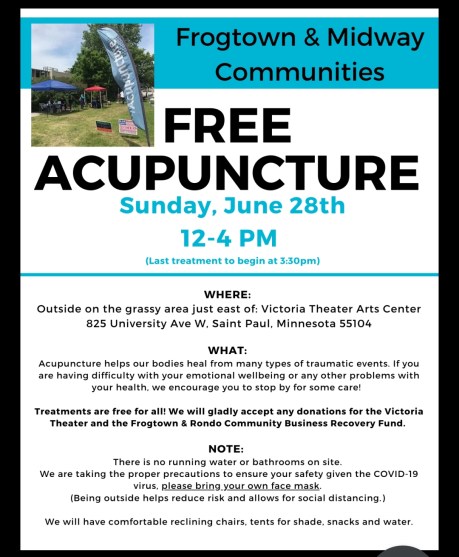
*
Errata: Categories have been added and a typo has been corrected.
### SAY IT LOUD ###
It’s There (Even When You Can’t See It) June 27, 2020
Posted by ajoyfulpractice in "Impossible" People, Books, Changing Perspectives, Healing Stories, Helen Keller, Hope, Life, Love, One Hoop, Pain, Philosophy, Suffering, Wisdom, Women, Yoga.Tags: adoption, Anne Sullivan, asana, Changing Perspectives, disability, family therapy, Helen Keller, Martha Washington, Pearl S Buck, Polly Thomson, Sai Zhenzhu, Swami Vivekananda, Virginia Satir, yoga philosophy, yoga practice, Yoga Sutra 2.26
4 comments
Making contact
I believe
The greatest gift
I can conceive of having
is
to be seen by them,
to be understood
and
touched by them.
The greatest gift
I can give
is
to see, hear, understand
and to touch
another person.
When this is done
I feel
contact has been made.
– from the poem “Making Contact” by Virginia Satir
For those of you who missed the memo: I am a huge fan of the work of therapist and author Virginia Satir. Born yesterday (June 26th) in 1916, she is known as the “Mother of Family Therapy” and placed her work in “family reconstruction” and “family sculpting” under the umbrella of “Becoming More Fully Human.” She developed the Virginia Satir Change Process Model, which was adopted by corporations in the 1990’s and 2000s as a change management model, and the Human Validation Process Model. Similar to other existential therapist (although I’m not sure she ever used such a label), Satir found that when people came into therapy the presenting, or “surface,” problem was seldom the real problem. Instead, her work revolved around the idea that the real issue was how they coped with situations in their lives. Additionally, she documented that people’s self-esteem played a part in how they coped with conflict and challenges. So, here again, the issue comes down to functional versus dysfunctional thought patterns and how those thought patterns manifest into words and deeds that alleviate suffering or cause suffering.
When Satir worked with patients she would utilize role playing as well as meditations. The role playing was to get family members to consider each other’s perspectives and, in doing so, cultivate empathy and better understanding. The guided meditations were a way for people to recognize that they already had (inside of themselves) the tools/toolkit – or abilities – needed to overcome challenges and obstacles within their relationships. They also empowered people to use the tools that were inside of them, and to cultivate those tools. However, Satir did not see her work as being limited to “traditional” families; she believed that if her work could heal a family unit, it could also heal the world. They key, again, was offering people that “greatest gift” and figuring out what people really wanted and/or needed.
“It is now clear to me that the family is a microcosm of the world. To understand the world, we can study the family: issues such as power, intimacy, autonomy, trust, and communication skills are vital parts underlying how we live in the world. To change the world is to change the family.”
– from The New Peoplemaking by Virginia Satir
Satir was born on the anniversary of the birth of the award winning novelist Pearl S. Buck, who was also known as Sai Zhenzhu. Born in Hillsboro, West Virginia in 1892, Buck spent most of her life in China. Her experiences in China, both as a young child of missionaries and as an adult, resulted in a plethora of novels, short stories, children’s books, and biographies that exposed Western readers to the people, culture, and landscape of China. She won the Nobel Prize in Literature and was the first woman to win the Pulitzer Prize.
Buck was a humanitarian who wrote about everything from women’s rights and immigration to Communism, war and the atomic bomb. Her work was a form of activism, but she didn’t regulate her actions to the page alone. When it came to Asian, mixed-race, special needs, and international adoptions, Buck was more than a writer – she was a parent. In addition to advocating against racial and religious matching in adoptions, Buck adopted six children of various ethnicities and nationalities. (Previously, she had given birth to one special needs daughter. So, she was a mother of seven.) She also co-founded Welcome House, Inc., the first international, inter-racial adoption agency (with author James Michener, lyricist and producer Oscar Hammerstein II, and interior designer and decorator Dorothy Hammerstein); established the Pearl S. Buck Foundation to support children who were not eligible for adoption, and opened Opportunity Center and Orphanage (aka Opportunity House) to advocate for the rights of orphans in South Korea, Thailand, Philippines, and Vietnam. Buck believed that families formed from love (as opposed to blood, race, religion, or nationality) and that they were living expressions of democracy – something she felt the United States could not unequivocally express during the Jim Crow era. In 1991, Welcome House and the foundation merged to form Pearl S. Buck International to continue Buck’s legacy.
“I was indignant, so I started my own damned agency!”
– Pearl S. Buck explaining why she started Welcome House in 1949 (after multiple agencies told she could not adopt Robbie, a mixed race 15-month old boy, because his skin was brown)
“What lingers from the parent’s individual past, unresolved or incomplete, often becomes part of her or his irrational parenting.”
– from Peoplemaking by Virginia Satir
Take another look at the poem at the top of this post. No, don’t read it… just look at it. What do you see? More specifically, who do you see? Granted, your device, your eyes, or even your brain may not see what I see. But, consider what you might see. What if you saw yourself? What if you saw someone you loved? What if you saw someone you didn’t like? Even if you don’t see what I see, the underlying meaning is the same: there is an individual, with open arms, wanting, needing, and waiting to be seen.
“We need 4 hugs a day for survival. We need 8 hugs a day for maintenance. We need 12 hugs a day for growth.”
– Virginia Satir
“We must not allow other people’s limited perceptions to define us.”
– from The New Peoplemaking by Virginia Satir
If you want to talk about people who did not let other people’s limited perceptions define them, let’s talk about Helen Keller and the people that surrounded her. Born in Tuscumbia, Alabama, today in 1880, Keller lost both her ability to see and her ability to hear when she was 19 months old. She fell ill with what might have been scarlet fever or meningitis and while she lost two of her senses, Keller was far from dumb. She figured out a way to use signs to communicate with Martha Washington (the Black six-year old daughter of her family’s cook, not to be confused with the 1st lady) and by the age of seven she had developed more than 60 signs – which her family also understood. Furthermore, she could identify people walking near her based on the vibrations and patterns of their steps – she could even identify people by sex and age.
“When one door of happiness closes, another opens; but often we look so long at the closed door that we do not see the one which has been opened for us… Happiness is a state of mind, and depends very little on outward circumstances.”
– from To Love This Life: Quotations by Helen Keller by Helen Keller (with Forward by Jimmy Carter)
Keller’s mother, Kate Adams Keller, learned about Laura Bridgman (who was a deaf and blind adult) from Charles Dickens’ travelogue American Notes for General Circulation. The Kellers were eventually referred to Alexander Graham Bell who, in turn, introduced them to Anne Sullivan (who was also visually impaired, due to a bacterial infection). Keller and Sullivan would form a 49-year relationship that evolved over time. Even when Sullivan got married, Keller (possibly) got engaged, and illness required additional assistance from Polly Thomson, the women worked and lived together. Keller would go on to learn to speak and became a lecturer, as well as an author and activist. Sullivan would be remembered as an extraordinary educator whose devotion and ability to adjust to her student’s needs is memorialized in school names and movies like The Miracle Worker and Monday After the Miracle. Keller (d. 06/01/1968), Sullivan (10/20/1936), and Thomson (03/20/1960) are interred together at the Washington National Cathedral.
“At that time the compliments he paid me were so generous that I blush to remember them. But now that I have come out for socialism he reminds me and the public that I am blind and deaf and especially liable to error. I must have shrunk in intelligence during the years since I met him.”
– from “How I Became a Socialist” by Helen Keller (published in The New York Call 11/03/1912)
Helen Keller, like Pearl S. Buck, is notable for many reasons, but both women were (and still can be) considered controversial when you think about their family histories and some of their views. Buck was described as “a thorn in the side of the welfare establishment” and her award-winning novel The Good Earth is considered by some to be literary propaganda. Keller’s father, and at least one of her grandfathers, served in the Confederate Army and she was a related to Robert E. Lee. She was a suffragist, a pacifist, a radical socialist, an advocate for people with disabilities, and a supporter of birth control – but/and she also believed in eugenics. Yes, history has shown us some pretty messed up examples of people believing in eugenics, the idea that we could genetically pre-select character traits in order to create a better society. Besides the basic humanitarian issues, one of the problems with eugenics is that at its core there is a lack of faith in humanity.
In referencing the coincidence that she was related to the first teacher of the deaf in Zurich, Keller wrote in her autobiography, “… it is true that there is no king who has not had a slave among his ancestors, and no slave who has not had a king among his.” There is clarity in knowing, deep inside, that you are connected to both sides of the coin. That clarity comes from going deep inside one’s self. If we pay attention to what’s going on inside of our own hearts we have a compass that steers us right – at least, that is the message of contemplatives.
“After long searches here and there, in temples and in churches, in earths and in heavens, at last you come back, completing the circle from where you started, to your own soul and find that He for whom you have been seeking all over the world, for whom you have been weeping and praying in churches and temples, on whom you were looking as the mystery of all mysteries shrouded in the clouds, is nearest of the near, is your own Self, the reality of your life, body, and soul. That is your own nature. Assert it, manifest it.”
– from “ The Real Nature of Man” speech, delivered in London and published in The Complete Works of Swami Vivekananda (Volume 2, Jnana-Yoga) by Swami Vivekananda
Yoga Sutra 2.26: vivekakhyātiraviplavā hānopāyah
– “The clear, unshakeable awareness of discerning knowledge (insight) is the means to nullifying sorrow (created by ignorance).”
Please join me for a little discernment in the form of a 90-minute virtual yoga practice on Zoom today (Saturday, June 27th) at 12:00 PM. You can use the link from the “Class Schedules” calendar if you run into any problems checking into the class. Give yourself extra time to log in if you have not upgraded to Zoom 5.0. You can request an audio recording of this practice via a comment below.
Today’s playlist is available on YouTube and Spotify. (This playlist is dated 06032020.)
### STILL HUMAN ###
What’s Behind Your Curtain? June 24, 2020
Posted by ajoyfulpractice in "Impossible" People, Buddhism, Changing Perspectives, Dharma, Faith, Gratitude, Healing Stories, Life, Music, Mysticism, One Hoop, Philosophy, Religion, Wisdom, Yoga.Tags: asana, Elizabeth, Fete, Henry Ward Beecher, John the Baptist, Lin Yutang, Mary, Midsummer, Nativity of John the Baptist, Saint John of Capistrano, Saint John of the Cross, Saint-Jean-Baptiste Day, samskāras, truth, vinyasa, Walela, William Shakespeare, yoga philosophy, Yoga Sutra, Zechariah
1 comment so far
Yoga Sutra 2.20: draşțā dŗśimātrah śuddho’pi pratyayānupaśyah
– “The Seer is the pure power of seeing, yet its understanding is through the mind/intellect.”
“my heart
Is true as steel:”
– Helena in Act II, Scene i of A Midsummer’s Night Dream by William Shakespeare
“The difference between perseverance and obstinacy is that one often comes from a strong will, and the other from a strong won’t.”
– Abolitionist, suffragist, and minister Henry Ward Beecher (b. 06/24/1813)
Life is a matter of perception. We experience certain things and that experience colors the way we experience future things. The way we experience something – based on previous experiences – plays a part in how we engage ourselves, others, and our experiences. In other words, life is how you see it.
In the Yoga Philosophy, these layers of experience or layers of perception are referred to as samskāras (which is often translated as “impressions”). Specifically, samskāras are karmic / mental impressions formed by everything we say, do, think, and experience through our senses. These layers of impression can be very subtle, and may be imbedded deep within our subconscious and unconscious memories. Or, they can be very much in the front of our conscious mind. Either way, they can strongly influence the way we think, speak, and act. Part of the practice, both in Yoga and in Buddhism, is to burn away the veil. Or, you could think of it as washing them away.
“Go and pray upon a mountain
Go and pray beside the ocean
And you’ll wash your spirit clean”
– from the song “Wash Your Spirit Clean” by Walela
There are lots of great stories about how previous experiences color future and current experiences, and one of those stories comes from Christianity and Islām. It is the story of Zechariah or Zachary. Zechariah was a Jewish priest who was married to a woman named Elizabeth (who happened to be a relative of the Virgin Mary). According to the gospels (specifically Luke 1:6), the couple were good people who followed the commandments and orders of God. We can take from this – and the fact that Zechariah was a rabbi – to mean that they had spent their lives steeped in their beliefs and, not only keeping those beliefs in their heart, but also acting according to the beliefs in their heart.
They were also old and considered beyond their child bearing years. So, it’s not surprising that Zechariah doubted the words of the angel Gabriel, who informed the couple that they would have a son named John and that he would “be a joy and delight to you, and many will rejoice because of his birth, for he will be great in the sight of the Lord…. and he will be filled with the Holy Spirit even before he is born.” (Luke 1:14 – 15).
“We never know the love of a parent till we become parents ourselves.”
– Abolitionist, suffragist, and minister Henry Ward Beecher (b. 06/24/1813)
Based on his previous experiences, the angel’s message didn’t make sense to the rabbi. It especially didn’t make sense, because Judaism – like many other cultures and religions – has very specific naming traditions. Given these traditions, what self-respecting rabbi (with a great name) would name a descendent of Aaron and Moses “John”? Zechariah wanted proof, he wanted a sign, and so Gabriel said the rabbi would be mute until the day the prophecy was fulfilled – basically, until Zechariah believed.
Before the baby was born, there were some other unbelievable events. One of those events came in the form of a visit from Elizabeth’s relative Mary. It turned out that Mary, a virgin, had also received a visit from Gabriel and was also pregnant. Her son would be born 6 months after Elizabeth’s son – and both sons were destined for greatness.
When Zechariah and Elizabeth’s son was born, their friends and family assumed the baby would be named after the father. The still mute Zechariah, however, wrote down the words that ultimately ended his muteness: “his name is John.” His written words were actually a sign that Zechariah’s experiences had changed his beliefs. Or, more precisely, his disbeliefs had changed and the veils were lifted.
“On the eighth day they came to circumcise the child, and they were going to name him after his father Zechariah, but his mother spoke up and said, ‘No! He is to be called John.’ They said to her, ‘There is no one among your relatives who has that name.’ Then they made signs to his father, to find out what he would like to name the child. He asked for a writing tablet, and to everyone’s astonishment he wrote, ‘His name is John.’ Immediately his mouth was opened and his tongue set free, and he began to speak, praising God.”
– New Testament: The Gospel According to Luke (1:59 – 1:64 NIV)
In the modern world, this son of Zechariah and Elizabeth is known as John the Forerunner (in Eastern Christianity), John the Immerser (in some Baptist traditions), John the Baptizer, the prophet John (in Islām), or simply John the Baptist. Born 6 months before Jesus, he would go on to baptize Jesus and be associated with a spiritual cleansing ritual within Christian traditions. In Christian traditions, to be baptized is to have one’s sins washed away and is a way to be transformed, or to mark one’s transformation.
There are four feast days associated with Saint John the Baptist, one of which is today, June 24th. Also, as an aside, Saint John of Capistrano (b. 1386) and Saint John of the Cross (b. 1542) would have celebrated birthdays today. The fact that today is not a feast day for the other two Johns is actually more interesting than the number of feast days for John the Baptist.
Most feast days are traditionally celebrated on the death date of a saint. The idea behind “dies natalis” is that upon death one is born into eternal life (and free of original sin). Today, however, is one of two feast days in Western Christianity associated with an individual’s birth – because Jesus and John the Baptist were cleansed in the womb. (NOTE: The Virgin Mary is considered immaculate in that she was “conceived without sin.”)
As Christianity made its way through the pagan and indigenous cultures, this became a “good” day to co-opt… because it already had meaning. Today is also Midsummer. Considered the ancient (pagan) middle of Summer, it is also (around) the astronomical beginning of Summer and was widely celebrated long before Christianity existed. Many of the pagan celebrations involved bonfires; fire being another element used in purification.
Celebrations of the Nativity of Saint John the Baptist are recorded back as far as 1333, when the poet and scholar Petrarch noted women in Cologne were “rinsing their hands and arms in the Rhine ‘so that the threatening calamities of the coming year might be washed away by bathing in the river.’” For people in Quebec, and for French Canadians throughout the North American continent, today has a particularly patriotic and cultural heritage significance – making it similar to Saint Patrick’s Day or Cinco de Mayo.
“No emotion, any more than a wave, can long retain its own individual form.”
– Abolitionist, suffragist, and minister Henry Ward Beecher (b. 06/24/1813)
Please join me today (Wednesday, June 24th) at 4:30 PM or 7:15 PM for a yoga practice on Zoom. Use the link from the “Class Schedules” calendar if you run into any problems checking into the class. You will need to register for the 7:15 PM class if you have not already done so. Give yourself extra time to log in if you have not upgraded to Zoom 5.0. You can request an audio recording of this practice via a comment below.
Wednesday’s playlist is available on YouTube and Spotify. (If you have a free Spotify account, you may hear extra music that is not part of the original playlist.)
“It is not so much what you believe in that matters, as the way in which you believe it and proceed to translate that belief into action.”
– from “Chapter I: The Awakening” in The Importance of Living by Lin Yutang
Edited June 24, 2023.
### BE GRATEFUL ###
LIFT YOUR LIGHT, LET YOUR POWER SHINE! June 17, 2020
Posted by ajoyfulpractice in Art, Changing Perspectives, Faith, Gratitude, Healing Stories, Hope, Life, Love, Music, One Hoop, Pain, Peace, Philosophy, Suffering, Tragedy, Wisdom, Yoga.Tags: "The New Colossus", Abraham Lincoln, Antoinette Sithole, Bramaviharas, Caroline Myss, Emma Lazarus, Frédéric-Auguste Bartholdi, Gustave Eiffel, Hectore Pieterson, Imam Khalid Latif, Joseph Pulitzer, Ma'makhubu, Mbuyisa Makhubo, Pandit Rajmani Tigunait, sankhya, siddhis, Statue of Liberty, yoga philosophy, Yoga Sutra 2.24, yoga sutras
2 comments
FRIEND [Old English, with Germanic origin; related to Dutch and German words “to love,” also related to “free”] 1. One who is attached to another by affection; one who entertains for another sentiments of esteem, respect and affection, which lead him to desire his company, and to seek to promote his happiness and prosperity; opposed to foe or enemy.
“FRIEND’SHIP, noun frend’ship. 1. An attachment to a person, proceeding from intimate acquaintance, and a reciprocation of kind offices, or from a favorable opinion of the amiable and respectable qualities of his mind. friendship differs from benevolence, which is good will to mankind in general, and from that love which springs from animal appetite. True friendship is a noble and virtuous attachment, springing from a pure source, a respect for worth or amiable qualities. False friendship may subsist between bad men, as between thieves and pirates. This is a temporary attachment springing from interest, and may change in a moment to enmity and rancor.”
– partially excerpted from Webster’s Dictionary 1828
“Physically speaking, we can not separate. We can not remove our respective sections from each other nor build an impassable wall between them. A husband and wife may be divorced and go out of the presence and beyond the reach of each other, but the different parts of our country can not do this. They can not but remain face to face, and intercourse, either amicable or hostile, must continue between them. Is it possible, then, to make that intercourse more advantageous or more satisfactory after separation than before? Can aliens make treaties easier than friends can make laws? “
– quoted from President Abraham Lincoln’s first inaugural address (March 4, 1861)
Let’s talk about cultivating friendships and tokens of friendship. For the last few days, I have focused on the siddhis (“powers” or “accomplishments”) we all have and, in particular, those powers or abilities which are considered by Indian philosophy to be “unique to humans.” You can read what I’ve already posted here, here, and here. Now, however, I’m going to hone in a little more on how we use those “supernormal” powers and how we express or manifest those powers.
Whenever I talk about the symbolic and energetic aspects of the chakra system, I tie each chakra to the preceding chakras in order to highlight the connection between biography and biology. Hence, when I talk about making relationships “outside of our first family, tribe, or community of birth,” I mention that how and/or if we make friends with people we (and the world) perceive as being different from us is partially determined by where we come from – our first family. (Remember, as always, that just as we are genetically connected to people we have never met and will never meet, we are energetically connected to people we have never met and will never meet.)
“Sacred Truth: Honor one another. Every relationship you develop, from casual to intimate, helps you become more conscious. No union is without spiritual value.”
– quoted from “Morning Visual Meditation” by Caroline Myss
Geography, general proximity, definitely plays a part. Even with the internet “bringing” people closer together – and despite the pandemic enforced social distancing – our strongest bonds tend to be with people in close physical proximity with us. We meet people in the middle of their stories, and we get to know them backwards and forwards (literally and metaphorically) by spending time together. The more time we spend with someone the more vulnerable we are together and the more we know each other’s hearts. The stronger the bond, the tighter it holds when friends are not physically together.
Another thing that plays a part in cultivating friendships is a common thread. We may share a common ideology, based on a correct or incorrect understanding of the world – an understanding that we started learning as a child (see first family). More often than not, however, the common thread is something we like or dislike. Whether it is a shared love of tortillas, yoga, movies, music, books, sports in general, and/or a specific sport, musician, or author, people form bonds around an attachment that is rooted in pleasure. Conversely, we can also form really strong bonds around something we don’t like, an aversion or attachment rooted in pain. And, yes, if you are following along, I’m using the same descriptions that are used to explain two of the three afflicted or dysfunctional thought patterns. But, before we get to that, there’s another way we bond: We bond over a shared experience.
“All people who died on that day, to me, it is like they did not die in vain. As people we managed to take out good things from bad things, to live by today, to shape ourselves and our country.”
– Antoinette Sithole talking about the Soweto student Uprising (06/17/1976) and the unknown “gentleman” (Mbuyisa Makhubo) and woman who helped her after her 12-year old brother Hector Pieterson was killed
“Mbuyisa is or was my son. But he is not a hero. In my culture, picking up Hector is not an act of heroism. It was his job as a brother. If he left him on the ground and somebody saw him jumping over Hector, he would never be able to live there.”
– quoted from Mbuyisa Makhubo’s mother Ma’makhubu explaining why her son picked up a stranger during the Soweto student Uprising (06/17/1976)
Sometimes we bond over a beautiful experience. However, more often than not, really strong relationships form over a shared experience involving a very tragic or traumatic experience. Think of people that came together, and stayed together, after 9/11 or any number of mass shootings. Yesterday, at the end of class, I mentioned that it was “Youth Day” in Soweto, South Africa, a commemoration of the anti-apartheid student uprising that occurred on June 16, 1976. It was a horrible day that brought people together – just as so many horrible events are bringing people in the United States, and around the world, together today. And that’s the other thing: people can become friends because they went through similar experiences – like a terrorist attack, a natural disaster, or a war – even when they didn’t go through the experiences together.
If you look back, you will note that all of the ways I mentioned about friendship involve at least one of the five afflicted or dysfunctional thought patterns; thought patterns that create suffering – and all of those afflicted thought patterns are born out of ignorance. That is not to say that friendship is ignorant. In fact, it is easy to argue that friendship, community, and belonging are wise. There is a definite reason why the Buddha described sangha (“community”) as one of the three jewels. But, when we look at how we become friends with someone it is almost always based on the outside. How we stay friends, however, is based on the inside.
Granted, sometimes we stay friends with someone, because of that final afflicted thought pattern: fear of loss or death. We can all look in our circle of friends and find people we have known for some extended period of time. We may even still spend time with them. However, if we’re being honest, we don’t spend a lot of time with these people. We don’t call them – or even have a strong desire – to call them when we are struggling. They are not our go-to people in troubling times. If they reach out to us, we may wrap up the conversation quickly. These are the people that make us think, “Wait, why am I still friends with this person?” These are the people you have recently “unfriended” if you are on social media. Be honest: You’re still “friends” with some people simply because you’ve known them since preschool, grade school, high school, college, or your first job. While seem interacting with some friends may leave you feeling lighter and brighter, interactions with this latter group of friends leaves you feeling a little dull, disempowered.
“Because of these powers we are able to comprehend the invisible forces of nature and harness them to improve the quality of life. With the decline of our inner luminosity, we lose these powers to a significant degree.”
– quoted from the commentary on Yoga Sūtra 2.24 (as it relates to “dana”) from The Practice of the Yoga Sutra: Sadhana Pada by Pandit Rajmani Tigunait, PhD
I have mentioned this week, that the first three “powers unique to humans” are mental abilities that are directly related to the final three. These final three are the ability to eliminate three-fold sorrow (which requires being able to identify the cause of these sorrows), the ability to cultivate “a good heart; finding friends,” and dana (“generosity” or the ability to give). I have described the last three as “heart powers,” but really and truly all six are heart powers – as they are related to discernment, the interior movements of the heart. When we look at our friendships though this lens, we can definitely see the power of our hearts. We can also see times when, and the ways in which, we are disempowered by ignorance. Society will definitely allow, even condone, a rural Republican, white man in law enforcement (who grills over 50 types of burgers on the side) to not be friends with a liberal black, vegetarian woman from a big city in the South. But, thanks in part to geography, a friendship formed – and I, for one, am richer and more powerful for it. What initially connects people is on the outside, and that may also be what inevitable separates people. What keeps people connected, however, is on the inside.
“There are many of selfish people in this world. People who think first of themselves. Don’t be like them. Don’t give in to the tyranny of your ego and self. Don’t be hateful, don’t be racist, don’t be ignorant or foolish. Learn to appreciate diversity by actually experiencing it and not just talking about it or watching it on TV or in a movie. Talk to and build a relationship with someone that the world would fully let you get away with not interacting with, simply because it’s the right thing to do and you understand that it will benefit you. It’s harder to stereotype when you actually learn someone’s name.”
– Imam Khalid Latif in a 2013 “Ramadān Reflection” for Huffington Post
What is on the inside is something that can only be felt. It doesn’t always have an external reference point. Yes, we can see an expression of love, a token of friendship, and understand it from our own experiences. However, when we see a parent and a child hugging, or even two children hugging, we don’t exactly know what they are feeling. We can only know how we have felt in similar circumstances. We can use those first three “powers unique to humans” (“intuitive knowledge,” words/meanings, and the ability to “study, analyze, and comprehend”) in order to have an emotional, embodied experience. So, we feel the love. And, when we feel the love, we may eliminate some sorrow of our own; cultivate friendship; and/or “have both the wisdom and the courage to share what lawfully belongs to us with others.”
“Our power of discernment and intuitive wisdom enables us to distinguish good thoughts and feelings from bad ones, and cultivate the good ones further to enrich the virtues of our heart. The same capacity enables us to see beyond the boundaries of our little world and share our goodness with others. This capacity also motivates us to pass our achievements on to future generations.”
– quoted from the commentary on Yoga Sūtra 2.24 (as it relates to “finding friends”) from The Practice of the Yoga Sutra: Sadhana Pada by Pandit Rajmani Tigunait, PhD
Today in 1885, the Statue of Liberty arrived in New York Harbor. It was a token of friendship from France and the sculptor Frédéric-Auguste Bartholdi. Bartholdi wanted to commemorate the anniversary of the American Revolution and also acknowledge its connection to the French Revolution. He felt kinship between the nations because of how each populace had overthrown royal sovereignty and oppression. He wanted also to honor the concepts of liberty, freedom, and equality smashing the chains of slavery. Initially inspired by the image of an Arab peasant woman and his own mother, he called the statue “Liberty Enlightening the World” and felt the words and symbols of the statue would do just that – enlighten the world.
The 450,000-pound copper-colored statue arrived in 350 individual pieces shipped in over 200 cases. This included the iron scaffolding created by Gustave Eiffel, who would later create the Eiffel Tower. Lady Liberty would be reassembled and dedicated the following year; but, there was a moment where this symbol of freedom and democracy seemed destined to collect dust like a puzzle someone decided not to put together. The project ran out of money. Who knows what would have happened if not for the general populace in both countries. The statue cost France an estimated $250,000 (about $5.5 million today). The United States was responsible for funding and building the pedestal, another $250,000 – $300,000. Fundraising efforts on both sides of the Atlantic included auctions, a lottery, and boxing matches. Publisher Joseph Pulitzer started a drive that attracted over 120,000 contributors. Remember, this was long before the internet and social media. Some people could only donate a dollar, but most donated less than that.
Emma Lazarus, an author and Jewish activist, wrote the sonnet “The New Colossus” in 1883 and auctioned it off during one of the fundraising efforts featuring original art and manuscripts. Lines from the poem would eventually be inscribed on the pedestal, but Lazarus initial declined the opportunity to participate in the auction. She said she couldn’t write a poem about a statue. In fact, what she eventually wrote was a gift of empathetic friendship for Jewish refugees. Part of her philanthropic efforts in the world included helping refugees who had fled anti-Semetic pogroms in Europe and Lazarus saw the refugees living in conditions that were outside of her privileged experience. Lazurus used her first three powers to supercharge her final three powers and, in doing so, she empowered the heart encased in Bartholdi’s statue and generations of hearts who have since read her words.
“‘Keep, ancient lands, your storied pomp!’ cries she
With silent lips. ‘Give me your tired, your poor,
Your huddled masses yearning to breathe free,
The wretched refuse of your teeming shore.
Send these, the homeless, tempest-tost to me,
I lift my lamp beside the golden door!’”
– from the poem “The New Colossus” by Emma Lazarus
Please join me today (Wednesday, June 17th) at 4:30 PM or 7:15 PM for a practice where we will empower the extensions of our hearts. Use the link from the “Class Schedules” calendar if you run into any problems checking into the class. You will need to register for the 7:15 PM class if you have not already done so. Give yourself extra time to log in if you have not upgraded to Zoom 5.0. You can request an audio recording of this practice via a comment below.
Wednesday’s playlist is available on YouTube and Spotify. (The playlist starts with instrumental music. If your Spotify is on shuffle, you will want your music volume low at the beginning of the practice.)
### MO’ METTĀ, LESS BLUES ###
Blood Will Tell (or Blood Will Out)… June 14, 2020
Posted by ajoyfulpractice in Changing Perspectives, Gratitude, Healing Stories, Hope, Life, Love, One Hoop, Science, Super Heroes, Wisdom, Yoga.Tags: asana, Blood, Dana, Dr. Jean-Baptiste Denys, Dr. Karl Landsteiner, Pandit Rajmani Tigunait, Red Cross and Red Crescent, vinyasa, WHO, World Blood Donor Day, yoga philosophy, Yoga Sutra 2.24
2 comments
“But not until recently has it been recognized that in living organisms, as in the realm of crystals, chemical differences parallel the variation in structure.”
*
– Dr. Karl Landsteiner, winner of the 1930 Nobel Prize in Physiology or Medicine
Pause for a moment. Consider the idea that “blood will tell” or “blood will out.” These are phrases, along with “blue-blood” that date back at least as far as the Battle of Hastings in 1066, when it was believed you could tell who was an “pure-bred” aristocrat and who was of Norse or Celtic descent by the way one fought on the battlefield. Your view of which was preferred depended on which side of the battle you fell.
Now, consider the idea that you can tell something about someone’s heritage just by looking at their outside – or at their actions. Don’t click yet, but consider the idea that in this picture you can see “humanity at its best and at its worst.” Even before you click on the link, you may have a feeling. Now, when you click on the link, pause before you read the headline or the caption.
Did your first impression match what you were seeing? Did it match what you were expecting?
I always say, go deeper. Go deeper than what is on the surface and you will find that we all breathe – even when we do it on a machine; we all have hearts; we all have the same blood pumping through our veins and arteries. Except we don’t…
Go deeper.
Dr. Karl Landsteiner, born today in 1868, was an Austrian biologist and physician known for identifying and classifying the main blood groups, based on the presence of different agglutinins (the substance which causes blood particles to coagulate and aggregate, i. e., clot). Even though Dr. Jean-Baptiste Denys documented successful blood transfusions as far back in 1667, the success of those surgeries was most likely the result of luck and/or the small amounts of blood that were used. Landsteiner’s research in 1900, as well as his work with Dr. Alexander S. Wierner to identify the Rhesus factor (in 1937), enable physicians to transfuse blood without the allergic reaction that proved fatal when blood types were mixed. In between his work with blood types, he worked with Drs. Constantin Levaditi and Erwin Popper to discover the polio virus (1909). He has been awarded several prestigious science awards, including the 1930 Nobel Prize in Physiology or Medicine, and is known as the “Father of Transfusion Medicine.”
“I have recently observed and stated that the serum of normal people is capable of clumping the red cells of other healthy individuals… As commonly expressed, it can be said that in these cases at least two different kinds of agglutinins exist, one kind in A, the other in B, both together in C. The cells are naturally insensitive to the agglutinins in their own serum.”
*
– Dr. Karl Landsteiner, winner of the 1930 Nobel Prize in Physiology or Medicine
In honor of Dr. Landsteiner’s birthday, today is World Blood Donor Day. (Coincidentally, it falls just the day before the anniversary of Dr. Denys’s 1667 surgery on a 15-year old boy, using sheep’s blood.) Established in 2005 by the World Health Organization and the International Federation of Red Cross and Red Crescent Societies, World Blood Donor Day is a celebration of and an expression of gratitude for the millions of donors worldwide. It is also an opportunity to raise awareness for the need for safe blood and blood products, which is a universal need. According to WHO, 42% of the world’s blood supply is collected in high income countries, which are home to only 16% of the world’s population. Additionally, as of 2014, only 60 countries have the majority (99-100%) of their blood supplied by voluntary, unpaid donors. Over 70 countries depend on family and paid donors. Go deeper and you will find that even in countries that can depend on voluntary donations, certain parts of the country experience shortages which can only be alleviated by a mobilized network. One of the goals of World Blood Donor Day is to “mobilize support at national, regional, and global levels among governments and development partners to invest in, strengthen and sustain national blood programmes.”
“The last category of our innate siddhis is dana, “the ability to give.” We have both the wisdom and the courage to share what lawfully belongs to us with others. We are designed to experience the joy of giving. This joy is the architect of human civilization, characterized by self-sacrifice and selflessness.”
*
– commentary on Yoga Sutra 2.24 from The Practice of the Yoga Sutra: Sadhana Pada by Pandit Rajmani Tigunait, PhD
If you want to get your blood pumping, please join me for a 65-minute virtual yoga practice on Zoom today (Sunday, June 14th) at 2:30 PM. You can use the link from the “Class Schedules” calendar if you run into any problems checking into the class. PLEASE NOTE: Zoom 5.0 has gone into effect yesterday. If you have not upgraded, you will need to give yourself extra time to log into Zoom. You can always request an audio recording of this practice (or any practice) via email or a comment below.
Today’s playlist is available on YouTube and Spotify.
 A Joyful Practice