“The more they target our spirit, the brighter we let our souls shine.”
*
– quoted from a Charlie Harary presentation about Chanukah and lessons he learned from his grandparents
So far this week I have centered classes around a series of interrelated, light-related questions: 1. When do you shine the brightest? 2. Why so much focus on light?Of course, these questions are inspired by the fact that it is Chanukah, the Jewish festival of lights. When I tell the story of Chanukah, I endeavor to highlight the different “miracles” within the story, the little things that turn into big things, and to also show that each and every one of us, is the light. People – and the way they shine – are every day miracles. I consider the Maccabees the shamash of the story; the way they show up, keep their faith, and inspire others when faced with oppression is one example of how people can shine in the world. That people still observe Chanukah is another example of people shining in the world.
Additionally, as I said mentioned to a friend yesterday, there are plenty of other stories in the world about people who show up and shine despite tragedy and oppression. There are several stories associated with today that feature people who are, in their own rights, the attendants, caretakers, and light workers of the world. People who helped make the world better, because they showed up and shined. As you read or hear today’s stories (or even take another look at the Chanukah story) consider how each person was in a unique position to make a difference, to shine. Then, consider your unique position and how you can shine.
Most of the following was originally posted on December 1, 2020. Dates and playlists have been updated. Some supplemental information has been added.
“If this article doesn’t scare the shit out of you, we’re in real trouble. If this article doesn’t rouse you to anger, fury, rage, and action, [we] may have no future on this earth. Our continued existence depends on just how angry you can get.”
*
– quoted from “1,112 and Counting” by Larry Kramer, printed in the New York Native (Issue 59, March 14 – 27, 1983)
*
“‘Mine was the first cry for justice, and a loud one. I made it so that our own adult leaders couldn’t just be nice anymore. Back then, as a teenager, I kept thinking, Why don’t the adults around here just say something?’”
*
– quoted from Claudette Colvin: Twice Toward Justice by Phillip Hoose
Today I have two stories for you. Both are fables, in that they are stories with a moral. Both are also true – in that they actually happened. Finally, both stories are open ended… in that we are still living with the ramifications of the stories and their lessons. There are some other overlaps; however, ultimately, one of the stories is a dark and twisted fairy tale, while the other is a bit of a horror story. You can decide which is which.
In the first story, a 15-year old student, coming home from school, was told she was in a place where she didn’t belong. For the record, she was in a place specifically designated for “her kind,” but that was neither here nor there when someone designated as her “better” was going to be in the area. This student, let’s call her Claudette (because that is her name) and an older pregnant woman (let’s call her Ruth) decide they were going to stay put. Of course (I say with a lot of sarcasm), the police were called. Ruth moved. Claudette did not. Eventually she was (re)moved, by the police and arrested. On the way to the police station, she was sexually harassed by the officers and she feared that one would take the harassment farther. A minister bailed her out of jail; she was convicted (in juvenile court) of three charges; and two of the charges were eventually dropped on appeal. Ironically, the charge that stuck – assaulting an officer – might not have even happened.
The events described above happened in the Montgomery, Alabama in the Spring of 1955. Claudette Colvin was not the first Black person to refuse to make room for a white person on a bus, or anywhere else, and she would not be the last. But, her story is one that many people forgot or didn’t know; because, nine months later – today in 1955 – Rosa Parks sat in the “white section” of a bus and didn’t get up.
“I would like to be remembered as a person who wanted to be free… so other people would be also free.”
*
– Rosa Parks, as quoted in Fight Like A Girl: 50 Feminists Who Changed the World by Laura Barcella
Some people referred to Mrs. Parks as a tired seamstress, a 42-year old “Colored” woman; but, more importantly to the story, she was an activist who had worked as a secretary for the NAACP and she made for good optics. Unlike, Claudette Colvin, who was a pretty, dark skinned teenager who was pregnant and unmarried, Rosa Parks was a pretty, fair skinned, established married woman – who also practiced yoga and was trained in civil disobedience.
There are lots of different lessons and morals to that story. Some of the big ones (to paraphrase Claudette Colvin) are the importance of knowing your rights, taking a stand, and saying when something isn’t right. Another big lesson: optics and messaging matter. Which leads me to the next story that is relevant to today.
Once upon a time some people got sick and, because of their illness, some children were born prematurely. Doctors thought the illness was a form of pneumonia. While there were some studies around the illness, it didn’t affect enough people in the right places to become a priority on any one’s radar. After all, optics and messaging matter – and it was believed that the adults who got sick did so because of their behavior. Fast forward 69 years and an African-American teenager in Saint Louis, Missouri (let’s call him Robert R) died of this pneumonia with weird symptoms. 7 years later a Norwegian sailor (with ties to Africa) died, 4 months after the death of his daughter and 8 months before the death of his wife. The next year a Danish doctor, also with ties to Africa, also died – as did several other people of various ages, genders, ethnicities, races, and (in the case of the adults) occupations.
By the late 70’s, children were being born with this pneumonia that some doctors then thought was a form of cancer. By the 1980’s, researchers and major American news outlets were publishing news about a “gay cancer” – which it is not – and people without any medical knowledge were guessing at how the disease is spread. And it was spreading, globally.
“If all of this had been happening to any other community for two long years, there would have been, long ago, such an outcry from that community and all its members that the government of this city and this country would not know what had hit them.”
*
– quoted from “1,112 and Counting” by Larry Kramer, printed in the New York Native (Issue 59, March 14 – 27, 1983)
It took a playwright and activist – that some people called “the angriest man in the world” and others considered to be a man “with a golden heart” – to really sound the alarm and lead the charge. Lawrence “Larry” Kramer started consolidating information, resources, and people. He started organizing. Mr. Kramer held a meeting in New York City with over 80 gay men and a doctor. In addition to gaining critical information from the doctor, the group raised over $6k towards research and efforts to raise awareness about the growing pandemic. That first meeting was the impetus for the Gay Men’s Health Crisis (now known as GMHC Health Services), whose mission is to “end the AIDS epidemic and uplift the lives of all affected.” Mr. Kramer, who died in May of 2020, was also one of the co-founders of Act Up (AIDS Coalition to Unleash Power).
Because yes, we’re talking about AIDS which, along with HIV, currently affects over 38 million people (including over 1 million children) worldwide. Yes, we’re talking about AIDS, because today is World AIDS Day. Designated by the World Health Organization (WHO), today is simultaneously an international day of mourning and remembrance as well as a day to raise awareness. As is the case with other epidemics and pandemics, fact-based awareness and testing are essential to prevention, treatment, and support. About 81% of people with HIV (worldwide) have been tested and know their status. Unfortunately, that means 19% (approximately 7.1 million people) have not been tested, do not know their status, and therefore risk infecting others. (In the United States that statistic translates to 1 in 7 people.) Additionally, HIV and AIDS still disproportionately affect racial and ethnic minorities, people designated as “male” at birth, and gay and bisexual men.
One critical thing to remember about HIV and AIDS is that a diagnosis is not a death sentence. There are now life-saving treatments which make it possible for people to live a long and healthy life. It is also possible to go about your life without a high risk of sexually transmitting HIV to others.
The 2020 theme for World AIDS Day was “Ending the HIV/AIDS Epidemic: Resilience and Impact.” The 2021 theme for World AIDS Day was “End Inequalities, End AIDS” (in the US, the National Institutes of Health used “Ending the HIV Epidemic: Equitable Access, Everyone’s Voices”). This year’s theme(s), in particular, highlight(s) the fact that there is still a social stigma associated with AIDS and HIV – a stigma that magnifies the toll of the disease and makes it harder to combat the spread of the disease. That stigma can result in people not getting the support they need, not getting the treatment they need, and (in some cases) facing additional trauma. Here again, there’s something about the optics.
World AIDS Day was marked with virtual displays of memorial quilts (in places that are still actively battling the COVID-19 pandemic), symposiums, access to rapid self testing kits, and information about how the disease is transmitted and how it is treated. That last part is a key element of the story and it’s moral, because when we look at the timeline of COVID-19 in other countries, we find that countries that learned from their response to previous epidemics – like AIDS and Ebola – have had better success rates of containing COVID-19. You may wonder why everyone in the world isn’t publicizing those facts…. Sadly, again, it may have something to do with optics.
“I am sick of everyone in this community who tells me to stop creating a panic. How many of us have to die before you get scared off your ass and into action? Aren’t 195 dead New Yorkers enough?”
*
– quoted from “1,112 and Counting” by Larry Kramer, printed in the New York Native (Issue 59, March 14 – 27, 1983)
Please join me today (Wednesday, December 1st) at 4:30 PM or 7:15 PM for a yoga practice on Zoom.Use the link from the “Class Schedules” calendar if you run into any problems checking into the class. You will need to register for the 7:15 PM class if you have not already done so. Give yourself extra time to log in if you have not upgraded to Zoom 5.0. You can request an audio recording of this practice via a comment below or by emailing myra (at) ajoyfulpractice.com.
Wednesday’s playlist is available on YouTube and Spotify. [Look for “Chanukah (Day 3-4) & World AIDS Day 2021”]
In the spirit of generosity (“dana”), the Zoom classes, recordings, and blog posts are freely given and freely received. If you are able to support these teachings, please do so as your heart moves you. (NOTE: You can donate even if you are “attending” a practice that is not designated as a “Common Ground Meditation Center” practice, or you can purchase class(es). Donations are tax deductible; class purchases are not necessarily deductible.)
“‘I know that segregation isn’t dead – just look at schools and neighborhoods and workplaces, and you can see that it’s still all over America. And yes, we are still at the very beginning economically. But at least those degrading signs, “White” and “Colored,” are gone. We destroyed them. There are laws now that make segregation illegal. We forced white people to take a different view. They had to change their attitudes toward blacks. The civil rights movement cleared the way legally so we could progress.’”
*
– quoted from Claudette Colvin: Twice Toward Justice by Phillip Hoose
For anyone interested, last year’s World AIDS Day is also available on YouTube and Spotify.
“If this article doesn’t scare the shit out of you, we’re in real trouble. If this article doesn’t rouse you to anger, fury, rage, and action, [we] may have no future on this earth. Our continued existence depends on just how angry you can get.”
– quoted from “1,112 and Counting” by Larry Kramer, printed in the New York Native (Issue 59, March 14 – 27, 1983)
“‘Mine was the first cry for justice, and a loud one. I made it so that our own adult leaders couldn’t just be nice anymore. Back then, as a teenager, I kept thinking, Why don’t the adults around here just say something?’”
– quoted from Claudette Colvin: Twice Toward Justice by Phillip Hoose
Today I have two stories for you. Both are fables, in that they are stories with a moral. Both are also true – in that they actually happened. Finally, both stories are open ended… in that we are still living with the ramifications of the stories and their lessons. There are some other overlaps; however, ultimately, one of the stories is a dark and twisted fairy tale, while the other is a bit of a horror story. You can decide which is which.
In the first story, a 15-year old student, coming home from school, was told she was in a place where she didn’t belong. For the record, she was in a place specifically designated for “her kind,” but that was neither here nor there when someone designated as her “better” was going to be in the area. This student, let’s call her Claudette (because that is her name) and an older pregnant woman (let’s call her Ruth) decide they were going to stay put. Of course (I say with a lot of sarcasm), the police were called. Ruth moved. Claudette did not. Eventually she was (re)moved, by the police and arrested. On the way to the police station, she was sexually harassed by the officers and she feared that one would take the harassment farther. A minister bailed her out of jail; she was convicted (in juvenile court) of three charges; and two of the charges were eventually dropped on appeal. Ironically, the charge that stuck – assaulting an officer – might not have even happened.
The events described above happened in the Montgomery, Alabama in the Spring of 1955. Claudette Colvin was not the first Black person to refuse to make room for a white person on a bus, or anywhere else, and she would not be the last. But, her story is one that many people forgot or didn’t know; because, nine months later – today in 1955 – Rosa Parks sat in the “white section” of a bus and didn’t get up.
“I would like to be remembered as a person who wanted to be free… so other people would be also free.”
– Rosa Parks, as quoted in Fight Like A Girl: 50 Feminists Who Changed the World by Laura Barcella
Some people referred to Mrs. Parks as a tired seamstress, a 42-year old “Colored” woman; but, more importantly to the story, she was an activist who had worked as a secretary for the NAACP and she made for good optics. Unlike, Claudette Colvin, who was a pretty, dark skinned teenager who was pregnant and unmarried, Rosa Parks was a pretty, fair skinned, established married woman – who was also trained in civil disobedience.
There are lots of different lessons and morals to that story. Some of the big ones (to paraphrase Claudette Colvin) are the importance of knowing your rights, taking a stand, and saying when something isn’t right. Another big lesson: optics and messaging matter. Which leads me to the next story that is relevant to today.
Once upon a time some people got sick and, because of their illness, some children were born prematurely. Doctors thought the illness was a form of pneumonia. While there were some studies around the illness, it didn’t affect enough people in the right places to become a priority on any one’s radar. After all, optics and messaging matter – and it was believed that the adults who got sick did so because of their behavior. Fast forward 69 years and an African-American teenager in Saint Louis, Missouri (let’s call him Robert R) died of this pneumonia with weird symptoms. 7 years later a Norwegian sailor (with ties to Africa) died, 4 months after the death of his daughter and 8 months before the death of his wife. The next year a Danish doctor, also with ties to Africa, also died – as did several other people of various ages, genders, ethnicities, races, and (in the case of the adults) occupations.
By the late 70’s, children were being born with this pneumonia that some doctors then thought was a form of cancer. By the 1980’s, researchers and major American news outlets were publishing news about a “gay cancer” – which it is not – and people without any medical knowledge were guessing at how the disease is spread. And it was spreading, globally.
“If all of this had been happening to any other community for two long years, there would have been, long ago, such an outcry from that community and all its members that the government of this city and this country would not know what had hit them.”
– quoted from “1,112 and Counting” by Larry Kramer, printed in the New York Native (Issue 59, March 14 – 27, 1983)
It took a playwright and activist – that some people called “the angriest man in the world” and others considered to be a man “with a golden heart” – to really sound the alarm and lead the charge. Lawrence “Larry” Kramer started consolidating information, resources, and people. He started organizing. Mr. Kramer held a meeting in New York City with over 80 gay men and a doctor. In addition to gaining critical information from the doctor, the group raised over $6k towards research and efforts to raise awareness about the growing pandemic. That first meeting was the impetus for the Gay Men’s Health Crisis (now known as GMHC Health Services), whose mission is to “end the AIDS epidemic and uplift the lives of all affected.” Mr. Kramer, who died in May of this year, was also one of the co-founders of Act Up (AIDS Coalition to Unleash Power).
Because yes, we’re talking about AIDS which, along with HIV, currently affects over 38 million people (including over 1 million children) worldwide. Yes, we’re talking about AIDS, because today is World AIDS Day. Designated by the World Health Organization (WHO), today is simultaneously an international day of mourning and remembrance as well as a day to raise awareness. As is the case with other epidemics and pandemics, fact-based awareness and testing are essential to prevention, treatment, and support. About 81% of people with HIV (worldwide) have been tested and know their status. Unfortunately, that means 19% (approximately 7.1 million people) have not been tested, do not know their status, and therefore risk infecting others. (In the United States that statistic translates to 1 in 7 people.) Additionally, HIV and AIDS still disproportionately affect racial and ethnic minorities, people designated as “male” at birth, and gay and bisexual men.
One critical thing to remember about HIV and AIDS is that a diagnosis is not a death sentence. There are now life-saving treatments which make it possible for people to live a long and healthy life. It is also possible to go about your life without a high risk of sexually transmitting HIV to others.
The 2020 theme for World AIDS Day is “Ending the HIV/AIDS Epidemic: Resilience and Impact.” There will be virtual displays of memorial quilts (in places that are still actively battling the COVID-19 pandemic), symposiums, access to rapid self testing kits, and information about how the disease is transmitted and how it is treated. That last part is a key element of the story and it’s moral, because when we look at the timeline of COVID-19 in other countries, we find that countries that learned from their response to previous epidemics – like AIDS and Ebola – have had better success rates of containing COVID-19. You may wonder why everyone in the world isn’t publicizing those facts…. Sadly, again, it may have something to do with optics.
“I am sick of everyone in this community who tells me to stop creating a panic. How many of us have to die before you get scared off your ass and into action? Aren’t 195 dead New Yorkers enough?”
– quoted from “1,112 and Counting” by Larry Kramer, printed in the New York Native (Issue 59, March 14 – 27, 1983)
Please join metoday (Tuesday, December 1st) at 12 Noon or 7:15 PM for a virtual yoga practice on Zoom, where we will see how the practice “evolves.” Use the link from the “Class Schedules” calendar if you run into any problems checking into the class. Give yourself extra time to log in if you have not upgraded to Zoom 5.0. You can request an audio recording of this practice via a comment below.
Tuesday’s playlist (revised at 2:30 PM) is available on YouTube and Spotify.
In the spirit of generosity (“dana”), the Zoom classes, recordings, and blog posts are freely given and freely received. If you are able to support these teachings, please do so as your heart moves you. (NOTE: You can donate even if you are “attending” a practice that is not designated as a “Common Ground Meditation Center” practice, or you can purchase class(es). Donations are tax deductible; class purchases are not necessarily deductible.)
“‘I know that segregation isn’t dead – just look at schools and neighborhoods and workplaces, and you can see that it’s still all over America. And yes, we are still at the very beginning economically. But at least those degrading signs, “White” and “Colored,” are gone. We destroyed them. There are laws now that make segregation illegal. We forced white people to take a different view. They had to change their attitudes toward blacks. The civil rights movement cleared the way legally so we could progress.’”
– quoted from Claudette Colvin: Twice Toward Justice by Phillip Hoose
“There are, of course, inherent tendencies to repetition in music itself. Our poetry, our ballads, our songs are full of repetition; nursery rhymes and the little chants and songs we use to teach young children have choruses and refrains. We are attracted to repetition, even as adults; we want the stimulus and the reward again and again, and in music we get it.”
– from Musicophilia: Tales of Music and the Brain by Dr. Oliver Sacks
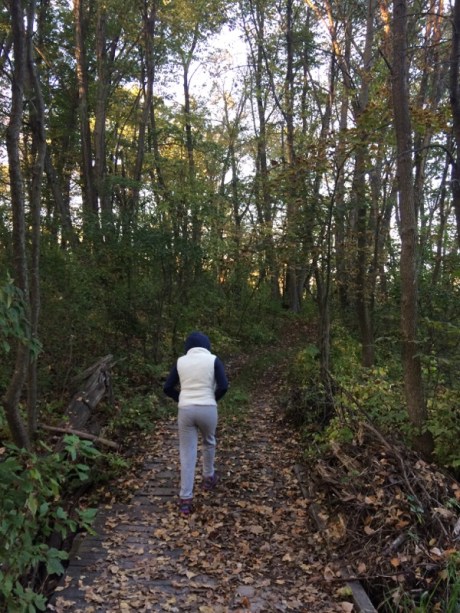
There is something about repetition and the repetition of movement. It is something you find in Nature, something you find in music, and it is something you find in the visual arts. That something was felt by Henry David Thoreau when he went into the woods and its one of the reasons Walt Whitman perambulated. It is part of what Rainer Maria Rilke recommended again and again in his letters to the young poet Franz Kappus and it is the key that unlocks Wendell Berry’s “Sabbath Poems” when he walks his Kentucky lands. That something is what Diane Ackerman references when she talks about the creativity of walking and bicycling in her book Play – and it’s something you find in the practice.
In Light on Yoga, B. K. S. Iyengar systematically broke down over 200 yoga poses and their benefits. Iyengar started off his exploration with Samasthiti / Tadasana (Equal Standing / Mountain Pose), which seems like a pretty disposable pose. In fact, it is all too easy to discount the pose – people do it all the time. You might even find yourself doing it if you aren’t encouraged to pause and notice where you’re going.
If your time on the mat is an in-depth exploration of you and your practice, you will find yourself going into Samasthiti/Tadasana again and again. It turns out that there is an element of the pose in almost every other pose. Another element that appears again and again in the practice is Cow Pose. Finally, you’ll keep coming back the connection to the breath that allows you to mimic your body’s natural tendencies.
“As many times as I forget, catch myself charging forward without even knowing where I’m going, that many times I can make the choice to stop, to breathe, and be, and walk slowly into the mystery.
Bryan Kest refers to walking as the best exercise known to man. When you move through your practice, move like you are strolling through the woods. Keep finding that Tadasana spine so that you find that Tadasana smile.
Go In and In & Walk Slowly– by Danna Faulds
Take a moment to breathe, be still, and then soften into Child’s Pose (Balasana). Settle in as if this is your whole practice. Notice the extension of the spine. Notice the deep breath in and the deeper breath out. Allow your breath to move through the spine. Allow your mind to follow the breath. Notice the rhythm of the breath. Notice the breath as music.
Once the mind is focused on the breath and the body’s reaction to the breath, use the breath as your pace. The inhale allows you to meander into Table Top: stack shoulders over elbows, elbows over wrists, hips over knees. Check your interior landscape to make sure it supports the exterior. Notice the length of the spine. Move through Cat/Cow or the “Un-Cat” sequence precisely matching the movement to the breath. This is a moving meditation. Just like in a seated meditation, when the brain wanders away from this present moment, use the breath to bring it back.
Again, find the place where you mind is focused on the rhythm and then curl your toes under and exhale into Downward Facing Dog (Adho Mukha Svanasana). Scan the exterior and interior landscapes. Make sure all your fingers are spread wide, with the majority of the weight/pressure in your hands moving into the thumb and first finger. (So that, there is less weight/pressure applied to your outer wrists.) When you relax your head and shoulders, make sure your big toes are parallel to each other and at least a foot apart. Big toes can be behind the thumbs or behind the middle fingers. Hips are high, heels are low (reaching, but not necessarily touching the mat); and neck is long. Even if you have to bend your knees, find Cow Pose in this position (so that you have a straight line from your middle fingers all the way up to your hips and then a second straight line from your hips to the back of your knees). Eyes are on your nose, your belly button, or the space between your toes. Notice the length of the spine.
Feel free to walk your dog!
Remember your can skip the arm balancing, by moving into Staff Pose (Dandasana) and positioning the arms accordingly or using “Dolphin Dog.” Another modification would be to do the pose on the wall. Either way, you can still walk your dog!
Stretch back (meaning, push your spine towards your thighs) and on an exhale walk your hands to your feet or bring your hands and feet together. Once hands are in line with the toes and heels are flat to the mat, inhale to a Half Lift/Flat Back or Extended Forward Bend. (This pose may be called Ardha Uttanasana or Urdhva Uttanasana.) Place your hands on your thighs and press the shoulders into the metaphorical back pockets. Remember, you want to engage in a similar fashion to Cow Pose, Staff Pose, and Downward Facing Dog. In fact, inhale and find a little bit of Cow Pose (even if you have to bend your knees). Now, press the heels down and – as much as you are able without losing the extension of the spine – engage the quadriceps to extend through the knees and press the thigh bones into the wall behind you. Engage your locks (bandhas) as you are able.
If you have unregulated blood pressure, low back issues, eye issues like glaucoma, or if this is already challenging, remember to stay here with knees bent. Otherwise, if it is not contraindicated, bend the knees and flex from the hips to prep Forward Bend (Uttanasana). Keeping the upper back extended, place the hands on the floor or a block and begin to extend through the legs while pressing the thigh bones into the backs of your legs. Do not force the extension. Use the exhales to settle the heart on the thighs (as much as you are able without losing the extension of the spine.) If your legs are completely straight, make sure the knee caps are lifted and that you are not hyper-extending the knees. Also double check to ensure that if the knees are straight the hips are over the knees, not behind the ankles. Remember to engage your locks (bandhas). Notice the length of the spine. Soften into yourself and into the stillness of the moment.
Inhale to Half Lift / Flat Back and use the exhale to engage your core. With hands on the hips, maintain the length of the spine and lift up to standing. Relax your arms by your sides. Balance the weight between all four corners of both feet. Feel free to move side-to-side or back and forth on the feet until you feel you are centered. Spread the toes, press big toes and little toes down, as well as both sides of the heels. (This establishes “all four corners of both feet.”) Engage the quadriceps in order to lift the knee caps and firm up the thighs. Sit bones point down so that the pelvic bones lift up. Engage your locks (bandhas). As you press down in order to lift the sternum up, use the core abdominal to draw the lower rib cage down. Relax the shoulders and gaze straight ahead. This is Equal Standing / Mountain Pose (Samasthiti/Tadasana). Notice the length of your spine.
Changing as little as possible, stretch the arms out like the letter T. Scan the interior and exterior landscape, checking to ensure you have maintained balance and alignment. Now, take the next few steps: Turn the palms up and inhale your arms overhead. (Many traditions refer to this as Arms Reaching Overhead (Urdhva Hastasana), but I tend to call this Tadasana). Scan the interior and exterior landscape, checking to ensure you have maintained balance and alignment. Notice the length of your spine. After several breaths, lower the arms to your sides on an exhale.
Now, use the whole inhale to lift the arms overhead and the whole exhale to press the hands together through heart center. On the exhale of the third centering breath, walk to the front of the mat with hands through heart center. Equal Standing is like a soldier in the “Ready” position. You are now ready for the next part of the practice.
Moving through half of a Sun Salutation (Surya Namaskar), inhale arms over head into Arms Reaching Overhead; exhale and stretch the arms out wide as you dive between the hands into a Forward Bend; inhale to a Half Lift / Flat Back; exhale back to Forward Bend. Keeping the knees bent and the core engaged, inhale to reverse swan dive and then exhale hands back to your sides. Repeat the sequence until you feel the natural rising and flowing, ebbing and flowing. Notice the similarities between Cat/Cow. Notice the length of the spine in every pose.
After the final exhale into Forward Bend, inhale into a Half Lift/ Flat Back and then step your left leg way back into a low lunge. Make sure the feet are in two separate lanes. Inhale to lengthen the spine and then exhale the back knee to the mat. Give yourself cushion under the back knee, as needed. Pressing down evenly into both feet, lift your torso up and place hands on your right thigh for a variation of Crescent Lunge (Anjaneyasana).
Use an exhale to slide the hips over the back knee and then place the back of the right hand on your sacrum (the flat part of your bum/hips) and place your left hand on the front of your pelvic bones. Your hands are now bracketing your hips. Slide the back hand down in order to direct the sit bones down. You may feel the front hand lifting as the pelvic bones lift. Notice the length of your spine, especially your low back. You may also feel engagement in your left hip and thigh. Stay here or bend the front knee deeper into the lunge – remembering to maintain the space in your low back. Hands can come to your front thigh or reach the hands over head. If you have Hot Half Moon (Ardha Chandrasana) in your practice, feel free to add it by lifting the left arm up and reaching it towards the right.
As many times as you forget, remind yourself to breath in and out of the length of your spine. When you are ready to move on, place the hands on the mat and step back to Child’s Pose. From Child’s Pose, inhale to Cow Pose and exhale to Downward Facing Dog. Repeat standing sequence from
Once you’ve completed the second side and returned to Child’s Pose, inhale to Cow Pose and then exhale into Downward Facing Dog. Repeat the sequence of standing poses (starting with the first Forward Bend after Downward Facing Dog, substituting left for right.
After the second side of standing poses, move into Staff Pose (Dandasana). Remember, this pose is not disposable. Consider the length of your spine and how you maintain it.
Keep the left leg extended and bend the right knee in order to set up the Sage Twist. Remember to keep the left heel and the right foot flat on the floor. You can place the right foot next to the inside or the outside of the left leg, as long as the knees are comfortable and the right foot is flat on the floor.
On an inhale, lift your right arm up and, as you watch it, reach the right arm back to the floor behind your hips. As you settle into the twist, adjust your left arm to provide additional support wherever you need it. You can always sit on a block and/or place a block under your hand if you’re hips and low back are really tight. If you don’t have a block, substitute a book.
Watch how you engage your base, your core, and your breath in order to lengthen your spine. Remember to start the twist in your base (not in your neck). Do not allow your body to collapse or untwist until you complete 3 – 5 complete breaths. After the third or fifth exhale, inhale to center, give the lifted knee a squeeze, and return to Staff Pose. Repeat the Sage Twist instructions for the Sage Twist (replacing right with left).
After the third or fifth exhale on the left, inhale to center and give the lifted knee a squeeze. Bend or extend both, as needed, and lower down onto your back for Corpse Pose (Savasana). Allow your body to settle into the spaces around your spine. Allow your breath to move through the spine. Allow your mind to follow the breath. Notice the rhythm of the breath. Notice the breath as music.
“Music seems to have a special power to animate us. Kant called music, ‘…the quickening art.’ There’s something about rhythm, as a start, compels one to move…with the beat…. There’s something about the rhythm of the music, which has a dynamic, animated, propulsive effect that gets people moving in sympathy with it; and gets people moving in sympathy with one another. So…the rhythm of music has a strong bonding thing. People dance together, move together…”
“There is certainly a universal and unconscious propensity to impose a rhythm even when one hears a series of identical sounds at constant intervals… We tend to hear the sound of a digital clock, for example, as “tick-tock, tick-tock” – even though it is actually “tick tick, tick tick.”
– from Musicophilia: Tales of Music and the Brain by Dr. Oliver Sacks
This opportunity to explore a poem on the mat is part of my offering for the 2018 Kiss My Asana yogathon. I encourage you to set aside at least 5 minutes a day during April, to practice with the poem as inspiration. You can practice in a class or on your own, but since the Kiss My Asana yogathon raises resources as well as awareness, I invite you to join me at the donation-based classes on April 28th.
I also challenge you to set aside a certain amount every day that you practice with a poem in mind. It doesn’t matter if you set aside one dollar per practice or $25 – set aside that amount each time you practice and donate it by April 30th.
Founded by Matthew Sanford, Mind Body Solutions helps those who have experienced trauma, loss, and disability find new ways to live by integrating both mind and body. They provide classes, workshops, and outreach programs. They also train yoga teachers and offer highly specialized training for health care professionals. By participating in the Kiss My Asana yogathon you join a global movement, but in a personal way. In other words, you practice yoga. Or, as this year’s tag line states, “do yoga. share yoga. help others.”
*Yes, it’s another two (2) poem day. It’s also a two (2) video day! Happy Monday!
 A Joyful Practice