FTWMI: Another Mystical Introduction (with Excerpt & links) January 31, 2026
Posted by ajoyfulpractice in Books, Buddhism, Changing Perspectives, Dharma, Dr. Martin Luther King, Jr., Faith, Gandhi, Healing Stories, Hope, Life, Meditation, Music, Mysticism, One Hoop, Peace, Philosophy, Religion, Vipassana, Wisdom, Writing, Yoga.Tags: 988, Christianity, Contemplation, courage, Exodus, faith, Fred Bahnson, Jeremy Seifert, Mahatma Gandhi Canadian Foundation for World Peace, meditation, Season for Nonviolence, Season of Non-violence, Season of Nonviolence, Shabbat Shiirah, Shemot, spirituality, Thomas Merton
add a comment
Peace and ease to all during this “Season for Non-violence” and all other seasons! May we all sing in honor of freedom & lovingkindness. May we all have the courage to go a little deeper.
For Those Who Missed It: The following was originally posted in 2024. Class details, some formatting, excerpts, and an extra blessing have been updated/added.
“It takes courage to stretch our worldview, to develop and deepen our commitment to peace. Courageous people are those who are empowered with the awareness that what they think, say and do makes a difference. Today start to see yourself as an agent of positive change. Have the courage to be the change you wish to see in the world.”
— quoted from the “Daily Action” section of the “Day 1 ~ January 31 ~ Courage” page for the “Season for Non-violence,” provided by the Mahatma Gandhi Canadian Foundation for World Peace
As I mentioned yesterday, Arun Gandhi, (Mohandas Gandhi’s grandson) established the “Season for Nonviolence” (January 30th through April 4th) in 1998. The Mahatma Gandhi Canadian Foundation for World Peace offers daily practices based on principles of nonviolence advocated by Mahatma Gandhi (who was assassinated on January 30, 1948) and Reverend Dr. Martin Luther King Jr. (who was assassinated on April 4, 1968). These two great leaders/teachers did not invent these ideas. These principles are not unique to one culture, one philosophy, or one religion. Ideas like ahiṃsā (non-violence or “non-harming”) — which is the very first yama (external “restraint” or universal commandment) in the Yoga Philosophy; one of the Ten Commandments according the Abrahamic religions; and one of the Buddhist precepts — predate both men and their struggles. They are enduring principles that guided them in their efforts to overcome their struggles.
Today’s word is courage, which came into the English language from Latin, by way of Old French and Middle English, from a word that meant “to live with [your] whole heart.” This is not — or, not only — an anatomical idea. It is a physical-mental, emotional-energetic, psychic-symbolic thing. It can also be a spiritual-religious thing: a mystical thing. Accordingly, Thomas Merton, who was born today in 1915, was not only a deeply religious, spiritual, contemplative, and mystical man; he was a man of courage. He was a man who was willing to push the boundaries of what was known and acceptable, in order to explore the unknown… even when it wasn’t acceptable.
Click the excerpt title below to learn more about the mystical adventures of Thomas Merton.
“Just remaining quietly in the presence of God, listening to Him, being attentive to Him, requires a lot of courage and know-how.”
— Thomas Merton, O. C. S. O.
Please join me today (Saturday, January 31st) at 12:00 PM for a yoga practice on Zoom. You can use the link from the “Class Schedules” calendar if you run into any problems checking into the class. You can request an audio recording of this practice via a comment below or (for a slightly faster reply) you can email myra (at) ajoyfulpractice.com.
Saturday’s playlist is available on YouTube and Spotify. [Look for “01312021 Merton’s Mystical Day”]
“We’re all on a journey. We’re all going somewhere.”
“Our task now is to learn that if we can voyage to the ends of the earth, and there find ourselves in the stranger who most differs from ourselves, we will have made a fruitful pilgrimage. This is why pilgrimage is necessary, in some shape or other. Mere sitting at home and meditating on the Divine presence is not enough for our time. We have to come to the end of a long journey and see that the stranger we meet there is no other than ourselves.”
— quoted from the Emergence Magazine documentary On The Road With Thomas Merton, by Jeremy Seifert and Fred Bahnson, based on Woods, Shore, Desert: A Notebook, May 1968, by Thomas Merton
This YouTube link will take you to a clip of the short Emergence documentary referenced above. The full documentary is also available on YouTube.
If you are thinking about suicide, worried about a friend or loved one, or would like emotional support, you can dial 988 (in the US) or call 1-800-273-TALK (8255) for the Suicide and Crisis Lifeline. You can also call this TALK line if you are struggling with addiction or involved in an abusive relationship. The Lifeline network is free, confidential, and available to all 24/7. YOU CAN TALK ABOUT ANYTHING.
White Flag is an app, which I have not yet researched, but which may be helpful if you need peer-to-peer (non-professional) support.
If you are a young person in crisis, feeling suicidal, or in need of a safe and judgement-free place to talk, you can also click here to contact the TrevorLifeline (which is staffed 24/7 with trained counselors).
In the spirit of generosity (“dana”), the Zoom classes, recordings, and blog posts are freely given and freely received. If you are able to support these teachings, please do so as your heart moves you. (NOTE: You can donate even if you are “attending” a practice that is not designated as a “Common Ground Meditation Center” practice, or you can purchase class(es).
Donations are tax deductible; class purchases are not necessarily deductible.
Check out the “Class Schedules” calendar for upcoming classes.
### Sit, Breathe…. ###
TEASER/EXCERPT: “The Serendipity Practice” (with an extra video!) January 28, 2026
Posted by ajoyfulpractice in Art, Books, Changing Perspectives, Life, Meditation, Music, One Hoop, Philosophy, Vipassana, Wisdom, Yoga.Tags: Art, chaos theory, Christa McAuliffe, Ed Sheeran, Ekow Nimako, Elvis Presley, Horace Walpole, Horatio Walpole, LEGO, samskāras, santosha, santoşā, serendipity, shoshin, Space Shuttle Challenger, synchronicity, T. H. Huxley, Thomas Henry Huxley, vasanas, Voltaire, vāsanā, yoga philosophy, Yoga Sutra 2.20, Yoga Sutra 3.16
add a comment
Many blessings to everyone, everywhere.
May we all be safe and protected / May we all be peaceful and happy / May we all be healthy and strong! May we all appreciate the “accidental goodness” in our lives.
“In all these cases, it is only the relation to time which alters — the process of divination beyond the limits of possible direct knowledge remains the same.“
— quoted from the essay “On the Method of Zadig: Retrospective Prophecy as a Function of Science” (1880) in Collected Essays, Volume 4. Science and Hebrew Tradition by T. H. Huxley
Today in 1754, Horace Walpole, the Right Honorable Earl of Orford, shared the word and meaning of serendipity.
CLICK ON THE EXCERPT TITLE BELOW FOR MORE!
The Serendipity Practice (the “missing” and “long-lost” Sunday post for 1/28)
Yoga Sūtra 3.16: pariṇāmatrayasaṃyamādatãtānāgatajñānam
— “By samyama [focus-concentration-meditation] on the three-fold changes in form, time, and characteristics, there comes knowledge of the past and future.”
Please join me today (Wednesday, January 21st) at 4:30 PM or 7:15 PM for a yoga practice on Zoom. You can use the link from the “Class Schedules” calendar if you run into any problems checking into the class. You can request an audio recording of this practice via a comment below or by emailing myra (at) ajoyfulpractice.com.
Wednesday’s playlist is available on YouTube and Spotify. [Look for “01282024 Serendipity”]
Check out what Ekow Nimako does with LEGO (which were patented today in 1958)!
If you are thinking about suicide, worried about a friend or loved one, or would like emotional support, you can dial 988 (in the US) or call 1-800-273-TALK (8255) for the Suicide and Crisis Lifeline. You can also call this TALK line if you are struggling with addiction or involved in an abusive relationship. The Lifeline network is free, confidential, and available to all 24/7. YOU CAN TALK ABOUT ANYTHING.
White Flag is an app, which I have not yet researched, but which may be helpful if you need peer-to-peer (non-professional) support.
If you are a young person in crisis, feeling suicidal, or in need of a safe and judgement-free place to talk, you can also click here to contact the TrevorLifeline (which is staffed 24/7 with trained counselors).
In the spirit of generosity (“dana”), the Zoom classes, recordings, and blog posts are freely given and freely received. If you are able to support these teachings, please do so as your heart moves you. (NOTE: You can donate even if you are “attending” a practice that is not designated as a “Common Ground Meditation Center” practice, or you can purchase class(es). Donations are tax deductible; class purchases are not necessarily deductible.)
### “I’ll pick you up when you’re gettin’ down” ~ Ed Sheeran ###
HAPPY New Year 2026! ** UPDATED** January 1, 2026
Posted by ajoyfulpractice in Bhakti, Changing Perspectives, Donate, Faith, Healing Stories, Health, Hope, Japa, Japa-Ajapa, Karma Yoga, Life, Love, Mala, Mantra, Meditation, Mysticism, New Year, One Hoop, Peace, Philosophy, Traditional Chinese Medicine, Vipassana, Wisdom, Writing, Yin Yoga, Yoga.Tags: 108 Sun Salutations, Anthony Shumate, Kwanzaa, New Year's Day, Nguzo Saba, Nia, Sun Salutations, Surya Namaskar
add a comment
“Happy New Year!” “Kwanzaa, yenu iwe na heri!” – “May your Kwanzaa be happy!” to everyone who is celebrating!
Many blessings to all!
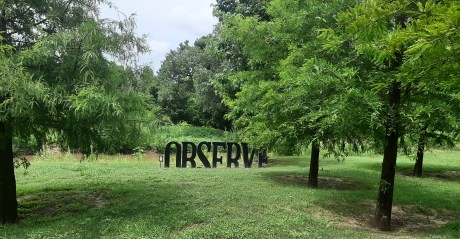
Part of the 6-piece “Monumental Moments” series
by Anthony Shumate, 2015
(located in Buffalo Bayou Park, along the Kinder Footpaths)
TRANSFORM • RENEW • HEAL • ENERGIZE
Celebrate the New Year with 108 Sun Salutations 10:00 AM – 1:00 PM CST!
AND/OR
RELAX • RELEASE • REST • RENEW • HEAL
Celebrate the New Year with Restorative Yoga+Meditation
5:00 PM – 7:00 PM CST!
The New Year is a beginning and an ending… and it is also a middle. On New Year’s Day we honor and celebrate transition with 108 Sun Salutations in the morning (10 AM – 1 PM, CST) and/or a Restorative* Yoga plus Meditation practice in the evening (5 – 7 PM, CST). We also put things in perspective.
These practices are open and accessible to all, regardless of experience.
*NOTE: In previous years, the evening practice has been Yin Yoga.
Please wear loose, comfortable clothing and make sure you are well hydrated before the practice. It is best to practice on an empty stomach (especially for the 108 ajapa-japa mala), but if you must eat less than 1 hour before the practice, make sure to keep it light. Make sure to have a towel (at the very least) for the 108 practice. For Restorative Yoga, a pillow/cushion or two, blocks or (hardcover) books, and a blanket or towel will be useful. I always recommend having something handy (pen and paper) that you can use to note any reflections (and will have some supplies handy).
IN-PERSON IS FULL! Use the link above for login information (or click here for more details about these practices and other practice opportunities related to the New Year).
The 108 playlist is available on YouTube and Spotify. [Look for “New Year’s Day 108 Ajapa-Japa Mala.”] NOTE: This playlist was revised for 2024, but should still sync up with the 2021 — 2023 recordings.
The Restorative playlist is available on YouTube and Spotify. [Look for “01072022 A Reflective Moment”]
Both practices are available in-person (if you are registered) and online. They are also donation based. If you don’t mind me knowing your donation amount you can donate to me directly. You can also email me to request my Venmo or Ca$hApp ID. If you want your donation to be anonymous (to me) and/or tax deductible, please donate through Common Ground Meditation Center (type my name under “Teacher”).
Please note that there is still no late admittance and you must log in before the beginning of the practice (so, by 9:45 AM for the 108 or by 4:45 PM for the Restorative Yoga+Meditation). You will be re-admittance if you get dumped from the call.)
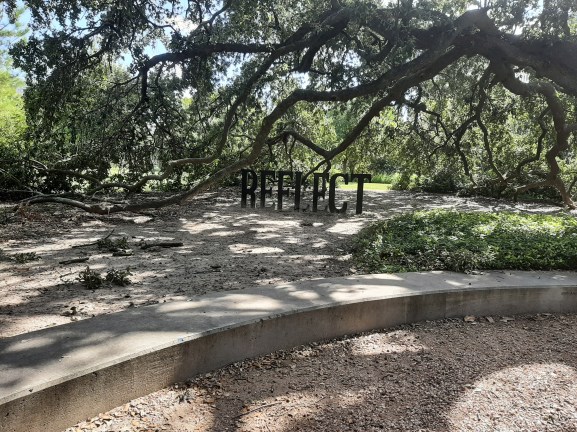
Part of the 6-piece “Monumental Moments” series
by Anthony Shumate, 2015
(located in Buffalo Bayou Park, along the Kinder Footpaths)
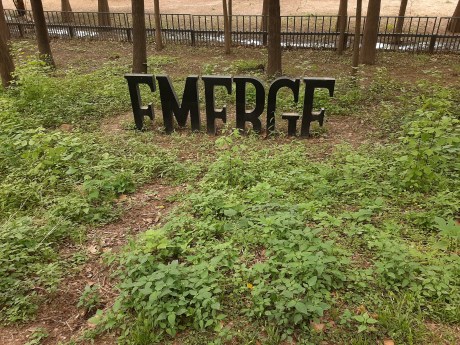
Part of the 6-piece “Monumental Moments” series
by Anthony Shumate, 2015
(located in Buffalo Bayou Park, along the Kinder Footpaths)
*Anthony Shumate’s “Monumental Moments” sculptures are located in Buffalo Bayou Park, along the Kinder Footpaths in Houston, Texas. They are unexpected reminders to “Explore,” “Pause,” “Reflect,” “Listen,” “Emerge,” and “Observe” – all things we do in our practice!
### NAMASTE ###
FTWMI: A Quick Note & Excerpt About Breathing and…. October 26, 2025
Posted by ajoyfulpractice in "Impossible" People, Art, Books, Buddhism, Changing Perspectives, Donate, Healing Stories, Health, Hope, Karma Yoga, Life, Meditation, One Hoop, Pain, Philosophy, Science, Suffering, Tragedy, Vipassana, Volunteer, Wisdom, Yoga.Tags: 988, Amnesty International, Betsy Driver, breath, breathing, Emi Koyama, gender, haṭha yoga, hatha yoga, Health, intersex, Intersex Awareness Day, Intersex Day of Remembrance, Intersex Solidarity Day, Laura Inter, Max Beck, meditation, Mindfulness, Morgan Carpenter PhD, Morgan Holmes PhD, Nyanasatta Thera, pranayama, sex, United Nations, yoga
add a comment
Many blessings to everyone and especially to anyone cultivating friendship, peace, freedom, understanding, and wisdom on Intersex Awareness Day.
May everyone be healthy and strong; may everyone be peaceful and happy; and may everyone recognize their whole self.
For Those Who Missed It: The following was originally posted in 2024. Class details have been updated.
“[A monk] then applies this perception to his own body thus: ‘Verily, also my own body is of the same nature; such it will become and will not escape it.’
Thus he lives contemplating the body in the body internally, or he lives contemplating the body in the body externally, or he lives contemplating the body in the body internally and externally. He lives contemplating origination-factors in the body, or he lives contemplating dissolution factors in the body, or he lives contemplating origination-and-dissolution-factors in the body. Or his mindfulness is established with the thought: ‘The body exists,’ to the extent necessary just for knowledge and mindfulness, and he lives detached, and clings to nothing in the world. Thus also, monks, a monk lives contemplating the body in the body.”
— quoted from Satipatthana Sutta (The Foundations of Mindfulness) translated by Nyanasatta Thera
Prāņāyāma — the awareness of breath (and the extension of breath) — is a big part of the physical practice of yoga (haṭha yoga, regardless of the style or tradition). As we bring awareness to our breath, on and off the mat, we may start to notice the things that take our breath away. We can experience things that take our breath away because they are surprising and beautiful. We can experience things that take our breath away because they are surprising and terrifying. Then there are things that take our breath away because they are just surprising, unexpected….
We may rush to qualify them with some adjective or another and, in doing so, rush to some conclusion about what we need to do… when, really, we just need to breathe (that’s today’s first step); recognize what is (that’s today’s second step); and repeat the first two steps (that’s the third step).
CLICK ON THE EXCERPT TITLE BELOW FOR THE RELATED POST (& VIDEO).
For Those Who Missed It: Third Step: Repeat the First & Second Steps
“Myth 2: Being intersex is very rare
According to experts, around 1.7% of the population is born with intersex traits – comparable to the number of people born with red hair.”
— quoted from the Amnesty International article “Its Intersex Awareness Day – here are 5 myths we need to shatter”
October 26th is Intersex Awareness Day, which highlights and raises awareness about human rights issues faced by intersex people. It also raises awareness around the fact that there are people — all around the world — who are born with one or more sex characteristics that “do not fit typical binary notions of male or female bodies.” According to the Office of the United Nations High Commissioner for Human Rights, these characteristics include chromosome patterns, gonads, and/or genitalia.
While there may be just as many people in the world with red hair as there are people in the world with intersex traits, the latter are not as easy to spot. Estimates on how many people are born with intersex traits may vary (depending on the traits and/or conditions) from 3% to 0.0009%. Aside from the fact that I’m referencing statistics related to over 40 intersex conditions, the wide variation in estimates is related to the fact that some people are not initially identified (medically) as intersex. Additionally, some people may never be identified as intersex. Lack of diagnosis can be the result of something relatively small — like the fact that a baby’s chromosome patterns (and/or gonads) are not typically tested. However, lack of diagnosis can also be the result of something fairly major — like the fact that sex (and gender) are typically assigned at birth based on the external appearance of a baby’s genitals.
And, here’s the kicker: If a baby’s genitalia appears ambiguous (to a medical practitioner) and/or atypical, a common practice has been to surgically alter the genitalia. Sometimes, even a baby’s internal sex organs (gonads) will be altered. Again, these surgeries and medical treatments happen to babies, as well as to children and young adults, who are too young to consent and/or may not be informed about their options. Sometimes, even their parents are not informed!
Medical attitudes and practices related to people with intersex characteristics are changing, in part because of people like Morgan Holmes and Max Beck, who both participated in the first public demonstration of intersex people (and their allies) in North America, today in 1996. Dr. Holmes (a Canadian sociologist) and Mr. Beck (who died in of cancer in 2008) attended the American Academy of Pediatrics annual conference in Boston, Massachusetts, with the intention of delivering a presentation on the long-term outcomes of “fixing” intersex infants through cosmetic surgery. However, they were met with what they described as “hostility” and escorted out of the venue. They later returned, outside of the venue, to demonstrate and advocate for better medical awareness. In 2003/2004, Betsy Driver (who was mayor of Flemington, New Jersey, January 2, 2019 – January 3, 2023) and artist and activist Emi Koyama organized the first official Intersex Awareness Day on the anniversary of that first public protest. Since then, people like Morgan Carpenter and Laura Inter have advocated for self-determination, while also providing peer support and education for and about people who have intersex traits.
For the next two weeks — up until November 8th, which is Intersex Day of Remembrance (also known as Intersex Solidarity Day) — grassroots organizations around the world will host events related to intersex visibility. Some of these events will be celebrations and opportunities for networking. Some of these events will be moments of reflection and remembrance. Some of these events will be all about political action and advocacy. All of these events will be about putting an “end [to] shame, secrecy and unwanted genital cosmetic surgeries on intersex children.”
“The flag is comprised of a golden yellow field, with a purple circle emblem. The colours and circle don’t just avoid referencing gender stereotypes, like the colours pink and blue, they seek to completely avoid use of symbols that have anything to do with gender at all. Instead the circle is unbroken and unornamented, symbolising wholeness and completeness, and our potentialities. We are still fighting for bodily autonomy and genital integrity, and this symbolises the right to be who and how we want to be.”
— quoted from the creator statement entitled “The intersex flag” by Morgan Carpenter, PhD.
Please join me today (Sunday, October 26th) at 2:30 PM for a yoga practice on Zoom. You can use the link from the “Class Schedules” calendar if you run into any problems checking into the class. You can request an audio recording of this practice via a comment below or (for a slightly faster reply) you can email myra (at) ajoyfulpractice.com.
Sunday’s playlist is available on YouTube and Spotify. [Look for “10272020 Pranayama II”]
If you are thinking about suicide, worried about a friend or loved one, or would like emotional support, you can dial 988 (in the US) or call 1-800-273-TALK (8255) for the Suicide and Crisis Lifeline. You can also call this TALK line if you are struggling with addiction or involved in an abusive relationship. The Lifeline network is free, confidential, and available to all 24/7. YOU CAN TALK ABOUT ANYTHING.
White Flag is an app, which I have not yet researched, but which may be helpful if you need peer-to-peer (non-professional) support.
If you are a young person in crisis, feeling suicidal, or in need of a safe and judgement-free place to talk, you can also click here to contact the TrevorLifeline (which is staffed 24/7 with trained counselors).
In the spirit of generosity (“dana”), the Zoom classes, recordings, and blog posts are freely given and freely received. If you are able to support these teachings, please do so as your heart moves you. (NOTE: You can donate even if you are “attending” a practice that is not designated as a “Common Ground Meditation Center” practice, or you can purchase class(es).
Donations are tax deductible; class purchases are not necessarily deductible.
Check out the “Class Schedules” calendar for upcoming classes.
### O ###
EXCERPT: “On Being Curious” September 16, 2025
Posted by ajoyfulpractice in "Impossible" People, Art, Books, Changing Perspectives, Healing Stories, Japa-Ajapa, Life, Meditation, Music, One Hoop, Peace, Philosophy, Vipassana, Wisdom, Writing, Yoga.Tags: 90 seconds, 988, Curiosity, Gabrielle Roth, H. A. Rey, Health, insight, Kelly Bartlett, Margaret Rey, meditation, mental health, Writing, yoga, Yoga Sutras 1.2 - 1.4
add a comment
Many blessings to everyone and especially to anyone curious about how we can have friendship, peace, freedom, understanding, and wisdom.
Stay safe! Hydrate and nourish your heart, body, and mind.
“The object of meditation is to still the mind, and the fastest way to do that is to move your body.”
— Gabrielle Roth
Today is the anniversary of the birth of Hans Augusto Reyersbach (better known as H. A. Rey) (b. 1898).
CLICK ON THE EXCERPT TITLE ABOVE IF YOU ARE CURIOUS ABOUT THE PRACTICE.
“After the day is gone we shall go out, breathe deeply, and look up – and there the stars will be, unchanged, unchangeable.”
— quoted from The Stars: A New Way to See Them by H. A. Rey
Please join me today (Tuesday, September 16th) at 12:00 PM or 7:15 PM for a yoga practice on Zoom. You can use the link from the “Class Schedules” calendar if you run into any problems checking into the class. You can request an audio recording of this practice via a comment below or by emailing myra (at) ajoyfulpractice.com.
Tuesday’s playlist is available on YouTube and Spotify. [Look for “07112020 An Introduction”]
NOTE: This is an instrumental playlist. Click on the excerpt title above for a puppy-related playlist (with lyrics & ~45 dogs)
If you are struggling, thinking about suicide, worried about a friend or loved one, or would like emotional support, you can dial 988 (in the US) or call 1-800-273-TALK (8255) for the Suicide and Crisis Lifeline. You can also call this TALK line if you are struggling with addiction or involved in an abusive relationship. The Lifeline network is free, confidential, and available to all 24/7. YOU CAN TALK ABOUT ANYTHING.
White Flag is an app, which I have not yet researched, but which may be helpful if you need peer-to-peer (non-professional) support.
If you are a young person in crisis, feeling suicidal, or in need of a safe and judgement-free place to talk, you can also click here to contact the TrevorLifeline (which is staffed 24/7 with trained counselors).
### BE MINDFULLY CURIOUS ###
Quick Notes & 3 Excerpts RE: Work & Listening (the post-practice Monday post) September 1, 2025
Posted by ajoyfulpractice in Abhyasa, Bhakti, Books, Changing Perspectives, Faith, Healing Stories, Japa, Japa-Ajapa, Karma, Mantra, Meditation, Music, One Hoop, Philosophy, Poetry, Religion, Vipassana, Wisdom, Yoga.Tags: 988, Dharma Singh Khalsa M. D., Ek Ong Kaar Kaur Khalsa, Eugene V. Debs, Guru Granth Sahib, Guru Nanak, history, Japa-Ajapa, Japji Sahib, John Metcalfe, Labor Action Tracker, Labor Day, meditation, Pullman Strike, sikh, Sikhism, Song of the Soul, spirituality, stillness, unions
add a comment
Many blessings to everyone and especially to anyone cultivating friendship, peace, freedom, understanding, and wisdom — especially when it gets hot (inside and outside).
Stay safe! Hydrate and nourish your heart, body, and mind.
The following post-practice compilation post is related to Monday, September 1st, which was Labor Day in the United States and parts of Canada. Some of the excerpted posts include videos.
The 2025 prompt question was, “What part of your mind-body or life does a little, but gets a lot of your attention & what part does a lot of work, but doesn’t get commensurate attention?” You can request an audio recording of this practice or a previous practice via a comment below or (for a slightly faster reply) you can email myra (at) ajoyfulpractice.com.
In the spirit of generosity (“dana”), the Zoom classes, recordings, and blog posts are freely given and freely received. If you are able to support these teachings, please do so as your heart moves you. (NOTE: You can donate even if you are “attending” a practice that is not designated as a “Common Ground Meditation Center” practice, or you can purchase class(es).
Donations are tax deductible; class purchases are not necessarily deductible.
Check out the “Class Schedules” calendar for upcoming classes.
“I am opposing a social order in which it is possible for one man who does absolutely nothing that is useful to amass a fortune of hundreds of millions of dollars, while millions of men and women who work all the days of their lives secure barely enough for a wretched existence.”
— Eugene V. Debs, quoted from his statement to the Federal Court (Cleveland, Ohio), after being convicted of violating the Sedition Act, September 18, 1918
The first Monday in September is Labor Day in the United States and parts of Canada.
CLICK ON THE EXCERPT TITLE BELOW FOR MORE.
2025 Update:
Between September 1, 2024 and September 1, 2025, the Labor Action Tracker counted strikes in 586 locations, plus additional labor protests in 683 locations; bringing the labor actions total to 1296 locations.
(NOTE: The total locations matches the same total locations as last year, however, the summary mechanism has changed.)
Click on the excerpt below for more details about the Labor Action Tracker and how modern day strikes and protests can lead to better working conditions.
FTWMI: Working Together (a post–practice Monday post w/ an extra excerpt)
“Deeply Listening,
Yoga
And the hidden systems
Of the body
Make themselves known.
Deeply Listening,
The wisdom
Of all sacred scriptures in the world
Is revealed.
Oh my soul,
Those who surrender themselves in Love
To the Divine
Continuously blossom and bloom.
Deeply Listening
Sorrows
And errors
Depart.”
— quoted from Japji Sahib: The Song of the Soul by Guru Nanak (Translated by Ek Ong Kaar Kaur Khalsa)
Our practices, on and off the mat or cushion, give us the opportunity to pay attention to how the mind-body works — and to really listen, deeply.
Listening deeply is one of the important lessons in the Japji Sahib (known in English as The Song of the Soul) an ancient Sikh text at the beginning of the Guru Granth Sahib, which is the Adi Granth or primary sacred text / scripture in Sikhism. Originally compiled and printed by Guru Arjan, the fifth Sikh guru, on August 29, 1604, it was placed in the Golden Temple in the city of Amritsar, Punjab, India, today (September 1st) in 1604.
CLICK ON THE EXCERPT TITLE BELOW FOR MORE.
FTWMI: Deep Listening (*Revised) – the post-practice Friday post
There is no playlist for the Common Ground Meditation Center practices.
The following (2) playlists include the Japji Sahib:
MUSIC NOTE: The playlist contains John Metcalfe’s album Tree (with the remixes); however, one track has been moved. The story behind the album is beautiful (and it is about working). Additionally, I encourage you to deeply listen to Track #11 (which is the Japji Sahib).
- A First Friday playlist is available on YouTube and Spotify. [Look for “09012023 Trusting, Listening… Deeply”]
MUSIC NOTE: You can start with Track #1, #2, #3, or #5. These are instrumental tracks. Track #4 is the Japji Sahib.
“If you
Trust what you hear
When you listen,
Then you will know
What you see,
How to understand
And act.”
— quoted from Japji Sahib: The Song of the Soul by Guru Nanak (Translated by Ek Ong Kaar Kaur Khalsa)
Extreme heat can not only make people lethargic and unmotivated, it can also lead to extreme agitation and anxiety-based fear. We may find it hard to think, hard to feel (or process our feelings), and/or hard to control our impulses. If you are struggling in the US, help is available just by dialing 988.
If you are thinking about suicide, worried about a friend or loved one, or would like emotional support, you can dial 988 (in the US) or call 1-800-273-TALK (8255) for the Suicide and Crisis Lifeline. You can also call this TALK line if you are struggling with addiction or involved in an abusive relationship. The Lifeline network is free, confidential, and available to all 24/7. YOU CAN TALK ABOUT ANYTHING.
White Flag is an app, which I have not yet researched, but which may be helpful if you need peer-to-peer (non-professional) support.
If you are a young person in crisis, feeling suicidal, or in need of a safe and judgement-free place to talk, you can also click here to contact the TrevorLifeline (which is staffed 24/7 with trained counselors).
NOTE: The translation by Ek Ong Kaar Kaur Khalsa is the foundation for The End of Karma: 10 Days to Perfect Peace, Tranquility, and Joy by Dharma Singh Khalsa, M. D., which I quote during the practice.
### BREATHE, WORK, LISTEN, REST (& do it all over again) ###
A Quick [REVISED] Note & EXCERPT: “The Practice of Observing Where You Are (and keeping notes)” August 10, 2025
Posted by ajoyfulpractice in Art, Changing Perspectives, Healing Stories, Hope, Life, Meditation, One Hoop, Philosophy, Science, Vipassana, Wisdom, Yoga.Tags: 988, Ferdinand Magellan, Greenwich Mean, insight, inspiration, James Smithson, John Flamsteed, King Charles II, meridians, Prime Meridian, Royal Observatory Greenwish, Sir Isaac Newton, Smithsonian Institute, travel, Writing, yoga practice
add a comment
Many blessings to everyone and especially to anyone navigating the road(s) with friendship, peace, freedom, and wisdom — especially when it gets hot (inside and outside).
Stay hydrated & be kind, y’all!
This is a *revised* version of 2024 note. Some date-related information, class details, and links have been added/updated.
“When I have got some more observations of it I shall bee [sic] able to tell you how long it will last and where it will pass[. At] present I dare not pretend to that knowledge.”
— quoted from a letter to “to Crompton [for Newton]” dated “December 15th (1680)” by John Flamsteed, the first Astronomer Royal
Every mindfulness-based practice is an opportunity for observation — for noticing what we notice and bringing awareness to our awareness. You could even say that observation is part of the cornerstone of a mindfulness-based practice.
These practices are also a way to better study cause and effect, on and off the mat. One of the underlying intentions, especially during [the last few year’s of] Saturday practices, is to notice cause and effect in order to better understand our trajectory — which, in turn, can help us navigate through life with a little more intentionality.
August 10th is the day the cornerstone for the Royal Observatory, Greenwich was laid (in 1675); the day Ferdinand Magellan set sail today (in 1519), with the intention of circumnavigating the globe; and the day the United States Congress passed legislation (in 1846) that established the Smithsonian Institution.
Click on the excerpt title below for more about observation, navigation, and preservation.
FTWMI: The Practice of Observing Where You Are (and keeping notes)
Please join me today (Sunday, August 10th) at 2:30 PM for a yoga practice on Zoom. You can use the link from the “Class Schedules” calendar if you run into any problems checking into the class. You can request an audio recording of this practice via a comment below or (for a slightly faster reply) you can email myra (at) ajoyfulpractice.com.
Sunday’s playlist available on YouTube and Spotify. [Look for “04192020 Noticing Things”]
NOTE: This is a 2-for-1 playlist. You can start with Track #1 or Track #14.
Extreme heat can not only make people lethargic and unmotivated, it can also lead to extreme agitation and anxiety-based fear. We may find it hard to think, hard to feel (or process our feelings), and/or hard to control our impulses. If you are struggling in the US, help is available just by dialing 988.
If you are thinking about suicide, worried about a friend or loved one, or would like emotional support, you can dial 988 (in the US) or call 1-800-273-TALK (8255) for the Suicide and Crisis Lifeline. You can also call this TALK line if you are struggling with addiction or involved in an abusive relationship. The Lifeline network is free, confidential, and available to all 24/7. YOU CAN TALK ABOUT ANYTHING.
White Flag is a new app, which I have not yet researched, but which may be helpful if you need peer-to-peer (non-professional) support.
If you are a young person in crisis, feeling suicidal, or in need of a safe and judgement-free place to talk, you can also click here to contact the TrevorLifeline (which is staffed 24/7 with trained counselors).
In the spirit of generosity (“dana”), the Zoom classes, recordings, and blog posts are freely given and freely received. If you are able to support these teachings, please do so as your heart moves you. (NOTE: You can donate even if you are “attending” a practice that is not designated as a “Common Ground Meditation Center” practice, or you can purchase class(es).
Donations are tax deductible; class purchases are not necessarily deductible.
Check out the “Class Schedules” calendar for upcoming classes.
### YOU WILL REACH YOUR DESTINATION! ###
FTWMI: A Quick Note & Excerpt: “Sitting in Grace & ‘A center of stillness surrounded by silence’” July 29, 2025
Posted by ajoyfulpractice in Abhyasa, Books, Buddhism, Changing Perspectives, Dharma, Faith, Fitness, Gratitude, Healing Stories, Life, Meditation, One Hoop, Peace, Philosophy, Vipassana, Wisdom, Yoga.Tags: 988, Dag Hammerskjöld, Daniel Goleman, Health, Joseph Goldstein, Mahāṭīkā, Mahāsī Sayādaw, meditation, Mindfulness, Theraveda Buddhism, United Nations, Vipassana, Vipassanā Mettā Foundation Translation Committee, wellness, yoga, yoga practice
add a comment
Many blessings to everyone and especially to anyone working for peace, freedom, and wisdom — especially when it gets hot (inside and outside). Stay hydrated, y’all!
For Those Who Missed It: The following was originally posted in 2024. Class details and some links have been updated. The original post also included an earlier playlist.
“The Mahāṭīkā says that the delight leads to jhāna [meditation] in certain cases. However, this does not mean that it cannot also give rise to insight concentration. Some Pāḷi texts explicitly mention that spiritual delight leads to the wholesome arising of other mental states such as rapture, calm (passaddhi), happiness (sukha), concentration, and knowledge of things as they really are (yathābhūtañāṇa). In the context of insight practice, every time one notes an object well it gives rise to delight. As a result of this, practice becomes enjoyable. This enjoyment in turn supports the progress of insight knowledge, step by step, until noble ones are liberated from the cycle of suffering. This is why delight is regarded as a cause of liberation for the noble ones.”
— quoted from the “Delight and laziness” section of “2. Purification of Mind: Liberations and Hindrances” in Manual of Insight by Venerable Mahāsi Sayadaw, translated and edited by the Vipassanā Mettā Foundation Translation Committee (Forwards by Joseph Goldstein and Daniel Goleman)
One of the things I find delightful and amazing about mindfulness-based practices — and particularly about my yoga and meditation practices — is that they meet you where you are, accept you as you are, and embrace all that you are.
Then, the practices encourage you to do the same for yourself (and, eventually for others).
I appreciate that this means we can practice even when we don’t feel super motivated to do anything (including a practice). I also appreciate that this means we can adapt and adjust the practice as needed — based on how we’re feeling, where we are, and/or what else we need to do in the course of the day. Finally, I appreciate that regardless of how any one of us feels about props, music, teachers, and other practitioners (all of which I love), we don’t need them to practice.
All any one of us needs to practice is our breath and our awareness of our breath.
Which means we can practice anywhere — including at the United Nations Headquarters.
Click on the excerpt title below for more.
Sitting in Grace & FTWMI: “A center of stillness surrounded by silence”
“…delight will arise spontaneously when one’s mindfulness, concentration, and insight mature. There is generally no need to try to deliberately develop it. However, when laziness is an obstacle, one should arouse delight by contemplating the virtues of the Triple Gem, the benefits of insight, how much one has purified one’s moral conduct since beginning to practice, or the pure and noble quality of the noting mind.”
— quoted from the “Delight and laziness” section of “2. Purification of Mind: Liberations and Hindrances” in Manual of Insight by Venerable Mahāsi Sayadaw, translated and edited by the Vipassanā Mettā Foundation Translation Committee (Forwards by Joseph Goldstein and Daniel Goleman)
Please join me today (Tuesday, July 29th) at 12:00 PM or 7:15 PM for a yoga practice on Zoom. You can use the link from the “Class Schedules” calendar if you run into any problems checking into the class. You can request an audio recording of this practice via a comment below or by emailing myra (at) ajoyfulpractice.com.
Tuesday’s playlist is available on YouTube and Spotify. [Look for “07292023 Still Breathing, Noting, Here & at the UN”]
“The more faithfully you listen to the voices within you, the better you will hear what is sounding inside.”
— quoted from Markings by Dag Hammerskjöld
Extreme heat can not only make people lethargic and unmotivated, it can also lead to extreme agitation and anxiety-based fear. We may find it hard to think, hard to feel (or process our feelings), and/or hard to control our impulses. If you are struggling in the US, help is available just by dialing 988.
If you are thinking about suicide, worried about a friend or loved one, or would like emotional support, you can dial 988 (in the US) or call 1-800-273-TALK (8255) for the Suicide and Crisis Lifeline. You can also call this TALK line if you are struggling with addiction or involved in an abusive relationship. The Lifeline network is free, confidential, and available to all 24/7. YOU CAN TALK ABOUT ANYTHING.
White Flag is an app, which I have not yet researched, but which may be helpful if you need peer-to-peer (non-professional) support.
If you are a young person in crisis, feeling suicidal, or in need of a safe and judgement-free place to talk, you can also click here to contact the TrevorLifeline (which is staffed 24/7 with trained counselors).
In the spirit of generosity (“dana”), the Zoom classes, recordings, and blog posts are freely given and freely received. If you are able to support these teachings, please do so as your heart moves you. (NOTE: You can donate even if you are “attending” a practice that is not designated as a “Common Ground Meditation Center” practice, or you can purchase class(es).
Donations are tax deductible; class purchases are not necessarily deductible.
Check out the “Class Schedules” calendar for upcoming classes.
### Peace In, Peace Out ###
Holy & Divine 2025 (a reboot) April 8, 2025
Posted by ajoyfulpractice in Books, Buddhism, Changing Perspectives, Dharma, Faith, Fitness, Gratitude, Healing Stories, Hope, Karma Yoga, Lent / Great Lent, Life, Mantra, Meditation, Music, Mysticism, One Hoop, Pain, Peace, Philosophy, Religion, Suffering, Vairagya, Vipassana, Wisdom, Writing, Yoga.Tags: 8 Limbs of Yoga Philosophy, 988, Amacha, arrows, Barbara Kingsolver, Buddha, Buddha's Birthday, Cula-Malunkyovada Sutta, Diamond Sutra, Elephant Journal, Flower Festival, Four Noble Truths, Japan, Lent / Great Lent, Matt Caron, Metta, Noble Eightfold Path, parables, phyllodulcin, poisoned arrow, second arrow, Siddhartha, Siddhartha Gautama, Suffering, Thanissaro Bhikkhu, Vesak, Wesak, Yoga Sutra 1.30-1.31, Yoga Sutra 1.32, Yoga Sutra 1.33-1.40, Yoga Sutra 1.5, Yoga Sutra 2.10-2.11, Yoga Sutra 2.2-2.9, Yoga Sutra 2.3
add a comment
Peace and many blessings to everyone and especially to those celebrating the Buddha’s birthday and the Flower Festival (in Japan) and/or observing Lent & Great Lent!
This “missing” post for Tuesday, April 8th features new and previously posted content, as well as some excerpts. Some embedded links will direct you to sites outside of this blog. My apologies for not posting before the Noon practice. You can request an audio recording of this practice or a previous practice via a comment below or (for a slightly faster reply) you can email myra (at) ajoyfulpractice.com.
In the spirit of generosity (“dana”), the Zoom classes, recordings, and blog posts are freely given and freely received. If you are able to support these teachings, please do so as your heart moves you. (NOTE: You can donate even if you are “attending” a practice that is not designated as a “Common Ground Meditation Center” practice, or you can purchase class(es).
Donations are tax deductible; class purchases are not necessarily deductible.
Check out the “Class Schedules” calendar for upcoming classes.
“A hundred different paths may lighten the world’s load of suffering. Giving up meat is one path; giving up bananas is another. The more we know about our food system, the more we are called into complex choices. It seems facile to declare one single forbidden fruit, when humans live under so many different kinds of trees.”
— quoted from Animal, Vegetable, Miracle: A Year of Food Life by Barbara Kingsolver
Born April 8, 1955, in Annapolis, Maryland, Barbara Kingsolver is the award-winning author of novels, essays, and poetry, as well as one of the co-founders of the rock band the Rock Bottom Remainders. Her fiction and nonfiction reflect her experiences living in rural Kentucky, the Republic of the Congo-Léopoldville (now known as the Democratic Republic of the Congo), Indiana, Arizona, and Appalachia (where she currently resides). The author of novels like The Bean Trees (1988), The Poisonwood Bible (1998), Prodigal Summer (2000), The Lacuna (2009), and Demon Copperhead (2022) — and nonfiction like Animal, Vegetable, Miracle: A Year of Food Life (2007), about her family attempting to eat locally — has won the Pulitzer Prize for Fiction (2023), a National Humanities Award (2000), the Women’s Prize for Fiction (in 2010 & 2023), and has had every one of her book’s listed on the New York Times Best Seller List since 1993.
While we can say that she writes about the the things that are important to her, including the opioid crisis in the United States, “social justice, biodiversity, and the interaction between humans and their communities and environments”, we can also just say that she really only writes about two things: suffering and the end of suffering.
Yoga Sūtra 1.5: vŗttayah pañcatayyah klişțāklişțāh
— “The tendencies that cause the mind to fluctuate (or rotate) are fivefold, and are either afflicting or non-afflicting.”
Yoga Sūtra 2.3: Avidyāmitārāgadveşābhiniveśāh kleśāh
— “Ignorance (or lack of knowledge), false sense of identity, attachment (rooted in pleasure), aversion (attachment rooted in pain), and fear of death or loss are the afflictions.”
If we look back over the previous nine days/nights and the stories associated with Navaratri, we see instances of suffering (in the form of “demons”) and the end of suffering (in the form of the goddesses being victorious in the battles and challenges). If we look back at the the civil rights movements I have mentioned over the last couple of months, we again see suffering (in the form of oppression) and the end of suffering (in the form of people being granted the civil rights). In fact, if we look back at the whole of humanity, we see this same theme play out again and again and again. We also see that every major religion and philosophy, as well as all medical sciences, have the same two ends of a common thread: people suffer and people want their suffering to end.
In the Yoga Sūtras, Patanjali outlined how the mind works and how to work the mind. The mind, he explained, has a tendency to wander, move around, and get caught up in those fluctuations. Those fluctuations are either afflicted or not afflicted — meaning some thoughts bring us pain/suffering and others alleviate or don’t cause pain/suffering. He also described nine obstacles, which lead to five conditions (or states of suffering) (YS 1.30-1.31); five dysfunctional/afflicted thought patterns that lead to suffering (YS 2.2-2.9); and specifically pointed to meditation as a way to overcome the suffering (YS 1.32 and YS 2.10-2.11).
Throughout the first two chapters of the text, he gave specific examples about how to overcome the afflicted thoughts; how to alleviate the suffering they cause; and how to overcome the obstacles and painful states of suffering. His recommendation: Various forms of meditation — various forms of sitting and breathing with awareness (āsana and prāṇāyāma).
One meditation technique Patanjali suggested is offering loving-kindness/friendliness to those who are happy, compassion to those who are sad, happiness to those who are virtuous, and indifference to those who are non-virtuous. (YS 1.33) It is similar to a metta meditation, which is actually a great way to start this practice. Another is simply focusing on the breath. (YS 1.34)
Knowing, however, that everyone can’t just drop into a deep seated meditation, Patanjali also offered physical techniques to prepare the mind-body for meditation. Although, Patanjali did not describe any specific āsanas or “seats” — just how to use them (and perfect them) — those physical techniques are our physical practice.
I personally find the yoga philosophy particularly practical, especially when practiced with the physical component. But then again, I tell my own stories and live in a different time and place than Patanjali and Siddhartha Gautama, the prince who would become the enlightened one.
“Prince Gautama, who had become Buddha, saw one of his followers meditating under a tree at the edge of the Ganges River. Upon inquiring why he was meditating, his follower stated he was attempting to become so enlightened he could cross the river unaided. Buddha gave him a few pennies and said: ‘Why don’t you seek passage with that boatman. It is much easier.’”
— a Buddhist “joke”, quoted from Matt Caron and from Elephant Journal
Historically speaking, Patanjali was in India compiling the Yoga Sūtras, which outline the 8-Limbed Yoga Philosophy as a way to alleviate current suffering and prevent future suffering, during the Buddha’s lifetime. “I have heard” that Siddhartha Gautama was aware of the Yoga Philosophy, and probably practiced it — but that doesn’t mean he was aware of the yoga sūtras (Sanskrit: “union threads”), simply that he was aware of the lifestyle and the codes of that lifestyle. Perhaps he even had a physical practice.
It is easy to believe that he found the practice helpful when, at 29 years old, he left the palace gates and saw suffering for the first time. In theory, this explains some of the parallels between yoga and Buddhism. It may also help explain why there are so many lists in Buddhism and why the Buddha taught in stories/parables. However, he did not share my sentiment that the yoga philosophy was practical (and accessible).
Remember, different time; different place.
“Furthermore, Subhūti, in the practice of compassion and charity a disciple should be detached. That is to say, he should practice compassion and charity without regard to appearances, without regard to form, without regard to sound, smell, taste, touch, or any quality of any kind. Subhuti, this is how the disciple should practice compassion and charity. Why? Because practicing compassion and charity without attachment is the way to reaching the Highest Perfect Wisdom, it is the way to becoming a living Buddha.”
— The Diamond Sutra (4)
Unfortunately, the caste system in 6th Century India (~563 BCE) prevented some people from practicing Yoga. So, the story goes that the prince sat under the Bodhi tree and was determined to wait there until he awakened to the nature of reality. In some suttas (Pali: “threads”), it says that the Buddha (“the Awakened One”) sat there for an additional seven days. Eventually, at the age of 35, he started teaching from this enlightened state. Some say that he only ever taught about two things: suffering and the end of suffering.
His teachings, which (again) run parallel to those of Patanjali, were codified in the Four Noble Truths of Buddhism and the Noble Eightfold Path. According to the former:
- Suffering exists
- Suffering is caused by attachment, clinging, craving
- There is an end to suffering
- The Noble Eight-fold Path is the way to end suffering
Following these paths includes some sitting… and waiting. What is promised at the end of the sitting and waiting is freedom from suffering. What we find in the middle is hope.
And, also, a celebration: the Buddha’s Birthday.
“By this name it shall be revered and studied and observed. What does this name mean? It means that when the Buddha named it, he did not have in mind any definite or arbitrary conception, and so named it. This Sutra is hard and sharp, like a diamond that will cut away all arbitrary conceptions and bring one to the other shore of Enlightenment.”
— The Diamond Sutra (13)
People celebrate the Buddha’s Birthday in different ways and at different times (depending on which calendar they are using). Some people celebrate the birth of Prince Siddhartha. Others celebrate the enlightenment or awakening of the Buddha. Some people celebrate both. While many of these celebrations occur in May (or even June, during a leap year) one of the birthday celebrations occurs in Japan on April 8th. While it is not a national holiday, it has been a major celebration for some Buddhist people (in Japan) since 1873.
Also known as Kanbutsu-e (Japanese: 灌仏会) or Hanamatsuri (Japanese: 花祭り) “the Flower Festival”, it is a day when some temples hold special ceremonies involving a Chinese tradition of bathing small Buddha statues with Amacha (甘茶) “sweet” “tea”, made from fermented hydrangea leaves, as if they were bathing a newborn baby. The tea is caffeine free, but the leaves contain phyllodulcin, which is “400–800 times sweeter than table sugar [and] 2 times sweeter than saccharin.”
People will also sit and breath — and perhaps contemplate and meditate on the teachings and parables of the Buddha.
“It’s not the case that when there is the view, ‘The soul & the body are the same,’ there is the living of the holy life. And it’s not the case that when there is the view, ‘The soul is one thing and the body another,’ there is the living of the holy life. When there is the view, ‘The soul & the body are the same,’ and when there is the view, ‘The soul is one thing and the body another,’ there is still the birth, there is the aging, there is the death, there is the sorrow, lamentation, pain, despair, & distress whose destruction I make known right in the here & now.”
— quoted from Cula-Malunkyovada Sutta: The Shorter Instructions Malunkya (translated from the Pali by Thanissaro Bhikkhu)
The following is excerpted directly from a 2020 post:
“‘I have heard’ two parables the Buddha used to differentiate between (physical) pain and (mental) suffering. Both parables also point to the ways in which we can alleviate our own suffering.
In one parable, a man is shot with a poisoned arrow. As the poison enters the man’s bloodstream, he is surrounded by people who can and want to help him, to save his life. The problem is that the man wants to know why he was shot. In fact, before the arrow is removed he wants to know why he was shot, by whom he was shot, and all the minutia about the archer and their life. While the information is being gathered, the poison is moving through the man’s body; the man is dying. In fact, the man will die before he has the answers to all his questions.
In another parable, a man is shot by an arrow (no poison this time) and then, in the very next breath, the man is shot by a second arrow. The Buddha explains that the first arrow is physical pain, and we can’t always escape or avoid that. The second arrow, however, is the mental suffering (or pain) that is caused when “the uninstructed run-of-the-mill person sorrows, grieves, & laments, beats his breast, becomes distraught.” How we respond to moments of pain and suffering determines how much more pain and suffering we will endure.”
“And what is declared by me? ‘This is stress,’ is declared by me. ‘This is the origination of stress,’ is declared by me. ‘This is the cessation of stress,’ is declared by me. ‘This is the path of practice leading to the cessation of stress,’ is declared by me. And why are they declared by me? Because they are connected with the goal, are fundamental to the holy life. They lead to disenchantment, dispassion, cessation, calming, direct knowledge, self-awakening, Unbinding. That’s why they are declared by me.
“So, Malunkyaputta, remember what is undeclared by me as undeclared, and what is declared by me as declared.”
— quoted from Cula-Malunkyovada Sutta: The Shorter Instructions Malunkya (translated from the Pali by Thanissaro Bhikkhu)
Click on the excerpt title below and scroll down to “So Much Suffering,” if you are interested in the ways the Buddha and Moses had parallel life experiences and journeys to freedom.
Remember Rachel’s Challenge, Especially When You’re Suffering (the “missing” Wednesday post)
Tuesday’s playlist is available on YouTube and Spotify. [Look for “07142020 Compassion & Peace for Pema”]
If you are thinking about suicide, worried about a friend or loved one, or would like emotional support, you can dial 988 (in the US) or call 1-800-273-TALK (8255) for the Suicide and Crisis Lifeline. You can also call this TALK line if you are struggling with addiction or involved in an abusive relationship. The Lifeline network is free, confidential, and available to all 24/7. YOU CAN TALK ABOUT ANYTHING.
White Flag is a new app, which I have not yet researched, but which may be helpful if you need peer-to-peer (non-professional) support.
If you are a young person in crisis, feeling suicidal, or in need of a safe and judgement-free place to talk, you can also click here to contact the TrevorLifeline (which is staffed 24/7 with trained counselors).
### LOKAH SAMASTHAH SUKHINO BHAVANTU ###
Creativity, Light, & Freedom (the “missing” Wednesday post) February 12, 2025
Posted by ajoyfulpractice in "Impossible" People, Art, Books, Buddhism, Changing Perspectives, Faith, Food, Gratitude, Healing Stories, Health, Hope, Kumbh Mela, Life, Love, Men, Music, New Year, One Hoop, Pain, Philosophy, Religion, Science, Suffering, Tragedy, Vipassana, Wisdom, Women, Writing, Yoga.Tags: 988, Abraham Lincoln, Amrit Snan, Black History Month, Carnival, Charles Darwin, Contemplation, Creativity, Da Shuhua, dǎshùhuā, Diana Galloway, discernment, Dongfang Shuo, Dragon Boat Festival, emotions, First Officer Stephanie Grant, Frances Mayes, Fugitive Slave Act, Jade Emperor, Jan Swammerdam, Judy Blume, Lantern Festival, Lunar New Year, Maha Kumbh Mela, Mahā Kumbha Mēlā, riddles, Strait Times, tangyuan, Thích Nhất Hạnh, Thich Nhat Hanh, Tuskegee Airmen, Tuskegee Institute, Vipassanā, Wang De, Year of the Snake, Yuan Xiao
add a comment
Many blessings to everyone, and especially those celebrating Carnival, Maha Kumbh Mela, and the the Lantern Festival!
Peace, ease, and contemplation throughout this “Season for Nonviolence” and all other seasons!!!
This “missing” post for Wednesday, February 12th (which was also the 15th and final day of the Spring Festival) is a compilation post. It includes some new material, some revised material, and excerpts. You can request an audio recording of this practice or a previous practice via a comment below or (for a slightly faster reply) you can email myra (at) ajoyfulpractice.com.
In the spirit of generosity (“dana”), the Zoom classes, recordings, and blog posts are freely given and freely received. If you are able to support these teachings, please do so as your heart moves you. (NOTE: You can donate even if you are “attending” a practice that is not designated as a “Common Ground Meditation Center” practice, or you can purchase class(es).
Donations are tax deductible; class purchases are not necessarily deductible.
Check out the “Class Schedules” calendar for upcoming classes.
“Always old, sometimes new…”
— a riddle* (read post for clues, see the end for the answer)
Philosophically speaking, part of our yoga practice is about bring awareness to what we know — or what we think we know — about ourselves and the world around us. Once we do that, we have begun the process of recognizing how what we know or think we know determines our actions, our thoughts, our words, our deeds. Our beliefs influence the we interact with ourselves, with others, and with our environment. Once we really get into it, we also start to notice when — or if — we incorporate new information into our belief system; thereby adjusting our actions as we grow and mature.
At some point, we may start to notice how our experiences shape our beliefs and how our experiences and beliefs determine what we chose to do on any given day. Hopefully, we also recognize that other people make other choices based on the their beliefs and experiences. If we can see that, be open to the reality of that, and maybe dig a little deeper into that reality, we gain better understanding of ourselves (and maybe of the world). In other words, we gain insight.
Vipassanā is a Buddhist meditation technique that has also become a tradition. It literally means “to see in a special way” and can also be translated as “special, super seeing”. In English, however, it is usually translated as “insight”. This insight is achieved by sitting, breathing, and watching the mind-body without judging the mind-body. Part of the practice is even to recognize when you are judging and, therefore, recognizing when you are getting in your own way. This can be seen as a (non-religious) form of discernment — which also requires observation — all of it is part of our yoga practice.
Of course, there are times when what we are feeling and/or the way we are feeling makes it hard to see clearly. In fact, the stronger we feel something, the harder it may be to focus on what is important.
“Anger is a mental, psychological phenomenon, yet it is closely linked to biological and biochemical elements. Anger makes you tense your muscles, but when you know how to smile, you begin to relax and your anger will decrease. Smiling allows the energy of mindfulness to be born in you, helping you to embrace your anger.”
— quoted from “Two – Putting Out the Fire of Anger: Tools for Cooling the Flames” in Anger: Wisdom for Cooling the Flames by Thich Nhat Hanh
Anger, fear, frustration, jealousy, worry, love, hate, anxiety, grief, and joy are some of the strong emotions that manifest in our bodies — e.g., in our expressions and gestures. Born February 12,1637, the Dutch biologist and microscopist Jan Swammerdam probably could have told us which muscles engage and which muscles relax when we smile versus when we frown. He studied muscle contractions; is recognized as the first person to observe and describe red blood cells; and also recognized as one of the first people (in Western science) to use a microscope in dissection.
Like Charles Darwin, who was February 12, 1809, Dr. Swammerdam had some controversial ideas about the origins of things — specifically about the origins of insects. Both men stirred up strong emotions in the peers and the populace, just like Abraham Lincoln (who was born on the exact same day as Charles Darwin — which also happens to be the anniversary of the day President George Washington signed the Fugitive Slave Act of 1793).
February 12th is also the anniversary of two other notable moments in American history. First, it was the day (in 1930) when the executive committee of the Rosenwald Fund approved two grants (totaling $10,000) to the Alabama State Board of Health — which would be used to start a syphilis treatment pilot program in Macon County, at Tuskegee Institute. Later, in 2009, it was the day when then Captain Rachelle Jones Kerr, First Officer Stephanie Grant, and Flight Attendants Robin Rogers and Diana Galloway became the first all African American commercial flight crew. Their historic flights (on Atlantic Southeast Airlines flights #5202 and #5106, between Atlanta and Nashville) were not planned; they happened because someone called in sick. Still, the odds of everything falling into place as it did were pretty low considering there were less Black women licensed to fly then than there are now; and now, there are still less than 1%.
“When we got to the gate in Nashville, and all of the passengers were off, we asked the gate agent would she take our picture. So we stuffed ourselves in the galley and one by one, she took our cell phones and snapped our picture. She asked us, ‘Why do you want your pictures taken?’ Flight Attendant, Diana Galloway said, “Oh, it’s because we’re sisters!’ The gate agent’s response was priceless. She said, “Oh, your mother must be so proud!’”
— quoted from “12th Anniversary of the First All-Female African American Flight Crew” by First Officer Stephanie Grant, Director of Development for Sisters of the Skies, Inc.
CLICK ON THE EXCERPT TITLES BELOW FOR MORE.
Golden Tigers Made of Steel (a Black History footnote)
En L’Air (a special Black History 2.5-for-1 note)
“Each of us must confront our own fears, must come face to face with them. How we handle our fears will determine where we go with the rest of our lives. To experience adventure or to be limited by the fear of it.”
— quoted from Tiger Eyes by Judy Blume (b. 02/12/1938)
Since strong emotions also manifest in our words, they show up in the stories of our lives and the stories we tell about our lives — and these stories, in turn, can elicit strong emotions. For example, consider the stories Judy Blume, who was born February 12, 1938. She has written books that often get banned and that have also changed people’s lives — in the best possible way. She writes about topics people often find hard for to discuss, including: racism, gender, menstruation, divorce, bullying, masturbation, sex and sexuality, and emotions like anger, fear, and grief. To some people, the worst part is not only that she has tackled these issues in her books; it’s that most of her books are intended for children and young adults. And, let’s be honest, nothing pushes people’s buttons like someone talking about things they are uncomfortable discussing. While we can say that there are some things better left unsaid, there are also things that need to be said — just in a skillful manner and… while treating ourselves and others with lovingkindness.
Just as we can look to modern fiction and nonfiction for skillful/wise, and kind ways to navigate strong emotions, we can also look to ancient and sacred stories. In fact, strong emotions show up in all the stories I’ve shared over the last few weeks in relation Black History Month, Navaratri, Maha Kumbh Mela, and the Lunar New Year / Spring Festival. “Creativity”, the “Season for Nonviolence” principle for Wednesday, February 12th, also plays a part in the stories and the traditions related to the Lantern Festival, which is the culmination of the Spring Festival.
Click on the excerpt title below for the full post related to Jan Swammerdam, Charles Darwin, and Judy Blume (on a different Lunar New Year day).
Anger and the Importance of Having “Treats” Before You Speak (a post-practice Monday post)
LANTERN FESTIVAL (LUNAR NEW YEAR DAY 15, excerpt):
“We buy blood oranges and tiny green lentils from a jar, chestnuts, winter pears, winy little apples, and broccoli, which I’ve never seen in Italy before. ‘Lentils for the New Year,’ she tells us.”
— quoted from “Green Oil” in Under the Tuscan Sun by Frances Mayes
As I mentioned over the last two weeks, some people celebrate the Lunar New Year for a handful of days and then go back to their regular routines. For some, however, there’s the Spring Festival: a 15-day celebration that culminates with the Lantern Festival. The Lantern Festival takes place on the first full moon of the Lunar New Year (which was Wednesday night in 2025). One of the traditional customs turns the event into something similar to modern-day Valentine’s Day. Traditionally, women would write their contact information on oranges and then toss the oranges in the river where men would scoop them up. Then, the men would eat the oranges. A sweet orange meant the couple could potential have a good relationship, but a bitter orange meant the match was best avoided.
The oranges in the river make for a pretty sight, but that’s not the main focus of the Lantern Festival — nor is it the most spectacular. In fact, weather permitting, anyone observing areas celebrating the Lantern Festival would primarily notice cities, towns, and villages adorned in red lanterns and lit up… almost like everything is on fire.
There are several different legends associated with the Lantern Festival. In one story, the Emperor Ming of the Eastern Han Dynasty wanted every person in every class to honor the Buddha as the monks would on the fifteenth day of the year. According to another story, Dongfang Shuo (a scholar and court jester) came upon a homesick maiden from the palace. To console her and lift her out of her despair, he told the young lady that he would reunite her with her family. Then he dressed up like a fortune teller and told everyone who came to his stall that they must beg the “red fairy” for mercy on the thirteenth day of the new year. If they didn’t ask for mercy, everything would burn down in a couple of days.
When the maiden, Yuan Xiao, appeared all dressed in red, people flocked to her. The only thing the surprised maiden could think to do was say that she would take a message to the emperor. Of course, Dongfang had already “tricked” the emperor and convinced him to tell Yuan Xiao to make her trademarked sweet-rice dumplings called tangyuan, because they were the favorite dessert of the God of Fire.
The whole town, and people from surrounding towns, came together to make the dumplings as a tribute to the God of Fire. As word spread, more people came — including Yuan Xiao’s family. And this is why Dongfang Shuo’s plan was so clever: In Chinese, the dumplings are 湯圓 or 汤圆 (pinyin: tāngyuán), which sounds like 團圓 or 团圆 (pinyin: tuányuán), which means “union”. While the round dumplings are enjoyed at a variety of events and festivals throughout the year, they are a staple during the Lantern Festival, which is actually 元宵節 or 元宵节 (pinyin: Yuánxiāo jié) — Yuan Xiao’s Festival.
“‘When you see it, it’ll affect you profoundly…’”
— Wang De quoted in the Feb. 19, 2019, The Strait Times article entitled “Blacksmiths keep alive the flame of China’s molten steel ‘fireworks’”
There are more variations on this theme, but the legend with which I am most familiar, and the one I share in the practice, is the story of the Jade Emperor and his favorite bird, a crane. This crane was beautiful and unlike any other bird or species. In some stories, the ruler of heaven and earth decided to treat people with a glimpse of the exotic bird. In other versions of the story, the crane got discombobulated and flew close to the earth. Either way, what happened next is why we can’t have nice things: Someone shot the exotic bird.
The Jade Emperor was furious and decided to send down fire breathing dragons to destroy the towns and villages. However, the Jade Emperor’s daughter warned the townsfolk and someone suggested that if they lit lanterns, started bonfires, and set off fireworks, the dragons — who are not very smart in these stories – would think everything was already on fire. The trick worked… on the dragons. The Jade Emperor was not tricked, but his anger had passed and he decided to offer a little compassion to the people on Earth.
To this day, people carry on the tradition of lighting up the skies. Traditionally, lanterns are made of paper, wooden, or jade. Some people will spend months designing and creating delicate lanterns that they will enter into competitions. Other people will make simple lanterns or purchase fancy store-bought lanterns. In addition to the plethora of basic red lanterns, there will also be animal-shaped lanterns — the most popular of which are in the shape of the animal of the year. Many of the lanterns will have riddles at the bottom — which adds to the fun, because if you know the answer to the riddle you can go find it’s owner and they will give you tangyuan (those sweet dumplings that sound like “union”) as a reward.
In addition to the lanterns, there are bonfires, fireworks, and a 300-plus years old tradition called Da Shuhua.
Da Shuhua is one of the English spellings for 打树花 (dǎshùhuā in pinyin), which is a 300-500 years old tradition handed down through families of blacksmiths in China´s northern Hebei province. It is sometimes referred to as the poor man’s fireworks, because it is produced from scrap metal that people in the remote village of Nuanquan give to the local blacksmiths. Dressed in straw hats, sheepskin jackets, and protective eyewear, the blacksmiths and their assistants melt down the scraps and then the blacksmiths throw the molten liquid up against a cold stone wall. When the liquid metal — which can reach up to 2,900 degrees Fahrenheit (1,600 degrees Celsius) — hits the cold wall, sparks fly.
The spectacular display looks like a blossoming tree and so the name of the art form translates into English as “beating tree flowers”. Although there are a few other places in China where this art form is showcased, it is traditional to Nuanquan. There is a square in the remote village (“Tree Flower Square”), which was specifically built to hold tourists who travel to the village to see the display. In addition to three days of performances at the end of the Spring Festival, the tradition is also performed during the Dragon Boat Festival. Also called Double Fifth Festival, this second event takes place on the fifth day of the fifth month of the Lunar New Year (May 31st in 2025).
Although UNESCO (United Nations Educational, Scientific and Cultural Organization) designated Da Shuhua as a prime example of China and Hebei province’s intangible cultural heritage, the tradition may be dying out. In 2019, there were only four blacksmiths trained in the art form and the youngest was 50 years old. Wang De, one of the four, had trained his youngest son; however, like so many of the younger generations, his son moved to the big city and started working in a different industry. His concerns, and hopes, for his legacy are not unlike those of his ancestors.
“‘It’s extremely dangerous and it doesn’t make much money,’ said Wang, who also farms corn to supplement his blacksmith’s income.
[…] Still, Wang De is hopeful he will return to keep the flame alive.
‘When we no longer can pull this off, people can learn from him. I have this confidence that (Da Shuhua) will be passed on.’”
— quoted from the Feb. 19, 2019, The Strait Times article entitled “Blacksmiths keep alive the flame of China’s molten steel ‘fireworks’”
Wednesday’s playlist is available on YouTube and Spotify. [Look for “Lantern Festival 2023”]
If you are thinking about suicide, worried about a friend or loved one, or would like emotional support, you can dial 988 (in the US) or call 1-800-273-TALK (8255) for the Suicide and Crisis Lifeline. You can also call this TALK line if you are struggling with addiction or involved in an abusive relationship. The Lifeline network is free, confidential, and available to all 24/7. YOU CAN TALK ABOUT ANYTHING.
White Flag is a new app, which I have not yet researched, but which may be helpful if you need peer-to-peer (non-professional) support.
If you are a young person in crisis, feeling suicidal, or in need of a safe and judgement-free place to talk, you can also click here to contact the TrevorLifeline (which is staffed 24/7 with trained counselors).
“But we can see the past, though we may not claim to have directed it; and seeing it, in this case, we feel more hopeful and confident for the future.
The world has never had a good definition of the word liberty, and the American people, just now, are much in want of one. We all declare for liberty; but in using the same word we do not all mean the same thing. With some the word liberty may mean for each man to do as he pleases with himself, and the product of his labor; while with others the same word may mean for some men to do as they please with other men, and the product of other men’s labor. Here are two, not only different, but incompatible things, called by the same name—liberty. And it follows that each of the things is, by the respective parties, called by two different and incompatible names—liberty and tyranny.
The shepherd drives the wolf from the sheep’s throat, for which the sheep thanks the shepherd as a liberator, while the wolf denounces him for the same act as the destroyer of liberty, especially as the sheep was a black one. Plainly the sheep and the wolf are not agreed upon a definition of the word liberty; and precisely the same difference prevails to-day among us human creatures, even in the North, and all professing to love liberty. Hence we behold the processes by which thousands are daily passing from under the yoke of bondage, hailed by some as the advance of liberty, and bewailed by others as the destruction of all liberty.”
— from an address at a “Sanitary Fair” on April 18, 1864 in Baltimore, Maryland by President Abraham Lincoln (b. 02/12/1809)
*RIDDLE NOTE: The riddles at the bottom (or sometimes underneath) the lanterns, are literally called “riddles written on lanterns”, but are sometimes referred to as “tiger riddles”, because solving them (in Chinese) is akin to wrestling a tiger. They often have three parts: the riddle, a hint or suggestion (which is that the answer is in the post and in the practice), and the answer. In this case, I took a page from Dongfang Shuo’s book and only gave you part of an English riddle so that instead of having one definite answer, there are three possible answers. Highlight the space between the hashtags for the answers.
 A Joyful Practice