Many blessings to all, and especially to those observing Passion/Holy/Spy Wednesday; Great Lent; the Fast of the First Born and/or erev Pesach!
Peace, ease, and commitment to all, throughout this “Season for Nonviolence” and all other seasons!
Please join me today (Wednesday, April 1st) at 4:30 PM or 7:15 PM for a yoga practice on Zoom. You can use the link from the “Class Schedules” calendar if you run into any problems checking into in the class.You can request an audio recording of this practice via a comment below or by emailing myra(at) ajoyfulpractice.com.
Wednesday’s playlist is available onYouTube and Spotify. [Look for “04012026 Spy Wednesday No Joke”]
If you are thinking about suicide, worried about a friend or loved one, or would like emotional support, you can dial 988 (in the US) or call 1-800-273-TALK (8255)for the Suicide and Crisis Lifeline. You can also call this TALK line if you are struggling with addiction or involved in an abusive relationship. The Lifeline network is free, confidential, and available to all 24/7. YOU CAN TALK ABOUT ANYTHING.
White Flag is an app, which I have not yet researched, but which may be helpful if you need peer-to-peer (non-professional) support.
In the spirit of generosity (“dana”), the Zoom classes, recordings, and blog posts are freely given and freely received. If you are able to support these teachings, please do so as your heart moves you. (NOTE: You can donate even if you are “attending” a practice that is not designated as a “Common Ground Meditation Center” practice, or you can purchase class(es).
Donations are tax deductible; class purchases are not necessarily deductible.
“Ramaḍān Mubarak, Blessed Ramaḍān!” to anyone observing the holy month of Ramaḍān. Many blessings to all, and especially to those celebrating and/or observing Lent, Great Lent, the Baháʼí 19-Day Fast, and/or Shushan Purim.
Peace, ease, and love to all, throughout this “Season for Nonviolence” and all other seasons!
“‘It is extremely difficult for a person in a physical form to really understand the formless. Ordinary people identify themselves with their own physical body and cannot help but conceptualize God as also being in some sort of body. To deeply love the formless God one must be free from one’s own body consciousness, and this state is attainable by many.
‘But keep in mind, Arjuna, that worshiping Divinity in a form will help for only a while.’”
— Krishna, speaking to Arjuna (12:5) of The Bhagavad Gita: A Walkthrough for Westerners by Jack Hawley
Please join me today (Wednesday, March 4th) at 4:30 PM or 7:15 PM for a yoga practice on Zoom. You can use the link from the “Class Schedules” calendar if you run into any problems checking into in the class.You can request an audio recording of this practice via a comment below or by emailing myra(at) ajoyfulpractice.com.
Wednesday’s playlist is available on YouTube and Spotify.
“‘… I know this may seem impossible, but as I said, the ‘impossible’ can be made possible through regular practice (abhyasa yoga)’”
— Krishna, speaking to Arjuna (12:9) of The Bhagavad Gita: A Walkthrough for Westerners by Jack Hawley
If you are thinking about suicide, worried about a friend or loved one, or would like emotional support, you can dial 988 (in the US) or call 1-800-273-TALK (8255)for the Suicide and Crisis Lifeline. You can also call this TALK line if you are struggling with addiction or involved in an abusive relationship. The Lifeline network is free, confidential, and available to all 24/7. YOU CAN TALK ABOUT ANYTHING.
White Flag is an app, which I have not yet researched, but which may be helpful if you need peer-to-peer (non-professional) support.
In the spirit of generosity (“dana”), the Zoom classes, recordings, and blog posts are freely given and freely received. If you are able to support these teachings, please do so as your heart moves you. (NOTE: You can donate even if you are “attending” a practice that is not designated as a “Common Ground Meditation Center” practice, or you can purchase class(es).
Donations are tax deductible; class purchases are not necessarily deductible.
“‘Knowledge is better than mere performance of rituals. Meditation is better than knowledge. Abandoning the fruits of one’s acts (tyaga), is better than meditation. Why? Because peace immediately follows the giving up of expectations.’”
— Krishna, speaking to Arjuna (12:12) of The Bhagavad Gita: A Walkthrough for Westerners by Jack Hawley
“Happy Carnival!” to those who are celebrating! Many blessings to everyone, and especially to anyone celebrating Rosa Parks Day*.
Peace, ease, contemplation, and simplicity throughout this “Season for Nonviolence” and all other seasons!!!
“There is a sacred simplicity in not doing something—and not doing it well. All the great religious leaders have done it. The Buddha sat still under a tree. Jesus sat still in a garden. Muhammad sat still in a cave. And Gandhi and King and thousands of others have brought sitting still to perfection as a powerful tool of social change. Passive resistance, meditation, prayer—one and the same.”
— quoted from It Was On Fire When I Lay Down On It by Robert Fulghum
Several people — including Rosa Parks, who was born today in 1913, in Tuskegee, Alabama — have been quoted as saying some variation of “The beauty of life is in the simplicity of it.” Additionally, lots of people (including Robert Fulghum) have described Rosa Parks and her life as simple. Such descriptions are not meant in a derogatory way. No, they are meant to highlight how one person, one single human being, has the ability to do something that is simultaneously simple, beautiful, and extraordinary.
That beauty and that simplicity are on full display in Our Town, which had it’s Broadway premiere at Henry Miller’s Theatre today in 1938. In the play, Thornton Wilder wrote a monologue (actually, a whole play) about something that — if not “unique to being human” — is at least an essential part of being human. Something simple, something beautiful, and something extra-ordinary.
“STAGE MANAGER….. – Now there are some things we all know but we don’t take’m out and look at’m very often. We all know that something is eternal. And it ain’t houses and it ain’t names, and it ain’t earth, and it ain’t even the stars . . . everybody knows in their bones that something is eternal, and that something has to do with human beings. All the greatest people ever lived have been telling us that for five thousand years and yet you’d be surprised how people are always letting go of that fact. There’s something way down deep that’s eternal about every human being.”
— quoted from Act III of Our Town by Thornton Wilder
“Simplicity” is the “Season for Nonviolence” principle of the day. In previous years, “preparation” has popped up as a principle around this time in the season. Both ideas play a part in the simple, yet extraordinary true story of how Rosa Parks became a household name.
“I believe we are here on the planet Earth to live, grow up and do what we can to make this world a better place for all people to enjoy freedom.”
— Rosa Parks
Please join me today (Wednesday, February 4th) at 4:30 PM or 7:15 PM for a yoga practice on Zoom. You can use the link from the “Class Schedules” calendar if you run into any problems checking into the class.You can request an audio recording of this practice via a comment below or by emailing myra(at) ajoyfulpractice.com.
Wednesday’s playlist is available on YouTube and Spotify. [Look for “02042024 Sitting, Breathing… on a Bus”]
NOTE: The before/after music is slightly different on each platform, as the YouTube playlist includes videos of some featured songs. Both playlists also include Margaret Bonds’s Montgomery Variations and a podcast episode about the women who started the Montgomery Bus Boycotts; however, the Spotify playlist does not include the short (below) from one of my favorite [haa-vahd] professors. (Neither playlist includes the extra video included in the post excerpted above.)
If you are thinking about suicide, worried about a friend or loved one, or would like emotional support, you can dial 988 (in the US) or call 1-800-273-TALK (8255)for the Suicide and Crisis Lifeline. You can also call this TALK line if you are struggling with addiction or involved in an abusive relationship. The Lifeline network is free, confidential, and available to all 24/7. YOU CAN TALK ABOUT ANYTHING.
White Flag is an app, which I have not yet researched, but which may be helpful if you need peer-to-peer (non-professional) support.
In the spirit of generosity (“dana”), the Zoom classes, recordings, and blog posts are freely given and freely received. If you are able to support these teachings, please do so as your heart moves you. (NOTE: You can donate even if you are “attending” a practice that is not designated as a “Common Ground Meditation Center” practice, or you can purchase class(es). Donations are tax deductible; class purchases are not necessarily deductible.)
*NOTE: Rosa Parks Day is currently celebrated today in Missouri and Massachusetts; on the first Monday after her birthday in Michigan and California; and on the anniversary of the day she was arrested (December 1, 1955) in Ohio, Texas, Alabama, Tennessee, Oregon and several cities and counties.
Many blessings to everyone, everywhere. May everyone breathe deeply and receive the love you need (the way you need it)!
May you be safe and protected / May you be peaceful and happy / May you be healthy and strong!
For Those Who Missed It: The following was originally posted in 2025, and I decided to repost it rather than excerpt it. Class details, links, and some formatting have been updated.
“The world is not comprehensible, but it is embraceable: through the embracing of one of its beings.”
— Martin Buber
You can hug yourself (and embrace yourself) every day!
There is, also, something to be said for being hugged (and embraced) by others. Humans are sensational beings (i.e., creatures full of sensation) and the largest organ of the human body is skin: the sense organ associated with touch. In a 2024 Harvard University article entitled, “Exploring Our Sense of Touch from Every Angle: Harvard Medical School researchers are illuminating one of the most mysterious — and most essential — senses”, Catherine Caruso wrote, “Touch is the process by which specialized neurons sense tactile information from the skin and other organs and convey this information to the brain, where it is perceived as sensations such as pressure, temperature, vibration, and pain.”
Touch can be healing. While there are times when we don’t notice touch — and/ or take it for granted — and there are times when touch can be too much sensation, there are definitely times when we can have too little touch. There are times when we need touch. Sometimes, we even need a specific kind of touch: a hug. Hugs activate our sense of touch and have the added benefit of putting a little compression on the nervous system, which can be particularly helpful in certain situations.
Keeping all of that in mind, Kevin Zaborney, who was friends with the granddaughter of the owner of Chase’s Calendar of Events, created National Hugging Day. Now celebrated all over the world, it was first celebrated in 1986 in Clio, Michigan and today is the day! So, hug yourself and hug someone else (physically, with their permission) and hug everyone (metaphorically)!! Happy International Hugging Day!!!
“We need 4 hugs a day for survival. We need 8 hugs a day for maintenance. We need 12 hugs a day for growth.”
— Virginia Satir
Please join me today (Wednesday, January 21st) at 4:30 PM or 7:15 PM for a yoga practice on Zoom. You can use the link from the “Class Schedules”calendar if you run into any problems checking into the class. You can request an audio recording of this practice via a comment below or (for a slightly faster reply) you can email myra(at) ajoyfulpractice.com.
Wednesday’s playlist is available on YouTube and Spotify. [Look for “02082022 Celebrating Being Humans”]
If you are thinking about suicide, worried about a friend or loved one, or would like emotional support, you can dial 988 (in the US) or call 1-800-273-TALK (8255)for the Suicide and Crisis Lifeline. You can also call this TALK line if you are struggling with addiction or involved in an abusive relationship. The Lifeline network is free, confidential, and available to all 24/7. YOU CAN TALK ABOUT ANYTHING.
White Flag is an app, which I have not yet researched, but which may be helpful if you need peer-to-peer (non-professional) support.
In the spirit of generosity (“dana”), the Zoom classes, recordings, and blog posts are freely given and freely received. If you are able to support these teachings, please do so as your heart moves you. (NOTE: You can donate even if you are “attending” a practice that is not designated as a “Common Ground Meditation Center” practice, or you can purchase class(es).
Donations are tax deductible; class purchases are not necessarily deductible.
Many blessings to everyone. May everyone breathe deeply and have sovereignty over your self!
May you know you are and be safe and protected / peaceful and happy / healthy and strong!
“Christopher Robin came down from the Forest to the bridge, feeling all sunny and careless, and just as if twice nineteen didn’t matter a bit, as it didn’t on such a happy afternoon, and he thought if he stood on the bottom rail of the bridge, and leant over, and watched the river slipping slowly away beneath him, then he would suddenly know everything there was to be known, and he would be able to tell Pooh, who wasn’t quite sure of it. But when he got to the bridge and saw all the animals there, then he knew that it wasn’t that kind of afternoon, but the other kind, when you wanted to do something.”
— quoted from “Chapter Six, In Which – Pooh Invents a New Game and Eeyore Joins In” of The House at Pooh Corner by Alan Alexander Milne, with decorations by Ernest Howard Shephard
Since Alan Alexander Milne was born today in 1882, some people call today Winnie-the-Pooh Day.
CLICK ON THE EXCERPT TITLE BELOW FOR MORE (including a video).
“Every child has his Pooh, but one would think it odd if every man still kept his Pooh to remind him of his childhood. But my Pooh is different, you say: he is the Pooh. No, this only makes him different to you. My toys were and are to me no more than yours were and are to you, not different to me. I do not love them more because they are known to children in Australia or Japan. Fame has nothing to do with love.”
— quoted from “12. The Toys” in The Enchanted Places by Christopher Milne
Please join me today (Sunday, January 18th) at 2:30 PM for a yoga practice on Zoom. You can use the link from the “Class Schedules”calendar if you run into any problems checking into the class. You can request an audio recording of this practice via a comment below or (for a slightly faster reply) you can email myra(at) ajoyfulpractice.com.
Sunday’s playlist is available on YouTube and Spotify. [Look for “08212021 An Afternoon of Just Knowing”]
If you are thinking about suicide, worried about a friend or loved one, or would like emotional support, you can dial 988 (in the US) or call 1-800-273-TALK (8255)for the Suicide and Crisis Lifeline. You can also call this TALK line if you are struggling with addiction or involved in an abusive relationship. The Lifeline network is free, confidential, and available to all 24/7. YOU CAN TALK ABOUT ANYTHING.
White Flag is an app, which I have not yet researched, but which may be helpful if you need peer-to-peer (non-professional) support.
In the spirit of generosity (“dana”), the Zoom classes, recordings, and blog posts are freely given and freely received. If you are able to support these teachings, please do so as your heart moves you. (NOTE: You can donate even if you are “attending” a practice that is not designated as a “Common Ground Meditation Center” practice, or you can purchase class(es).
Donations are tax deductible; class purchases are not necessarily deductible. Check out the “Class Schedules” calendar for upcoming classes.
### “Rivers know this: there is no hurry. We shall get there some day.” ~ A. A. M. ###
“Happy New Year!” & many blessings to everyone and especially to anyone celebrating a fast free day and the Nativity & the Adoration of the Magi.
May you be safe and protected / May you be peaceful and happy / May you be healthy and strong!
For Those Who Missed It: The following note and excerpts were posted in 2025. Class details have been updated.
“Research is formalized curiosity. It is poking and prying with a purpose. It is a seeking that he who wishes may know the cosmic secrets of the world and they that dwell therein.”
— quoted from the autobiographical essay “Research” in Dust Tracks On A Road: An Autobiography by Zora Neale Hurston
Today in 1610, Galileo Galilei wrote a letter about something he observed in the heavens.
281 years later, today in 1891, Zora Neale Hurston was born in Notasulga, AL, and grew up to write about what she observed here on Earth (when people were looking up to Heaven).
CLICK ON ONE OF THE EXCERPT TITLES BELOW FOR MORE!
NOTE: The second post is the expanded post that ties in a philosophical discussion of Grace.
“…God reveals himself to humanity in two books: the book of nature (I have elucidated already) and the book of Scripture. Now, here comes the punchline, Galileo suggested that both books express eternal truths. That’s very interesting, because the face of science is forever changing. Galileo suggested that both books express eternal truths and are compatible, not incompatible, but compatible of course [because] they have the same author….He’s saying, I’ve got two books in front of me, the book in front of my telescope, the scriptures, but there’s no disagreement because they have the same author.”
— quoted from the lecture “From Tyndale to Galileo: Grace and Space” by David Block, professor emeritus in the School of Computer Science and Applied Mathematics at the University of the Witwatersrand, Johannesburg, South Africa
Please join me today (Wednesday, January 7th) at 4:30 PM or 7:15 PM for a (virtual or in-person) yoga practice.You must be registered and confirmed to attend in person. You can use the link from the “Class Schedules” calendar if you run into any problems checking into the class.You can request an audio recording of this practice via a comment below or by emailing myra(at) ajoyfulpractice.com.
Wednesday’s playlist is available on YouTube and Spotify. [Look for “01072023 Grace, Zora, & Galileo’s Moons”].
NOTE: The before/after music is slightly different, because I could only find one of the folk songs, related to Zora Neale Hurston, on Spotify.
EXCERPT NOTE: The first excerpt (above) features a different playlist.
“You cannot teach a man anything. You can only help him to find it within himself.”
— Galileo Galilei, as quoted in How to Win Friends and Influence People by Dale Carnegie
If you are thinking about suicide, worried about a friend or loved one, or would like emotional support, you can dial 988 (in the US) or call 1-800-273-TALK (8255)for the Suicide and Crisis Lifeline. You can also call this TALK line if you are struggling with addiction or involved in an abusive relationship. The Lifeline network is free, confidential, and available to all 24/7. YOU CAN TALK ABOUT ANYTHING.
White Flag is an app, which I have not yet researched, but which may be helpful if you need peer-to-peer (non-professional) support.
In the spirit of generosity (“dana”), the Zoom classes, recordings, and blog posts are freely given and freely received. If you are able to support these teachings, please do so as your heart moves you. (NOTE: You can donate even if you are “attending” a practice that is not designated as a “Common Ground Meditation Center” practice, or you can purchase class(es).
Donations are tax deductible; class purchases are not necessarily deductible.
“Happy New Year!” to everyone. “Merry Little Christmas, Epiphany, Theophany, Three Kings Day, & Twelfth Day of Christmas (for some) or Eve of the Nativity of Christ (for others)!”
May you be safe and protected / May you be peaceful and happy / May you be healthy and strong!
“What I really want to get to today is why the Magi came. What was it that brought them to Bethlehem? What was it that brought them to find Jesus and his family?”
— quoted from “The Epiphany Light: Another Reflection” by Reverend Ed Trevors (dated Jan 6, 2022)
Click on the excerpt title below for more about the holidays being observed, a little insight into why people may see the same things in different ways, & the video quoted above.
— “The sheer power of seeing is the seer. It is pure, and yet it sees only what the mind [brain] shows it.”
Please join me today (Tuesday, January 6th) at 12:00 PM or 7:15 PM (virtual or in-person) yoga practice.You must be registered and confirmed to attend in person. You can use the link from the “Class Schedules” calendar if you run into any problems checking into the class.You can request an audio recording of this practice via a comment below or by emailing myra(at) ajoyfulpractice.com.
Tuesday’s playlist is available on YouTube and Spotify. [Look for “01062021 Epiphany & Theophany”]
If you are thinking about suicide, worried about a friend or loved one, or would like emotional support, you can dial 988 (in the US) or call 1-800-273-TALK (8255)for the Suicide and Crisis Lifeline. You can also call this TALK line if you are struggling with addiction or involved in an abusive relationship. The Lifeline network is free, confidential, and available to all 24/7. YOU CAN TALK ABOUT ANYTHING.
White Flag is an app, which I have not yet researched, but which may be helpful if you need peer-to-peer (non-professional) support.
In the spirit of generosity (“dana”), the Zoom classes, recordings, and blog posts are freely given and freely received. If you are able to support these teachings, please do so as your heart moves you. (NOTE: You can donate even if you are “attending” a practice that is not designated as a “Common Ground Meditation Center” practice, or you can purchase class(es).
Donations are tax deductible; class purchases are not necessarily deductible.
These practices are open and accessible to all, regardless of experience.
*NOTE: In previous years, the evening practice has been Yin Yoga.
Please wear loose, comfortable clothing and make sure you are well hydrated before the practice. It is best to practice on an empty stomach (especially for the 108 ajapa-japa mala), but if you must eat less than 1 hour before the practice, make sure to keep it light. Make sure to have a towel (at the very least) for the 108 practice. For Restorative Yoga, a pillow/cushion or two, blocks or (hardcover) books, and a blanket or towel will be useful. I always recommend having something handy (pen and paper) that you can use to note any reflections (and will have some supplies handy).
IN-PERSON IS FULL! Use the link above for login information (or click here for more details about these practices and other practice opportunities related to the New Year).
The 108 playlist is available on YouTube and Spotify. [Look for “New Year’s Day 108 Ajapa-Japa Mala.”] NOTE: This playlist was revised for 2024, but should still sync up with the 2021 — 2023 recordings.
The Restorative playlist is available on YouTube and Spotify. [Look for “01072022 A Reflective Moment”]
Both practices are available in-person (if you are registered) and online. They are also donation based. If you don’t mind me knowing your donation amount you can donate to me directly. You can also email me to request my Venmo or Ca$hApp ID. If you want your donation to be anonymous (to me) and/or tax deductible, please donate through Common Ground Meditation Center (type my name under “Teacher”).
Please note that there is still no late admittance and you must log in before the beginning of the practice (so, by 9:45 AM for the 108 or by 4:45 PM for the Restorative Yoga+Meditation). You will be re-admittance if you get dumped from the call.)
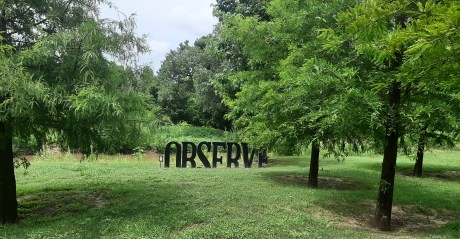
Part of the 6-piece “Monumental Moments” series
by Anthony Shumate, 2015
(located in Buffalo Bayou Park, along the Kinder Footpaths)
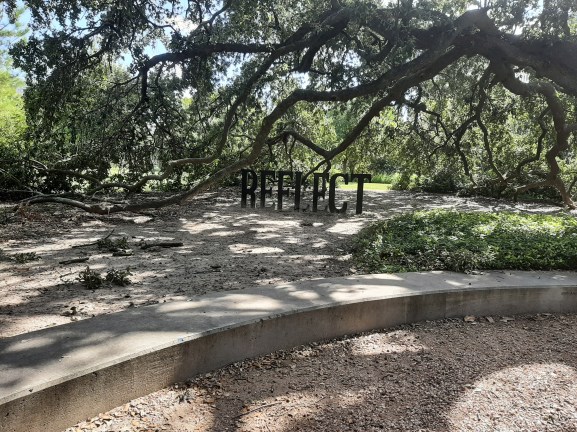
Part of the 6-piece “Monumental Moments” series
by Anthony Shumate, 2015
(located in Buffalo Bayou Park, along the Kinder Footpaths)
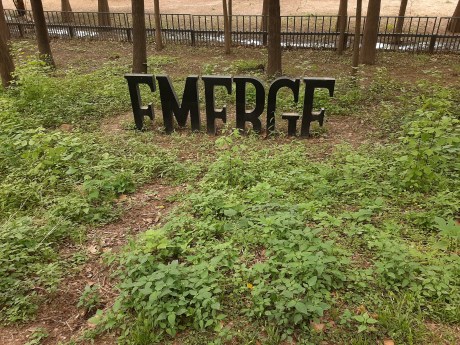
*Anthony Shumate’s “Monumental Moments” sculptures are located in Buffalo Bayou Park, along the Kinder Footpaths in Houston, Texas. They are unexpected reminders to “Explore,” “Pause,” “Reflect,” “Listen,” “Emerge,” and “Observe” – all things we do in our practice!
“Kwanzaa, yenu iwe na heri!” – “May your Kwanzaa be happy!” to everyone who is celebrating! May you have a meaningful observation no matter if your focus is on the Nativity Fast / St. Philip’s Fast or the Feast Day of Saint Thomas of Canterbury (and London). Many blessings to everyone!
This is the post-practice post for Monday, December 29th. It includes new and re-posted content. The 2025 prompt question was, “What is your love language?” You can request an audio recording of this practice or a previous practice via a comment below or (for a slightly faster reply) you can email myra(at) ajoyfulpractice.com.
In the spirit of generosity (“dana”), the Zoom classes, recordings, and blog posts are freely given and freely received. If you are able to support these teachings, please do so as your heart moves you. (NOTE: You can donate even if you are “attending” a practice that is not designated as a “Common Ground Meditation Center” practice, or you can purchase class(es).
Donations are tax deductible; class purchases are not necessarily deductible.
Check out the “Class Schedules” calendar for upcoming classes (and holiday cancellations).
“We’re paying with love tonight
It’s not about the money, money, money We don’t need your money, money, money We just wanna make the world dance Forget about the price tag Ain’t about the, uh, cha-ching, cha-ching Ain’t about the, yeah, ba-bling, ba-bling”
— quoted from the song “Price Tag” by Jessie J (written by Lukasz Gottwald / Claude Kelly / Jessica Cornish / Bobby Ray Simmons Jr.)
Some things (like people) are priceless. Yet, even when we know that, it is so easy to get distracted by the price tag. It is especially easy to get distracted this time of year, because of all the gift giving and receiving (and, for some, the possibility of a Christmas bonus).
On the fourth day of Kwanzaa — which is also the the fourth or fifth day of the “12 Days of Christmas” (depending on when you start counting) — we focus on “Ujamaa (Cooperative Economics)” and go a little deeper into how we value and appreciate people and things. We also touch on the struggles that arise in a society that has never found a good balance between the material and the spiritual.
Even though “it’s not about the money,” I do talk about the money.
The following (revised) excerpt, from the 2022 “Social Economics” post, includes a 2025 update:
“The actual cost of ‘The 12 Days of Christmas’ varies, depending on if you are giving a single set of each gift (i.e. only one set of five gold rings) or if you are going the cumulative route. According to PNC Financial Services Group’s annual ‘Christmas Price Index’ (which they have issued for 41 42 years), the cost for one set of each gift in 2019 was $38,993.59; with a cumulative price tag of $170, 298.03, which was just barely more than the 2018 cost. In 2020, however, the cost was $16,168.10 – $105, 561.80. In 2021, the cost for a single set of gifts was $41,205.58; with a cumulative total of $179,454.19. In 2022, the overall cost went up 10.5%, putting the single set of gifts at $45,523.27 and the cumulative total at $197,071.09.”
2025 UPDATE: This year, the overall costs for a single set of gifts went up (4.5%, from 2024, which was already up 5.4%, from 2023) to $51,476.12 and the cumulative total went up (4.4%) to $218,542.98. Last year, the highest percentage increase was for the partridge in a pear tree — because the cost of the tree (in particular the fertilizer for the tree) has steadily increased over the last few years. This year, however, the highest percentage increase — by far, at 32.5% — was the gift of the Five Gold Rings. (Unfortunately, the increase in the price of gold is a sign of not so good things to come as far as the U. S. economy is concerned.) NOTE: The Lords-A-Leaping also went up (again) and remains the most expensive gift (even more than the swans)!
Ujamaa (cooperative economics)—To build and maintain our own stores, shops, and other businesses and to profit from them together.
— The fourth of the Nguzo Saba (or “Seven Essential Pillars”) of Kwanzaa
There is no playlist for the Common Ground Meditation Center practices.
A playlist inspired by the 4th day of Kwanzaa is available on YouTube and Spotify. [Look for “12292021 Social Economics”]
If you are thinking about suicide, worried about a friend or loved one, or would like emotional support, you can dial 988 (in the US) or call 1-800-273-TALK (8255)for the Suicide and Crisis Lifeline. You can also call this TALK line if you are struggling with addiction or involved in an abusive relationship. The Lifeline network is free, confidential, and available to all 24/7. YOU CAN TALK ABOUT ANYTHING.
White Flag is an app, which I have not yet researched, but which may be helpful if you need peer-to-peer (non-professional) support.
“Kwanzaa, yenu iwe na heri!” — “May your Kwanzaa be happy!” to everyone who is celebrating! May you have a good observation if your focus is the Feast Day of Saint Stephen or Saint John or the Nativity Fast / St. Philip’s Fast.
“nguzo (Swahili)
Noun
nguzo
prop, pillar (an object placed against or under another, to support it)
column, supporting pole
pillar (an essential supporting part of something)
(figuratively) a support or comfort”
— definition from WordSense.eu (and English dictionary based on Wiktionary)
Today is the second day of Kwanzaa and the second or third day of“The 12 Days of Christmas” (depending on when you start counting). While some (Orthodox) Christian traditions are still getting ready for Christmastide, some (Western) Christian traditions are celebrating the Feast Day of Saint John, while others (in some Orthodox traditions) are focused on Saint Stephen.
Even though the rituals and traditions may seem different from the outside, they share similar practices (see excerpt below). They also have similar effects on the inside: They keep people focused on their foundations.
“I gotta be me, I’ve gotta be me What else can I be but what I am
I want to live, not merely survive And I won’t give up this dream Of life that keeps me alive I gotta be me, I gotta be me The dream that I see makes me what I am”
— quoted from the song “I Gotta Be Me” by Sammy Davis, Jr. (written by Walter Marks)
Please join me for a virtual yoga practice on Zoom, today (Saturday, December 27th) at 12:00 PM. You can use the link from the “Class Schedules”calendar if you run into any problems checking into the class. You can request an audio recording of this practice via a comment below or (for a slightly faster reply) you can email me at myra(at) ajoyfulpractice.com.
Saturday’s playlist is available on YouTube and Spotify. [Look for “12272020 Will, Determination, & John”]
If you are thinking about suicide, worried about a friend or loved one, or would like emotional support, you can dial 988 (in the US) or call 1-800-273-TALK (8255)for the Suicide and Crisis Lifeline. You can also call this TALK line if you are struggling with addiction or involved in an abusive relationship. The Lifeline network is free, confidential, and available to all 24/7. YOU CAN TALK ABOUT ANYTHING.
White Flag is an app, which I have not yet researched, but which may be helpful if you need peer-to-peer (non-professional) support.
“Umoja (unity) — To strive for and maintain unity in the family, community, nation, and race.
Kujichagulia (self-determination) — To define ourselves, name ourselves, create for ourselves, and speak for ourselves.
Ujima (collective work and responsibility) — To build and maintain our community together and make our brother’s and sister’s problems our problems and to solve them together.
Ujamaa (cooperative economics) — To build and maintain our own stores, shops, and other businesses and to profit from them together.
Nia (purpose) — To make our collective vocation the building and development of our community in order to restore our people to their traditional greatness.
Kuumba (creativity) — To do always as much as we can, in the way we can, in order to leave our community more beautiful and beneficial than we inherited it.
Imani (faith) — To believe with all our heart in our people, our parents, our teachers, our leaders, and the righteousness and victory of our struggle.”
— The Nguzo Saba (or “Seven Essential Pillars”) of Kwanzaa
In the spirit of generosity (“dana”), the Zoom classes, recordings, and blog posts are freely given and freely received. If you are able to support these teachings, please do so as your heart moves you. (NOTE: You can donate even if you are “attending” a practice that is not designated as a “Common Ground Meditation Center” practice, or you can purchase class(es).
Donations are tax deductible; class purchases are not necessarily deductible. Check out the “Class Schedules” calendar for upcoming classes.
CHECK OUT THE CALENDAR! You can kick off New Year’s Day 2026 in two ways (and in two spaces): with the very active practice of 108 Sun Salutations at 10:00 AM or with the very “chill” practice of a Restorative Yoga+Meditation practice beginning at 5:00 PM. All times are Central Standard.
 ###
###
 A Joyful Practice