Many blessings to everyone, and especially to anyone Counting the Omer!
“‘Bhikkhus, I could tell you in many ways about the animal kingdom, so much so that it is hard to find a simile for the suffering in the animal kingdom. Suppose a man threw into the sea a yoke with one hole in it, and the east wind carried it to the west, and the west wind carried it to the east, and the north wind carried it to the south, and the south wind carried it to the north. Suppose there were a blind turtle that came up once at the end of each century. What do you think, bhikkhus [monks]? Would that blind turtle put his neck into that yoke with one hole in it?’
Bhikkhus: ‘He might, venerable sir, sometime or other at the end of a long period.’
‘Bhikkhus, the blind turtle would take less time to put his neck into that yoke with a single hole in it than a fool, once gone to perdition, would take to regain the human state, I say. Why is that? Because there is no practicing of the Dhamma there, no practicing of what is righteous, no doing of what is wholesome, no performance of merit. There mutual devouring prevails, and the slaughter of the weak.’”
– quoted from “The Animal Kingdom” in Majjhima Nikāya 129, Balapandita Sutta: Fools and Wise Men
Please join me today (Tuesday, May 16th) at 12:00 PM or* 7:15 PM for a yoga practice on Zoom. You can use the link from the “Class Schedules”calendar if you run into any problems checking into the class. You can request an audio recording of this practice via a comment below or (for a slightly faster reply) you can email me at myra(at) ajoyfulpractice.com.
*SCHEDULE NOTE: I will not be available for the Noon class today, but plan to be back on schedule this evening.
Tuesday’s playlist is available on YouTube and Spotify. [Look for “05162021 Doing the Work”]
PLAYLIST NOTE: Due to artist protests, one song may not play on Spotify. As I support artists in their efforts to bring about change, I am not re-mixing affected playlists because of the protests. This particular remix was due to additional content.
In the spirit of generosity (“dana”), the Zoom classes, recordings, and blog posts are freely given and freely received. If you are able to support these teachings, please do so as your heart moves you. (NOTE: You can donate even if you are “attending” a practice that is not designated as a “Common Ground Meditation Center” practice, or you can purchase class(es). Donations are tax deductible; class purchases are not necessarily deductible.)
Many blessings to everyone, and especially to anyone Counting the Omer (Lag B’Omer or Lag LaOmer)!
This is a “missing” post for Tuesday, May 9th.You can request an audio recording of this practice via a comment below or (for a slightly faster reply) you can email me at myra (at) ajoyfulpractice.com.
“Tio, kio malamas vin, ne faru al via ulo. Tio estas la tuta Torao; la resto estas la klarigo. Nun iru studi.”
“That which is hateful to you, do not do to your fellow. That is the whole Torah; the rest is the explanation. Now go and study.”
– quoted from the story of Hillel the Elder “[teaching] the meaning of the whole Torah while standing on one foot,” translated into Esperanto and English by Dr. L. L. Zamenhof
It is not the point of the story – and, in some ways it doesn’t matter – however, today I am wondering “Which foot?”
According to the Talmud a potential convert to Judaism went to two famous rabbis of the 1st century and asked to be taught the whole Torah while standing on one foot.* Rabbi Shammai insulted the man and threw him out. Rabbi Hillel (the Elder) taught a lesson about respect, which some commentators say is also love.
Respect/love that’s the important part of the story. However, today, I am also wondering about which foot. Because, which foot determines which leg and which hip bear the weight of the lesson – and which leg and hip, represents the (symbolic) foundation of the teaching.
“Yes, how my love this moment here is ripe for us Yes, you and I so brave against the years If nothing’s left to live we must find a way There’s reason yet to live There’s something left to give We must find a way There is so much to give”
– quoted from “When Nothing’s Left” by Royal Wood
As I often mention this time of year, Jewish mysticism (Kabbalah) indicates that the Tree of Life has ten sefirot (“emanations,” attributes, or manifestations) of the Divine – seven of which are associated with the body. For instance, the right leg/thigh is associated with the fourth attribute, Netzach, meaning “endurance,” “sustainability,” “victory,” and “persistence.” Meanwhile, the left leg/thigh is associated with Hod, which can be defined as “humility,” “gratitude,” “splendor,” and “glory.” I often reference this in relation to the Counting of the Omer, a 7-week period of prayer and reflection which begins on the second night of Passover. Each night, for 49 days, people count the days of the Omer and reflect on a combination of two of the sefirot.
We’re heading towards the end of the fifth week; and so, the focus is on how each attribute – lovingkindness, strength, balance, endurance, humility, bonding, and stewardship – shows up in relation to Hod. Sunset on Monday marked the beginning of Lag B’Omer (or Lag LaOmer) – Day 33 of (or in) the Omer, which is Hod She’b’Hod. The 33rd day has an extra special significance and is treated differently from the other days. The reason it’s different is related to hope – gained, lost, and regained – and, also, to that first lesson regarding respect/love.
“They said by way of example that Rabbi Akiva had twelve thousand pairs of students in an area of land that stretched from Gevat to Antipatris in Judea, and they all died in one period of time, because they did not treat each other with respect.”
– quoted from Yevamot 62b:9 in The Koren Talmud Bavli Noé (Vol. 14 Yevamot 1), with commentary by Rabbi Adin Even-Israel Steinsaltz and English from The William Davidson digital edition
I often refer to Counting the Omer as a preparation ritual, similar to other observations and celebrations that fit within the rubric of kriya yoga. What I don’t often mention is that the beginning of the 7 weeks is also a period of mourning related to Rabbi Akiva’s 24,000 students and the lost hope that their deaths represent. Obviously, so many people being lost at once would be devastating and heartbreaking. However, the communal hopelessness is also related to the fact that the 24,000 were preparing for the return of the Temple.
Yet, somehow, despite focusing on the scholarly aspects of their faith, they got it wrong.
How? How could so many students of Torah not respect/love one another properly? How could so many students of one of the greatest rabbis not understand a foundational element of their teaching? According to some commentary, they did not love those that had different opinions and perspectives. Rather than learning from one another, they believed they could only respect/love those who shared the same views. So the were struck down by a plague.
Some scholars say the plague that killed them was an actual disease (as it is indicated in the text); others say it was a metaphor for war against the Roman Empire. Either way, Lag B’Omer (or Lag LaOmer) is the anniversary of the day when the plague ended – or when a revolt led by Simon Bar Kokhba achieved a victory against the Roman Empire. It is also the anniversary of the death one of the students from Rabbi Akiva’s second cohort: Rabbi Shimon Bar Yochai, whose life is celebrated as a symbol of hope for the future.
All the activities people put on hold during the period of mourning, resume on the 33rd Day of the Omer. Additionally, some people will make a pilgrimage to sacred sites. In some communities, people build bonfires to symbolize the ways in which people marked the beginning of the holidays and the sabbath in medieval times and the fires Bar Kokhba’s soldiers would have used to communicate. (Similarly, children may use toy boy and arrows to reenact the revolt.) Bonfires and torches are also symbolic of the mystical fire that surrounded Rabbi Shimon Bar Yochai as he shared his wisdom of the Torah on his last day. Finally, the fires symbolize the light of the Torah and the return of that light to the Jewish people.
They are a reminder that Rabbi Akiva didn’t give up – even when all were lost and he hit the proverbial wall.
“And the world was desolate of Torah until Rabbi Akiva came to our Rabbis in the South and taught his Torah to them. This second group of disciples consisted of Rabbi Meir, Rabbi Yehuda, Rabbi Yosei, Rabbi Shimon, and Rabbi Elazar ben Shamua. And these are the very ones who upheld the study of Torah at that time. Although Rabbi Akiva’s earlier students did not survive, his later disciples were able to transmit the Torah to future generations.”
– quoted from Yevamot 62b:10 in The Koren Talmud Bavli Noé (Vol. 14 Yevamot 1), with commentary by Rabbi Adin Even-Israel Steinsaltz and English from The William Davidson digital edition
For Those Who Missed It: The following was originally posted in 2020. One quote was moved. Additionally, the first and third paragraphs have been slightly revised.
“For there is no doubt that the most radical division that it is possible to make of humanity is that which splits it into two classes of creatures: those who make great demands on themselves, piling up difficulties and duties; and those who demand nothing special of themselves, but for whom to live is to be every moment what they already are, without imposing on themselves any effort towards perfection; mere buoys that float on the waves.”
― from The Revolt of the Masses by José Ortega y Gasset
My friend Bob P once told me this joke: “There are two kinds of people in a kayak, the people that just fell out and the people who are about to fall out.” I find his joke is a pretty apropos metaphor for that feeling of “hitting the wall” during [the] pandemic; if you haven’t hit the wall, you’re about to hit the wall. The same can be said for some of life’s greatest heartaches. While it might seem trite to suggest that you can tell a lot about a person by how they get over/under/around/through the wall, it doesn’t change the fact that [what we’ve been through and are going through] is all part of our circumstances and, to paraphrase José Ortega y Gasset, we are (in part) our circumstances.
Born in Spain, today (May 9th) in 1883, Ortega y Gasset was an existential philosopher and writer, as well as a bit of an activist/social reformer, who believed that life was simultaneously fate and freedom, but that freedom could only be experienced within a given fate. In other words, we must play the hand we’re dealt – but, and this is key, we decide what game we’re playing with the hand we’re dealt. In fact, Ortega y Gasset encouraged actively deciding and creating a “project of life” and, in doing so, create meaning not only for one’s self, but also for others.
– “The objective world (what is seen), consisted of a combination of elements and senses, and having a nature of illumination, activity, and stability, has two purposes: fulfillment and freedom.
– The “gunas” fall into four categories: specific/identifiable, unspecific/unidentifiable, barely describable (by signs), and absolutely indescribable (because it is beyond reference)
It may seem strange, even counterintuitive to some, to draw parallels between the work of 20th century existential philosophers and psychologists (or psychoanalysts) and the work of the ancient yogis (and medieval rabbis). Yet, remember, Patanjali, Vyasa, and the authors of the sacred texts like the Upanishads were explaining their life experiences – just like modern day existentialists – and codifying their life philosophies. When you get right down to it, all of this comes down to an understanding of the nature of things and the nature of ourselves. So, once again, we are back to the same two questions: “Who are you?” and “Where does the world come from?”
José Ortega y Gasset was a strong proponent of creating one’s world and being an active creator rather than a passive receiver. The second section/chapter of the yoga sutras (“The Foundation on Practice”) begins by focusing on how we are creating our world and our experiences in the world – sometimes unconsciously.
“Life cannot wait until the sciences may have explained the universe scientifically. We cannot put off living until we are ready. The most salient characteristic of life is its coerciveness: it is always urgent, “here and now” without any possible postponement. Life is fired at us point-blank. And culture, which is but its interpretation, cannot wait any more than can life itself.”
– from Misión de la Universidad (Mission of the University) by José Ortega y Gasset
Tuesday’s playlist is available on YouTube and Spotify. [Look for “05009020 JOyG”]
*NOTE: In most translations of the Talmud, it clearly states that the gentile was the one standing on one foot during the lesson.
Many blessings to everyone, and especially to anyone Counting the Omer!
“The mind is like an iceberg, it floats with one-seventh of its bulk above water.”
– possibly Sigmund Freud, as quoted in his New York Times obituary (09/24/1939)
Last week’s explanation of different traditions having different understandings of the meaning of shastra, might have induced fever dreams. However, the essence of the different meanings – as it relates to our practice and the concept of “grace of shastra” – is the same: Shastra is a collection of knowledge or laws of nature that are true, that have “always been and will always be” true, and that can be communicated directly. Some of the difference in meanings comes from how the knowledge or rules of nature are communicated – and to whom. Because, for some, the knowledge can only be communicated directly from the Divine to someone who has done the work to reach a certain state of enlightenment and/or awareness.
Of course, a teacher can then communicate the truth to others; however, those others must also do the work in order to truly understand the knowledge or precepts. Today, let’s consider one of the ways in which someone could initially and directly receive the truth. (Warning: Yoga Sūtra 1.10 is a bit of a caveat.)
Yoga Sūtra 1.38: svapna nidrā jñānālambanaṁ
– “Or by meditating on the knowledge gained from dreams and sleep, one acquires stability of mind.”
For Those Who Missed It: The following was originally posted on May 6, 2020. Other than moving the very first quote (above), I have added a link and updated the class details, but the content is the same.
“The conscious mind may be compared to a fountain playing in the sun and falling back into the great subterranean pool of subconscious from which it rises.”
– Sigmund Freud, as quoted in his New York Times obituary (09/24/1939)
“The interpretation of dreams is the royal road to knowledge of the unconscious activities of the mind.”
– from The Interpretation of Dreams by Sigmund Freud
Let’s talk about our dreams. During this pandemic, some people have mentioned having particularly wild dreams – even when they weren’t sick. People have also talked about either remembering or not remembering their dreams, but in the opposite way than what is normal for them. I recently dreamed there was a brown rabbit sitting at the foot of my bed. It wasn’t doing anything; just hopped up and sat there for a bit. Not touching me, or biting me – not even really looking at me or wiggling its nose – just sitting there.
Prior to seeing the movie US, a dream like that would have had me running to search for Freud’s take on the symbolism of rabbits. Rather than going down that particular (and surprising) rabbit hole, let’s just stick with the work and the history.
Born today (May 6th) in 1856, Dr. Sigmund Freud was a neurologist who studied researched cerebral paralysis or cerebral palsy, as it is known today. In an attempt to better understand the workings of the brain, Freud collaborated with Dr. Josef Breuer, a physician who utilized a type of hypnosis very different from what Freud had previously studied. Breuer’s work, especially with a patient referred to as “Anna O,” laid the foundation for psychoanalysis – the development of which would lead to Freud’s legacy as the “Father of Psychoanalysis” and dream interpretation.
“…here we have another limitation to the effectiveness of analysis; after all, analysis does not set out to make pathological reaction impossible, but to give the patient’s ego freedom to decide one way or the other.”
– from The Ego and the Id by Sigmund Freud
“Psychoanalysis in the hands of the physician is what confession is in the hands of the Catholic priest. It depends on its user and its use, whether it becomes a beneficial tool or a two-edged sword.”
– Bertha Pappenheim (also known as “Anna O”)
Bertha Pappenheim (a.k.a. “Anna O” and “Only A Girl”) was a Jewish Austrian feminist, education organizer, and writer who was born into a wealthy and prestigious family. She was highly educated, cultured, and spoke multiple languages. She was immersed in a variety of cultures throughout her childhood. In her twenties, around the same time that her father became ill, she started experiencing a variety of physical and mental ailments. The ailments became worse after her father’s death. Breuer initially diagnosed her with hysteria (a pretty common diagnosis for women at that time, regardless of how they presented) and started her on a new type of hypnosis therapy. Rather than trying to cure or “correct” her, however, Breuer placed “Anna O” under hypnosis and encouraged her to talk in order to reveal the underlying causes of her symptoms. Breuer believed that the underlying causes were childhood traumas, suppressed memories, and suppressed thoughts. “Anna O’ referred to this therapy as her “talking cure” and it did in fact alleviate some of her symptoms and reduce the intensity of others. (NOTE: She discontinued her therapy with Breuer after accusing him of getting her pregnant; an accusation that is either not mentioned in either of their biographies or dismissed as a symptom of her illness. Later in life, as an educator, Pappenheim would not allow girls in her care to utilize the therapy that had become commonplace.)
By the time Freud (who never met Bertha Pappenheim) started collaborating with Breuer, he had pretty much given up on the possibility of hypnosis being a consistently viable treatment for his patients. Breuer’s method, however, was different and so Freud began to encourage his patients to speak freely about whatever came up in whatever manner it came up. He referred to this stream of consciousness as “free association” and eventually concluded that dreams were the key to the subconscious and repressed memories. His clinical experience evolved into the development of psychoanalysis.
“Neurosis is the inability to tolerate ambiguity.”
– Sigmund Freud
Keep in mind that during the bulk of this work on a new form of treatment, Freud himself was experiencing symptoms that, had he been a woman, would have led to a diagnosis of hysteria. Naturally, he started using his new treatment on himself and ultimately codified a system of symbols and dream interpretation that supported his theories about sexual development and its correlation to maturity; an understanding of “wish fulfillment” and the desires of the ego and super ego; his seduction theory, which explained certain neurosis as the result of repressed sexual trauma and abuse; and postulation of the Oedipus Complex, which he said manifested as “castration anxiety” in men and “penis envy” in women. (NOTE: Freud firmly dismissed Dr. Carl Jung’s discussions of an “Electra complex,” positing that there was one issue experienced by different genders in different ways, as opposed to multiple issues which could be experienced by any gender.)
As I started reading Freud at a tender age, I could go on like this all night… especially since the history is just as interesting as the clinical concepts. But, at some point I need to go to sleep – perchance to dream. And if you ask me if you’re in my dreams, the answer may surprise you. (Or not: after all, a little over half of small business professionals dream about work and the vast majority who dream of work, put those dreams into action when the wake. Keep that in mind next time you think I dreamed up a sequence.)
“Dreams are often most profound when they seem the most crazy.”
– from The Interpretation of Dreams by Sigmund Freud
If you’re curious about what I might “dream up” next, please join me for a 90-minute virtual yoga practice on Zoom today (Saturday, May 6th) at 12:00 PM.Use the link from the “Class Schedules” calendar if you run into any problems checking into the class. You can request an audio recording of this practice via a comment below or by emailing myra(at) ajoyfulpractice.com.
Saturday’s playlist is available on YouTube and Spotify. [Look for “05062020 What Dreams May Come”]
In the spirit of generosity (“dana”), the Zoom classes, recordings, and blog posts are freely given and freely received. If you are able to support these teachings, please do so as your heart moves you. (NOTE: You can donate even if you are “attending” a practice that is not designated as a “Common Ground Meditation Center” practice, or you can purchase class(es). Donations are tax deductible; class purchases are not necessarily deductible.)
“Being entirely honest with oneself is a good exercise.”
– from a letter written by Sigmund Freud to Dr. Wilhelm Fleiss, otolaryngologist (dated 10/15/1897)
### SOMETIMES THE APPLE STAYS CLOSE TO THE TREE ###
“Happy Riḍván!” to those celebrating “the Most Great Festival.” Many blessings to everyone, and especially to anyone Counting the Omer!
For Those Who Missed It: The following was originally posted in 2021. In addition to a few revisions, I have updated the class details and music links, as well as information related to this year’s Kiss My Asana yogathon. Some embedded links will direct you outside of this blog. Astronomical details related to April 26, 2021 have not been changed. WARNING: There is passing reference to people with mental health issues.You can request an audio recording of this practice via a comment below or (for a slightly faster reply) you can email me at myra (at) ajoyfulpractice.com.
“‘My main point today is that usually one gets what one expects, but very rarely in the way one expected it.’”
– quoted from a draft of Charles Richter’s 1970 retirement speech, as printed in the Appendix of Richter’s Scale: Measure of an Earthquake, Measure of a Man by Susan Elizabeth Hough
Over the last month (or so) I have developed a new guilty pleasure: watching the Lock Picking Lawyer’s YouTube videos. To be completely transparent, I will admit that I have known people who spent their down time at work picking locks from the “lost and found” (or locks that someone on staff had to break, because the owner locked themselves out). I will also admit that I found it an odd and eyebrow raising hobby – especially when they did it in full view of the very people who relied on locks for security. However, my previous opinions haven’t stopped me from getting hooked by these videos, starting with the first one I watched (which I will link at the end of this post).
The first video was the Lock Picking Lawyer’s annual April 1st video, which is slightly different from his regular offering (in that it is a joke); but still contains some of the same elements that are, frankly speaking, compelling and addictive. First, the videos are witty, logical, informative, and low-key ASMR. (ASMR stands for Autonomous Sensory Meridian Response and is used to describe content that provides a calming experience for the brain and spine; what some people call a “brain massage.”) Second, the videos are philosophical on several different levels and reinforce some critical elements of our physical practice of yoga.
“Philosophy is like trying to open a safe with a combination lock: each little adjustment of the dials seems to achieve nothing, only when everything is in place does the door open.”
– Ludwig Wittgenstein, philosopher
Born in Vienna, Austria today in 1889, Dr. Ludwig Wittgenstein was part of one of the richest families in Europe and (although he was the youngest of nine) he inherited his father’s fortune at the age of 24. Many people associate great wealth with great ease and comfort, but none of that wealth prevented Dr. Wittgenstein from suffering severe depression, contemplating suicide, or losing three of his brothers to mental health issues. He made anonymous donations to artists and writers (including Rainer Maria Rilke). Then he gave his entire fortune to his brothers and sisters. Throughout his lifetime, he worked in several different areas in an attempt to find some ease to his suffering, but he ultimately said that philosophy saved him and was “the only work that gave me real satisfaction.” His work in logic, the philosophy of mathematics, the philosophy of the mind, and the philosophy of language is recognized as some of the most important works of philosophy of the twentieth century.
As I have previously mentioned (specifically in the 2020 blog post on this date), “The word philosophy comes to us from Greek, by way of Latin, Old French, and Middle English, from a word that means “love of wisdom.” It is the study of the fundamental nature of knowledge, thought, reality, and existence. It provides a way to think about and understand the world, the universe, and everything. As stated in Wikipedia, it “is the study of general and fundamental questions about existence, knowledge, values, reason, mind, and language.” The most basic question being, “Why?” which spirals out as:
Who/What are you?
Why do you exist?
Where does the world come from? / Why does the world exist?
The philosophy of yoga addresses all of these questions, and the follow-up questions (like, “Why do we/I/other people do the things we/I/they do?” and “How do I find balance in my life/relationships/pose?”). Yoga addresses philosophical questions even when someone only practices the physical practice, because, ultimately, the physical practice is a container in which we can consider these questions.
One of the questions that we address – especially through the physical practice – is the question of security/stability and comfort/ease. Many commentaries on Patanjali’s Yoga Sūtras (in particular, commentary related to YS 2.46 – 49) point out that “stability and comfort go hand in hand.” We see this on and off the mat. There is a bit of a dichotomy, however, between what we think will bring us security/stability and comfort/ease versus what actually gives us those feelings. We could, for instance, have all the wealth of Ludwig Wittgenstein and, just as he did, suffer greatly.
One way people with stuff suffer is when they don’t feel their stuff is secure. For instance, consider the uncomfortable feeling some people have when they think they have forgotten to lock their front door after leaving home. Since the emotional (fear) response is connected to the perception of a threat, the feeling that they may have left the door unlocked is similar to returning home and finding the door wide open. Although the latter may, understandably, be more intense and acute – and combined with the fear that someone with nefarious intentions is inside – both sensations can be eliminated if we are secure in the knowledge that the door is locked (maybe because we checked before we left) and that the door is closed and locked upon our return.
What becomes very clear after a watching a few of the videos from the Locking Picking Lawyer is that in most cases locks are “easily” picked. On one level, they provide a deterrent, but – more importantly – they are manifested maya (“illusion”). And, philosophically speaking, because they can be opened by someone you may not want to open them, the lock and the closed door only give us the illusion of security – and that illusion (or perception) is what gives us the feeling of ease/comfort.
One of the things I appreciate about the Locking Picking Lawyer’s content is that while he readily “picks” apart the illusion, he also provides information that can make us better consumers. In being better informed – about the reality of locks – we make better decisions and, also, may experience more stable comfort and ease. Remember, in the Eastern philosophies, like Yoga and Buddhism, suffering comes from attachment and the end of suffering comes from the practice of non-attachment. No one wants someone to steal or mess with their stuff – that’s why people lock their stuff up! However, letting go of the illusion of the lock (and key or combination) can alleviate some suffering. Not only can letting alleviate mental and emotional suffering, it can be one of the keys to unlocking physical suffering.
“The human body is the best picture of the human soul.”
– Ludwig Wittgenstein, philosopher
I don’t know much about the Locking Picking Lawyer (other than the obvious and the fact that he’s married to Mrs. Lock Picking Lawyer, who apparently has no interest in picking locks). However, I definitely appreciate that his videos (unintentionally) reinforce the following critical elements which are directly applicable to our physical practice of yoga:
You need the right tools.
You can access almost anything with the right skills/knowledge.
You have to start with stability (i.e., secure what you’re accessing the way you would access it “in the wild”).
It’s important to access the core.
Take your time and go by the numbers / step by step.
It’s important to listen (and pay attention to what’s “clicking” and “binding”).
More knowledge comes from the inside than the outside.
Sometimes you have to turn things around.
Never underestimate the power of a good wiggle/jiggle.
It’s important to have a sense of humor.
Also, as an aside, you can do something again to show it wasn’t a fluke.
“The most remarkable feature about the magnitude scale was that it worked at all and that it could be extended on a worldwide basis. It was originally envisaged as a rather rough-and-ready procedure by which we could grade earthquakes. We would have been happy if we could have assigned just three categories, large, medium, and small; the point is, we wanted to avoid personal judgments. It actually turned out to be quite a finely tuned scale.”
– quoted from the Earthquake Information Bulletin (January- February 1980, Volume 12, Number 1) article, “Charles F. Richter – An Interview” by Henry Spall, U. S. Geological Survey, Reston, Va. (regarding the scale Mr. Richter developed with Beno Gutenberg)
With regard to those last two bullet points, today is also the anniversary of the births of the seismologist and physicist Charles Richter (b. 1900, Overpeck, Ohio) and the award-winning Carol Burnett (b. 1933, San Antonio, Texas). Mr. Richter, along with Beno Gutenberg, developed the Richter Magnitude Scale in 1935. Prior to their creation, shock measurement was based on The Mercalli intensity scale, which was developed by the Italian priest Giuseppe Mercalli and used Roman numerals (I to XII) to rate shocks based on how buildings and people were affected. The Richter-Gutenberg collaboration was designed to measure displacement in a non-subjective manner. The idea of using “magnitude” came from Mr. Richter’s interest in astronomy. (There’s a good possibility that if he were alive today he would spend some part of this evening and the next checking out the “Super” Pink Moon.) In addition to being remembered for his knowledge and ingenuity, Charles Richter is remembered as being a little prickly on the outside, but warm on the inside and for having a sense of humor – although he didn’t often laugh at himself.
Maybe Carol Burnett, one of the funniest people on the face of the Earth, could have helped Charles Richter laugh at the fact that a man who wasn’t planning to become a seismologist became synonymous with seismology. She has won 6 Primetime Emmy Awards (out of 23 nominations); 7 Golden Globe Awards (out of 18 nominations); 3 Tony Awards; and 3 Grammy Awards. An actress, comedian, singer, and writer, she has also received everything from 2 Peabody Awards to a Screen Actors Guild (SAG) Life Achievement Award; a Presidential Medal of Freedom; and the Mark Twain Prize for American Humor. She was even awarded the very first Golden Globes Carol Burnett Lifetime Achievement Award (for Television) and has a star on the Hollywood Walk of Fame. But, before all of that, she endured a lot of suffering as a child because of the instability of her first family – specifically her parents, who were alcoholics. Then she suffered as an adult when her oldest child suffered from drug addiction (and then died of pneumonia at the age of 39).
A natural born performer, even before she “went into show business,” Carol Burnett sang, created characters, and developed the imagination that would lead her to a career that has spanned 7 decades. One of the things that “saved” her from a life of complete misery and insecurity was her grandmother Mabel – who not only raised her when her parents moved to Hollywood, but also regularly took her to the movies. As a secret “I love you” to her grandmother, Ms. Burnett would tug on her left ear at the end of every episode of The Carol Burnett Show.
“The first time someone said, ‘What are your measurements?’ I answered, ’37, 24, 38 – but not necessarily in that order.’”
– Carol Burnett, comedian
Wednesday playlist is available on YouTube and Spotify. (Look for “04262020 Philosophy of Locks”)
If you are thinking about suicide, worried about a friend or loved one, or would like emotional support, you can dial 988 (in the US) or call 1-800-273-TALK (8255). You can also call the TALK line if you are struggling with addiction or involved in an abusive relationship. The Lifeline network is free, confidential, and available to all 24/7. YOU CAN TALK ABOUT ANYTHING.
The picture above is part of my 2023 offering for the 10th annual Kiss My Asana yogathon, which benefits Mind Body Solutions (MBS). This week (April 22nd – 28th), I’m dedicated to raising awareness and resources for MBS’ life-affirming work to help people living with disabilities – and you can help too! You can help by joining me as we practice with purpose, by sharing this page, and/or by making a donation that creates opportunities for more people to practice yoga.
Mind Body Solutions provides live, online resources to people living with disabilities, worldwide. In addition to 11 live online yoga classes a week, MBS has also created a comprehensive library of recorded adaptive yoga classes for students, instructional videos for adaptive yoga teachers, and insightful interviews between our founder, Matthew Sanford, and adaptive students. It all helps people with disabilities live more fully, where they are and how they are.
Each year, in addition to hosting a fundraising page and making my personal donation, I offer a blog post and/or a YouTube post – sometimes even a whole practice. This year, part of my offering is a series of poses I’m posting on the Community page of my YouTube channel. Of course, there’s more to the poses (and pictures) than meets the eye. So, keep in mind that they – like the classes I lead – are just the tip of the iceberg.
What happens at Mind Body Solutions is the whole enchilada!
Ultimately, MBS is all about people having better relationships with their mind-body and spreading the message that a greater connection between mind and body can help us all live with improved comfort and ease.
“Happy Riḍván!” to those celebrating “the Most Great Festival.” Many blessings to anyone Counting the Omer or celebrating/observing Eastertide / the Octave of Easter!
This is a “missing” post for Saturday, April 22nd. It includes some recycled quotes and re-purposed information from earlier posts. Some embedded links will take you outside of the blog. You can request an audio recording of this practice via a comment below or (for a slightly faster reply) you can email me at myra (at) ajoyfulpractice.com.
“Those who contemplate the beauty of the earth find reserves of strength that will endure as long as life lasts. There is something infinitely healing in the repeated refrains of nature — the assurance that dawn comes after night, and spring after winter.”
– quoted from Silent Spring by Rachel Carson (published 1962)
So, this week we considered the power found in waiting, waiting in community and also the power of water and light – which is akin to fire – (plus there were some references to wind). But what about Earth… and Space? And what does any of this have to do with grace, particularly shastra kripa (or, at least, one of the definitions of shastra kripa)? To get to all that we have to get grounded, dig deep, and take a little detour through another celebration related to waiting and through a yogathon.
Notice, however, that all of the references below are centered and grounded in community.
“But it seems reasonable to believe — and I do believe — that the more clearly we can focus our attention on the wonders and realities of the universe about us the less taste we shall have for the destruction of our race. Wonder and humility are wholesome emotions, and they do not exist side by side with a lust for destruction.”
– Rachel Carson accepting the John Burroughs Medal (April 1952) and printed in Lost Woods: The Discovered Writing of Rachel Carson
In addition to being the beginning of the 10th annual Kiss My Asana yogathon, today was Earth Day. While the roots of Earth Day can be found in the 1962 publication of Rachel Carson’s Silent Spring, an actual day dedicated to Earth and peace was initially proposed by John McConnell during a 1969 conferenced hosted by the United Nations Educational, Scientific and Cultural Organization (UNESCO). The very first Earth Day, as he proposed it, was held in San Francisco on March 21, 1970, to coincide with the first day of spring in the northern hemisphere. Gaylord Nelson, a United States Senator from Wisconsin, proposed a nationwide environmental teach-in and hired a young activist named Denis Hayes to organize the first national Earth Day, which was held on April 22, 1970. More than 20 million people, including then-President Richard Nixon and First Lady Pat Nixon, participated in the events on April 22, 1970, making that day one of the largest protests in the United States. (The 1970 Earth Day teach-in was the largest recorded protest until the 2020 protest after the murder of George Floyd.)
“In these troubled times it is a wholesome and necessary thing for us to turn again to the earth and in the contemplation of her beauties to know the sense of wonder and humility. There is modern truth to the ancient wisdom of the psalmist: `I will lift up mine eyes unto the hills, from whence cometh my help.’”
– quoted from Rachel Carson’s original submission to “Words to Live By” for This Week Magazine (1951)
“A determination to be outward looking in the process of community building had already become an established aspect of culture in many, many places; it has now blossomed, in a rising number of communities, into a sense of real responsibility for the spiritual and material progress of larger and larger groups within society, well beyond the membership of the Bahá’í community itself. The efforts of the friends to build communities, to engage in social action, and to contribute to the prevalent discourses of society have cohered into one global enterprise, bound together by a common framework for action, focused on helping humanity to establish its affairs on a foundation of spiritual principles.”
– quoted from the Riḍván 2022 message from the Universal House of Justice “To the Bahá’is of the World”
Thursday night marked the beginning of the twelve-day festival of Ridván, “the Most Great Festival” in the Baháʼí Faith. As I mentioned last month, the Baháʼí Faith is a monotheistic faith that believes in the oneness of God and religion, as well as the oneness and nobility of humanity. The community believes that, historically, there has been a “progressive revelation of religious truth” which has been shared with the world through the voices of the prophets or Divine Messengers, known as “Manifestations of God” (which include “Braham, Krishna, Zoroaster, Moses, Buddha, Jesus Christ, Muhammad, and, in more recent times, the Báb and Bahá’u’lláh”). People within the faith are taught to honor the value of different religious and philosophical traditions as well as the value of education, especially in science (which is viewed by some faiths as being contrary to religion).
The Bahá’í calendar begins around the Vernal (Spring) Equinox in the Northern Hemisphere and has 19 months with 19 days – each named for one of the 19 names/manifestations/attributes of God. For example, “Splendor” and “Glory” are the English translations for Bahá and Jalál, the first two months (and days) of this solar calendar. There are also 4 or 5 intercalary days that occur just before the final month and which are considered “transcendent” in nature. The calendar is partially tied to the Gregorian calendar, in that days on each calendar always correspond with each other; however, the Bahá’í calendar is very much focused around its own historical liturgy. Hence, why 2023 is the year 180 BE (Bahá’í Era).
The twelve-day festival of Ridván, one of the holiest times within the Bahá’í community, is celebrated during the second month and begins exactly one Gregorian-month after the new year. This “Most Great Festival” in the Baháʼí Faith honors the time that the founder of the Bahá’i Faith, Bahá’u’lláh waited in the original garden of Ridván prior to being exiled to Constantinople. The Arabic word ridván means “paradise” and I indicated “the original garden,” because in addition to the garden outside of Baghdad, where the great spiritual leader (considered a manifestation of the Divine) prepared for his exile, there is a second garden with the same name in Israel, which Bahá’u’lláh visited after years of exile.
The festival is a time of a sacred time of prayer, reflection, and celebration. This year’s celebrations began two hours before sunset on Thursday – with the specific timing meant to commemorate the actual time, in 1863, when Bahá’u’lláh entered the Najíbíyyih Garden with his three sons and his secretary and began to receive the visitors who wanted to wish him well before his departure. It was during this time, in the space he called “paradise,” that Bahá’u’lláh declared himself as the most recent manifestation of God; that all religious wars were repealed; that there would not be another manifestation of the God for another 1,000 years; and that the names of God (or attributes of the divine) are manifested in all things. To honor the fact that he made these announcements, the Universal House of Justice issues an annual Ridván message. They also hold elections held during this time. The first day (yesterday), the ninth day (next Saturday), and the twelfth day are considered the most holy of days. The ninth day is auspicious because it is the day the rest of Bahá’u’lláh’s family joined him in the garden and it is also the beginning of the third month, Jamál (“Beauty”).
“Besides my involvement with the Investor’s Circle, I temporarily put aside my plan for an institute and returned to the basics – an almost exclusive focus on my yoga practice. After a couple of years, I decided that it was time to share my experience with yoga and paralysis. If nothing else, I could help others who lived with disability. I started teaching an adapted yoga class at the Courage Center, a leading rehabilitation facility in a suburb of Minneapolis.
My idea was that by teaching this class, I could give something back – an obvious means to make my experience useful. What I found was much more. I thought I was teaching these students, when, in fact, they were teaching me. Neurological deficit is a frontier of mind-body integration. Working with these students has taught me that the principles of yoga are nondiscriminating – they can travel though any body.”
– quoted from “16, Falling Gracefully” in “Part Three: Yoga, Bodies, and Baby Boys” of Waking: A Memoir of Trauma and Transcendence by Matthew Sanford
As I have mentioned before, my first exposure to the physical practice of yoga was also my first exposure to Yoga Philosophy and to the fact that anyone and everyone can practice yoga. Sometimes we stumble upon the practice that works for us. However, sometimes it takes an extra effort to find the practice (and the teacher) that works for our particular mind-bod-spirit. In fact, it wasn’t until I took my first yoga teacher training that I really realized how many people weren’t practicing, because they didn’t know they could practice. Even worse, some people had been told that they couldn’t practice – which is heartbreaking.
Still, I believed (and continue to believe) in the transformative, healing, and joyful experience of yoga. I also still believe there is a practice for every mind/body/spirit – every veteran, every person with disability, every survivor of sexual assault and other trauma, every elderly person, every person living with chronic pain, every person with a terminal illness, and every caregiver. I am joyfully participating in the Kiss My Asana yogathon for the 10th year in a row, because Mind Body Solutions is helping people find their practice!
The Kiss My Asana yogathon is an annual event that raises awareness and resources for Mind Body Solutions and their life-affirming work to help people living with disabilities. Best known for their Adaptive Yoga Program, which provides adapted yoga opportunities for people around the globe, MBS currently provides live, online resources to people living with disabilities, worldwide. In addition to 11 live online yoga classes a week, MBS has also created a comprehensive library of recorded adaptive yoga classes for students, instructional videos for adaptive yoga teachers, and insightful interviews between the founding teacher, Matthew Sanford, and adaptive students. In the past, MBS has also offered training and workshops for yoga teachers, healthcare professionals, and caregivers (so they can share this work in their communities, too).
All of this helps people with disabilities live more fully, where they are and how they are. Ultimately, however, Mind Body Solutions is all about everyone having better relationships with their mind-body and spreading the message that a greater connection between mind and body can help us all live with improved comfort and ease. So, we can all benefit from the practice, because we all experience trauma, loss, and disability in some way shape or form.
The yogathon started as a month-long endeavor, but switched to a 7-day yogathon in 2020. This week (April 22nd – 28th) I’m planning to practice with purpose. I’m going to “Do Yoga. Share Yoga. Help Others.” – and you can join me! The practices I lead will be full of little bits of teaching/practice I’ve picked up from Matthew Sanford and other teachers and students at Mind Body Solutions. Plus, I’ll be posting on the community page on my YouTube channel.
If you’re interested in my previous KMA offerings, check out the following (some links only take you to the beginning of a series):
Saturday’s playlist is available on YouTube and Spotify. [Look for “0422020 Earth Day”]
What’s this?
Dandasana (“Staff Pose”)
Have you subscribed to my YouTube page? It’s mostly playlists, plus a few mini-practices and videos from previous yogathons. Starting later tonight, I’m also going to be posting on my community page as part of my 2023 Kiss My Asana offering. So, check it out if you want to know more about the pose pictured above (and why we’re doing it).
“Happy Riḍván!” to those celebrating “the Most Great Festival.” Many blessings to anyone Counting the Omer or celebrating/observing Eastertide / the Octave of Easter! Also, “Happy Earth Day!” to everyone.
“But it seems reasonable to believe — and I do believe — that the more clearly we can focus our attention on the wonders and realities of the universe about us the less taste we shall have for the destruction of our race. Wonder and humility are wholesome emotions, and they do not exist side by side with a lust for destruction.”
– Rachel Carson accepting the John Burroughs Medal (April 1952) and printed in Lost Woods: The Discovered Writing of Rachel Carson
Please join me for a 90-minute virtual yoga practice on Zoom today (Saturday, April 22nd) at 12:00 PM.Use the link from the “Class Schedules” calendar if you run into any problems checking into the class. You can request an audio recording of this practice via a comment below or by emailing myra(at) ajoyfulpractice.com.
Saturday’s playlist is available on YouTube and Spotify. [Look for “0422020 Earth Day”]
In the spirit of generosity (“dana”), the Zoom classes, recordings, and blog posts are freely given and freely received. If you are able to support these teachings, please do so as your heart moves you. (NOTE: You can donate even if you are “attending” a practice that is not designated as a “Common Ground Meditation Center” practice, or you can purchase class(es). Donations are tax deductible; class purchases are not necessarily deductible.)
“Eid Mubarak, Blessed Festival!” to anyone who is (or was) celebrating. Many blessings to anyone Counting the Omer or celebrating/observing Eastertide / the Octave of Easter! “Happy Riḍván!” to those celebrating “the Most Great Festival.”
This is a “missing” post for Wednesday, April 19th. Scroll to the bottom to find links related to Eid-al Fitr. You can request an audio recording of this practice (or any of the related practices) via a comment below or (for a slightly faster reply) you can email me at myra (at) ajoyfulpractice.com.
In the spirit of generosity (“dana”), the Zoom classes, recordings, and blog posts are freely given and freely received. If you are able to support these teachings, please do so as your heart moves you. (NOTE: You can donate even if you are “attending” a practice that is not designated as a “Common Ground Meditation Center” practice, or you can purchase class(es). Donations are tax deductible; class purchases are not necessarily deductible.
“Kuraib reported that Ibn ‘Abbas spent a night in the house of the Messenger of Allah (may peace be upon him) and he said: The Messenger of Allah may peace be upon him) stood near the water-skin and poured water out of that and performed ablution in which he neither used excess of water nor too little of it, and the rest of the hadith is the same, and in this mention is also made (of the fact) that on that night the Messenger of Allah (may peace be upon him) made supplication before Allah in nineteen words. Kuraib reported: I remember twelve words out of these, but have forgotten the rest. The Messenger of Allah said: ‘Place light in my heart, light in my tongue, light in my hearing, light in my sight, light above me, light below me, light on my right, light on my left, light in front of me, light behind me, place light in my soul, and make light abundant for me.’”
– Sahih Muslim 7673 (Book 4, Hadith Muslim 1680)
In some ways, Wednesday’s practice picked up in the middle of the Tuesday practices – with a look at what we do (or what we can do) when we are waiting for something powerful. This time, the focus was on connecting with the power of the elements. Just like so many other teachers (and poets, not to mention health care practitioners), I often recommend connecting with the elements. In fact, I recommend connecting with the elements all around you – as well as the elements (and the way they show up) inside you and in the practice. Light and water (as well as wind), are elements that are often associated with certain physical practices of yoga. For example, in our vinyasa practice, we move (or “flow”) like water to the pace of our breath as we “salute” the sun (or the moon). Light and water (as well as wind) also show up in different religious practices. They show up, um, in their element and they also show up as symbols. They show up in various sacred texts and they also show up in various rituals.
One of the things I find interesting is that just as science uses similar language to explore and investigate all three (e. g. waves), different religions use similar language and context with regard to light and water (as well as wind). I have mentioned before how water is associated with wisdom in Hasidic Jewish traditions and, also, how “the spirit that lives on the water” is a concept that shows up in the Abrahamic religions as well as in indigenous religions, medicine, and philosophy from around the world. In other practices, I have focused on how water takes the shape of its container (or boundaries) and how, when it moves, it is also powerful enough to change the shape of that which contains it. Similarly, I have focused on how water is associated with so many different creation stories – including stories from India, China, Hawaii, and the First Nations – and how rituals and traditions that celebrate those stories rely heavily on water. Sometimes, however, we are missing the context.
Recently, a friend told me about an incredible water-related ritual they experienced in Thailand. After sharing the story, they lamented that we didn’t have such practices here in the United States. To which I responded that of course we do! It’s all about context. Consider the ritual washing of hands and feet in Judaism, as well as practices around the Mikveh (or mikvah). Consider the practice of baptism, winter swimming, and the significance of holy water in Christianity. Consider ritual washing in Islām and how (like in Judaism) there are certain prayers that are said before washing hands and certain that are said after ablutions.
Part of what makes an experience powerful is the connection to the elements. Part of the power, however, comes from the knowledge (and one’s belief in the knowledge).
The highlighted quote above and the following post appeared on the blog as a “renewed” post in April 2022. Some syntax and links have been updated. (NOTE: Some embedded links will take you outside of the blog.)
“‘Remember, dear friend, that I am subtly inherent in everything, everything in the universe! I am the all-illuminating light of the sun, the light in the moon, the brilliance in the fire – all light is Mine. I am even the consciousness of light, and indeed, I am the consciousness of the entire cosmos.’”
– The Bhagavad Gita: A Walkthrough for Westerners (15:12) by Jack Hawley
Yoga Sutra 1.36: viśokā vā jyotişmatī
– “Or [fixing the mind] on the inner state free of sorrow and infused with light, anchors the mind in stability and tranquility.”
In Huffington Post “Ramadān Reflection” in 2012, Imam Khalid Latif mentioned the importance of searching for the Night of Power when it comes to the last days of Ramadān. My understanding is that, regardless of our faith or overall beliefs, we have to actively participate in our fate and in our practices. We have to actively seek in order to find. So, while, I could point out all the different ways in which “light” comes up in different religious and spiritual practices, while I could outline a little comparative analysis between the sacred texts of the Abrahamic religions and songs by Yusuf Islam, Santana and Everlast, Matisyahu, and the Maccabeats, I’m not going to do it. Instead, I’m going to encourage you to seek and see what you find.
True, you can follow the links (above) and maybe find something new (or remember something you had forgotten). However, more than anything, I encourage you to sit with your own history and tradition for a moment and consider what comes up. How does light come up? When and where does light come up? How do your internalized references to light compare to those I’ve mentioned (above and below)? How do you describe those moments when you put your light on and let it shine?
2023: Now ask yourself the same questions about water.
“I used to trust nobody, trusting even less their words, Until I found somebody, there was no one I preferred, My heart was made of stone, my eyes saw only misty grey, Until you came into my life girl, I saw everyone that way. Until I found the one I needed at my side, I think I would have been a sad man all my life.
I think I see the light coming to me, Coming through me giving me a second sight. So shine, shine, shine, Shine, shine, shine, Shine, shine, shine.”
– from “I Think I See the Light” by Cat Stevens/Yusuf Islam
As I recently (and virtually) discussed with two dear friends (as well as in classes), the similarities between the three Abrahamic religions – Judaism, Christianity, and Islam – is no coincidence. These traditions share historical, spiritual, and liturgical roots. How do we explain, however, these same similarities when they come up in non-Abrahamic religions? Yes, yes, the cynical parts of us can say that language and customs were co-opted in order for missionaries to more easily conquer and convert. But, how do we explain that the elemental foundations – the opportunity to co-opt – already existed? How do we explain, for instance, the focus on light other than it is a fundamental and universal experience? We can be cynical for days, but at some point we have to “step into the light, baby.”
“‘O Allah ! place light in my heart, light in my hearing, light in my sight, light on my right, light on my left, light in front of me, light behind me, light above me, light below me, make light for me,’ or he said: ‘Make me light.’”
– Sahih Muslim 7673 (Book 4 Hadith Muslim 1677)
Wednesday playlist is available on YouTube and Spotify.[Look for “Ramadan 2023”]
Two quick notes about the music: First, while the most of the musicians featured on the playlists during these final days of Ramadān are Muslim there are some exceptions. One of the notable exceptions – notable, because she is the only female soloist and the only non-Muslim singer on the list – is Reba McEntire. Her song “Pray for Peace” is on the playlist because she re-released it during the month of Ramadān in 2014 – but not just randomly in the month, the song was released in the last ten days of the month! Second, there are some songs on the playlist that are Nasheeds (meaning they are religiously moral songs) that, in some traditions, are meant to be sung without instrumentation or only with percussion. I have, however, included orchestrated versions of these songs, because this seems to have worked best in an in-studio setting. I mean no disrespect by this choice. As far as I know, percussion or voice only recordings of each song are available (if you want to build your own playlist). Alternatively, you can practice without the music.
“Ramadān Mubarak, Blessed Ramadān!” to anyone who observing the holy month of Ramadān. (Keep your eyes open!) Many blessings to anyone Counting the Omer or celebrating/observing Eastertide / the Octave of Easter!
“I know I’m waiting Waiting for something Something to happen to me But this waiting comes with Trials and challenges Nothing in life is free”
“My Lord, show me right from wrong Give me light, make me strong I know the road is long Make me strong”
– quoted from the song “Make Me Strong” by Sami Yusuf
There’s a lot in my head and heart today, a lot I want to share. But, it’s a lot. So, I’m going to ask you to wait a moment and, while you’re waiting, I’m going to ask you to send me some strength… as I send you some strength.
All over the world, people come together. Sometimes physically; sometimes virtually; sometimes spiritual; and sometimes religiously. It happens a lot when Nature cooperates – and/or when people work together to overcome natural (and man-made) disasters. It also happens this time of year, because so many communities are engaged in holy obligations, observations, and celebrations. I’ve talked about such things quite a bit recently and, this week, I again focus on a holy time – this time on the holy month of Ramadān.*
However, in addition to using this time (wisely) to share information that can bring us all closer together; I also want to use today to bring awareness to how powerful we all are (and can be) when we come together. Because, there is so much power in what we do when we come together – even virtually. There is power in coming together and waiting together. What is especially powerful is what we do, in community, when we come together and wait together. People have known about this power for eons upon eons. We see it in rituals and traditions around the world: in people coming together, as a community, during different sacred times throughout the year.
What is funny (ironic) to me is how, despite years of proof, Western science is only recently figuring out and acknowledging this power.
“But if we remove the theology—views about the nature of God, the creation of the universe, and the like—from the day-to-day practice of religious faith, the animosity in the debate evaporates. What we’re left with is a series of rituals, customs, and sentiments that are themselves the results of experiments of sorts. Over thousands of years, these experiments, carried out in the messy thick of life as opposed to sterile labs, have led to the design of what we might call spiritual technologies—tools and processes meant to sooth, move, convince, or otherwise tweak the mind. And studying these technologies has revealed that certain parts of religious practices, even when removed from a spiritual context, are able to influence people’s minds in the measurable ways psychologists often seek.”
– quoted from the (09/14/2021) Wired article entitled, “Psychologists Are Learning What Religion Has Known for Years: Social scientists are researching what humans can do to improve their quality of life. Their findings echo what religious practices perfected centuries ago.” by David DeSteno
In Yoga Sūtra 2.1, Patanjali described a spiritual technology that he called it kriyā yoga: a cleansing ritual consisting of tapas (“heat”, “discipline”, and “austerity”, as well as the practices that build heat, discipline, and austerity); svādyāya (“self-study” – which is reflection); and īshvarapraņidhāna (“trustful surrender to the Divine”). I often note that rituals made up of these exact three elements exist outside of yoga – and include observing a silent retreat (Buddhism), giving up leavened bread during Passover (Judaism), fasting for Yom Kippur (Judaism), fasting during Lent (Christianity), observing the 19-Day Fast (Bahá’í), and fasting during the holy month of Ramadān, which is ending this week.
More often than not, I contemplate and talk about the power of these rituals, of community, and of waiting in a positive way. For example, this month I have talked about the kindness in the waiting; I have referenced strength cultivated while waiting; and I have focused on the positive “destinations” we are looking forward to arriving/experiencing. I have not focused (much) on the fact that there is so much trauma that many of us are waiting for the next negative.
Yes, we can be (and are) excited about visiting new places; reconnecting with friends and family; starting new jobs and new relationships; having babies and seeing those babies hit new milestones (like taking first steps and graduating, which can be their first steps into adulthood); and hitting our own milestones. However, if we’re being honest, we are simultaneously waiting for those positives and, also, waiting for the next mass shooting, the next random shooting, the next assault, the next insult, the next ban, and the next law that keeps people from accessing “certain unalienable Rights, that among these are Life, Liberty and the pursuit of Happiness.”
Let’s be honest: We’re all waiting for the next trauma.
But, what are doing while we’re waiting?
“Take a moment to break your mind free of any distraction that causes your heart to be shackled in anxiety or pain. Remove from yourself any feeling of emptiness or remorse that comes from having to put on a face that is not your own to gain acceptance from a society that won’t take you as you are. Let your thoughts move away from those who can’t look beyond the color of your skin, the texture of your hair, the accent that you speak with, or anything else that makes you beautiful. Don’t chase after words that are unfamiliar to you but seek and speak with words that are sincerely your own. Be with those who give you hope and courage, who help you to be bold in your prayer. Forget the judgments and harshness of any who have lead you to believe that you cannot ask of your Creator for whatever your heart wishes. Don’t inhibit yourself in anyway. God is Most Generous and Most Merciful, and we all are entitled to benefit from that generosity and mercy. You are going to stand in front of the Creator of the Heavens and the Earth, One who looks for a reason to accept from you, not push you away.”
– quoted from a 2012 “Ramadān Reflection” (Day 26) for Huffington Post by Imam Khalid Latif
Given that the Western science community has only recently started to catch up with the religious and spiritual communities, I should not be surprised that so many of us have taken spiritual, energetic, and psychological power for granted. Some of us scoff at people who talk about “thoughts and prayers” every time there is a shooting in the United States. But what are we doing? That is an important question: What are we doing?
I am asking that question in the context of each individual person’s civic duty, moral duty, and physical/material duty – and I am also asking in the context of energy, emotion, and spirit. Because, here’s the thing, the bottom line: Thoughts and prayers can create resistance; thoughts and prayers can create obstacles. Thoughts and prayers can create despair.
I know, I know, that’s not the way it’s “supposed” to work. Except it is.
It is supposed to work exactly like that. It is the way it has always worked. That’s one of the reasons the stoic Emperor Marcus Aurelius** wrote, “Our actions may be impeded… but there can be no impeding our intentions or dispositions. Because we can accommodate and adapt. The mind adapts and converts to its own purposes the obstacle to our acting…. The impediment to action advances action. What stands in the way becomes the way.”
So, maybe those of us who want change need to take another look at thoughts and prayers. Maybe we all need to look at what it is for which we are praying/hoping/wishing/thinking and how that praying/hoping/wishing/thinking creates the energy, emotion, and spirit needed for people to engage their minds and bodies. Maybe we need to look at how all of that can create more energy towards the positive, instead of continually experiencing how it contributes to the negative.
We need to start believing in change for the better. And, while we’re waiting, we need to start doing the things that enable us to create that better – and we need to come do it in community.
“The Creation Equation states that when the intensity of desire, or shakti (Is), plus the intensity of the energy you direct toward achieving it, or vayu (Iv), is greater than the intensity of resistance, or karma (Ik), it equals attainment of your desire, or prapti (P). Thus, the formula looks something like this:
Is + Iv > Ik = P.”
– quoted from “Chapter 11. The Formula For Fulfilling Your Desires” in The Four Desires: Creating a Life of Purpose, Happiness, Prosperity, and Freedom by Rod Stryker
UMMAH [Arabic] – Community, refers to a group of people who share common religious beliefs, often used as a synonym for “ummat al-Islām” (“the Islāmic Community”). Also appears in the Qur’ān as “Ummah Wāhida” (“One Nation”).
SHA’B [Arabic] – A Nation or Community which share common ancestry and geography (but not necessarily culture, language, or beliefs).
DHIMMĪ [Arabic] – Protected Person, historically used in reference to non-Muslims living within an Islamic state and conveys certain legal rights related to life, property, and religious freedom.
Please join me today (Tuesday, April 18th) at 12:00 PM or 7:15 PM for a yoga practice on Zoom. You can use the link from the “Class Schedules”calendar if you run into any problems checking into the class. You can request an audio recording of this practice via a comment below or (for a slightly faster reply) you can email me at myra(at) ajoyfulpractice.com.
Tuesday’s playlist is available on YouTube and Spotify.[Look for “Ramadan 2023”]
Two quick notes about the music: First, while the most of the musicians featured on the playlists during these final days of Ramadān are Muslim there are some exceptions. One of the notable exceptions – notable, because she is the only female soloist and the only non-Muslim singer on the list – is Reba McEntire. Her song “Pray for Peace” is on the playlist because she re-released it during the month of Ramadān in 2014 – but not just randomly in the month, the song was released in the last ten days of the month! Second, there are some songs on the playlist that are Nasheeds (meaning they are religiously moral songs) that, in some traditions, are meant to be sung without instrumentation or only with percussion. I have, however, included orchestrated versions of these songs, because this seems to have worked best in an in-studio setting. I mean no disrespect by this choice. As far as I know, percussion or voice only recordings of each song are available (if you want to build your own playlist). Alternatively, you can practice without the music.
I remixed the playlist because I wanted to include some new songs. One of these songs is on the playlist three (3) times and was inspired by “the stories in In Baghdad Dreaming Of Cairo: In Cairo, Dreaming Of Baghdad by Rumi and by The Alchemist by Paulo Coelho.” The song is moving in English (and as an instrumental, which is how it shows up during the practice), but it is next level in Arabic. Let’s go. Better yet, let’s make the whole world feel like home.
In the spirit of generosity (“dana”), the Zoom classes, recordings, and blog posts are freely given and freely received. If you are able to support these teachings, please do so as your heart moves you. (NOTE: You can donate even if you are “attending” a practice that is not designated as a “Common Ground Meditation Center” practice, or you can purchase class(es). Donations are tax deductible; class purchases are not necessarily deductible.)
**NOTE: The Marcus Aurelius statement is from Book 5 of Meditations. The translation above appears in the preface of The Obstacle is the Way: The Timeless Art of Turning Trials into Triumphs by Ryan Holiday.
“Ramadān Mubarak, Blessed Ramadān!” to anyone observing the holy month of Ramadān. (Keep your eyes open!) Many blessings to anyone Counting the Omer or celebrating/observing Eastertide / the Octave of Easter!
“I know I’m waiting Waiting for something Something to happen to me But this waiting comes with Trials and challenges Nothing in life is free”
“My Lord, show me right from wrong Give me light, make me strong I know the road is long Make me strong”
– quoted from the song “Make Me Strong” by Sami Yusuf
Please join me today (Tuesday, April 18th) at 12:00 PM or 7:15 PM for a yoga practice on Zoom. You can use the link from the “Class Schedules”calendar if you run into any problems checking into the class. You can request an audio recording of this practice via a comment below or (for a slightly faster reply) you can email me at myra(at) ajoyfulpractice.com.
Tuesday’s playlist is available on YouTube and Spotify.[Look for “Ramadan 2023”]
Two quick notes about the music: First, while the most of the musicians featured on the playlists during these final days of Ramadān are Muslim there are some exceptions. One of the notable exceptions – notable, because she is the only female soloist and the only non-Muslim singer on the list – is Reba McEntire. Her song “Pray for Peace” is on the playlist because she re-released it during the month of Ramadān in 2014 – but not just randomly in the month, the song was released in the last ten days of the month! Second, there are some songs on the playlist that are Nasheeds (meaning they are religiously moral songs) that, in some traditions, are meant to be sung without instrumentation or only with percussion. I have, however, included orchestrated versions of these songs, because this seems to have worked best in an in-studio setting. I mean no disrespect by this choice. As far as I know, percussion or voice only recordings of each song are available (if you want to build your own playlist). Alternatively, you can practice without the music.
In the spirit of generosity (“dana”), the Zoom classes, recordings, and blog posts are freely given and freely received. If you are able to support these teachings, please do so as your heart moves you. (NOTE: You can donate even if you are “attending” a practice that is not designated as a “Common Ground Meditation Center” practice, or you can purchase class(es). Donations are tax deductible; class purchases are not necessarily deductible.)
Blessings to anyone Counting the Omer or celebrating Easter and Eastertide / the Octave of Easter! “Ramadān Mubarak, Blessed Ramadān!” to anyone who is observing the holy month of Ramadān. (Keep your eyes open!)
This is the “missing” and slightly revised post for Saturday, April 8th, which was the 2023 Saturday before Easter in Western Christian traditions and Lazarus Saturday in the Orthodox Christian traditions, as well as Passover and the holy month of Ramadān. This is also an Easter post. NOTE: There are references to death and dying.You can request an audio recording of this Saturday practice and/or the Easter practice from 2020 via a comment below or (for a slightly faster reply) you can email me at myra (at) ajoyfulpractice.com.
In the spirit of generosity (“dana”), the Zoom classes, recordings, and blog posts are freely given and freely received. If you are able to support these teachings, please do so as your heart moves you. (NOTE: You can donate even if you are “attending” a practice that is not designated as a “Common Ground Meditation Center” practice, or you can purchase class(es). Donations are tax deductible; class purchases are not necessarily deductible.
“Still; all that close throng Of spirits waiting, as I, For the message. Prompt me, God; But not yet. When I speak, Though it be you who speak Through me, something is lost. The meaning is in the waiting.”
– quoted from the poem “Kneeling” by R. S. Thomas, with accompanying music composed by Hilary Tann, featuring Guy Johnston
April marks the beginning of our Saturday exploration of the second of the four graces found in Indian philosophy, particularly in the Himalayan tradition of the Yoga Philosophy. We started with “Grace of God” (or Divine Grace) and we plan to end the year with Grace of Self. The second and third graces (Grace of Scripture and Grace of Guru) are often flipped and, in some ways, this practice connects the two. Mostly, however, this is about shastra kripa. In another practice (and post), I will get into why some traditions do not translate shastra as “scripture” and also why those tradition do not consider the scriptures I reference below as shastras. However, some do and, ultimately, the practice is about what we find inside the stories.
Pay close attention and you will find there is a lot of waiting – so much waiting – in the stories that people commemorate during Passover; the Saturday of Holy Week (which is the Saturday before Easter); Lazarus Saturday (which is the Saturday before Palm Sunday); and during the holy month of Ramadān. In 2023, all of those observations overlapped each other and overlapped some celebrations of the Buddha’s birthday – and there is significant waiting in the story of the Buddha. It is almost like there is something important about waiting. It is almost like there is something holy, something Divine, about waiting.
Waiting is something we all do at some point in our day-to-day lives – and it can be challenging. Whether we are waiting our turn or waiting for something for which we desire, we can get fidgety and impatient on the best days. We can be especially fidgety and impatient if we feel like nothing is happening or that something is not happening fast enough. But something is always happening; we just need to bring awareness to the moment.
This is where the waiting in yoga and meditation comes in handy: We can bring awareness to how we wait.
For instance, we may notice that we are so keen to do something that we start doing things that don’t actually serve us. We may even do things that are detrimental, because we don’t have the strength to wait. (And don’t doubt for a minute, that waiting, patiently, requires a certain kind of strength.) Additionally, we may notice that we are in the habit of saying, “I can’t wait,” when what we really mean is “I can hardly wait.” At first, the difference can seem like a matter of semantics, but then we notice that the mind-body is taking cues from our conscious awareness and that changing our inner dialogue (as well as what we verbalize to others) changes the way we show up in the moment. Over time, we may find that there can be kindness in waiting. We may notice that waiting sometimes gives us an opportunity to get ready for what’s ahead.
In fact, if you pay close attention, you will find that there is something important about what people do while they wait – especially in the sacred stories commemorated (this year) on April 8th.
“First and foremost, we believe creation of the world, G-d created a world in which he wanted the human being to actually be able to do something – that is to say, to exercise free will, to be like G-d, meaning to be a creator, not to be lab rats…. He wants us to have a relationship with Him. But to have a relationship with G-d requires that I have an exercise of my free will…. Free will means an environment in which not necessarily do I always have pleasure when I make the right decisions and not necessarily does someone always suffer when they make the wrong decision. Free will is having real power to create stuff. Free will is having real power to alleviate suffering.”
– Rabbi Mordechai Becher, in vlog explaining one of several reasons why suffering exists
While some people celebrate the birthday of the Siddhartha Gautama, also known as Gautama Buddha, on different days in May, some celebrate on April 8th. I have heard that Siddhartha Gautama sat under the Bodhi tree and was determined to wait there until he awakened to the nature of reality. In some suttas, it says that the Buddha (“the Awakened One”) sat there for an additional seven days. Eventually, he started teaching from this enlightened state. Some say that he only ever taught about two things: suffering and the end of suffering. His teachings were codified in the Four Noble Truths of Buddhism and the Noble Eightfold Path. According to the former:
Suffering exists
Suffering is caused by attachment, clinging, craving
There is an end to suffering
The Noble Eight-fold Path is the way to end suffering
Following the path includes some sitting… and waiting. What is promised at the end of the sitting and waiting is freedom from suffering.
Towards the end of the holy month of Ramadān, people in the Muslim community seek the holiest of nights, Laylat al-Qadr (translated as “Night of Power,” “Night of Destiny,” “Night of Value,” Night of Measure,” Night of Decree” or “Night of Honour”), which is commemorated as the anniversary of the revelations of the Qur’ān. As they seek (and wait) they pray. This pattern of people waiting for revelations (and freedom) shows up again and again in the other Abrahamic traditions.
For example, the story of Passover (which is summarized below), is the story of the Jewish people waiting to be free. Part of the story is also about waiting to be passed over during the 10th and final plague. Remember, that during most of the waiting, the Jewish people had to continue living their lives as enslaved people in Egypt. They had to suffer the indignities and hardships of slaver – and, also, the first nine plagues. They had to wait, with faith. Then, on that final night they had to wait and believe. They had to believe enough to celebrate freedom that had not been given. One the second night of Passover, some people begin Counting the Omer.
The sacred ritual of Counting the Omer is a period of 49 days, a total of 7 weeks, leading up to Shavuot or Shavuos (also known as the “Festival of Weeks”) – which itself is a commemoration of the Jewish people receiving the Torah. Commonly associated with Jewish mysticism (Kabbalah), the practice of Counting the Omer involves 7 of the 10 attributes of the Divine that are found on the Tree of Life. Each day is associated with a different attribute, as is each week – which means that for 49 days people are focusing-concentrating-meditating on the interrelation of two attributes. Since each attribute is associated with a different part of the body, and some people combine a physical component, it’s a ritual exercise wrapped in a mystical meditation disguised as a 49-day perspective changing challenge.
In some ways, Counting the Omer is a period of waiting. However, it is not the only time, in Jewish tradition, when people are praying and reflecting while they wait. Nor is it the only time when 7 is a factor. In fact, one of the notably periods of waiting occurs after someone dies and their loved ones are “sitting shiva.” The Hebrew word shiva ( שִׁבְעָה ) comes from shiv’ah ( שבעה ), which means “seven,” and it is a seven-day period of mourning. The rituals, traditions, and prayers associated with Shiva formalize the grieving process and also provide a container for people to express compassion. It can also be a way to express hope.
“As spring is nature’s season of hope, so Easter is the Church’s season of hope. Hope is an active virtue. It’s more than wishful thinking….. My hope in the Resurrection is not an idle hope like wishing for good weather but an active hope. It requires something on my part – work. Salvation is a gift from God for which I hope, but Saint Paul told the Philippians to ‘work out your salvation with fear and trembling’ (2:12). My hope in the resurrection and eternal life in heaven requires work on my part.”
– quoted from A Year of Daily Offerings by Rev. James Kubicki
In the Gospel According to John (11:1 – 45), Jesus received the news that Lazarus was sick, but then waited (until he died) before traveling to Bethany. The text is very clear that Lazarus had been dead (or dead and buried) for four days. Historically speaking, and given that there are seven-day periods of mourning depicted in the Torah, Mary and Martha (and all of their friends) would have been “sitting shiva” when Jesus and the disciples arrived in Bethany. To be clear, they were waiting for Jesus and then they were waiting for the end of the mourning period.
While Lazarus Saturday is not always highlighted in Western Christian traditions the way it is in Orthodox Christian traditions, there are several parts of the story that are critical. First, Jesus waited (and knew when Lazarus died). Second, the description of how Lazarus was buried – in a cave with a stone in front – matches the descriptions of how Jesus was buried. Third, Jesus asks the sisters if they believe in him (and ask for verbal confirmation) – which was the whole reason he waited. Finally, it is notable that news of Jesus raising Lazarus from the dead reached Jerusalem before Jesus arrived home for Passover.
Why did the news travel faster than Jesus? According to the Gospel, it is because he waited… in the desert – and that period of waiting in the desert is commemorated by people who observe Lent and Great Lent. However, those are not the only periods of waiting in the Christian liturgy. Remember, after his crucifixion and death, Jesus was buried, much like Lazarus – and his mother, Mary, and his followers waited.
“This year however, we are experiencing, more than ever, the great silence of Holy Saturday. We can imagine ourselves in the position of the women on that day. They, like us, had before their eyes the drama of suffering, of an unexpected tragedy that happened all too suddenly. They had seen death and it weighed on their hearts. Pain was mixed with fear: would they suffer the same fate as the Master? Then too there was fear about the future and all that would need to be rebuilt. A painful memory, a hope cut short. For them, as for us, it was the darkest hour.
Yet in this situation the women did not allow themselves to be paralyzed. They did not give in to the gloom of sorrow and regret, they did not morosely close in on themselves, or flee from reality. They were doing something simple yet extraordinary: preparing at home the spices to anoint the body of Jesus. They did not stop loving; in the darkness of their hearts, they lit a flame of mercy. Our Lady spent that Saturday, the day that would be dedicated to her, in prayer and hope. She responded to sorrow with trust in the Lord. Unbeknownst to these women, they were making preparations, in the darkness of that Sabbath, for “the dawn of the first day of the week”, the day that would change history. Jesus, like a seed buried in the ground, was about to make new life blossom in the world; and these women, by prayer and love, were helping to make that hope flower. How many people, in these sad days, have done and are still doing what those women did, sowing seeds of hope! With small gestures of care, affection and prayer.”
– Homily of His Holiness Pope Francis, Easter Vigil, Holy Saturday, 11 April 2020
The following was originally posted in April 2020 and revised in April 2022 (in the “Down the Rabbit Hole” section). Some information was posted during Passover and holy week this year, but I am posting it here, For Those Who Missed It. This version has been slightly revised.
Whenever I think about Easter, the waiting that happened on the Saturday between Good Friday and Easter, and the moment when the rock was rolled away to reveal the empty tomb, I think of one thing: Wigner’s friend taking care of that quantum mechanics Cat.
For those of you not familiar with physicist Erwin Schrödinger’s thought experiment (or paradox), it goes like this: The (imaginary) cat is closed up in a box with an unstable radioactive element that has a 50-50 chance of killing the cat before the box is opened. According to quantum mechanics, there is a moment when the cat is simultaneously alive and dead. This is called superposition and it could be considered the scientific equivalent of non-duality. When the box is opened, revealing the state of the cat, the superposition collapses into a single reality. (There is also the possibility that opening the box changes the percentage, but that’s a whole different tunnel.)
Physicist Eugene Wigner took things a bit farther by adding a friend. According to the Wigner’s thought experiment, instead of doing the experiment, the scientist leaves it all in the hands of a friend and waits for a report. Now, there is the superposition inside of the box and there is a separate superposition inside the lab, which means the wave (or superposition) collapses into a single reality when the box is opened (creating reality as the friend knows it) and collapses again when the (imaginary) friend reports to the scientist (establishing the original scientist’s reality). Let’s not even get into what happens if the friend opens the box and leaves the lab without reporting back to the original scientist, but has a certain expectation – i.e., understanding of reality – about what the scientist will find in the lab. Through it all, the cat exists (and ceases to exist) within its own reality. It never experiences the superposition others experience. It just is.
That state of being, existing, takes us back to Passover, and eventually to the Resurrection of Jesus.
“And He said, ‘For I will be with you, and this is the sign for you that it was I Who sent you. When you take the people out of Egypt, you will worship God on this mountain.’”
– quoted from Shemot – Exodus (3:12)
“God said to Moses, ‘Ehyeh asher ehyeh (I will be what I will be),’ and He said, ‘So shall you say to the children of Israel, “Ehyeh (I will be) has sent me to you.’””
– quoted from Shemot – Exodus (3:14)
In the Exodus story, while the Jewish people were slaves in Egypt, G-d commanded Moses to go to Pharaoh and demand the Jews be released. Moses had an interesting backstory and was, in some ways, the perfect person to be the (human) hero of the story. However, he was humble to the point of lacking confidence and ended up asking his brother Aaron to come along on the mission. When their show of power didn’t convince Pharaoh of the authority of G-d, everyone was subject to nine plagues: blood, frogs, lice, wild beasts in the streets, pestilence, boils, hail, locusts, and day(s) of darkness. Remember it was not only Pharaoh and the Egyptians who suffered. The Jews, who were already suffering the hardship of slavery, also had to endure the additional hardships. On the evening of the tenth plague, the death of the first born male child, the Jewish families were told to smear lambs blood on their doors – so their households will be passed over. They were also commanded to celebrate and give thanks for their freedom – even though they are still slaves.
Yes, it is a little mind boggling, but what passes as the first Passover Seder happened in Egypt and during a time of slavery. Considering Pharaoh had changed his mind before, they had no way of knowing (with any certainty) that they would be freed immediately after the tenth plague. See where this is going? In that moment, the Jewish people are simultaneously free and not free.
Furthermore, Rabbi David Fohrman, quoting Shlomo Yitzchaki, the medieval French rabbi known as Rashi, points out that when G-d initial spoke to Moses and Moses asked for G-d’s identity, Moses was told three times that the One who spoke was the One who would always be with Moses and the Jewish people. Regardless of what they experience, Rashi explained, G-d will be with them. This is the very definition of compassion, which literally means “to suffer with.”
“‘Whenever goodness and “dharma” (right action) weaken and evil grows stronger, I make Myself a body. I do this to uplift and transform society, reestablish the balance of goodness over wickedness, explain the sublime plan and purpose of life, and serve as the model for others to follow. I come age after age in times of spiritual and moral crisis for this purpose.’”
– Krishna speaking to Arjuna (4.7 – 8) in The Bhagavad Gita: A Walkthrough for Westerners by Jack Hawley
Jesus was (during his time), and future Christians are, kind of in the same boat. In the last week of his life, he was betrayed, crucified, dead, buried, and resurrected – and he simultaneously was not. However, most of that is semantics. What is critical is the dead/buried, and resurrected part. In those moments, even right after the tomb was opened and there was some confusion about what had happened, Jesus was essentially the quantum physics Cat – and Christians, as well as non-believers, were either the original scientist or the friend.
Yet, when everything is said and done (stay with me here), this is all head stuff. What people observe, commemorate, and/or celebrate in modern times, isn’t really about the head. Faith never is. It’s all about the heart. It’s all about love. Specifically, in these examples, it all comes back to G-d’s love expressed as compassion.
“For God so loved the world that he gave his one and only Son, that whoever believes in him shall not perish but have eternal life.”
– quoted from The Gospel According to John (3:16, NIV)
The playlist for Saturday (4/8/2023) is available on YouTube and Spotify.
 ###
###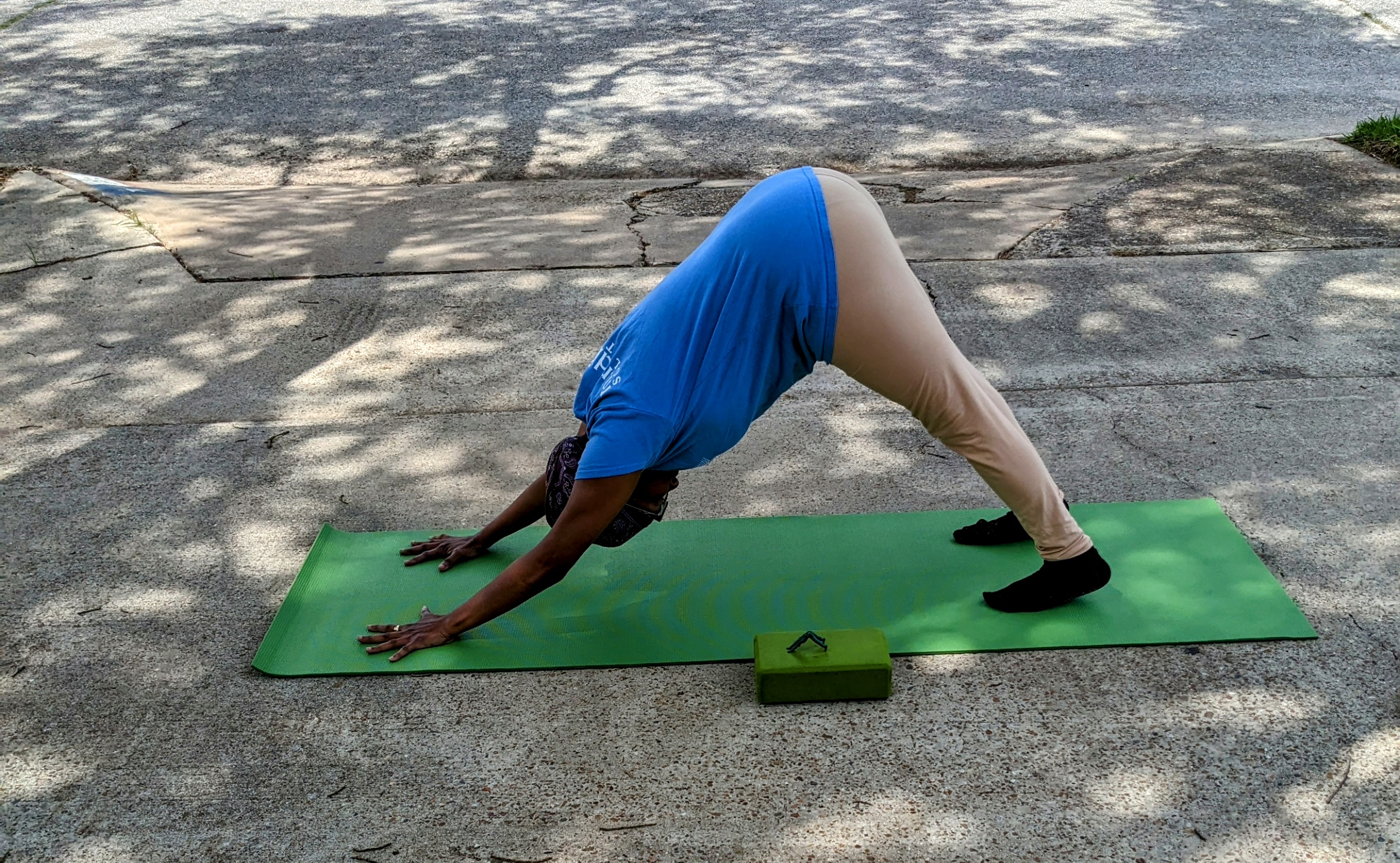

 A Joyful Practice