“Chag sameach!” to those celebrating Sukkot! Many blessings to everyone and especially to anyone grateful for friendship, peace, freedom, understanding, and wisdom.
May everyone be healthy and strong; may everyone be peaceful and happy.
This post-practice post for Monday, October 6th, is a compilation post featuring previously posted content (For Those Who Missed It) and a couple of related excerpts. Please note that linked excerpts direct you to posts that will include content related to a specific year. The 2025 prompt question was, “What is something you are looking forward to?”You can request an audio recording of this practice or a previous practice via a comment below or (for a slightly faster reply) you can email myra(at) ajoyfulpractice.com.
In the spirit of generosity (“dana”), the Zoom classes, recordings, and blog posts are freely given and freely received. If you are able to support these teachings, please do so as your heart moves you. (NOTE: You can donate even if you are “attending” a practice that is not designated as a “Common Ground Meditation Center” practice, or you can purchase class(es).
Donations are tax deductible; class purchases are not necessarily deductible.
“Be joyful at your festival – you and your son, and your daughter, and your manservant, and your maid-servant, and the Levite, and the stranger, and the orphan, and the widow who live within your city.
For seven days you must celebrate the Festival to YHVH*, your God, in the place which YHVH* shall choose, because the Lord, your God, will bless you in all your produce, and in all the work of your hands, and you will only be happy.”
(*NOTE: YHVH is commonly translated as “the Lord” in English.)
— quoted from Devarim – Deuteronomy (16:14 – 15)
In the Torah (and the Christian Old Testament), there are a list of commandments. Mixed into that list are certain dates the faithful are commanded to observe. We think of them, in the modern context, as “holidays” and they are filled with ritual and tradition. Sometimes the mandate is general and left to interpretation (like when it says in Deuteronomy, “‘… and they shall not appear before the Lord empty: Every man shall give as he is able, according to the blessing of the Lord thy God which he hath given thee.’” Other times, however, it is very specific about who, what, when, and even where. Sukkot, the “Festival (or Feast) of the Tabernacles (or Booths)” is one of the times where the details are specific — even when they appear vague.
For seven days, 8 in the diaspora, people within the Jewish community and people who observe the commanded holidays, eat, sleep, socialize, and sometimes work in a temporary shelter. The shelter, a sukkah, consists of three walls of any material and a roof made of natural fiber. (Natural being something grown from the earth.) In 2020, when the pandemic created so many obstacles to the ways in which people typically observed and practiced their faith here, finally, was a time when there was less challenge. Yes, true, it was still best for people [around this time in 2020] to socially distance, wear masks, wash your hands, and avoid big gatherings — but, it was also best (when gathering) to be outdoors. It’s like Sukkot was tailor-made for 2020.
“1. Give yourself permission to be human.
2. Happiness lies at the intersection between pleasure and meaning.”
— quoted from the Psychology 1504 (“Positive Psychology”) course by Dr. Tal Ben-Shahar
One of the significant things about Sukkot is that it is a time for people to come together regardless of their circumstances, gender, religion, or political affiliation. It is a time for all to remember challenges of the past; while also celebrating better days ahead. Another especially noteworthy thing about Sukkot is the symbolism behind the rituals. For instance, one of the points of being outside in the most basic of shelters, exposed to the elements, is to remind people of the time when their ancestors were living in simple, temporary shelters when they were exiled in the desert for 40 years. It is also a good time to remember how much we have — as well as the fact that we could be happy with less. Sukkot is a reminder that life can be full, even when it is simple and bare-boned. It is a time of appreciation and it is also about accepting the present moment.
That last part — accepting the present moment — is easy to overlook. However, the commandment specifically states that the celebration occurs in a place chosen by God. In other words, we might not be where we want to be or where we thought we would be. (Hello, 2020!) This is something I point out every year, but it was especially pointed out to me in 2016, when the creamery, where I held my 2015 Sukkot retreat was no longer available… and again, in 2017, when it was no longer as easy to schedule time in the church where I held the second retreat… and again, in 2019, when the church camp I had planned to use experienced a fire and had to cancel the bulk of their season. And, then, 2020… once again, things were not as we planned — despite the fact that CP graciously offered to help me plan that year’s retreat. On the face, it might sometimes seem that we are “destined” not to observe this time — and yet, we do, every year… just not necessarily in the place that we thought.
“3. Keep in mind that happiness is mostly dependent on our state of mind, not on our status or the state of our bank account.
4. Simplify!”
— quoted from the Psychology 1504 (“Positive Psychology”) course by Dr. Tal Ben-Shahar
Many people refer to Sukkot as the “Season of Happiness”, because they view the instructions in the Bible as a mandate to be happy. Since the instruction is to be joyful, or rejoice, about things that have yet to happen — blessings yet to come — one has to wonder: What does it mean to be happy?
Click on the first excerpt title below for a few ways we can define “happy” and the second excerpt title for more about the ways we may experience it.
— quoted from the Psychology 1504 (“Positive Psychology”) course by Dr. Tal Ben-Shahar
Another thing we may wonder is how can we be “independently happy” and celebrate something that hasn’t happened yet? It’s a good question. And, it turns out, there are some really good answers.
Dr. Tal Ben-Shahar, an expert in Positive Psychology and the author of Happier: Learn the Secrets to Daily Joy and Lasting Fulfillment and A Clash of Values: The Struggle for Universal Freedom, used to teach a class at Harvard University called “Happiness 101”. In his class and through his research, he offered 6 very practical tips for cultivating happiness. Those tips are featured in the practices during Sukkot (and are highlighted throughout this blog post).
— quoted from the Psychology 1504 (“Positive Psychology”) course by Dr. Tal Ben-Shahar
There is no playlist for the Common Ground Meditation Center practices.
If you are thinking about suicide, worried about a friend or loved one, or would like emotional support, you can dial 988 (in the US) or call 1-800-273-TALK (8255)for the Suicide and Crisis Lifeline. You can also call this TALK line if you are struggling with addiction or involved in an abusive relationship. The Lifeline network is free, confidential, and available to all 24/7. YOU CAN TALK ABOUT ANYTHING.
White Flag is an app, which I have not yet researched, but which may be helpful if you need (non-professional) support.
Many blessings to everyone and especially to anyone cultivating friendship, peace, freedom, and wisdom — especially when it gets hot (inside and outside).
Stay hydrated & be kind, y’all!
“Your thoughts are happening, just like the sounds going on outside and everything is simply a happening and all you’re doing is watching it.”
— quoted from “2.5.4 Meditation” by Alan Watts
There is a story for everything that happens. Every story and every practice involves cause and effect. Every story and every practice can be an opportunity to reflect and remember and/or to practice a little svādhyāya (“self-study”) . On some days, all of that is just beneath the surface. Other days, like today, it is all front and center.
Today, I will tell you some stories. Some of the stories are directly connected; some of the stories are indirectly connected. Some are obviously horrific and tragic. In the end, it all comes to a “peak” with the story of an “impossible” girl and her wish.
Click on the excerpt title below for a little more about the practice and (some of) the stories.
“I have heard there are at least 8 Japanese words that translate into the English word ‘dedication’. Some of those words also translate into English as devotion, offering, gift, and consecration. At the beginning of the practice, there are two dedications. The second one is most definitely an offering, a gift, and a consecration — especially on the anniversary of a tragic event.”
— quoted from my blog post for August 9, 2020
Please join me today (Wednesday, August 6th) at 4:30 PM or 7:15 PM for a yoga practice on Zoom. You can use the link from the “Class Schedules”calendar if you run into any problems checking into the class.You can request an audio recording of this practice via a comment below or (for a slightly faster reply) you can email myra(at) ajoyfulpractice.com.
Wednesday’s playlist is available on YouTube and Spotify. [Look for “08062022 Cause + Effect”]
Extreme heat can not only make people lethargic and unmotivated, it can also lead to extreme agitation and anxiety-based fear. We may find it hard to think, hard to feel (or process our feelings), and/or hard to control our impulses. If you are struggling in the US, help is available just by dialing 988.
If you are thinking about suicide, worried about a friend or loved one, or would like emotional support, you can dial 988 (in the US) or call 1-800-273-TALK (8255)for the Suicide and Crisis Lifeline. You can also call this TALK line if you are struggling with addiction or involved in an abusive relationship. The Lifeline network is free, confidential, and available to all 24/7. YOU CAN TALK ABOUT ANYTHING.
White Flag is an app, which I have not yet researched, but which may be helpful if you need peer-to-peer (non-professional) support.
In the spirit of generosity (“dana”), the Zoom classes, recordings, and blog posts are freely given and freely received. If you are able to support these teachings, please do so as your heart moves you. (NOTE: You can donate even if you are “attending” a practice that is not designated as a “Common Ground Meditation Center” practice, or you can purchase class(es).
Donations are tax deductible; class purchases are not necessarily deductible.
Many blessings to everyone and especially to anyone cultivating friendship, peace, freedom, and wisdom — especially when it gets hot (inside and outside).
Stay hydrated & be kind, y’all!
For Those Who Missed It: The following is a compilation of excerpts from 2021 and 2023. The first and final portions are based on a First Friday Night Special practice.
Date related information, some formatting, and links have been updated.
I. Reflect + Remember
“Your thoughts are happening, just like the sounds going on outside and everything is simply a happening and all you’re doing is watching it.
Now, in this process, another thing that is happening that is very important is that you’re breathing. And as you start meditation. You allow your breath to run just as it wills. In other words, don’t do at first any breathing exercise, but just watch your breath breathing the way it wants to breathe. And the notice a curious thing about this. You say in the ordinary way, I breathe. Because you feel that breathing is something that you are doing voluntarily just in the same way as you might be walking or talking. But you will also notice that when you are not thinking about breathing, your breathing goes on just the same. So, the curious thing about breath is that it can be looked at both as a voluntary and an involuntary action. You can feel on the one hand I am doing it, and on the other hand, it is happening to me. And that is why breathing is a most important part of meditation, because it is going to show you as you become aware of your breath, that the hard and fast division that we make between what we do on the one hand and what happens to us on the other is arbitrary. So that as you watch your breathing you will become aware that both the voluntary and the involuntary aspects of your experience are all one happening.”
— quoted from “2.5.4 Meditation” by Alan Watts
Our breath is a symbol of our life, a symbol of our life-force, and a symbol of our spirit. I say something to that affect almost every day. Yet, when that first part is combined with the perspective offered by Alan Watts, it takes on a slightly different (maybe even deeper connotation): Life is happening. Life is happening to us. Life is happening all around us. Life is a happening…whether we are engaged in it or not. But, before we start rushing off to do…life (or anything else); I just want to pause for a moment and consider the three parts of the breath.
Just breathe. Do that 90-second thing. Let your breath naturally flow in and naturally ebb out. Notice where you feel the breath; where it naturally goes — where there is awareness and presence, where it’s happening. Also, notice where there is resistance — where maybe you need to cultivate awareness, where something different is happening.
One thing you may notice, if you practice, is that pretty much every type of “breathing exercise” is an exaggeration of a natural breathing pattern. There are situations when we are breathing deeply, richly. The mind-body is focused and relaxed. Other times, we may find ourselves panting, short of breath. The mind-body may still be focused, but in this second case it is also agitated. There are times when our inhale is longer than our exhale and still other times when our exhale is longer than our inhale. There are moments in life when we find we are holding our breath — retaining the inhale or the exhale — and other times when we sigh a heavy breath out. And every one of these natural breathing patterns occurs because of something that happens in/to the mind-body.
Remember: What happens to the mind happens to the body; what happens to the body happens to the mind; and both affect the breath. In turn, what happens to the breath affects the mind and the body. In our practice, we harness the power of the breath in order to harness the power of the mind and body.
To actively and mindfully harness the power of the mind-body-spirit we have to cultivate awareness. The thing is, when you take a moment to focus, concentrate, meditate — even become completely absorbed by the breath — you may start to notice that just cultivating awareness changes the way you breathe (just as cultivating awareness can change the way you sit or stand, walk or talk). Bringing awareness to how you breathe in certain situations — or even when thinking/remembering certain situations — can give you insight into what’s happening to your mind-body. That insight provides better information for decision-making. So that you can respond in the most skillful way possible, instead of just reacting.
In other words, sometimes the best thing we can do is pay attention to our breath — and figure out what we need to do to keep breathing. Because that’s what we do: We breathe.
Remember: As long as we are breathing, we are alive; as long as we are alive, we have the opportunity to live, learn, grow, love, and really thrive. So, the first question(s) to ask yourself in a stressful and challenging situation is: What’s happening with my breath and what do I need to do, in this moment, to keep breathing?
A key element to practicing svādhyāya (“self-study”) is to observe what happens to your mind, your body, and (yes) your spirit/breath when you are in certain situations. You may notice what thoughts and/or emotions come up when you hear passages from sacred text. You may notice how your body reacts to certain music/sounds. You may notice how your breathing changes in certain poses and/or sequences. You may notice how your mind-body-spirit reacts when you imagine yourself (figuratively) walking in the footsteps of a historical or fictional person. You may notice any other combination of the above. You can also practice this important niyama (internal “observation”) by bring awareness to what happens when you remember a moment in (your) history.
Maybe the memory is something that seems to randomly pop up in your mind when you’re practicing or maybe, like with Marcel Proust, when you bite into a biscuit.
II. Reflecting & Remembering + Cause & Effect
“We are able to find everything in our memory, which is like a dispensary or chemical laboratory in which chance steers our hand sometimes to a soothing drug and sometimes to a dangerous poison.”
— quoted from The Captive, Volume 5 of Remembrance of Things Past (or In Search of Lost Time) by Marcel Proust
Despite the yoga sütras and lojong statements (from Tibetan Buddhism) that instruct us to cultivate and practice joy, not all practice themes are joyful. Some practices are about reflecting and remembering, recognizing cause and effect, and healing. Reflecting and remembering can be healing tools. Recognizing cause and effect can help us notice patterns so that we don’t repeat the things that create suffering. Recognizing cause and effect and noticing patterns can also assist us in repeating the things that alleviate suffering.
The thing is, we cannot do any of this work without the stability/steadiness, ease/comfort/joyfulness that allows us to focus on our breath and also on a moment. We can not practice self-study without having a mind that is at ease enough (joyful enough) to appreciate the suffering of others — or even ourselves.
There are moments in history that are brutal and horrific. Today is one of those days in history when things get worse before they get better. But, they do get better. It just takes work. It takes all of us to do the work.
“As you practice today, hold a neighbor in your hearts and minds with friendship and kindness. Offer your efforts, no matter how small, as a token of that friendship and kindness. As so many people suffer due to current events, may we take a moment to remember those who are still suffering due to our shared past. Let us not forget those who are still grieving and healing from past wounds. May our efforts bring us all closer to peace, harmony, and benevolence.”
— quoted from my blog post for August 5, 2020
Warning: The “memories” below were originally posted in 2021 and reference to slavery, World War II, and the COVID pandemic.
The timeline has been updated and slightly revised.
For most people, reading through the list below will be a different experience than hearing each one in turn. Still, take your time. Also, give yourself time to not only breathe, but to notice the breath in the mind and in the body.
This is not about thinking about these situations or creating/telling the story. It’s about noticing how you feel and how that translates into a breathing pattern. Then, the practice becomes about noticing what changes through observation. Yes, you can engage the breath (by controlling it, even sighing). However, I encourage you to just let the breath naturally flow in and freely ebb out — and just watch what happens as you watch it. Don’t force anything. Go with the flow. If you find yourself holding on (to anything), your breath and awareness are the tools you use to let go before moving on to the next item.
Four years ago this week, my mother passed. Like so many other people who have experienced an unexpected loss of a loved one, the anniversary brings certain feelings, emotions, thoughts…vibrations. There is still sadness and grief — among other things/sensations that are part of life.
Take a moment, especially if you have experienced such a loss, to notice what happens when you continue to breath — i. e., to live. Consider that grief comes not because we loss someone (or something), but because we loved and were loved. Let all of that wash over you.
Four years and a few months ago, George Floyd was killed and his murder was a watershed moment in the United States and in the world. Everyone had and continues to have a different experience around what happened in Minneapolis on May 25, 2020 (just as many people had and continue to have different feelings around what happened in Central Park on the same day).
Take a moment to notice how you feel, right now, as your remember, the moments between then and now. Is there any tightness? Any resistance? What happens when you notice the tightness and/or resistance? What happens when you don’t notice tightness and/or resistance? Let any judgement wash over you.
Nearly four and a half ago years ago — almost 5 years ago for some people outside of the United States — the world started shutting down in response to the COVID-19 pandemic.
Take a moment to notice how you feel as you think about that? What’s happening with body, your mind, your breath? How does it feel to be where you are in the ever-changing process that is life given this global health crisis (and that fact that we are all in different places/stages related to it)? What do you need to do to keep breathing? Maybe, this is a good time to sigh a breath (or two) out.
59 years ago today, President Lyndon B. Johnson signed the Voting Rights Act of 1965 into law. The law came about after protests and marches — and so much violent resistance directed at those peacefully resisting. It also came about after private citizens implored President Johnson to take action and after he spoke, passionately, to Congress.
The act has been amended at least five times, to close legal loopholes and reinforce the rule of law. Yet, to this day, the Voting Rights Acts are still being challenged and still being defended.
What comes up for you when you think about all the efforts that led up to the Act and all that has transpired in the meanwhile? How are you breathing?
79 years ago today, on August 6, 1945, at 8:15 AM (local time), the United States Army Air Forces’ Enola Gray dropped the atomic bomb designated “Little Boy” on Hiroshima, Japan. Buildings and trees were destroyed. Approximately 80,000 people were killed on impact. Another 35,000 died over the next week and an additional 60,000 over the next year. Thousands more suffered for the rest of their lives. Three days later, at 11:01 AM (local time) on August 9th, the United States Army Air Forces’ Bockscar dropped a second atomic bomb (designated “Fat Man”) on Nagasaki and thousands more died.
You may have learned that the bombs were dropped in response to or in retaliation of Japan’s attack on Pearl Harbor. You may have learned that the U. S.’s attack on Japan helped to end World War II and the Holocaust, thereby saving thousands of lives. Around the world, these historical events are taught in very different ways. So, you may or may not have learned that some people say the war was already ending. You may or may not have learned that Nagasaki was not initial target for the second atomic bomb and that, in fact, the flight crews on the bomber and its escorts had already started the contingency plans that involved dropping the bomb in the ocean — which would have saved thousands of lives.
What happens when you remember what you already knew? What happens when you think of something you didn’t previously know or remember? What do you need to do, in this moment, to take a deep breath in and a deeper breath out?
163 years ago today, President Abraham Lincoln signed the Confiscation Act of 1861, which allowed Union forces to seize Confederate property during the Civil War. This “property” included enslaved people and one of the intentions of the act was to free people who were in any way attached to the rebellion. Freeing enslaved people was also part of the intention of the Confiscation Act that Congress passed on July 17, 1862 — which allowed the federal government to free the “property” of any member of the Confederacy (military or civilian) who resided in territory occupied by the Union Army but who had not surrendered within 60 days of the Act passing. President Lincoln wasn’t sure of the legality or the ultimate effects of the Confiscations Acts of 1861 and 1862, but he signed them into law anyway; thereby laying a foundation for the legal emancipation of all enslaved people within the Union.
What do you feel and/or think when you consider these Acts of Congress and President Lincoln? Is there any difference in sensation when considering the enslaved people and/or the people of the Confederacy? Do you experience any tightness and/or resistance around this being mentioned? Is any of the tightness and/or resistance connected to thoughts that arose related to other steps taken to ensure emancipation? What are you feeling with regard to steps taken to deny emancipation?
Take a deep breath in. Sigh it out. Spend some time just breathing (through your nose) and observing the breath. You can repeat the 1:1 and 1:2 prānāyāma (using a 4-count base), which is a great practice before, during, and after stressful encounters. Finally, take another few minutes to allow the breath to naturally flow in and freely ebb out.
Obviously, there are even more “memories” related to this date. Some of them may have come up for you. Some of them may have been interwoven with the events above. In any case, take another moment to consider those “neighbors” — near and far — who are also processing past events, on and off the mat. Take a moment to consider what happens when we remember that we are all in this together.
“[Shinichi Tetsutani] did not survive that night. He was ten days short of his fourth birthday.
The next day, Shin’s father buried him in the backyard along with his friend Kimi and his beloved tricycle.
Forty years later, Shin’s father decided to move his son’s remains to the family gravesite. When his parents dug up the little bodies, Shin’s father was surprised to find the tricycle. He had completely forgotten about it. As he gently lifted Shin’s tricycle, his father thought, ‘This should never happen to children. Maybe if enough people could see Shin’s tricycle, they would remember that the world should be a peaceful place where children can play and laugh.’
The very next day, Shin’s father donated the tricycle to the Peace Museum in Hiroshima where it remains as a powerful symbol and a bitter reminder of the horrors of nuclear warfare.
Shin’s story was brought to light through a children’s book titled Shin’s Tricycle by Tatsuharu Kodama published in 1992.”
— quoted from the article “Shin’s Tricycle” by Kaushik Patowary (dated FEB 13, 2019)
Please join me today (Tuesday, August 6th) at 12:00 PM or 7:15 PM for a yoga practice on Zoom. You can use the link from the “Class Schedules” calendar if you run into any problems checking into the class.You can request an audio recording of this practice via a comment below or by emailing myra(at) ajoyfulpractice.com.
Tuesday’s playlist is available on YouTube and Spotify. [Look for “08062022 Cause + Effect”]
Extreme heat (and hard memories) can not only make people lethargic and unmotivated, they can also lead to extreme agitation and anxiety-based fear. We may find it hard to think, hard to feel (or process our feelings), and/or hard to control our impulses. If you are struggling in the US, help is available just by dialing 988.
If you are thinking about suicide, worried about a friend or loved one, or would like emotional support, you can dial 988 (in the US) or call 1-800-273-TALK (8255)for the Suicide and Crisis Lifeline. You can also call this TALK line if you are struggling with addiction or involved in an abusive relationship. The Lifeline network is free, confidential, and available to all 24/7. YOU CAN TALK ABOUT ANYTHING.
White Flag is a new app, which I have not yet researched, but which may be helpful if you need peer-to-peer (non-professional) support.
In the spirit of generosity (“dana”), the Zoom classes, recordings, and blog posts are freely given and freely received. If you are able to support these teachings, please do so as your heart moves you. (NOTE: You can donate even if you are “attending” a practice that is not designated as a “Common Ground Meditation Center” practice, or you can purchase class(es).
Donations are tax deductible; class purchases are not necessarily deductible.
For Those Who Missed It: The following was originally posted on November 9, 2020 and reposted in 2021. Class details and links have been updated, as have some date notations. *Granted, things don’t always turn out the way we expect.
“Fate is what you are given. Destiny is what you make of it.”
– original source unknown
Let’s talk about the difference between fate and destiny. Often, especially in (American) English, we use the words interchangeably, and without distinction. We sometimes do this even if we know “destiny” shares etymological roots with “destination” and “fate” is rooted in the mythology of the three goddess, sisters, or witches (depending on the depiction) who weave (or stir) together the circumstances of one’s life. Either way you look at it, both are related to cause and effect – something we pay attention to in the Eastern philosophies like Yoga and Buddhism.
The concept of will, or determination, is one of the challenges that comes up when discussing fate and destiny; because, our understanding of the concepts may involve a level of predestination. One way to distinguish the two concepts, and the role predestination plays, is to think of fate as the present moment – which has been determined by all the previous moments – and destiny as a possible future moment – which will be determined by fate (i.e., this present moment and all the previous moments). If we look at it this way, we can’t change our fate, but we can change our destiny.
Yes, yes, it might be possible to present and argue the reverse, but I think that way gets really muddled. I’d rather go back to the “seat” of the words. Fate comes to the English from Latin, by way of Italian and Middle English, from a phrase that means “that which has been spoken.” Destiny comes through Old French and Middle English, from the Latin meaning “make firm, establish.” So, again, fate is what has happened and destiny is what we make happen. As an example, step back [a couple of days] with me and let’s revisit Philoctetes from The Cure at Troy: A Version of Sophocles’ Philoctetes.
“Human beings suffer. They torture one another They get hurt and they get hard. No poem or play or song Can fully right a wrong Inflicted and endured.
History says, Don’t hope On this side of the grave, But then, once in a lifetime The longed-for tidal wave Of justice can rise up And hope and history rhyme.”
– The Greek Chorus in The Cure at Troy: A Version of Sophocles’ Philoctetes by Seamus Heaney
Remember that Philoctetes was a great archer who had a magical bow. According to Sophocles accounting of events, the bow was a thank you gift from Heracles, the divine protector of mankind and patron of gymnasiums, whose funeral pyre could only be lit by the great archer. So, by using his skills to light the pyre, Philoctetes has the means to (eventually) assist Odysseus in winning the Trojan War by mortally wounding Paris with a poisoned arrow. Those circumstances, along with the fact that he is bitten by a poisonous snake, make up Philoctetes’ fate. His destiny could be to die of his wounds on the island where his colleagues abandoned him – because they couldn’t stand the sound of his belly aching – or he could go to Troy, win the war, and have his snake wound healed.
Now, keep in mind that like all the other characters, the fate and destiny of Philoctetes are tied up with the fate and destiny of Paris who, once wounded, could have been healed if he hadn’t pissed off and abandoned his first wife. (Alas, poor, pitiful Paris, thought his destiny was power, rather than the love of a “good woman,” and let that thirst for power be his dharma or guiding principle.)
“Fate is your karma. Destiny is your dharma.”
– Livnam Kaur
Some people think the power of fate and destiny can reside not only in our actions, but also in a date. Take today, for instance: November 9th. In Germany it is known as Schicksalstag – “Destiny Day” or “Fateful Day” – because of all the historical events that happened today and shaped the history of Germany. It’s kind of wild, when you think about it. But, also, when you start to go deeper into the events, you start to realize that some (but not all) of the events were planned because people believed in the power of the day.
In talking about the events of today throughout German history, most people start with 1848 and the execution of the democratic politician, poet, and publisher Robert Blum. One of the leaders of the National Assembly of 1848 and a prominent figure during the Vienna revolts, Blum was arrested after the Vienna revolts and argued in vain that his role as a deputy from the German Diet should protect him from execution. Instead, his death was used as an example and a method for crushing the subsequent revolution in Germany in the spring of 1849.
Fast forward 70 years, to 1918, and Emperor Wilhelm II was dethroned by his chancellor, Max von Baden, and socialist and social democratic politicians proclaimed the beginning of the “Free” German Republic. As a side note, Albert Einstein was named winner of the 1921 Nobel Prize in Physics today in 1922.
In 1923, the failed “Beer Hall Putsch” marked the initial emergence and downfall of the Nazi Party. Even though the march officially failed it was the beginning of Adolf Hitler’s rise to power, and during the Nazi regime it was considered a national holiday honoring the Nazis who died today in 1923. As a side note, German Crown Prince Wilhelm (son of the ousted Emperor) chose this day to return out of exile.
Another example of people using previous events to infuse their actions with the power of the day’s history tragically, and horrifically, happened today in 1938: Kristallnacht (“Night of Glass”). The Nazis symbolically chose this night to begin destroying synagogues and Jewish properties. More than 400 Jewish people died and, after this demonstration of far-reaching anti-Semitism, the Nazi’s arrested approximately 30,000 people on November 10th, many of whom would ultimately die in concentration camps.
“Two thousand years ago, the proudest boast was ‘civis romanus sum’ [‘I am a Roman citizen’]. Today, in the world of freedom, the proudest boast is ‘Ich bin ein Berliner!’ … All free men, wherever they may live, are citizens of Berlin, and therefore, as a free man, I take pride in the words ‘Ich bin ein Berliner!’”
– U. S. President John Kennedy, speaking to the public in West Berlin, June 26, 1963
“Every stone bears witness to the moral bankruptcy of the society it encloses.”
– English Prime Minister Margaret Thatcher as quoted in the New York Times article “Mrs. Thatcher Visits the Berlin Wall” by John Tagliabue (published Oct. 30, 1982)
One of the outcomes of the World War II was the division of Germany and, ultimately, the construction of the Berlin Wall. However, today in 1989 marked the beginning of the fall of the Berlin Wall and the end of German separation. In many ways, this event can be seen as an accident. I mean, it wasn’t like anyone planned it to happen today.
Yes, people, including Presidents John F. Kennedy and Ronald Reagan, had called for the end of the Wall. Furthermore, musicians like David Bowie (1987), Bruce Springsteen (1988), and David Hasselhoff (1989) boldly played songs about freedom in concerts near the Wall – and, in Hasselhoff’s case, over the Wall! There was also the announced intention (by the East German government) to change policy. But the changes were intended for a different day.
“We come to Berlin, we American presidents, because it’s our duty to speak, in this place, of freedom. But I must confess, we’re drawn here by other things as well: by the feeling of history in this city, more than 500 years older than our own nation; by the beauty of the Grunewald and the Tiergarten; most of all, by your courage and determination. Perhaps the composer Paul Lincke understood something about American presidents. You see, like so many presidents before me, I come here today because wherever I go, whatever I do: Ich hab noch einen Koffer in Berlin. [I still have a suitcase in Berlin…..]”
There is one sign the Soviets can make that would be unmistakable, that would advance dramatically the cause of freedom and peace. General Secretary Gorbachev, if you seek peace, if you seek prosperity for the Soviet Union and eastern Europe, if you seek liberalization, come here to this gate. Mr. Gorbachev, open this gate. Mr. Gorbachev, tear down this Wall!”
– U. S. President Ronald Reagan, speaking to the public at Brandenburg Gate, June 12, 1987
When the policy changes were announced by Günter Schabowski, an official of the Socialist Unity Party of Germany (SED), during a press conference on November 9th, he hadn’t actually been briefed about the details. Based on the wording of the announcement he had been given, when asked when the policy changes would go into effect, he said, “As far as I know… effective immediately, without delay.” That wasn’t actually true, but, the metaphorical wrecking ball was swinging. In answering follow up questions, and in subsequent interviews that day, Schabowski “confirmed” that the decrease in travel restrictions applied to every part of the Wall and to travel in every direction – including into West Berlin. Naturally, people started showing up at the Wall demanding to be let through and, by 11:30 PM, at least two gates were open.
On the flip side, I would not be surprised if the German drug company BioNtech intentionally chose this date to announce that their COVID-19 vaccine, developed with Pfizer, is 90% effective. I wouldn’t be surprised at all if someone thought drawing on the power of the day would give people more hope than a basic announcement on any other day. After all, the announcement [a year ago] today, *means the end of the world’s suffering isn’t just fate, it’s destiny.
“Call miracle self-healing, The utter self-revealing Double-take of feeling. If there’s fire on the mountain And lightening and storm And a god speaks from the sky
That means someone is hearing The outcry and the birth-cry Of new life at its term. It means once in a lifetime That justice can rise up And hope and history rhyme.”
– The Greek Chorus in The Cure at Troy: A Version of Sophocles’ Philoctetes by Seamus Heaney
Please join me today (Wednesday, November 9th) at 4:30 PM or 7:15 PM for a yoga practice on Zoom.Use the link from the “Class Schedules” calendar if you run into any problems checking into the class. You will need to register for the 7:15 PM class if you have not already done so. You can request an audio recording of this practice via a comment belowor (for a slightly faster reply) you can email me at myra (at) ajoyfulpractice.com.
In the spirit of generosity (“dana”), the Zoom classes, recordings, and blog posts are freely given and freely received. If you are able to support these teachings, please do so as your heart moves you. (NOTE: You can donate even if you are “attending” a practice that is not designated as a “Common Ground Meditation Center” practice, or you can purchase class(es). Donations are tax deductible; class purchases are not necessarily deductible.)
“I’m not here for or against any government. I’ve come to play rock ‘n’ roll for you in the hope that one day all the barriers will be torn down”
– Bruce Springsteen, speaking German in East Berlin, before playing “Chimes of Freedom” with the E Street Band, during the “Rocking the Wall” concert, July 19, 1988
### dóchas / dúchas // història / esperança // histoire / espoir // historio / espero ###
The following was originally posted on November 9, 2020. Class details and links have been updated, as has one date notation. *Granted, things don’t always turn out the way we expect.
“Fate is what you are given. Destiny is what you make of it.”
– original source unknown
Let’s talk about the difference between fate and destiny. Often, especially in (American) English, we use the words interchangeably, and without distinction. We sometimes do this even if we know “destiny” shares etymological roots with “destination” and “fate” is rooted in the mythology of the three goddess, sisters, or witches (depending on the depiction) who weave (or stir) together the circumstances of one’s life. Either way you look at it, both are related to cause and effect – something we pay attention to in the Eastern philosophies like Yoga and Buddhism.
The concept of will, or determination, is one of the challenges that comes up when discussing fate and destiny; because, our understanding of the concepts may involve a level of predestination. One way to distinguish the two concepts, and the role predestination plays, is to think of fate as the present moment – which has been determined by all the previous moments – and destiny as a possible future moment – which will be determined by fate (i.e., this present moment and all the previous moments). If we look at it this way, we can’t change our fate, but we can change our destiny.
Yes, yes, it might be possible to present and argue the reverse, but I think that way gets really muddled. I’d rather go back to the “seat” of the words. Fate comes to the English from Latin, by way of Italian and Middle English, from a phrase that means “that which has been spoken.” Destiny comes through Old French and Middle English, from the Latin meaning “make firm, establish.” So, again, fate is what has happened and destiny is what we make happen. As an example, step back to Saturday with me and let’s revisit Philoctetes from The Cure at Troy: A Version of Sophocles’ Philoctetes.
“Human beings suffer. They torture one another They get hurt and they get hard. No poem or play or song Can fully right a wrong Inflicted and endured.
History says, Don’t hope On this side of the grave, But then, once in a lifetime The longed-for tidal wave Of justice can rise up And hope and history rhyme.”
– The Greek Chorus in The Cure at Troy: A Version of Sophocles’ Philoctetes by Seamus Heaney
Remember that Philoctetes was a great archer who had a magical bow. According to Sophocles accounting of events, the bow was a thank you gift from Heracles, the divine protector of mankind and patron of gymnasiums, whose funeral pyre could only be lit by the great archer. So, by using his skills to light the pyre, Philoctetes has the means to (eventually) assist Odysseus in winning the Trojan War by mortally wounding Paris with a poisoned arrow. Those circumstances, along with the fact that he is bitten by a poisonous snake, make up Philoctetes’ fate. His destiny could be to die of his wounds on the island where his colleagues abandoned him – because they couldn’t stand the sound of his belly aching – or he could go to Troy, win the war, and have his snake wound healed.
Now, keep in mind that like all the other characters, the fate and destiny of Philoctetes are tied up with the fate and destiny of Paris who, once wounded, could have been healed if he hadn’t pissed off and abandoned his first wife. (Alas, poor, pitiful Paris, he thought his destiny was power, rather than the love of a “good woman,” and let that thirst for power be his dharma or guiding principle.)
“Fate is your karma. Destiny is your dharma.”
– Livnam Kaur
Some people think the power of fate and destiny can reside not only in our actions, but also in a date. Take today, for instance: November 9th. In Germany it is known as Schicksalstag – “Destiny Day” or “Fateful Day” – because of all the historical events that happened today and shaped the history of Germany. IT’s kind of wild, when you think about it. But, also, when you start to go deeper into the events, you start to realize that some (but not all) of the events were planned because people believed in the power of the day.
In talking about the events of today throughout German history, most people start with 1848 and the execution of the democratic politician, poet, and publisher Robert Blum. One of the leaders of the National Assembly of 1848 and a prominent figure during the Vienna revolts, Blum was arrested after the Vienna revolts and argued in vain that his role as a deputy from the German Diet should protect him from execution. Instead, his death was used as an example and a method for crushing the subsequent revolution in Germany in the spring of 1849.
Fast forward 70 years, to 1918, and Emperor Wilhelm II was dethroned by his chancellor, Max von Baden, and socialist and social democratic politicians proclaimed the beginning of the “Free” German Republic. As a side note, Albert Einstein was named winner of the 1921 Nobel Prize in Physics today in 1922.
In 1923, the failed “Beer Hall Putsch” marked the initial emergence and downfall of the Nazi Party. Even though the march officially failed it was the beginning of Adolf Hitler’s rise to power, and during the Nazi regime it was considered a national holiday honoring the Nazis who died today in 1923. As a side note, German Crown Prince Wilhelm (son of the ousted Emperor) chose this day to return out of exile.
Another example of people using previous events to infuse their actions with the power of the day’s history tragically, and horrifically, happened today in 1938: Kristallnacht (“Night of Glass”). The Nazis symbolically chose this night to begin destroying synagogues and Jewish properties. More than 400 Jewish people died and, after this demonstration of far-reaching anti-Semitism, the Nazi’s arrested approximately 30,000 people on November 10th, many of whom would ultimately die in concentration camps.
“Two thousand years ago, the proudest boast was ‘civis romanus sum’ [‘I am a Roman citizen’]. Today, in the world of freedom, the proudest boast is ‘Ich bin ein Berliner!’ … All free men, wherever they may live, are citizens of Berlin, and therefore, as a free man, I take pride in the words ‘Ich bin ein Berliner!’”
– U. S. President John Kennedy, speaking to the public in West Berlin, June 26, 1963
“Every stone bears witness to the moral bankruptcy of the society it encloses.”
– English Prime Minister Margaret Thatcher as quoted in the New York Times article “Mrs. Thatcher Visits the Berlin Wall” by John Tagliabue (published Oct. 30, 1982)
One of the outcomes of the World War II was the division of Germany and, ultimately, the construction of the Berlin Wall. However, today in 1989 marked the beginning of the fall of the Berlin Wall and the end of German separation. In many ways, this event can be seen as an accident. I mean, it wasn’t like anyone planned it to happen today. Yes, people, including Presidents John F. Kennedy and Ronald Reagan, had called for the end of the Wall. Furthermore, musicians like David Bowie (1987), Bruce Springsteen (1988), and David Hasselhoff (1989) boldly played songs about freedom in concerts near the Wall – and, in Hasselhoff’s case, over the Wall! There was also the announced intention (by the East German government) to change policy. But the changes were intended for a different day.
“We come to Berlin, we American presidents, because it’s our duty to speak, in this place, of freedom. But I must confess, we’re drawn here by other things as well: by the feeling of history in this city, more than 500 years older than our own nation; by the beauty of the Grunewald and the Tiergarten; most of all, by your courage and determination. Perhaps the composer Paul Lincke understood something about American presidents. You see, like so many presidents before me, I come here today because wherever I go, whatever I do: Ich hab noch einen Koffer in Berlin. [I still have a suitcase in Berlin…..]”
There is one sign the Soviets can make that would be unmistakable, that would advance dramatically the cause of freedom and peace. General Secretary Gorbachev, if you seek peace, if you seek prosperity for the Soviet Union and eastern Europe, if you seek liberalization, come here to this gate. Mr. Gorbachev, open this gate. Mr. Gorbachev, tear down this Wall!”
– U. S. President Ronald Reagan, speaking to the public at Brandenburg Gate, June 12, 1987
When the policy changes were announced by Günter Schabowski, an official of the Socialist Unity Party of Germany (SED), during a press conference on November 9th, he hadn’t actually been briefed about the details. Based on the wording of the announcement he had been given, when asked when the policy changes would go into effect, he said, “As far as I know… effective immediately, without delay.” That wasn’t actually true, but, the metaphorical wrecking ball was swinging. In answering follow up questions, and in subsequent interviews that day, Schabowski “confirmed” that the decrease in travel restrictions applied to every part of the Wall and to travel in every direction – including into West Berlin. Naturally, people started showing up at the Wall demanding to be let through and, by 11:30 PM, at least two gates were open.
On the flip side, I would not be surprised if the German drug company BioNtech intentionally chose today to announce that their COVID-19 vaccine, developed with Pfizer, is 90% effective. I wouldn’t be surprised at all if someone thought drawing on the power of the day would give people more hope than a basic announcement on any other day. After all, the announcement [a year ago] today, *means the end of the world’s suffering isn’t just fate, it’s destiny.
“Call miracle self-healing, The utter self-revealing Double-take of feeling. If there’s fire on the mountain And lightening and storm And a god speaks from the sky
That means someone is hearing The outcry and the birth-cry Of new life at its term. It means once in a lifetime That justice can rise up And hope and history rhyme.”
– The Greek Chorus in The Cure at Troy: A Version of Sophocles’ Philoctetes by Seamus Heaney
Please join me today (Tuesday, November 9th) at 12:00 PM or 7:15 PM for a yoga practice on Zoom.Use the link from the “Class Schedules” calendar if you run into any problems checking into the class. Give yourself extra time to log in if you have not upgraded to Zoom 5.0. You can request an audio recording of this practice via a comment below or by emailing myra (at)ajoyfulpractice.com.
In the spirit of generosity (“dana”), the Zoom classes, playlists, and blog posts are freely given and freely received. If you are able to support these teachings, please do so as your heart moves you. (NOTE: You can donate even if you are “attending” a practice that is not designated as a “Common Ground Meditation Center” practice, or you can purchase class(es). If you don’t mind me knowing your donation amount you can also donate to me directly. Donations to Common Ground are tax deductible; class purchases and donations directly to me are not necessarily deductible.)
“I’m not here for or against any government. I’ve come to play rock ‘n’ roll for you in the hope that one day all the barriers will be torn down”
– Bruce Springsteen, speaking German in East Berlin, before playing “Chimes of Freedom” with the E Street Band, during the “Rocking the Wall” concert, July 19, 1988
### dóchas / dúchas // història / esperança // histoire / espoir // historio / espero ###
This is the post for the “First Friday Night Special” #10 from August 6th.This practice included gentle movement and seated meditation.
You can request an audio recording of Friday’s practice via a comment below or (for a slightly faster reply) you can email me at myra (at) ajoyfulpractice.com.
In the spirit of generosity (“dana”), the Zoom classes, recordings, and blog posts are freely given and freely received. If you are able to support these teachings, please do so as your heart moves you. (NOTE: You can donate even if you are “attending” a practice that is not designated as a “Common Ground Meditation Center” practice, or you can purchase class(es). Donations are tax deductible; class purchases are not necessarily deductible.
“Your thoughts are happening, just like the sounds going on outside and everything is simply a happening and all you’re doing is watching it.
Now, in this process, another thing that is happening that is very important is that you’re breathing. And as you start meditation. You allow your breath to run just as it wills. In other words, don’t do at first any breathing exercise, but just watch your breath breathing the way it wants to breathe. And the notice a curious thing about this. You say in the ordinary way, I breathe. Because you feel that breathing is something that you are doing voluntarily just in the same way as you might be walking or talking. But you will also notice that when you are not thinking about breathing, your breathing goes on just the same. So, the curious thing about breath is that it can be looked at both as a voluntary and an involuntary action. You can feel on the one hand I am doing it, and on the other hand, it is happening to me. And that is why breathing is a most important part of meditation, because it is going to show you as you become aware of your breath, that the hard and fast division that we make between what we do on the one hand and what happens to us on the other is arbitrary. So that as you watch your breathing you will become aware that both the voluntary and the involuntary aspects of your experience are all one happening.”
– quoted from “2.5.4 Meditation” by Alan Watts
Our breath is a symbol of our life, a symbol of our life-force, and a symbol of our spirit. I say something to that affect almost every day. Yet, when that first part is combined with the perspective offered by Alan Watts, it takes on a slightly different (maybe even deeper connotation): Life is happening. Life is happening to us. Life is happening all around us. Life is a happening…whether we are engaged in it or not. But, before we start rushing off to do…life (or anything else); I just want to pause for a moment and consider the three parts of the breath.
Just breathe. Do that 90-second thing. Let your breath naturally flow in and naturally ebb out. Notice where you feel the breath; where it naturally goes – where there is awareness and presence, where it’s happening. Also, notice where there is resistance – where maybe you need to cultivate awareness, where something different is happening.
One thing you may notice, if you practice, is that pretty much every type of “breathing exercise” is an exaggeration of a natural breathing pattern. There are situations when we are breathing deeply, richly. The mind-body is focused and relaxed. Other times, we may find ourselves panting, short of breath. The mind-body may still be focused, but in this second case it is also agitated. There are times when our inhale is longer than our exhale and still other times when our exhale is longer than our inhale. There are moments in life when we find we are holding our breath – retaining the inhale or the exhale – and other times when we sigh a heavy breath out. And every one of these natural breathing patterns occurs because of something that happens in/to the mind-body.
Remember: What happens to the mind happens to the body; what happens to the body happens to the mind; and both affect the breath. In turn, what happens to the breath affects the mind and the body. In our practice, we harness the power of the breath in order to harness the power of the mind and body.
To actively and mindfully harness the power of the mind-body-spirit we have to cultivate awareness. The thing is, when you take a moment to focus, concentrate, meditate – even become completely absorbed by the breath – you may start to notice that just cultivating awareness changes the way you breathe (just as cultivating awareness can change the way you sit or stand, walk or talk). Bringing awareness to how you breathe in certain situations – or even when thinking/remembering certain situations – can give you insight into what’s happening to your mind-body. That insight provides better information for decision-making. So that you can respond in the most skillful way possible, instead of just reacting.
In other words, sometimes the best thing we can do is pay attention to our breath – and figure out what we need to do to keep breathing. Because that’s what we do: We breathe.
Remember:As long as we are breathing, we are alive; as long as we are alive, we have the opportunity to live, learn, grow, love, and really thrive. So, the first question(s) to ask yourself in a stressful and challenging situation is: What’s happening with my breath and what do I need to do, in this moment, to keep breathing?
A key element to practicing svādhyāya (“self-study”) is to observe what happens to your mind, your body, and (yes) your spirit/breath when you are in certain situations. You may notice what thoughts and/or emotions come up when you hear passages from sacred text. You may notice how your body reacts to certain music/sounds. You may notice how your breathing changes in certain poses and/or sequences. You may notice how your mind-body-spirit reacts when you imagine yourself (figuratively) walking in the footsteps of a historical or fictional person. You may notice any other combination of the above. You can also practice this important niyama (internal “observation”) by bring awareness to what happens when you remember a moment in (your) history.
Maybe the memory is something that seems to randomly pop up in your mind when you’re practicing or maybe, like with Marcel Proust, when you bite into a biscuit. Or, perhaps, as happened in the August 6th “First Friday Night Special,” it’s a memory that is brought to your awareness specifically so that you can notice your breath, notice your body, and notice your mind. Perhaps, as we do in the practice, you observe what happens when you start watching yourself reacting to the memory. Finally, you ask the last half of the question: “… what do I need to do, in this moment, to keep breathing?”
Or, better yet, “What do I need to do, in this moment, to keep taking the deepest breath I’ve taken all day?” Because that’s the practice and that’s what we do.
“As you practice today, hold a neighbor in your hearts and minds with friendship and kindness. Offer your efforts, no matter how small, as a token of that friendship and kindness. As so many people suffer due to current events, may we take a moment to remember those who are still suffering due to our shared past. Let us not forget those who are still grieving and healing from past wounds. May our efforts bring us all closer to peace, harmony, and benevolence.”
– quoted from my blog post for August 5, 2020
Here are the “memories” (and associated contexts) I shared during the “First Friday Night Special” on August 6th. Before we reached this point in the (Zoom and recorded) practice, we spent some time using the senses to get grounded in the moment; did some gentle movement to prepare the mind-body to be still in an upright position (when accessible); and practiced a little 1:1 and then 1:2 prānāyāma (using a 4-count base).
For most people, reading through the list will be a different experience than hearing each one in turn. Still, take your time. Also, give yourself time to not only breathe, but to notice the breath in the mind and in the body.
This is not about thinking about these situations or creating/telling the story. It’s about noticing how you feel and how that translates into a breathing pattern. Then, the practice becomes about noticing what changes through observation. Yes, you can engage the breath (by controlling it, even sighing). However, I encourage you to just let the breath naturally flow in and freely ebb out – and just watch what happens as you watch it. Don’t force anything. Go with the flow. If you find yourself holding on (to anything), your breath and awareness are the tools you use to let go before moving on to the next item.
A year ago this weekend, my mother passed. Like so many other people who have experienced an unexpected loss of a loved one, the anniversary brings certain feelings, emotions, thoughts…vibrations. There is still sadness and grief – among other things/sensations that are part of life.
Take a moment, especially if you have experienced such a loss, to notice what happens when you continue to breath – to live. Consider that grief comes not because we loss someone (or something), but because we loved and were loved. Let all of that wash over you.
A year and a few months ago, George Floyd was killed and his murder was a watershed moment in the United States and in the world. Everyone had and continues to have a different experience around what happened in Minneapolis on May 25, 2020 (just as many people had and continues to have different feelings around what happened in Central Park on the same day).
Take a moment to notice how you feel, right now, as your remember, the moments between then and now. Is there any tightness? Any resistance? What happens when you notice the tightness and/or resistance? What happens when you don’t notice tightness and/or resistance? Let any judgement wash over you.
Nearly a year and a half ago – almost 2 years ago for some people outside of the United States – the world started shutting down in response to the COVID-19 pandemic.
Take a moment to notice how you feel thinking about that? What’s happening with body, your mind, your breath? How does it feel to be where you are in the ever-changing process that is life given this global health crisis (and that fact that we are all in different places/stages related to it)? What do you need to do to keep breathing? Maybe, this is a good time to sigh a breath (or two) out.
56 years ago today, President Lyndon B. Johnson signed the Voting Rights Act of 1965 into law. The law came about after protests and marches – and so much violent resistance directed at those peacefully resisting. It also came about after private citizens implored President Johnson to take action and after he spoke, passionately, to Congress. The act has been amended at least five times, to close legal loopholes and reinforce the rule of law. Yet, to this day, the Voting Rights Acts are still being challenged and still being defended.
What comes up for you when you think about all the efforts that led up to the Act and all that has transpired in the meanwhile? How are you breathing?
76 years ago today, on August 6, 1945 at 8:15 AM (local time), the United States Army Air Forces’ Enola Gray dropped the atomic bomb designated “Little Boy” on Hiroshima, Japan. Buildings and trees were destroyed. Approximately 80,000 people were killed on impact. Another 35,000 died over the next week and an additional 60,000 over the next year. Thousands more suffered for the rest of their lives. Three days later, at 11:01 AM (local time) on August 9th, the United States Army Air Forces’ Bockscar dropped a second atomic bomb (designated “Fat Man”) on Nagasaki and thousands more died. You may have learned that the bombs were dropped in response to or retaliation of Japan’s attack on Pearl Harbor. You may have learned that the U. S.’s attack on Japan helped to end World War II and the Holocaust, thereby saving thousands of lives. Around the world, these historical events are taught in very different ways. So, you may or may not have learned that some people say the war was already ending. You may or may not have learned that Nagasaki was not initial target for the second atomic bomb and that, in fact, the flight crews on the bomber and its escorts had already started the contingency plans that involved dropping the bomb in the ocean – which would have saved thousands of lives.
What happens when you remember what you already knew? What happens when you think of something you didn’t previously know or remember? What do you need to do, in this moment, to take a deep breath in and a deeper breath out?
160 years ago today, President Abraham Lincoln signed the Confiscation Act of 1861, which allowed Union forces to seize Confederate property during the Civil War. This “property” included slaves and one of the intentions of the act was to free slaves who were in any way attached to the rebellion. Freeing slaves was also part of the intention of the Confiscation Act that Congress passed on July 17, 1862 – which allowed the federal government to free the slaves of any member of the Confederacy (military or civilian) who resided in territory occupied by the Union Army but who had not surrendered within 60 days of the Act passing. President Lincoln wasn’t sure of the legality or the ultimate effects of the Confiscations Acts of 1861 and 1862, but he signed them into law anyway; thereby laying a foundation for the legal emancipation of all slaves within the Union.
What do you feel and/or think when you consider these Acts of Congress and President Lincoln? Is there any difference in sensation when considering the slaves and/or the Confederacy? Do you experience any tightness and/or resistance around this being mentioned? Is any of the tightness and/or resistance connected to thoughts that arose related to other steps taken to ensure emancipation? What are you feeling with regard to steps taken to deny emancipation?
Take a deep breath in. Sigh it out. Spend some time just breathing and observing the breath. You can repeat the 1:1 and 1:2 prānāyāma (using a 4-count base), which is a great practice before, during, and after stressful encounters. Finally, take another few minutes to allow the breath to naturally flow in and freely ebb out.
“We are able to find everything in our memory, which is like a dispensary or chemical laboratory in which chance steers our hand sometimes to a soothing drug and sometimes to a dangerous poison.”
– quoted from The Captive, Volume 5 of Remembrance of Things Past (or In Search of Lost Time) by Marcel Proust
PLEASE NOTE:The playlists begin with music related to Reiki healing energy and they are in a very specific order. If you are uncomfortable using the first two tracks, you can use the Track #3 for your practice or you can loop Track #6 (to play ~3 times). The Spotify app may add extra music – so be mindful of that. As always, you can choose not to use music during this practice. Finally, there is no personal dedication specifically because I selected the Reiki chants for this practice. Please let me know if you have questions, comments, or concerns.
[The 75-minute Common Ground Meditation Center practice, in the spirit of generosity (“dana”), is freely given and freely received. You can use the link from the “Class Schedules” calendar if you run into any problems checking into the class. You can request an audio recording of Monday’s practice via a comment below or (for a slightly faster reply) you can email me at myra (at) ajoyfulpractice.com.
“Fate is what you are given. Destiny is what you make of it.”
– original source unknown
Let’s talk about the difference between fate and destiny. Often, especially in (American) English, we use the words interchangeably, and without distinction. We sometimes do this even if we know “destiny” shares etymological roots with “destination” and “fate” is rooted in the mythology of the three goddess, sisters, or witches (depending on the depiction) who weave (or stir) together the circumstances of one’s life. Either way you look at it, both are related to cause and effect – something we pay attention to in the Eastern philosophies like Yoga and Buddhism.
The concept of will, or determination, is one of the challenges that comes up when discussing fate and destiny; because, our understanding of the concepts may involve a level of predestination. One way to distinguish the two concepts, and the role predestination plays, is to think of fate as the present moment – which has been determined by all the previous moments – and destiny as a possible future moment – which will be determined by fate (i.e., this present moment and all the previous moments). If we look at it this way, we can’t change our fate, but we can change our destiny.
Yes, yes, it might be possible to present and argue the reverse, but I think that way gets really muddled. I’d rather go back to the “seat” of the words. Fate comes to the English from Latin, by way of Italian and Middle English, from a phrase that means “that which has been spoken.” Destiny comes through Old French and Middle English, from the Latin meaning “make firm, establish.” So, again, fate is what has happened and destiny is what we make happen. As an example, step back to Saturday with me and let’s revisit Philoctetes from The Cure at Troy: A Version of Sophocles’ Philoctetes.
“Human beings suffer. They torture one another They get hurt and they get hard. No poem or play or song Can fully right a wrong Inflicted and endured.
History says, Don’t hope On this side of the grave, But then, once in a lifetime The longed-for tidal wave Of justice can rise up And hope and history rhyme.”
– The Greek Chorus in The Cure at Troy: A Version of Sophocles’ Philoctetes by Seamus Heaney
Remember that Philoctetes was a great archer who had a magical bow. According to Sophocles accounting of events, the bow was a thank you gift from Heracles, the divine protector of mankind and patron of gymnasiums, whose funeral pyre could only be lit by the great archer. So, by using his skills to light the pyre, Philoctetes has the means to (eventually) assist Odysseus in winning the Trojan War by mortally wounding Paris with a poisoned arrow. Those circumstances, along with the fact that he is bitten by a poisonous snake, make up Philoctetes’ fate. His destiny could be to die of his wounds on the island where his colleagues abandoned him – because they couldn’t stand the sound of his belly aching – or he could go to Troy, win the war, and have his snake wound healed.
Now, keep in mind that like all the other characters, the fate and destiny of Philoctetes are tied up with the fate and destiny of Paris who, once wounded, could have been healed if he hadn’t pissed off and abandoned his first wife. (Alas, poor, pitiful Paris, he thought his destiny was power, rather than the love of a “good woman,” and let that thirst for power be his dharma or guiding principle.)
“Fate is your karma. Destiny is your dharma.”
– Livnam Kaur
Some people think the power of fate and destiny can reside not only in our actions, but also in a date. Take today, for instance: November 9th. In Germany it is known as Schicksalstag – “Destiny Day” or “Fateful Day” – because of all the historical events that happened today and shaped the history of Germany. IT’s kind of wild, when you think about it. But, also, when you start to go deeper into the events, you start to realize that some (but not all) of the events were planned because people believed in the power of the day.
In talking about the events of today throughout German history, most people start with 1848 and the execution of the democratic politician, poet, and publisher Robert Blum. One of the leaders of the National Assembly of 1848 and a prominent figure during the Vienna revolts, Blum was arrested after the Vienna revolts and argued in vain that his role as a deputy from the German Diet should protect him from execution. Instead, his death was used as an example and a method for crushing the subsequent revolution in Germany in the spring of 1849.
Fast forward 70 years, to 1918, and Emperor Wilhelm II was dethroned by his chancellor, Max von Baden, and socialist and social democratic politicians proclaimed the beginning of the “Free” German Republic. As a side note, Albert Einstein was named winner of the 1921 Nobel Prize in Physics today in 1922.
In 1923, the failed “Beer Hall Putsch” marked the initial emergence and downfall of the Nazi Party. Even though the march officially failed it was the beginning of Adolf Hitler’s rise to power, and during the Nazi regime it was considered a national holiday honoring the Nazis who died today in 1923. As a side note, German Crown Prince Wilhelm (son of the ousted Emperor) chose this day to return out of exile.
Another example of people using previous events to infuse their actions with the power of the day’s history tragically, and horrifically, happened today in 1938: Kristallnacht (“Night of Glass”). The Nazis symbolically chose this night to begin destroying synagogues and Jewish properties. More than 400 Jewish people died and, after this demonstration of far-reaching anti-Semitism, the Nazi’s arrested approximately 30,000 people on November 10th, many of whom would ultimately die in concentration camps.
“Two thousand years ago, the proudest boast was ‘civis romanus sum’ [‘I am a Roman citizen’]. Today, in the world of freedom, the proudest boast is ‘Ich bin ein Berliner!’ … All free men, wherever they may live, are citizens of Berlin, and therefore, as a free man, I take pride in the words ‘Ich bin ein Berliner!’”
– U. S. President John Kennedy, speaking to the public in West Berlin, June 26, 1963
“Every stone bears witness to the moral bankruptcy of the society it encloses.”
– English Prime Minister Margaret Thatcher as quoted in the New York Times article “Mrs. Thatcher Visits the Berlin Wall” by John Tagliabue (published Oct. 30, 1982)
One of the outcomes of the World War II was the division of Germany and, ultimately, the construction of the Berlin Wall. However, today in 1989 marked the beginning of the fall of the Berlin Wall and the end of German separation. In many ways, this event can be seen as an accident. I mean, it wasn’t like anyone planned it to happen today. Yes, people, including Presidents John F. Kennedy and Ronald Reagan, had called for the end of the Wall. Furthermore, musicians like David Bowie (1987), Bruce Springsteen (1988), and David Hasselhoff (1989) boldly played songs about freedom in concerts near the Wall – and, in Hasselhoff’s case, over the Wall! There was also the announced intention (by the East German government) to change policy. But the changes were intended for a different day.
“We come to Berlin, we American presidents, because it’s our duty to speak, in this place, of freedom. But I must confess, we’re drawn here by other things as well: by the feeling of history in this city, more than 500 years older than our own nation; by the beauty of the Grunewald and the Tiergarten; most of all, by your courage and determination. Perhaps the composer Paul Lincke understood something about American presidents. You see, like so many presidents before me, I come here today because wherever I go, whatever I do: Ich hab noch einen Koffer in Berlin. [I still have a suitcase in Berlin…..]”
There is one sign the Soviets can make that would be unmistakable, that would advance dramatically the cause of freedom and peace. General Secretary Gorbachev, if you seek peace, if you seek prosperity for the Soviet Union and eastern Europe, if you seek liberalization, come here to this gate. Mr. Gorbachev, open this gate. Mr. Gorbachev, tear down this Wall!”
– U. S. President Ronald Reagan, speaking to the public at Brandenburg Gate, June 12, 1987
When the policy changes were announced by Günter Schabowski, an official of the Socialist Unity Party of Germany (SED), during a press conference on November 9th, he hadn’t actually been briefed about the details. Based on the wording of the announcement he had been given, when asked when the policy changes would go into effect, he said, “As far as I know… effective immediately, without delay.” That wasn’t actually true, but, the metaphorical wrecking ball was swinging. In answering follow up questions, and in subsequent interviews that day, Schabowski “confirmed” that the decrease in travel restrictions applied to every part of the Wall and to travel in every direction – including into West Berlin. Naturally, people started showing up at the Wall demanding to be let through and, by 11:30 PM, at least two gates were open.
On the flip side, I would not be surprised if the German drug company BioNtech intentionally chose today to announce that their COVID-19 vaccine, developed with Pfizer, is 90% effective. I wouldn’t be surprised at all if someone thought drawing on the power of the day would give people more hope than a basic announcement on any other day. After all, the announcement today, means the end of the world’s suffering isn’t just fate, it’s destiny.
“Call miracle self-healing, The utter self-revealing Double-take of feeling. If there’s fire on the mountain And lightening and storm And a god speaks from the sky
That means someone is hearing The outcry and the birth-cry Of new life at its term. It means once in a lifetime That justice can rise up And hope and history rhyme.”
– The Greek Chorus in The Cure at Troy: A Version of Sophocles’ Philoctetes by Seamus Heaney
There is no playlist for the Common Ground practices. (But, if there were, it would definitely include some Bruce….)
“I’m not here for or against any government. I’ve come to play rock ‘n’ roll for you in the hope that one day all the barriers will be torn down”
– Bruce Springsteen, speaking German in East Berlin, before playing “Chimes of Freedom” with the E Street Band, during the “Rocking the Wall” concert, July 19, 1988
### dóchas / dúchas // història / esperança // histoire / espoir // historio / espero ###
“Be joyful at your festival – you and your son, and your daughter, and your manservant, and your maid-servant, and the Levite, and the stranger, and the orphan, and the widow who live within your city.
For seven days you must celebrate the Festival to YHVH*, your God, in the place which YHVH* shall choose, because the Lord, your God, will bless you in all your produce, and in all the work of your hands, and you will only be happy.”
(*NOTE: YHVH is commonly translated as “the Lord” in English.)
— quoted from Devarim – Deuteronomy (16:14 – 15)
In the Torah (and the Christian Old Testament), there are a list of commandments and, mixed into that list, are certain dates the faithful are commanded to observe. We think of them, in the modern context, as “holidays” and they are filled with ritual and tradition. Sometimes the mandate is general and left to interpretation (like when it says in Deuteronomy, “‘… and they shall not appear before the Lord empty: Every man shall give as he is able, according to the blessing of the Lord thy God which he hath given thee.’” Other times, however, it is very specific about who, what, when, and even where. Sukkot, the “Festival (or Feast) of the Tabernacles (or Booths)” is one of the times where the details are specific — even when they appear vague.
For seven days, 8 in the diaspora, people within the Jewish community and people who observe the commanded holidays, eat, sleep, socialize, and sometimes work in a temporary shelter. The shelter, a sukkah, consists of three walls of any material and a roof made of natural fiber. (Natural being something grown from the earth.) In this year where the pandemic has created so many obstacles to the ways in which people typically observe and practice their faith here, finally, is a time when there is less challenge. Yes, true, it is still best for people to socially distance, wear masks, wash your hands, and avoid big gatherings — but, it is also best (when gathering) to be outdoors. It’s like Sukkot was tailor-made for this part of 2020.
“1. Give yourself permission to be human.
2. Happiness lies at the intersection between pleasure and meaning.”
— quoted from the Psychology 1504 (“Positive Psychology”) course by Dr. Tal Ben-Shahar
One of the significant things about Sukkot is that it is a time for people to come together regardless of their circumstances, gender, religion, or political affiliation. It is a time for all to remember challenges of the past; while also celebrating better days ahead. Another especially noteworthy thing about Sukkot is the symbolism behind the rituals. For instance, one of the points of being outside in the most basic of shelters, exposed to the elements, is to remind people of the time when their ancestors were living in simple, temporary shelters when they were exiled in the desert for 40 years. It is also a good time to remember how much we have — as well as the fact that we could be happy with less. Sukkot is a reminder that life can be full, even when it is simple and bare-boned. It is a time of appreciation and it is also about accepting the present moment.
That last part — accepting the present moment — is easy to overlook. However, the commandment specifically states that the celebration occurs in a place chosen by God. In other words, we might not be where we want to be or where we thought we would be. (Hello, 2020!) This is something I point out every year, but it was especially pointed out to me in 2016, when the creamery, where I held my 2015 Sukkot retreat was no longer available… and again, in 2017, when it was no longer as easy to schedule time in the church where I held the second retreat… and again, in 2019, when the church camp I had planned to use experienced a fire and had to cancel the bulk of their season. And now, here it is 2020… once again, things are not as we planned — despite the fact that CP graciously offered to help me plan this year’s retreat. On the face, it might seem that we are “destined” not to observe this time — and yet, we do, every year… just not necessarily in the place that we thought.
“3. Keep in mind that happiness is mostly dependent on our state of mind, not on our status or the state of our bank account.
4. Simplify!”
— quoted from the Psychology 1504 (“Positive Psychology”) course by Dr. Tal Ben-Shahar
Many people refer to Sukkot as the “Season of Happiness”, because they view the instructions in the Bible as a mandate to be happy. Since the instruction is to be joyful, or rejoice, about things that have yet to happen — blessings yet to come — one has to wonder: How can we be “independently happy” and celebrate something that hasn’t happened yet? It’s a good question. And, it turns out, there are some really good answers.
Dr. Tal Ben-Shahar, an expert in Positive Psychology and the author of Happier: Learn the Secrets to Daily Joy and Lasting Fulfillment and A Clash of Values: The Struggle for Universal Freedom, use to teach a class at Harvard University called “Happiness 101”. In his class and through his research, he offered 6 very practical tips for cultivating happiness. Those tips are featured in the practice during Sukkot (and are highlighted throughout this blog post).
“5. Remember the mind-body connection.”
— quoted from the Psychology 1504 (“Positive Psychology”) course by Dr. Tal Ben-Shahar
Please join me for a 65-minute virtual yoga practice on Zoom today (Sunday, October 4th) at 2:30 PM. You can use the link from the “Class Schedules” calendar if you run into any problems checking into the class. PLEASE NOTE: Zoom 5.0 is in effect. If you have not upgraded, you will need to give yourself extra time to log into Zoom. You can always request an audio recording of this practice (or any practice) via email or a comment below.
Today’s playlist is available on YouTube and Spotify. (Look for “Sukkot 2”)
“6. Express gratitude, whenever possible.”
— quoted from the Psychology 1504 (“Positive Psychology”) course by Dr. Tal Ben-Shahar
PLEASE NOTE: This post involves a theoretical discussion on non-COVID related death.”
“People ask me how I find hope. I answer that I don’t believe in hope, and I don’t believe in hopelessness. I believe in compassion and pragmatism, in doing what is right for its own sake. Hope can be lethal when you are fighting an autocracy because hope is inextricable from time. An enduring strategy of autocrats is to simply run out the clock.”
– from Hiding in Plain Sight by Sarah Kendzior
“As spring is nature’s season of hope, so Easter is the Church’s season of hope. Hope is an active virtue. It’s more than wishful thinking….. My hope in the Resurrection is not an idle hope like wishing for good weather but an active hope. It requires something on my part – work. Salvation is a gift from God for which I hope, but Saint Paul told the Philippians to ‘work out your salvation with fear and trembling’ (2:12). My hope in the resurrection and eternal life in heaven requires work on my part.”
– from A Year of Daily Offerings by Rev. James Kubicki
Serendipitously, I received two texts from the same Austin suburb last night. One was from a friend, sharing the quote above. The other was from my brother, asking why people were celebrating the same thing at different times. The quote sharpened my focus. The question brings me to you.
Even though he didn’t ask the question in an all encompassing way, I am going to answer his question here in a broader sense, and in a pretty basic way. On Sunday, April 12th, Western Christians are celebrating Easter, Orthodox Christians are celebrating Palm Sunday (the Sunday before Easter), the Jewish community is observing Passover and there are some people in the world celebrating both Easter (or Palm Sunday) and Passover. When you consider that this observations and celebrations are occurring all over the world – and keep in mind different time zone – it can get really confusing. Hence my brothers question.
As you remember, Passover is a commemoration of the Exodus story, which is the story of the Jewish people being freed from slavery in Egypt. The Jewish liturgical calendar is lunar-based and therefore Passover happens at a slightly different time each year on the Gregorian (i.e., secular) calendar. According to all four canonical Gospels of the New Testament, Jesus spent the last week of his life preparing for Passover (and what he knew was coming in terms of the Crucifixion and Resurrection). Three of the four indicate that what Christians (and artists) refer to as the “Last Supper” was actually a Passover Seder – so we are back to a lunar calendar, although it’s a different lunar calendar. Orthodox Christians operate under the old-school Julian calendar, so now we have a third timeline.
Just to add a little spice to the mix, consider that, dogmatically speaking, the concept of a Messiah originates within Judaism and includes specific qualifications for how the Messiah would be identified. According to the Christian paradigm, Jesus meets the qualifications. According to most Jews, he does not. Most modern Christians focus exclusively on the New Testament and observe holy times accordingly. Some Christians, however, also follow the observations commanded in Deuteronomy and Leviticus.
Got it? Be honest. If you need a scorecard, I’m happy to provide one – especially since I’m about to go down the (metaphorical) rabbit hole.
Whenever I think about Easter, the waiting that happens on the Saturday between Good Friday and Easter, and the moment when the rock is rolled away to reveal the empty tomb, I think of one thing: Wigner’s friend taking care of Schrödinger’s Cat.
For those of you not familiar with physicist Erwin Schrödinger’s thought experiment (or paradox), it goes like this. The (imaginary) cat is closed up in a box with an unstable radioactive element that has a 50-50 chance of killing the cat before the box is opened. According to quantum mechanics, there is a moment when the cat is simultaneously alive and dead. This is called superposition and it could be considered the scientific equivalent of non-duality. When the box is opened, revealing the state of the cat, the superposition collapses into a single reality. (There is also the possibility that opening the box changes the percentage, but that’s a whole different tunnel.)
Physicist Eugene Wigner took things a bit farther by adding a friend. According to the Wigner’s thought experiment, instead of doing the experiment, the scientist leaves it all in the hands of a friend and waits for a report. Now, there is the superposition inside of the box and there is a separate superposition inside the lab, which means the wave (or superposition) collapses into a single reality when the box is opened (creating reality as the friend knows it) and collapses again when the (imaginary) friend reports to the scientist (establishing the original scientist’s reality). Let’s not even get into what happens if the friend opens the box and leaves the lab without reporting back to the original scientist, but has a certain expectation – i.e., understanding of reality – about what the scientist will find in the lab. Through it all, the cat exists (and ceases to exist) within its own reality. It never experiences the superposition others experience. It just is.
That state of being, existing, takes us back to Passover, and eventually to the Resurrection of Jesus.
“’And know also, Arjuna, that as the Divinity in all creatures and all nature, I am birthless and deathless. And yet, from time to time I manifest Myself in worldly form and live what seems an earthly life. I may appear human but that is only my “mya” (power of illusion), because in truth I am beyond humankind; I just consort with nature, which is Mine.’”
– The Bhagavid Gita: A Walkthrough for Westerners (4:6), by Jack Hawley
“And He said, ‘For I will be with you, and this is the sign for you that it was I Who sent you. When you take the people out of Egypt, you will worship God on this mountain.’”
– Shemot / Exodus 3:12
“God said to Moses, ‘Ehyeh asher ehyeh (I will be what I will be),’ and He said, ‘So shall you say to the children of Israel, “Ehyeh (I will be) has sent me to you.’””
– Shemot / Exodus 3:14
In the Exodus story, the Jewish people are slaves in Egypt and G-d commands Moses to go to Pharaoh and demand they be released. Moses takes his brother Aaron along and then, when their show of power doesn’t convince Pharaoh of the authority of G-d, everyone is subject to nine plagues: blood, frogs, lice, wild beasts in the streets, pestilence, boils, hail, locusts, and day(s) of darkness. Remember it’s not only Pharaoh and the Egyptians who suffer. The Jews, who are already suffering the hardship of slavery, also have to endure these additional hardships. On the evening of the tenth plague, the death of the first born male child, the Jewish families are told they are to smear lambs blood on their doors – so their households will be passed over. They are also commanded to celebrate and give thanks for their freedom – even though they are still slaves.
Yes, it is a little mind boggling, but what passes as the first Passover Seder happens in Egypt and during a time of slavery. Considering Pharaoh had changed his mind before, they had no way of knowing (with any certainty) that they would be freed immediately after the tenth plague. See where this is going? In that moment, the Jewish people are simultaneously free and not free.
Furthermore, Rabbi David Fohrman, quoting Shlomo Yitzchaki, the medieval French rabbi known as Rashi, points out that when G-d initial speaks to Moses and Moses asks for G-d’s identity, Moses is told three times that the One who speaks is the One who will be with Moses and the Jewish people always. Regardless of what they are experiencing, Rashi explains, G-d will be with them. This is the very definition of compassion, which literally means “to suffer with.”
“’Whenever goodness and “dharma” (right action) weaken and evil grows stronger, I make Myself a body. I do this to uplift and transform society, reestablish the balance of goodness over wickedness, explain the sublime plan and purpose of life, and serve as the model for others to follow. I come age after age in times of spiritual and moral crisis for this purpose.’”
– The Bhagavid Gita: A Walkthrough for Westerners (4:7-8), by Jack Hawley
Jesus (during his time), and future Christians, are kind of in the same boat. In the last week of his life, he is betrayed, crucified, dead, buried, and resurrected – and he simultaneously is not. However, most of that is semantics. What is critical is the dead/buried, and resurrected part. In those moments, even right after the tomb is opened and there is some confusion about what has happened, Jesus is essentially Schrödinger’s Cat – and Christians, as well as non-believers, are either the original scientist or the friend.
Yet, when everything is said and done (stay with me here), this is all head stuff. What people are observing, commemorating, and/or celebrating right now, isn’t really about the head. Faith never is. It’s all about the heart. It’s all about love. Specifically, in these examples, it all comes back to G-d’s love expressed as compassion.
“For God so loved the world that he gave his one and only Son, that whoever believes in him shall not perish but have eternal life.”
– John 3:16 (NIV)
“’Strange? Yes. It is difficult for most people to comprehend that the Supreme Divinity is actually moving about in human form. But for those few who dare to learn the secret that is I, Divinity, who is the Operator within them, their own Self, My coming in human form is a rare opportunity to free themselves from the erroneous belief that they are their bodies.’”
– The Bhagavid Gita: A Walkthrough for Westerners (4:9), by Jack Hawley
Please join me today (April 12th)for my first every Easter Sunday service/practice, 2:30 PM – 3:35 PM, on Zoom. Some of the new security protocols are definitely kicking in so, please use the link from the “Class Schedules” calendar if you run into any problems. The playlist is available on YouTube and Spotify.
If you are following the Orthodox Christian calendar and would like a recording of last week’s classes, please comment or email me.
For more ways you can practice pragmatism and self-compassion, please join me and a special guest for “Lung Health and How We Cope Right Now ((viewing COVID-19 through Traditional Chinese Medicine and YIN Yoga),” a discussion on the importance of the lungs in our overall wellbeing as well as how to just friggin’ cope right now. The conversation will include a brief overview of Traditional Chinese Medicine and YIN Yoga, as well as a brief Q&A followed by a little YIN Yoga.
If you are struggling with your physical or mental health, if you’ve always been curious about “alternative” medicine, and/or if you are missing your yoga practice, this special one hour event is for you. Please join us on YouTube, Wednesday, April 15th, 3:00 PM to 4:00 PM,
Also, mark your calendar for April 25th – the beginning of Kiss My Asana!
Speaking of Kiss My Asana…
Founded by Matthew Sanford, Mind Body Solutions helps those who have experienced trauma, loss, and disability find new ways to live by integrating both mind and body. They provide classes, workshops, and outreach programs. They also train yoga teachers and offer highly specialized training for health care professionals. This year’s yogathon is only a week long. Seven days, at the end of the month, to do yoga, share yoga, and help others. By participating in the Kiss My Asana yogathon you join a global movement, but in a personal way. In other words, you practice yoga… for 7 days.
Kissing My Asana is pragmatic and compassionate!
You don’t need to wait until the end of the month, however, to consider how you might participate. Start thinking now about how you can add 5 minutes of yoga (or meditation) to your day, how you can learn something new about your practice, or even how you would teach a pose to someone close to you – or even to one of your Master Teachers/Precious Jewels.
To give you some ideas, consider that in past years my KMA offerings have included donation-based classes and (sometimes) daily postings. Check out one of my previous offerings dated April 12th (or thereabouts):
PATI [Latin, “suffer” > Late Latin, passio > Old French …> Middle English, PASSION]
PATI [Latin, “suffer”> Latin, patientia, “suffering”> Old French…> Middle English, PATIENCE]
– Etymology (the origin and meaning history) of the words “passion” and “patience”
Ask almost anyone, their family, and their friends if the original person is patient and you will often receive very divergent answers. There are people who cultivate patience, people who practice patience, and people who seem naturally patient. Then there’s everyone else. Or so it seems. The truth, when it comes to patience can be a little more nuanced than a single answer. It turns out we have different definitions / understandings of patience. Furthermore, our ability to be patient has as much (maybe more) to do with our situation (not to mention our neurobiology and perspective) than with our personality or habits.
Serotonin is a naturally produced chemical in the brain that sustains healthy brain and nerve function. Although it is a neurotransmitter, which helps relay signals in the brain, 90% of a person’s serotonin supply is found in the digestive track and in blood platelets. Too much or too little can affect our brain function (especially memory and learning), our overall mood, sexual desire and function, appetite, sleep, temperature regulation, and (on a certain level) engagement with the world. Too much or too little serotonin can adversely affect our cardiovascular system, muscles, endocrine system, and digestive system.
Studies indicate that next time you’re “hangry,” instead of blaming the person (or situation) pushing your buttons, you could blame your serotonin levels. You could also, however, consider your expectations.
In a 2018 Psychology Today article, Christopher Bergland described McDonald’s struggling with the “patience effect” when drive-thru customers didn’t realize their longer wait time was resulting in a higher quality burger. He also pointed out how Heinz struggled with people being irritated by how long it took ketchup to come out of an old-fashioned glass bottle back in the 70’s. Neither company changed their process. Instead, both companies overcame their issues with ad campaigns that changed customers’ expectations and, in the process, customers’ patience.
“Mice in a lab aren’t much different than humans waiting at the drive-thru or for ketchup to dispense from an old glass bottle. In a recent experiment, researchers pinpointed the role that serotonin plays in “the patience effect” depending on the confidence a mouse has that it’s worth waiting a few extra seconds for a delayed food reward…. the researchers found that stimulating serotonin production made the mice willing to wait for a food reward if they knew there was at least a 75% chance of being fed after waiting a maximum of 10 seconds. When the odds of receiving the food reward slipped below this threshold, serotonin failed to increase patience. ‘The patience effect only works when the mouse thinks there is a high probability of reward,’ [ Dr. Katsuhiko] Miyazaki said in a statement.
The main takeaway from this research is that the link between serotonin levels and subsequent behavior appears to be highly dependent on a mouse’s subjective confidence in an expected outcome.”
– Christopher Bergland, a world-class endurance athlete, coach, author, and political activist
Much of what’s happening in the world right now results in experiences that feel like our serotonin levels are out of whack. And that’s not a coincidence – especially when you consider the role emotional and social support play in maintaining healthy serotonin levels. To add insult to injury, unlike the people in the drive-thru, the people with the old-fashioned ketchup bottle, or the mice, we have no real expectations of when our patience will be rewarded. So, frustration – and suffering – increases.
Once again, we are caught in a feedback loop; because, studies show negative thought patterns, hostility, and irritability result in decreased health (including serotonin levels), which in turn causes us to experience an increase in negative thoughts, hostility, and irritability. There is hope, however.
Dr. Simon N Young, in 2007 Journal of Psychiatry and Neuroscience article reviewing neuroscience research, pointed out “alterations in thought, either self-induced or due to psychotherapy, can alter brain metabolism” and hypothesized that it could also increase serotonin levels, He also highlighted the fact that exposure to sunlight (even on a cloudy day) and bright lights can increase serotonin levels. Finally, he pointed to a third and fourth “strategy” for increasing serotonin levels: exercise and diet.
Four ways, right here, that you can do today!
cultivate positive thoughts (maybe through meditation, hint, hint);
step into the bright lights, baby;
exercise (yoga, anyone?);
and be mindful of what you eat.
If you’re available, please join me today (Saturday, April 11th), Noon – 1:30 PM for a live yoga practice on Zoom. The “04112020 LSPW” playlist is available on YouTube and Spotify. My only request is that you let go of some expectations.
If you are following the Orthodox Christian calendar and would like a recording of last week’s classes, please comment or email me.
Meanwhile, regular loving-kindness meditation can improve your mood (hint, hint below). This type of Metta Meditation was part of my daily commute prior to the pandemic. Part I gives you a little background and a partially guided meditation. Part II (coming soon) includes guided meditation for the cardinal and intercardinal directions. These meditations were recorded in the Spring of 2019.
Also, mark your calendar for April 25th – the beginning of Kiss My Asana – and a special YIN Yoga event this Wednesday, April 15th, at 3:00 PM
Speaking of Kiss My Asana…
Founded by Matthew Sanford, Mind Body Solutions helps those who have experienced trauma, loss, and disability find new ways to live by integrating both mind and body. They provide classes, workshops, and outreach programs. They also train yoga teachers and offer highly specialized training for health care professionals. This year’s yogathon is only a week long. Seven days, at the end of the month, to do yoga, share yoga, and help others. By participating in the Kiss My Asana yogathon you join a global movement, but in a personal way. In other words, you practice yoga… for 7 days.
Pucker Up and Kiss My Asana!
You don’t need to wait until the end of the month, however, to consider how you might participate. Start thinking now about how you can add 5 minutes of yoga (or meditation) to your day, how you can learn something new about your practice, or even how you would teach a pose to someone close to you – or even to one of your Master Teachers/Precious Jewels.
To give you some ideas, consider that in past years my KMA offerings have included donation-based classes and (sometimes) daily postings. “Flashback” to one of my previous offerings dated April 11th (or thereabouts):
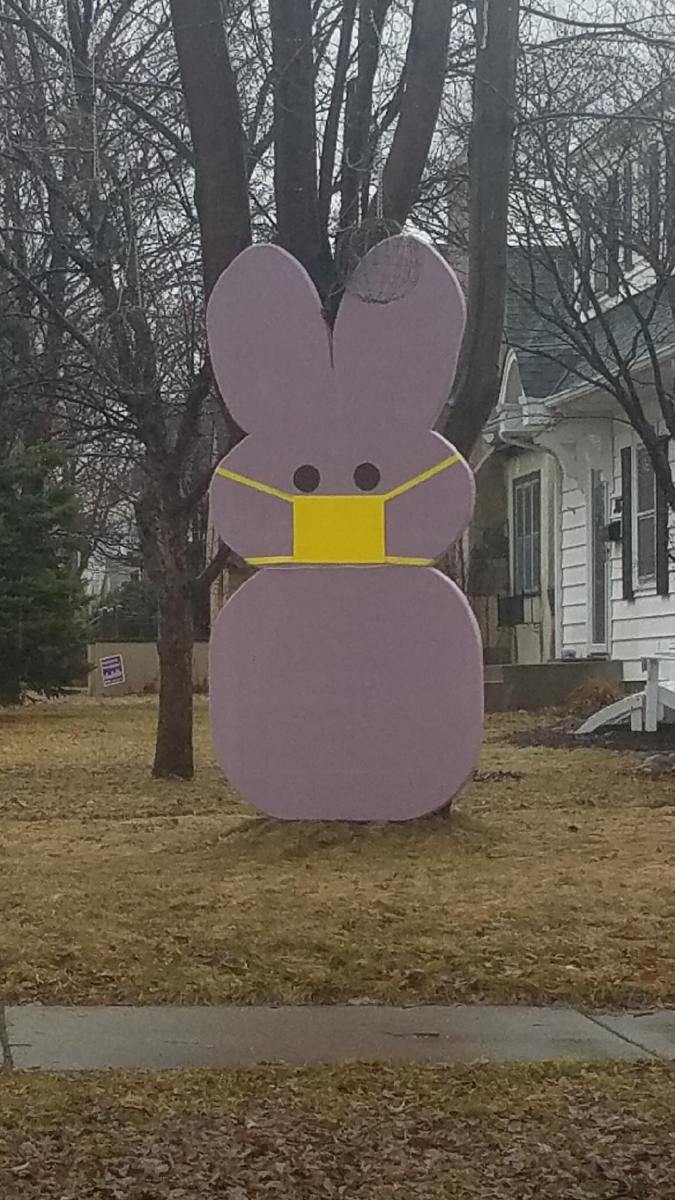
 A Joyful Practice