Seriously, Is That All You’ve Got? December 31, 2016
Posted by ajoyfulpractice in 108 Sun Salutations, Books, Changing Perspectives, Depression, Faith, Fitness, Gratitude, Health, Hope, Japa-Ajapa, Karma, Life, Loss, Mala, Meditation, Minneapolis, Minnesota, Mysticism, New Year, One Hoop, Pain, Peace, Philosophy, Science, Suffering, Surya Namaskar, Texas, Twin Cities, Whirling Dervish, Wisdom, Yoga.Tags: awareness, community, confidence, devotion, gratitude, inspiration, kindness, New Year, recovery, yoga practice
6 comments
It is New Year’s Eve eve. And, while I still have things to do in anticipation of the New Year, I am more than ready for the arrival of 2017. Funny thing is, all of us who are “D-O-N-E, stick-a-fork-in-it, done” with 2016, have to admit that it hasn’t all been bad. There have been some memorable and very personal highlights and there have been many changes for the better. Oh, then there’s the fact that this whole “new year” thing is completely arbitrary.
Yes, yes, there are reasons and explanations for why the Western world celebrates a beginning and an ending at this time of year. But, in some ways those reasons and explanations are beside the point. What’s important is that change is always happening – and most of it is beyond our control. Since being out of control can be psychologically uncomfortable, we take control by choosing a transition to celebrate. The celebration is a reminder that everything, including hard times, ends and that the end of one thing marks the beginning of another thing.
We can only hope the new thing is better than the old thing.
Even when, it’s the same thing over and over again.
Throughout history, different cultures have had different ways of marking transitions. One yoga tradition is to practice 108 Sun Salutations (Surya Namaskar) when the seasons change on the equinoxes and solstices. Here in the West, we have also taken to practice this yoga variation of a marathon when the calendar year changes. (I am again leading the Surya Namaskar malas at Nokomis Yoga (this practice is full) and at the Downtown Minneapolis YMCA (3 PM – 6 PM).)
Sun Salutations (Surya Namaskar) are a moving meditation consisting of 12 poses. The series of poses are linked with breath so that we mimic our bodies’ natural inclination to extend the spine and open the heart as we inhale, to flex the spine and engage the core as we exhale. Or, you could think of it symbolically: as reaching for the sun as you inhale, drawing its energy to the earth as you exhale. Or, you could reach to the Source of all the things as you inhale, surrender to that Source as you exhale. Or…you get the idea. Whether you come to the practice from a physical-mental, psychic-symbolic, or emotional-energetic perspective, this series of poses engages your whole being: mind, body, and spirit.
Since the practice mirrors the cycle of time – the beginning of each breath marking the end of another, the end of each pose marking the beginning of the next – we inevitably find ourselves appreciating it, enjoying it, and then wishing it were done. We can be lost in/absorbed by the effortless repetition (ajapa japa), but then find our brains want a delineated break.
We seek the break, not because we’re tired, per se, but because it’s a way for our brains to absorb the pattern. And, in that moment, we may create the break by asking the question that has been coming up a lot in my practice: Is that all you’ve got? Seriously, is that all you’ve got?
I can’t remember if it was during an interview or during a teacher training, but I very clearly remember Seane Corn describing a conversation where she said to the Universe, “Bring it; but, bring it gently.” I love that sentiment. It acknowledges that throughout our lives we are going to be faced with challenges, and it simultaneously reinforces the idea that we can be ready to meet those challenges head on. It is a statement sourced in strength, courage, and wisdom – without being braggadocios. In fact, it embodies the splendor of humility.
This secular calendar year, 2016, New Year’s Eve happens to fall on the 8th Night of Chanukah. (Therefore, New Year’s Day 2017 is the 8th Day of Chanukah 5777.) Hod (humility, splendor, surrender, or gratitude) is the eighth aspect of the Divine found on the Tree of Life (in Jewish mysticism, Kabbalah). Physically it is symbolized by the left foot and leg. Energetically it is directly connected to Gevurah (Strength, discipline), Tiferet (Balance, Compassion), Netzach (Endurance), and Yesod (Foundation or Bonding). It can also be energetically connected to the 3rd Chakra, our physical core, which is related to our personality, our sense of self, and our self esteem.
I could go on, but what I’m getting at here is that the question (Is that all you’ve got?) isn’t something I’m asking the Universe. I know the Universe has more in store for us. I know it’s going to bring it (hopefully, gently). What I’m really doing, at those moments when I want to throw in the towel, is asking myself the question: Is that all you’ve got? Seriously, is that all you’ve got?
My early teachers often said, “How you do yoga is how you do life.” Whether we are in the middle of 1 hour, 90 minutes, or 3 hours of yoga – or anything else – we all have that moment where we want to throw in the towel. But, if we pace ourselves, we inevitably get a second wind. And, while I don’t always feel this way after I other physical things I do, in yoga and in life I almost always feel like I could have handled a little bit more. Not that I want to or need to – but, that if I had to, I could dig deep and pull up a little bit more of whatever I need to face the challenge.
The first day of 2017, is just another day on the calendar; just another day in our lives. It’s a beginning and it’s an ending. So, yes, celebrate, set an intention, and move on.
But, don’t forget that this liminal or transitional moment is also a middle. And, ultimately, the most significant thing that’s changing is your awareness and your perspective. Start noticing what you’re doing when you ask a question like “Is that all you’ve got?” Start noticing what you’re doing when your answer to the question changes.
Feel free to share your experiences by commenting below!
~ Happy New Year, Happy New Perspective ~
Take the Deepest Breath You’ve Taken All Day – All Day, On Retreat! September 30, 2016
Posted by ajoyfulpractice in Art, Bhakti, Books, Changing Perspectives, Depression, Donate, Faith, Fitness, Food, Gratitude, Healing Stories, Health, Karma, Karma Yoga, Kirtan, Life, Love, Mantra, Meditation, Men, Minneapolis, Minnesota, Music, Mysticism, Peace, Philosophy, Religion, Science, Sukkot, Twin Cities, Wisdom, Women, Writing, Yoga.Tags: community, gratitude, heart, inspiration, kindness, laughter
2 comments

What if you had a day, just a day? A day away from your regular routines, worries, and fears…. A day where everything you need is provided. Would you still worry? Would you still fear? Would you grumble and complain?
Or would you express a little gratitude?
Scientists, meditation practitioners, monks, and nuns have proven a link between gratitude and happiness. Even considering the possibility that there is something in your life for which you can be grateful, can affect your well-being in a positive way. So, what happens if you spend a day giving thanks for what you have – as well as for what you may have in the future?
Be joyful at your festival – you and your son, and your daughter, and your manservant, and your maid-servant, and the Levite, and the stranger, and the orphan, and the widow who live within your city.
For seven days you must celebrate the Festival to YHVH*, your God, in the place which YHVH* shall choose, because the Lord, your God, will bless you in all your produce, and in all the work of your hands, and you will only be happy.
(*NOTE: YHVH is commonly translated as “the Lord” in English.)
– Deuteronomy 16:14 – 15
Every cultural has rituals, meaningful traditions, marking liminal or threshold moments throughout the year. The Hebrew Bible / Old Testament outlines a series of ritual “holidays,” times when people are to gather for reflection, remembrance, and thanksgiving. Sukkot, the Festival of the Tabernacles, is the seventh and final holiday outlined in Deuteronomy, which some people view as a mandate for happiness. In fact, it is sometimes referred to as the Season of Happiness.
But, what is happiness? How is it defined by the sages of various cultures? And how do we make ourselves happy? For that matter, how can we “only be happy” for any given period of time?
The answers to all those questions (and more) are within you. You just have to go deeper.
At the end of Sukkot 2016, join Myra K. Rucker, Meghan Murray, and special guest Kalyani for a day of community, ritual, harvest focused meals, and yoga – all centered around the link between gratitude, mindfulness, and happiness.
WHEN: Saturday, October 22, 2016, 10:30 AM – 9:30 PM (see below for full schedule)
WHERE: St. Luke’s Presbyterian Church (3121 Groveland School Road, Minnetonka, MN), approximately 40 minutes outside of downtown Minneapolis.
WHO: Everyone (sons, daughters, neighbors, strangers) are welcome.
WHAT: Myra will lead two (2) alignment and breath focused yoga practices focusing on gratitude and the ritual of Sukkot, a walking meditation, and conversation to cultivate gratitude. Meghan will prepare yoga-friendly, vegetarian, gluten-free fall harvest meals guaranteed to tantalize the taste buds. Special guest Kalyani (Colleen Buckman) will close out the festival with breath work and music, including selections from her new album Fertile Ground.
HOW: Register online (or offline with Myra) by October 15th.
FULL PACKAGE A (Includes all events and meals*): $125, 10% discount available for senior.
+ Meals are not certified Kosher. Refrigeration is available for any attendee.
….and no one shall appear…empty-handed.” – Deuteronomy 16:16
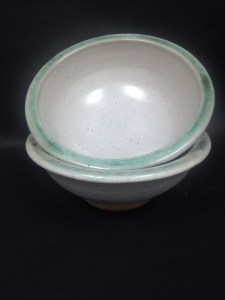
In addition to being a phenomenal chef and baker, Meghan is also an amazing potter, who annually donates bowls to the Powderhorn Empty Bowls fundraiser. You can support this great fundraiser during our retreat by bringing a bowl to donate, purchasing a bowl to donate ($10), or purchasing a bowl as a keepsake ($20, includes donation). Either way, we will use the bowls and fill them with gratitude!
We will provide a limited amount of mats and props. At least one (1) meal and one (1) meditation/yoga practice may be held outdoors. Events are intended to be communal; however, quiet spaces will be reserved for anyone wishing to retreat in silence – and conversation pits will be reserved for anyone wishing to continue dialogue during the silent portions of the weekend.
** St. Luke’s is around the cornder from Mind Body Solutions and less than 2 miles from The Marsh. Contact The Marsh directly if you are interested in reserving a hotel room or utilizing their spa facilities. **
~ We are grateful for your presence ~
Saturday, October 22nd (tentative schedule):
10:30 AM – 12:00 PM Heart Opening Yoga
12:30 PM – 1:45 AM LUNCH & “Guided” Conversation (1 space designated for silence)
2:15 PM – 3:30 PM Journey Meditation (1 space designated for silence / journal writing)
4:00 PM – 5:30 PM YOGA
6:00 PM – 7:15 PM DINNER & “Guided” Conversation (1 space designated for silence)
7:30 PM – 9:00 PM Closing Celebration & “Leave” Taking with Music & Breath by Kalyani (Colleen Buckman)
~ NAMASTE ~
 A Joyful Practice