“There are, of course, inherent tendencies to repetition in music itself. Our poetry, our ballads, our songs are full of repetition; nursery rhymes and the little chants and songs we use to teach young children have choruses and refrains. We are attracted to repetition, even as adults; we want the stimulus and the reward again and again, and in music we get it.”
– from Musicophilia: Tales of Music and the Brain by Dr. Oliver Sacks
There is something about repetition and the repetition of movement. It is something you find in Nature, something you find in music, and it is something you find in the visual arts. That something was felt by Henry David Thoreau when he went into the woods and its one of the reasons Walt Whitman perambulated. It is part of what Rainer Maria Rilke recommended again and again in his letters to the young poet Franz Kappus and it is the key that unlocks Wendell Berry’s “Sabbath Poems” when he walks his Kentucky lands. That something is what Diane Ackerman references when she talks about the creativity of walking and bicycling in her book Play – and it’s something you find in the practice.
In Light on Yoga, B. K. S. Iyengar systematically broke down over 200 yoga poses and their benefits. Iyengar started off his exploration with Samasthiti / Tadasana (Equal Standing / Mountain Pose), which seems like a pretty disposable pose. In fact, it is all too easy to discount the pose – people do it all the time. You might even find yourself doing it if you aren’t encouraged to pause and notice where you’re going.
If your time on the mat is an in-depth exploration of you and your practice, you will find yourself going into Samasthiti/Tadasana again and again. It turns out that there is an element of the pose in almost every other pose. Another element that appears again and again in the practice is Cow Pose. Finally, you’ll keep coming back the connection to the breath that allows you to mimic your body’s natural tendencies.
“As many times as I forget, catch myself charging forward without even knowing where I’m going, that many times I can make the choice to stop, to breathe, and be, and walk slowly into the mystery.
Bryan Kest refers to walking as the best exercise known to man. When you move through your practice, move like you are strolling through the woods. Keep finding that Tadasana spine so that you find that Tadasana smile.
Go In and In & Walk Slowly– by Danna Faulds
Take a moment to breathe, be still, and then soften into Child’s Pose (Balasana). Settle in as if this is your whole practice. Notice the extension of the spine. Notice the deep breath in and the deeper breath out. Allow your breath to move through the spine. Allow your mind to follow the breath. Notice the rhythm of the breath. Notice the breath as music.
Once the mind is focused on the breath and the body’s reaction to the breath, use the breath as your pace. The inhale allows you to meander into Table Top: stack shoulders over elbows, elbows over wrists, hips over knees. Check your interior landscape to make sure it supports the exterior. Notice the length of the spine. Move through Cat/Cow or the “Un-Cat” sequence precisely matching the movement to the breath. This is a moving meditation. Just like in a seated meditation, when the brain wanders away from this present moment, use the breath to bring it back.
Again, find the place where you mind is focused on the rhythm and then curl your toes under and exhale into Downward Facing Dog (Adho Mukha Svanasana). Scan the exterior and interior landscapes. Make sure all your fingers are spread wide, with the majority of the weight/pressure in your hands moving into the thumb and first finger. (So that, there is less weight/pressure applied to your outer wrists.) When you relax your head and shoulders, make sure your big toes are parallel to each other and at least a foot apart. Big toes can be behind the thumbs or behind the middle fingers. Hips are high, heels are low (reaching, but not necessarily touching the mat); and neck is long. Even if you have to bend your knees, find Cow Pose in this position (so that you have a straight line from your middle fingers all the way up to your hips and then a second straight line from your hips to the back of your knees). Eyes are on your nose, your belly button, or the space between your toes. Notice the length of the spine.
Feel free to walk your dog!
Remember your can skip the arm balancing, by moving into Staff Pose (Dandasana) and positioning the arms accordingly or using “Dolphin Dog.” Another modification would be to do the pose on the wall. Either way, you can still walk your dog!
Stretch back (meaning, push your spine towards your thighs) and on an exhale walk your hands to your feet or bring your hands and feet together. Once hands are in line with the toes and heels are flat to the mat, inhale to a Half Lift/Flat Back or Extended Forward Bend. (This pose may be called Ardha Uttanasana or Urdhva Uttanasana.) Place your hands on your thighs and press the shoulders into the metaphorical back pockets. Remember, you want to engage in a similar fashion to Cow Pose, Staff Pose, and Downward Facing Dog. In fact, inhale and find a little bit of Cow Pose (even if you have to bend your knees). Now, press the heels down and – as much as you are able without losing the extension of the spine – engage the quadriceps to extend through the knees and press the thigh bones into the wall behind you. Engage your locks (bandhas) as you are able.
If you have unregulated blood pressure, low back issues, eye issues like glaucoma, or if this is already challenging, remember to stay here with knees bent. Otherwise, if it is not contraindicated, bend the knees and flex from the hips to prep Forward Bend (Uttanasana). Keeping the upper back extended, place the hands on the floor or a block and begin to extend through the legs while pressing the thigh bones into the backs of your legs. Do not force the extension. Use the exhales to settle the heart on the thighs (as much as you are able without losing the extension of the spine.) If your legs are completely straight, make sure the knee caps are lifted and that you are not hyper-extending the knees. Also double check to ensure that if the knees are straight the hips are over the knees, not behind the ankles. Remember to engage your locks (bandhas). Notice the length of the spine. Soften into yourself and into the stillness of the moment.
Inhale to Half Lift / Flat Back and use the exhale to engage your core. With hands on the hips, maintain the length of the spine and lift up to standing. Relax your arms by your sides. Balance the weight between all four corners of both feet. Feel free to move side-to-side or back and forth on the feet until you feel you are centered. Spread the toes, press big toes and little toes down, as well as both sides of the heels. (This establishes “all four corners of both feet.”) Engage the quadriceps in order to lift the knee caps and firm up the thighs. Sit bones point down so that the pelvic bones lift up. Engage your locks (bandhas). As you press down in order to lift the sternum up, use the core abdominal to draw the lower rib cage down. Relax the shoulders and gaze straight ahead. This is Equal Standing / Mountain Pose (Samasthiti/Tadasana). Notice the length of your spine.
Changing as little as possible, stretch the arms out like the letter T. Scan the interior and exterior landscape, checking to ensure you have maintained balance and alignment. Now, take the next few steps: Turn the palms up and inhale your arms overhead. (Many traditions refer to this as Arms Reaching Overhead (Urdhva Hastasana), but I tend to call this Tadasana). Scan the interior and exterior landscape, checking to ensure you have maintained balance and alignment. Notice the length of your spine. After several breaths, lower the arms to your sides on an exhale.
Now, use the whole inhale to lift the arms overhead and the whole exhale to press the hands together through heart center. On the exhale of the third centering breath, walk to the front of the mat with hands through heart center. Equal Standing is like a soldier in the “Ready” position. You are now ready for the next part of the practice.
Moving through half of a Sun Salutation (Surya Namaskar), inhale arms over head into Arms Reaching Overhead; exhale and stretch the arms out wide as you dive between the hands into a Forward Bend; inhale to a Half Lift / Flat Back; exhale back to Forward Bend. Keeping the knees bent and the core engaged, inhale to reverse swan dive and then exhale hands back to your sides. Repeat the sequence until you feel the natural rising and flowing, ebbing and flowing. Notice the similarities between Cat/Cow. Notice the length of the spine in every pose.
After the final exhale into Forward Bend, inhale into a Half Lift/ Flat Back and then step your left leg way back into a low lunge. Make sure the feet are in two separate lanes. Inhale to lengthen the spine and then exhale the back knee to the mat. Give yourself cushion under the back knee, as needed. Pressing down evenly into both feet, lift your torso up and place hands on your right thigh for a variation of Crescent Lunge (Anjaneyasana).
Use an exhale to slide the hips over the back knee and then place the back of the right hand on your sacrum (the flat part of your bum/hips) and place your left hand on the front of your pelvic bones. Your hands are now bracketing your hips. Slide the back hand down in order to direct the sit bones down. You may feel the front hand lifting as the pelvic bones lift. Notice the length of your spine, especially your low back. You may also feel engagement in your left hip and thigh. Stay here or bend the front knee deeper into the lunge – remembering to maintain the space in your low back. Hands can come to your front thigh or reach the hands over head. If you have Hot Half Moon (Ardha Chandrasana) in your practice, feel free to add it by lifting the left arm up and reaching it towards the right.
As many times as you forget, remind yourself to breath in and out of the length of your spine. When you are ready to move on, place the hands on the mat and step back to Child’s Pose. From Child’s Pose, inhale to Cow Pose and exhale to Downward Facing Dog. Repeat standing sequence from
Once you’ve completed the second side and returned to Child’s Pose, inhale to Cow Pose and then exhale into Downward Facing Dog. Repeat the sequence of standing poses (starting with the first Forward Bend after Downward Facing Dog, substituting left for right.
After the second side of standing poses, move into Staff Pose (Dandasana). Remember, this pose is not disposable. Consider the length of your spine and how you maintain it.
Keep the left leg extended and bend the right knee in order to set up the Sage Twist. Remember to keep the left heel and the right foot flat on the floor. You can place the right foot next to the inside or the outside of the left leg, as long as the knees are comfortable and the right foot is flat on the floor.
On an inhale, lift your right arm up and, as you watch it, reach the right arm back to the floor behind your hips. As you settle into the twist, adjust your left arm to provide additional support wherever you need it. You can always sit on a block and/or place a block under your hand if you’re hips and low back are really tight. If you don’t have a block, substitute a book.
Watch how you engage your base, your core, and your breath in order to lengthen your spine. Remember to start the twist in your base (not in your neck). Do not allow your body to collapse or untwist until you complete 3 – 5 complete breaths. After the third or fifth exhale, inhale to center, give the lifted knee a squeeze, and return to Staff Pose. Repeat the Sage Twist instructions for the Sage Twist (replacing right with left).
After the third or fifth exhale on the left, inhale to center and give the lifted knee a squeeze. Bend or extend both, as needed, and lower down onto your back for Corpse Pose (Savasana). Allow your body to settle into the spaces around your spine. Allow your breath to move through the spine. Allow your mind to follow the breath. Notice the rhythm of the breath. Notice the breath as music.
“Music seems to have a special power to animate us. Kant called music, ‘…the quickening art.’ There’s something about rhythm, as a start, compels one to move…with the beat…. There’s something about the rhythm of the music, which has a dynamic, animated, propulsive effect that gets people moving in sympathy with it; and gets people moving in sympathy with one another. So…the rhythm of music has a strong bonding thing. People dance together, move together…”
“There is certainly a universal and unconscious propensity to impose a rhythm even when one hears a series of identical sounds at constant intervals… We tend to hear the sound of a digital clock, for example, as “tick-tock, tick-tock” – even though it is actually “tick tick, tick tick.”
– from Musicophilia: Tales of Music and the Brain by Dr. Oliver Sacks
This opportunity to explore a poem on the mat is part of my offering for the 2018 Kiss My Asana yogathon. I encourage you to set aside at least 5 minutes a day during April, to practice with the poem as inspiration. You can practice in a class or on your own, but since the Kiss My Asana yogathon raises resources as well as awareness, I invite you to join me at the donation-based classes on April 28th.
I also challenge you to set aside a certain amount every day that you practice with a poem in mind. It doesn’t matter if you set aside one dollar per practice or $25 – set aside that amount each time you practice and donate it by April 30th.
Founded by Matthew Sanford, Mind Body Solutions helps those who have experienced trauma, loss, and disability find new ways to live by integrating both mind and body. They provide classes, workshops, and outreach programs. They also train yoga teachers and offer highly specialized training for health care professionals. By participating in the Kiss My Asana yogathon you join a global movement, but in a personal way. In other words, you practice yoga. Or, as this year’s tag line states, “do yoga. share yoga. help others.”
*Yes, it’s another two (2) poem day. It’s also a two (2) video day! Happy Monday!
“Remember the moon survives, draws herself out crescent-thin, a curved woman. Untouchable, she bends around the shadow that pushes himself against her, and she
Barbara Kingsolver, born today in 1955, always seems to point her pen in the direction of struggle and suffering. Sometimes the struggle is within a single community, sometimes it involves multiple communities; sometimes it involves an individual struggling to find balance between a community; and other times the struggle is between man’s desires and the needs of the natural world. But, always, there is struggle, suffering…and hope.
The Buddha, whose birthday is also celebrated today by some Buddhists, pointed his heart towards struggle and suffering as well. Unlike Kingsolver, Prince Siddhartha Guatama didn’t grow up with awareness of the suffering of others. However, once he was aware of it, he started considering how to alleviate it. And so, like Kingsolver, the Buddha’s work includes the promise of hope.
The Buddha outlined Four Noble Truths: There is suffering/suffering exists; suffering is caused by desire and an attachment to ignorance; there is an end to suffering; and there is a path to the end of suffering. (Specifically, he points to the Noble Eightfold Path.) So again, there is suffering, there is struggle, and there is hope. However, in the middle of struggling and suffering, it is easy to get stuck in the middle of that second noble truth and forget all about the promise. In the middle of suffering, it is easy to forget all about the hope, and be filled with doubt – even when you’re on the road that promises freedom.
Just the other day, a friend of mine mentioned her rosary. “In Islam,” Mya said, “using the rosary [for prayer/meditation/contemplation] is called dhikr (“remembering”).” As the devoted move through the beads, they are constantly “remembering” God and the nature of God.
The words may be different, but this practice of “remembering” is the same in Catholicism. Hindus and Yogis use mala beads, also a rosary, to count out a mantra – this too is “remembering” what the practitioner views as important.
The Jewish tradition does not include beads; instead, some wear a prayer shawl (tallit) or small tallit (tallit katan) with a knotted fringe or tassels of blue (tzitzit). Jews do not count with them, but the tassels are intended as a reminder of what is important within the Jewish tradition.
Whether you are on the mat, on the cushion, on the pew, or on the rug, part of the practice is to remember. The question is: What are you remembering? Go back to that José Ortega y Gasset statement from the 6th offering, “Tell me to what you pay attention and I will tell you who you are.”
“You are the one who knows, behind the rising, falling tide of shadow, the moon is always
whole.”
– from Remember the Moon Survives, by Barbara Kingsolver
Remember the Moon Survives – by Barbara Kingsolver
Remember how to move into Child’s Pose (Balasana), but also remember it is the beginning and full of possibilities. Remember to soften into the breath and allow the breath to flow freely in and ebb gently out. Remember your intention.
When you move into Table Top remember to move with full awareness of your mind and body in the present moment. Remember to check your alignment. Press down so that the shoulders and shoulder blades are even with the rest of the back and your belly is firm. Engage your locks (bandhas) if that is part of your practice. Remember this is an opportunity to remember the connection between your mind, body, and spirit.
Remember to move through Cat/Cow or the “Un-Cat” sequence precisely matching the movement to the breath. So that, as the breath gets long and fine and deep, the movement gets richer – whatever that means to you in this moment.
On an inhale, stretch the right leg back, remembering to keep the hips level – even and equal to each other so that the low back doesn’t struggle. On an exhale, step the right foot in between the hands so that the foot is flat on the floor (with the right toes pointed forward). If the foot doesn’t easily land between the hands, scoop it forward with your hands. If needed, add a knee pad under the back knee. Pressing down evenly into both feet, lift your torso up and place hands on your right thigh. This is a form of Crescent Lunge (Anjaneyasana).
Use an exhale to slide the hips over the back knee and then place the back of the right hand on your sacrum (the flat part of your bum/hips) and place your left hand on the front of your pelvic bones. Your hands are now bracketing your hips. Slide the back hand down in order to direct the sit bones down. You may feel the front hand lifting as the pelvic bones lift. You may feel space opening up in your low back. You may also feel engagement in your left hip and thigh. Stay here or bend the front knee deeper into the lunge – remembering to maintain the space in your low back. Hands can come to your front thigh or reach the hands over head. If you have Hot Half Moon (Ardha Chandrasana) in your practice, feel free add it by lifting the left arm up and reaching it towards the right.
Remember to breathe. Remember to breathe into the heart. Crescent Lunge is one of the poses inspired by Hanuman, the monkey king in the epic poem The Ramayana. In the great adventure, Hanuman is asked to take giant leaps to save or rescue others. He hesitates, he doubts…and then he leaps. Again and again, he does what needs to be done to help others. At the end of the poem he revels what is in his heart: a devotion to God. Take a moment to remember what is in your heart.
After a few breaths, place the hands on the mat and step back to Child’s Pose. From Child’s Pose repeat the sequence again (from Cow Pose) , this time on the left side.
Once you’ve completed the second side and returned to Child’s Pose, inhale to Cow Pose and then exhale into Downward Facing Dog (Adho Mukha Svanasana). Remember your can skip the arm balancing, by moving into Staff Pose (Dandasana) and positioning the arms accordingly or using “Dolphin Dog.”. Another modification would be to do the pose on the wall. Either way, remember to check your alignment – make sure your body is in the shape of capital A.
Remember to make sure all your fingers are spread wide, with the majority of the weight/pressure in your hands moving into the thumb and first finger. (So that, there is less weight/pressure applied to your outer wrists.) When you relax your head and shoulders, remember to place your big toes are parallel to each other and at least a foot apart. Big toes can be behind the thumbs or behind the middle fingers. Notice if you feel lighter or heavier when your feet are spaced further apart. Hips are high, heels are low (reaching, but not necessarily touching the mat); and neck is long. Even if you have to bend your knees, remember to find Cow Pose in this position (so that you have a straight line from your middle fingers all the way up to your hips and then a second straight line from your hips to the back of your knees). Remember, eyes are on your nose, your belly button, or the space between your toes.
Remember Downward Facing Dog is simultaneously an arm balance and a standing pose; a forward bend, as well as a back bend; and an inversion. Stretch back (meaning, push your spine towards your thighs) and on an exhale walk your hands to your feet or bring your hands and feet together. Once hands are in line with the toes and heels are flat to the mat, inhale to a Half Lift/Flat Back or Extended Forward Bend. (This pose may be called Ardha Uttanasana or Urdhva Uttanasana.) Place your hands on your thighs and press the shoulders into the metaphorical back pockets. Remember, you want to engage in a similar fashion to Cow Pose, Staff Pose, and Downward Facing Dog. In fact, inhale and find a little bit of Cow Pose (even if you have to bend your knees). Now, press the heels down and – as much as you are able without losing the extension of the spine – engage the quadriceps to extend through the knees and press the thigh bones into the wall behind you. Engage your locks (bandhas) as you are able.
If you have unregulated blood pressure, low back issues, eye issues like glaucoma, or if this is already challenging, remember to stay here with knees bent. Otherwise, if it is not contraindicated, bend the knees and flex from the hips to prep Forward Bend (Uttanasana). Keeping the upper back extended, place the hands on the floor or a block and begin to extend through the legs while pressing the thigh bones into the backs of your legs. Do not force the extension. Use the exhales to settle the heart on the thighs (as much as you are able without losing the extension of the spine.) If your legs are completely straight, make sure the knee caps are lifted and that you are not hyper-extending the knees. Also double check to ensure that if the knees are straight the hips are over the knees, not behind the ankles. Remember to engage your locks (bandhas).
On an inhale, extend to Half Lift/Flat Back and on an exhale fold into the Forward Bend. If you are modifying and using the Half Lift throughout, keep the back in the position that feels similar to an intense Table Top and use the breath to extend the knees on an inhale and flex/bend them on an exhale. Remember to precisely match the movement to the breath. Remember all the ways you are mimicking your body’s natural tendencies (e.g., extending/flexing, lifting/grounding, creating/engaging, rising/falling, etc.).
Move into Staff Pose. Keep the left leg extended and bend the right knee in order to set up the Sage Twist. Remember to keep the left heel and the right foot flat on the floor. You can place the right foot next to the inside or the outside of the left leg, as long as the knees are comfortable and the right foot is flat on the floor.
On an inhale, lift your right arm up and, as you watch it, reach the right arm back to the floor behind your hips. As you settle into the twist, adjust your left arm to provide additional support wherever you need it. You can always sit on a block and/or place a block under your hand if you’re hips and low back are really tight. If you don’t have a block, substitute a book.
Watch how you engage your base, your core, and your breath. Remember to start the twist in your base (not in your neck). Do not allow your body to collapse or untwist until you complete 3 – 5 complete breaths. After the third or fifth exhale, inhale to center, give the lifted knee a squeeze, and return to Staff Pose. Repeat the Sage Twist instructions for the Sage Twist (replacing right with left).
After the third or fifth exhale on the left, inhale to center and give the lifted knee a squeeze. Bend or extend both, as needed, and lower down onto your back for Corpse Pose (Savasana). Remember, just as the end of the inhale is the beginning of the exhale and the end of the exhale is the beginning of the inhale, this final pose is a beginning and an ending. Remember you are on the right path.
This opportunity to explore a poem on the mat is part of my offering for the 2018 Kiss My Asana yogathon. I encourage you to set aside at least 5 minutes a day during April, to practice with the poem as inspiration. You can practice in a class or on your own, but since the Kiss My Asana yogathon raises resources as well as awareness, I invite you to join me for a donation-based classes on Saturday, April 28th.
I also challenge you to set aside a certain amount every day that you practice with a poem in mind. It doesn’t matter if you set aside one dollar per practice or $25 – set aside that amount each time you practice and donate it by April 30th.
Founded by Matthew Sanford, Mind Body Solutions helps those who have experienced trauma, loss, and disability find new ways to live by integrating both mind and body. They provide classes, workshops, and outreach programs. They also train yoga teachers and offer highly specialized training for health care professionals. Thank you to everyone who attended the class on April 7th, and thank you to everyone who has already donated. By participating in the Kiss My Asana yogathon you join a global movement, but in a personal way. In other words, you practice yoga. Or, as this year’s tag line states…
“And now I see with eye with eye serene The very pulse of the machine; A being breathing thoughtful breath, A traveler between life and death; The reason firm, the temperate will, Endurance, foresight, strength, and skill;”
The more you practice yoga the more insight you gain, insight into yourself and, also, more insight into the practice. The more you practice the more you may start to appreciate the beauty and the perfection of the human mind-body-spirit. For instance, the body and mind are constantly striving to maintain balance. You can see the natural balancing act in the way we process food and waste, as well as in the way we breathe.
Let’s say, for instance, that a person consumed the perfect amount of calories, proteins, carbohydrates, vitamins, minerals, and fluids for their body type and activity level. That person with the perfect dietary habit would still produce waste – a good amount of waste, in fact. Because, the body is a machine that uses what it needs, in order to flush out what it does not need. It may be hard to view the food/waste analogy on the mat, but part of the practice is observing the process of breathing (which is another way the body takes in fuel and releases waste). Part of the practice is noticing how the inhale and exhale are opposite and equal reactions – and how the body reacts to the breath.
Since we were in the womb, our bodies have responded to breathing by extending on the inhale and flexing on the exhale. The reactions are subtle and autonomous, and they mirror the breath in that they are opposite and equal. So, here again is an example of the body-mind seeking balance within the imbalance.
In most physical yoga practices (hatha yoga, regardless of the style or tradition), poses are engaged in a way that exaggerates the body’s natural tendencies – extending on the inhale, flexing on the exhale. This is true even in static poses: we press down to go up or find a backbend on the inhale and engage the core or fold forward on the exhale. Vinyasa literally means “to place in a special way” and is a technique, as well as a style of yoga (sometimes referred to as flow, whereby the poses are linked with the breath – again, in a way that exaggerates the body’s natural tendencies. Vipassana literally means “to see in a spacial way” and is a technique, as well as a style of Buddhist meditation (sometimes referred to as Insight Meditation).
William Wordsworth’s poem Perfect Woman, also known as “She was a phantom of delight,” chronicles the poet’s growing perception and understanding of his wife. When they first meet, Wordsworth (born today in 1770) views Mary as “a lovely apparition” and very literarily refers to her as eye candy, an object that looks good on his arm. But, as they get to know each other better, Wordsworth starts to recognize his future wife as a multi-dimensional human being. Even though he is still slightly in awe of her otherness, in the end Wordsworth’s esteem reaches a point where he can describe her in the same way he might (as a Romantic poet) describe a peer. He develops insight.
People new to yoga often experience a similar evolution of perspective. At first, they may just see the top surface of the practice; they see the obvious physical benefits. Over time, people may start to notice that there is something more going on than just the physical elements. They get more in touch with their emotions and become more of how to manage their emotions. They also start to notice that the practices changes as the body and mind change, and that every day is different. Ultimately, people begin to see things in a special way. They start to recognize the symbolic elements of the practice; how the sequences often mimics life – like “A traveller between life and death;” – and how there is “something of angelic light” in all beings everywhere. As they gain insight into themselves, they may also gain insight into the world.
Perfect Woman– by William Wordsworth
Placing your body parts in a special way, move into Child’s Pose (Balasana). Notice how much of what you do is now automatic and how much is mindful of the way your mind and your body are in this present moment. Has your understanding of Child’s Pose changed over the last week? Has your understanding changed over the entire lifetime of your practice? Does your appreciation of the pose – even as a simple possibility – change throughout any given practice?
When you move into Table Top again check to ensure you are moving with full awareness of your mind and body in the present moment. Double check your alignment. Press down so that the shoulders and shoulder blades are even with the rest of the back and your belly is firm. Engage your locks (bandhas) if that is part of your practice. Notice how you feel in the pose (physically, mentally, emotionally, and energetically).
Move through Cat/Cow or the “Un-Cat” sequence precisely matching the movement to the breath. So that, as the breath gets long and fine and deep, the movement gets richer – whatever that means to you in this moment. This is the first vinyasa in this practice, notice all the ways you are mimicking your body’s natural tendencies (e.g., extending/flexing, lifting/grounding, creating/engaging, rising/falling, etc.).
Pause with the spine back in Table Top position and then move into Staff Pose (Dandasana). Sit down with your legs straight out in front of you. Sit up on a blanket or a block if you have a lot of tightness/stiffness in the back of your body.
Press your heels down into the ground, flex the ankles so the toes reach for the nose, and then spread the toes. At the same time, fire up your thighs and engage the quadriceps (the four muscles at the top of your things) in order to lift the knee caps into their full extended position. Press the sit bones and hands down (with the hands next to the hips). If this engagement is too extreme, bend knees or place the hands behind the hips (but still wide enough to just barely be outside of the hips).
As if they are seeds you are planting, push your shoulders and everything touching the floor, the mat, or a prop down into the earth. Allow your heart to blossom. With your eyes on your nose, watch your breath and notice how you feel in the pose (physically, mentally, emotionally, and energetically).
Engage your locks (bandhas) as described in earlier practices. Changing as little as possible, lift the arms over the head, with wrists in line with the shoulders, and turn the palms up so that the finger tips point towards the wall behind you.
Extend the elbows and, as much as you are able, rotate them towards your nose. Keeping the shoulders down the back, push the whole body down to lift the heart and the arms up. If this is too much intensity for the shoulders, modify by bending the elbows to 90 degrees and extending the wrists rather than flexing them. Again, notice how you feel in the pose (physically, mentally, emotionally, and energetically).
NOTE: If you want to skip the arm balancing below, move back into the poses after Downward Facing Dog. Another modification would be to do the Downward Facing Dog or “Dolphin Dog” with hands on the on the wall.
For the arm balance Downward Facing Dog (Adho Mukha Svanasana), return to Table Top – engaging as you did at the beginning of the practice. Curl your toes under; then use your arms and legs, hands and feet to lift your hips up in the air.
Check to make sure all your fingers are spread wide, with the majority of the weight/pressure in your hands moving into the thumb and first finger. (So that, there is less weight/pressure applied to your outer wrists.) When you relax your head and shoulders, make sure your big toes are parallel to each other and at least a foot apart. Big toes can be behind the thumbs or behind the middle fingers. Notice if you feel lighter or heavier when your feet are spaced further apart. Hips are high, heels are low (reaching, but not necessarily touching the mat); and neck is long. Even if you have to bend your knees, find Cow Pose in this position (so that you have a straight line from your middle fingers all the way up to your hips and then a second straight line from your hips to the back of your knees). Eyes are on your nose, your belly button, or the space between your toes.
If you are staying off of your wrists or need something to minimize stress on the shoulders, bring the elbows to the mat when you are in Table Top and lift your hips up for “Dolphin Dog.”
No matter which variation you choose, notice how and what you feel (physically, mentally, emotionally, and energetically). Notice how Downward Facing Dog is simultaneously an arm balance and a standing pose; a forward bend, as well as a back bend; and an inversion. Notice how much of the engagement in the Staff Pose variations you can also feel here. How and what can you adjust to experience more of the sensations of Staff Pose?
Stretch back (meaning, push your spine towards your thighs) and on an exhale walk your hands to your feet or bring your hands and feet together. Once hands are in line with the toes and heels are flat to the mat, inhale to a Half Lift/Flat Back or Extended Forward Bend. (This pose may be called Ardha Uttanasana or Urdhva Uttanasana.) Place your hands on your thighs and press the shoulders into the metaphorical back pockets. Again, you want to engage in a similar fashion to Cow Pose, Staff Pose, and Downward Facing Dog. In fact, inhale and find a little bit of Cow Pose (even if you have to bend your knees). Now, press the heels down and – as much as you are able without losing the extension of the spine – engage the quadriceps to extend through the knees and press the thigh bones into the wall behind you. Engage your locks (bandhas) as you are able. You can play with the position of the arms for a moment; again, noticing the similarities between this pose and the other two poses.
If you have unregulated blood pressure, low back issues, eye issues like glaucoma, or if this is already challenging, stay here with knees bent. Otherwise, if it is not contraindicated, bend the knees and flex from the hips to prep Forward Bend (Uttanasana). Keeping the upper back extended, place the hands on the floor or a block and begin to extend through the legs while pressing the thigh bones into the backs of your legs. Do not force the extension. Use the exhales to settle the heart on the thighs (as much as you are able without losing the extension of the spine.) If your legs are completely straight, make sure the knee caps are lifted and that you are not hyper-extending the knees. Also double check to ensure that if the knees are straight the hips are over the knees, not behind the ankles. Engage your locks (bandhas). When you reach your edge, take a moment to notice you feel (physically, mentally, emotionally, and energetically).
On an inhale, extend to Half Lift/Flat Back and on an exhale fold into the Forward Bend. If you are modifying and using the Half Lift throughout, keep the back in the position that feels similar to an intense Table Top and use the breath to extend the knees on an inhale and flex/bend them on an exhale. This is the second vinyasa. Move through the sequence precisely matching the movement to the breath. So that, as the breath gets long and fine and deep, the movement gets richer – whatever that means to you in this moment. Notice all the ways you are mimicking your body’s natural tendencies (e.g., extending/flexing, lifting/grounding, creating/engaging, rising/falling, etc.).
Move back into Staff Pose. Keep the left leg extended and bend the right knee in order to set up the Sage Twist. Remember to keep the left heel and the right foot flat on the floor. You can place the right foot next to the inside or the outside of the left leg, as long as the knees are comfortable and the right foot is flat on the floor.
On an inhale, lift your right arm up and, as you watch it, reach the right arm back to the floor behind your hips. As you settle into the twist, adjust your left arm to provide additional support wherever you need it. You can always sit on a block and/or place a block under your hand if you’re hips and low back are really tight. If you don’t have a block, substitute a book.
Watch how you engage your base, your core, and your breath. Remember to start the twist in your base (not in your neck). Do not allow your body to collapse or untwist until you complete 3 – 5 complete breaths. After the third or fifth exhale, inhale to center, give the lifted knee a squeeze, and return to Staff Pose. Repeat the Sage Twist instructions for the Sage Twist (replacing right with left).
After the third or fifth exhale on the left, inhale to center and give the lifted knee a squeeze. Bend or extend both, as needed, and lower down onto your back for Corpse Pose (Savasana). Notice the breath, as Spirit, and how it is still moving you towards balance.
This opportunity to explore a poem on the mat is part of my offering for the 2018 Kiss My Asana yogathon. I encourage you to set aside at least 5 minutes a day during April, to practice with the poem as inspiration. You can practice in a class or on your own, but since the Kiss My Asana yogathon raises resources as well as awareness, I invite you to join me at one of the donation-based classes listed (April 7th and April 28th).
I also challenge you to set aside a certain amount every day that you practice with a poem in mind. It doesn’t matter if you set aside one dollar per practice or $25 – set aside that amount each time you practice and donate it by April 30th.
Founded by Matthew Sanford, Mind Body Solutions helps those who have experienced trauma, loss, and disability find new ways to live by integrating both mind and body. They provide classes, workshops, and outreach programs. They also train yoga teachers and offer highly specialized training for health care professionals. By participating in the Kiss My Asana yogathon you join a global movement, but in a personal way. In other words, you practice yoga. Or, as this year’s tag line states…
“Practice, practice, practice…all is coming.” – Sri Pattabhi Jois
“It comes in its own good time and in its own way to the one who will go where it lives, and wait, and be ready, and watch. Hurry is beside the point, useless, an obstruction. The thing is to be attentively present. To sit and wait is as important as to move.”
We’ve been here before, and we will be here again – that is the nature of the practice. Practicing hatha yoga (the physical practice, regardless of style or tradition) can be a little like being in an old Western where characters pass the same rock again and again. In the movies, the only thing that changes is the characters’ bodies and their awareness.
Come to think of it, the same thing is true of our practice.
Some practices (e.g., Ashtanga – one of the earliest forms of vinyasa, introduced to the West by Sri Pattabhi Jois; Bikram Choudhury’s hot yoga sequence; and Sivananda Yoga – based on the teachings of Swami Sivananda) include the same poses in the same order every time. These practices give people a standardized measure by which to gauge their practice and their evolution within the practice.
On the flip side, some practices include an ever rotating set of poses and sequences so that we keep coming at the metaphorical rock from a different direction.
Either way, as the body and the mind change, the practice also changes. The body and the teacher will repeat the same information again and again, but we won’t “hear” the information until we’re ready to process and synthesize it. That’s why, when people new to yoga ask me how they can hurry up and get up to speed, I tell them to keep practicing.
“And then I began to learn perhaps the most important lesson that nature had to teach me: that I could not learn about her in a hurry.
– from “Being Watchful” by Wendell Berry
We’ve been here before…but now something is different. It may be a while before we notice the difference, but it’s there…just waiting for us to be ready. In some ways, this is all like walking the land.
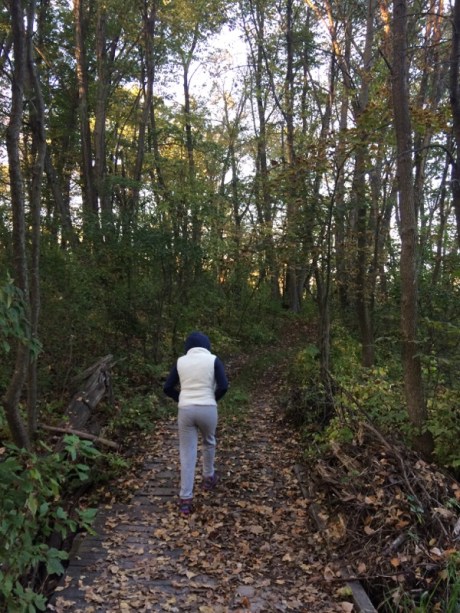
Walking the land is not unusual for a farmer – it’s what they do after all. They walk the land, pausing to assess something or just to soak it all in. Sometimes they just walk for the sake of walking. And, anyone who has walked just for the sake of walking will tell you, it is not unusual for the mind to open up on a walk.
Wendell Berry is a poet, a farmer, a novelist, an environmentalist, a Christian, an activist, and a Kentuckian. He is also a walker – and by that I mean, he walks. Naturally, being a farmer who is also a poet, he writes poems inspired on his walks. He calls them “Sabbath poems.” Consider today’s practice a “Sabbath poem.”
Being Watchful – by Wendell Berry
Move into Child’s Pose (Balasana) as if you are moving into a new house. Take your time to balance the effort and relaxation inherent in the pose. Watch the breath. Pause and take in the landscape that is your mind and your body in this present moment.
When you move into Table Top – hands and knees to the mat with shoulders over elbows and wrists, hips over knees – or into a seated position if that is more accessible, move as if you are taking a leisurely stroll. Take your time, and pause to get the lay of the land. Move through Cat/Cow or the “Un-Cat” sequence precisely matching the movement to the breath. So that, as the breath gets long and fine and deep, the movement gets richer – whatever that means to you in this moment.
Pause with the spine back in Table Top position. Sit down with your legs straight out in front of you. Sit up on a blanket or a block if you have a lot of tightness/stiffness in the back of your body. This is Staff Pose (Dandasana), which appears on the Top 10 Poses People Overlook/Underestimate.
Press your heels down into the ground, flex the ankles so the toes reach for the nose, and then spread the toes. At the same time, fire up your thighs and engage the quadriceps (the four muscles at the top of your things) in order to lift the knee caps into their full extended position. Press the sit bones and hands down (with the hands next to the hips). If this engagement is too extreme, bend knees or place the hands behind the hips (but still wide enough to just barely be outside of the hips).
As if they are seeds you are planting, push your shoulders and everything touching the floor, the mat, or a prop down into the earth. Watch how the engagement of your feet, your legs, your hips, your core, your hands, and your arms allows you to lift the heart and the ribs away from the lower body. You are actively creating space. Now, engage the space: squeeze your perineum muscles for the root lock (mula bandha); draw the belly button up and back for the core lock (uddiyana bandha); and press the chin into your throat for the chin lock (jalandhara bandha). With your eyes on your nose, watch your breath.
Keep the left leg extended and bend the right knee in order to set up the Sage Twist. Remember to keep the left heel and the right foot flat on the floor. You can place the right foot next to the inside or the outside of the left leg, as long as the knees are comfortable and the right foot is flat on the floor.
On an inhale, lift your right arm up and, as you watch it, reach the right arm back to the floor behind your hips. As you settle into the twist, adjust your left arm to provide additional support wherever you need it. You can always sit on a block and/or place a block under your hand if you’re hips and low back are really tight. If you don’t have a block, substitute a book.
Watch how you engage your base. Again, like you a planting, use every inhale to press down in order to lift up – creating more space between your ribs and your hips. Use every exhale to twist and rinse – engaging that space. Remember to start the twist in your base (not in your neck). Do not allow your body to collapse or untwist until you complete 3 – 5 complete breaths. After the third or fifth exhale, inhale to center, give the lifted knee a squeeze, and return to Staff Pose. Repeat the Sage Twist instructions for the Sage Twist (replacing right with left).
After the third or fifth exhale on the left, inhale to center and give the lifted knee a squeeze. Bend or extend both, as needed, and lower down onto your back for Corpse Pose (Savasana). Be here, and be watchful.
This opportunity to explore a poem on the mat is part of my offering for the 2018 Kiss My Asana yogathon. I encourage you to set aside at least 5 minutes a day during April, to practice with the poem as inspiration. You can practice in a class or on your own, but since the Kiss My Asana yogathon raises resources as well as awareness, I invite you to join me at one of the donation-based classes listed (April 7th and April 28th).
I also challenge you to set aside a certain amount every day that you practice with a poem in mind. It doesn’t matter if you set aside one dollar per practice or $25 – set aside that amount each time you practice and donate it by April 30th.
Founded by Matthew Sanford, Mind Body Solutions helps those who have experienced trauma, loss, and disability find new ways to live by integrating both mind and body. They provide classes, workshops, and outreach programs. They also train yoga teachers and offer highly specialized training for health care professionals. By participating in the Kiss My Asana yogathon you join a global movement, but in a personal way. In other words, you practice yoga. Or, as this year’s tag line states, “do yoga. share yoga. help others.”
*Yes, clock watchers, the extra poem in this post is just for you!
Once upon a time, there was a little girl who didn’t have the best start in life. In fact, you could say that much of her early life was very twisted, and “rooted in pain.”
She was separated from her parents at the age of 3. But, the separation wasn’t all bad; she went to live with her grandmother, who was quite prosperous – for a black woman in the South, during the Great Depression.
Life was better, for about four years, but then she was once again unexpectedly torn from her home. She was 7. At age 8 she was sexually abused and raped by a grown man, her mother’s boyfriend. When she reported the assault, the man was arrested, sentenced to 1 day in jail, and then murdered. The little girl blamed her voice for her assailant’s death and so, for about 5 years, she didn’t speak.
This little girl moved back and forth between her mother and grandmother at least twice more before, in the span of three weeks, she graduated from school and gave birth to her son – all at the age of 17.
Given her background, few would be surprised to learn that this little girl grew up to be a streetcar conductor, a fry cook, a sex worker, a singer, and a dancer. All noble endeavors; however, the real twist to the story is that this little girl rose above the expectations of herself and others.
This little, whose older brother called her Maya (as in, “Mya Sister”), grew up to become a writer, a poet, a journalist, an activist, and an inspirational teacher known around the world for and by her voice – a voice of wisdom, courage, love, and light.
My first yoga teachers use to say, “How you do yoga, is how you do life.” On the yoga mat, everything has a purpose. Bringing your awareness to the importance of the moment – even when you’re not sure of the purpose – is part of the practice.
Remember: No matter how twisted the situation, never underestimate what you can do with an inhale, a pause, an exhale, or a pause. No matter how twisted the situation, never underestimate the ability of your heart and spirit to rise above.
Still I Rise – by Maya Angelou
Move into Child’s Pose (Balasana) as if you are moving into a new house. Notice how the front of your heart is protected, but the back of your heart is exposed. Feel the breath moving through your heart as you inhale and, also, as you exhale. Let the breath create space, awareness, around your heart center.
After a few minutes in Balasana, make your way into Table Top – hands and knees to the mat with shoulders over elbows and wrists, hips over knees – or into a seated position if that is more accessible. As you exaggerate your body’s natural tendencies with Cat/Cow or the “Un-Cat” sequence, notice how the inhale opens your heart to the world and the exhale turns your heart inward. Here is the “bowed head and lowered eyes,” but here are also the gifts, the hope, and the dream of being alive.
Once you feel the physical and emotional connection between your mind-body-spirit, set up for a Sage Twist*. Move into a seated position with the left leg extended in front of you (so that the left heel is on the floor) and the right knee bent (so that the right foot is flat on the floor). You can place the right foot next to the inside or the outside of the left leg, as long as the knees are comfortable and the right foot is flat on the floor. (Feeling like you’ve got diamonds at the meeting of your thighs is all on you!)
On an inhale, lift your right arm up and, as you watch it, reach the right arm back to the floor behind your hips. As you settle into the twist, adjust your left arm to provide additional support wherever you need it. You can always sit on a block and/or place a block under your hand if you’re hips and low back are really tight. If you don’t have a block, substitute a book.
Use every inhale to press down in order to lift up – creating more space between your ribs and your hips. Use every exhale to twist and rinse – engaging that space. Remember to start the twist in your base (not in your neck). Do not allow your body to collapse or untwist until you complete 3 – 5 complete breaths. After the third or fifth exhale, inhale to center and give the lifted knee a squeeze. Switch the legs and repeat the Sage Twist instructions in this paragraph (replacing right with left).
After the third or fifth exhale on the left, inhale to center and give the lifted knee a squeeze. Bend or extend both, as needed, and lower down onto your back for Savasana. Maya Angelou wrote, “But still, like air, I’ll rise.” (In the first link above, you can hear her son recite, “But still, life LIFE, I’ll rise.”)
Notice that as long as you are breathing (i.e., as long as you are alive), your heart will always rise.
This opportunity to explore a poem on the mat is part of my offering for the 2018 Kiss My Asana yogathon. I encourage you to set aside at least 5 minutes a day during April, to practice with the poem as inspiration. You can practice in a class or on your own, but since the Kiss My Asana yogathon raises resources as well as awareness, I invite you to join me at one of the donation-based classes listed (April 7th and April 28th).
I also challenge you to set aside a certain amount every day that you practice with a poem in mind. It doesn’t matter if you set aside one dollar per practice or $25 – set aside that amount each time you practice and donate it by April 30th.
Founded by Matthew Sanford, Mind Body Solutions helps those who have experienced trauma, loss, and disability find new ways to live by integrating both mind and body. They provide classes, workshops, and outreach programs. They also train yoga teachers and offer highly specialized training for health care professionals. By participating in the Kiss My Asana yogathon you join a global movement, but in a personal way. In other words, you practice yoga. Or, as this year’s tag line states, “do yoga.share yoga. help others.”
*NOTE: The Sage Twist video features Dianne Bondy, another one of my favorite teachers focused on keeping/making yoga accessible.
Regardless of what you practice or how you practice yoga, breathing is an essential part of the practice. In fact, the physical practice of yoga, Hatha Yoga (regardless of the style or tradition) is a combination of the third and fourth limbs of the philosophy of yoga: asana (“seat”) and pranayama (“awareness” or “extension” of breath). As the body is a container for the breath, the asana is a way to direct the breath, as well as a way to connect the mind and body.
Connecting through the breath is also a way to bring about change in the mind and body. Literally speaking, Hatha Yoga may be translated as “sun-moon union” or “by-force union.” The power of the practice comes from the uniting of opposites. It is by the force of the breath that we bring about change.
Sir Isaac Newton stood on the shoulders of giants, in particular Nicolaus Copernicus, Galileo Galilei and Johannes Kepler, and published his laws of motion in 1687. Three hundred and thirty-one years later, these physical laws first published in the Philosophiae Naturalis Principia Mathematica still hold up: (1) that an object at rest remains at rest and an object in motion remains in motion – unless acted upon by a force; (2) that the rate of change in momentum is directly related to the force applied, and the direction applied; and (3) that there is an equal and opposite reaction to every action.
Every time we breathe, especially if we observe the body’s natural reaction to the breath, we are seeing these laws at work. Take a deeper breath in and that action results in a deeper breath out. As, the breath enters the body the belly rises; as the breath leaves, the belly falls. Simultaneously, the diaphragm rises and falls, enters and leaves – but, in the opposite direction of the belly. Also, on a much deeper level, the spine extends as we inhale and flexes as we exhale. Our physical practice of yoga is simply a way to observe natural phenomena at work.
Our physical practice is also a way to observe natural phenomena from a philosophical standpoint. For example, Daoism views everything in existence as the manifestation of four (4) actions: entering and leaving, rising and falling. As we inhale, things and people come into our lives, things happen around us. As we exhale, things and people leave our lives, things change around us. Notice the thoughts and emotions that arise. Notice how the thoughts and emotions settle.
Sonnets to Orpheus II, 29 – by Rainer Maria Rilke
Move into Child’s Pose (Balasana) as if you are moving into a new house. Make yourself comfortable and stable enough to focus on the breath. Notice the inhale, the pause, the exhale, the pause. Notice how the body reacts to each part of the breath. Notice how the inhale creates space and the exhale allows you to engage that space.
After a few minutes in Balasana, make your way into Table Top – hands and knees to the mat with shoulders over elbows and wrists, hips over knees – or into a seated position if that is more accessible. Begin to move with the breath in an exaggeration of your body’s natural tendencies: Inhale and extend the spine into a back-bend with the belly dropping down (this is Cow Pose). Exhale and flex the spine so the belly is drawn up into the spine (this is Cat Pose). If you sit hunched over a computer all day, you might try the “un-Cat” instead.
As Rainer Maria Rilke writes, “Move back and forth into the change.” Match the movement to the breath and notice the natural balance of the breath being reflected in the movement. Notice how your mind settles into the rising and falling, the ebbing and flowing. Notice how your mind settles into the present moment – even as it changes.
After a few minutes of Cat/Cow or the “un-Cat” (from the link above), move into Corpse Pose (Savasana). Notice the rising and falling of the belly as the breath enters and leaves the body. Feel the breath in your spine. Notice the breath that leaves the body is entering the world, and vice versa.
Breath is spirit. In fact, in the old languages, people used the same words for breath that they used for spirit: Prana in Sanskrit, Qi in Chinese, Pneuma in Greek, Ruach (in the body) in Hebrew, and Spiritus in Latin. So, feel the force of your spirit in the body and in the world.
This opportunity to explore a poem on the mat is part of my offering for the 2018 Kiss My Asana yogathon. I encourage you to set aside at least 5 minutes a day during April, to practice with the poem as inspiration. You can practice in a class or on your own, but since the Kiss My Asana yogathon raises resources as well as awareness, I invite you to join me at one of my donation-based classes (April 7th and April 28th).
I also challenge you to set aside a certain amount every day that you practice with a poem in mind. It doesn’t matter if you set aside one dollar per practice or $25 – set aside that amount each time you practice and donate it by April 30th.
Founded by Matthew Sanford, Mind Body Solutions helps those who have experienced trauma, loss, and disability find new ways to live by integrating both mind and body. They provide classes, workshops, and outreach programs. They also train yoga teachers and offer highly specialized training for health care professionals. By participating in the Kiss My Asana yogathon you join a global movement, but in a personal way. In other words, you practice yoga. Or, as this year’s tag line states….
Every time we step on the mat and move into a pose we are sitting. Asana, literally means “seat” and if we refer to the “poses” in Sanskrit, almost everything we practice ends in the word asana, seat. So, here we are – sitting and breathing on a mat, not unlike so many other meditation practitioners who sit and breathe on a cushion.
As we sit, and breath, sensation/information bombards us. We are met with physical information in the form of physical sensation. Then, just as we get comfortable, we are met with mental and emotional information in the form of thoughts and memories. The mind wanders; the breath gets shallow; the body shakes or slouches; we judge the moment and then remember, “Oh, yes, I’m sitting and breathing. Get back to the breath!”
We have a moment of peace – maybe a second, maybe a minute, maybe more, maybe less – and then the sensation/information calls to us again and again. Again and again, we do what we need to do to focus our awareness back on the breath. That is the practice.
Too often, we forget that the sensation/information is part of the practice. Too often, we forget to be grateful for the sensation/information. Too often we take for granted our ability to feel and think.
What happens if we sit, breathe, and express gratitude not only for the breath, but also for everything that pulls our awareness away from the breath?
It is a blessing to feel – anything. It is a blessing to smell, to taste, to see, to feel, to hear, to think. On the mat, it is a gift to notice where you feel strong, flexible, able, or not able, powerful, or weak; because, that information informs our practice and brings awareness to what needs to happen in order for us to find balance. It brings awareness to what needs to happen in order for us to breathe deeply in, and breathe deeply out.
This body is a guest house / This being human is a guest house – by Rumi (see 2 translations above)
After a few minutes, prepare yourself to move into Savasana, the Seat of the Corpse. Find a position on your back where you can be still and quiet. Get rid of your physical fidgets, even if that requires some shifting, micro-movements, or the addition of props. Then, get rid of your mental fidgets by fixing your eyes on something that’s not moving: your third eye (the space between your eyebrows, about an inch into your forehead, and half an inch above there), your heart center, or the tip of your nose.
Again, notice what you notice. Bring awareness to your awareness. Express gratitude for your sense organs: nose, mouth/tongue, eyes, skin, ears, and mind. Count how many different things you sense and express gratitude for your ability to experience all this sensation. Visualize your body as a guest house and greet each sensation/information warmly.
Just as the beginning of life is full of possibilities the end of life means leaving everything behind. Consider Savasana to be the death of your practice. As you relax your body and deepen your breath, visualize each part of your body (and the accompanying sensation/information) as a guest going to bed or leaving your guest house. Relax, release, breathe, bid them rest or adieu – with gratitude for their visit. Here is one possible order:
Toes, feet, ankles, shins, knees, thighs – sense of smell
Hips (back and front), genital organs – sense of taste
Belly, low back, abdominal organs – sight
Chest, upper back, organs of the torso, fingers, hands, wrists, forearms, elbows, upper arms, shoulders – sense of touch
Breathe, and remember, we are just visiting these bodies. We are just visiting these minds.
Part of my offering for the 2018 Kiss My Asana yogathon is to post a poem, which you can explore on the mat. I encourage you to set aside at least 5 minutes a day during April, to practice with the poem as inspiration. You can practice in a class or on your own, but since the Kiss My Asana yogathon raises resources as well as awareness for Mind Body Solutions, I invite you to join me at one of the donation-based classes listed (April 7th and April 28th).
I also challenge you to set aside a certain amount every day that you practice with a poem in mind. It doesn’t matter if you set aside one dollar per practice or $25 – set aside that amount each time you practice and donate it by April 30th.
Founded by Matthew Sanford, Mind Body Solutions helps those who have experienced trauma, loss, and disability find new ways to live by integrating both mind and body. They provide classes, workshops, and outreach programs. They also train yoga teachers and offer highly specialized training for health care professionals. By participating in the Kiss My Asana yogathon you join a global movement, but in a personal way. In other words, you practice yoga. Or, as this year’s tag line states….
“The word Karma literally means action. It may appear that Karma is happening to us, as if some outside force is causing good things or bad things to come to us. However, it is really our own inner conditionings and processes that are leading us to experience outer effects or consequences in relation to our own actions.” – Swami Jnaneshvara Bharati
a karma yogi devoted to service to spread truth & peace” – from Be The Change by MC Yogi
When Rachel Guvenc started teaching at Nokomis Yoga she noticed we were missing something…something important…an opportunity to give back, as a community.
She could have just sat back and done her own thing, as many of the rest of us have done. She could have held her own classes to supported a cause or two that had a special place in her heart and left it at that. But Rachel decided to practice yoga (union) and bring us together.
She rallied instructors. She joined forces with Solveig Corbin. They publicize classes. People practiced yoga. Sounds so simple, but that simple required action. And, as a direct result of that action, the Nokomis Yoga community participated in 5 classes which donated a total of $900 to 5 non-profits in 2017.
I am deeply grateful to everyone who participated in this year’s Kiss My Asana yogathon to benefit Mind Body Solutions. It doesn’t matter if you made a donation online, attended a donation-based class, hosted a donation-based class, or asked a question (and, maybe, are still waiting on my answer) – either way, you made a difference in how we view yoga and how we, as part of the yoga community, keep our sacred circle open to all bodies and all minds. During one class in particular, when I listed all the types of people who can benefit from adaptive yoga, I found myself referencing every person in the room. Just a reminder that it’s not about modifications, it’s about the practice.
Thank you, also, to Sandra Razieli for spending part of her birthday weekend co-teaching with me!
May the 4th is with us! While I am sad to report that I will not be leading any Star Wars yoga classes this year, I am very excited about returning to the Walker Art Center to facilitate meditation during MN Artists Presents: Marcus Young (5 – 9 PM). This free event is kid-friendly and has a lot of mindfully interactive moments. For more information, check out the event page or the Walker’s Facebook page. (Please note: road closures may create delays and detours. Breathe deeply. And may the force be with you.)
Finally, my YMCA classes will have subs on Friday night (5/5), Saturday morning (5/6), and all day Sunday (5/7). Enjoy!
When do you practice? – B (who practices “about once a week,” but not with me – yet)
About once a quarter, someone expresses gratitude for their practice and then asks me when I find time to practice. The question is usually associated with their appreciation of the benefits they experience from yoga and their observation of me not practicing the physical poses when I lead a yoga practice. The “quick and dirty” answer to B’s question is that I practice before I teach. The “not so quick and dirty” answer is that I practice before I teach, while I’m teaching, and after I’m teaching.
The physical practice before I teach may happen in a variety of ways. Sometimes I take a class or a workshop, sometimes I stream a class or use some other form of media. However, since I currently teach six (6) days a week, and teach during peak hours, I find it challenging to take a class. So, more often than not, I find a quiet spot and hit the mat on my own.
When I take a class or workshop, I gravitate towards alignment-focused yoga classes or intensely physical yoga practices with a teacher who emphasizes the emotional, energetic, philosophical and/or spiritual aspects of yoga. (Hmm, sound familiar?) When I practice on my own, the physical elements change based on how I’m feeling and what I’m teaching. In general, I practice a template of the first sequence I’m going to teach. My current practice schedule looks a little like this:
Monday – Yin Yoga
Tuesday – Vinyasa
Wednesday – Yin Yoga
Thursday – open day; rest day, Yin, Vinyasa, meditation and/or other physical activity
Friday – Vinyasa
Saturday – rest day, Yin, Vinyasa, or some other tradition
Sunday – Vinyasa
That’s the “quick and dirty” answer, but there’s a story behind why I practice before I teach.
During my initial yoga teacher training, I was fortunate enough to be part of a small group talking to a teacher named Kim. A few things to note about Kim: first, she was not one of the teachers leading or facilitating the teacher training; second, she was not the stereotypical CorePower teacher; third, she had the brightest smile and one of the biggest spirits. It’s her spirit, I think, that instigated the conversation where she shared with us something she wished she had been told during her teacher training: take a class for every class you teach.
Being young pups, full of the enthusiasm and power that comes from being in an intense learning situation, parts of us dismissed Kim’s advice. We were in teacher training because we loved yoga and couldn’t imagine a time when we wouldn’t take a class (or practice on our own) on a daily basis. We couldn’t imagine that teaching yoga creates a scheduling dynamic which is really different from the scheduling dynamic of squeezing our yoga practice in between our work and family life. We hadn’t yet grasped that once the learning-teaching brain engaged we might not be capable of getting back to a learning-only brain. Many of us, also, didn’t yet understood that teaching hath yoga (the physical practice of yoga) requires actively practicing the yoga philosophy. And that’s where my “not so quick and dirty” answer comes into play.
The 8-limb philosophy of Yoga begins with an ethical component: 5 yamas (external restraints or universal commandments) and 5 niyamas (or internal observations). The yamas and niyamas, like any other moral compass, may guide a person on and off the mat. In the philosophy, these ethical considerations precede the asana (seat or pose) and pranayama (awareness or extension of breath), which means we can use our time on the mat as a way to practice our ethics in a controlled environment. For example, the first and second yamas – ahimsa (non-harming) and satya (truth) – may be practiced by being honest about the mind-body strengths and weakness in order to practice a pose safely. At the same time, second, third, and fourth niyamas – santosha (contentment), tapas (heat, discipline, and/or austerity) and svadyaya (self-study) – may be observed by focusing on the alignment of a challenging pose while also noticing how you react to using a prop, needing/taking a modification, or not completing the pose and, simultaneously, accepting where you are in the practice.
I practice these elements while I’m physically on the mat, but I also need to practice them when I’m leading other people. For example, I need to consider if the options I’m suggesting are safe for the individuals in the room and if I’m providing enough options to meet and accept everyone in the room – all while noticing my reaction to things not going the way I planned when my mind-body on the mat was the only consideration. If I’m demonstrating a peak pose, I need to make sure I’ve prepared myself along the way (despite not doing all the preparatory poses) to demonstrate without injuring myself. Finally, after I teach, there are several things I do as a kind of mental Savasana (Corpse Pose), to decompress and allow the mind-body to absorb the work.
Even though I didn’t initial understand them, Kim’s words really stuck with me. In fact, they were some of the most important words I heard during yoga teacher training.
Thanks for the wisdom, Kim!
The teachers at Mind Body Solutions are awakening the connection between mind and body in a way that transforms trauma, loss, and disability into hope and potential. They say the practice is humanity disguised as yoga. So, clicking here to Kiss My Asana with a donation practices humanity off the mat, in a way that allows someone to practice humanity on the mat. When I’m able, I drop-in to Matthew Sanford’s Monday morning class. Maybe I’ll see you practicing your humanity on the mat!

 A Joyful Practice