So Much That Is Holy On April 8th April 8, 2020
Posted by ajoyfulpractice in 7-Day Challenge, Abhyasa, Bhakti, Books, Buddhism, Changing Perspectives, Depression, Dharma, Donate, Faith, Gratitude, Healing Stories, Health, Hope, Karma Yoga, Lent / Great Lent, Life, Loss, Love, Mala, Maya Angelou, Music, Mysticism, One Hoop, Pain, Passover, Peace, Philosophy, Poetry, Religion, Suffering, Tragedy, Vairagya, Wisdom, Writing.Tags: asana, Buddha, Hanumanasana, Holy Week, inspiration, KISS MY ASANA, Lent / Great Lent, Moses, Passion Wednesday, Spy Wednesday, Suffering, truth, vinyasa, yoga
add a comment
“And how many times can a man turn his head
And pretend that he just doesn’t see – the answer
The answer, my friend, is blowin’ in the wind
The answer is blowin’ in the wind”
– “Blowin in the Wind” sung by Joan Baez, lyrics by Bob Dylan
Every year, I say that May 1st is one of the hardest working days of the year, because so many people use that day to celebrate so many things. That being said, this year, April 8th may be the most revered day of the year as it coincides with several religious or philosophical observations: Spy Wednesday in the Roman Catholic and Western Christian traditions, the beginning of Passover (at sunset) in the Jewish tradition, Hanuman Jayanti in some Hindu traditions, and the Buddha’s birthday in some culturally Buddhist traditions (specifically in parts of Japan). These observations don’t always stack up like this since different traditions and cultures base their holy days on different calendars. This year; however, the super pink moon shines over the world in a way that is uniquely auspicious.
I am always up for a good auspicious story, one that is simultaneously inspiring and enlightening, and a reason to practice the splits. The question is: How do we honor so much in the short amount of time that is a 60-minute class? That’s an especially tricky challenge when some of these are not even remotely connected on paper. The answer, of course, is to find the common denominator.
When considering different people’s experiences with the divine – or even what is best in mankind – we start with what is universal to the human experience: doubt and fear, passion/suffering, faith, and change. Everything changes and, in moments of great suffering – in moments when we doubt and fear ourselves and those around us – it is important to have faith in the fact that things will change. That faith can, sometimes, bring hope – and the power of hope is another common denominator. But, let’s step back for a moment and consider doubt and fear plus passion/suffering.
“It’s not the case that when there is the view, ‘The soul & the body are the same,’ there is the living of the holy life. And it’s not the case that when there is the view, ‘The soul is one thing and the body another,’ there is the living of the holy life. When there is the view, ‘The soul & the body are the same,’ and when there is the view, ‘The soul is one thing and the body another,’ there is still the birth, there is the aging, there is the death, there is the sorrow, lamentation, pain, despair, & distress whose destruction I make known right in the here & now.”
– from Cula-Malunkyovada Sutta: The Shorter Instructions Malunkya (translated from the Pali by Thanissaro Bhikkhu)
The Buddha (whose birthday is celebrated in May by some traditions) said that he taught only two things: suffering and the end of suffering. In fact, the Four Noble Truths outline exactly that. “I have heard” two parables the Buddha used to differentiate between (physical) pain and (mental) suffering. Both parables also point to the ways in which we can alleviate our own suffering.
In one parable, a man is shot with a poisoned arrow. As the poison enters the man’s bloodstream, he is surrounded by people who can and want to help him, to save his life. The problem is that the man wants to know why he was shot. In fact, before the arrow is removed he wants to know why he was shot, by whom he was shot, and all the minutia about the archer and their life. While the information is being gathered, the poison is moving through the man’s body; the man is dying. In fact, the man will die before he has the answers to all his questions.
In another parable, a man is shot by an arrow (no poison this time) and then, in the very next breath, the man is shot by a second arrow. The Buddha explains that the first arrow is physical pain, and we can’t always escape or avoid that. The second arrow, however, is the mental suffering (or pain) that is caused when “the uninstructed run-of-the-mill person sorrows, grieves, & laments, beats his breast, becomes distraught.” How we respond to moments of pain and suffering determines how much more pain and suffering we will endure.
“How many ears must one person have
Before he can hear people cry?
And how many deaths will it take ’till he knows
That too many people have died?
The answer, my friends, is blowin’ in the wind
The answer is blowin’ in the wind”
– “Blowin in the Wind” lyrics by Bob Dylan
When we look the observations that are happening around the world today (Wednesday, April 8th) from the perspective of the human experience (instead of looking at them from the perspective of cultural or historical differences), we find they are more alike than different. In these stories there are two recognized teachers of wisdom (Jesus and the Buddha) and two heroes who lack confidence in their own ability to shine and help to save others (Hanuman and Moses). All four experience great suffering. All four have great faith (although, arguable in the Buddha’s case, not in G-d, whatever that means to you at this moment). All four are known for their devoted service to their community. All four are the unlikely heroes in stories about freedom from suffering. All four are sources of great inspiration.
Finally, all four offer very practical lessons related to what we are all experiencing right now. If you’re interested in the stories, the lessons, and a little bit of the splits, join me for one of the following Wednesday yoga practices on Zoom:
4:30 PM – The Nokomis Yoga class is a 60-minute, open-level vinyasa practices using vinyasa karma, which means we will move with the breath and progress in intensity as we make our way to a final and/or peak pose. All are welcome!
7:15 PM – The Flourish class is a 60-minute “Slow Flow,” with the same elements found in the open-level vinyasa practice. This class requires registration, but all are welcome.
The playlist for Wednesday is available on YouTube and Spotify.
As Zoom has changed some security protocols, please use the link on the “Class Schedules” calendar if you encounter any access problems. During this quarantine experience, you can make a donation through Common Ground Meditation Center, which operates on dana/generosity, or you can purchase a package on my Squarespace. Either option can be applied to any class. If you are worried about finances, do not add this to your worry list – I got you, just come to the virtual practice.
Speaking of our virtual practice, Kiss My Asana, the yogathon that benefits Mind Body Solutions and their adaptive yoga program is coming online at the end of this month. Founded by Matthew Sanford, Mind Body Solutions helps those who have experienced trauma, loss, and disability find new ways to live by integrating both mind and body. They provide classes, workshops, and outreach programs. They also train yoga teachers and offer highly specialized training for health care professionals. This year’s yogathon is only a week long. Seven days, at the end of the month, to do yoga, share yoga, and help others. By participating in the Kiss My Asana yogathon you join a global movement, but in a personal way. In other words, you practice yoga… for 7 days.
You can totally do that!
You don’t need to wait until the end of the month, however, to consider how you might participate. Start thinking now about how you can add 5 minutes of yoga (or meditation) to your day, how you can learn something new about your practice, or even how you would teach a pose to someone close to you – or even to one of your Master Teachers/Precious Jewels.
To give you some ideas, consider that in past years my KMA offerings have included donation-based classes and (sometimes) daily postings. Check out one of my previous offerings dated April 8th (or thereabouts):
30 Poses in 30 Days (scroll down to see April 8th)
A Musical Preview (scroll down to see March 8th)
A Preview of the April 8th Practice
“And what is declared by me? ‘This is stress,’ is declared by me. ‘This is the origination of stress,’ is declared by me. ‘This is the cessation of stress,’ is declared by me. ‘This is the path of practice leading to the cessation of stress,’ is declared by me. And why are they declared by me? Because they are connected with the goal, are fundamental to the holy life. They lead to disenchantment, dispassion, cessation, calming, direct knowledge, self-awakening, Unbinding. That’s why they are declared by me.
“So, Malunkyaputta, remember what is undeclared by me as undeclared, and what is declared by me as declared.”
– from Cula-Malunkyovada Sutta: The Shorter Instructions Malunkya (translated from the Pali by Thanissaro Bhikkhu)
Happy, happy birthday, to three amazing women – two of whom I know (and you know who you are) and one of whom is Barbara Kingsolver, today’s featured poet!
### LOKAH SAMASTHAH SUKHINO BHAVANTU ###
Passion, Talents, & Happy Warriors Shine on a Tuesday April 7, 2020
Posted by ajoyfulpractice in 7-Day Challenge, Bhakti, Books, Buddhism, Changing Perspectives, Depression, Dharma, Donate, Faith, Gratitude, Healing Stories, Health, Hope, Karma Yoga, Lent / Great Lent, Life, Loss, Love, Meditation, Music, One Hoop, Pain, Peace, Philosophy, Poetry, Religion, Suffering, Tragedy, William Wordsworth, Wisdom.Tags: adaptive yoga, Bhagavad Gita, hatha yoga, Holy Tuesday, KISS MY ASANA, Mind Body Solutions, parables, Passion Tuesday, Passion Week, William Wordsworth, yoga
1 comment so far
Yoga Sutra 1.36: viśokā vā jyotişmatī
– “[the part that is] free from sorrow and/or infused with inner light cultivates steadiness [of the mind]”
“One’s personal duty in life (one’s sva-dharma) should be viewed as one’s responsibility to his or her highest Self, the Atma. This ultrahigh level of duty carries with it the requirement that one never does anything that is contrary to this True Self Within. And even if you consider your sva-dharma more narrowly from the standpoint of being true to your profession, you should not hesitate to fight. For a warrior, war against evil, greed, cruelty, hate, and jealousy is the highest duty.”
– Krishna speaking to Arjuna (2.31) in The Bhagavad Gita: A Walkthrough for Westerners by Jack Hawley
We all have gifts, talents. Doesn’t matter if you believe you’ve been given them or if you’ve cultivated them, you have them. So, the question becomes: what are you doing with those talents? Right here, right now, it may seem like there is nothing you can do. And yet, and yet, so many in the world are doing what they can do. Sometimes we see people’s efforts on display in a way that seems so bright it is nearly blinding. Other people’s light shines in a way that is more subtle. It’s not dimmer, mind you, it’s just not as obvious. Some people shine in the light.
It’s easy to discount those lights that intermingle, because we don’t always recognize how much dimmer, darker, life would be without them. One example of this is all the people doing their jobs right now, despite how often in the past we’ve taken them for granted. Another example is related to all the celebrities leading fundraising events, donating money, mobilizing resources, and just spending some time literally sharing their talents. While our perceptions of these two (2) groups may be (often is) different, what they are doing for us right now, is the same. They’re keeping their inner lights on and inspiring us to do the same.
Furthermore, watching different celebrities rise to the occasion during this pandemic makes me think of all the “regular people” who give celebrities their status, their fame, and their fortune. This is one of the times celebrities give back. They do not give back alone; however, because for every millions of dollars or hundreds of hours that someone famous gives there is someone we may not every hear about who is also giving.
And the impact is bigger, and the light is brighter.
Except, of course, when we don’t let our light shine. Except, of course, when we bury our talents.
“Not doing the right thing when it is required is worse than doing the wrong thing.”
– Krishna speaking to Arjuna (2.33) in The Bhagavad Gita: A Walkthrough for Westerners by Jack Hawley
Every one of us has a reason why we don’t do something we could be doing right now. Yes, there are people not honoring “stay home” mandates, but that’s not the part I’m thinking about right now. Right now, I’m thinking about the people who have had dreams in their hearts and ideas in their heads, but no time to pursue those dreams or engage those ideas. Right here, right now, I’ve been thinking about all the “Master Classes,” all the books, all the podcasts, and all the research that can be done. Right now, I’m thinking about people who can’t do what they were doing (work-wise) right now, for a variety of reasons, and who may be feeling the weight of the darkness.
If you are feeling the weight of the darkness, now is the time to get up and get ready to shine. Now is the time, to put your lights on. Almost all of the reasons you had (for not doing what is in your heart and in your head) are actually null and void. Life is different now. There is no reason, however, to suffer in the darkness. Be the light.
Even if you’ve hit the wall, consider what you need to get over it (under, or around it). Because I guarantee you that someone you know needs you to shine, because they too have hit that wall (and they need a little light to get over it, under it, or around it).
You have time. You have resources. If you are reading this, or listening to this, or someone tells you about this, you have an engraved invitation to get started. That’s all you need to do right now: take that first step. (Or take that second step you’ve been putting off.)
Prepare yourself for the moments after this worldwide quarantine is done. Life will be different when this is behind us. We may not know for sure what our new normal will be, but we don’t have to passively receive it. We can actively engage our lives and how we want to live it… even in isolation, choose the light.
“For the person of steady mind, Arjuna, there is always just one decision, but for the quivering mind pulled in a thousand directions, the decisions that plague it are endless, and they exhaust one’s mental strength. People with an unsteady mind inevitably end up failing; those with an unwavering mind achieve great success.”
– Krishna speaking to Arjuna (2.41) in The Bhagavad Gita: A Walkthrough for Westerners by Jack Hawley
Today (Tuesday the 7th), is Passion Tuesday or Holy Tuesday in the (Western) Christian and Roman Catholic traditions. It is also the anniversary of the birth of the poet William Wordsworth. If you are interested in hearing a couple of parables and practicing some “happy warriors,” please join me for one of the Nokomis Yoga practices on Zoom, today (Tuesday, April 7th) at 12:00 PM – 1:00 PM or at 7:15 PM – 8:30 PM. The playlist for Tuesday is available on YouTube and Spotify.
As Zoom has changed some security protocols, please use the link (here) or on the “Class Schedules” calendar if you encounter any access problems. During this quarantine experience, you can make a donation through Common Ground Meditation Center, which operates on dana/generosity, or you can purchase a package on my Squarespace. Either option can be applied to any class. If you are worried about finances, do not add this to your worry list – I got you, just come to the virtual practice.
Speaking of our virtual practice, Kiss My Asana, the yogathon that benefits Mind Body Solutions and their adaptive yoga program is coming online at the end of this month. Founded by Matthew Sanford, Mind Body Solutions helps those who have experienced trauma, loss, and disability find new ways to live by integrating both mind and body. They provide classes, workshops, and outreach programs. They also train yoga teachers and offer highly specialized training for health care professionals. This year’s yogathon is only a week long. Seven days, at the end of the month, to do yoga, share yoga, and help others. By participating in the Kiss My Asana yogathon you join a global movement, but in a personal way. In other words, you practice yoga… for 7 days.
What can you do, share, give?
You don’t need to wait until the end of the month, however, to consider how you might participate. Start thinking now about how you can add 5 minutes of yoga (or meditation) to your day, how you can learn something new about your practice, or even how you would teach a pose to someone close to you – or even to one of your Master Teachers/Precious Jewels.
To give you some ideas, consider that in past years my KMA offerings have included donation-based classes and (sometimes) daily postings. Check out one of my previous offerings dated April 7th (or thereabouts):
30 Poses in 30 Days (scroll down to see April 7th)
A Musical Preview (scroll down to see March 7th)
A Preview of the April 7th Practice OR (A Preview of the 2019 Passion Tuesday Practice)
### WE’VE GOT THIS ###
Meditation Monday March 30, 2020
Posted by ajoyfulpractice in Books, Buddhism, Changing Perspectives, Depression, Dharma, Faith, Fitness, Gratitude, Healing Stories, Health, Hope, Karma, Life, Loss, Love, Meditation, Minneapolis, Minnesota, Movies, Music, Mysticism, Pain, Peace, Philosophy, Poetry, Suffering, Texas, Traditional Chinese Medicine, Tragedy, Twin Cities, Wisdom, Writing.Tags: anesthesia, Celine Dion, Dr. Crawford M. Long, Eric Clapton, Guns N' Roses, inspiration, loving-kindness, meditation, Meditation Monday, National Doctors Day, Norah Jones, Pete Remm, The Mourning Bride, Tracy Chapman, vinyasa, William Congreve, Yin Yoga, yoga
2 comments
“Musick has Charms to sooth a savage Breast,
To soften Rocks, or bend a knotted Oak.
I’ve read, that things inanimate have mov’d,
And, as with living Souls, have been inform’d,
By Magick Numbers and persuasive Sound.
What then am I? Am I more senseless grown
Than Trees, or Flint? O force of constant Woe!
‘Tis not in Harmony to calm my Griefs.”
– the opening line of The Mourning Bride (Act I, scene i), by William Congreve
Right about now, one of the most misquoted (and misattributed) lines in the history of live theatre*, has several people thinking I am not getting enough sleep (because clearly I didn’t type that quote correctly). But, when Almeria (daughter of the King of Granada) spoke the opening line of The Mourning Bride back in February or March 1697, no one anticipated confusion about the first line – they were anticipating laughter. Playwright and poet William Congreve was known for brilliantly engaging, high-brow, sexual comedy of manners with satirical dialogue (and sometimes mistaken identities). The idea that inanimate objects could be moved (or animated) by music while a woman in grief would be stuck with her emotions, could be played for laughs – and Congreve even follows the idea up with the suggestion that Almeria is being melodramatic – then, however, there is a turn in events and the audience is made aware that her emotions are very real, very valid, and very hard to endure (because she can’t change the events that led to the emotions).
We’ve all been there. In times like these, we find ourselves there again and again: stricken by very real, very valid, and very hard to endure emotions. We may have the desire to run from those emotions, maybe even to keep busy so that we don’t have to feel much or deal with the emotions. However, escapism only works for so long. And, it can be nearly impossible as people all over the world are social distancing and self quarantining. Rather than making it harder, consider settling in for a moment – just a moment – and breathe. You can do that 90-second thing. Notice how you’re feeling, how the emotion feels in your body. Notice what happens if instead of building a story around it – or running from it – you stay still, breathe, notice what changes and how it changes.
Yoga Sutra 1.2: yogaścittavŗttinirodaha
– “Yoga (or union) ceases the fluctuations of the mind”
I think of Mondays as Meditation Monday, because for several years now, I have led a YIN Yoga practice (which is very meditative in quality) followed by a vinyasa practice at Common Ground Meditation Center. The vinyasa practice is followed by Buddhist Studies and so I am constantly aware that many people in the group are using their physical practice (hatha yoga) as it was classically intended: as preparation for deep seated meditation. The movement in the physical practice not only helps to strengthen and relax the body, it also helps to strengthen and relax the mind, thereby enabling the mind to do one of the things it is made to do: focus-concentrate-meditate.
Patanjali begins the Yoga Sutras with the Chapter (or Foundation) on Concentration, in which he outlines several different concentration/mediation techniques. These include (but are not limited to):
- focusing on the breath {YS 1.35};
- focusing on the sensations being experienced by the body-mind (smell, taste, form, touch, and sound) {YS 1.35};
- focusing on any sense of lightness or joy one may be experiencing {YS 1.36};
- focusing on whatever “well-considered object” brings peace and ease {YS 1.39}
All of these techniques are intended to cultivate transparency in the mind, as well as clarity and ease in the body.
The second chapter of the Yoga Sutras in some ways acknowledges that not everyone can just drop down into a seated meditation for hours on end. Many people – most people even – need a little preparation. So, Patanjali then focuses on preparation (this is the practice). Along the way, he explains that when there is no clarity, peace, joy, and kindness in the mind-body we create more suffering, for ourselves and others – in this lifetime, and the next.
Yoga Sutra 2.13: sati mūle tadvipāko jātyāyurbhogāh
– “As long as the root cause exists [ignorance/lack of knowledge, false sense of self,-identity, attachment, aversion, and fear of loss/death]karma must bear fruit, such as birth in a particular species, life span, and life experience. ”
“Yes, thou shalt know, spite of thy past Distress,
And all those Ills which thou so long hast mourn’d;
Heav’n has no Rage, like Love to Hatred turn’d,
Nor Hell a Fury, like a Woman scorn’d.”
– Zara (the Moor princess or queen) in The Mourning Bride (Act III, scene ii), by William Congreve
While The Mourning Bride was very popular back in 1697, and even featured some of the things for which William Congreve was famous, it was the playwright’s only dramatic tragedy and has pretty much faded into obscurity…except for those two misquoted (and often misattributed) lines.
The practice for today (Monday, March 30th), is inspired by an altogether different way of soothing the body and the mind – a way that can come with some significant side effects. Today in 1842, Dr. Crawford W Long used sulphuric ether as he removed a tumor from the neck of James M. Venable. This became the first successful surgical procedure using general ether anesthetic.
In honor of this anesthesia anniversary, March 30th became National Doctors Day back in 1933. Today, more than ever, is a great day to thank a doctor for their dedication, perseverance, and contributions to society. As we all are dealing with our emotions over the current pandemic, take a moment to also say thank you to the nurses, technicians, first responders, and personal caretakers, as well as to the administrators, cooks, servers, and medical custodial staff that are enduring so much right now. Notice how that gratitude feels in your mind-body.
If you are directly encountering any of the people listed above as you go about your day, one very small act of kindness (that has a huge impact) is to take three deep breaths before you engage in conversation.
- Inhale love, exhale kindness.
- Inhale patience, exhale compassion.
- Inhale peace, exhale peace.
You can access tonight’s practice live (5:30 – 6:45 PM CST) via the ZOOM app, your internet browser, or your telephone. The ID for tonight is 111-660-355. (For additional details, check out the calendar.)
Ironically, there’s no playlist for today (because I rarely play music for the Common Ground practice). When, however, March 30th falls on a day other than Monday, I play “music to soothe the savage beast,” by some musicians who celebrate their birthdays on my anesthesia day. As you listen, wish them well too!
Eric Clapton (b.1945) & Tracy Chapman (b. 1964)
*NOTE: I’m making a definite distinction (above) between live theatre and cinematic theatre, because clearly this is one of the most misquoted lines in the history of film.
### OM SHANTI SHANTI SHANTIHI OM ###
Sunday Stillness March 29, 2020
Posted by ajoyfulpractice in Bhakti, Changing Perspectives, Depression, Dharma, Faith, Gratitude, Healing Stories, Hope, Life, Loss, Love, Meditation, Mysticism, Pain, Peace, Poetry, Suffering, Tragedy, Wisdom, Writing, Yoga.Tags: Guy Johnston, Hilary Tann, meditation, R. S. Thomas, Sabbath, Savasana, stillness, Sunday, yoga
4 comments
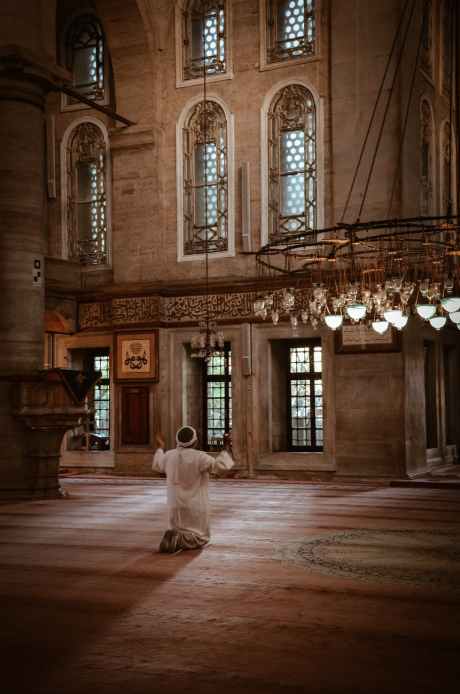
Photo by Ekrulila on Pexels.com
“Moments of great calm,
Kneeling before an alter
Of wood in a stone church”
– from “Kneeling” by R. S. Thomas, with accompanying music composed by Hilary Tann, featuring Guy Johnston
From the very moment we are born, we are moving towards stillness. Since the practice is a reflection of life (and “how we do yoga is how we do life”), it makes sense that the moment we hit the mat…we are moving towards stillness. Savasana, the seat of the corpse or Dead Man’s Pose, is the peak pose for almost every practice – even when it is not advertised as such – and despite the t-shirts, it is the pose that most often gets skipped (or shorted).
So, what are we missing?
To find out what we’re missing, let’s very intentionally and very deliberately move towards stillness. Join me on the Zoom mat, Sunday at 2:30 PM for a 65-minute practice featuring the poetry of R. S. Thomas (b. 3/29/1913), a man once described as ” a poet of…the unanswered prayer, the bleak trek through darkness….”
Sunday’s playlist is already posted on Spotify and will be available on my YouTube channel. If you’re interested in the inspiration behind the music, check out this Kiss My Asana post from 2019.
### OM SHANTI SHANTI SHANTIHI OM ###
THROWBACK THURSDAY! March 26, 2020
Posted by ajoyfulpractice in Books, Buddhism, Changing Perspectives, Depression, Dharma, Faith, Fitness, Gratitude, Healing Stories, Hope, Karma Yoga, Life, Loss, Love, Minneapolis, Music, Mysticism, One Hoop, Pain, Passover, Philosophy, Poetry, Religion, Robert Frost, Suffering, Tantra, Tennessee Williams, Texas, Traditional Chinese Medicine, Tragedy, Twin Cities, Wisdom, Writing, Yoga.Tags: chesed, Counting of the Omer, inspiration, kabbalah, Life, Love, loving-kindness, Robert Frost, Tennessee Williams, truth, yoga
4 comments
“Lonely . . . When so many are lonely as seem to be lonely, it would be inexcusably selfish to be lonely alone.”
– Don Quixote in the Prologue to Camino Real by Tennessee Williams (b. 3/26/1911)
Just because we are alone – and in some cases lonely – is not a reason to go it alone. Tennessee Williams wrote, “For time is the longest distance between places.” “Throwback Thursday” is a way to look back, but we can’t actually go back in time, we can’t bridge that distance of which Williams speaks. We can, however, bridge the physical distance of social isolation by reaching out (virtually speaking, of course).
Call, text, email, write a letter, make a chalk drawing, or use any of a variety of technological advances to connect to a stranger or a friend. Remember, we are all in this together – and we will succeed or fail based on how we are together, even when we are apart. Remember, in A Streetcar Named Desire, Blanche DuBois says, “I always depended on the kindness of strangers.” Right now, we are all Blanche…but we are also those strangers.
Love/ loving-kindness (chesed in Hebrew) is an aspect of the Divine. In fact, not only is it one of the ten ways (according to Jewish mysticism) that G-d is revealed to the world, it is one of the 7 aspects people contemplate if they are counting the Omer during Passover. Just like in Eastern philosophies, like yoga, Kabbalism associates loving-kindness with the arms (specifically, the right arm). As you go through your practice – or through your day – bring awareness to how you use your right arm. Are you using it to express your heart or withhold your heart?
“(1) If I could speak all the languages of earth and of angels, but didn’t love others, I would only be a noisy gong or a clanging cymbal. (2) If I had the gift of prophecy, and if I understood all of God’s secret plans and possessed all knowledge, and if I had such faith that I could move mountains, but didn’t love others, I would be nothing. (3) If I gave everything I have to the poor and even sacrificed my body, I could boast about it; but if I didn’t love others, I would have gained nothing.”
– 1st Corinthians 13:1 – 3 (the part just before all the “famous parts” people use in weddings, movies, and songs)
Consider, for a moment, that when Saint Paul and Sosthenes wrote their letter to the church in Corinth, before they spoke of what love was, they spoke of what love was not. This is very similar to passages which appear in the Upanishads, ancient Sanskrit texts, where a teacher – and then his spouse – point out that the Divine is not this or that (neti, neti) thing that is so obvious. The Divine is not (just) what is obviously seen, but what is unseen, what is felt. (Yes, yes, but neti,neti: this is not the throwback you’re looking for.)
We can never really know how much it means to someone when we do something nice for them simply out of the kindness of our hearts. They can say thank you a million times – and we may even feel the sincerity of their gratitude – and yet that feeling pales in comparison to the love they felt from the kindness.
“Something we were withholding made us weak
Until we found out that it was ourselves
We were withholding from our land of living,
And forthwith found salvation in surrender.”
– excerpt from the poem “The Gift Outright” by Robert Frost (b. 3/26/1874)
While I am not teaching today (Thursday), I am going to spend part of today and Friday updating my schedule to reflect streaming classes I will start offering Saturday – Wednesday.
Right now I am planning to offer seven (7) classes on Zoom. These are (mostly) during times when I had studio classes and they will be (mostly) open for anyone to attend. You can purchase or renew a package on my online store or you can make a donation to Common Ground. (Donations are tax deductible and I will receive the bulk of the donation.)
I want you to practice; so don’t let any financial issues be an obstacle you can’t get over! If you need it, I got you. Yoga means union.
### BETTER & BETTER ###
When Somethin’s Not Right It’s Wrong March 19, 2020
Posted by ajoyfulpractice in 108 Sun Salutations, Baha'i, Buddhism, Changing Perspectives, Hula Hoop, Life, Loss, Love, Meditation, Minneapolis, Minnesota, Music, Pain, Religion, Suffering, Surya Namaskar, Twin Cities, Wisdom, Yoga.Tags: Alvin & the Chipmunks, Andy Greene, Bob Dylan, Equinox, meditation, Rolling Stones, Spring, Vernal, yoga
5 comments
“I’ve seen love go by my door
It’s never been this close before
Never been so easy or so slow
I’ve been shooting in the dark too long
When somethin’s not right it’s wrong
You’re gonna make me lonesome when you go”
– “You’re Gonna Make Me Lonesome” by Bob Dylan (covered by Shawn Colvin, Elvis Costello, Miley Cyrus (with Johnzo West) and a host of other artists)
Happy Spring Everyone! Also, I offer many blessings to those of you who are finishing the 19-Day Bahá’i Fast, and many blessings to all.
Thursday is normally my day off – unless I’m subbing prenatal yoga – and a great day for me to work on my own seated meditation practice. I had planned on posting some meditation audio recorded by my friend-who-is-my-twin; however, as I ran into some technical issues getting Wednesday’s video ready, I’m a little behind schedule.
But, fear not! I still have something fun for you! In addition to being the Spring Equinox, today is a special day for Bob Dylan fans. Today (March 19th) in 1962, Bob Dylan released his self-titled debut album. As Andy Greene points out in a 2012 Rolling Stones article, Bob Dylan’s Bob Dylan came out when everybody – and I mean, everybody – was doing the twist. So, dust off your favorite Bob Dylan vinyl, add a cover (or two) of Bob Dylan songs made famous by other artists, and either practice some twists – open twists if you’re pregnant; do the twist; or (in honor of the Vernal Equinox) practice 108 Sun Salutations.
“I see my light come shining
From the west down to the east
Any day now, any day now
I shall be released”
– “I Shall Be Released” by Bob Dylan (covered by Nina Simone, The Band, and a host of other artists)
### (THIS, ALL THIS, IS) “TO MAKE YOU FEEL MY LOVE” ###
A Prize-Winning Solution March 18, 2020
Posted by ajoyfulpractice in Books, Buddhism, Changing Perspectives, Depression, Faith, Gratitude, Healing Stories, Hope, Life, Loss, Love, Meditation, Men, Minneapolis, Minnesota, Music, One Hoop, Pain, Poetry, Religion, Suffering, Tragedy, Uncategorized, Vipassana, Yoga.Tags: Alison McGhee, discernment, Franz Wright, heart, Hope, kindness, loneliness, Poetry, yoga
1 comment so far
“I am in no way different from anyone else, that my predicament, my sense of aloneness or isolation may be precisely what unites me with everyone.”
– Franz Wright
It seems very fitting to me, somehow, that what we sometimes think of as one of the hardest days of the week – Hump Day – during this first week of major league social distancing coincides with the anniversary of the birth of a man who wrote about isolation, loneliness, longing, and death intersecting with kindness, love, faith, and hope. If you are not familiar with Franz Wright, born today (3/18) in 1953, then you might be interested to know that he is the son-half of (I believe) the only father and son to win Pulitzer Prizes in the same category and that Chicago Tribune critic Julia Keller once described one of his collections as being “ultimately about joy and grace and the possibility of redemption, about coming out whole on the other side of emotional catastrophe,” while Denis Johnson supposedly compared his poems to “tiny jewels shaped by blunt, ruined fingers – miraculous gifts.” I know, that’s a lot to take in (and you might need to read that Va. Woolf-like sentence again). The thing is; I think we are in the middle of a Franz Wright poem. So, brace yourself.
I first came across Wright’s poem “Solution” in a 2015 blog post written by Alison McGhee, a New York Times bestselling author who writes and teaches up the street from me. In the post (which I strongly recommend), McGhee wrote about an encounter she had with someone best described as her exterior opposite. Yet the interior movements of the heart, all of our hearts, are ultimately the same – something both McGhee’s short post and Wright’s poem illustrate bluntly, beautifully, and miraculously.
Franz Wright’s “Solution” is something we could all use right now.
“What is the meaning of kindness?
Speak and listen to others, from now on,
as if they had recently died.
At the core the seen and unseen worlds are one.”
Wright’s poems are full of natural spirituality and that oftentimes “heartbreaking human conflict between religion and spirit. The final line of the poem reminds me of 2 Corinthians 4:18 where Saint Paul wrote, “So we fix our eyes not on what is seen, but on what is unseen, since what is seen is temporary, but what is unseen is eternal.” NOTE: The New Living Translation translates this passage as “So we don’t look at the troubles we can see now; rather, we fix our gaze on things that cannot be seen. For the things we see now will soon be gone, but the things we cannot see will last forever.”
PRACTICE NOTES:
Start seated or lying on your back. As your move through your practice today, focus on what is unseen. What are you feeling in your heart, in your mind, in your body? How does what you feel move, shift, and change as you inhale – and, especially, as you exhale? Is what distracts you from this present moment seen or unseen, temporary or eternal? At one point in your body (or mind) does everything – including your breath – overlap and become one?
Prior to this week, Wednesdays were one of my busy days, because I would teach three (3) classes in three (3) different locations: a 60-minute YIN Yoga practice, a 60-minute open-level vinyasa practice, and a 60-minute “slow flow” vinyasa practice. My “Franz Wright inspired” sequences would be heart, lung (as Wright died of lung cancer), and core focused, with some emphasis on arm movements and position since arms are an extension of the heart chakra and also contain the heart and lung meridians.
As I am not currently able to post three (3) different practices, the YIN Yoga link above directs you to a Bernie Clark playlist on YouTube. I have posted a 60-minute vinyasa playlist (see here or below) for anyone who wants it and will email a Soma Yoga/Vinyasa practice to people who normally attend the studio classes.
(This is freely given and freely received. I do not own the rights to these songs, but highly encourage you to buy them!)
“Soon, soon, between one instant and the next, you will be well.”
– from “Nude with Handgun and Rosary by Franz Wright
### OM SHANTI SHANTI SHANTIHI OM ###
ENDLESS POSSIBILITIES: 2019 Kiss My Asana Offering #17 (on Day 28) April 29, 2019
Posted by ajoyfulpractice in 31-Day Challenge, Books, Buddhism, Changing Perspectives, Dharma, Healing Stories, Karma Yoga, Love, Meditation, Minneapolis, Minnesota, Music, Poetry, Twin Cities, Writing, Yoga.Tags: Bhujangasana, Cobra Pose, inspiration, KISS MY ASANA, Mind Body Solutions, Poetry, poetry month
add a comment
The
(slightly belated) “practicepreview” below is part of my offering for the 2019 Kiss My Asana yogathon. I encourage you to set aside at least 5 minutes a day during April, to practice with today’s theme or concept as inspiration. You can practice in a class or on your own, but since the Kiss My Asana yogathon raises resources as well as awareness, I invite you to join me at a donation-based class on May 4th.I also challenge you to set aside a certain amount every day that you practice with this concept/theme in mind. It doesn’t matter if you set aside one dollar per practice or $25 – set aside that amount each time you practice and donate it by April 30th.
Founded by Matthew Sanford, Mind Body Solutions helps those who have experienced trauma, loss, and disability find new ways to live by integrating both mind and body. They provide classes, workshops, and outreach programs. They also train yoga teachers and offer highly specialized training for health care professionals. By participating in the Kiss My Asana yogathon you join a global movement, but in a personal way. In other words, you practice yoga. Or, as this year’s tag line states….
do yoga. share yoga. help others.
***
What I’ve seen in my lifetime –
and in the last few days, weeks, years
is that us human beings:
We’re capable of anything.
We are full
of possibilities.
BIG possibilities…and little possibilities
Great acts of LOVE / great acts of hate
We can CREATE. Or destroy.
It’s all the same energy – I think /
it’s all about how we CHANNEL it.
It’s a choice. &
To choose PEACE requires WISDOM.
– MKR, April 2019
April is one of my favorite months – not because of the weather, the coming flowers, or even because of the opportunity to Kiss My Asana. (Although, let’s be real, Kiss My Asana in April does make April rock!) No, I love April because ever since 1996, April is National Poetry Month. Organized by the Academy of American Poets, National Poetry Month is a celebration of poetry…all poetry…every kind of poetry, and every kind of poet. The organizers say, “[I]t has become largest literary celebration in the world with schools, publishers, libraries, booksellers, and poets celebrating poetry’s vital place in our culture.”
If you go to poets.org (see link above), you will find official events, poems, and opportunities to read, write, and share poems. They actually have a list of “30 more ways to celebrate” – which means you could celebrate poetry every day, possibly in more than one way.
Over the years, I’ve celebrated poetry month in different ways. One of my favorite ways to celebrate combines my love of poetry with my love of music and yoga: a poetry-themed yoga class featuring music inspired by poems. Depending on when Easter and Passover fall, I can sometimes offer (at least) one poetry celebration for all of the classes I teach. Sometimes it’s an “April is Poetry Month” class, featuring a playlist of different music and poets. Other times, if a poet’s birthday falls in April, the class only features music related to the birthday poet and/or their poetry. (But, let’s be real, I do birthday poets all year long!)
As we finish out the 6th Annual Kiss My Asana yogathon and another April full of poetry, I’m going to finish up my online offerings with some of my poetry playlists. First up: “April is Poetry Month.” (This is an extend playlist featuring poems set to music and songs that sample poems. Psalm 23 as the music for Savasana.)
FEATURED POSE for April 16th: Cobra Pose (Bhujangasana)
Spend a moment in stillness. You can be in any pose; however, you want to make sure you are comfortable and that your spine is extended and that you feel balanced on the left and right side of your spine. Notice how the vertebrae of the spine stack one on top of the other. Check in with your breath. Begin to extend as you inhale and engage your core and pelvic floor as you exhale. So that your inhale creates space and your exhale supports that created space. Make sure you’re not slumping on the exhale. No matter your position, roll the shoulders down and back – squeezing the shoulder blades together – and notice how that affects the front of your chest. Let your mind settle into your heart, knowing that wisdom is a heart practice.
You can warm-up the spine with Cat/Cow or Cat/Puppy. Moving one-breath-one-movement, the heart lifts on the inhale and the spine rounds (flexes) on the exhale for Cat/Cow. For Cat/Puppy, the heart lifts on the inhale and the spine stays long as you flex at your hips and sink the hips to the heels on the exhale. This warm-up can be done in a seated position, a standing position, or on hands and knees.
To move into Cobra Pose (literally “seat of the snake”), you need to lie down flat on your belly. This is not a prenatal friendly position. If you are pregnant, you could modify Cobra Pose by placing a bolster or blankets underneath the thighs (ensuring that your baby-belly is not compressed). Other options include standing and using the wall as you would use the floor (again, not compressing the baby-belly) or picking a different back bend (like Camel or Cow). Whichever choice you make, you always want to be mindful with back bends so that you do not hyper-extend the belly.
Once you are on your belly (or have arranged props for a prenatal variation), straighten out the legs and point the toes behind you. Place the hands directly under the shoulders – so the elbows bend back and squeeze in like grasshopper legs. Make sure the elbows are behind the back, not squeezing into the ribs. (NOTE: There is a “Baby Cobra” variation in some styles of yoga where the hands are in front of the shoulders. However, that is not the variation I am describing.) From toes to hips, squeeze the legs together as you inhale. Engage your core and pelvic floor as you exhale. Next time you inhale, press the feet, the pubic bone, and the hands down in order to lift the heart and ribs off the mat. Look up, but do not over extend your neck. Make this pose a poem about your foundation and your core – not a poem about the strength of your arms.
Roll the shoulders down and back to push the heart forward. Make sure you are not compressing your low back. Keep breathing. After about 6 breaths, exhale and lower down to your prep position.
Once you have the basic shape and engagement, there are lots of possibilities. You can practice Cobra Pose with your arms hovering off the mat or you could isometrically engage the arms and pull your heart forward by engaging your arms as if you are lying on a skateboard and propelling your body forward. This will be isometric engagement, because the arms engage as if you are moving, but your arms don’t move. Another option is to extend your cobra: Press down and lift up until the arms straighten. Again, shoulders are down and back, hands are under the shoulders even when you extend. Keep the front hip bones on the mat even if you extend your Cobra Pose.
If you want to practice Cobra with some movement, “Bowing Cobra” can be done with the nose and forehead lowering straight down on the exhale (and then inhale to lift back up) or turn your head to one side when you exhale. If you turn your head on the exhale, lift back up to center on the inhale and then turn the opposite cheek to the mat on the exhale. A “Writhing Cobra” is similar to a “Bowing Cobra” except that you start with your head turned so that right cheek is on the mat and as you inhale you look up and lift up on the left, move your head/eyes from left to right during the same inhale so that you lower down on the right side when you exhale. During the exhale, your head/eyes complete the circle so that you end up lifting up on the left when you inhale. After 3 – 5 circles, reverse the circles and writhe in the other direction.
Once you finish practicing Cobra Pose, move into Child’s Pose or Puppy Dog. If you want to stay off of your knees, you can lie on your back with legs stretched out of knees hugging into your chest. After a few breaths, finish with Corpse Pose (Savasana) or return to your starting pose – sitting, kneeling, standing, or lying on your back or belly. Scan your body and settle into your breath.
### NAMASTE: The poem in me honors and appreciates the poem that is also inside you. ###
CH-CH-CHANGES, LIKE A RIVER: 2019 Kiss My Asana Offering #8 April 8, 2019
Posted by ajoyfulpractice in 31-Day Challenge, Abhyasa, Books, Buddhism, Changing Perspectives, Confessions, Daoism, Depression, Dharma, Donate, Faith, Food, Gratitude, Healing Stories, Health, Hope, Karma, Karma Yoga, Life, Loss, Love, Meditation, Men, Minneapolis, Minnesota, Music, Mysticism, One Hoop, Pain, Peace, Philosophy, Religion, Suffering, Uncategorized, Vairagya, Vipassana, Yoga.Tags: Buddha, Buddha's Birthday, cherry blossoms, Heraclitus of Ephesos, inspiration, Japan, KISS MY ASANA, Life, Mind Body Solutions, sakura, space, truth
add a comment
The “practice preview” below is part of my offering for the 2019 Kiss My Asana yogathon. I encourage you to set aside at least 5 minutes a day during April, to practice with today’s theme or concept as inspiration. You can practice in a class or on your own, but since the Kiss My Asana yogathon raises resources as well as awareness, I invite you to join me at a donation-based class on April 27th or May 4th.
I also challenge you to set aside a certain amount every day that you practice with this concept/theme in mind. It doesn’t matter if you set aside one dollar per practice or $25 – set aside that amount each time you practice and donate it by April 30th.
Founded by Matthew Sanford, Mind Body Solutions helps those who have experienced trauma, loss, and disability find new ways to live by integrating both mind and body. They provide classes, workshops, and outreach programs. They also train yoga teachers and offer highly specialized training for health care professionals. By participating in the Kiss My Asana yogathon you join a global movement, but in a personal way. In other words, you practice yoga. Or, as this year’s tag line states….
do yoga. share yoga. help others.
***
“πάντα ρεῖ “ (“panta rhei “ everything flows or everything to the stream)
– Greek philosopher Heraclitus of Ephesos (c. 535 BCE – c.475 BCE)
“Earth to earth, ashes to ashes, dust to dust”
– excerpt from funeral service in The Book of Common Prayer
Shift happens…all the time. Or, as the Greek philosopher Heraclitus once put it, “Everything changes and nothing remains still…you cannot step twice into the same stream.” Recognizing the temporal nature of everything, including ourselves and our experiences, can be very helpful. However, it seems to be human nature to resist change and, in doing so, deny that change is happening – which, as the Buddha pointed out, creates suffering.
(Thus) have I heard that Prince Siddhartha Guatama of India was born into a family of great wealth and great privilege. As pointed out at the beginning of this series, Siddartha means “one who has accomplished his goal” or “one who has achieved his aim” and – as far as his family was concerned his dharma (or goal) was to one day take over as ruler of his father’s lands. (The title “Buddha,” which means “Awakened One,” would come later in his life.)
Siddhartha knew nothing of pain and nothing of suffering, having been shielded from the existence of sickness and death, until the age of 29. Upon seeing the suffering of others, his life trajectory changed and he renounced the life he knew in order to find a path that would alleviate suffering. At the age of 35, tradition tells us, he articulated The Four Noble Truths:
- Suffering exists
- Suffering is caused by attachment, clinging, craving
- There is an end to suffering
- The Noble Eightfold Path is the way to end suffering
In some traditions of Buddhism, understanding and accepting these four noble truths is the key to waking up and there are a number of practices specifically designed to bring awareness to change happening every time you inhale, every time you exhale. In fact, the very act of sitting and watching the breath can illuminate the Four Noble Truths and the temporal nature of our existence.
The history of Japan and Japanese culture is full of change. Depending on where you look you may find an acute juxtaposition between accepting change, keeping a tradition (without change), and actually celebrating change. For example, most of the Buddhist world celebrates the Buddha’s birthday on May 8th or a day determined by a lunar calendar. Many temples in Japan, however, started celebrating on April 8th every year, when the country switched over to the Gregorian calendar in 1873. During the Flower Festival, which is the birthday celebration, people will pour a sweet tea made from fermented hydrangea leaves over where small statues of the Buddha.
For an example of people celebrating change, look no further than the sakura (cherry blossom) season that is beginning. The Cherry Blossom Festivals that are currently kicking off (or ending, depending on the region) is completely separate from the Flower Festival associated with the Buddha’s birthday.
Sakura usually begin blossoming in the southern part of Japan and, over a matter of weeks, eventually blossom across the whole island. However, by the time the blossoms peak in the North they are already out of season in the South. The delicate flowers literally blow away like dust in the wind. For the heart and mind to hold the beauty of the moment when the flowers peak, with the awareness (and sadness) that the moment is already passing, is known as mono no aware (literally, “the pathos of things”). Mono no aware may be translated as “empathy towards things,” but there’s really no set words in English to express the feeling of wonder (“the ahhness”) inextricably tied to the longing and deep sadness that accompanies loss. This is what is – and yet, without some kind of mindfulness practice it is easy to separate the two sensations or to be so overwhelmed by the twin emotions that we focus on one to the complete exclusion of the other. Focusing on what feels good and appealing, while avoiding what doesn’t feel good results in more suffering. It also creates suffering when our longing for what has passed causes us to miss what is. (Not to mention, it causes us to continuously confront the illusion that we can go back to a moment in time, in the same way we think we can cross the same river twice.)
If you look at the history of sitting in Japan, you will also find lots of change – and sometimes a resistance to change. What is now commonly considered the proper way to sit in Zen Buddhism, as well as in day-to-day life, is seiza (which literally means “proper sitting”). Seiza is kneeling so that the big toes overlap (right over left) and then sitting on the heels. Women are taught to sit with the knees together, while men may be taught to spread the knees a little. In the modern times, this type of sitting is ubiquitous and considered respectful; however, prior to the mid 14th century and up to the late 16th century it was consider proper and respectful to either sit with legs to the side or cross-legged. Cross-legged was, in fact, the preference for many warriors as it was believed that a cross-legged position would not hinder a samurai if they needed to draw their sword.
“The way up and the way down are one and the same. Living and dead, waking and sleeping, young and old, are the same.”
– Greek philosopher Heraclitus of Ephesos (DK22A1)
In the physical practice of yoga, the “proper way to sit” is in way that is stable and comfortable enough for you to focus on your breath. Notice that in Yoga Sutra II.46 (broken down in yesterday’s post) Patanjali uses the words sukham asanam which can be translated as “dwelling in a good space.” The flip side of a good space is dukha “a bad space” – or, more acutely, “a space of suffering.” As you move into this next pose, make sure you are not dwelling in a space of suffering.
FEATURED POSE for April 8th: Auspicious or Gracious Pose (Bhadrasana)
Auspicious Pose or Gracious Pose (Bhadrasana) appears in classical texts like Gheranda Samhita (c. 17th century) as a pose similar to seiza. In more modern texts it is depicted as a Bound Angle Pose (Baddha Konasana). Either variation can be in the beginning, middle, and/or the end of a practice. In fact, if you are doing a variety of poses today, you can return to your Auspicious pose the way your return to Downward Facing Dog, or Equal Standing, and notice was changed or shifted.
For the classical variation, be mindful of the knees and hips as you come to your hands and knees and bring the tips of the big toes to touch. Spread the knees as wide as you are able and then sit back on your heels. If there is a lot of pressure on the knees, sit on a block or blanket. You may also need a blanket or towel under the feet for this variation.
For the second variation, bring your feet together, like a prayer, in front of your hips (rather than behind). This variation is easier on the knees and feet. You may still need to sit up on a blanket or block. Especially if the hips are tight, you slump into the low back, and/or the knees are up higher than the hips. In this variation you can also adjust the feet (bring them closer in or further out) to bring more ease to the knees.
You can sit up tall with the hands resting on the thighs. Another option, which is very nice for the shoulders, is to lift your heart up (into the beginning of a backbend) and cross the hands behind the back so that you can grab the toes, the heels, or (if your feet are in front) the opposite hip. Make sure you are not leaning back, but instead are arching your chest up. Be mindful that you are not straining or compressing the low back.
If you have unregulated blood pressure issues, let your breath flow naturally in and ebb naturally out. If you find you are holding your breath or panting, ease out of the pose. If you are in overall good health, and they are in your practice, you can add your bandhas.
Dwell in this good space (sukha asama) until you have to move out of it (because it has become the “bad space” ( dukkha asanam). Be mindful that you ease out of the pose with the same awareness you used to get into it. Find some gentle, micro-movements to release the joints.
(Click here if you do not see the video.)
### NAMASTE ###
PRACTICE, PRACTICE, PRACTICE; SOMETHING’S COMING: 2019 Kiss My Asana Offering #6 April 6, 2019
Posted by ajoyfulpractice in 31-Day Challenge, Abhyasa, Bhakti, Books, Buddhism, Dharma, Donate, Faith, Fitness, Food, Gandhi, Gratitude, Healing Stories, Health, Hope, Karma, Karma Yoga, Life, Loss, Love, Mantra, Maya Angelou, Meditation, Men, Minneapolis, Minnesota, Music, One Hoop, Pain, Peace, Philosophy, Suffering, Tragedy, Uncategorized, Vairagya, Yoga.add a comment
The “practice preview” below is part of my offering for the 2019 Kiss My Asana yogathon. I encourage you to set aside at least 5 minutes a day during April, to practice with today’s theme or concept as inspiration. You can practice in a class or on your own, but since the Kiss My Asana yogathon raises resources as well as awareness, I invite you to join me at a donation-based class on April 27th or May 4th.
I also challenge you to set aside a certain amount every day that you practice with this concept/theme in mind. It doesn’t matter if you set aside one dollar per practice or $25 – set aside that amount each time you practice and donate it by April 30th.
Founded by Matthew Sanford, Mind Body Solutions helps those who have experienced trauma, loss, and disability find new ways to live by integrating both mind and body. They provide classes, workshops, and outreach programs. They also train yoga teachers and offer highly specialized training for health care professionals. By participating in the Kiss My Asana yogathon you join a global movement, but in a personal way. In other words, you practice yoga. Or, as this year’s tag line states….
do yoga. share yoga. help others.
***
“Practice, practice, practice; all is coming.”
– Sri Pattabhi Jois
“sa tu dīrgha kala nairantairya satkārā asevito dŗdha bhūmih ” (YS 1.14)
sa that (practice)
tu and, but, definitely
dīrgha kala long time
nairantairya continuously, without interruption
satkārā with devotion, sincerity, respect, reverence,positivity
asevito cultivated, attended to
dŗdha-bhūmih with stable , solid foundation, rooted, firmly-grounded
One of the most succinct and brilliant commentaries on Yoga Sutra 1.14 came from Sri Pattabhi Jois, who introduced one of the first vinyasa practices to the West. The Primary, Intermediate, and Advanced forms of the Ashtanga practice are an established set of sequences intended to be practiced consistently and in a way that allows the practitioner to build a practice from the ground up.
Since the beginning of the year, we have been building a practice from the ground up (On Saturdays) using Course I of B. K. S. Iyengar’s Light on Yoga as physical inspiration. During the last part of the summer, I usually spend a few Saturdays breaking down and exploring the Ashtanga Primary Series. Anyone familiar with the two forms will notice, as I hope people will this summer, that what Iyengar refers to as “Important Poses in Course I” looks a lot like the Primary Series. This is no coincidence. Even though they were coming to the practice from different perspectives – Iyengar was a sickly child when he started; Jois was a robust teenager – they practiced with the same teacher and at the same time. Given that biographical context, it makes sense that certain poses consistently practiced result in a mastery of those poses.
However, in the Yoga Sutras, Patanjali barely mentions the physical practice of yoga. Additionally, he doesn’t just suggest consistent practice. He explicitly states that results come from practicing consistently, without interruption, and with devotion /respect/reverence for the practice. But, if he’s not talking about (or not only talking about) being able to do challenging poses on the mat, what is coming?
“[The world] is a wonderful place only when we have a positive mind. For someone with a confused, negative mind, the world is chaotic and ugly….
What is more important than understanding the dynamics of this powerful mind and keeping it healthy, organized, and sharp? What is more urgent than protecting it from inner unrest and stupor? What should take precedence over preventing our mind from being consumed by fear, anger, jealousy, greed, and endless cravings?”
– from The Secret of the Yoga Sutra: Samadhi Pada by Pandit Rajmani Tugunait, PhD
In the mid-1880s, the British East India Company (and then the British government) enacted a series of salt taxes, which made it illegal to produce or possess salt without paying a tax. By 1930, that tax represented 8.2% of the British Raj tax revenue – and it meant that even if you lived in a coastal town like Dandi, you had to pay the tax, or suffer the consequences. Mohandas Karamchanda Gandhi decided salt would be the focus of one of a direct action, non-violent mass protest. When questioned about using salt as the focal point of his satyagraha, Gandhi said, “Next to air and water, salt is perhaps the greatest necessity of life. It is the only condiment of the poor. Through this injustice, the British exploit the starving millions, the sick, the maimed, and the utterly helpless. The salt tax constitutes the most inhuman poll tax that the ingenuity of man can devise.”
From Wednesday, March 12th until Saturday, April 5th, 1930, Gandhi walked over 240 miles so that he could reach the sea shore in Dandi in order to break an unjust law. He woke up in Dandi, on Sunday, April 6th, prayed and illegal made salt at 6:30 AM. The satyagraha against the salt tax would continue for almost a year. It would, ultimately, be one of the inspirations for Civil Rights Movement in the United States and would be one of the first times that women were actively involved in a protest in India.
Over 60,000 Indians (including Gandhi) would be jailed before it was all said and done. But, when Gandhi began the march he was only accompanied by 78 men devoted to truth (satya).
“Truth (satya) implies love, and firmness (agraha) engenders and therefore serves as a synonym for force. I thus began to call the Indian Movement satyagraha, that is to say, the Force which is born of Truth and Love or non-violence, and gave up the use of the phrase “passive resistance” in connection with it, so much so that even in English writing we often avoided it and used instead the word “satyagraha.”
Even though thousands would join them, the 78 men who started the march with Gandhi (and many who would join in along the way) were people who practiced a dedication to ahimsa (non-violence/non-harming) and satya (truth). Since Gandhi once said, “God is Truth” and another time said “Truth is God,” there was also a commitment to recognizing a day-to-day awareness of a higher purpose, meaning in life, and supreme consciousness. This is one way to look at bramacharya. Finally, along with the business and logistics of the campaign, people participating in the march had to sleep outside, often wore a single white garment, and were dependent on villagers along the way to provide food and water for them to wash up. This means they practiced aparagraha (non-attachment), saucha (cleanliness), santosha (contentment), and tapas (discipline/austerity). They chanted and sang devotionals to keep their spirits up, which can also be a way of practicing isvarapranidhana (releasing one’s efforts back to the source). All told, the satyagrahis actively practiced all five (5) of the yamas (external restraints/universal commandments) and four (4) of the five (5) niyamas (internal observations) which make up the ethical component of the philosophy of yoga.
One could argue that, since people had to consider their feelings on the subject and make the decision to join the movement, they were also practicing svadyaya (self-study), which is the niyama I did not include above. Either way, the practice of Gandhi and the first 78 men set the tone for the movement. They were steeped in a way of life and a way of thinking that enabled them to respond rather than to react and to work towards change without being attached to the results. More than anything, the legacy of the salt satyagraha was, according to Jawaharalal Nehru (who would go on to become India’s first Prime Minister) how it changed the mindset of the Indian populace.
“But the real importance, to my mind, lay in the effect they had on our own people, and especially the village masses…Non-cooperation dragged them out of the mire and gave them self-respect and self-reliance…They acted courageously and did not submit so easily to unjust oppression; their outlook widened and they began to think a little in terms of India as a whole.”
– Jawaharal Nehru
Fast forward to the United States in the 1960’s and you, again, see the agency given to the people through a faith-driven, grassroots movement. Fast forward to today and we see lots of grassroots efforts and lots of agency being given to the people. But, very little of it is firmly-grounded in a practice.
“How you do yoga is how you do life.” – my first yoga teachers
I sometimes parrot my first yoga teachers because I see the value of what they taught – forward and back; because, how we do life is also how we do yoga. If we show up without reverence and discipline we become careless and we may hurt ourselves or we hurt others. If we practice from a point of being selfish, we become more selfish. If we are attached to a certain outcome, we may miss opportunities to learn and grow – and we are more likely to give up on the practice (and ourselves) at the first setback or struggle.
On the flip side, if we practice with an understanding of how we are connected to the universe (and all beings in the universe), if we understand that there is a purpose to every inhale and every exhale, and if we are focused, then we see the practice building up. If we are honest with ourselves about where we are physically and mentally, on any given day, we can be mindful and honor our limitations with grace. If always do our best and always let go our efforts, we find that we are also letting go of the struggle. Peace is coming.
FEATURED POSE for April 6th: Corpse Pose, (Savasana)
Savasana is, quite possibly, the most important part of a physical practice. Literally “Seat of the Corpse,” it marks the end, or the death, of the practice. It is more than an opportunity to relax, release, and rest. It is also an opportunity to integrate the efforts of the mind-body-spirit and, in doing so, maintain integration of the mind-body-spirit. It is an opportunity to let go of our efforts and let our bodies and minds absorb the work we’ve done. It is an opportunity to trust that – having planted, watered, fertilized, and otherwise nourished our seeds – something bountiful and pleasant will come to fruition. Both the Hebrew Bible and the Christian New Testament indicate that [we] shall reap what [we] sow; however, what is often overlooked is that in this context, “sow” is what we will be given or what we have earned. There is, absolutely, benefit to resting when you need to rest and if the body is so relaxed that you fall asleep well then…your body and mind are telling you that you need more sleep. The thing to keep in mind is that savasana, like all the other poses, is a seat and gives you an opportunity to focus, concentrate, and even mediate on a single point of focus.
To reach the point where you can turn inward and withdraw your senses from the external is a large part of the practice. A large part of that sense withdrawal (pratyahara), which is the fifth limb of yoga, is the ability to keep bring your mind back to your point of focus whenever it drifts away (or, whenever you start drifting off). This is the practice.
Set a timer for 5 – 15 minutes, depending on what else you’ve done as part of this practice.
Lie down on your back with arms by your sides and legs stretch out. If the low back (or anything else) is not comfortable with the legs extended flat on the floor, place something under the thighs so that the back relaxes. Place the arms by the hips, palms up. If this is not comfortable you can, again, place something under the arms or place the hands palm down on your hips. Make whatever micro-movements you need to make in order to be still and find balance on either side of your spine. Close your eyes, if that is comfortable for you, and gaze at something that’s not moving (e.g., your third eye, your heart center, or the tips of your nose).
Allow the back of the head and the shoulders to be heavy. Allow the elbows and the hands to be heavy. Allow the hips and the hills to be heavy. As the heavy parts sink down and become grounded, let your eyes and your checks soften. Relax your jaw and shoulders. Swallow so that you can relax your throat. Starting with 10, count backwards on the exhales and let every exhale be an opportunity to relax, release, rest. Once you reach 1, let the breath naturally flow in and ebb out. Mentally watch the breath as if you are a guard at a castle gate: watch the breath come in through the nose; know how it feels. Watch the breath come out of the nose; know how it feels.
When your times goes off, take your time move out of the pose and then to make your way to a seated position.
Click here if you can’t see the video.

