Old and New Commandments April 9, 2020
Posted by ajoyfulpractice in 7-Day Challenge, Bhakti, Books, Changing Perspectives, Dharma, Donate, Faith, Fitness, Food, Gratitude, Healing Stories, Health, Hope, Japa, Japa-Ajapa, Karma Yoga, Lent / Great Lent, Life, Loss, Love, Mala, Mantra, Meditation, One Hoop, Pain, Passover, Philosophy, Poetry, Religion, Suffering, Traditional Chinese Medicine, Wisdom, Writing.Tags: 613, chesed, Counting of the Omer, Exodus, kabbalah, KISS MY ASANA, Love, loving-kindness, Marcus J Freed, Marian Anderson, Matthew Sanford, Passover
add a comment
“Oh, the gospel train is coming
I hear it just at hand
I hear the car wheels rumbling
And rolling thro’ the land”
– “The Gospel Train (Get On Board),” a traditional Negro Spiritual sung by Marian Anderson on the steps of the Lincoln Memorial, April 9, 1939*
Thursday, April 9, 2020, marks the first full day of Passover in the Jewish tradition and, for Roman Catholics and Western Christians, it marks Maudy Thursday (also known as Holy Thursday). Judaism and Christianity are tied together, historically, as they are both Abrahamic religions. They are also connected, historically, because Jesus was a Jewish teacher, a rabbi, who spent the last week of his life observing Passover and preparing for what only he knew was coming: the Crucifixion and Resurrection. What people believe and how they practice their faiths can seem so different that it’s easy to forget they are connected. Pay attention to the details, however, and you will notice there’s a whole lot of hand washing and feet washing during today’s observations.
During a Passover Seder, when Jewish people commemorate their ancestors’ exodus from slavery in Egypt, they wash their hands before and after the story of exodus is told through the lens of four questions. The first time, hands are washed without a blessing; the second time, hands are washed with a blessing. Like everything else in the Seder, even the name and the questions, the hand washing is crucial and symbolic.
The Hebrew word “Seder” means “order, procedure.” Just like in our yoga practice, everything happens in a very specific order that tells the story of the people, of their faith, and of their exodus. Symbols are used to engage not only the numerically young children at the table, but also those who are spiritually young and may not have studied the Torah. For example, the elements of the four questions (leavened vs. unleavened bread; all vegetables vs. bitter herbs; dipping the herbs in brine or vinegar and also in a sweet paste; eating in a variety of positions vs. eating in a reclining position) are symbolic of how quickly people fled when given the chance to escape Egypt; the bitterness of slavery; the sweat and tears of the enslaved people, as well as the bricks-and-mortar the enslaved were forced to build; and the luxury and privilege implied in eating in a reclining position – as if one has not a care in the world. The symbolic nature of the different aspects of the observation means that the ritual is both a mental experience and a visceral experience. Still, it’s easy to overlook the hand washing, even though it’s in the Bible.
“For Aaron and his sons shall wash their hands and their feet thereat: Whenever they enter the tent of meeting, they shall wash with water so that they will not die. Also, when they approach the altar to minister by presenting a food offering to the LORD, they shall wash their hands and feet so that they will not die. This is to be a lasting ordinance for Aaron and his descendants for the generations to come.”
– Exodus 30:19 – 30:21 (NIV)
In the Eastern philosophies (like yoga) and religions (like Judaism) arms and hands are recognized as extensions of the heart. They are how we reach out to others, embrace others, embrace ourselves, and even embrace a moment. We use our hands and arms to build the world around us. We also use our hands and arms to love one another, or not, and to defend or support what we love (or not). Two of the aspects of the Divine (found on the Tree of Life) are love (chesed) and strength (gevurah). Furthermore, Jewish mysticism identifies these elements of the Divine as being embodied by the right and left arms, respectively. It is no accident then, nor is it only an element of good hygiene, that hands are washed before handling the sacred food. In fact, in the Hasidic tradition, “Water represents the healing power of wisdom. Water flows downward, carrying its essential simplicity to each thing. It brings them together as a single living, growing whole. We pour water over our hands as an expression of wisdom pouring downward passing through our heart and from there to our interaction with the world around us.”
Of the 613 commandments within the Jewish tradition, at least 21 – 27 are directly related to the observation of Passover, the Seder, the Counting of the Omer (which begins on the second night of Passover), and Shavuot (which begins at the end of the Counting of the Omer). The Last Supper (or suppers, depending on who you ask) is acknowledged as Jesus’ last meal and the source of the Eucharist or Holy Communion in Christian faiths. While the one of the four Canonical Gospels (John) places Passover after Jesus’s death, the Synoptic Gospels (Matthew, Mark, and Luke) present The Last Supper as a Passover Seder. Therefore, it would make sense that Jesus – a Rabbi, a teacher, long before he was considered by some to be the Messiah – would make sure everyone washed their hands, twice during the Seder. It’s part of the Law, part of the Commandments. What is interesting is that before the Seder, Jesus washes the feet of his disciples. This is one of the events commemorated by some Christians on Maundy Thursday.
You may recall that one of the events of Spy Wednesday, the day before Maundy Thursday, is Mary of Bethany washing Jesus’ feet with expensive oil (and even before that, a woman offering hospitality by washing Jesus’ feet with her tears and hair). The occasion with Mary, theoretically, causes Judas to betray Jesus for 30 pieces of silver. In John, Judas leaves (after what will be Jesus last meal) and Jesus prepares to wash the feet of the remaining disciples. When Simon Peter objects, Jesus tells him three particularly noteworthy things:
“If I wash thee not, thou hast no part with me.” (John 13:8, KJV )
“Know ye what I have done to you? Ye call me Master and Lord: and ye say well; for so I am. If I then, your Lord and Master, have washed your feet; ye also ought to wash one another’s feet. For I have given you an example, that ye should do as I have done to you.” (John 13:12 – 15, KJV )
“A new command I give you: Love one another. As I have loved you, so you must love one another. By this everyone will know that you are my disciples, if you love one another.” (John 13:34 – 35, KJV)
The word “Maundy” comes to us, by way of Middle English and Old French, from a Latin word that means “command, order” and while it may be associated with the ritual of washing the feet of a saint, showing hospitality, or preparing a body for burial. The command or order associated with this Thursday before Easter is that “new command,” which John reiterates in 15:12 and 15:17. It is a sentiment echoed by one of the last things Jesus says on the cross, when he connects his own mother with one of his disciples as if they are mother and son.
Sunset on Thursday night marks the beginning of the Counting of the Omer in Jewish mysticism (Kabbalism). The Counting of the Omer is a 49-day observation which reflects the days the freed Jews were in the desert and segues into the commemoration of the people receiving the Torah. When people observe the Counting of the Omer there is an extra element of prayer, of offering, and also contemplation on two connected elements of the Divine (from the Tree of Life). The first night the connect elements are Chesed She b’Chesed (Lovingkindness in Lovingkindness).
Even though it is a completely different tradition, my offering to you on this Thursday, April 8th, is a Metta (Loving-Kindness) Meditation:
May you be safe and protected
May you be peaceful and happy
May you be healthy and strong
May you have ease and well-being, today and always.
If you are interested in combining a physical practice (yoga or weightlifting) with the Counting of the Omer, you can purchase a copy of Marcus J. Freed’s The Kabbalh Sutras: 49 Steps to Enlightenment. Meanwhile, I will upload a guided Metta Meditation on my YouTube channel and post information about how you can offer a little metta to yourself by way of Yin Yoga (April 15th) and mo’ metta to Mind Body Solutions and their adaptive yoga programs by way of the Kiss My Asana yogathon (beginning April 25th).
Founded by Matthew Sanford, Mind Body Solutions helps those who have experienced trauma, loss, and disability find new ways to live by integrating both mind and body. They provide classes, workshops, and outreach programs. They also train yoga teachers and offer highly specialized training for health care professionals. This year’s yogathon is only a week long. Seven days, at the end of the month, to do yoga, share yoga, and help others. By participating in the Kiss My Asana yogathon you join a global movement, but in a personal way. In other words, you practice yoga… for 7 days.
That’s plenty of time to Kiss My Asana!
You don’t need to wait until the end of the month, however, to consider how you might participate. Start thinking now about how you can add 5 minutes of yoga (or meditation) to your day, how you can learn something new about your practice, or even how you would teach a pose to someone close to you – or even to one of your Master Teachers/Precious Jewels.
To give you some ideas, consider that in past years my KMA offerings have included donation-based classes and (sometimes) daily postings. Check out one of my previous offerings dated April 9th (or thereabouts):
30 Poses in 30 Days (scroll down to see April 9th)
A Musical Preview (scroll down to see March 9th)
A Preview of the April 9th Practice
* NOTE: Despite what is initially said in the introduction, Marian Anderson’s performance on the steps of the Lincoln Memorial on April 9, 1939 was made possible by First Lady Eleanor Roosevelt and President Franklin D. Roosevelt after the Daughters of the American Revolution refused the use of Constitution Hall for a concert with an integrated audience.
### MAY ALL BEINGS EVERYWHERE BE HAPPY & BE FREE ###
So Much That Is Holy On April 8th April 8, 2020
Posted by ajoyfulpractice in 7-Day Challenge, Abhyasa, Bhakti, Books, Buddhism, Changing Perspectives, Depression, Dharma, Donate, Faith, Gratitude, Healing Stories, Health, Hope, Karma Yoga, Lent / Great Lent, Life, Loss, Love, Mala, Maya Angelou, Music, Mysticism, One Hoop, Pain, Passover, Peace, Philosophy, Poetry, Religion, Suffering, Tragedy, Vairagya, Wisdom, Writing.Tags: asana, Buddha, Hanumanasana, Holy Week, inspiration, KISS MY ASANA, Lent / Great Lent, Moses, Passion Wednesday, Spy Wednesday, Suffering, truth, vinyasa, yoga
add a comment
“And how many times can a man turn his head
And pretend that he just doesn’t see – the answer
The answer, my friend, is blowin’ in the wind
The answer is blowin’ in the wind”
– “Blowin in the Wind” sung by Joan Baez, lyrics by Bob Dylan
Every year, I say that May 1st is one of the hardest working days of the year, because so many people use that day to celebrate so many things. That being said, this year, April 8th may be the most revered day of the year as it coincides with several religious or philosophical observations: Spy Wednesday in the Roman Catholic and Western Christian traditions, the beginning of Passover (at sunset) in the Jewish tradition, Hanuman Jayanti in some Hindu traditions, and the Buddha’s birthday in some culturally Buddhist traditions (specifically in parts of Japan). These observations don’t always stack up like this since different traditions and cultures base their holy days on different calendars. This year; however, the super pink moon shines over the world in a way that is uniquely auspicious.
I am always up for a good auspicious story, one that is simultaneously inspiring and enlightening, and a reason to practice the splits. The question is: How do we honor so much in the short amount of time that is a 60-minute class? That’s an especially tricky challenge when some of these are not even remotely connected on paper. The answer, of course, is to find the common denominator.
When considering different people’s experiences with the divine – or even what is best in mankind – we start with what is universal to the human experience: doubt and fear, passion/suffering, faith, and change. Everything changes and, in moments of great suffering – in moments when we doubt and fear ourselves and those around us – it is important to have faith in the fact that things will change. That faith can, sometimes, bring hope – and the power of hope is another common denominator. But, let’s step back for a moment and consider doubt and fear plus passion/suffering.
“It’s not the case that when there is the view, ‘The soul & the body are the same,’ there is the living of the holy life. And it’s not the case that when there is the view, ‘The soul is one thing and the body another,’ there is the living of the holy life. When there is the view, ‘The soul & the body are the same,’ and when there is the view, ‘The soul is one thing and the body another,’ there is still the birth, there is the aging, there is the death, there is the sorrow, lamentation, pain, despair, & distress whose destruction I make known right in the here & now.”
– from Cula-Malunkyovada Sutta: The Shorter Instructions Malunkya (translated from the Pali by Thanissaro Bhikkhu)
The Buddha (whose birthday is celebrated in May by some traditions) said that he taught only two things: suffering and the end of suffering. In fact, the Four Noble Truths outline exactly that. “I have heard” two parables the Buddha used to differentiate between (physical) pain and (mental) suffering. Both parables also point to the ways in which we can alleviate our own suffering.
In one parable, a man is shot with a poisoned arrow. As the poison enters the man’s bloodstream, he is surrounded by people who can and want to help him, to save his life. The problem is that the man wants to know why he was shot. In fact, before the arrow is removed he wants to know why he was shot, by whom he was shot, and all the minutia about the archer and their life. While the information is being gathered, the poison is moving through the man’s body; the man is dying. In fact, the man will die before he has the answers to all his questions.
In another parable, a man is shot by an arrow (no poison this time) and then, in the very next breath, the man is shot by a second arrow. The Buddha explains that the first arrow is physical pain, and we can’t always escape or avoid that. The second arrow, however, is the mental suffering (or pain) that is caused when “the uninstructed run-of-the-mill person sorrows, grieves, & laments, beats his breast, becomes distraught.” How we respond to moments of pain and suffering determines how much more pain and suffering we will endure.
“How many ears must one person have
Before he can hear people cry?
And how many deaths will it take ’till he knows
That too many people have died?
The answer, my friends, is blowin’ in the wind
The answer is blowin’ in the wind”
– “Blowin in the Wind” lyrics by Bob Dylan
When we look the observations that are happening around the world today (Wednesday, April 8th) from the perspective of the human experience (instead of looking at them from the perspective of cultural or historical differences), we find they are more alike than different. In these stories there are two recognized teachers of wisdom (Jesus and the Buddha) and two heroes who lack confidence in their own ability to shine and help to save others (Hanuman and Moses). All four experience great suffering. All four have great faith (although, arguable in the Buddha’s case, not in G-d, whatever that means to you at this moment). All four are known for their devoted service to their community. All four are the unlikely heroes in stories about freedom from suffering. All four are sources of great inspiration.
Finally, all four offer very practical lessons related to what we are all experiencing right now. If you’re interested in the stories, the lessons, and a little bit of the splits, join me for one of the following Wednesday yoga practices on Zoom:
4:30 PM – The Nokomis Yoga class is a 60-minute, open-level vinyasa practices using vinyasa karma, which means we will move with the breath and progress in intensity as we make our way to a final and/or peak pose. All are welcome!
7:15 PM – The Flourish class is a 60-minute “Slow Flow,” with the same elements found in the open-level vinyasa practice. This class requires registration, but all are welcome.
The playlist for Wednesday is available on YouTube and Spotify.
As Zoom has changed some security protocols, please use the link on the “Class Schedules” calendar if you encounter any access problems. During this quarantine experience, you can make a donation through Common Ground Meditation Center, which operates on dana/generosity, or you can purchase a package on my Squarespace. Either option can be applied to any class. If you are worried about finances, do not add this to your worry list – I got you, just come to the virtual practice.
Speaking of our virtual practice, Kiss My Asana, the yogathon that benefits Mind Body Solutions and their adaptive yoga program is coming online at the end of this month. Founded by Matthew Sanford, Mind Body Solutions helps those who have experienced trauma, loss, and disability find new ways to live by integrating both mind and body. They provide classes, workshops, and outreach programs. They also train yoga teachers and offer highly specialized training for health care professionals. This year’s yogathon is only a week long. Seven days, at the end of the month, to do yoga, share yoga, and help others. By participating in the Kiss My Asana yogathon you join a global movement, but in a personal way. In other words, you practice yoga… for 7 days.
You can totally do that!
You don’t need to wait until the end of the month, however, to consider how you might participate. Start thinking now about how you can add 5 minutes of yoga (or meditation) to your day, how you can learn something new about your practice, or even how you would teach a pose to someone close to you – or even to one of your Master Teachers/Precious Jewels.
To give you some ideas, consider that in past years my KMA offerings have included donation-based classes and (sometimes) daily postings. Check out one of my previous offerings dated April 8th (or thereabouts):
30 Poses in 30 Days (scroll down to see April 8th)
A Musical Preview (scroll down to see March 8th)
A Preview of the April 8th Practice
“And what is declared by me? ‘This is stress,’ is declared by me. ‘This is the origination of stress,’ is declared by me. ‘This is the cessation of stress,’ is declared by me. ‘This is the path of practice leading to the cessation of stress,’ is declared by me. And why are they declared by me? Because they are connected with the goal, are fundamental to the holy life. They lead to disenchantment, dispassion, cessation, calming, direct knowledge, self-awakening, Unbinding. That’s why they are declared by me.
“So, Malunkyaputta, remember what is undeclared by me as undeclared, and what is declared by me as declared.”
– from Cula-Malunkyovada Sutta: The Shorter Instructions Malunkya (translated from the Pali by Thanissaro Bhikkhu)
Happy, happy birthday, to three amazing women – two of whom I know (and you know who you are) and one of whom is Barbara Kingsolver, today’s featured poet!
### LOKAH SAMASTHAH SUKHINO BHAVANTU ###
Passion, Talents, & Happy Warriors Shine on a Tuesday April 7, 2020
Posted by ajoyfulpractice in 7-Day Challenge, Bhakti, Books, Buddhism, Changing Perspectives, Depression, Dharma, Donate, Faith, Gratitude, Healing Stories, Health, Hope, Karma Yoga, Lent / Great Lent, Life, Loss, Love, Meditation, Music, One Hoop, Pain, Peace, Philosophy, Poetry, Religion, Suffering, Tragedy, William Wordsworth, Wisdom.Tags: adaptive yoga, Bhagavad Gita, hatha yoga, Holy Tuesday, KISS MY ASANA, Mind Body Solutions, parables, Passion Tuesday, Passion Week, William Wordsworth, yoga
1 comment so far
Yoga Sutra 1.36: viśokā vā jyotişmatī
– “[the part that is] free from sorrow and/or infused with inner light cultivates steadiness [of the mind]”
“One’s personal duty in life (one’s sva-dharma) should be viewed as one’s responsibility to his or her highest Self, the Atma. This ultrahigh level of duty carries with it the requirement that one never does anything that is contrary to this True Self Within. And even if you consider your sva-dharma more narrowly from the standpoint of being true to your profession, you should not hesitate to fight. For a warrior, war against evil, greed, cruelty, hate, and jealousy is the highest duty.”
– Krishna speaking to Arjuna (2.31) in The Bhagavad Gita: A Walkthrough for Westerners by Jack Hawley
We all have gifts, talents. Doesn’t matter if you believe you’ve been given them or if you’ve cultivated them, you have them. So, the question becomes: what are you doing with those talents? Right here, right now, it may seem like there is nothing you can do. And yet, and yet, so many in the world are doing what they can do. Sometimes we see people’s efforts on display in a way that seems so bright it is nearly blinding. Other people’s light shines in a way that is more subtle. It’s not dimmer, mind you, it’s just not as obvious. Some people shine in the light.
It’s easy to discount those lights that intermingle, because we don’t always recognize how much dimmer, darker, life would be without them. One example of this is all the people doing their jobs right now, despite how often in the past we’ve taken them for granted. Another example is related to all the celebrities leading fundraising events, donating money, mobilizing resources, and just spending some time literally sharing their talents. While our perceptions of these two (2) groups may be (often is) different, what they are doing for us right now, is the same. They’re keeping their inner lights on and inspiring us to do the same.
Furthermore, watching different celebrities rise to the occasion during this pandemic makes me think of all the “regular people” who give celebrities their status, their fame, and their fortune. This is one of the times celebrities give back. They do not give back alone; however, because for every millions of dollars or hundreds of hours that someone famous gives there is someone we may not every hear about who is also giving.
And the impact is bigger, and the light is brighter.
Except, of course, when we don’t let our light shine. Except, of course, when we bury our talents.
“Not doing the right thing when it is required is worse than doing the wrong thing.”
– Krishna speaking to Arjuna (2.33) in The Bhagavad Gita: A Walkthrough for Westerners by Jack Hawley
Every one of us has a reason why we don’t do something we could be doing right now. Yes, there are people not honoring “stay home” mandates, but that’s not the part I’m thinking about right now. Right now, I’m thinking about the people who have had dreams in their hearts and ideas in their heads, but no time to pursue those dreams or engage those ideas. Right here, right now, I’ve been thinking about all the “Master Classes,” all the books, all the podcasts, and all the research that can be done. Right now, I’m thinking about people who can’t do what they were doing (work-wise) right now, for a variety of reasons, and who may be feeling the weight of the darkness.
If you are feeling the weight of the darkness, now is the time to get up and get ready to shine. Now is the time, to put your lights on. Almost all of the reasons you had (for not doing what is in your heart and in your head) are actually null and void. Life is different now. There is no reason, however, to suffer in the darkness. Be the light.
Even if you’ve hit the wall, consider what you need to get over it (under, or around it). Because I guarantee you that someone you know needs you to shine, because they too have hit that wall (and they need a little light to get over it, under it, or around it).
You have time. You have resources. If you are reading this, or listening to this, or someone tells you about this, you have an engraved invitation to get started. That’s all you need to do right now: take that first step. (Or take that second step you’ve been putting off.)
Prepare yourself for the moments after this worldwide quarantine is done. Life will be different when this is behind us. We may not know for sure what our new normal will be, but we don’t have to passively receive it. We can actively engage our lives and how we want to live it… even in isolation, choose the light.
“For the person of steady mind, Arjuna, there is always just one decision, but for the quivering mind pulled in a thousand directions, the decisions that plague it are endless, and they exhaust one’s mental strength. People with an unsteady mind inevitably end up failing; those with an unwavering mind achieve great success.”
– Krishna speaking to Arjuna (2.41) in The Bhagavad Gita: A Walkthrough for Westerners by Jack Hawley
Today (Tuesday the 7th), is Passion Tuesday or Holy Tuesday in the (Western) Christian and Roman Catholic traditions. It is also the anniversary of the birth of the poet William Wordsworth. If you are interested in hearing a couple of parables and practicing some “happy warriors,” please join me for one of the Nokomis Yoga practices on Zoom, today (Tuesday, April 7th) at 12:00 PM – 1:00 PM or at 7:15 PM – 8:30 PM. The playlist for Tuesday is available on YouTube and Spotify.
As Zoom has changed some security protocols, please use the link (here) or on the “Class Schedules” calendar if you encounter any access problems. During this quarantine experience, you can make a donation through Common Ground Meditation Center, which operates on dana/generosity, or you can purchase a package on my Squarespace. Either option can be applied to any class. If you are worried about finances, do not add this to your worry list – I got you, just come to the virtual practice.
Speaking of our virtual practice, Kiss My Asana, the yogathon that benefits Mind Body Solutions and their adaptive yoga program is coming online at the end of this month. Founded by Matthew Sanford, Mind Body Solutions helps those who have experienced trauma, loss, and disability find new ways to live by integrating both mind and body. They provide classes, workshops, and outreach programs. They also train yoga teachers and offer highly specialized training for health care professionals. This year’s yogathon is only a week long. Seven days, at the end of the month, to do yoga, share yoga, and help others. By participating in the Kiss My Asana yogathon you join a global movement, but in a personal way. In other words, you practice yoga… for 7 days.
What can you do, share, give?
You don’t need to wait until the end of the month, however, to consider how you might participate. Start thinking now about how you can add 5 minutes of yoga (or meditation) to your day, how you can learn something new about your practice, or even how you would teach a pose to someone close to you – or even to one of your Master Teachers/Precious Jewels.
To give you some ideas, consider that in past years my KMA offerings have included donation-based classes and (sometimes) daily postings. Check out one of my previous offerings dated April 7th (or thereabouts):
30 Poses in 30 Days (scroll down to see April 7th)
A Musical Preview (scroll down to see March 7th)
A Preview of the April 7th Practice OR (A Preview of the 2019 Passion Tuesday Practice)
### WE’VE GOT THIS ###
Passion & Salt on a Monday April 6, 2020
Posted by ajoyfulpractice in 7-Day Challenge, Abhyasa, Bhakti, Buddhism, Changing Perspectives, Confessions, Dharma, Donate, Faith, Fitness, Food, Gratitude, Healing Stories, Health, Hope, Japa, Japa-Ajapa, Karma Yoga, Lent / Great Lent, Meditation, Minneapolis, Minnesota, Music, Pain, Peace, Philosophy, Poetry, Religion, Suffering, Texas, Twin Cities, Wisdom, Writing.Tags: asana, detox flow, hatha yoga, Holy Monday, KISS MY ASANA, lymph, Matthew Sanford, Passion Monday, yoga
2 comments
“Sometimes, however, we do things – or don’t do things – that sap our energy and drag us down. If our mind-bodies are temples, then the things that sap our energy are like thieves in the temple. Thieves can be eating the wrong foods; drinking too much of the wrong beverages and/or not drinking enough water; not resting; not exercising; partaking in illicit drugs; not managing stress; and/or being surrounded by negative opinions. Doesn’t matter what they are though, because at some point we have to throw the thieves out of the temple in order to restore the temple to its original purpose.”
– me, blogging about Passion/Holy Monday in 2019
Sometimes I feel like the embodiment of an Adam Ant song: “Don’t drink, don’t smoke, what do you do?” Well, I do a lot of yoga. That doesn’t mean, however, that I don’t have my vices. I have a bit of a sweet tooth (cue the laughter from my friends) and while I endeavor to stick to really good quality chocolate, or pastries without a lot of preservatives, I have been known – not often, but occasionally – to grab what’s handy. And then, the suffering ensues. Because, as much as I love it, processed sugar is not our friend and when you mix it with a bunch of additives it might as well be one of the deadlier vices.
Years ago, on one of my busiest days, I was feeling lethargic, hungry, and a little spacey, but I still had one more class to teach. Rather than choose wisely and do something I knew would be helpful, but would take a bit of time, I went for the quick fix: chocolate, but not the good kind. One of the lifeguards at the Blaisdell Y saw me pull my poor choice out of the vending machine and asked if my students knew I ate stuff like that. I shrugged and said I was only going to eat half. Needless to say, I ate it all. While I felt “better” in the short term, the next morning I woke up feeling awful. I felt like I had thieves in my personal temple.
“And Jesus went into the temple of God, and cast out all them that sold and bought in the temple, and overthrew the tables of the moneychangers, and the seats of them that sold doves,” (Matthew 21:12 KJV)
“And said unto them, It is written, My house shall be called the house of prayer; but ye have made it a den of thieves.” (Matthew 21:13 KJV)
– The Gospel According to Matthew
When we don’t treat our mind-bodies as respected temples, we suffer and are sometimes not able to do the things we need and want to do. Even if you’re getting some exercise, resting, and drinking a lot of water, the very nature of our current world quarantine is full of all the things that get us out of balance: extra sitting around, lack of routine, poor eating choices, stress, and isolation. When we get out of balance, we need more of something to get back into balance. Sometimes we need more rest, sometimes more water, sometimes more movement.
I will often refer to the fact that our bodies are mostly water as a reason why movement feels good. We are meant to flow and slosh all that salty water around a little. It’s a great visual, and it’s true on a certain level; however, there are even more scientific reasons why it’s good to stay active. One of those reasons is our lymphatic system.
The lymphatic system is a vital part of our immune system. It helps keep us healthy by providing proteins and other nutrients to healthy cells, while simultaneously brushing away dead, damaged, and infected cells. It also maintains the balance of fluid between the blood and tissues, as well as aiding in the absorption of fats and fat-soluble nutrients. Unlike the cardiovascular system, however, the lymphatic system does not have its own pump. If we want lymph to bring nutrients to healthy cells and also brush/rinse away dead or damaged cells, we have to move our bodies. Any kind of movement is helpful, especially if it engages the whole body. Most physical practices of yoga engage and move your whole body in a very systematic way. So, you could say that the physical practice of yoga almost always has an element of detoxification. There are, however, certain poses and sequences that are considered detoxifying in nature.
Today, Monday, April 6th, is Passion Monday or Holy Monday in the Roman Catholic and Western Christian traditions. It is the last Monday of Lent, which is a period of fasting and prayer within the aforementioned traditions. Part of the Passion Week or Holy Week observation is to remember the stories and parables associated with the last week of Jesus’ life. The story I most closely associate with this day is the story of Jesus throwing the thieves out of the temple and then having his authority questioned.
Lent and Easter are movable feasts, meaning Passion Monday does not always fall on April 6th as it does this year. April 6th is the anniversary of the end of Mahatma Gandhi’s Salt Satyagraha, a 24-day march to protest the British Salt Tax. On that Sunday morning in 1930, Gandhi prayed, raised a handful of salty mud and proceeded to break the law. He said, “With this, I am shaking the foundations of the British Empire” – which, according to the Gospels, is pretty much what Jesus did when he returned home for Passover and found the temple all awry.
If you are available and interested in a little detox flow and storytelling, please join me for the Common Ground Meditation Center yoga practice on Zoom, today (Monday, April 6th) at 5:30 PM – 7:45 PM.
As Zoom has changed some security protocols, please use the link (here) or on the “Class Schedules” calendar if you encounter any access problems. During this quarantine experience, you can make a donation through Common Ground Meditation Center, which operates on dana/generosity, or you can purchase a package on my Squarespace. Either option can be applied to any class. If you are worried about finances, do not add this to your worry list – I got you, just come to the virtual practice.
There is no music for this practice. However, I have included a couple of songs from my Passion Monday playlist and my April 6th playlist, which you will find below the Kiss My Asana highlights. That’s right; Kiss My Asana, the yogathon that benefits Mind Body Solutions and their adaptive yoga program is coming at the end of this month. Consider all the information above about the importance of movement and then consider the challenges to staying healthy when your ability to move requires the assistance of other people.
Founded by Matthew Sanford, Mind Body Solutions helps those who have experienced trauma, loss, and disability find new ways to live by integrating both mind and body. They provide classes, workshops, and outreach programs. They also train yoga teachers and offer highly specialized training for health care professionals. This year’s yogathon is only a week long. Seven days, at the end of the month, to do yoga, share yoga, and help others. By participating in the Kiss My Asana yogathon you join a global movement, but in a personal way. In other words, you practice yoga… for 7 days.
Are you ready to move?
You don’t need to wait until the end of the month, however, to consider how you might participate. Start thinking now about how you can add 5 minutes of yoga (or meditation) to your day, how you can learn something new about your practice, or even how you would teach a pose to someone close to you – or even to one of your Master Teachers/Precious Jewels.
To give you some ideas, consider that in past years my KMA offerings have included donation-based classes and (sometimes) daily postings. Check out one of my previous offerings dated April 5th (or thereabouts):
30 Poses in 30 Days (scroll down to see April 6th)
A Musical Preview (scroll down to see March 6th)
A Preview of the April 6th Practice OR (A Preview of the 2019 Passion Monday Practice)
Music for a Passion Monday practice
Music for a Salt Satyagraha practice
### OM OM AUM ###
Holy April 2020 April 5, 2020
Posted by ajoyfulpractice in 7-Day Challenge, Baha'i, Bhakti, Buddhism, Changing Perspectives, Donate, Faith, Gratitude, Healing Stories, Hope, Karma Yoga, Lent / Great Lent, Loss, Mysticism, One Hoop, Pain, Passover, Peace, Ramadan, Religion, Suffering, Wisdom.Tags: April, holidays, KISS MY ASANA, Lent / Great Lent, Palm Sunday, Ramadan, Religion, shibboleth, social distancing, yoga
3 comments
“For where two or three are gathered together in my name, there am I in the midst of them”
– Matthew 18:20
When I was growing up in the church(es) down South, I heard it all the time, “we are gathered here today” – and not just for weddings. For a minister or a preacher to mention that we were gathered was to remind us WHY we were together. It was an implied invocation, just as it is intended in Matthew 18:20. It is also a bit of a shibboleth.
West Wing fans will smile and tell you they understand, if not the word, at least the modern lesson: that being able to pronounce the word correctly was a password of sorts that distinguished one Tribe of Israel from another. Nowadays that meaning also extends to shared-experiences, like hearing or thinking the words “we are gathered here today” and imagining a Western wedding…or a tent revival.
Etymologist, linguists, rabbis, and Hebrew scholars will smile and nod, and perhaps point out that the Hebrew word itself refers to “ear of grain” or “the part of the plant that contains the grain.” So, when you sow (or plant) it is with the intention of reaping (or harvesting) the sibbolėt.
Sometimes, however, we miss the point – and start focusing on the word instead of the harvest or the fruits of our labor.
For weeks, months, (even a year for some), people have been getting ready for this month (and even for this time next year). This year, April brings all the things I mentioned in an earlier post, plus a plethora of religious and spiritual holidays. In fact, for many people around the world this month marks their holiest times – even though they are of different faiths from each other.
However, it’s not only the month that these different faiths have in common this year. From Chaitra Navaratri and Rama Navami to Hanuman Jayanti (in Hindu traditions); from 2 different Holy Weeks and Easter (in the Roman Catholic/Western Christian and the Eastern/Greek Orthodox traditions) to Passover (in the Jewish tradition) and Ramadan (in the Muslim tradition); from celebrations of the Buddha’s birth (in April and in May) to Sikhs celebrating the beginning of their faith with Vaisakhi and Baha’I commemorating Ridván, all of these holy celebrations are traditional observed in community. This year, of course, there’s an extra test of faith as people are figure out how to observe their faith and, simultaneously, practice social distancing.
Or not; because the reality is that some will not observe social distancing and that decision will come with consequences.
Those outside of a certain faith may not understand the compulsion of tradition and faith. Those within a certain faith may not understand what is most important. What is the grain? What is the original intention? Did Jesus say you couldn’t gather on Zoom or YouTube? (I’m asking for friends.)
“Who may ascend the mountain of the Lord? Who may stand in his holy place?
The one who has clean hands and a pure heart, who does not trust in an idol or swear by a false god.”
– Psalm 24:3-4
At the beginning of Lent, I often tell the story of “a little old lady” who goes to a fast food restaurant and almost forgets that it’s Lent. I tell the story to describe something I think we are currently seeing highlighted all over the world:
There was a time when everything people did had a purpose.
Over time, some of the meaning was lost and those rituals became traditions or customs.
Over time, some more meaning was lost and those traditions just became something we do because our ancestors and elders told us it was important to do.
As more time passes, and more meaning was lost, what once had a purpose just becomes something we say. Shibboleth.
If you are available, please join me for a (Western) Palm Sunday yoga practice on Zoom, today (Sunday, April 5th) 2:30 PM – 3:35 PM CST. You can find my Palm Sunday playlist on YouTube and Spotify.
Due to security concerns, Zoom has updated their protocols and additional security measures go into place today/Sunday. One of these features means you will be in a “waiting room” until I open the virtual doors of the virtual studio.
Please check the “Class Schedules” calendar for links to upcoming classes. You can use the same Meeting ID as last week’s class, however, if you are prompted to use a password, please try using the link from the calendar. If you were unable to attend last week, check out the access details in the calendar description for Sunday, April 5th. Feel free to text or email me if you run into a problem before the class begins.
“Faith is the key
Open the doors and board them
There’s room for all
Among the loved and lost
Now there ain’t no room
For the hopeless sinner
Whose hard on mankind
Just to save his own”
– from “People Get Ready” by Eva Cassidy
Don’t forget we’re getting ready for Kiss My Asana!
Kiss My Asana is an annual yogathon, to raise awareness and resources for Mind Body Solutions and their adaptive yoga program. Founded by Matthew Sanford, Mind Body Solutions helps those who have experienced trauma, loss, and disability find new ways to live by integrating both mind and body. They provide classes, workshops, and outreach programs. They also train yoga teachers and offer highly specialized training for health care professionals.
This year’s yogathon is only a week long. Seven days, at the end of the month, to do yoga, share yoga, and help others. By participating in the Kiss My Asana yogathon you join a global movement, but in a personal way. In other words, you practice yoga… for 7 days.
Are you getting ready?
You don’t need to wait until the end of the month, however, to consider how you might participate. Start thinking now about how you can add 5 minutes of yoga (or meditation) to your day, how you can learn something new about your practice, or even how you would teach a pose to someone close to you – or even to one of your Master Teachers/Precious Jewels.
To give you some ideas, consider that in past years my KMA offerings have included donation-based classes and (sometimes) daily postings. Check out one of my previous offerings dated April 5th (or thereabouts):
30 Poses in 30 Days (scroll down to see April 5th)
A Musical Preview (scroll down to see March 5th)
A Preview of the April 5th Practice OR (A Preview of the Palm Sunday Practice)
### “LET US GO FORTH IN PEACE ###
It’s A Kiss My Asana “Flashback Friday” April 3, 2020
Posted by ajoyfulpractice in 7-Day Challenge, Abhyasa, Bhakti, Books, Buddhism, Changing Perspectives, Dharma, Donate, Faith, Healing Stories, Health, Hope, Karma, Karma Yoga, Kirtan, Lent / Great Lent, Life, Loss, Mantra, Mathmatics, Meditation, Men, Minneapolis, Minnesota, Movies, Music, Mysticism, One Hoop, Pain, Philosophy, Poetry, Religion, Suffering, Tantra, Texas, Tragedy, Twin Cities, Vairagya, Wisdom, Women, Writing.Tags: adaptive yoga, hatha yoga, Hellacopters, inspiration, Iyengar, Joseph Campbell, KISS MY ASANA, Matthew Sanford, Rip Van Winkle, Washington Irving, yoga
5 comments
“You want it bad you want it oh so much
There are some things that you should know
Some things that someone like you just cannot touch
You weep and dwell on our loss
Stand denied by the nails in the cross
And I for one you for two
Knows no one’s gonna do it for you
No one’s gonna do it for you”
– “No One’s Gonna Do It For You” by The Hellacopters
A lot of people, most people I would surmise, have a moment when they wish all the hard stuff was over – that they could just go to sleep and wake up with their problems solved. Can you imagine what that would be like right now? Can you imagine what it would be like if you fell asleep tonight and, when you woke up, all of this was over? No more pandemic, no more social distancing, no more self-quarantines.
Now, can you imagine what it would feel like if you actually slept through all of this…and woke up to find the world changed? Everyone else has lived their way into a new normal and you are just discovering that the old normal is…history.
Yes, this would make a great story – but it’s not a new story; it’s actually a very old story. It’s a story that predates all the specific details of this present moment, but a story that endures because it touches on some very basic and universal truths:
- Suffering happens (This is the first of the 4 Noble Truths from Buddhism.)
- Change happens (Or, as Heraclitus put it over 400 years BCE, “You could not step twice into the same river” – which implies that we want things to stay the same.)
- “We must be willing to get rid of the life we’ve planned, so as to have the life that is waiting for us.” (Joseph Campbell as quoted in Reflections on the Art of Living: A Joseph Campbell Companion by Diane K. Osbon)
- As much as we want it to be otherwise, “no one’s gonna do it for you.” (The hard part of adulting, and lyrics from a song by The Hellacopters.)
Just to clarify, the four (4) items above are NOT the 4 Noble Truths, but it’s no accident that they mirror them or that I’ve pulled statements from what appears to be vastly different sources. And yet, and yet…. The reason why these elements can be found in philosophy, religions, comparative mythology, and rock music (even literature and mathematics) is that they are elements of the human experience. We find them everywhere; we find them inside of ourselves.
“You must unlearn what you have learned… No. Try not. Do. Or do not. There is no try.”
– Yoda in Star Wars: The Empire Strikes Back (and a quote I used during a 2019 Kiss My Asana donation-based class)
Kiss My Asana is an annual yogathon, to raise awareness and resources for Mind Body Solutions and their adaptive yoga program. Founded by Matthew Sanford, Mind Body Solutions helps those who have experienced trauma, loss, and disability find new ways to live by integrating both mind and body. They provide classes, workshops, and outreach programs. They also train yoga teachers and offer highly specialized training for health care professionals.
This year’s yogathon is only a week long. Seven days, at the end of the month, to do yoga, share yoga, and help others. By participating in the Kiss My Asana yogathon you join a global movement, but in a personal way. In other words, you practice yoga… for 7 days.
We’re doing this, right?
You don’t need to wait until the end of the month, however, to consider how you might participate. Start thinking now about how you can add 5 minutes of yoga (or meditation) to your day, how you can learn something new about your practice, or even how you would teach a pose to someone close to you – or even to one of your Master Teachers/Precious Jewels.
To give you some ideas, consider that in past years my KMA offerings have included donation-based classes and (sometimes) daily postings. Since it’s “Flashback Friday,” check out one of my previous offerings dated April 3rd (or thereabouts):
30 Poses in 30 Days (scroll down to see April 3rd)
A Musical Preview (scroll down to see March 3rd)
A Preview of the April 3rd Practice
My next virtual practice is on Saturday. Use the same Meeting ID as last week’s class or, if you were unable to attend last week, check out the “Class Schedules” tab. You’ll find access details in the calendar description for Saturday, April 4th. I’ll post the playlists by Saturday morning.
Also, if you are interested in YIN Yoga, plan to join me and a special guest on Wednesday (April 8th) for a special webinar/mini-practice at 3 PM. Details to be announced.
“No One’s Gonna Do It For You”
### KAALI DURGE NAMOH NAMAH ###
It’s a Kiss My Asana “Throwback Thursday” April 2, 2020
Posted by ajoyfulpractice in 7-Day Challenge, Bhakti, Books, Changing Perspectives, Dharma, Donate, Faith, Fitness, Gratitude, Healing Stories, Health, Hope, Karma Yoga, Loss, Meditation, Minneapolis, Minnesota, Music, One Hoop, Pain, Poetry, Suffering, Traditional Chinese Medicine, Tragedy, Twin Cities, Wisdom.Tags: adaptive yoga, children's books, Hans Christian Andersen, hatha yoga, Healing Stories, inspiration, Iyengar, KISS MY ASANA, Rumi
2 comments
“The rest of the dojo’s floor is covered with a hard white mat. No shoes, let alone wheels, traverse this ground. This is a place where bodies tumble and twist and fall. A martial art is practiced here, and its imprint is tangible felt.
But now there is another problem. ‘Can you get down on the mat?’ Jo asks.
I pause with uncertainty. I didn’t expect to be separated from my wheelchair so quickly. ‘I can get down, but who knows about up.’
She nods and smiles. ‘Obviously, there is plenty of help around.’”
– from Waking by Matthew Sanford
Consider what your yoga practice means to you at this moment. Consider how you would experience, how you would cope, with all the changes we are experiencing, if you didn’t have a practice. Now consider what if would be like if part of your practice relied on the facilitation of other people. Many people who experienced trauma, loss, and disability – long before our current shared experience of trauma, loss, and disability – may be experiencing an interruption in their regular practice not only because brick and mortar studios are closed, but also because their practice includes being touched by other people.
Founded by Matthew Sanford, Mind Body Solutions helps those who have experienced trauma, loss, and disability find new ways to live by integrating both mind and body. They provide classes, workshops, and outreach programs. They also train yoga teachers and offer highly specialized training for health care professionals.
Kiss My Asana is an annual yogathon, to raise awareness and resources for Mind Body Solutions and their adaptive yoga program. This year’s yogathon is only a week long. Seven days, at the end of the month, to do yoga, share yoga, and help others. By participating in the Kiss My Asana yogathon you join a global movement, but in a personal way. In other words, you practice yoga… for 7 days.
We can do this, right?
You don’t need to wait until the end of the month, however, to consider how you might participate. Start thinking now about how you can add 5 minutes of yoga (or meditation) to your day, how you can learn something new about your practice, or even how you would teach a pose to someone close to you – or even to one of your Master Teachers/Precious Jewels.
To give you some ideas, consider that in past years my KMA offerings have included donation-based classes and (sometimes) daily postings. Since it’s “Throwback Thursday,” check out one of my previous offerings dated April 2nd (or thereabouts):
- 30 Poses in 30 Days (scroll down to see April 1st and 2nd)
- A Musical Preview (scroll down to see March 1st and 2nd)
- A 5-Minute Practice
- 5 Questions Answered by Yogis
- Answers to Yogis Questions
- A Poetry Practice
- A Preview of the April 2nd Practice
My next virtual practice is on Saturday. Use the same Meeting ID as last week’s class or, if you were unable to attend last week, check out the “Class Schedules” tab. You’ll find access details in the calendar description for Saturday, April 4th. I’ll post the playlists by Saturday morning.
Also, if you are interested in YIN Yoga, plan to join me and a special guest on Wednesday (April 8th) for a special webinar/mini-practice at 3 PM. Details to be announced.
### PUCKER UP, PEOPLE! ###
Sunday Stillness March 29, 2020
Posted by ajoyfulpractice in Bhakti, Changing Perspectives, Depression, Dharma, Faith, Gratitude, Healing Stories, Hope, Life, Loss, Love, Meditation, Mysticism, Pain, Peace, Poetry, Suffering, Tragedy, Wisdom, Writing, Yoga.Tags: Guy Johnston, Hilary Tann, meditation, R. S. Thomas, Sabbath, Savasana, stillness, Sunday, yoga
4 comments
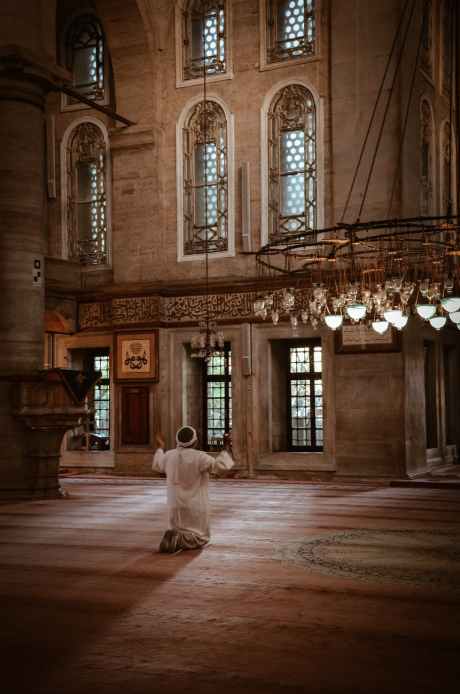
Photo by Ekrulila on Pexels.com
“Moments of great calm,
Kneeling before an alter
Of wood in a stone church”
– from “Kneeling” by R. S. Thomas, with accompanying music composed by Hilary Tann, featuring Guy Johnston
From the very moment we are born, we are moving towards stillness. Since the practice is a reflection of life (and “how we do yoga is how we do life”), it makes sense that the moment we hit the mat…we are moving towards stillness. Savasana, the seat of the corpse or Dead Man’s Pose, is the peak pose for almost every practice – even when it is not advertised as such – and despite the t-shirts, it is the pose that most often gets skipped (or shorted).
So, what are we missing?
To find out what we’re missing, let’s very intentionally and very deliberately move towards stillness. Join me on the Zoom mat, Sunday at 2:30 PM for a 65-minute practice featuring the poetry of R. S. Thomas (b. 3/29/1913), a man once described as ” a poet of…the unanswered prayer, the bleak trek through darkness….”
Sunday’s playlist is already posted on Spotify and will be available on my YouTube channel. If you’re interested in the inspiration behind the music, check out this Kiss My Asana post from 2019.
### OM SHANTI SHANTI SHANTIHI OM ###
FLASHBACK FRIDAY!! March 27, 2020
Posted by ajoyfulpractice in Art, Bhakti, Changing Perspectives, Daoism, Dharma, Donate, Faith, Gratitude, Healing Stories, Hope, Life, Meditation, Minneapolis, Minnesota, Movies, Music, Mysticism, One Hoop, Suffering, Taoism, Texas, Twin Cities, Vairagya, Wisdom, Writing.Tags: Brett Bailey, cherry blossoms, mono no aware, sakura, Shahid Nadeem, streaming yoga, World Theatre Day, yoga, Zoom
4 comments
“We gather to weep and to remember; to laugh and to contemplate; to learn and to affirm and to imagine”
– Brett Bailey, Stage Director from South Africa, World Theatre Day Message Author 2014
In As You Like It, William Shakespeare famously wrote, “All the world’s a stage, And all the men and women merely players; They have their exits and their entrances; And one man in his time plays many parts.” Art imitates life, which sometimes imitates art (because art can inform our lives). That overlap between inspiration, those being inspired, and those creating the inspiration is one of the beautiful things about art. It’s what makes art alive.
Today, however, the theatres are dark. The front of house is empty. There are no children, über-fans, or well-heeled patrons waiting in the green room, the wings, or at the stage door. On the big stages, there is only a single “ghost light” in place to make sure no one falls in the pit . . . and yet, social distancing means there is no one in danger of falling in the pit. It’s heartbreaking for so many artists and dedicated audience members, and people like me. For most of my adult life, before I started teaching yoga, my professional life was spent behind the scenes – quite literally keeping track of exits and entrances. I worked on legit theatre, musical theatre, dinner theatre, classical and modern dance, as well as opera and musical revues. I worked in different parts of the world; with artists from all of the world, and Friday night was always a big night.
Even if one company was in rehearsals or in a layoff period on Friday, another theatre was performing. Theatres are usually dark on Monday nights. Not Friday nights. Especially not this particular Friday night, as it happens to be World Theatre Day. Since it was initiated in 1961 by the International Theatre Institute, World Theatre Day has been celebrated on March 27th by performing artists all over the world. Today, many theatres will not celebrate. Others have moved their celebration online.
Each year, an artist is selected from a different host country to write a message about theatre’s enduring role in the world community. This year’s message was written by Shahid Nadeem, Pakistan’s leading playwright and the head of the renowned Ajoka Theatre, who partially focused on the spiritual and transcendental power of theatre.
“Our planet is plunging deeper and deeper into a climatic and climactic catastrophe and one can hear the hoof-beats of the horses of the Four Horsemen of the Apocalypse. We need to replenish our spiritual strength; we need to fight apathy, lethargy, pessimism, greed and disregard for the world we live in, the Planet we live on. Theatre has a role, a noble role, in energizing and mobilizing humanity to lift itself from its descent into the abyss. It can uplift the stage, the performance space, into something sacred.”
– Shahid Nadeem, Playwright from Pakistan, World Theatre Day Message Author 2020
It’s weird (and heartbreaking) to think no one in my former role will be asking people to turn off their cellular devices – unless someone jokes about the fact that so many tonight will be watching their “theatre” on their cellular devices. It’s weird (and heartbreaking) to think something I have always taken for granted is suddenly not existing as it did.
And yet, if I learned nothing else from doing live theatre, I definitely learned about the temporal nature of things. Everything changes. That’s one of the beautiful – and also one of the most challenging – things about live theatre. It is always changing. You can have the best, most exhilarating performance of your life, followed by one where everything is just a little off. You can have a horrible final dress rehearsal, followed by a standing ovation on opening night. As a professional – onstage and backstage, as well as front of house – part of the job is to stay in the moment.
Staying in the moment requires being fully present with everyone and everything in the moment. We can look back later and work on fixing what went wrong. We can marvel at the unscripted audience reaction we want to figure out how to cultivate again and again. But, right here and right now it is time to turn up the music, turn down the lights, and breathe. The curtain is going up on this day in our lives, and what happens next can be (will be) simultaneously beautiful and heartbreaking. Like the cherry blossoms (sakura).
Flashback Friday: Today in 1912, First Lady Helen Herron Taft and Viscountess Chinda Iwa, wife of the Japanese ambassador to the United States, each planted a cherry blossom tree on the north bank of the Tidal Basin in West Potomac Park. These trees were part of a larger shipment of cherry blossoms meant to replace the ones initially given as a gift of friendship between the two countries. Normally, at this time of year, thousands of people can be found in D. C. celebrating the brilliance of these trees, just as thousands normally celebrate in parts of Japan and China. Normally….But, today the cherry blossoms are in bloom, while most people are inside, watching the beauty on their screens.
In Japan the fact that blossoms peak at one end of the island at the same time the blossom season is ending on another part of the island is a great illustration of mono no aware (literally “the pathos of things” of “sadness of things”). The fact that we can see this beauty even as we are socially distancing might also be considered the “sadness of things.” However, that very literally translation doesn’t quite work in English because it almost precludes appreciation of the beauty. The Japanese phrase is about simultaneously holding/celebrating/appreciating the beauty and the pain of the change that brings loss. Please check out the following links if you are interested in reading my take on mono no aware as it relates to YIN Yoga (April 5, 2017) or the physical practice of yoga and meditation (April 8, 2019). NOTE: While both posts include a bit of practice, only the 2017 includes a complete (YIN Yoga) practice.
Right now, I am appreciating the beauty of being able to share this practice online. I am also very much aware that this too shall change; however, I endeavor to stay in the moment. With that said, I am currently planning to host 7 online classes as follows:
MONDAY 5:30 – 6:45 PM for Common Ground
TUESDAY 12:00 – 1:00 PM & 7:15 – 8:30 PM (both) for Nokomis Yoga
WEDNESDAY 4:30 – 5:30 PM for Nokomis Yoga & 7:15 – 8:15 PM for Flourish
SATURDAY 12:00 – 1:30 PM (Nokomis)
SUNDAY 2:30 – 3:30 PM (Nokomis)
Everyone is welcome to join any class (although you will need to register in advance for the Flourish class). All online classes will currently be on ZOOM and I will post the meeting IDs on my “class schedule” late Friday afternoon. Each class will have a different ID, but that ID will be the same each week.
If you are new to yoga or new to vinyasa, please send me a message (myra at ajoyfulpractice.com) before joining the group. I apologize to my YIN Yoga folks, but at this time I am not streaming any full YIN practices, I will, however, continue to post or link you to the practice.
Those who are able may purchase or renew a package on my online store. Anyone can also make a donation (in lieu of a package) to Common Ground Meditation Center. (Donations are tax deductible.) If you plan to purchase a Nokomis Package please note that there is a discounted package for students, seniors, Healthcare Providers, and First Responders.
I want you to practice; so don’t let any financial issues be an obstacle you can’t get over! If you need it, I got you.
### AS WE SAY IN BALLET, MERDE ###
It’s Bach’s Day Too! March 21, 2020
Posted by ajoyfulpractice in Abhyasa, Bhakti, Books, Buddhism, Changing Perspectives, Dharma, Faith, Fitness, Gratitude, Healing Stories, Hope, Karma, Life, Meditation, Minneapolis, Minnesota, Music, Mysticism, One Hoop, Pain, Peace, Philosophy, Suffering, Tragedy, Twin Cities, Vairagya, Wisdom.Tags: Johann Sebastian Bach, kriya yoga, Pandit Rajmani Tigunait, Philosophy, Ram Das, samadhi, Swamij, yoga, yoga sutras
5 comments
NOTE: Some embedded links connect to sites outside of this blog.
“[Music] should have no other end and aim than the glory of God and the re-creation of the soul, where this is not kept in mind, there is no true music, but only an infernal clamour and ranting.”
– Johann Sebastian Bach (b. 1685)
According to the Old Style / Julian calendar, March 21st, is the anniversary of the birth of the composer Johann Sebastian Bach. Born in 1685, Bach’s statement about music also works as a statement for yoga: ‘[Philosophically speaking, yoga] should have no other end and aim than the glory of God and the re-creation of the soul, where this is not kept in mind, there is no true [yoga], but only an infernal clamour and ranting.’ People who think of yoga only as a form of exercise are often surprised that there’s more. One can only imagine their surprise if they walk into one of my classes – especially on March 21st, when the playlist starts with Bach and then becomes a soundtrack for other events that correspond to this date in history. Imagine their further surprise when all of that is just the background to a deeper practice.
On Saturdays, I typically teach a 90-minute practice that is primarily attended by a dedicated group who are interested in the yoga philosophy as well as asana and asana philosophy. For the past few years, we’ve started in January and then we “build a practice from the ground up” physically as well as philosophically. Physically, we start with the beginning of a specific practice or sequence and either explore it for about 30-weeks before continuing to a new practice built on the original or – as we did this year – we start with a basic set of poses and start building around it. Philosophically, in years past, we have explored the 8-limbs of yoga, as well as how the 7 chakras correspond with 7 yoga paths (hatha, tantra, karma, bhakti, mantra, yantra, and jnana). Last year, we started moving through the Yoga Sūtras – which worked perfectly as there are 51 sūtras in the first chapter.
This year, we started physically moving through the warm-up and asanas that Ram Dass illustrated in Be Here Now, and just recently started using that sequence as a “finishing sequence.” (If you’ve been attending the Saturday practices and/or are familiar with the sequence, that’s your practice today.)
Philosophically, we decided to continue last year’s work and make our way through the second chapter of the Yoga Sūtras. Today, March 21st, is the 12th Saturday of 2020. I am including a bit of background for those who are just now joining this journey and a bit of last week’s commentary since so many had to miss the class. For more on the sūtras, you can check out Swami J’s website or purchase the series of books by Pandit Rajmani Tigunait, PhD – both associated with the traditions of the Himalayan Masters.
Yoga Sūtra 1.1: atha yogānuśānam
– “Right here, right now (in this auspicious moment), yoga (or union) instruction begins”
Yoga Sūtra 1.2: yogaścittavŗttinirodaha
– “Yoga (or union) ceases the fluctuations of the mind”
The first chapter of the Yoga Sūtras is the “Chapter (or, more literally, Foundation) on Concentration,” in which Patanjali began by explaining how the mind works; atha, right here, right now. In this present moment, each of our minds is processing multi-bazillion bits of information/sensation – which results in a constant fluctuation of the mind (cittavŗtti). This restlessness and agitation of the mind, in turn becomes restlessness and agitation in the body – and this becomes obstacles to the practice (or to our goals). At the same time, he explained that our thoughts fall into two (2) categories: afflicted thoughts (i.e., thoughts which cause pain) and not afflicted thoughts (which may ease pain, or at least not cause pain). Finally, Patanjali explained how to work the mind – using the mind’s own ability to concentration/meditate – in order to rest the mind and, therefore, the body.
This is why, I often say, “What happens in the mind happens in the body. What happens in the body happens in the mind. And both affect the breath.” If you take a deep breath in (right here, right now) and a deeper breath out (right here, right now), you not only bring your awareness to the present moment (right here, right now; every time you consciously inhale and every time you consciously exhale), you also, affect the body and the mind. In fact, that is one of the ten practices Patanjali described in the first chapter: focus on your breath.
Yoga Sūtra 2.11: dhyānaheyāstadvŗttayah
– “Meditation destroys the mental tendencies (associated with affliction/pain)”
The second chapter of the Yoga Sūtras is (the “Chapter (or, more literally, Foundation) on Practice. It is basically where Patanjali – way back in the 2nd, 3rd, or 4th BCE – recognized and acknowledged that everyone on the planet can’t just drop into a deep-seated meditative state. So he started explaining the elements of kriya yoga (“yoga in action”) and how the practice of training the senses, exploring within, and letting go of aversions and attractions attenuates the effect of afflicted/pain-producing thoughts. To do this, however, he first gave us a deeper understanding of how afflicted thoughts produce pain.
“Samskaras – the drivers of our mental tendencies – manifest in the form of memory. We are able to remember something because the subtle impressions related to the object have been stored in our mind. Because they are hidden beneath thick layers of the forces of time, the mind is not aware of their existence. But like a seed that lies dormant until spring brings moisture and warmth, samskaras awaken when the conditions inside and outside the mind are conducive.”
– Pandit Rajmani Tigunait’s commentary on sūtra 2.11
Using seeds as a metaphor or a simile for our thoughts, words, and deeds is a very common teaching tool. In previous weeks, the metaphor I used was a backpack containing a still soft, but sculpted, piece of clay. Let’s say you’ve molded a little figurine (whatever comes to mind) or a tiny cup; but, something causes you to place the molded clay into your backpack. For some reason, the clay stays in your backpack, getting tossed around, even a little mushed, as you go about your days. Every once in awhile you brush your finger across it when you’re looking for something and you think, “What’s that? Oh, yeah….” And whatever emotions you were feeling in relation to making the piece, or having to toss it in your bag before it was finished, flash up.
Later, you might even pull the piece of clay out, notice that it’s smashed, and decide to completely smash it and start again. Or, you may restore it to some close proximity of what you did before. Someone else could feel it or see it, or see you remolding it, and have a completely different experience, but this is your experience – and now this new layer of experience is attached to the clay, just like the oils from your skin. Even if you “buy a new backpack,” a piece of the clay finds its way inside. (YS 2.10) Unless, of course, you have “trained your senses, explored within, and given up your aversions and attractions” – in which case you can discard the clay when you switch backpacks or you can recognize what it was and decide to treat it as a fresh piece of clay ready for a new project. (YS 2.11)
Yoga Sūtra 2.12: kleśamūlah karmāśayo dŗşţādŗşţjanmavedanīyah
– “The reservoir of our actions is rooted in affliction/pain that is experienced in seen and unseen lives”
For anyone wondering: Nope, I had no idea this week’s sūtra was going to keep us firmly grounded in the “seen and unseen.” Previous translations I’ve used for comparative analysis talk about “current life and future life,” “this life and the lives to come,” and “at the time of the action or (another time).” The bottom line, though, is still the same.
All of our experiences, thoughts, words, and deeds have consequences. Some consequences occur “immediately” and we easily see the connection between cause and effect. Other times, there is the distance of time, space, memory, and/or ignorance (or lack of awareness), which causes the connection to be “unseen” by us. Yet, cause and effect is still there, and so it becomes even more important to recognize that, as Pandit Tigunait points out, “Impure karmic impressions cloud our mind with desire, greed, confusion, and anger, and become the drivers of negative, destructive actions. Pure karmic impressions create a positive mental atmosphere, awakening virtues such as love, compassion, kindness, and selflessness, which then become drivers of positive, constructive actions…. Causing intense pain to someone who is fearful, diseased, or stingy engenders a highly, negatively charged karmic reality. Betraying someone who trusts you or harming a high-caliber soul committed to intense austerity also engenders a highly potent negative karmic reality. This potent negative karma ripens quickly.”
We don’t always have control over our circumstances, but we always have control over our actions (thoughts, words, and deed). We don’t, however, make decisions in a vacuum. Part of the practice is recognizing that our current actions are informed by our previous experiences, thoughts, words, and deeds – and that what we do in this moment is going to inform what happens to us (and what we do) in our next moments… even if those moments are years away.
2023 Note: This post has been slightly revised to clean-up a type-o (or three) and some syntax.

