“Your last Monday Yin Yoga class was the best class I’ve experienced in a long time. Today’s class was almost just as good. Is it possible to get a list of poses from last Mon, or, might you have a repeat of the class sometime & I could make a list of the poses?
By the way, the Yin classes are more frequently & for longer periods lowering my neuropathy pain in my feet. Thanks for your medicinal touch.”
– G
Yin Yoga has its roots in Traditional Chinese Medicine, which maps out the vitality of the body’s organs through a system of meridians located in the deep tissue of the body. As we move into spring, my Yin Yoga classes are focusing on the gall bladder Meridian (running down the outer perimeter of the body) and liver Meridian (running up the inner thigh) – which means lots of hip opening.
The long, prop-supported holds (typically, 3 – 5 minutes) in Yin Yoga may appear similar to poses in a restorative practice; however, Yin Yoga can be significantly more “intense” than a restorative practice. By “intense,” I don’t mean active. In fact, Yin Yoga is, in some ways, the opposite of our other Hatha Yoga (physical yoga) practices. Rather than addressing the outer musculature (the muscles we can see, shape, and tone), Yin Yoga addresses the body’s fascia, deep tissue, and connective tissues. The practice may also decompress areas around the joints. One of the best online resources for Yin Yoga is Bernie Clark’s aptly named yinyoga.com, where you will find pose details, a community forum, and links to Clark’s YouTube channel.
My regular students are always welcome to take a picture of my “playbook” (see below).
(Please note: These practice details are intended for individuals who already have a Yin Yoga practice. Before starting a new practice, be sure to check in with your health care provider. Most importantly, remember that although you may experience health benefits from your practice, this practice information is not intended as medical advice or as a means to replace medical care.)
Since my so-called hieroglyphics can be a little tiny or hard to read, here is an outline of the Monday Yin Yoga class from March 27, 2017 a.k.a. Julia Alvarez’s Big Day, a.k.a. the anniversary of the day First Lady Helen Taft and Viscountess Iwa Chinda planted cherry blossoms in D.C.:
Legs-Up-The Wall (for centering and integration): Sit sideways on the mat, so that the side of your hip is up against the wall; then pivot the body so the legs swing up and the back reclines on the mat. The trick is to keep your bottom on the wall. (For more release in the hamstrings, back, and hips, place the feet on a chair or table so that hips, knees, and ankles are resting at 90 degree angles.) Hold for about 2 minutes with back on the floor or a blanket. For additional decompression, bend the knees in order to use the legs to lift the hips and add a block, making sure not to pinch the spine. Hold for another 3 minutes.
“Sleeping Butterfly” – on the wall (counter-pose): Remove the block and move into Butterfly (feet together like a prayer, knees open up like the pages of a book) with legs on the wall for about one minute. Use “Sleeping Butterfly” or a Squat on the wall to set a personal intention, which will keep you on the wall for another minute.
Dragonfly, on the wall: Stretch your legs out (on the wall) as wide as they’ll go, and support the legs by placing a block between the wall and each thigh or by placing blocks or a bolster on the outside of each thigh. Hold for 3 – 5 minutes.
“Sleeping Butterfly” (transitional pose) and Fetal Position (transitional pose)
Wide Legged Child’s Pose (with arms bent on floor over head): Props may be placed under the hips and/or under your chest. If you have a bolster, you can recline your whole body on it. Hold for 2 – 3 minutes.
Counter-pose Moment: Inhale to table top and use Cat/Cow to transition into about 1 minute of gentle movement to break up the stillness.
Half Shoelace or Half Square sequence: Sit with legs extended in front of you. If there’s compression in the low back and/or hips, sit up on top of a blanket or block. Hug right knee in and lift it over extended left leg. You can either rotate the top leg so the knee points to the left foot or slide the top leg to the side so the ankle rests on the bottom thigh, right below the knee. (If elevated, you can place a blanket or towel under the extended shin – to soften the experience at the back of the knee. If you have a hamstring issue, you could sub “Full” Shoelace or Square by bending the bottom knee into the appropriate position.) Twist upper body to the right and hold for at least 1 minute. Rotate back to center and fold until you feel a change, support the change and hold for at least 3 minutes.
Counter-pose Moment: Inhale to lift the body, unravel the legs and give them a rub or a hug. Lean back on the forearms or recline with back on the floor, windshield wiper bent knees for about 1 minute.
Repeat “Half Shoelace or Half Square” sequence on opposite side and Counter-pose Moment.
(Prone) Frog or Dragonfly: Face the long side of the mat and set up props as needed. For (Prone) Frog, come into table top; spread the knees as wide as they’ll go, with ankles under the knees (when you look down the legs) and hips pressing back. Extend the chest forward and recline on forearms and/or props. Prop the thighs. For Dragonfly, sit with legs in front of you and spread wide; prop as needed for low back and lean forward until you feel a change; prop the change. Hold for 5 minutes
Counter-pose Moment: (Prone) Frogs Inhale to table top and use Cat/Cow to transition; Dragonflies use inhale to rise up, hug the knees into the chest and then recline to windshield wiper bent knees. Gentle movement for about 1 minute.
“Sleeping Butterfly”: Set up props so upper back is supported, behind shoulder blades, and head us raised slightly above the chest by a prop that supports the nape of the neck (where head meets the spine). If thighs do not touch the ground when legs rest in position, place a block under each thigh. Hold for 5 minutes.
Counter-pose Moment: Mindfully, move off the props.
Savasana (with props, as needed): Hold for at least 5 minutes.
Counter-pose Moment: Be easy and gentle as you move out of Savasana and into a fetal position. Give yourself a moment before sitting up and closing out your practice. Namaste.
Thanks, G, for your question. I’m always so glad to see you in class and (of course) super grateful your yoga practice is helping you feel good!
“The number of words you use to answer these questions is going to be divisible by 108? Why 108?” – the obvious questions
The significance of 108 is something pondered pretty much whenever people get ready to practice 108 Sun Salutations (for New Year’s Day, Spring/Fall Equinox, and Summer/Winter Solstice). It is considered an auspicious number in a variety of disciplines and traditions. So much so that if I listed 108 reasons, I might still be missing some. Swami J has a pretty comprehensive list; however, here are some of my favorites:
108 is a harshad (or, “great joy” bringer) number in mathematics, meaning that it is divisible by the sum of its parts (1+0+8=9; 108/9 = 12)
Note also 1+2 = 3; 12/3 = 4 and 108/3 = 36; 3+6 = 9; 36/9 = 6
108 is a prime example of numbers being exponentially powerful {(1, raised to the 1st power) multiplied times (2, raised to the 2nd power) multiplied times (3, raised to the 3rd power), i.e., 1*4*27}
In Buddhism, the 108 feelings or sensations humans experience result from external/physical and internal/mental stimuli (2) being received through our senses and consciousness (5+1) multiplied times our perception of sensation as positive/pleasant, negative/painful, or neutral (3) multiplied times our ability to experience feelings or sensations in the past, present, and future (3). {2*(5+1)*3*3}
In Eastern religions and philosophies, a mala used to count repetitions during meditation contains 108 beads – or a fraction of 108, and this coincides with an old school Catholic rosary which allows you to count out 10 decades, and provides 8 additional beads (for mistakes). The cross would be considered the guru bead.
In some religions there is only one God; however there are 101-108 names for God.
In an Indian creation story, God as Dance (Nataraja) creates the universe through a dance containing 108 steps or poses; and, there are 108 forms of dance in Indian traditions.
Some martial arts forms contain 108 steps or poses.
According to some yoga texts, there are 108 nadis (energy rivers carrying the bodies vitality) intersecting at the heart chakra.
Since I’m writing this on opening day 2017:
The 108 double stitches on a Major League baseball are hand stitched; AND
Finally, it would be seriously auspicious if a couple of people (2) Kiss(ed) My Asana by clicking here and donating $54 each. Or, you know what would be a real joy bringer? If a certain number of individuals (108) clicked above and donated $108 each.
For those of you doing the math: $25 shares a “Beyond Disability” DVD with a home-bound person living with a disability; $250 provides four yoga classes at a battered women’s shelter or veterans center; $500 provides full tuition for an Opening Yoga Teacher Training Workshop; and $1000 transforms the life of someone living with a disability by providing them an entire year of adaptive yoga. While these numbers focus on the people directly receiving the service, consider how yoga affects not only the individual on the mat, but everyone that individual encounters off the mat.
“Are you ready? Are you ready? / For what’s to come…Oh, I said Are you ready? / Are you ready? For what’s to come / Ten, nine, eight, seven, six, five, four, three, two, one / Count down to…”
It’s that time again! Spring? Yes, but also it’s time for Kiss My Asana. For the fourth year in a row, I am joining joyful yogis everywhere to raise awareness and resources for Mind Body Solutions and their adaptive yoga programs.
Matthew Sanford and the other teachers at Mind Body Solutions are committed to a yoga practice which “transcends ability and disability, opens people’s lives to new possibilities, and transforms the delivery of health care.” The annual yogathon is a virtual four-week challenge open to anyone, anywhere, and it’s pretty much open to any way you want to do more yoga, learn more about yoga, and share more yoga.
“Are you ready? For what’s to come?”
Then let’s get started. There are a lot of ways to help raise awareness and resources during the month of April. Here are just a few suggestions.
If you join the “A Joyful Practice” donation team, you will receive a studio passport which will enable you to practice at participating passport studios for free. You may also use the joyful link above to donate to Mind Body Solutions and the 2017 Kiss My Asana Yogathon (without committing to raising additional resources).
You can attend one or more than one of the donation-based yoga classes being offered during Kiss My Asana.
I will host donation-based classes at Flourish on Saturday, April 22nd (6:30 PM – 8:00 PM) and at Nokomis Yoga on Saturday, April 29th (3:30 PM – 5:30 PM).
Erika teaches a Vin-Yin class at Nokomis, and her KMA class will be a Slow Flow Vinyasa. The classes I host (or co-host) will be inspired by the practice principles featured in the adaptive yoga DVD “Beyond Disability” as led by Matthew Sanford. (Please RSVP using the links above if you would like to join one of these donation-based classes.)
You can challenge yourself by practicing one thing (an asana, pranayama, or a meditation) every day for 30 days.
You can use yoga to embody your favorite story, song, emotion, poem, prayer, visual art, person, or moment in time.
You can blog, tweet, instagram, or Facebook link about how your yoga practice on the mat transforms your experiences off the mat.
This is all good, but “What,” you might ask, “are you (Myra) doing as the virtual part of this year’s Kiss My Asana?”
In my favorite “Letters To A Young Poet” passage, Rainer Maria Rilke urges Franz Kappus: “… try to love the questions themselves…. the point is, to live everything. Live the questions now.”
Oh, and did I mention that questions led me to yoga teacher training?
When I started practicing in Texas, I often encountered people whose only intersection with yoga was me. These people had questions – lots and lots of questions. I, unfortunately, had no answers…other than telling people they could come with me to practice. When some of my teachers suggested teacher training, I thought, “Sure, someday. Then I’ll know some answers – or, at least, know a resource where someone could live (or practice) their way into their own answers.” Flash forward to “someday” and I’m in Minneapolis attending a teacher training focused on teaching people how to teach – and everybody had to teach.
So, last year I asked people questions. This year, you get to ask me questions. Answer word count will be divisible by 108.
Want to ask me a question? You can make a comment below, ask me before or after a class, or send an email to myra at ajoyfulpractice.com. Subscribers to ajoyfulpractice.com will receive my answers as they are posted – or, you can check back here throughout April.
It is New Year’s Eve eve. And, while I still have things to do in anticipation of the New Year, I am more than ready for the arrival of 2017. Funny thing is, all of us who are “D-O-N-E, stick-a-fork-in-it, done” with 2016, have to admit that it hasn’t all been bad. There have been some memorable and very personal highlights and there have been many changes for the better. Oh, then there’s the fact that this whole “new year” thing is completely arbitrary.
Yes, yes, there are reasons and explanations for why the Western world celebrates a beginning and an ending at this time of year. But, in some ways those reasons and explanations are beside the point. What’s important is that change is always happening – and most of it is beyond our control. Since being out of control can be psychologically uncomfortable, we take control by choosing a transition to celebrate. The celebration is a reminder that everything, including hard times, ends and that the end of one thing marks the beginning of another thing.
We can only hope the new thing is better than the old thing.
Even when, it’s the same thing over and over again.
Throughout history, different cultures have had different ways of marking transitions. One yoga tradition is to practice 108 Sun Salutations (Surya Namaskar) when the seasons change on the equinoxes and solstices. Here in the West, we have also taken to practice this yoga variation of a marathon when the calendar year changes. (I am again leading the Surya Namaskar malas at Nokomis Yoga (this practice is full) and at the Downtown Minneapolis YMCA (3 PM – 6 PM).)
Sun Salutations (Surya Namaskar) are a moving meditation consisting of 12 poses. The series of poses are linked with breath so that we mimic our bodies’ natural inclination to extend the spine and open the heart as we inhale, to flex the spine and engage the core as we exhale. Or, you could think of it symbolically: as reaching for the sun as you inhale, drawing its energy to the earth as you exhale. Or, you could reach to the Source of all the things as you inhale, surrender to that Source as you exhale. Or…you get the idea. Whether you come to the practice from a physical-mental, psychic-symbolic, or emotional-energetic perspective, this series of poses engages your whole being: mind, body, and spirit.
Since the practice mirrors the cycle of time – the beginning of each breath marking the end of another, the end of each pose marking the beginning of the next – we inevitably find ourselves appreciating it, enjoying it, and then wishing it were done. We can be lost in/absorbed by the effortless repetition (ajapa japa), but then find our brains want a delineated break.
We seek the break, not because we’re tired, per se, but because it’s a way for our brains to absorb the pattern. And, in that moment, we may create the break by asking the question that has been coming up a lot in my practice: Is that all you’ve got? Seriously, is that all you’ve got?
I can’t remember if it was during an interview or during a teacher training, but I very clearly remember Seane Corn describing a conversation where she said to the Universe, “Bring it; but, bring it gently.” I love that sentiment. It acknowledges that throughout our lives we are going to be faced with challenges, and it simultaneously reinforces the idea that we can be ready to meet those challenges head on. It is a statement sourced in strength, courage, and wisdom – without being braggadocios. In fact, it embodies the splendor of humility.
This secular calendar year, 2016, New Year’s Eve happens to fall on the 8th Night of Chanukah. (Therefore, New Year’s Day 2017 is the 8th Day of Chanukah 5777.) Hod (humility, splendor, surrender, or gratitude) is the eighth aspect of the Divine found on the Tree of Life (in Jewish mysticism, Kabbalah). Physically it is symbolized by the left foot and leg. Energetically it is directly connected to Gevurah (Strength, discipline), Tiferet (Balance, Compassion), Netzach (Endurance), and Yesod (Foundation or Bonding). It can also be energetically connected to the 3rd Chakra, our physical core, which is related to our personality, our sense of self, and our self esteem.
I could go on, but what I’m getting at here is that the question (Is that all you’ve got?) isn’t something I’m asking the Universe. I know the Universe has more in store for us. I know it’s going to bring it (hopefully, gently). What I’m really doing, at those moments when I want to throw in the towel, is asking myself the question: Is that all you’ve got? Seriously, is that all you’ve got?
My early teachers often said, “How you do yoga is how you do life.” Whether we are in the middle of 1 hour, 90 minutes, or 3 hours of yoga – or anything else – we all have that moment where we want to throw in the towel. But, if we pace ourselves, we inevitably get a second wind. And, while I don’t always feel this way after I other physical things I do, in yoga and in life I almost always feel like I could have handled a little bit more. Not that I want to or need to – but, that if I had to, I could dig deep and pull up a little bit more of whatever I need to face the challenge.
The first day of 2017, is just another day on the calendar; just another day in our lives. It’s a beginning and it’s an ending. So, yes, celebrate, set an intention, and move on.
But, don’t forget that this liminal or transitional moment is also a middle. And, ultimately, the most significant thing that’s changing is your awareness and your perspective. Start noticing what you’re doing when you ask a question like “Is that all you’ve got?” Start noticing what you’re doing when your answer to the question changes.
Feel free to share your experiences by commenting below!
What if you had a day, just a day? A day away from your regular routines, worries, and fears…. A day where everything you need is provided. Would you still worry? Would you still fear? Would you grumble and complain?
Or would you express a little gratitude?
Scientists, meditation practitioners, monks, and nuns have proven a link between gratitude and happiness. Even considering the possibility that there is something in your life for which you can be grateful, can affect your well-being in a positive way. So, what happens if you spend a day giving thanks for what you have – as well as for what you may have in the future?
Be joyful at your festival – you and your son, and your daughter, and your manservant, and your maid-servant, and the Levite, and the stranger, and the orphan, and the widow who live within your city.
For seven days you must celebrate the Festival to YHVH*, your God, in the place which YHVH* shall choose, because the Lord, your God, will bless you in all your produce, and in all the work of your hands, and you will only be happy.
(*NOTE: YHVH is commonly translated as “the Lord” in English.)
– Deuteronomy 16:14 – 15
Every cultural has rituals, meaningful traditions, marking liminal or threshold moments throughout the year. The Hebrew Bible / Old Testament outlines a series of ritual “holidays,” times when people are to gather for reflection, remembrance, and thanksgiving. Sukkot, the Festival of the Tabernacles, is the seventh and final holiday outlined in Deuteronomy, which some people view as a mandate for happiness. In fact, it is sometimes referred to as the Season of Happiness.
But, what is happiness? How is it defined by the sages of various cultures? And how do we make ourselves happy? For that matter, how can we “only be happy” for any given period of time?
The answers to all those questions (and more) are within you. You just have to go deeper.
At the end of Sukkot 2016, join Myra K. Rucker, Meghan Murray, and special guest Kalyani for a day of community, ritual, harvest focused meals, and yoga – all centered around the link between gratitude, mindfulness, and happiness.
WHEN: Saturday, October 22, 2016, 10:30 AM – 9:30 PM (see below for full schedule)
WHO: Everyone (sons, daughters, neighbors, strangers) are welcome.
WHAT: Myra will lead two (2) alignment and breath focused yoga practices focusing on gratitude and the ritual of Sukkot, a walking meditation, and conversation to cultivate gratitude. Meghan will prepare yoga-friendly, vegetarian, gluten-free fall harvest meals guaranteed to tantalize the taste buds. Special guest Kalyani (Colleen Buckman) will close out the festival with breath work and music, including selections from her new album Fertile Ground.
FULL PACKAGE A (Includes all events and meals*): $125, 10% discount available for senior.
+ Meals are not certified Kosher. Refrigeration is available for any attendee.
….and no one shall appear…empty-handed.” – Deuteronomy 16:16
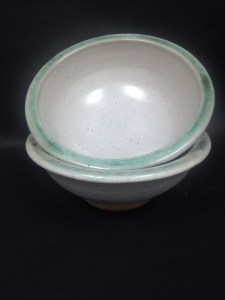
In addition to being a phenomenal chef and baker, Meghan is also an amazing potter, who annually donates bowls to the Powderhorn Empty Bowls fundraiser. You can support this great fundraiser during our retreat by bringing a bowl to donate, purchasing a bowl to donate ($10), or purchasing a bowl as a keepsake ($20, includes donation). Either way, we will use the bowls and fill them with gratitude!
We will provide a limited amount of mats and props. At least one (1) meal and one (1) meditation/yoga practice may be held outdoors. Events are intended to be communal; however, quiet spaces will be reserved for anyone wishing to retreat in silence – and conversation pits will be reserved for anyone wishing to continue dialogue during the silent portions of the weekend.
** St. Luke’s is around the cornder from Mind Body Solutions and less than 2 miles from The Marsh. Contact The Marsh directly if you are interested in reserving a hotel room or utilizing their spa facilities. **
~ We are grateful for your presence ~
Saturday, October 22nd(tentative schedule):
10:30 AM – 12:00 PM Heart Opening Yoga
12:30 PM – 1:45 AM LUNCH & “Guided” Conversation (1 space designated for silence)
2:15 PM – 3:30 PM Journey Meditation (1 space designated for silence / journal writing)
4:00 PM – 5:30 PM YOGA
6:00 PM – 7:15 PM DINNER & “Guided” Conversation (1 space designated for silence)
7:30 PM – 9:00 PM Closing Celebration & “Leave” Taking with Music & Breath by Kalyani (Colleen Buckman)
“Even in the animal kingdom, the ability to search and reapply know-how is a key attribute that moves a species from survival to prosperity.
Just as the guru tutors the novitiate so does the goldsmith his apprentice. The same is true for officers and engineers and in all fields where the mastery of craft is a matter of certification. The greater enlightens the lesser. The maxim is “See One, Do One, Teach One” or as the sensei might say ‘SODOTO.’”
During my first year teaching, a student approached with questions about yoga teacher training. He had been practicing long before I arrived, but now he was ready to consider the possibilities. We talked about his goals, and the will/determination driving those goals. I gave him a summary of the big teacher training programs in the Twin Cities. A few months later, someone else approached me. I had the list (and the highlighted bullet points) ready. Those first two students, and many of the ones who came later, ended up completing yoga teacher training and started teaching. Sometimes I would even take classes from them. Often I would refer others to them. At least one of those early students who became the teacher began teaching other students how to teach! Eventually, I discovered trainings were changing and growing in the Twin Cities; so I started updating the list.
And the people kept asking, again, and again…and again. But they weren’t always people who regularly practiced with me. Once the person who asked was someone I just knew from a neighborhood coffee shop. Once, someone visiting from California before entering Kripalu teacher training, emailed me for additional tips as she approached her finals. Once a woman approached me after I subbed her regular class – she was already in a training program, but seriously considering dropping out over a major theological issue. By the time Yogi #26 (Annamaria) approached me it had occurred to me that maybe my presence as a teacher reminded people that they had something to offer the world. It was as if, after years of ruminating and precontemplation, something in them woke up and shouted, “If she can do that, I can so do that!”
“Wax on, right hand. Wax off, left hand. Wax on. Wax Off. Breathe – in through nose, out the mouth. {Sound of inhale, sound of ‘ha’ out} Wax on. Wax off. Don’t forget to breathe – very important. Wax on. Wax Off. Wax on…”
– Noriyuki “Pat” Morita as Mr. (Kesuke) Miyagi in The Karate Kid
Daniel: So, you’re suppose to teach and I’m suppose to learn….
Mr. Miyagi: You learned plenty.
Daniel: I learned plenty. I learned how to sand your decks, maybe. I waxed your car. Paint your house. Paint your fence. I learned plenty – right!
Mr. Miyagi: Ahh. Not everything is as seems.
– Ralph Macchio as Daniel LaRusso and Noriyuki “Pat” Morita as Mr. (Kesuke) Miyagi in The Karate Kid
Yoga teacher training requires adjusting one’s life off the mat, in order to spend more time on the mat – even when the mat is all in one’s head. That adjustment can be extra hard for a modern day householder – who already has to balance life-at-work with life-at-home, life-at-play, life-with-family, life-with-friends, life-with-oneself, and life-with-one’s-spirit. Adding to all that, teacher training requires doing things over and over again, even when your arms no longer want to move, until whatever you’re doing becomes hardwired – hopefully without all the bad habits you’ll discover along the way. And, the more yoga you do, the more your personal yoga practice changes. Your body is different; your awareness of your body is different. Whereas before part of your mental challenge was letting go of all your regular daily life chatter, once you go through teacher training you’ll find yourself judging the poses (or the teachers) and thinking about how you’d cue the sequence you’re practicing if you were teaching your students – especially if your students are very different from the people surrounding you at a major yoga studio.
As a modern day householder, Annamaria decided pursuing teacher training was totally worth the personal investment. She wasn’t looking at teaching yoga as a stepping stone into a new career. She wanted to start with a basic 200-Hour training, which typically involves more than 200 hours worth of curriculum, and gradually add blocks which would enable her to serve in some underserved communities. Like me at the beginning of my yoga journey, she was inspired by the people around her who might find yoga beneficial – but didn’t (or couldn’t) want the benefits to come at the price of a new outfit and an $18 – $20 drop-in fee. Right now, we’re converging – still discussing what comes next as she evolves and grows as a teacher – but evidence of divergence is hard to ignore. Soon, Annamaria will do things as a yoga teacher that I will only ever dream of doing. She’s going to be one of our greats.
“What I think is very special about this is that he’s one of our great teachers, and great spiritual luminaries, and that there was anything that I did that inspired him…that inspires me. And it touches me. And it makes me feel like I’m on the path that I prayed to be on. So, I feel blessed to have had that reflected back to me – through the eyes, and through the words of the, one and only, Wayne Dyer.”
– India.Arie talking about Wayne Dyer talking about her song inspiring his teachings
“If I have seen further than others, it is by standing on the shoulders of Giants.”
– my father paraphrasing Sir Isaac Newton
I grew up surrounded by teachers: my dad’s a professor; his mother was a school teacher; Sunday school teachers reign on both sides (starting for me with my mother’s grandmother); and one of my cousins taught people how to drive buses and trucks. All that before even mentioning all the behind-the-scenes mentoring, guiding, and teaching we take for granted because, ‘Hey, that’s what moms do, right?’ Loving school as I did, certain teachers always had a special place in my heart. Annamaria’s dedication to going deeper on behalf of her yoga students reminds me of my favorite teachers.
A few years after I started practicing yoga, I noticed myself referring to some people as “my yoga teacher” and others as “my yoga instructor” – for a moment I wondered why my subconscious mind would so consciously make that distinction. Then I wondered if it was true; was there a difference, and (if there was a difference) was it my perceptions of the teachers’ perceptions?
During my yoga teacher training, there was a lot of discussion about people who teach yoga and people who teach asana. Looking back, I realized that even though all my early classes included basic elements of the yoga philosophy, some teachers were focused on instructing us how to exercise the bodies, while others were focused on teaching us how to engage the mind-body connection on (and off) the mat. In the end, we teachers are like everybody else: We teach what we know.
A big giant thank you to the 15 yogis who held the space and shared the practice during my donation-based KISS MY ASANA class on Saturday, February 27th(details coming soon). If you’re interested, there are still spaces available for March 5th (6:30 – 8:00 PM at Flourish). Contact Myra at a joyfulpractice.com to reserve a spot (or two). Space is limited. Bay Area yogis, don’t forget: Sandra Razieli’s KISS MY ASANA class is in Oakland on Sunday, February 28th.
“A good traveler has no fixed plans and is not intent on arriving.”
– Lao Tzu
“He who asks a question is a fool for a minute. He who does not ask remains a fool forever.”
– various sources
When I decided to ask people 7 questions as part of my 2016 Kiss My Asana commitment, I greatly underestimated how many times I would feel foolish and how much I would learn. Even if I had spent more time thinking like a research scientist, I’m not sure I could have anticipated the insights that came up when Yogi #25 (Helen) volunteered to answer the questions.
“All the insight we will ever need to live well will come from fully being who and where we are.”
Aha moments, also known as (intellectual or emotional) epiphanies, require a certain amount of awareness and knowledge. But no matter how prepared one is or how hard one works at it, no one seems to be able to mass produce “Eureka!” moments on demand.
In Your Brain at Work, and his Psychology Today blog of the same name, David Rock relates neuroscience research which indicates that “while it seems unlikely we can ‘control’ when we have an insight, it’s now very clear that we can dramatically increase the likelihood that an insight emerges.” According to the research, the elements required to help your brain produce more “aha” moments are the same elements practiced in meditation: Quiet; Inward-looking; Having a positive mood (i.e., being slightly happy/open/curious); and Non-Attachment/Beginner’s Mind.
Helen didn’t know the questions before I asked them – and I actually asked her an extra question. But, since she brought to the table a strong background in psychology and meditation, perhaps it was pretty natural, instinctual even, for her to do what I always suggest at the beginning of a practice – go deeper.
So often we can invest so much energy trying to repress the thoughts that most trouble and distress us, that we don’t spend the time needed to properly understand, heal and grow from these often insightful and potentially liberating thoughts.”– David Cunliffe
After her final answer, Helen and I spent a few minutes talking about some of the questions. In particular, we discussed Question #5: What words or sounds do you try not to utter in class?
Unbeknownst to Helen, Question #5 was partially inspired by people who have told me they don’t like to practice yoga in groups because they feel self-conscious about farting in public, and it was mirrored after James Lipton’s question about a person’s favorite curse word. If you’ve watched the other videos, you’ll notice that the answers to Question #5 vary; however, one thing the answers have in common is something Helen very insightfully pointed out. The answers to Question #5 inevitably relate to things society pressures people to suppress even though they are things naturally arising (and descending) in our minds/bodies. In other words, they are things are bodies/minds want to release.
Several meditation practices and dharma talks, as well as psychological and neurological studies, focus on what happens when we suppress emotions and natural bodily functions. These discourses often will also detail the ways our bodies and minds become polluted, and methods for cultivating more wholesome habits (i.e., habits which do not lead directly to suffering). However, one of the things that struck me as Helen and I talked is how much energy we humans spend conforming to what society has deemed “normal” – even when society’s scale is skewed, artificial, or incomplete.
We see beautiful people in magazines or posters striking a pose – without any information about what it took for them to achieve that pose. We get annoyed when someone the needs of someone other than ourselves disrupt our desires – without ever considering what’s most important or how we can compromise. We create spaces we say are inclusive, but which are – almost by definition – exclusive. Then we value that exclusivity with our time and money.
“There are times to let things happen, and times to make things happen. Now is that time. You will either make things happen, watch what happens, or wonder what happened.… The choices you make today sow the seeds for the future.”
Dianne Bondy, a Canadian yoga teacher and a leading voice of the Yoga & Body Image Coalition, leads workshops and teacher trainings which remind us that the philosophy of yoga does not describe a yogi as having a particular skin color, body type, socioeconomic or education level. Nor does it prescribe a particular ethnicity, political persuasion, gender or sexuality. Nowhere does it state that you can’t practice (or teach) yoga because you aren’t flexible, strong, and 100% fit. In fact, great teachers like B. K. S. Iyengar (who early in life suffered from malaria, typhoid, and tuberculosis) might not have practiced yoga at all if they had been born in the U. S. in the mid-20th century, because they wouldn’t have been deemed healthy enough to practice. If you feel me, don’t just say “Amen!” or “Ase, ase, ase!” Do it: Kiss My Asana – because we all create the spaces where we practice union (yoga).
My donation-based KISS MY ASANA class on Saturday, February 27th is full; however, I still have spaces available for March 5th (6:30 – 8:00 PM at Flourish). Contact Myra at a joyfulpractice.com to reserve a spot (or two). Space is limited. Bay Area yogis, don’t forget: Sandra Razieli’s KISS MY ASANA class is in Oakland on Sunday, February 28th.
~
HONOR YOUR HEART AS IT’S DESIRES BECOME YOUR THOUGHTS,
– Seane Cornon “the best advice she’s been given as a teacher
“Find your struggle, learn your lesson, and then know your purpose.”
– a “Monaism” (saying by Mona Miller, as quoted by Seane Corn)
People who come to my classes always talk about how the experience (of practicing asana with philosophy) is different from their other yoga experiences. From day one, my original teachers all included some aspect of the philosophy into their classes, so that’s the only practice I knew. It’s a practice that resonated with me, because even as a child I was preoccupied with the idea that we are connected to something more than ourselves, something divine.
Early in my life, I assumed everyone was a little preoccupied with issues of theology and existentialism. But, over time, I’ve realized everyone doesn’t consciously question and struggle with philosophical and spiritual matters – even when they crave the answers to that struggling and questioning.
In listening to feedback from people, I’ve now started to realize that every teacher doesn’t teach the way I teach. So, last year when I was ready to host my first yoga practice, I wanted someone who could teach the kind of classes I teach: alignment focused classes with spirit! Two teachers immediately came to mind – and Yogi #23 (Sandra) was one of those teachers.
“Ben Zoma would say: Who is wise? One who learns from every man. As is stated (Psalms 119:99): ‘From all my teachers I have grown wise, for Your testimonials are my meditation.’”
“The student is not above the teacher, but everyone who is fully trained will be like their teacher.”
– Luke 6:40
Sandra and I met almost five years ago at a Seane Corn vinyasa teacher training in Minneapolis. Unlike some of the other teachers in the training, we were already spirit-focused in our teaching. We had lunch together the first day, touched base throughout the week, and stayed in touch after she returned to California. One of the many reasons Sandra left such an impression on me is that she obviously teaches from her experiences – one of her specialties is Yoga for Scoliosis because she is a little curvy and has first-hand knowledge of how yoga benefits physical well-being. Another reason she left an impression on me is that she gave me her CD, “Morning Blessings”.
“The tent that houses you / houses your soul. / The Mischan, the hollow dwelling place / Be a vessel / for the love-song of God”
– Excerpt from “Morning Blessings” by Sandra Razieli (with reference to Hanna Tiferet)
“Do you not know that your bodies are temples of the Holy Spirit, who is in you, whom you have received from God? You are not your own; … Therefore honor God with your bodies.”
– 1 Corinthians 6:19-20
I spent the week of Thanksgiving 2011 practicing with Sandra’s “Morning Blessings” CD. Even though my annual trip to Texas is always busy, that year it felt like a retreat. Years later, when I was thinking about the takeaway experience I wanted people to have on a retreat I hosted, I thought about how I felt after practicing with Sandra’s CD.
Sandra is an Iyengar teacher, as well as a certified Yoga for Scoliosis Trainer, as well as a Yoga and Jewish Spirituality teacher, as well as an Anthropologist, a spiritual leader, and…I could keep going with her accomplishments; because, bottom line, she’s no slouch. Sandra is a person of integrity and honor, a true mentsch.
A mentsch is someone who respects the needs and wishes of others—especially the desires of those in his care.
In the care of each of us is entrusted a divine soul. She has a terrible allergy to all those messy deeds that darken her world, and desires only those beautiful deeds that will bring in more light.”
I can only imagine what a delight it would be to practice with Sandra on a weekly basis. What I know first-hand is that every time I am in her presence I learn something. Sometimes what I learn is obviously information inside me, just waiting for a way to be articulated; however, sometimes it feels like the information is just outside of myself, waiting to be invited in. Sandra has a way of inviting inspiration, grace, and spirit in – and she does it in a way that even someone who has refused the information in the past, suddenly is open to the invitation.
There are two ways to hug somebody. The first is to grab them and draw them in, but the second, perhaps a more refined approach, is to open your arms and create space for the other person. This opening is a passive energy of Hod (humility/gratitude) that makes room for others.”
I will always be grateful for the lessons I learned from collaborating with Sandra last year. We definitely enhanced what we each already bring to the table – and, in the process, we strengthened each other’s weak spots. However, Sandra once again upped my game when (at the end of our Sukkot/Gratitude retreat) she gave me a copy of The Kabbalah Sutras: 49 Steps to Enlightenment. I started the practice during my annual Thanksgiving trip, finished on my birthday, and experience a transformation I am still processing.
“Rabbi Ishmael the son of Rabbi Yossei would say: One who learns Torah in order to teach, is given the opportunity to learn and teach. One who learns in order to do, is given the opportunity to learn, teach, observe and do.”
– Excerpt from Ethics of the Fathers (Pirkei Avot) 4:5
I get a little goose-pimply when I think about all the ways my life-journey and Sandra’s life-journey have mystically, energetically, and spiritually overlapped. Take this weekend for example: We’re both leading donation-based classes which benefit Mind Body Solutions and the adaptive yoga program. My KISS MY ASANA class is in Minneapolis on Saturday, February 27th; Sandra’s KISS MY ASANA class is in Oakland on Sunday, February 28th. (Click on each of the KISS MY ASANA links above to find out more information about each class, as well as information about my second Minneapolis class on Saturday, March 5th.)
Just in case you’re not convinced Sandra is no slouch, you can also see her here in another Kiss My Asana video.
“This is what should be done By one who is skilled in goodness, And who seeks the path of peace: Let them be able and upright, Straightforward and gentle in speech. Humble and not conceited,”
“The Buddha said that we are never separated from enlightenment. Even at the times we feel most stuck, we are never alienated from the awakened state. This is a revolutionary assertion. Even ordinary people like us with hang-ups and confusion have this mind of enlightenment called bodhichitta. The openness and warmth of bodhichitta is in fact our true nature and condition. Even when our neurosis feels far more basic than our wisdom, even when we’re feeling most confused and hopeless, bodhichitta—like the open sky—is always here, undiminished by the clouds that temporarily cover it.”
Yoga, and its sister science Ayurveda, can be great healing tools – especially if you’ve identified what’s going on in the body and in the mind. Since I’m not a medical doctor, a psychotherapist, or an Ayurvedic practitioner, I avoid diagnosing people who come to my classes. However, if I were to offer a simple assessment of Yogi #22 (Mary C.), I would say she exhibits the characteristics outlined in the Karaniya, has a tendency to breath into the soft spot of her own heart, and “hear the cries of the world.”* On and off the mat, she practices ways to awaken the heart.
Chitta means “mind” and also “heart” or “attitude.” Bodhi means “awake,” “enlightened,” or “completely open.” Sometimes the completely open heart and mind of bodhichitta is called the soft spot, a place as vulnerable and tender as an open wound. It is equated, in part, with our ability to love. Even the cruelest people have this soft spot. Even the most vicious animals love their offspring. As Chögyam Trungpa Rinpoche put it, “Everybody loves something, even if it’s only tortillas.”
When you’re talking to Mary C. there is no question that she is present, engaged, and listening. Her focus is deliberate; mindful; skillful – and results in a hum that sounds a lot like someone whispering the question, “Do you realize you are loved?” If one can hear such a hum, and not be unsettled by it, it becomes one of the most comforting experiences in the world.
But, everyone isn’t comfortable being loved. And, being the one who always loves is not always easy or comfortable. In fact, there could be a downside to being the person that instigates that hum. After all, everybody isn’t humming along. And, if you are aware of the hum – and aware of the harmony – you are also aware of the dissonance, the lack of harmony. Being aware is a beautiful blessing, but not getting swamped by the darkness in the world requires effort. Mary C. not only makes the effort, she works it!
“An analogy for bodhichitta is the rawness of a broken heart. Sometimes this broken heart gives birth to anxiety and panic; sometimes to anger, resentment and blame. But under the hardness of that armor there is the tenderness of genuine sadness. This is our link with all those who have ever loved. This genuine heart of sadness can teach us great compassion. It can humble us when we’re arrogant and soften us when we are unkind. It awakens us when we prefer to sleep and pierces through our indifference. This continual ache of the heart is a blessing that when accepted fully can be shared with all.”
– “Bodhichitta: The Excellence of Awakened Heart” from The Places That Scare You: A Guide to Fearlessness in Difficult Time by Pema Chödrön
I don’t mean to imply that Mary C. is a saint. Just like everybody else, she has her off days. However, while some of us check out on our off days, I’ve seen Mary C. own hers. In fact, I think her off days make her more curious. She is curious about the techniques and skills that will improve her life physically, mentally, and emotionally. And, underlying her personal curiosity is the awareness that if she improves her life, lives around her will improve.
If you are curious about ways to improve your life – physically, mentally, and emotionally – check out a yoga class at Mind Body Solutions (or at your local Y or neighborhood studio). If you’re not sure where to begin, check out a donation-based class anywhere or contact Mind Body Solutions to find out if they’ve trained a teacher near you. Even people across the pond are KISS(ing) MY ASANA! Have you? Want to KISS MY ASANA while you practice? Contact Myra at a joyfulpractice.com to reserve a spot (or two) at a donation-based class on Saturday, February 27th (3:30 - 5:30 PM) or Saturday, March 5th (6:30 - 8:00 PM). Space is limited.Click here for more information about things to do in February and March.
“And be not conformed to this world: but be transformed by the renewing of your mind, that you may prove what is that good, and acceptable, and perfect, will of God.”
– Romans 12:2
“It is the aim of my pilgrimage on earth to show my brethren by living demonstration how one may serve God with merriment and rejoicing. For he who is full of joy is full of love for me and for all fellow creatures.”
– Baal Shem Tov*
“‘Where are you going?’ She said, ‘To that world.’ ‘And where have you come from?’ She answered, ‘From that world.’ ‘And what are you doing in this world?’ And she said, ‘I am sorrowing.’ ‘In what way?’ they asked her. And Rabia replied, ‘I am eating the bread of this world, And doing the work of that world.’”
Follow me for a moment, while I tell you a story: Once upon a time, a great composer created a piece of music that would inspire the world. The only problem was that none of the existing instruments in the world sounded quite right as the featured soloist. She tried everything. Finally, she decided to make a special instrument – that had to be played a special way. In her studio, the instrument sounded, mostly, divine. Honestly, it sounded OK if treated like any other instrument. And, it had the unfortunate knack of being really off-key if it wasn’t held properly or used appropriately. However, when proper care and attention were taken, there was nothing like it on Earth. It would sound heavenly and enhance the sound of all the other instruments in the orchestra. Knowing she wouldn’t be around to pass the instrument along in person, the great composer left the instrument, music, and instructions for a very competent musician.
Like all music, the figured bass should have no other end and aim than the glory of God and the recreation of the soul; where this is not kept in mind there is no true music, but only an infernal clamour and ranting.” – Johann Sebastian Bach
I have it on good authority that Yogi #17 (Greg) is a very competent musician. Like Yogi #16 (my good authority), he is also a healer whose presence is as soothing as his favorite music. If the world really were an orchestra – full of divine instruments and competent musicians (like Greg), who knew how to play their holy instruments – all would be right with the world.
Unfortunately, the musical story above doesn’t always end well.
In some versions of the story most of the composer’s instructions were lost; the music was rearranged; the special instrument may (or may not) have gotten a little dented; and the conductor didn’t know who was supposed to lead.
So, there you have it: the state of the world as we know it. We have these bodies that can touch and be touched – yet, we often feel disconnected from our bodies, and all the bodies around us. We have these minds that can draw in, process, and evaluate information in the present moment – yet, we spend quite a bit of time making up stuff about past and future moments. We have something driving us to live, to love, to play and be known – let’s call it a spirit – yet, we continuously ignore that our bodies, minds, and spirits are connected. It’s enough disharmonious ranting to make Bach pull off his powdered wig!
“Two things are guaranteed to hook you up with the God of Love: sorrowing and rejoicing. You do not need to go searching for either; they are written into the architecture of human existence.”
– (*All with asterisks) Excerpted from God of Love by Mirabai Starr
Somehow there is harmony and beauty in the world. Maybe, as Mirabai Starr indicates, that harmony and beauty (like sorrowing and rejoicing) is part of our basic make-up. Maybe we just need a practice, the right music, a healer like Greg, or a teacher like Matthew Sanford to help us connect to the very fibers of our being.
All I know for sure, is that on any given Sunday (or Monday through Saturday), someone realizes that they are more than their body, more than their mind. On any given Sunday (or Monday through Saturday), someone awakens to the fact that they are connected to something Divine/Universal. And, maybe they see the Divine/Universal something as an anthropomorphic being, or maybe they feel it as a sensation of connectedness to the people around them. Either way, this awakening comes with a responsibility and a purpose to play the notes they’ve been given.
“To be tender, loving, and caring, human beings must be tenderly loved and cared for in their earliest years, from the moment they are born.”
– Ashley Montagu
“The simple act of touching is of extreme importance to the healthy functioning of the human organism. The skin can be considered the outer layer of the nervous system. The skin is the boundary of our bodies. Through touch, that boundary is gently broken down, permeated by another, and our whole internal system enhanced and stimulated.”
Greg, like Matthew Sanford, believes in the power of touch. It is important not only for the person who needs care, but also to the caregiver. It is critical to the person dying, as well as to those who go on living. During the KISS MY ASANA yogathon, it’s easy to reference the people who have obvious external signs that they’ve experienced trauma, loss, and disability. However, let’s not forget the caregivers and the space holders. While “best known for adapting yoga for persons living with disabilities,” Mind Body Solutions also offers workshops and trainings for caregivers, healthcare providers, and whole organizations. Remember: Everyone benefits when we integrate our mind-body, on and off the mat. So, if you want to honor a healer (or a musician), go to Sharon’s page (she’s matching donations) and KISS MY ASANA!
###
“If there is light in the soul, there will be beauty in the person. If there is beauty in the person, there will be harmony in the house. If there is harmony in the house, there will be order in the nation. If there is order in the nation, there will be peace in the world.” – Chinese Proverb


 A Joyful Practice