From the Office of the Scholar August 31, 2020
Posted by ajoyfulpractice in Changing Perspectives, Faith, Healing Stories, Life, Men, Wisdom, Women, Writing.Tags: American Scholar, Ralph Waldo Emerson, yoga
add a comment
“We are all strangers
We are all living in fear
We are all ready to change”
– quoted from The Air I Breathe
The movie The Air I Breathe is partially inspired by the idea that human emotions are like fingers on a hand. In fact, the primary characters in the movie are named (or referenced as) Happiness, Pleasure, Sorrow, Love, and Fingers. The movie presents extreme depictions of each emotion as a life experience. The idea behind the inspiration is that to be fully human, to live a full life, we must experience all of the emotions – or, that as we are living our lives we will experience all of emotions – and that the emotions are interconnected: like fingers on a hand.
So, consider a hand. You can think of my hand, your hand, the hand of your favorite person or your least favorite person. You can think of someone who works with their hands, someone who is constantly working on their hands, or someone who does both. It doesn’t matter; in fact, think of all the different kinds of human hands. The typical human hands (like the hands of some other primates and even some frogs) are different from the extreme appendages that other animals use to pick up things, appendages we often refer to as paws, because we typically have opposable thumbs. These thumbs, along with the fingers, enable a person to not only pick up a plethora of objects, but also to use those objects as tools. Our thumbs and fingers give us a level of dexterity that affects the way we interact with the world.
Now, let’s say that you were missing a piece of your hand or a portion of your hands function. Maybe you were missing a fingernail or a tendon. Maybe you were missing a finger, a thumb, or maybe a whole hand. Maybe no one else is missing what you are missing. Or, maybe you are surrounded by people who are missing what you are missing. Either way, it may change the way you interact with the world. It may even change the way you eat, create, or put on a mask – because your mind-body will recreate different muscles to do what you need to do. The question then, isn’t how the body functions without the missing piece. The question is: How do you function?
Does the missing part change the way you think of yourself? Does it change the way people think of you of you and then, therefore, how you think of yourself? Does the answer depend on how and why you are missing the piece or the function? Does the answer depend on how obvious it is that you are missing something? Does it matter if it is inside or outside? Does it even matter?
“It is one of those fables which out of an unknown antiquity convey an unlooked-for wisdom, that the gods, in the beginning, divided Man into men, that he might be more helpful to himself; just as the hand was divided into fingers, the better to answer its end.”
– quoted from the 1837 “The American Scholar” speech by Ralph Waldo Emerson
I have known people who would answer “no” to all of those questions; however, I also have known people who would answer “yes.” And, there is a part of me that thinks maybe these are the wrong questions. There’s a part of me that wonders at what point we start thinking of ourselves (and others) as a single part of ourselves (especially a missing or different part). There’s a part of me that wonders when we stop (or start) thinking of ourselves as a whole. Tied to that last piece of wondering is the acknowledgement that when we consider ourselves as the whole, we are no longer missing…anything.
Today in 1837, Ralph Waldo Emerson delivered “The American Scholar” speech to the Phi Beta Kappa Society at Harvard College. The students invited Emerson to speak after the world’s powerful reception to his 1836 essay “Nature.” The speech was an introduction to Transcendentalist and Romantic views on Nature, as well as the American scholar’s relationship with and responsibility to Nature. It garnered him more accolades and more invitations to speak. It also made people think about the way they thought. In particular, it made people think about the way they thought about themselves.
“The old fable covers a doctrine ever new and sublime; that there is One Man,—present to all particular men only partially, or through one faculty; and that you must take the whole society to find the whole man. Man is not a farmer, or a professor, or an engineer, but he is all. Man is priest, and scholar, and statesman, and producer, and soldier. In the divided or social state these functions are parceled out to individuals, each of whom aims to do his stint of the joint work, whilst each other performs his. The fable implies that the individual, to possess himself, must sometimes return from his own labor to embrace all the other laborers. But, unfortunately, this original unit, this fountain of power, has been so distributed to multitudes, has been so minutely subdivided and peddled out, that it is spilled into drops, and cannot be gathered. The state of society is one in which the members have suffered amputation from the trunk and strut about so many walking monsters,—a good finger, a neck, a stomach, an elbow, but never a man.”
– quoted from the 1837 “The American Scholar” speech by Ralph Waldo Emerson
Now, following Emerson’s logic, we can see a lesson that also appears in the Upanishads: the Neti neti, “not this, not that” lesson pertaining to the nature of the Divine. The parallels in the argument are no accident. Emerson was in fact stating that if we focus too much on one aspect, one nature, one ability, then we lose sight of ourselves as a whole. The same can be said of an individual and their mind-body, as well as of an individual and their whole society. We are, after all, parts of a whole – and, the minute we forget that is the minute we become a thing. Like Frankenstein’s “monster,” there is more going on (inside and outside) than is apparent when we only view things through a single point of view.
“Man is thus metamorphosed into a thing, into many things. The planter, who is Man sent out into the field to gather food, is seldom cheered by any idea of the true dignity of his ministry. He sees his bushel and his cart, and nothing beyond, and sinks into the farmer, instead of Man on the farm. The tradesman scarcely ever gives an ideal worth to his work, but is ridden by the routine of his craft, and the soul is subject to dollars. The priest becomes a form; the attorney a statute-book; the mechanic a machine; the sailor a rope of the ship.
In this distribution of functions the scholar is the delegated intellect. In the right state he is Man Thinking. In the degenerate state, when the victim of society, he tends to become a mere thinker, or, still worse, the parrot of other men’s thinking.”
– quoted from the 1837 “The American Scholar” speech by Ralph Waldo Emerson
Please join me on the virtual mat today (Monday, August 31st) at 5:30 PM for a 75-minute virtual yoga practice.
This is a 75-minute Common Ground Meditation Center practice that, in the spirit of generosity (dana), is freely given and freely received. You can use the link from the “Class Schedules” calendar if you run into any problems checking into the class. You can request an audio recording of this practice via a comment below.
If you are able to support the center and its teachings, please do so as your heart moves you. (NOTE: You can donate even if you are “attending” my other practices, or you can purchase class(es). Donations are tax deductible, class purchases are not necessarily.)
There is no playlist for the Common Ground practices. (But, Van is the Man, and “the Belfast Cowboy” turned 75 today so…)
“If it were only for a vocabulary, the scholar would be covetous of action. Life is our dictionary. Years are well spent in country labors; in town; in the insight into trades and manufactures; in frank intercourse with many men and women; in science; in art; to the one end of mastering in all their facts a language by which to illustrate and embody our perceptions. I learn immediately from any speaker how much he has already lived, through the poverty or the splendor of his speech. Life lies behind us as the quarry from whence we get tiles and copestones for the masonry of to-day. This is the way to learn grammar. Colleges and books only copy the language which the field and the work-yard made.
But the final value of action, like that of books, and better than books, is that it is a resource. That great principle of Undulation in nature, that shows itself in the inspiring and expiring of the breath; in desire and satiety; in the ebb and flow of the sea; in day and night; in heat and cold; and, as yet more deeply ingrained in every atom and every fluid, is known to us under the name of Polarity,—these “fits of easy transmission and reflection,” as Newton called them, are the law of nature because they are the law of spirit.
The mind now thinks, now acts, and each fit reproduces the other. When the artist has exhausted his materials, when the fancy no longer paints, when thoughts are no longer apprehended and books are a weariness,—he has always the resource to live. Character is higher than intellect. Thinking is the function. Living is the functionary. The stream retreats to its source. A great soul will be strong to live, as well as strong to think. Does he lack organ or medium to impart his truth? He can still fall back on this elemental force of living them. This is a total act. Thinking is a partial act. Let the grandeur of justice shine in his affairs. Let the beauty of affection cheer his lowly roof. Those “far from fame,” who dwell and act with him, will feel the force of his constitution in the doings and passages of the day better than it can be measured by any public and designed display. Time shall teach him that the scholar loses no hour which the man lives. Herein he unfolds the sacred germ of his instinct, screened from influence. What is lost in seemliness is gained in strength.
– quoted from the 1837 “The American Scholar” speech by Ralph Waldo Emerson
### OM OM AUM ###
Wonderfully, Fearlessly, Hopefully Impossible August 5, 2020
Posted by ajoyfulpractice in "Impossible" People, Books, Changing Perspectives, Faith, Gratitude, Healing Stories, Hope, Life, Loss, Mathematics, Men, Music, One Hoop, Pain, Philosophy, Religion, Suffering, Wisdom, Women, Yoga.Tags: Barack Obama, Duchess of Sussex, Hope, inspiration, John Venn, Life, Louis Armstrong, Meghan Markle, Percy Bysshe Shelley, truth, X Ambassadors
add a comment
[This is the post for Tuesday, August 4, 2020.]
“Nothing in the world is single;
All things by a law divine
In one spirit meet and mingle.
Why not I with thine?—”
– quoted from the poem “Love’s Philosophy” by Percy Bysshe Shelley
Everything overlaps. We all share common threads. So, even without the Muhammad Ali quote (from 8/2), you could create a Venn diagram based on the first three “impossible” posts and figure out who I might highlight next as an “impossible person.” A Venn diagram is, of course, a set or logic model that shows the overlapping relations between finite collections. They are used in set theory, probability, logic, statistics, computer science, and other math modalities. These diagrams were developed by John Venn, who was born today (August 4th) in 1834. While he came from a long line of church evangelicals, including his namesake and grandfather, it was not impossible for him to choose a field of study outside of the church. That being said, two years after he obtained his mathematics degree from Gonville and Caius College (the fourth oldest and the wealthiest college at University of Cambridge), Venn became an Angelican priest and actually served in the church. It was after his first church appointment, while working as an intercollegiate lecturer at Cambridge, that Venn developed the diagrams.
If you create sets based on the biographies of Maria Mitchell and Rabbi Regina Jonas, you might think that to make my “impossible list” someone would have to be a woman who was the first woman to do something in a profession normally associated with men. You might even think that that someone had to be virtually unknown to the masses. But, then you have to add James Baldwin into the mix. Now, with the third set, you can broaden the definition to include any human who does something outside of society’s expectations – especially, if their achievements make it possible for others to follow in their footsteps and/or do something previously viewed as impossible.
I have heard that it is impossible to make a Venn diagram out of four circles – and I’ll admit that I probably wouldn’t do a very good job of explaining (mathematically) why it is considered impossible – but you can use ellipses. So, when you add in the fact that John Venn was a suffragist who also encouraged woman to run for office, you might think he makes my list. But, he doesn’t. Neither does Percy Bysshe Shelley, who was born today in 1792. Instead, today’s “impossible people” are a musician, a president, and a duchess.
“Some of you young folks been sayin’ to me, ‘Eh, Pops, what do you mean, what a wonderful world? How ’bout all them wars all over the place? You call them wonderful? And how ’bout hunger and pollution? That ain’t so wonderful, either.’ But how ’bout listenin’ to old Pops for a minute? Seems to me it ain’t the world that’s so bad but what we’re doing to it, and all I’m saying is: see what a wonderful world it would be if only we’d give it a chance. Love, baby – love. That’s the secret. Yeeeaaahhh. If lots more of us loved each other, we’d solve lots more problems.”
– Louis Armstrong (introducing “What a Wonderful World” in a 1970 recording)
The wonderful Louis Armstrong was born today (August 4th) in New Orleans, Louisiana in 1901. Known as “Satchmo,” “Satch,” “Pops,” “Dipper,” and “Louie,” he came by his most famous nickname because people said the way he puffed out his cheeks when he played the trumpet made him look like he had a mouth full of coins. Some biographers even say that, as a child, he played for pennies and would actually use his mouth as his satchel. For five decades he carved a place for himself in the world as a trumpeter, a composer, a singer, and an actor. His career also spanned different genres of jazz and in 2017 he was inducted into the Rhythm & Blues Hall of Fame. Some might say that it should have been impossible for him to play the way he played given the way he breathed into his mouth. Others might think that, as a talented African-American entertainer, there was nothing impossible about his success. Yet, when you look at the history of music in America, you find that there was a time (cough, cough) when African-American music often crossed over into the popular culture – but, it did so without the African-American musicians. Louis Armstrong established himself without publicizing (or politicizing) his race and, therefore, his music entered a room before his skin color.
Louis Armstrong wore a Star of David pendant for most of his life, in honor of the Jewish family that “adopted” him as a child and bought him his first trumpet. He wrote in his memoir about seeing his “adopted family” experiencing discrimination and said that the way they lived taught him how to live with determination. Yet, his determination to live and be judged by his art rather than his skin color, led him to receive a lot of criticism from other prominent Black entertainers and activist. Part of the criticism stemmed from the fact that he played for segregated audiences and wouldn’t use his social power and echelon to press for civil rights. However, he did criticize President Dwight D. Eisenhower for his lack of response to the Little Rock desegregation crisis – even going so far as to cancel a State Department sponsored tour to the Soviet Union and state that he would not represent a government that mistreated his people.
“While I could say Pennsylvania and Ohio, and continue this proverbial two-step, I instead give them what they’re after: ‘My dad is Caucasian and my mom is African American. I’m half black and half white.’ To describe something as being black and white means it is clearly defined. Yet when your ethnicity is black and white, the dichotomy is not that clear. In fact, it creates a grey area. Being biracial paints a blurred line that is equal parts staggering and illuminating. When I was asked by ELLE to share my story, I’ll be honest, I was scared. It’s easy to talk about which make-up I prefer, my favourite scene I’ve filmed, the rigmarole of ‘a day in the life’ and how much green juice I consume before a requisite Pilates class. And while I have dipped my toes into this on thetig.com, sharing small vignettes of my experiences as a biracial woman, today I am choosing to be braver, to go a bit deeper, and to share a much larger picture of that with you.”
– quoted from “Meghan Markle: I’m More Than An ‘Other’” by Meghan Markle (published in Elle Magazine, July 2015)
1957 may have been when the FBI started a file on Louis Armstrong. So, you can definitely add that – FBI files – to the Venn diagram of impossible people; because the FBI definitely has files on President Barack Obama (born today in 1961, in Honolulu, Hawai’i) and Meghan, Duchess of Sussex (née Markle) (born today in 1981, in Los Angeles, California). President Obama served two terms as the 44th President of the United States and was the first African-American president (as well as the first openly biracial president). The Duchess of Sussex is not only a “commoner,” she is a biracial American woman who not only married into the British Royal family, she also did the doubly impossible by stepping away from the royal life. Both President Obama and the Duchess of Sussex worked as philanthropists before and after “holding” their very public offices. They have been known to feed the hungry and inspire people to hope.
“Hope is not blind optimism. It’s not ignoring the enormity of the task ahead or the roadblocks that stand in our path. It’s not sitting on the sidelines or shirking from a fight. Hope is that thing inside us that insists, despite all evidence to the contrary, that something better awaits us if we have the courage to reach for it, and to work for it, and to fight for it. Hope is the belief that destiny will not be written for us, but by us, by the men and women who are not content to settle for the world as it is, who have the courage to remake the world as it should be.”
– quoted from (then Senator) Barack Obama’s address after the Iowa Caucus speech (January 3, 2008)
Errata (2025): The original post duplicate lines in the poem “Love’s Philosophy”.
### F Dm G C G ###
Impossible x3 August 3, 2020
Posted by ajoyfulpractice in "Impossible" People, Changing Perspectives, Faith, Healing Stories, Hope, Life, Loss, Men, Movies, Mysticism, Pain, Philosophy, Religion, Suffering, Tragedy, Wisdom, Women, Writing, Yoga.Tags: Dr. Etka Liebowitz, Dr. Viktor Frankl, Havdalah, Holocaust, In the Footsteps of Regina Jonas, Rabbi Gesa Ederberg, Rabbi Max Dienemann, Rabbi Regina Jonas, yoga
6 comments
“Here there is a role reversal of what was related in bSotah – instead of the woman [Queen Salome Alexandra] being “nameless” now she is named and cunningly tries to get around the rabbinic prohibition, while the male character, her son, is unnamed and plays no role in the matter in dispute.”
– commentary on bShabbat (16b – 14b) in doctoral thesis entitled “Queen Alexandra: The Anamoly of a Sovereign Jewish Queen in the Second Temple Period” by Etka Liebowitz, PhD
There was a time when being a female (non-nun) member of the clergy would have been considered impossible. But, imagine for a moment, someone who was not only the first woman to be ordained in their religion, but to receive the highest orders during a time when it was hard to even be a male member of your religion. Allow me to introduce you to (or re-acquaint you with) Rabbi Regina Jonas ([‘re-ghee-na yo-nas]). Born today in 1902, Rabbi Jonas was not only the first woman to be ordained as a rabbi; she was ordained in Berlin in 1935. In other words, she became the first woman to be named as a Jewish teacher during the height of Nazi Germany.
Throughout history, you can find plenty of women who fulfilled rabbinical duties. They did not, however, hold the title. These women, like Beruryah (Rebbetzin Meir), Yalta, the Hasmonean queen Salome Alexandra (also known as Alexandra of Jerusalem), and the daughters and granddaughters of the great Talmud scholar Rashi (Rabbi Shlomo Yitzachaki), are found in the Talmud and would have been studied by Rabbi Jonas and other women who studied at the Hochschule für die Wissenschaft des Judentums in Berlin, the Jūdisch-Theologisches Seminar in Breslau, and other theology schools that admitted women. Unlike her female peers, however, Rabbi Jonas didn’t just want the academic teacher’s degree; she wanted the title and the responsibilities. And this desire was something that she felt and expressed from a very young age.
“If I am to confess what drove me, as a woman, to become a rabbi, two things come to mind. My belief in God’s calling and my love of my fellow man. God has bestowed on each one of us special skills and vocations without stopping to ask about our gender. This means each one of us, whether man or woman, has a duty to create and work in accordance with those God-given skills.”
– quoted from the doctoral thesis entitled “May a woman hold rabbinic office?” by Rabbi Regina Jonas
Rabbi Regina Jonas had a passion for Jewish history, the Bible, and the Hebrew language; a passion that was remembered even by her high school friends and supported by Orthodox rabbis like Isidor Bleichrode, Delix Singerman, and Max Weyl (who officiated at the synagogue the Jonas family attended). When she decided to pursue her degree and also the title, Rabbi Jonas wrote and submitted a final theses, which was a requirement for ordination. Her final theses topic, which was based on Biblical, Talmudic, and rabbinical sources, was near and dear to her heart: “May a woman hold rabbinic office?”
While halakhic literature did not specifically with ordination, she combined halakhic theory related to women’s issues with a modern attitude about women’s roles. She did not, however, use a Reform movement argument. Instead, Rabbi Jonas wanted to establish gender equality within the (and as a) continuity of tradition – and, in doing so, established herself as independent of both the reform movement and Orthodoxy. She also included in her argument very specific gender qualities and expectations centered around Zeni’ut (“Modesty”), which she viewed as being essential to someone’s role as a rabbi. Interestingly, some of her thesis is very much consistent with the ideas Hannah Crocker expressed in 1818.
Rabbi Jonas concluded that yes, a woman could be a rabbi according to halachic sources. She went even further by saying that female rabbis were a “cultural necessity, in part because of so-called female qualities like compassion, interpersonal skills, and psychological intuition. Her final thesis, which was supervised by Eduard Baneth, renowned professor of Talmud at the Hochschule für die Wissenschaft des Judentums in Berlin, was submitted in June 1930. Unfortunately, Rabbi Baneth died soon after her submission and his successor was not willing to ordain women. Ironically, a leader in the Reform movement, Rabbi Leo Baeck, also rejected her submission.
“Almost nothing halakhically but prejudice and lack of familiarity stand against women holding rabbinic office.”
– quoted from the doctoral thesis entitled “May a woman hold rabbinic office?” by Rabbi Regina Jonas
Despite the fact that her professors were not willing to ordain her, she received a “good” grade for her thesis and graduated as a religious teacher. She then began teaching religion at several girls’ schools in Berlin. At this same time, however, anti-Semitism created an increased need for Jewish teachers and religious education. Rabbi Max Dienemann, executive director of Liberaler Rabbinerveband (Conference of Liberal Rabbis) agreed to ordain Rabbi Jonas on behalf of the conference and, within two years, she began to serve the official community as “pastoral-rabbinic counselor.” She particularly ministered to those in the Jewish Hospital, those who were considering emigrating, and people economically affected by “Kristallnacht.” As more and more rabbis were imprisoned by the Nazis or fled the persecution, she began to lecture to various groups, preach in liberal synagogues and lead some Havdalah (“weekday”) services in the Neue Synagogue, the flagship of German Jewry. At one point, during the winter of 1940 – 1941, the Germany Jewry organization established by the Nazis actually sent her to cities that no longer had rabbis. Even when she was forced to work in a factory, she continued her ministry.
On November 2, 1942, Rabbi Jonas was compelled to fill out a declaration form where she listed her property, including all of her books. Two days later, all of her property was confiscated by the Nazis. The next day, she and her mother were arrested. They were deported November 6th, to Theresienstadt concentration camp, where she continued to preach and counsel. The psychoanalyst Viktor Frankl asked her to help him with crisis intervention, including meeting and assessing new arrivals and helping to prevent suicide attempts. On October 12, 1944, at the age of 42, Rabbi Jonas and her mother were deported to Auschwitz, where they were killed.
“Since I saw that her heart is with God and Israel, and that she dedicates her soul to her goal, and that she fears God, and that she passed the examination in matters of religious law, I herewith certify that she is qualified to answer questions of religious law and entitled to hold the rabbinic office. And may God protect her and guide her on all her ways.”
– quoted from the Diploma of Ordination for Rabbi Regina Jonas (approved by Rabbi Max Dienemann)
None of the male religious leaders who survived the Holocaust spoke of Rabbi Regina Jonas. However, a copy of her thesis, her teaching certificate, her rabbinical diploma, personal documents, and two photos have been preserved at the Centrum Judaicum in Berlin. Included in those personal documents were letters of gratitude from refugees she had counseled (and whose families she continued to counsel in Germany). There is also a list of 24 sermons and lectures she delivered, along with notes for at least one full sermon. In the Footsteps of Regina Jonas is a documentary about her life and legacy, which features rabbis like Gesa Ederberg, who celebrated the 75th anniversary of Rabbi Jonas’s ordination with a Havdalah service – the very type of weekday service Rabbi Jonas led in Berlin.
“God has placed abilities and callings in our hearts without regard to gender. If you look at things this way, one takes woman and man for what they are: human beings.”
– quoted from a 1938 news article by Rabbi Regina Jonas
I am cancelling classes on Tuesday and Wednesday of this week, but will post as I am able. Thank you to everyone who is keeping my family in your hearts and minds.
### SHALOM שָׁלוֹם ###
A Brother’s Love August 2, 2020
Posted by ajoyfulpractice in "Impossible" People, Art, Books, Changing Perspectives, Confessions, Healing Stories, James Baldwin, Life, Loss, Love, Maya Angelou, Men, Pain, Poetry, Suffering, Super Heroes, Writing, Yoga.Tags: Aimee Lehto, America, being present, Boyd Croyner, Civil Rights, inspiration, James Baldwin, Justin Timberlake, Maria Mitchell, Maya Angelou, Muhammad Ali, PRIDE, truth, yoga
2 comments
“Impossible is just a word thrown around by small men who find it easier to live in the world they’ve been given than to explore the power they have to change it. Impossible is not a fact. It’s an opinion. Impossible is potential. Impossible is temporary. Impossible is nothing.”
– quoted from a 2004 Adidas ad campaign written by Aimee Lehto (with final tag line credited to Boyd Croyner), often attributed to Muhammad Ali
Yesterday I referred to Maria Mitchell as an impossible woman. Back in 2016, thanks to Justin Timberlake quoting Muhammad Ali to a bunch of teens, I started thinking about what it meant to be an impossible person and spent the first week in August highlighting impossible people. Born today in Harlem, New York, in 1924, the author James Baldwin is – by his own words – my second impossible person.
“Given the conditions in this country to be a black writer was impossible. When I was young, people thought you were not so much wicked as sick, they gave up on you. My father didn’t think it was possible—he thought I’d get killed, get murdered. He said I was contesting the white man’s definitions, which was quite right.”
– James Baldwin, quoted from the interview “James Baldwin, The Art of Fiction No. 78” by Jordan Elgrably (printed in The Paris Review, Issue 91, Spring 1984)
Mr. Baldwin’s life (and career) were, in so many ways, shaped by a combination of opinions. There were the opinions of his stepfather David Baldwin (who he referred to as his father) about life in general plus his stepfather’s opinion of how the world would view him, how the world actually viewed him, and his own ideas about what was possible – or, what was necessary. He spent the ages of 14 – 17 following his father’s footsteps into the ministry and then, when his father died, he took a giant leap. He said, “Those were three years [preaching] which probably turned me to writing.”
Leaping into writing was not Mr. Baldwin’s only leap. He leapt across the pond to Paris, France, twice, even as his writing challenged Western society’s conceptions about race, class, gender, and sexuality. His essays, novels, and plays include Giovanni’s Room, Notes of a Native Son, The Fire Next Time, If Beale Street Could Talk (which was recently made into a movie) and the unfinished manuscript Remember This House (which was adapted to create the 2016 Academy Award-nominated documentary I Am Not Your Negro). Mr. Baldwin first went to Paris with $40 and not a lick of French. He was 24 years old, coming to grips with his sexuality, and escaping what he viewed – what he had witnessed – was a death sentence at the hands of American society.
“Not so metaphorically. Looking for a place to live. Looking for a job. You begin to doubt your judgment, you begin to doubt everything. You become imprecise. And that’s when you’re beginning to go under. You’ve been beaten, and it’s been deliberate. The whole society has decided to make you nothing. And they don’t even know they’re doing it.”
– James Baldwin, quoted from the interview “James Baldwin, The Art of Fiction No. 78” by Jordan Elgrably (printed in The Paris Review, Issue 91, Spring 1984)
From Paris, he was able to not only gain perspective about his experiences of being Black in America (and of being Black and Gay in America), but also to offer those experience back to the United States – in the form of a literary mirror. In words that very much echo Miss Maria Mitchell’s words, he said wanted to see himself, and be seen as, more than “merely a Negro; or, merely a Negro writer.”
In his late 30’s/early 40’s, Mr. Baldwin briefly returned to the United States and physically participated in the Civil Rights Movement and Gay Liberation Movement that he had (from Paris) helped to literally inspire. He became friends with Langston Hughes, Martin Luther King, Malcolm X, Medgar Evers, Lorraine Hansberry, Nikki Giovanni, and Nina Simone (who he and Mr. Hughes convinced to become active in the Civil Rights Movement). He worked with Drs. Kenneth and Mamie Clark, as well as Lena Horne and Miss Hansberry, to discuss the importance of civil rights legislation with President John F. Kennedy.
His friendships, however, were not only with Black artists and activists. He worked with his childhood friend Richard Avedon, marched with Marlon Brando and Charlton Heston, collaborated with Margaret Mead and Sol Stein, and also knew Rip Torn, Jean-Paul Sartre, and Dorothea Tanning. In fact, to read a biography or autobiography of James Baldwin is to read a Who’s Who of activism and artistry in the 20th century. But, you don’t have to settle for a reading a measly biography. If you can get your hands on the 1,884 pages of documents compiled by the FBI, you would be in for quite a treat.
Yes, you read that correctly. For a little over a decade, the FBI collected nearly two thousand pages worth of documents on a man that many Americans may not realize helped convince President Kennedy to send federal troops to defend the civil rights activists marching from Selma to Montgomery. True, it’s not the well-over 17,000 pages they compiled on Martin Luther King (not including the wire-tap documents). Here, however, is some perspective: the FBI only collected 276 pages on authors like Richard Wright (Native Son) and 110 pages on authors like Truman Capote (In Cold Blood) and Henry Miller (Tropic of Cancer). Additionally, FBI Director J. Edgar Hoover showed a particular interest in Mr. Baldwin and actually worked with agents to figure out ways they could ban Mr. Baldwin’s 1962 novel Another Country – despite the fact that the report of the Justice Department’s General Crimes Section “concluded that the book contains literary merit and may be of value to students of psychology and social behavior.”
“The occurrence of an event is not the same thing as knowing what it is that one has lived through. Most people had not lived — nor could it, for that matter, be said that they had died– through any of their terrible events. They had simply been stunned by the hammer. They passed their lives thereafter in a kind of limbo of denied and unexamined pain. The great question that faced him this morning was whether or not had had ever, really, been present at his life.”
– quoted from Another Country by James Baldwin
“I imagine one of the reasons people cling to their hates so stubbornly is because they sense, once hate is gone, they will be forced to deal with pain.”
– quoted from The Fire Next Time by James Baldwin
When so many of his friends, who were also the leaders of the Civil Rights Movement, were killed, Mr. Baldwin made his second leap back to Paris. Again, it was a leap made out of fear and the basic desire to survive. His grief, anger, horror, and disappointment are all on full display in later works like If Beale Street Could Talk, Just Above My Head, and the 1985 non-fiction book Evidence of Things Not Seen (about the Atlanta child murders). Yet, until his dying day he wrote about love and hope – even using a portion of the Epistle to the Hebrews, from the Christian New Testament, as the title of his book about the Atlanta child murders.
Another place where you can see Mr. Baldwin’s devotion to love, life, and humanity is in the words of his friends; people, who actually knew him, were inspired by him, and some of whom called him Jim or Jimmy. When he died in 1987, Maya Angelou wrote a tribute for The New York Times, entitled “James Baldwin: His Voice Remembered; Life In His Language.” In addition to describing how Mr. Baldwin introduced her to his family as his mother’s newest daughter, she explained that he “opened the [unusual] door” and encouraged her to tell her story.
“Well, the season was always Christmas with you there and, like one aspect of that scenario, you did not neglect to bring at least three gifts. You gave me a language to dwell in, a gift so perfect it seems my own invention….
The second gift was your courage, which you let us share: the courage of one who would go as a stranger in the village and transform the distances between people into intimacy with the whole world; courage to understand that experience in ways that made it a personal revelation for each of us…. Yours was the courage to live life in and from its belly as well as beyond its edges, to see and say what was, to recognize and identify evil, but never fear or stand in awe of it….
The third gift was hard to fathom and even harder to accept. It was your tenderness – a tenderness so delicate that I thought it could not last, but last it did and envelop me it did. In the midst of anger it tapped me lightly like the child in Tish’s womb…. Yours was a tenderness, of vulnerability, that asked everything, expected everything and, like the world’s own Merlin, provided us with the ways and means to deliver. I suppose that was why I was always a bit better behaved around you, smarter, more capable, wanting to be worth the love you lavished, and wanting to be steady enough to bear while it broke your heart, wanting to be generous enough to join your smile with one of my own, and reckless enough to jump on in that laugh you laughed. Because our joy and our laughter were not only all right, they were necessary.”
– quoted from “James Baldwin: His Voice Remembered; Life In His Language” by Maya Angelou (printed in The New York Times Book Review December 20, 1987)
I have cancelled class today and tomorrow night, but encourage you to practice. Practice with those aforementioned gifts and especially the second and third gifts – with courage and tenderness that has you lifting the corners of your mouth up to your ears and laughing out loud.
In the past, I have used a variation of my “Langston Hughes” playlist, which features Miles Davis, Charles Mingus, Charlie Parker, and a whole lot of Bach. You are welcome to use my “Selma to Montgomery” playlist, which is available on YouTube and Spotify. However, if you have time, I would encourage you to grab some Nina Simone, Lena Horne, Harry Belafonte (“Merci Bon Dieu” comes to mind, of course), Sammy Davis, Jr., and Joan Baez – and then mix in some of the aforementioned jazz.
“I love America more than any other country in this world, and, exactly for this reason, I insist on the right to criticize her perpetually.”
“Love takes off masks that we fear we cannot live without and know we cannot live within. I use the word love here not merely in the personal sense but as a state of being or a state of grace – not in the infantile American sense of being made happy but in the tough and universal sense of quest and daring and growth….Love is a growing up.”
– James Baldwin
2022 Errata: This post has been updated to correctly credit the Adidas ad associated with Muhammad Ali and to clarify that all references to James Baldwin’s “father” and “stepfather” refer to David Baldwin. Additionally, some syntax has been revised and music links have been update.
### OPEN THE DOOR, & LET ME IN (OR OUT)! ###
Some Things are Universal August 1, 2020
Posted by ajoyfulpractice in "Impossible" People, Books, Buddhism, Changing Perspectives, Dharma, Healing Stories, Life, Men, Wisdom, Women, Yoga.Tags: Buddhism, Hannah Mather Crocker, Herman Melville, I-35 bridge, Maria Mitchell, Moby-Dick, Pandit Rajmani Tigunait, Religion, Ten Commandments, yoga philosophy, yoga practice, Yoga Sutra 2.31
add a comment
“There can be no doubt, that, in most cases, their judgment may be equal with the other sex; perhaps even on the subject of law, politics or religion, they may form good judgment, but t would be improper, and physically very incorrect, for the female character to claim the statesman’s birth or ascend the rostrum to gain the loud applause of men, although their powers of mind may be equal to the task.”
– quoted from “II: Becoming an Advocate” in Observations on the Real Rights of Women , with Their Appropriate Duties, Reminiscences and Traditions of Boston, Agreeable to Scripture, Reason and Common Sense by Hannah Mather Crocker (published 1818)
Believe it or not, Hannah Crocker was advocating for women’s rights when the wrote the above, in 1818, and stated that “It is woman’s peculiar right to keep calm and serene under every circumstance in life, as it is undoubtedly her appropriate duty, to soothe and alleviate the anxious cares of men, and her friendly and sympathetic breast should be found the best solace for him, as she has an equal right to partake with him the cares, as well as the pleasures of life.” Taken out of context, and viewed with a modern mind, it is easy to think that Crocker would have disapproved of Maria Mitchell, who was born today in 1818 (on the island of Nantucket in Massachusetts).
Miss Mitchell, as the king of Denmark would refer to her, was the first acknowledged female astronomer. Her Quaker parents believed in equal education for the 10 offspring, regardless of gender, and her father shared his love of astronomy with all of his children. Miss Mitchell, however, was the only one really interested in going deeper into the math and science of what they viewed as “a hymn of praise to God.” She was assisting her father by the age of 12; opened and taught at a school for girls by the age of 17; and starting working as the librarian at the Nantucket Atheneum in her twenties. On October 1, 1848 she observed what she initially thought was a distant star, but quickly suspected was actually a comet. Further observation proved her correct and, after her father wrote to the Harvard Observatory, her conclusion was reported to the King of Denmark who awarded her a gold medal and named the newly sighted object “Miss Mitchell’s Comet.”
Maria Mitchell would go on to be the first woman appointed to the American Association of the Advancement of Science (also in 1848), the first woman to earn an advanced degree (1853), the first woman appointed to the faculty of Vassar Female College (as their astronomy professor and head of their observatory, in 1865), and, therefore, the first woman in American history to earn a position as an astronomy professor. She is what I refer to this week as an impossible woman (more on that in a later post) and Hannah Crocker may or may not have approved.
“First, no woman should say, ‘I am but a woman!’ But a woman! What more can you ask to be? Born a woman — born with the average brain of humanity — born with more than the average heart — if you are mortal, what higher destiny could you have? No matter where you are nor what you are, you are power.”
– quoted from Maria Mitchell: Life, Letters, and Journals by Maria Mitchell
Whether or not Hannah Crocker approved of Maria Mitchell’s life choices is kind of beside the point. What’s relevant here is the idea that all things being equal, there are still people who believe there should be different rules (and therefore different rules of moral conduct) for different people based on gender, race, or other external factors. A quick glance at religious and philosophical commandments and precepts, however, indicates that (in most cases) the big commandments and precepts are intended for all, they are universal.
Yoga Sūtra 2.30: ahimsāsatyāsteyabrahmcaryāparigrahā yamāh
– “Non-violence (or non-harming), truthfulness, non-stealing, walking in awareness of the highest reality, and non-possessiveness (or non-hording) are the restraints (or universal commandments).”
Yoga Sūtra 2.31: jātideśakālasamayānavacchinnāh sārvabhaumā mahāvratam
– “[The five restraints] are not affected by class, race, ethnicity, place, time, and circumstance. They are universal and become a great vow.”
There are times when I am quite perplexed by the different ways people will twist things around so that the rules and laws no longer apply to them. Hold off (for just a moment) on jumping to conclusions and let me be specific. Over the years, I have been involved in several discussions regarding the Buddhist precepts. There are five basic precepts or rules of training for lay Buddhist: non-harming (or non-killing), non-stealing, not engaging in illicit sex, a commitment to truth/honesty, and not imbibing in intoxicants. Notice how the first four overlap with the yamās from the yoga philosophy and how both philosophies overlap with the last five of the 10 Commandments. Also, just as Jewish practitioners adhere to more than 10 commandments (613 in total), there are additional precepts for people on retreat and people who are taking vows.
Regarding what might be viewed as discrepancies in practice, all the categories include non-harming/non-killing, but I have heard people very clearly argue that they are not violating the precept/commandment/yamā if they didn’t actually kill the animal that results in their burger. Here, now, I am not judging that argument except to say that it can be confusing (to me), because I think it all comes down to intent. And, speaking of intent, I have listed the third precept as “not engaging in illicit sex” versus “not engaging in adultery,” just as I refer to bramacharyā in the more literal sense so that (in both cases) the focus is on the cause of the action (i.e., intent), rather than on the resulting action.
Intention is important. Yes, you can unintentional harm someone or something. And, sometimes, that unintentional act can be tremendously more harmful than something you did intentional (knowing it would cause “a little” harm). Most legal systems back me up on this, hence the reason there are different penalties for manslaughter versus murder, and even within each of those categories there are various degrees with different punishments. Intention also comes into play when you look at why there are more commandments in Judaism and why there are more precepts if you are on retreat of taking vows as a monk or nun. Intention is also the key to why some would say, from the outside looking in, that Islām only has one rule: avoid what is harām (“forbidden”). That said, if we are going to be dedicated to the truth (i.e., not lie), we have to be honest with ourselves about why we want to practice – or not practice – some aspect of our particular belief system(s).
Ask yourself why you follow certain rules. Is your intention in following the rule(s) to be good? To be holy? To be saved? To be enlightened? To not be reincarnated? To not have people judge you harshly? To not get in trouble? To mitigate (or lessen) harm to yourself or another?
In the commentary for yoga sūtra 2:31, Pandit Rajmani Tigunait and others point to the fact that the intention is always to start where you are, given your particular situation. These practices are intended to set up for success and so the expectation is that you (again) practice with dedication and devotion to the best of your ability. As stated in the sūtra, these restraints can be applied to every situation. They are universal. The last part of the sūtra is equally important, because by practicing where you are and as you are, on every plane of existence, these practices become habit. They become ingrained in your psyche. They become the great vow and you start to think, speak, and act in a way that is mindful of all living beings…without actually having to think about it.
But, of course, we start off thinking about it.
“Killing a human being is murder, but killing a fish is not. Killing a fish is not. Killing a fish is a spiritual offense for a strict vegetarian, but not for a fisherman. Hunting in and around a shrine is an offense, but hunting in the forest is not. For a Hindu, eating meat on the fourteenth day of the moon is an offense, but eating meat on other days is not. In day-to-day life it is a grave offense for a soldier to shoot someone, but it is not an offense for a soldier to kill and enemy on the battlefield.”
– commentary on Yoga Sūtra 2.31 from The Practice of the Yoga Sutra: Sadhana Pada by Pandit Rajmani Tigunait, PhD
Speaking of “killing a fish,” today is also the anniversary of the birth of Herman Melville. Born today in New York City in 1819, exactly a year to the day after Maria Mitchell, the author shared a love of the sea (and certain other experiences) with Nathanial Hawthorne. During Melville and Hawthorne’s brief friendship, they were both their most prolific and published what would become their most popular works, including Melville’s Moby-Dick and Hawthorne’s The Scarlet Letter. Both wrote about people who obsessively purposed their goals (something that is encouraged in yoga), but their characters did not always temper their determination with devoted surrender and non-attachment (which is something that is also encouraged in yoga). Lest you think it was only Hawthorne who focused on commandments, read on.
“Think not, is my eleventh commandment; and sleep when you can, is my twelfth.”
– quoted from Moby-Dick, or the Whale by Herman Melville
“Whenever I find myself growing grim about the mouth; whenever it is a damp, drizzly November in my soul; whenever I find myself involuntarily pausing before coffin warehouses, and bringing up the rear of every funeral I meet; and especially whenever my hypos get such an upper hand of me, that it requires a strong moral principle to prevent me from deliberately stepping into the street, and methodically knocking people’s hats off – then, I account it high time to get to sea as soon as I can.”
– quoted from Moby-Dick, or the Whale by Herman Melville
Per my email, I have cancelled class today due to a family emergency. I still have tomorrow’s class on the schedule, but stay tuned here to see how that works out. If you were planning to practice today, please, practice with yoga sūtras 2.30-2.31 in mind. Since this week’s sūtra focus is a continuation of last week’s, you can use last week’s recording. If you are not on my email list, you can request the audio recording from last week via a comment below or (for a slightly faster reply) you can email me at myra (at) ajoyfulpractice.com.
Last week’s playlist is available on YouTube and Spotify. (This is the “Hays Code 2020” playlist dated March 31.)
As this is the anniversary of the 1-35 bridge collapse, please hold a neighbor in your hearts and minds today. So many people are suffering with current events, but let us not forget that some people are still grieving and healing from past events. To quote my dad, “Sounds like we’ve got a lot of work to do.”
###” CALL ME ISHMAEL, GOD LISTENS” ###
Practice Responsibly July 26, 2020
Posted by ajoyfulpractice in Art, Books, Buddhism, Changing Perspectives, Confessions, Dharma, Faith, Fitness, Healing Stories, Health, Hope, Karma, Life, Men, Music, One Hoop, Pain, Peace, Philosophy, Science, Suffering, Tantra, Tragedy, Wisdom, Women, Writing, Yoga.Tags: Amazing Fantasy, Anneke Lucas, asana, B.K.S. Iyengar, David Swenson, gurus, hatha yoga, Krishnamacharya, Spiderman, Sri Pattabhi Jois, Stan Lee, The Science of Yoga, vinyasa, William J. Broad, yoga philosophy, yoga practice, Yoga Sutra
add a comment
“…aware at last that in this world, with great power there must also come — great responsibility!”
– quoted from Amazing Fantasy #15 by Stan Lee, et al, August 1962
In 1962, at the end of the comic book that introduced Spiderman to the world, Peter Parker is faced with the tragic and life-altering loss of his Uncle Ben Parker. This loss leads to the life-altering realization that he can never again take his actions for granted. The words above, which appear in the final panel, are perhaps the most well-known and oft quoted words in comic book history. Really, in world history, when you consider that the words (and the idea behind them date back) to the French Revolution. We’re human; so, context matters. The way we receive the message, or even internalize the lesson, is different if we first read it in the final panel of a fantasy comic book versus if we’re studying historical documents from the French National Convention in 1793. We may discount the message, or take it more seriously, when it is attributed to beloved elder (like Ben Parker) versus when it is attributed to British Prime Minister (like William Lamb or Winston Churchill). Especially in a situation like this, there is a certain gravitas that comes not only from the words, but also from the speaker and whether their life is a reflection of the words.
“Are you practicing?”
– David Swenson, on the cover of his Ashtanga Yoga: The Practice Manual
Do they practice what they preach? Seeing the contradiction and/or hypocrisy, do we do as they say or as they do? Or, do we completely disregard the benefit of the lesson, because it is associated with someone who behaved badly?
These are the questions a lot of people are asking right now, in regards to race, sex, sexuality, religion, and the forming of countries (in particular the United States) and companies. They are also questions some of us in spiritual and religious communities have been asking for years with regard to our practices. Part of the challenge in answering these questions, with regard to bad behavior associated with the founders of an institution, is ignorance about the true nature of thing (avidyā). We may not always know about the bad behavior when we first become associated with an institution and, sometimes, the way in which we learn about the bad behavior makes it seem not so bad. Doesn’t matter if we are born into a society or join a community as an adult, once we are involved, our experiences are very personal and, as a result, we associate these situations with our sense of self – or false sense of self (asmitā). We define ourselves based on our attachment to things we like (rāga) and our aversion to things we dislike (dveşa) – even though sometimes don’t understand the true nature of what we like and dislike (hence, more avidyā). Finally, we are challenged by these questions, because answering may mean we lose something very meaningful to us, we may lose our sense of who we are, and we fear those losses like Peter Parker fears the loss of his uncle.
Notice, all the challenges I mentioned above are identified in the Yoga Sūtra as kleśāh (“afflicted” or “dysfunctional”) and therefore they are the very things that lead to suffering. Patanjali recommends meditation (YS 2.11) and the 8-limbs of yoga (YS 2.28) as a way to end the afflicted or dysfunctional thought patterns (and therefore the words and deeds) which lead to suffering. (Note, this instruction dovetails with the Buddha’s recommendation of meditation and the noble 8-fold path of Buddhism, as well as certain theological practices found in the major religions.) There’s only one problem: For most of us in the West, the practices of yoga and meditation are mired in the muck of bad behavior and the suffering that has been caused by that bad behavior.
“I was far more hurt by the culture of silence and ignoring the victim and victim-blaming than the abuse itself. If there would’ve been support from the community, and it had been dealt with, it would have gone away.”
– Anneke Lucas, founder of Liberation Prison Yoga, quoted in The New Yorker (07/23/2019) about confronting Sri Pattabhi Jois
Almost exactly a year ago, I posted about the foundations and how on Saturdays I place a year-long emphasis on “building the practice from the ground up,” both physically and philosophically. In the post I mentioned B. K. S. Iyengar (b. 12/14/1918) and Sri Pattabhi Jois (who was born today in 1915). Both teachers are part of a small group (of mostly Indian men) who were charged by their teacher Sri Krishnamacharya with introducing the physical practice of yoga to the Western world. Both teachers introduced their personal practice as “the practice” and for many people those practices are how people define “yoga.” Thinking that yoga is a particular set of poses and/or a specific way of doing them is problematic in and of itself. However, there is a bigger problem: both of these teachers have been very credibly accused of bad behavior. And, they are not alone. There are a number of yoga (and Buddhist) teachers (male and female) who have been called out for bad behavior. (Note: I am not using the term “bad behavior” in an attempt to belay or undermine the heinous of what people have allegedly done. Instead, I am using the term as an umbrella to cover sexual misconduct, physical and psychological abuse, and financial misconduct.)
A few days after I posted, a friend and fellow yogi sent me an email, with a link to an article about Jois, and expressed concern about the allegations and “about the current Ashtanga community’s response (or lack thereof) to his abuses.” In conclusion, this friend acknowledged their own conflict about allegations related to their own practices and asked about my thoughts. I started to reply, but then didn’t finish or send the reply (because, well…life). So, with apologies to my friend and fellow yogi, here is part of my response:
Hi! How are you?
Thank you for your email (and the link). I had only heard a portion of this, and it was quite a while back – so, obviously, a lot more has come up. I appreciate the information. Interestingly enough, a friend who is also an Iyengar teacher is in town and when we were catching up she posed a similar question about the value of the teachings when the teacher (and their actions) are so clearly heinous. I ask myself this question a lot, because (unfortunately) there’s so much bad behavior.
Honestly, I’m not sure I have a good answer. In regards to individuals and their bad behaviors, this is something I have also seen in the performing arts (and obviously in Corporate America and religious organizations), and it is why I think it is so important to maintain awareness and connection to the ethical components of these practices – not as a way to condemn or ostracize others, but as a way to have checks and balances into our own practices and behaviors. Ultimately, there is a power element to the practice of yoga and a power imbalance in the (formal) teacher-student(s) relationship. It is up to the (formal) teacher to maintain awareness of this power and power imbalance in order to protect themselves AND the student(s).
I am not part of a formal tradition and have not had any direct contact with guru-predators. And I’ve never had a big-G Guru, which is itself a can of worms. That said; if I hear of someone doing something questionable I will steer people away. (Even though, in my case, I am only going by hearsay and have to step carefully.) Also, when people ask me about teacher trainings I always stress checking out the teacher/studio/situation to make sure that their comfortable with the instructors. I also stress that during teacher trainings (or intensives) people are sometimes asked to do things they may not feel comfortable doing and that it is important to feel secure in knowing when you are uncomfortable because you are outside your comfort zone (i.e., being asked to do something you haven’t ever done before) versus feeling uncomfortable because someone is doing something or asking you to do something that is just plain wrong.
Like Jubilee Cook, I often wonder why – even when people didn’t/don’t feel like they had/have the power to bring a predator down – they don’t understand that they have the power to stop others from being abused! I mean, I do get it on a certain level…and I say this not as a way to blame the victims, but to highlight an additional challenge.
Part of that additional challenge (or maybe it’s a separate challenge) is that people in formal traditions (led by big-G Gurus) experience a combination of hero worship and brain washing that can itself be a kind of trauma. In the recent past, it has taken people a bit of time to “deprogram.” My hope is that the delay in Ashtangis speaking up comes from needing to “deprogram.” Or maybe that’s my naiveté, because honestly, as more comes out, more shame and blame comes up – and people tend to want to curl up and ignore it. Especially, if/when you can pretend that sense certain people are dead the abuse has ended.
With regard to actual teachings…I found there is amazing value in the practice of yoga (on so many different levels)
That’s where I stopped. And, to a certain degree, that is where I am still stuck; because I can’t go back and learn all the valuable things about yoga through a less fractured lens. Maybe “stuck” isn’t the right word, but the bottom line is that this is an issue I confront on a fairly regular basis – not because I’ve personally encountered so much of this bad behavior, but because I can’t go back and pretend like bad behavior didn’t happen. I want people to be informed, but I don’t not always feel it is appropriate to bring certain things up in the middle of a yoga practice. Yes, yes, I do sometimes bring up a lot of controversial and horrific things that have happened in history. I also wrestle with the decision to do so.
Sometimes, I become aware of someone’s bad behavior and I change the way I teach certain things – or leave something/someone out completely, if I know of another way to make the point. Sometimes, I pivot because I’m aware of the history (or age) of someone in the room. I also, sometimes, make a misstep; I am human after all. However, I teach certain things (like religion, philosophy, science, and history) as if they were part of a history lesson or a survey course. I do this out of respect for the subject/theme and also because I think knowledge is power. And with that power…
I am not a big fan of William J. Broad’s very well researched and very well written book The Science of Yoga: The Risks and Rewards. Broad is very upfront about the fact that his book is about the physical practice – but that’s one of my big complaints about the book! By separating the physical practice from the larger context, the book does the exact same thing so many people do: it removes the ethics. Yet what Broad’s research reinforces, to me, is that one of the “rewards” of the postural practice (the increase in physical health and power) becomes a risk if some kind of ethical component is not affixed to the practice.
Let us not forget, Patanjali gave us the ethical component when he codified the system – and he didn’t give it to us as an afterthought. He gave it us first (just as the Buddha did). Most yoga teachers, and all teachers of Buddhism or the major religions, are aware of the ethics of their particular system. If they are not teaching those elements, they may not be practicing them. If they are not practicing the ethics of their system, in all aspects of their life, we end up with more suffering.
Please join me for a 65-minute “short form” virtual yoga practice on Zoom today (Sunday, July 26th) at 2:30 PM, when you can practice your ethics. You can use the link from the “Class Schedules” calendar if you run into any problems checking into the class. PLEASE NOTE: Zoom 5.0 is in effect. If you have not upgraded, you will need to give yourself extra time to log into Zoom. You can always request an audio recording of this practice (or any practice) via email or a comment below.
Today’s playlist is available on YouTube and Spotify. (This is the playlist dated 04192020. It is actually two playlists and you can decide which one you use.)
My apologies, again, to my friend and fellow yogi, for the delay. I also apologize to all for any missteps I’ve made along the way. If you would like to know more about the history of the practices mentioned above, here is a Kiss My Asana blog post from 2016. I started to excerpt it, but trust you won’t think unkindly about the amazing yogi in the profile just because he shares a gender with people who have harmed others.
### “HOW YOU DO YOGA, IS HOW YOU DO LIFE” ###
In the beginning… June 28, 2020
Posted by ajoyfulpractice in "Impossible" People, Books, Changing Perspectives, Healing Stories, Life, Love, Men, One Hoop, Pain, Suffering, Super Heroes, Wisdom, Women, Yoga.Tags: Craig Rodwell, Dave Van Ronk, Dick Leitsch, Fred Sargent, Howard Smith, Jackie Hormona, John O'Brien, John O’ Brian, Marsha P. Johnson, Martha Shelley, Marty Boyce, PRIDE, Raymond Castro, Stonewall Inn, Stormé DeLarverie, Sylvia Rivera, yoga, Yvonne “Maria” / “Butch” Ritter, Zazu Nova
add a comment
“[It was] a perfect event in my life because it let me live the kinds of dreams I had of seeing an equitable society. I was able to live my life, which I would have done anyway, but without Stonewall I would have had more opposition. So it turns out the times were on my side, which left me with a basically happy life.”
– Martin “Marty” Boyce
It started off like any other regular Friday. People got up, got dressed, went to work (on Wall Street) or to school. Some wrote poetry or songs in a café. Some gathered on a street corner hoping to score their next meal. It was a regular Friday, and people were looking forward to the weekend. They came home or went to a friend’s place. They changed clothes – that was the first spark of something special… but it was still just a regular Friday. People were going to go out, have a good time, sing, dance, gather with friends (maybe do it again on Saturday night), and then spend some time recovering so that, on Monday, they could go back to being regular.
It was a regular Friday… that became an extraordinary Saturday, because at around 1:20 AM on Saturday, June 28, 1969, four policeman dressed in dark suits, two patrol officers in uniform, a detective, and a deputy inspector from the New York Police Department walked into the Stonewall Inn and announced that they were “taking the place!” It was a raid.
“I was never afraid of the cops on the street, because I was not an obvious person. I was not flaunting my homosexuality to anyone. I wasn’t holding hands. It would never have occurred to me to try and have a confrontation with them [because] you don’t want to be arrested for any stupid reason. I never had any problems with the police. I never had problems with anyone anywhere, until that night…. I never ever gave it a thought of [Stonewall] being a turning point. All I know is enough was enough. You had to fight for your rights. And I’m happy to say whatever happened that night, I was part of it. Because [at a moment like that] you don’t think, you just act.”
– Raymond Castro
In some ways, there was still nothing special. The Stonewall Inn, located on Christopher Street in the Greenwich Village neighborhood of Lower Manhattan was a Mafia owned “private bottle bar” frequented by members of the GLBTQIA+ community. It was raided on a regular basis, usually at a standard time. Because the bar was Mafia owned, it would normal get a heads up (from someone who knew the raid was coming – wink, wink, nudge, nudge) and just before the raid was scheduled the lights would come up so people could stop holding hands or dancing (both of which were illegal for same sex partners) and any illegal alcohol could be hidden. The police would separate people based on clothing and then a female officer would take anyone wearing a dress into the bathroom in order to check their genitalia. Some people were arrested, but many would go back to the party once the police had taken their leave.
The raid that happened this morning in 1969 was different. There was no warning. No lights came up. No then-illegal activity was hidden. Unbeknownst to the patrons, four undercover officers (two men and two women) had previously been in the bar gathering visual evidence. The police started rounding people up and, also, letting some people go. They were planning to close the bar down. The only problem was…people didn’t leave. The people who were released stayed outside in the street, watching what was happening, and they were eventually joined by hundreds more.
“I changed into a black and white cocktail dress, which I borrowed from my mother’s closet. It was mostly black, empire-waisted, with a white collar. I used to dress with a bunch of older queens and one of them lent me black fishnet stockings and a pair of black velvet pumps…. The cop looked at me and said, ‘Hey, you!’ and I said, ‘Please, it’s my birthday, I’m just about to graduate from high school, I’m only 18,’ and he just let me go! [I was] scared to death that my father would see me on the television news in my mother’s dress.”
– Yvonne (also known as Maria) Ritter
At times the crowd was eerily quiet. But then, as Mafia members were brought out, they started to cheer. When employees were brought out, someone yelled, “Gay power,” and someone started to sing. An officer shoved a person in a dress and she started hitting him over the head with her purse. The crowd was becoming larger… and more restless. At some point people started throwing beer bottles and pennies (as a reference to the police being bribed by the Mafia.) This was becoming a problem, but an even bigger problem was when the police found out the second van was delayed. They were stuck.
Then, things went from bad to worse when some of the 13 people arrested (including employees and people not wearing what was considered “gender appropriate clothing”) resisted. One of the women, a lesbian of color, managed to struggle and escape multiple times. At some point there were four officers trying to contain her. When a police officer hit her over the head, she yelled at the crowd, “Why don’t you guys do something?” And they did.
Police officers barricaded themselves and several people they were arresting (some of whom were just in the neighborhood) inside of the bar for safety. The NYPD’s Tactical Patrol Force was called out to free the officers and detainees trapped inside the Stonewall Inn. One witness said that the police were humiliated…and out for blood. The police’s own escalation, in trying to contain the violence, was met with a Broadway chorus style kick-line… and more violence. The escalation continued. At times, people were chasing the police.
The ensuing protests/riots lasted through the weekend and, to a lesser degree, into the next week. The bar re-opened that next night and thousands lined up to get inside. There was more vandalism and more violence, but on Saturday night (June 28th) there were also public displays of affection: at that time, illegal same-sex public displays of affection. People were out.
“It was a rebellion, it was an uprising, it was a civil rights disobedience – it wasn’t no damn riot!”
– Stormé DeLarverie
The Stonewall Uprising, the riots and the ensuing protests and celebrations were not the first of their kind. Three years earlier, the Mattachine Society had organized “sip-ins” where people met at bars and openly declared themselves as gay. That kind of organized, peaceful civil disobedience was happening all over the country during the 60’s. It was a way to break unjust laws and it temporarily reduced the number of police raids. However, the raids started up again.
Stormé DeLarverie, Marsha P. Johnson, Zazu Nova, Jackie Hormona, Martin “Marty” Boyce, Sylvia Rivera, Raymond Castro, John O’ Brian, and Yvonne “Maria” / “Butch” Ritter were among the people involved in the Stonewall Uprising. The musician Dave Van Ronk (who famously arranged the version of “House of the Rising Sun” made famous by Bob Dylan) was not gay, but he was arrested. Alan Ginsberg, who was gay, would witness the riots and applaud the people who were taking a stand. Village Voice columnist Howard Smith was a straight man who had never been inside the Stonewall Inn until he grabbed his press credentials and made his way into the center of the uprising. Craig Rodwell (owner of the Oscar Wilde Memorial Bookshop) and Fred Sargent (the bookstores manager) started writing and distributing leaflets on behalf of the Mattachine Society. They also drummed up media interest. In addition to Rodwell and Sargent, Dick Leitsch (a member of the Mattachine Society), John O’Brien, and Martha Shelley (a member of the Daughters of Bilitis) would start organizing so that the protest that turned into a riot would come full circle as a protest that created change.
A year later, June 28, 1970, thousands of people returned to Stonewall Inn. They marched from the bar to Central Park in what was then called “Christopher Street Liberation Day.” The official chant was, “Say it loud, gay is proud.” And, I’m betting there was at least one kick line.
Please join me for a 65-minute virtual yoga practice on Zoom today (Sunday, June 28th) at 2:30 PM to celebrate Pride. You can use the link from the “Class Schedules” calendar if you run into any problems checking into the class. PLEASE NOTE: Zoom 5.0 is in effect. If you have not upgraded, you will need to give yourself extra time to log into Zoom. You can always request an audio recording of this practice (or any practice) via email or a comment below.
Today’s playlist is available on YouTube and Spotify.
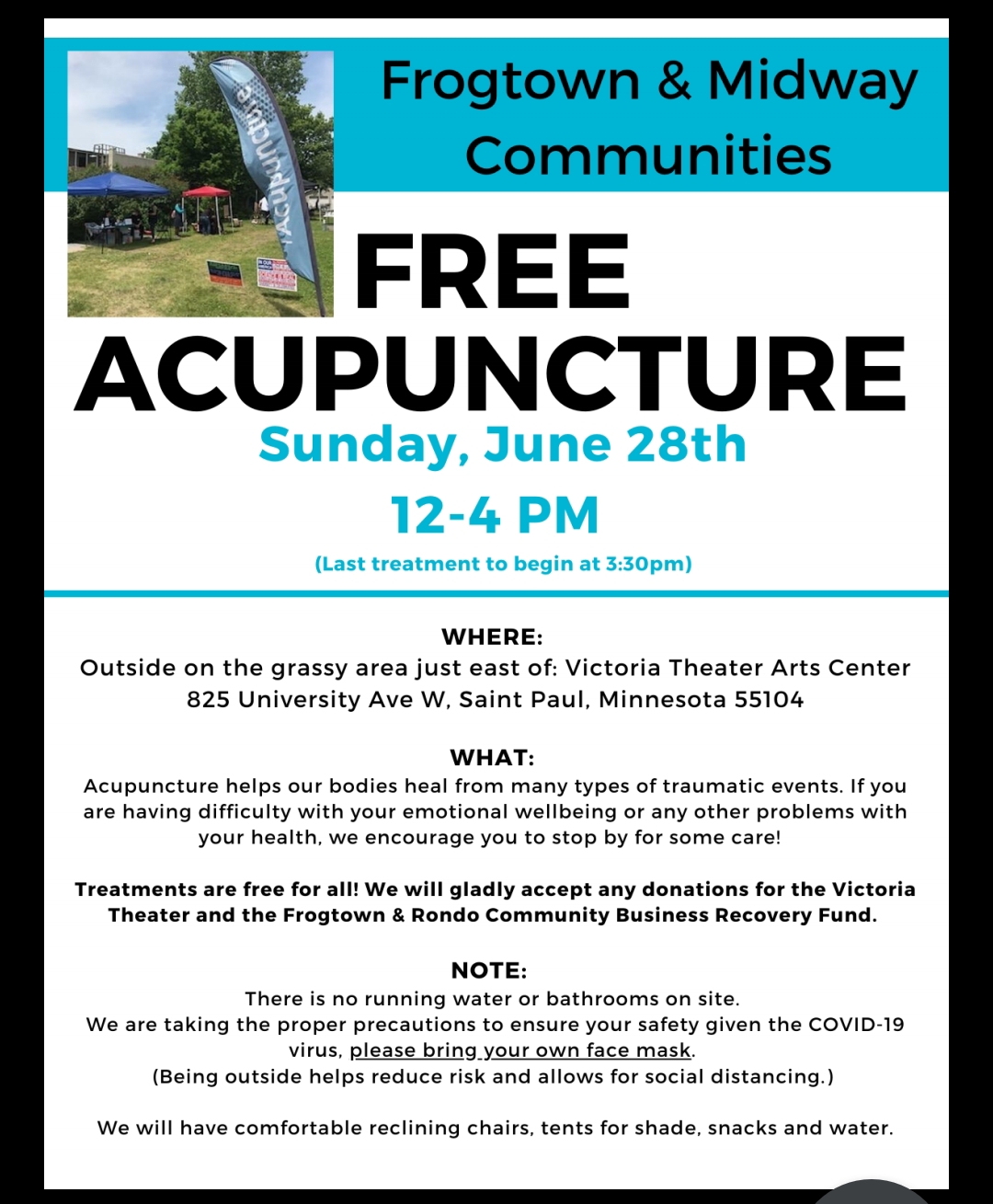
*
Errata: Categories have been added and a typo has been corrected.
### SAY IT LOUD ###
It’s A Kiss My Asana “Flashback Friday” April 3, 2020
Posted by ajoyfulpractice in 7-Day Challenge, Abhyasa, Bhakti, Books, Buddhism, Changing Perspectives, Dharma, Donate, Faith, Healing Stories, Health, Hope, Karma, Karma Yoga, Kirtan, Lent / Great Lent, Life, Loss, Mantra, Mathmatics, Meditation, Men, Minneapolis, Minnesota, Movies, Music, Mysticism, One Hoop, Pain, Philosophy, Poetry, Religion, Suffering, Tantra, Texas, Tragedy, Twin Cities, Vairagya, Wisdom, Women, Writing.Tags: adaptive yoga, hatha yoga, Hellacopters, inspiration, Iyengar, Joseph Campbell, KISS MY ASANA, Matthew Sanford, Rip Van Winkle, Washington Irving, yoga
5 comments
“You want it bad you want it oh so much
There are some things that you should know
Some things that someone like you just cannot touch
You weep and dwell on our loss
Stand denied by the nails in the cross
And I for one you for two
Knows no one’s gonna do it for you
No one’s gonna do it for you”
– “No One’s Gonna Do It For You” by The Hellacopters
A lot of people, most people I would surmise, have a moment when they wish all the hard stuff was over – that they could just go to sleep and wake up with their problems solved. Can you imagine what that would be like right now? Can you imagine what it would be like if you fell asleep tonight and, when you woke up, all of this was over? No more pandemic, no more social distancing, no more self-quarantines.
Now, can you imagine what it would feel like if you actually slept through all of this…and woke up to find the world changed? Everyone else has lived their way into a new normal and you are just discovering that the old normal is…history.
Yes, this would make a great story – but it’s not a new story; it’s actually a very old story. It’s a story that predates all the specific details of this present moment, but a story that endures because it touches on some very basic and universal truths:
- Suffering happens (This is the first of the 4 Noble Truths from Buddhism.)
- Change happens (Or, as Heraclitus put it over 400 years BCE, “You could not step twice into the same river” – which implies that we want things to stay the same.)
- “We must be willing to get rid of the life we’ve planned, so as to have the life that is waiting for us.” (Joseph Campbell as quoted in Reflections on the Art of Living: A Joseph Campbell Companion by Diane K. Osbon)
- As much as we want it to be otherwise, “no one’s gonna do it for you.” (The hard part of adulting, and lyrics from a song by The Hellacopters.)
Just to clarify, the four (4) items above are NOT the 4 Noble Truths, but it’s no accident that they mirror them or that I’ve pulled statements from what appears to be vastly different sources. And yet, and yet…. The reason why these elements can be found in philosophy, religions, comparative mythology, and rock music (even literature and mathematics) is that they are elements of the human experience. We find them everywhere; we find them inside of ourselves.
“You must unlearn what you have learned… No. Try not. Do. Or do not. There is no try.”
– Yoda in Star Wars: The Empire Strikes Back (and a quote I used during a 2019 Kiss My Asana donation-based class)
Kiss My Asana is an annual yogathon, to raise awareness and resources for Mind Body Solutions and their adaptive yoga program. Founded by Matthew Sanford, Mind Body Solutions helps those who have experienced trauma, loss, and disability find new ways to live by integrating both mind and body. They provide classes, workshops, and outreach programs. They also train yoga teachers and offer highly specialized training for health care professionals.
This year’s yogathon is only a week long. Seven days, at the end of the month, to do yoga, share yoga, and help others. By participating in the Kiss My Asana yogathon you join a global movement, but in a personal way. In other words, you practice yoga… for 7 days.
We’re doing this, right?
You don’t need to wait until the end of the month, however, to consider how you might participate. Start thinking now about how you can add 5 minutes of yoga (or meditation) to your day, how you can learn something new about your practice, or even how you would teach a pose to someone close to you – or even to one of your Master Teachers/Precious Jewels.
To give you some ideas, consider that in past years my KMA offerings have included donation-based classes and (sometimes) daily postings. Since it’s “Flashback Friday,” check out one of my previous offerings dated April 3rd (or thereabouts):
30 Poses in 30 Days (scroll down to see April 3rd)
A Musical Preview (scroll down to see March 3rd)
A Preview of the April 3rd Practice
My next virtual practice is on Saturday. Use the same Meeting ID as last week’s class or, if you were unable to attend last week, check out the “Class Schedules” tab. You’ll find access details in the calendar description for Saturday, April 4th. I’ll post the playlists by Saturday morning.
Also, if you are interested in YIN Yoga, plan to join me and a special guest on Wednesday (April 8th) for a special webinar/mini-practice at 3 PM. Details to be announced.
“No One’s Gonna Do It For You”
### KAALI DURGE NAMOH NAMAH ###
So Many Birthdays, So Many Stories, So Much Music… March 22, 2020
Posted by ajoyfulpractice in Books, Changing Perspectives, Gratitude, Healing Stories, Hope, Life, Men, Music, One Hoop, Peace, Poetry, Science, Super Heroes, Wisdom, Writing, Yoga.Tags: #Savewithstories, Andrew Lloyd Webber, Barbra Streisand, Billy Collins, James Patterson, Maty Ezraty, Stephen Sondheim, storytellers, yoga, yoga sequencing
4 comments
This post contains a link for “Save with Stories” – a partnership with Save the Children and No Kid Hungry. You’ll find the link in the sentence (below), “Being read to as a child is one of the great experiences in life.”
Maty Ezraty, a yoga teacher of teachers, who died last summer, once told a teacher, “A good sequence is like a good story. There is a beginning (an introduction), the middle (the heart of the story), and the end (the conclusion)”
Take a moment to go little deeper into the middle of your story, because that’s where we are: the middle of our stories.
People often tell me (as someone told me just this weekend) that one of the things they like about my classes is the story, as well as the way the poses and the music tell the story. The practice is always a way to tell our stories. It is also a way to process our stories, every time we inhale, every time we exhale. As I was reviewing Sunday’s playlist (March 22nd), I realized it not only tells the stories of some great storytellers celebrating birthdays today (as I intended) and is a way to process our current life-plot (as I intended), it also reflects my story as a lover of stories.
James Patterson (b. 1947, in Newburgh, NY), is a bestselling novelist and children’s book author whose books can always be found in my parents bookshelves. Doesn’t matter if it is mystery, suspense, romance, or science, Patterson keeps you in the moment and keeps a Chekhovian promise (which we’ll get to in the end). One of his protagonists is a 12-year old orphan named Max Einstein. Like her namesake, this Einstein is a genius with wild (in her case red) curly hair. She is told that her story combined with her emotional and intellectual quotients are why she is considered the world’s “last great hope.” Patterson wrote, “If we are to help save the human race, we must recognize the humanity in all, no matter their station in life.”
For his part, Patterson has donated over 300 million books to school-aged children and the military, over $70 million to support education, and endowed over 5,000 scholarships for teachers.
Stephen Sondheim (b. 1930, in New York City, NY) is a legendary musical theater composer and lyrics, as well as an award-winning film composer. He has won 8 Tony Awards (more than any other composer), 8 Grammy Awards, a Pulitzer Prize, a Laurence Olivier Award, and was awarded a 2015 Presidential Medal of Freedom. In all my time working in theater, I can’t say that I ever worked on any of Sondheim’s musicals (or the musicals of our final birthday composer), but I’ve seen my fair share of both their works – and can definitely sing along.
Also born in New York City, NY, in 1941, poet Billy Collins has been called “The most popular poet in America” and has served as United States Poet Laureate (2001 – 2003) and New York State Poet (2004 – 2006). Collins considers “humor a doorway into the serious” and begins his poem “Picnic, Lightning” by quoting Vladimir Nabokov. In Lolita, the protagonist says, “My very photogenic mother died in a freak accident (picnic, lightning)…”
The poem’s title is also the title of a collection of poems which my friend Mimi gave me in a moment when I was overwhelmed by grief. Fast forward almost a decade and, as if in a poem, I was dancing with Billy Collins on Nicollet Island and giving him a piece of Collins-inspired poetry. Even now, I can feel it…I can feel it…the joy of the moment, the joy of being alive; which fits in with his secret theory.
In a 2001 interview with The Paris Review, Billy Collins said, “I have a secret theory that people who are addicted to reading are almost trying to recreate the joy, the comfortable joy of being read to as a child…. Being read to as a child is one of the great experiences in life.”
Our final birthday storyteller is Baron Lloyd-Webber, or more properly styled, The Lord Lloyd-Webber…better known as the EGOT Andrew Lloyd Webber (no hyphen). Born today in 1948 (in Kensington, London), he has composed 13 musicals, a song cycle, a set of variations, 2 film scores, and a Latin Requiem Mass. He is an EGOT because he has won an Emmy Award, 4 Grammy Awards, an Academy Award (Oscar), and 7 Tony Awards – as well as 8 Laurence Olivier Awards and a plethora of other awards.
And now, back to that Chekhovian promise.
It was Anton Chekov who said that if there is a rifle (or a pistol) hanging on the wall in the first chapter/act, it must go off in the second or third. He told another playwright, “It’s wrong to make promises you don’t mean to keep.”
Whenever we step on the mat, there’s a part of us that is making a promise. Whenever, I put together a sequence there’s a part of me that thinks about that promise, as well as about that second Sondheim song (“Putting it together…bit by bit…piece by piece”) and Maty Ezraty’s sequencing advice about the middle (the heart) of the story. I consider how can I build up to a big heart opener and how we each need to process our own personal story in order to not only lift and open our hearts, but to also support our lifted and open hearts – especially in a time when it is so easy to close off.
Maty Ezraty said, “Practicing yoga is a privilege. And with this privilege comes a duty to be kind, to share a smile, and to offer yoga from the mat into the rest of your life.”
Here’s a mini-practice (5 minutes) which you can use it as your whole practice as the beginning/introduction portion of your practice and finish with a deeper back bend (even if it’s the same back bend – just with more awareness, more breath, and more smile.
### NAMASTE ###
Happy First Friday of Spring! March 20, 2020
Posted by ajoyfulpractice in Books, Buddhism, Changing Perspectives, Depression, Faith, Healing Stories, Hope, James Baldwin, Life, Loss, Meditation, Men, Minneapolis, Minnesota, One Hoop, Pain, Peace, Poetry, Religion, Suffering, Tragedy, Uncategorized, Vairagya, Yoga.Tags: Alison McGhee, Franz Wright, hatha yoga, inspiration, silence, somatic, somayoga, vinyasa, yoga
4 comments
“The long silences need to be loved, perhaps more than the words which arrive to describe them in time.”
– from God’s Silence by Franz Wright
Yes, it is hard to believe: Yesterday was gray, rainy, cold – even snow for some – and it was the first day of Spring in the Northern Hemisphere. I know, hard to believe. Some folks had forgotten all about Spring, it seems. Still others were expecting it to bring some great change… And maybe it did. But, like the old saying (April showers bring May flowers) implies, we have to wait for the beauty.
In waiting for the beauty of being able to offer a video practice inspired by Franz Wright, I was reminded that Wright’s collection after winning the 2004 Pulitzer Prize was entitled God’s Silence. I haven’t read it (yet), but I am suddenly fascinated by the idea of 144 pages worth of Franz Wright poetry curated around the idea of “God’s Silence.” Notice, that’s 144 pages – not 144 poems. (Poets everywhere are now doing the math.) This is the kind of the thing that gets me oddly excited, especially right now, because there is so much I want to know!
I want to know if he is referring to silence that is the response to a prayer or a request (or even a curse); the silence that precedes an answer; the silence that follows the answer (when the questioner is dumbfounded or in awe of the response); the silence when one is pondering the best way to phrase something and therefore measuring their words; the silence of shock (can we shock God?); the silence of disappointment; the silence of wonder; the silence when no one is around; the silence of sleeping children; the silence between one breath and the next; the silence of meditation; the silence of peace; the silence honoring the dead; the silence just before a newborn declares itself alive; or….The list goes on. He could be talking about all of the above. Or none of the above. There are so many possibilities!
What I know is that he starts off with “The telephone ringing / in the deserted city ––– ” and and that one of the poems is called “Solitary Play: Minnesota, 1961.” I feel like this is where we are at, and I’m here for it.
“You survive this and in some terrible way, which I suppose no one can ever describe, you are compelled, you are corralled, you are bullwhipped into dealing with whatever it is that hurt you. And what is crucial here is that if it hurt you, that is not what’s important. Everybody’s hurt. What is important, what corrals you, what bullwhips you, what drives you, torments you, is that you must find some way of using this to connect you with everyone else alive. This is all you have to do it with. You must understand that your pain is trivial except insofar as you can use it to connect with other people’s pain; and insofar as you can do that with your pain, you can be released from it, and then hopefully it works the other way around too; insofar as I can tell you what it is to suffer, perhaps I can help you to suffer less.”
– James Baldwin speaking at Community Church in NYC on Nov. 29, 1962
Besides an ultimate love for poetry that gets you through hard times (because you realize someone has been through harder – or, as hard of a time), maybe one of the reasons I’m here for it is because part of my practice involves silence. The kind of silence and stillness that can make people uncomfortable, because it is so powerful. But, simultaneously, the kind of silence and stillness that is the epitome of peace. When Patanjali codified the philosophy of yoga in the Yoga Sutras, he wrote, “yogash citta vritti nirodah.” Yoga ceases the fluctuations of the mind.
Silence.
Perhaps, God’s silence.
It’s 2 days late and $2 dollars short, but I offer you a video of Wednesday’s practice (inspired by Franz Wright). It’s nowhere near perfect, but I hope it brings you a moment of peace, a moment of ease. I hope it brings you stillness and yes, silence.

