EXCERPT: “More Songs for the DJ’s Adventure (a remix*)” March 10, 2026
Posted by ajoyfulpractice in 19-Day Fast, Art, Baha'i, Dharma, Healing Stories, Hope, Kirtan, Lent / Great Lent, Life, Music, One Hoop, Philosophy, Ramadan, Religion, Science, Wisdom, Yoga.Tags: 988, music, Rachel Martin, Rick Rubin, Season for Nonviolence
add a comment
“Ramaḍān Mubarak, Blessed Ramaḍān!” to anyone observing the holy month of Ramaḍān. Many blessings to all, and especially to those celebrating and/or observing Lent, Great Lent, and/or the Baháʼí 19-Day Fast.
Peace, ease, and unity to all, throughout this “Season for Nonviolence” and all other seasons!
“Each of these moments
is an invitation
to further inquiry:
looking deeper,
zooming out, or in.
Opening possibilities
for a new way of being.”
— quoted from the prelude to The Creative Act: A Way of Being by Rick Rubin (b. 1963)
CLICK ON THE EXCERPT TITLE FOR MORE.
“We’re making something with our hearts and souls, and then we’re sharing it with the world. And if people like it, it’s great, and if they don’t, we wouldn’t change it, because we’ve made it with our hearts and souls, and it’s true. It’s a true thing we’re doing.”
— Rick Rubin, quoted from an NPR, All Things Considered interview with Rachel Martin entitled “Rick Rubin on taking communion with Johnny Cash and not rushing creativity” (December 10, 2023)
Please join me today (Tuesday, March 10th) at 12:00 PM or 7:15 PM for a yoga practice on Zoom. You can use the link from the “Class Schedules” calendar if you run into any problems checking into in the class. You can request an audio recording of this practice via a comment below or by emailing myra (at) ajoyfulpractice.com.
Tuesday’s playlist is available on YouTube and Spotify. [Look for “03102021 Songs for the DJ’s Adventure”]
If you are thinking about suicide, worried about a friend or loved one, or would like emotional support, you can dial 988 (in the US) or call 1-800-273-TALK (8255) for the Suicide and Crisis Lifeline. You can also call this TALK line if you are struggling with addiction or involved in an abusive relationship. The Lifeline network is free, confidential, and available to all 24/7. YOU CAN TALK ABOUT ANYTHING.
White Flag is an app, which I have not yet researched, but which may be helpful if you need peer-to-peer (non-professional) support.
If you are a young person in crisis, feeling suicidal, or in need of a safe and judgement-free place to talk, you can also click here to contact the TrevorLifeline (which is staffed 24/7 with trained counselors).
In the spirit of generosity (“dana”), the Zoom classes, recordings, and blog posts are freely given and freely received. If you are able to support these teachings, please do so as your heart moves you. (NOTE: You can donate even if you are “attending” a practice that is not designated as a “Common Ground Meditation Center” practice, or you can purchase class(es).
Donations are tax deductible; class purchases are not necessarily deductible.
Check out the “Class Schedules” calendar for upcoming classes.
### AUM (is the bassline and the baseline) ###
EXCERPT (2026): “Do You See What I See? & Your Presence Is Requested” January 6, 2026
Posted by ajoyfulpractice in Art, Bhakti, Books, Changing Perspectives, Christmas, Dharma, Faith, Gratitude, Healing Stories, Hope, Life, Love, Music, Mysticism, New Year, One Hoop, Pain, Peace, Philosophy, Religion, Suffering, Wisdom, Writing, Yoga.Tags: 988, Art, avidya, Epiphany, Epiphanytide, faith, inspiration, Johann Sebastian Bach, magi, Rev. Ed Trevors, Reverend Ed Trevors, Three Kings Day, Twelvetide, Whitney Houston, Writing, Yoga Sutra 2.20, Yoga Sutras 2.12-2.14, Yoga Sutras 2.16-2.18, Yoga Sutras 2.3-2.9
add a comment
“Happy New Year!” to everyone. “Merry Little Christmas, Epiphany, Theophany, Three Kings Day, & Twelfth Day of Christmas (for some) or Eve of the Nativity of Christ (for others)!”
May you be safe and protected / May you be peaceful and happy / May you be healthy and strong!
“What I really want to get to today is why the Magi came. What was it that brought them to Bethlehem? What was it that brought them to find Jesus and his family?”
— quoted from “The Epiphany Light: Another Reflection” by Reverend Ed Trevors (dated Jan 6, 2022)
Click on the excerpt title below for more about the holidays being observed, a little insight into why people may see the same things in different ways, & the video quoted above.
Yoga Sutra 2.20: draşțā dŗśimātrah śuddho’pi pratyayānupaśyah
— “The sheer power of seeing is the seer. It is pure, and yet it sees only what the mind [brain] shows it.”
Please join me today (Tuesday, January 6th) at 12:00 PM or 7:15 PM (virtual or in-person) yoga practice. You must be registered and confirmed to attend in person. You can use the link from the “Class Schedules” calendar if you run into any problems checking into the class. You can request an audio recording of this practice via a comment below or by emailing myra (at) ajoyfulpractice.com.
Tuesday’s playlist is available on YouTube and Spotify. [Look for “01062021 Epiphany & Theophany”]
If you are thinking about suicide, worried about a friend or loved one, or would like emotional support, you can dial 988 (in the US) or call 1-800-273-TALK (8255) for the Suicide and Crisis Lifeline. You can also call this TALK line if you are struggling with addiction or involved in an abusive relationship. The Lifeline network is free, confidential, and available to all 24/7. YOU CAN TALK ABOUT ANYTHING.
White Flag is an app, which I have not yet researched, but which may be helpful if you need peer-to-peer (non-professional) support.
If you are a young person in crisis, feeling suicidal, or in need of a safe and judgement-free place to talk, you can also click here to contact the TrevorLifeline (which is staffed 24/7 with trained counselors).
In the spirit of generosity (“dana”), the Zoom classes, recordings, and blog posts are freely given and freely received. If you are able to support these teachings, please do so as your heart moves you. (NOTE: You can donate even if you are “attending” a practice that is not designated as a “Common Ground Meditation Center” practice, or you can purchase class(es).
Donations are tax deductible; class purchases are not necessarily deductible.
Check out the “Class Schedules” calendar for upcoming classes.
### Do You Believe What You Are Shown? ###
HAPPY New Year 2026! ** UPDATED** January 1, 2026
Posted by ajoyfulpractice in Bhakti, Changing Perspectives, Donate, Faith, Healing Stories, Health, Hope, Japa, Japa-Ajapa, Karma Yoga, Life, Love, Mala, Mantra, Meditation, Mysticism, New Year, One Hoop, Peace, Philosophy, Traditional Chinese Medicine, Vipassana, Wisdom, Writing, Yin Yoga, Yoga.Tags: 108 Sun Salutations, Anthony Shumate, Kwanzaa, New Year's Day, Nguzo Saba, Nia, Sun Salutations, Surya Namaskar
add a comment
“Happy New Year!” “Kwanzaa, yenu iwe na heri!” – “May your Kwanzaa be happy!” to everyone who is celebrating!
Many blessings to all!
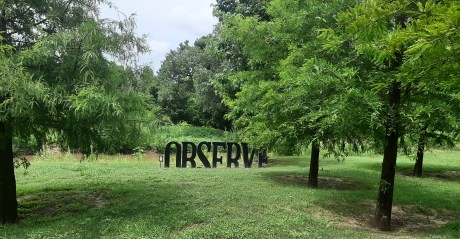
Part of the 6-piece “Monumental Moments” series
by Anthony Shumate, 2015
(located in Buffalo Bayou Park, along the Kinder Footpaths)
TRANSFORM • RENEW • HEAL • ENERGIZE
Celebrate the New Year with 108 Sun Salutations 10:00 AM – 1:00 PM CST!
AND/OR
RELAX • RELEASE • REST • RENEW • HEAL
Celebrate the New Year with Restorative Yoga+Meditation
5:00 PM – 7:00 PM CST!
The New Year is a beginning and an ending… and it is also a middle. On New Year’s Day we honor and celebrate transition with 108 Sun Salutations in the morning (10 AM – 1 PM, CST) and/or a Restorative* Yoga plus Meditation practice in the evening (5 – 7 PM, CST). We also put things in perspective.
These practices are open and accessible to all, regardless of experience.
*NOTE: In previous years, the evening practice has been Yin Yoga.
Please wear loose, comfortable clothing and make sure you are well hydrated before the practice. It is best to practice on an empty stomach (especially for the 108 ajapa-japa mala), but if you must eat less than 1 hour before the practice, make sure to keep it light. Make sure to have a towel (at the very least) for the 108 practice. For Restorative Yoga, a pillow/cushion or two, blocks or (hardcover) books, and a blanket or towel will be useful. I always recommend having something handy (pen and paper) that you can use to note any reflections (and will have some supplies handy).
IN-PERSON IS FULL! Use the link above for login information (or click here for more details about these practices and other practice opportunities related to the New Year).
The 108 playlist is available on YouTube and Spotify. [Look for “New Year’s Day 108 Ajapa-Japa Mala.”] NOTE: This playlist was revised for 2024, but should still sync up with the 2021 — 2023 recordings.
The Restorative playlist is available on YouTube and Spotify. [Look for “01072022 A Reflective Moment”]
Both practices are available in-person (if you are registered) and online. They are also donation based. If you don’t mind me knowing your donation amount you can donate to me directly. You can also email me to request my Venmo or Ca$hApp ID. If you want your donation to be anonymous (to me) and/or tax deductible, please donate through Common Ground Meditation Center (type my name under “Teacher”).
Please note that there is still no late admittance and you must log in before the beginning of the practice (so, by 9:45 AM for the 108 or by 4:45 PM for the Restorative Yoga+Meditation). You will be re-admittance if you get dumped from the call.)
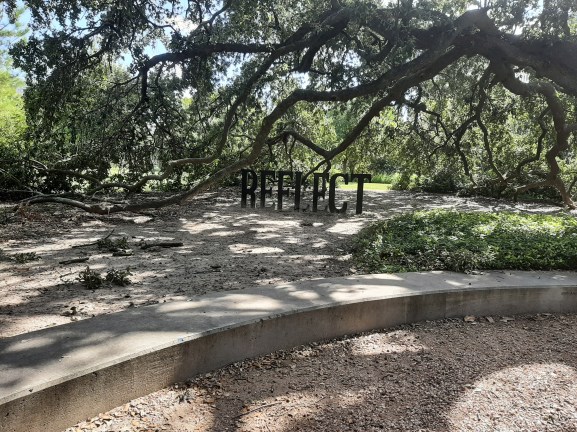
Part of the 6-piece “Monumental Moments” series
by Anthony Shumate, 2015
(located in Buffalo Bayou Park, along the Kinder Footpaths)
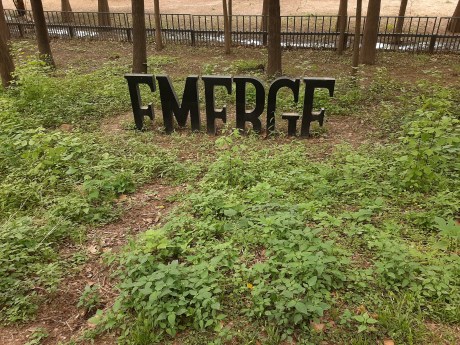
Part of the 6-piece “Monumental Moments” series
by Anthony Shumate, 2015
(located in Buffalo Bayou Park, along the Kinder Footpaths)
*Anthony Shumate’s “Monumental Moments” sculptures are located in Buffalo Bayou Park, along the Kinder Footpaths in Houston, Texas. They are unexpected reminders to “Explore,” “Pause,” “Reflect,” “Listen,” “Emerge,” and “Observe” – all things we do in our practice!
### NAMASTE ###
A Quick Note & UPDATED EXCERPTS Regarding Social Economics (the post-practice Monday post, revised for 2026) December 29, 2025
Posted by ajoyfulpractice in Bhakti, Changing Perspectives, Christmas, Faith, Healing Stories, Hope, Life, Loss, Love, Music, Mysticism, One Hoop, Pain, Peace, Religion, Suffering, Tragedy, Wisdom, Yoga.Tags: 12 Days of Christmas, 988, Bobby Ray Simmons Jr., Christmas, Claude Kelly, faith, family, Feast of Saint Thomas of Canterbury, holidays, Jessica Cornish, Jessie J, Kwanzaa, Lukasz Gottwald, Mishlei, New Year's, Nguzo Saba, Proverbs, Twelvetide, Ujamaa, Wisdom
add a comment
“Kwanzaa, yenu iwe na heri!” – “May your Kwanzaa be happy!” to everyone who is celebrating! May you have a meaningful observation no matter if your focus is on the Nativity Fast / St. Philip’s Fast or the Feast Day of Saint Thomas of Canterbury (and London). Many blessings to everyone!
This is the post-practice post for Monday, December 29th. It includes new and re-posted content. The 2025 prompt question was, “What is your love language?” You can request an audio recording of this practice or a previous practice via a comment below or (for a slightly faster reply) you can email myra (at) ajoyfulpractice.com.
In the spirit of generosity (“dana”), the Zoom classes, recordings, and blog posts are freely given and freely received. If you are able to support these teachings, please do so as your heart moves you. (NOTE: You can donate even if you are “attending” a practice that is not designated as a “Common Ground Meditation Center” practice, or you can purchase class(es).
Donations are tax deductible; class purchases are not necessarily deductible.
I am offering in-person classes at the beginning of January 2026. Click here for more details and to reserve your spots now. Let’s start the 2026 together!
Check out the “Class Schedules” calendar for upcoming classes (and holiday cancellations).
“We’re paying with love tonight
It’s not about the money, money, money
We don’t need your money, money, money
We just wanna make the world dance
Forget about the price tag
Ain’t about the, uh, cha-ching, cha-ching
Ain’t about the, yeah, ba-bling, ba-bling”
— quoted from the song “Price Tag” by Jessie J (written by Lukasz Gottwald / Claude Kelly / Jessica Cornish / Bobby Ray Simmons Jr.)
Some things (like people) are priceless. Yet, even when we know that, it is so easy to get distracted by the price tag. It is especially easy to get distracted this time of year, because of all the gift giving and receiving (and, for some, the possibility of a Christmas bonus).
On the fourth day of Kwanzaa — which is also the the fourth or fifth day of the “12 Days of Christmas” (depending on when you start counting) — we focus on “Ujamaa (Cooperative Economics)” and go a little deeper into how we value and appreciate people and things. We also touch on the struggles that arise in a society that has never found a good balance between the material and the spiritual.
Even though “it’s not about the money,” I do talk about the money.
The following (revised) excerpt, from the 2022 “Social Economics” post, includes a 2025 update:
“The actual cost of ‘The 12 Days of Christmas’ varies, depending on if you are giving a single set of each gift (i.e. only one set of five gold rings) or if you are going the cumulative route. According to PNC Financial Services Group’s annual ‘Christmas Price Index’ (which they have issued for
4142 years), the cost for one set of each gift in 2019 was $38,993.59; with a cumulative price tag of $170, 298.03, which was just barely more than the 2018 cost. In 2020, however, the cost was $16,168.10 – $105, 561.80. In 2021, the cost for a single set of gifts was $41,205.58; with a cumulative total of $179,454.19. In 2022, the overall cost went up 10.5%, putting the single set of gifts at $45,523.27 and the cumulative total at $197,071.09.”2025 UPDATE: This year, the overall costs for a single set of gifts went up (4.5%, from 2024, which was already up 5.4%, from 2023) to $51,476.12 and the cumulative total went up (4.4%) to $218,542.98. Last year, the highest percentage increase was for the partridge in a pear tree — because the cost of the tree (in particular the fertilizer for the tree) has steadily increased over the last few years. This year, however, the highest percentage increase — by far, at 32.5% — was the gift of the Five Gold Rings. (Unfortunately, the increase in the price of gold is a sign of not so good things to come as far as the U. S. economy is concerned.) NOTE: The Lords-A-Leaping also went up (again) and remains the most expensive gift (even more than the swans)!
CLICK ON THE EXCERPT TITLE BELOW FOR MORE.
Ujamaa (cooperative economics)—To build and maintain our own stores, shops, and other businesses and to profit from them together.
— The fourth of the Nguzo Saba (or “Seven Essential Pillars”) of Kwanzaa
There is no playlist for the Common Ground Meditation Center practices.
A playlist inspired by the 4th day of Kwanzaa is available on YouTube and Spotify. [Look for “12292021 Social Economics”]
If you are thinking about suicide, worried about a friend or loved one, or would like emotional support, you can dial 988 (in the US) or call 1-800-273-TALK (8255) for the Suicide and Crisis Lifeline. You can also call this TALK line if you are struggling with addiction or involved in an abusive relationship. The Lifeline network is free, confidential, and available to all 24/7. YOU CAN TALK ABOUT ANYTHING.
White Flag is an app, which I have not yet researched, but which may be helpful if you need peer-to-peer (non-professional) support.
If you are a young person in crisis, feeling suicidal, or in need of a safe and judgement-free place to talk, you can also click here to contact the TrevorLifeline (which is staffed 24/7 with trained counselors).
I am offering in-person classes during January 2026. Click here for more details and to reserve your spots now. Let’s start the 2026 together!
### MISHLEI / PROVERBS 3:13 – 3:15 ###
A Quick Note & EXCERPT: “Celebrating What Supports the Practice” December 27, 2025
Posted by ajoyfulpractice in 7-Day Challenge, Art, Bhakti, Changing Perspectives, Christmas, Faith, Healing Stories, Hope, Life, Love, Music, Mysticism, One Hoop, Peace, Philosophy, Religion, Science, Suffering, Yoga.Tags: 12 Days of Christmas, 988, Charles Darwin, Christmas, holidays, Kujichagulia, Kwanzaa, Nativity Fast, Nguzo Saba, psychology, Saint John the Apostle, Saint Stephen, Sammy Davis Jr., social science, St. Philip's Fast
add a comment
“Kwanzaa, yenu iwe na heri!” — “May your Kwanzaa be happy!” to everyone who is celebrating! May you have a good observation if your focus is the Feast Day of Saint Stephen or Saint John or the Nativity Fast / St. Philip’s Fast.
“nguzo (Swahili)
Noun
nguzo
-
prop, pillar (an object placed against or under another, to support it)
-
column, supporting pole
-
pillar (an essential supporting part of something)
-
(figuratively) a support or comfort”
— definition from WordSense.eu (and English dictionary based on Wiktionary)
Today is the second day of Kwanzaa and the second or third day of “The 12 Days of Christmas” (depending on when you start counting). While some (Orthodox) Christian traditions are still getting ready for Christmastide, some (Western) Christian traditions are celebrating the Feast Day of Saint John, while others (in some Orthodox traditions) are focused on Saint Stephen.
Even though the rituals and traditions may seem different from the outside, they share similar practices (see excerpt below). They also have similar effects on the inside: They keep people focused on their foundations.
CLICK ON THE EXCERPT BELOW FOR MORE.
“I gotta be me, I’ve gotta be me
What else can I be but what I am
I want to live, not merely survive
And I won’t give up this dream
Of life that keeps me alive
I gotta be me, I gotta be me
The dream that I see makes me what I am”
— quoted from the song “I Gotta Be Me” by Sammy Davis, Jr. (written by Walter Marks)
Please join me for a virtual yoga practice on Zoom, today (Saturday, December 27th) at 12:00 PM. You can use the link from the “Class Schedules” calendar if you run into any problems checking into the class. You can request an audio recording of this practice via a comment below or (for a slightly faster reply) you can email me at myra (at) ajoyfulpractice.com.
Saturday’s playlist is available on YouTube and Spotify. [Look for “12272020 Will, Determination, & John”]
If you are thinking about suicide, worried about a friend or loved one, or would like emotional support, you can dial 988 (in the US) or call 1-800-273-TALK (8255) for the Suicide and Crisis Lifeline. You can also call this TALK line if you are struggling with addiction or involved in an abusive relationship. The Lifeline network is free, confidential, and available to all 24/7. YOU CAN TALK ABOUT ANYTHING.
White Flag is an app, which I have not yet researched, but which may be helpful if you need peer-to-peer (non-professional) support.
If you are a young person in crisis, feeling suicidal, or in need of a safe and judgement-free place to talk, you can also click here to contact the TrevorLifeline (which is staffed 24/7 with trained counselors).
“Umoja (unity) — To strive for and maintain unity in the family, community, nation, and race.
Kujichagulia (self-determination) — To define ourselves, name ourselves, create for ourselves, and speak for ourselves.
Ujima (collective work and responsibility) — To build and maintain our community together and make our brother’s and sister’s problems our problems and to solve them together.
Ujamaa (cooperative economics) — To build and maintain our own stores, shops, and other businesses and to profit from them together.
Nia (purpose) — To make our collective vocation the building and development of our community in order to restore our people to their traditional greatness.
Kuumba (creativity) — To do always as much as we can, in the way we can, in order to leave our community more beautiful and beneficial than we inherited it.
Imani (faith) — To believe with all our heart in our people, our parents, our teachers, our leaders, and the righteousness and victory of our struggle.”
— The Nguzo Saba (or “Seven Essential Pillars”) of Kwanzaa
In the spirit of generosity (“dana”), the Zoom classes, recordings, and blog posts are freely given and freely received. If you are able to support these teachings, please do so as your heart moves you. (NOTE: You can donate even if you are “attending” a practice that is not designated as a “Common Ground Meditation Center” practice, or you can purchase class(es).
Donations are tax deductible; class purchases are not necessarily deductible.
Check out the “Class Schedules” calendar for upcoming classes.
CHECK OUT THE CALENDAR! You can kick off New Year’s Day 2026 in two ways (and in two spaces): with the very active practice of 108 Sun Salutations at 10:00 AM or with the very “chill” practice of a Restorative Yoga+Meditation practice beginning at 5:00 PM. All times are Central Standard.
Register to practice in-person (or join us via Zoom). Details are posted on the “Class Schedules” calendar.
Updated for clarity. 12/28/2025
### You Are Supported! ###
FTWMI: “A Christmas Prelude” (revised*) December 23, 2025
Posted by ajoyfulpractice in Bhakti, Christmas, Faith, Healing Stories, Hope, Music, One Hoop, Peace, Poetry, Religion, Wisdom, Writing, Yoga.Tags: 4Him, 988, Carola, Christmas carols, David Allen Clark, Donald A. Koch, healing, Healing Stories, Katherine Kennicott Davis, Mark R. Harris, New Year's Day, story, yoga
add a comment
Peace and good will!” to all. “Happy Holidays!” and “Merry Christmas!” to all who are celebrating.
For Those Who Missed It: The following is the slightly revised version of a post from December 23, 2020. Some formatting, musical credits, and dates have been adjusted accordingly.
“Why me, I’m just a simple man of trade
Why Him with all the rulers in the world
Why here inside this stable filled with hay
Why her, she’s just an ordinary girl
Now I’m not one to second guess
What angels have to say
But this is such a strange way to save the
World”
— quoted from the song “What a Strange Way to Save the World” by 4Him (written by Mark R. Harris, Donald A. Koch, David Allen Clark)
Almost everyone has a favorite Christmas carol — even if they don’t celebrate Christmas! And the carols not only tell the story of Christmas, they are a great way to tell the story. For a little over a decade, I have used a variation of today’s playlist to do just that: tell the story of Christmas. Sometimes, Christmastide overlaps Chanukah and the playlist expands accordingly. It’s not that hard, really. After all, they are both celebrations of light that focus us on the 25th.
This year’s variation, as it appears on YouTube and Spotify, is a little different. There’s no Garth; however, my favorite Garth “carol” makes an appearance in a surprisingly endearing format — and delivered by someone dearly loved. Both formats include an a cappella version of “The Little Drummer Boy” (which holds a special place in my heart), but they are different versions. Another variation on a theme: the two different versions of “Hark! The Herald Angels Sing!” The version on YouTube includes an introduction to a live performance by a choir in London (and concludes with a prayer). The version on Spotify is the one I used to play in my (in-person) classes just before we start the practice.
Which brings me to another change: the beginning of the playlist. Just as so many set the tone this time of year by playing holiday music, I usually have two or three tracks at the beginning of the playlist that are not actually intended for the practice. They are simply to establish a feeling of reverence and celebration consistent with the time. The version of “Hark! The Herald Angels Sing!” (by Carola) that I typically use is amazing and makes every space feel a little like a cathedral. But, since there is no way to really time things out the way I normally would, you can enjoy the music after the practice.
“Mary nodded
Pa rum pum pum pum
The ox and lamb kept time
Pa rum pum pum pum
I played my drum for him
Pa rum pum pum pum
I played my best for him
Pa rum pum pum pum,
Rum pum pum pum,
Rum pum pum pum
Then he smiled at me
Pa rum pum pum pum
Me and my drum”
— quoted from the song “The Little Drummer Boy” (originally written as “”Carol of the Drum” by Katherine Kennicott Davis)
Please join me today (Tuesday, December 23rd) at 12:00 PM or 7:15 PM for a yoga practice on Zoom. You can use the link from the “Class Schedules” calendar if you run into any problems checking into in the class. You can request an audio recording of this practice via a comment below or by emailing myra (at) ajoyfulpractice.com.
Tuesday’s playlist is available on YouTube and Spotify. [Look for “12232020 A Christmas Prelude”]
*2025 Music Note: I updated the playlist for the longer (evening practice). The Spotify playlist includes extra tracks, since the longer Winter Solstice track was not yet available.
If you are thinking about suicide, worried about a friend or loved one, or would like emotional support, you can dial 988 (in the US) or call 1-800-273-TALK (8255) for the Suicide and Crisis Lifeline. You can also call this TALK line if you are struggling with addiction or involved in an abusive relationship. The Lifeline network is free, confidential, and available to all 24/7. YOU CAN TALK ABOUT ANYTHING.
White Flag is an app, which I have not yet researched, but which may be helpful if you need peer-to-peer (non-professional) support.
If you are a young person in crisis, feeling suicidal, or in need of a safe and judgement-free place to talk, you can also click here to contact the TrevorLifeline (which is staffed 24/7 with trained counselors).
In the spirit of generosity (“dana”), the Zoom classes, recordings, and blog posts are freely given and freely received. If you are able to support these teachings, please do so as your heart moves you. (NOTE: You can donate even if you are “attending” a practice that is not designated as a “Common Ground Meditation Center” practice, or you can purchase class(es).
Donations are tax deductible; class purchases are not necessarily deductible.
Check out the “Class Schedules” calendar for upcoming classes.
CHECK OUT THE CALENDAR! You can kick off New Year’s Day 2026 in two ways (and in two spaces): with the very active practice of 108 Sun Salutations at 10:00 AM or with the very “chill” practice of a Restorative Yoga+Meditation practice beginning at 5:00 PM. All times are Central Standard.
Register to practice in-person (or join us via Zoom). Details are posted on the “Class Schedules” calendar.
### “AND HAVE YOURSELF A MERRY LITTLE CHRISTMAS, NOW” ###
FTWMI: “Have Light, Let It Shine” October 19, 2025
Posted by ajoyfulpractice in Art, Bhakti, Books, Changing Perspectives, Dharma, Faith, Food, Healing Stories, Hope, Japa, Japa-Ajapa, Kirtan, Life, Mantra, Meditation, Music, Mysticism, One Hoop, Philosophy, Religion, Wisdom, Women, Yoga.Tags: 988, Babul Sharma, Choti Diwali, Diwali, Elizabeth Cady Stanton, Garth Brooks, Gayatri Mantra, Gāyatrī Mantra, Kali Puja, light, Mahābhārata, mantra, puja, Rig Veda, Rāmāyaņa, The Ramayana, Tom Walker, Yoga Sutra 1.36, Yoga Sutras 2.46-2.53
add a comment
Happy Choti Diwali, Diwali, and Kali Puja! Blessings, light, love, and peace to everyone, everywhere!
For Those Who Missed It: The following is the 2024 version of a 2023 post. Date related details and links have been updated/revised.
“oṃ bhūr bhuvaḥ svaḥ
tat savitur vareṇyaṃ
bhargo devasya dhīmahi
dhiyo yo naḥ pracodayāt”
[Conscious, subconscious, unconscious mind, and every plane of existence, we meditate on the (adorable) Light, that it may inspire us, enlighten us, and remove our obstacles.]
— “Gāyatrī Mantra” from the Rig Veda (from Mandala 3.62.10)
During the darkest times of the year, people all over the world celebrate light. In each culture’s stories and traditions, light overcoming darkness is a metaphor for good overcoming evil; life overcoming death, wisdom overcoming fear; love overcoming hate; hope overcoming despair, and knowledge overcoming ignorance. Once again, the celebrations kick off with Diwali, the Indian festival of lights.
Diwali is a five-day celebration which takes its name from Deepavali, which are rows and rows of lamps. It is a lunar calendar based holiday observed throughout India, parts of Southeast Asia, and the diaspora by Hindus, Sikhs, Jains, and Newar Buddhists. Each day has different rituals and customs, which may vary between religious, cultural, and regional traditions. But, the common threads are the (clay) lamps and other great displays of light; pujas (“offerings”); feasts and sweets; epic tales of heroes and heroines prevailing; and a focus on relationships and also on wealth.
While some communities start earlier, most people’s Diwali celebrations begin with Dhanteras (October 18, 2025), a day that the Indian ministry of Ayurveda, Yoga and Naturopathy, Unani, Siddha and Homeopathy designated as “National Ayurveda Day” (in 2016). Many pujans (“offering ceremonies”) are dedicated to Lakshmi, the goddess of wealth and prosperity, fertility and abundant crops, and overall good fortunate. People also create decorations, including rangolas, which are associated with Lakshmi; clean their homes; and buy something new — usually gold, silver, clothes, and gadgets.
The second day of Diwali (which is today in 2025) is known as Choti (“little”) Diwali and, also, as Naraka Chaturdasi. Naraka is a Sanskrit word for “hell” and the day is associated with the story of Krishna defeating the asura (“demon”) Narakasura. Again, the elements of the story — as well as the rituals and traditions of the day — have symbolic significance related to the ways people live their lives and the ways their souls can be liberated from suffering (i.e., hell). Some people spend the day praying to the souls of their ancestors, sending light for their afterlife journey. In some regions (e.g., Tamil Nadu, Goa, and Karnataka), Choti Diwali is the main Diwali day. People get oil massages and take ritual baths. Some people also spend part of the day visiting their temple. For people celebrating the “little” Diwali, the second day is a day to visit friends and family and share sweets and gifts.
“Fiery-eyed Durga astride a golden lion; Saraswati resplendent in white along with her swan; a glowing Lakshmi seated on a lotus in bloom; and Kali with her frightening garland of skulls. The legends that surround them are told over and over again and soon the children know them by heart. For them, as it is for me, these beautiful lotus-eyed goddesses are not just religious icons but part of one’s family. They laugh and cry, quarrel with each other over petty things, they have fragile natures despite their powerful forms. They are often jealous, angry, greedy and plot deviously against their enemies but still they need to be loved by their devotees, Then they appear, splendid, glorious and benevolent, to dazzle us with their all-pervading light.”
— quoted from the “Introduction” to The Book of Devi by Bubul Sharma
The third day (tomorrow, October 20, 2025) is the biggest day for most: Diwali! It coincides with the darkest night of the festival and is normally marked by people getting together, feasting and celebrating. In fact, this is a time when the youngest members of the family visit their elders; businesses owners give gifts to their employees; and, instead of the fasts that are commonly associated with some Indian religious rituals, there are great feasts. Pujas are again made to Lakshmi. For some people, however, pujans are dedicated to Kali, the goddess of time and change, creation, power, war, destruction, and death. In many ways, making an offering to Kali highlights the fact that Diwali is a day of renewal, new beginnings, and starting over.
The stories in the Rāmāyaņa highlight all of the themes associated with Diwali — and the end is particularly pertinent to the third day. In the epic poem (which is part of the Mahābhārata), Rāma, his wife Sītā, and his brother Lakshmana are exiled by the brothers’ father. Their great adventure includes Sītā being kidnapped by the demon king Ravana (and rescued with help from Hanuman, the monkey king); a great battle where an entire army gets sick (and ultimately healed, thanks to Hanuman); the defeat of Ravana; and the revelation that Hanuman overcame his doubts, insecurities, and fears by focusing on the love and devotion for Lord Rama that shined (like a bright light) in his heart. Finally, after 14 years of exile, Rāma, Sītā, and Lakshmana returned home to Ayodhya — on the day that is now celebrated as Diwali. According to the legends, people lit up the city in order to guide the travelers home and also to celebrate their return. So, every year, people from all of the different religions light up their homes, businesses, and temples to commemorate this auspicious homecoming.
SIDE NOTE: As they travelled home, Sītā requested a pit stop in Kishkindha, because she wanted to enter Ayodhya with a company of women as her escorts. The request and fulfillment are conveyed in just a few lines, making up a minuscule portion of the epic poem. Normally, I would not mention this tiny passage — even though, if you think about it, it is a powerful moment when a woman who has suffered trauma and drama asks for (and receives) what she needs before facing what could be more trauma, drama, and judgement.
It also highlights the power of a group of women standing up for each other — which I highlighted in 2023, because Diwali fell on the anniversary of the birth of the birth of Elizabeth Cady Stanton (the social activist, abolitionist, and suffragist who was born on November 12, 1815, in Johnstown, New York). I’m mentioning here it again, in 2025, just in case someone needs the subliminal message.
“The moment we begin to fear the opinions of others and hesitate to tell the truth that is in us, and from motives of policy are silent when we should speak, the divine floods of light and life no longer flow in our souls. Every truth we see is ours to give the world, not to keep to ourselves alone, for in so doing we cheat humanity out of their rights and check our own development.”
— quoted from Elizabeth Cady Stanton’s speech at the National American Woman Suffrage Association convention (and birthday celebration for Susan B. Anthony), February 18, 1890
Please join me today (Sunday, October 19th) at 2:30 PM for a yoga practice on Zoom. You can use the link from the “Class Schedules” calendar if you run into any problems checking into the class. You can request an audio recording of this practice via a comment below or (for a slightly faster reply) you can email myra (at) ajoyfulpractice.com.
Sunday’s playlist is available on YouTube and Spotify. [Look for “Diwali (2-3) 2022”]
If you are thinking about suicide, worried about a friend or loved one, or would like emotional support, you can dial 988 (in the US) or call 1-800-273-TALK (8255) for the Suicide and Crisis Lifeline. You can also call this TALK line if you are struggling with addiction or involved in an abusive relationship. The Lifeline network is free, confidential, and available to all 24/7. YOU CAN TALK ABOUT ANYTHING.
White Flag is an app, which I have not yet researched, but which may be helpful if you need peer-to-peer (non-professional) support.
If you are a young person in crisis, feeling suicidal, or in need of a safe and judgement-free place to talk, you can also click here to contact the TrevorLifeline (which is staffed 24/7 with trained counselors).
In the spirit of generosity (“dana”), the Zoom classes, recordings, and blog posts are freely given and freely received. If you are able to support these teachings, please do so as your heart moves you. (NOTE: You can donate even if you are “attending” a practice that is not designated as a “Common Ground Meditation Center” practice, or you can purchase class(es).
Donations are tax deductible; class purchases are not necessarily deductible.
Check out the “Class Schedules” calendar for upcoming classes.
### “I will leave a light on” ~ TW/GB ###
A Quick Note & Excerpts for These Auspicious Times September 23, 2025
Posted by ajoyfulpractice in "Impossible" People, 7-Day Challenge, 9-Day Challenge, Art, Bhakti, Books, Changing Perspectives, Faith, Healing Stories, Hope, Life, Music, Mysticism, New Year, One Hoop, Peace, Philosophy, Poetry, Religion, Rosh Hashanah, Wisdom, Women, Yoga.Tags: 988, Ananta Ripa Ajmera, Bramacharini, Bramcharya, Dorothy Miles, High Holidays, International Day of Sign Languages (IDSL), International Week of Deaf People (IWDP), Lori Palatnik, Navaratri, Norman Fischer, Rabbi Alan Lew, Rosh Hashanah, Sharada Navaratri, sign languages, Ten Days of Atonement, Ten Days of Awe, World Federation of the Deaf, Yogini
add a comment
“L’Shana Tovah U’Metukah!” to everyone celebrating Rosh Hashanah and the High Holidays. “Nine days and nine nights of blessings and happiness if you are celebrating Sharada Navaratri!” Many blessings to everyone and especially to anyone cultivating friendship, peace, freedom, understanding, and wisdom during International Week of Deaf People and on International Day of Sign Languages.
Stay safe! Live well! Hydrate and nourish your heart, body, and mind.
“How do you get ready for something big, for something momentous, for something auspicious?”
— The prompt question from Monday’s Common Ground Meditation Center practice (on 9/22/2025)
In response to last night’s prompt question, one of my yoga buddies talked about getting ready for a wedding and, over the weekend, another yoga buddy talked about going to a wedding anniversary party. These were big, momentous, auspicious occasions. They required people to get ready and, also, to RSVP!
But, how do you RSVP for another year of life?
RSVP
— Acronym for Répondez s’il vous plaît [French for “Respond if you please”]
CLICK ON THE EXCERPT TITLE BELOW TO FIND OUT HOW YOUR RSVP FOR ANOTHER YEAR OF LIFE!
“FOR TEN DAYS, THE GARES ARE OPEN AND THE WORLD is fluid. We are finally awake, if only in fits and starts, if only to toss and turn. For ten days, transformation is within our grasp. For ten days, we can imagine ourselves not as fixed and immutable beings, but rather as a limitless field upon which qualities and impulses rise up and fall away again like waves on the sea. Some of these impulses rise up with particular intensity. We may even experience them as afflictions, but they can be the keys to our transformation. Their intensity points to the disequilibrium and dysfunction in us that is in need of transformation.”
— quoted from “Chapter 7, What The Soul Does While The Gates Are Still Open: The Ten Days of Teshuvah” in This is Real and You Are Completely Unprepared: The Days of Awe as a Journey of Transformation by Rabbi Alan Lew (with a forward by Norman Fischer)
After last night’s practice, I virtually attended a Temple Ner Tamid service that featured Cantor Meredith Greenberg leading the synagogue in a song with the refrain, “Ten Days / You Have Ten Days”. The song refers to the High Holidays (or High Holy Days) known as the “Ten Days of Atonement” and the “Ten Days of Awe” — which begin with Rosh Hashana ( “the Head of the Year”) and culminate with Yom Kippur, “The Day of Atonement”. Of course, some people spend more than ten days preparing their hearts and minds for a new year. Some people actually begin their reflection process 7 weeks (49 days) before the new year, on Tisha B’Av, a day of mourning which commemorates the destruction of the first Temple in Jerusalem.
Over the weekend, I had a very rich conversation with a dear friend (who was also a dear friend of my mom) and she told me about This is Real and You Are Completely Unprepared: The Days of Awe as a Journey of Transformation by Rabbi Alan Lew. I haven’t read it yet, but I am always struck by how people spend their time and how much time they need to get their hearts and minds in the right place for a special occasion (which, in this case, is the rest of their lives).
For some it is 10 days, for some it is 40, for some it is 49, for some it is 9.
The following (slightly revised) excerpt was originally posted in October 2024.
“While this may sound like an extreme–and even scary–story, I don’t see it as the tale of a goddess who gave up everything to marry a god. Instead, I understand it as the story of a Truth seeker who gave up all distractions to merge with the ultimate Truth.”
— quoted from the “Knowing BRAHMACHARINI” section of “Chapter 2: Channeling Your Energy — Channeling Your Energy (when you’re feeling excited) with Goddess Brahmacharini, the one who follows brahmacharya (the path of self-control)” in The Way of the Goddess: Daily Rituals To Awaken Your Inner Warrior And Discover Your True Self by Ananta Ripa Ajmera
Yesterday was also the beginning of Sharada Navaratri, the most celebrated of the four Navaratri festivals. Navaratri literally means “nine nights” and is a Hindu celebration of God / the Divine as a woman. Each day is dedicated to a different manifestation of Durga/Parvati and each manifestation marks a different point in Her journey. Today, the second day, is dedicated to the Goddess Brahmacharini (“Unmarried One”), who is also Yogini. Both of her names highlight her path.
A yogini is a woman who practices yoga. Brahmacharini shares a root with the fourth yama (external “restraint” or universal commandment), brahmacharya, which can be translated as following in the steps of God or “chasing God” — or even that the devotee is riding in God’s “chariot”. All of these translations are associated with the life of someone who is deeply invested in their religious and spiritual life. In art, Brahmacharini has all the symbols of an ascetic: bare feet, a mala (rosary) and a kamandalu (water pot). Since people consider her a symbol of bliss and calmness, some pray to her for moksha (“liberation” from suffering), peace, and prosperity.
People also believe Brahmacharini can endow them with strong concentration and self-control. In fact, her story is full of the great challenges associated with the austerity she practices in order to achieve her goal of marriage. To me, she, herself, is liminal in that she is the embodiment of the auspicious moment between the goddess being identified as a daughter and the goddess being identified as a wife.
“The story of Brahmacharini and Shiva is not meant to be the story of a romantic relationship; Shiva is merely symbolic of the true Self. He is pure consciousness, the eternal soul, which we strive to merge with vis–à–vis the power of spiritual practice.”
— quoted from the “Knowing BRAHMACHARINI” section of “Chapter 2: Channeling Your Energy — Channeling Your Energy (when you’re feeling excited) with Goddess Brahmacharini, the one who follows brahmacharya (the path of self-control)” in The Way of the Goddess: Daily Rituals To Awaken Your Inner Warrior And Discover Your True Self by Ananta Ripa Ajmera
Each and every person on the planet (or a space station) “contain[s] multitudes” and experiences different seasons of life. At different stages in our lives, we are recognized in different ways. At different times in our lives we fulfill different roles. Each season and each role comes with different responsibilities and expectations, as well as with different skills, abilities, experiences, and powers.
Take a moment to recognize the path you are on; the journey that is your life; the season you are in; the roles you play; and the way you serve the world.
Take a moment to acknowledge that you can simultaneously experience excitement, anticipation, doubt, fear, hesitation, and joy every time you experience change.
Take a moment to do what you need to do to grieve and appreciate what is no longer and, also, to appreciate what is not yet — knowing that what is not yet is a possibility that could be or might never be.
Take a moment to remember that you and the things you do have meaning and are valuable.
Now, take a breath, exhale, and begin.
“You hold the word in hand
and offer the palm of friendship;
of frontiers where men of speech lend lip-
service to brotherhood, you pass, unhampered
by sounds that drown the meaning, or by fear
of the foreign-word-locked fetter;
oh, better
the word in hand than a thousand
spilled from the mouth upon the hearless ear.”
— quoted from the poem “To A Deaf Child” by Dorothy Miles
Variations of the following have been previously posted.
In addition to the religious/cultural holidays referenced above, September 23rd, is the International Day of Sign Languages (IDSL). This year, it is the second day of International Week of Deaf People (IWDP). While IWDP is celebrated during the last full week of September (and therefore the dates shift a little), IDSL is held annually on the anniversary of the day, in 1951, when the World Federation of the Deaf (WFD) was established in Rome, Italy, during the first World Deaf Conference. That first conference was organized by Ente Nazionale Sordomuti (ENS), the Italian Deaf Association, and attended by representatives from 25 countries. Now, WFD is an international non-profit and non-governmental organization of deaf associations from 133 countries. It promotes the human rights of deaf people worldwide and works with the United Nations (UN) General Assembly and UN agencies like the World Health Organization (WHO).
Each day of IWDP has a different focus. As I mentioned in the the post excerpted below, The 2025 theme for the entire week is “No Human Rights Without Sign Language Rights”, which is also the Tuesday focus.
“All people have an inherent right to human rights from birth. For deaf people, sign language rights are fundamental for the full enjoyment of their human rights. As we look at the Universal Declaration of Human Rights, we recognise progress made and the challenges that remain in ensuring equality for all. We recognise that our achievements are leading us towards our goal: a world where deaf people everywhere can sign anywhere.”
— quoted from the “International Week of Deaf People 2025 — Daily Themes: A Week of Celebration, Awareness, and Action” (Monday) section of the World Federation of the Deaf (WFD) website
CLICK HERE TO LEARN MORE ABOUT INTERNATIONAL WEEK OF DEAF PEOPLE & MEET SOME OF THE PEOPLE I HIGHLIGHTED LAST YEAR!
NOTE: In 2025, this will be the first post and yesterday’s post will be the second post.
Please join me today (Tuesday, September 23rd) at 12:00 PM or 7:15 PM for a yoga practice on Zoom. You can use the link from the “Class Schedules” calendar if you run into any problems checking into the class. You can request an audio recording of this practice via a comment below or by emailing myra (at) ajoyfulpractice.com.
Tuesday’s playlist is available on YouTube and Spotify. [Look for “Rosh Hashanah 2021”]
(My apologizes for not posting before the noon practice.)
Click here (or below) for the Dorothy Miles poem “To A Deaf Child.”
If you are struggling, thinking about suicide, worried about a friend or loved one, or would like emotional support, you can dial 988 (in the US) or call 1-800-273-TALK (8255) for the Suicide and Crisis Lifeline. You can also call this TALK line if you are struggling with addiction or involved in an abusive relationship. The Lifeline network is free, confidential, and available to all 24/7. YOU CAN TALK ABOUT ANYTHING.
White Flag is an app, which I have not yet researched, but which may be helpful if you need peer-to-peer (non-professional) support.
If you are a young person in crisis, feeling suicidal, or in need of a safe and judgement-free place to talk, you can also click here to contact the TrevorLifeline (which is staffed 24/7 with trained counselors).
Errata: The Tuesday focus for the International Week of Deaf People was originally misidentified as the Monday focus.
### MAY YOUR NAME BE WRITTEN & SEALED IN THE BOOK OF LIFE ###
Quick Notes & 3 Excerpts RE: Work & Listening (the post-practice Monday post) September 1, 2025
Posted by ajoyfulpractice in Abhyasa, Bhakti, Books, Changing Perspectives, Faith, Healing Stories, Japa, Japa-Ajapa, Karma, Mantra, Meditation, Music, One Hoop, Philosophy, Poetry, Religion, Vipassana, Wisdom, Yoga.Tags: 988, Dharma Singh Khalsa M. D., Ek Ong Kaar Kaur Khalsa, Eugene V. Debs, Guru Granth Sahib, Guru Nanak, history, Japa-Ajapa, Japji Sahib, John Metcalfe, Labor Action Tracker, Labor Day, meditation, Pullman Strike, sikh, Sikhism, Song of the Soul, spirituality, stillness, unions
add a comment
Many blessings to everyone and especially to anyone cultivating friendship, peace, freedom, understanding, and wisdom — especially when it gets hot (inside and outside).
Stay safe! Hydrate and nourish your heart, body, and mind.
The following post-practice compilation post is related to Monday, September 1st, which was Labor Day in the United States and parts of Canada. Some of the excerpted posts include videos.
The 2025 prompt question was, “What part of your mind-body or life does a little, but gets a lot of your attention & what part does a lot of work, but doesn’t get commensurate attention?” You can request an audio recording of this practice or a previous practice via a comment below or (for a slightly faster reply) you can email myra (at) ajoyfulpractice.com.
In the spirit of generosity (“dana”), the Zoom classes, recordings, and blog posts are freely given and freely received. If you are able to support these teachings, please do so as your heart moves you. (NOTE: You can donate even if you are “attending” a practice that is not designated as a “Common Ground Meditation Center” practice, or you can purchase class(es).
Donations are tax deductible; class purchases are not necessarily deductible.
Check out the “Class Schedules” calendar for upcoming classes.
“I am opposing a social order in which it is possible for one man who does absolutely nothing that is useful to amass a fortune of hundreds of millions of dollars, while millions of men and women who work all the days of their lives secure barely enough for a wretched existence.”
— Eugene V. Debs, quoted from his statement to the Federal Court (Cleveland, Ohio), after being convicted of violating the Sedition Act, September 18, 1918
The first Monday in September is Labor Day in the United States and parts of Canada.
CLICK ON THE EXCERPT TITLE BELOW FOR MORE.
2025 Update:
Between September 1, 2024 and September 1, 2025, the Labor Action Tracker counted strikes in 586 locations, plus additional labor protests in 683 locations; bringing the labor actions total to 1296 locations.
(NOTE: The total locations matches the same total locations as last year, however, the summary mechanism has changed.)
Click on the excerpt below for more details about the Labor Action Tracker and how modern day strikes and protests can lead to better working conditions.
FTWMI: Working Together (a post–practice Monday post w/ an extra excerpt)
“Deeply Listening,
Yoga
And the hidden systems
Of the body
Make themselves known.
Deeply Listening,
The wisdom
Of all sacred scriptures in the world
Is revealed.
Oh my soul,
Those who surrender themselves in Love
To the Divine
Continuously blossom and bloom.
Deeply Listening
Sorrows
And errors
Depart.”
— quoted from Japji Sahib: The Song of the Soul by Guru Nanak (Translated by Ek Ong Kaar Kaur Khalsa)
Our practices, on and off the mat or cushion, give us the opportunity to pay attention to how the mind-body works — and to really listen, deeply.
Listening deeply is one of the important lessons in the Japji Sahib (known in English as The Song of the Soul) an ancient Sikh text at the beginning of the Guru Granth Sahib, which is the Adi Granth or primary sacred text / scripture in Sikhism. Originally compiled and printed by Guru Arjan, the fifth Sikh guru, on August 29, 1604, it was placed in the Golden Temple in the city of Amritsar, Punjab, India, today (September 1st) in 1604.
CLICK ON THE EXCERPT TITLE BELOW FOR MORE.
FTWMI: Deep Listening (*Revised) – the post-practice Friday post
There is no playlist for the Common Ground Meditation Center practices.
The following (2) playlists include the Japji Sahib:
MUSIC NOTE: The playlist contains John Metcalfe’s album Tree (with the remixes); however, one track has been moved. The story behind the album is beautiful (and it is about working). Additionally, I encourage you to deeply listen to Track #11 (which is the Japji Sahib).
- A First Friday playlist is available on YouTube and Spotify. [Look for “09012023 Trusting, Listening… Deeply”]
MUSIC NOTE: You can start with Track #1, #2, #3, or #5. These are instrumental tracks. Track #4 is the Japji Sahib.
“If you
Trust what you hear
When you listen,
Then you will know
What you see,
How to understand
And act.”
— quoted from Japji Sahib: The Song of the Soul by Guru Nanak (Translated by Ek Ong Kaar Kaur Khalsa)
Extreme heat can not only make people lethargic and unmotivated, it can also lead to extreme agitation and anxiety-based fear. We may find it hard to think, hard to feel (or process our feelings), and/or hard to control our impulses. If you are struggling in the US, help is available just by dialing 988.
If you are thinking about suicide, worried about a friend or loved one, or would like emotional support, you can dial 988 (in the US) or call 1-800-273-TALK (8255) for the Suicide and Crisis Lifeline. You can also call this TALK line if you are struggling with addiction or involved in an abusive relationship. The Lifeline network is free, confidential, and available to all 24/7. YOU CAN TALK ABOUT ANYTHING.
White Flag is an app, which I have not yet researched, but which may be helpful if you need peer-to-peer (non-professional) support.
If you are a young person in crisis, feeling suicidal, or in need of a safe and judgement-free place to talk, you can also click here to contact the TrevorLifeline (which is staffed 24/7 with trained counselors).
NOTE: The translation by Ek Ong Kaar Kaur Khalsa is the foundation for The End of Karma: 10 Days to Perfect Peace, Tranquility, and Joy by Dharma Singh Khalsa, M. D., which I quote during the practice.
### BREATHE, WORK, LISTEN, REST (& do it all over again) ###
FTWMI (x2): What the Gurus Teach Us & Heart Filled… [revised] August 26, 2025
Posted by ajoyfulpractice in Bhakti, Books, Buddhism, Changing Perspectives, Faith, Healing Stories, Hope, Life, Loss, Love, Meditation, Music, One Hoop, Pain, Peace, Philosophy, Religion, Suffering, Tragedy, Women, Yoga.Tags: 988, Anjeze Gonxhe Bojaxhiu, bible, Buddha, Chris Pine, Christopher Isherwood, compassion, Diamond Sutra, Diamond Sutta, Dorothy S. Hunt, Edmund White, Edward W. Desmond, faith, god, Gospel According to St. John, Gwen Costello, Hillel the Elder, Jesus, Love, loving-kindness, lovingkindness, Missionaries of Charity, Mother Teresa, Nobel Peace Prize, Qur'an, Swami Prabhavananda, Swami Tattwamayananda, The Gospel According to John, Thornton Wilder, Tom Eubanks, Torah, Vedanta, Yoga Sutra 1.33
add a comment
Many blessings to everyone and especially to anyone observing the Dormition (Theotokos) Fast; and/or working to cultivate friendship, peace, freedom, understanding, and wisdom — especially when it gets hot (inside and outside).
Hydrate and nourish your heart, body, and mind.
For Those Who Missed It: The following was originally posted in 2024. Class details and some links have been added/updated.
“STAGE MANAGER….. – Now there are some things we all know but we don’t take’m out and look at’m very often. We all know that something is eternal. And it ain’t houses and it ain’t names, and it ain’t earth, and it ain’t even the stars . . . everybody knows in their bones that something is eternal, and that something has to do with human beings. All the greatest people ever lived have been telling us that for five thousand years and yet you’d be surprised how people are always letting go of that fact. There’s something way down deep that’s eternal about every human being.”
— quoted from Act III of Our Town by Thornton Wilder
Given the fact that I love Thornton Wilder’s work and that the Stage Manager in Our Town has a special place in my heart — and given the fact that that little bit from Act III plays as a regular loop in my brain — I should not have been caught off guard by a question someone asked Swami Tattwamayananda, the Minister of the Vedanta Society of Northern California, San Francisco, at the end of one of his 2019 lectures on the Bhagavad Gita. But, there I was doing my hair on a Friday, listening to the podcast, and being completely flabbergasted that someone didn’t get the lesson taught by all the “Big G” gurus associated with all the major religions and philosophies.
I’m not going to lie; for a moment, I got “hooked.” My judgement kicked in and I just waited for the answer… the answer I knew was coming. I just didn’t know how it was going to come. I knew it was coming, because (again), it’s the most consistent lesson in the world. It is the lesson that is at the heart (pun intended) of all the major philosophies and religions. In no particular order…
It’s the one underlying most of my practices (and highlighted in all of the practices over the last couple of days).
It’s the one Hillel the Elder taught while standing on one foot.
It’s the one the Buddha taught with a Diamond.
It’s the one the Prophet (peace and blessings of Allah be upon him) taught with a brother.
It’s the one Jesus taught until his final words and the one Patanjali taught, with a twist. (See below.)
It’s the one taught by so many teachers we could spend our whole lives just naming the teachers (and never even getting to the lesson). But, let’s get (back) to the lesson, the heart filled lesson.
For Those Who Missed It: The following is a revised and expanded version of a 2020 post. The revisions include more information on Christopher Isherwood, citations for quotes, and a coda related to the 2019 Vedanta lesson referenced above.
“… if we have no peace, it is because we have forgotten that we belong to each other.”
— quoted from the Markkula Center for Applied Ethics at Santa Clara University’s Architects of Peace essay, “Reflections on Working Towards Peace” by Mother Teresa
“When Jesus therefore saw his mother, and the disciple standing by, whom he loved, he saith unto his mother, Woman, behold thy son! Then saith he to the disciple, Behold thy mother! And from that hour that disciple took her unto his own home.”
— quoted from (“the last words of Jesus”) in The Gospel According to St. John (19:26 – 27, KJV)
I have officiated three weddings as a yogi and I did this after pretty in-depth conversations with the couples about their relationships, their backgrounds, their expectations, and their love languages. Each wedding was uniquely beautiful — as the relationships are uniquely beautiful. However, I ended each ceremony with the words (above) of Mother Teresa. When someone says, “Start as you mean to go on,” I again think of Mother Teresa’s words; because to me they are as vital in a marriage as they are in any other relationship — including (maybe especially) our relationships with our master teachers and our precious jewels, people with whom we have no peace.
Born Anjeze Gonxhe Bojaxhiu, today in 1910, Mother Teresa spoke words that remind me of one of the Stations of the Cross that falls in the rubric of “the last words of Jesus.” According to The New Testament, specifically The Gospel According to John, when Jesus looks down from the cross to see his mother and one of his disciples, he tells them that they are family. Now, I know that some folks don’t treat every member of their family with love and respect. I know that we all have a moment when we forget what many great minds and sacred texts keep telling us. Yet, the lesson on love and kindness persists. Even before Johannes Gutenberg created the first printed Bible on August 24, 1456, the lesson was there in the Hebrew Bible and in the Christian New Testament. The lesson also appears in the Diamond Sūtra and in the Mettā Sūtra. While I often say that the lesson on offering love, kindness, equanimity, and joy also appears in the Yoga Sūtra — and it does, Patanjali made a distinction that is overlooked in some translations.
“Undisturbed calmness of mind is attained by cultivating feelings of friendliness toward the happy, compassion for the unhappy, delight in the virtuous, and indifference toward the wicked [ or non-virtuous].”
— quoted from How to Know God: The Yoga Aphorisms of Patanjali (1.33), translated and with commentary by Swami Prabhavananda and Christopher Isherwood
Born today in 1904, Christopher Isherwood was a British-American novelist, playwright, screenwriter, autobiographer, and diarist. He was the author of the semi-autobiographical novel Goodbye to Berlin (1939) — which John van Druten adapted into the 1951 Broadway play I Am a Camera, which was the inspiration for the Broadway musical (1966) and movie Cabaret. He was also the author of A Single Man (1964), a semi-autobiographical gay romance about learning to live despite grief, which was adapted into a film by Tom Ford in 2009, and his 1976 memoir, Christopher and His Kind, (which was also turned into a television movie by the BBC in 2011). When reviewing the author’s diaries in a 2012 LAMBDA Literary article, Tom Eubanks noted Mr. Isherwood’s “melancholia [with] humorous doses of hypochondria and body dysmorphia” and stated that “As Edmund White notes in the preface, there’s a surprising amount of anti-Semitism and misogyny in these pages. Overall, it could be argued that Isherwood was an equal opportunity hater.” At the same time, Christopher Isherwood and his closest friends, like W. H. Auden and Truman Capote, were critical of Nazism and Adolf Hitler.
Other seemingly contradictory aspects of Christopher Isherwood’s life were his long-term relationships with young men and his long-term relationship with the Vedanta Society of Southern California. The former was about romantic (and sexual) love; the latter required so much austerity, discipline, and devotion to spirit (rather than to the flesh) that the author did not a novel during the six years when he was becoming a monk. Yet, there is no denying that, after Gerald Heard and Aldous Huxley introduced him to Vedanta, he was deeply committed to the philosophy. He and Swami Prabhavananda, the society’s founder, even spent 35 years researching, translating, and collaborating on several books and papers.
Christopher Isherwood and Swami Prabhavananda’s collaborations included Bhagavad Gita — The Song of God (1944), which features an introduction by Aldous Huxley, and a translation with commentary of the Yoga Sūtras, called How to Know God: The Yoga Aphorisms of Patanjali (1953). As noted above, they were very explicit and specific about sūtra 1.33; noting in the commentary, “As for the wicked, we must remember Christ’s words: ‘Be not overcome of evil.’ If someone harms us or hates us, our instinct is to answer him with hatred and injury. We may succeed in injuring him, but we shall be injuring ourselves much more, and our hatred will throw our own mind into confusion.”
This, too, seems to be a lesson Mother Teresa carried close to her heart. She was considered a saint by some, a pariah by others; but, there is no denying that she served, taught, and ministered to the poor, the sick, and the hungry in a way that fed bodies as well as minds. She heard her (religious) calling at the age of 12 and left home at 18-years old. She was an ethnic Albanian who claimed Indian citizenship; Catholic faith; said, “As to my calling, I belong to the world. As to my heart, I belong entirely to the Heart of Jesus;” and considered August 27th, the date of her baptism, as her true birthday. She took her religious vows in Dalkey, Ireland in 1931. Her chosen name was after Thérèsa de Lisieux, the patron saint of missionaries; however, she chose a different spelling as the Loreta Abbey already had a nun named Theresa.
“You in the West have millions of people who suffer such terrible loneliness and emptiness. They feel unloved and unwanted.”
— quoted from “Pentecost: Spiritual Poverty — Twenty-First Sunday After Pentecost — Spiritual poverty of Western World” in Love, A Fruit Always in Season: Daily Meditations From the Words of Mother Teresa of Calcutta by Mother Teresa, selected and edited by Dorothy S. Hunt
“The hunger for love is much more difficult to remove than the hunger for bread.”
— Mother Teresa, quoted from the December 4, 1989, TIME interview, “Interview with MOTHER Teresa: A Pencil In the Hand Of God” by Edward W. Desmond
While teaching in Calcutta, India, Teresa heard God telling her to leave the safety and comfort of the convent so that she could live with and minister to the poor. With permission from the Vatican, she started what would become the Missionaries of Charity. 13 nuns joined Teresa by taking vows of chastity, poverty, obedience, and devotion to God through “wholehearted free service to the poorest of poor.” When Pope Paul VI gave her a limousine, she raffled it and gave the proceeds to charity. When she was awarded the Nobel Peace Prize in 1979, she asked that the money that would normally go towards a gala dinner be donated to charity. When the Nobel committee asked her what people should do to promote peace, she said, “Go home and love your family.” During her Nobel Peace Prize acceptance speech, she also said, “Love begins at home.”
When Mother Teresa died in 1977, Missionaries of Charity had expanded beyond India. It had become a worldwide institution with more than 4,000 workers in 133 countries. The organizations ongoing efforts include orphanages, homes for people suffering from tuberculosis, leprosy, and HIV/AIDs. Mother Teresa opened soup kitchens, mobile health clinics, schools, and shelters in places like Harlem and Greenwich Village, while also brokering a temporary cease-fire in the Middle East in order to rescue children trapped in a hospital on the front lines.
All of the above is why some consider her a saint. However, the celebrity status her work earned her, as well as her pro-life position, was criticized by people who felt she was hurting the poor as much as she was helping them. For every documentary, book, and article praising her, there is a documentary, book, and article demonizing her. While she was known to have “dark nights of the soul,” or crises of faith, she continued to wash her $1 sari every day and go out in service to the world.
“Love is a fruit in season at all times, and within the reach of every hand. Anyone can gather it and no limit is set. Everyone can reach this love through meditation, spirit of prayer, and sacrifice, by an intense inner life.”
— quoted from the front page of Love, A Fruit Always in Season: Daily Meditations From the Words of Mother Teresa of Calcutta by Mother Teresa, selected and edited by Dorothy S. Hunt
“It is not how much we are doing but how much love we put into doing it. It makes no difference what we are doing. What you are doing, I cannot do, and what I am doing you cannot do. But all of us are doing what God has given us to do. Only sometimes we forget and spend more time looking at somebody else and wishing we were doing something else (HP, 138).”
— quoted from “Pentecost: Martha and Mary — Monday — Wishing we were doing something else” in Love, A Fruit Always in Season: Daily Meditations From the Words of Mother Teresa of Calcutta by Mother Teresa, selected and edited by Dorothy S. Hunt
𝄌
“Intense love does not measure, it just gives.”
— Mother Teresa, quoted from “22. A Simple Response” in Spiritual Gems from Mother Teresa by Gwen Costello
So there it is: the lesson that, according to the Stage Manager in Our Town, “All the greatest people ever lived have been telling us that for five thousand years and yet you’d be surprised how people are always letting go of that fact.” And, there is no denying that we can’t seem to hang on to it. Because, if we got it — really, really got it — we would not be so disconnected, disenfranchised, and without peace.
While I (mostly) hold on to the lesson, I sometimes forget that not everyone gets it. So, as I mentioned before, I was flabbergasted to hear the 2019 exchange between an unnamed person and Swami Tattwamayananda — an exchange that could have just as easily been between Christopher Isherwood and Swami Prabhavananda in the 1930s or any other teacher at any other time in history. I paused, hands still in my hair, and this is what I heard:
“Unnamed Person: You mentioned compassion for others as leading to a state of equilibrium or — I was wondering what that has to do with – anything, really. Why is that important?
Swami Tattwamayananda: Compassion for —
Unnamed Person: Compassion for others, and purity of thought. Why is that important to —?
Swami Tattwamayananda: Yeah. Vedanta tells you that this spiritual reality is present in everyone and everything. So compassion is not really an act of charity. It is rooted in the idea of the spiritual unity and oneness of humanity. So, when we show compassion to somebody, we are spiritually helping our self. When we do not do that, when we are [doing] harm to someone, we are spiritually doing harm to our self. So, the idea of the spiritual oneness of humanity, [of] one spiritual family, that is the practical aspect of Vedanta metaphysics.
The metaphysics tells you the same reality is present in everyone. It’s practical application makes you a better human being. And that, compassion, humanistic impulse is not an act of charity. It’s rooted in the understanding and realization of the fact that when we do good to others, we are doing good to our self. And the opposite way! When we do harm to others, we are doing harm to our self.
The spiritual unity and oneness of existence is the foundation of this compassion.”
— quoted from an exchange between a person in attendance and Swami Tattwamayananda (at the end of the guru’s lecture, “4 – The Real and the Unreal: Beyond Pain and Pleasure,” recorded February 22, 2019 as part of the “Bhagavad Gita | The Essence of Vedanta” lecture series)
Please join me today (Tuesday, August 26th) at 12:00 PM or 7:15 PM for a yoga practice on Zoom. You can use the link from the “Class Schedules” calendar if you run into any problems checking into the class. You can request an audio recording of this practice via a comment below or by emailing myra (at) ajoyfulpractice.com.
Tuesday’s heart-filled playlist is available on YouTube and Spotify. [Look for “08262020 Heart Filled for Teresa & 2 Christophers”]
(The second “Christopher” is Chris Pine, born today in 1980, so I have also previously offered last week’s (Courage filled) playlist, which is also available on YouTube and Spotify. [Look for “08192020 To Boldly Go with Courage”])
It’s hard to be loving or kind — to yourself or another — when you’re uncomfortable. Extreme heat can not only make people lethargic and unmotivated, it can also lead to extreme agitation and anxiety-based fear. We may find it hard to think, hard to feel (or process our feelings), and/or hard to control our impulses. If you are struggling in the US, help is available just by dialing 988.
If you are thinking about suicide, worried about a friend or loved one, or would like emotional support, you can dial 988 (in the US) or call 1-800-273-TALK (8255) for the Suicide and Crisis Lifeline. You can also call this TALK line if you are struggling with addiction or involved in an abusive relationship. The Lifeline network is free, confidential, and available to all 24/7. YOU CAN TALK ABOUT ANYTHING.
White Flag is a new app, which I have not yet researched, but which may be helpful if you need peer-to-peer (non-professional) support.
If you are a young person in crisis, feeling suicidal, or in need of a safe and judgement-free place to talk, you can also click here to contact the TrevorLifeline (which is staffed 24/7 with trained counselors).
In the spirit of generosity (“dana”), the Zoom classes, recordings, and blog posts are freely given and freely received. If you are able to support these teachings, please do so as your heart moves you. (NOTE: You can donate even if you are “attending” a practice that is not designated as a “Common Ground Meditation Center” practice, or you can purchase class(es).
Donations are tax deductible; class purchases are not necessarily deductible.
Check out the “Class Schedules” calendar for upcoming classes.
 A Joyful Practice