PRACTICE, PRACTICE, PRACTICE; SOMETHING’S COMING: 2019 Kiss My Asana Offering #6 April 6, 2019
Posted by ajoyfulpractice in 31-Day Challenge, Abhyasa, Bhakti, Books, Buddhism, Dharma, Donate, Faith, Fitness, Food, Gandhi, Gratitude, Healing Stories, Health, Hope, Karma, Karma Yoga, Life, Loss, Love, Mantra, Maya Angelou, Meditation, Men, Minneapolis, Minnesota, Music, One Hoop, Pain, Peace, Philosophy, Suffering, Tragedy, Uncategorized, Vairagya, Yoga.add a comment
The “practice preview” below is part of my offering for the 2019 Kiss My Asana yogathon. I encourage you to set aside at least 5 minutes a day during April, to practice with today’s theme or concept as inspiration. You can practice in a class or on your own, but since the Kiss My Asana yogathon raises resources as well as awareness, I invite you to join me at a donation-based class on April 27th or May 4th.
I also challenge you to set aside a certain amount every day that you practice with this concept/theme in mind. It doesn’t matter if you set aside one dollar per practice or $25 – set aside that amount each time you practice and donate it by April 30th.
Founded by Matthew Sanford, Mind Body Solutions helps those who have experienced trauma, loss, and disability find new ways to live by integrating both mind and body. They provide classes, workshops, and outreach programs. They also train yoga teachers and offer highly specialized training for health care professionals. By participating in the Kiss My Asana yogathon you join a global movement, but in a personal way. In other words, you practice yoga. Or, as this year’s tag line states….
do yoga. share yoga. help others.
***
“Practice, practice, practice; all is coming.”
– Sri Pattabhi Jois
“sa tu dīrgha kala nairantairya satkārā asevito dŗdha bhūmih ” (YS 1.14)
sa that (practice)
tu and, but, definitely
dīrgha kala long time
nairantairya continuously, without interruption
satkārā with devotion, sincerity, respect, reverence,positivity
asevito cultivated, attended to
dŗdha-bhūmih with stable , solid foundation, rooted, firmly-grounded
One of the most succinct and brilliant commentaries on Yoga Sutra 1.14 came from Sri Pattabhi Jois, who introduced one of the first vinyasa practices to the West. The Primary, Intermediate, and Advanced forms of the Ashtanga practice are an established set of sequences intended to be practiced consistently and in a way that allows the practitioner to build a practice from the ground up.
Since the beginning of the year, we have been building a practice from the ground up (On Saturdays) using Course I of B. K. S. Iyengar’s Light on Yoga as physical inspiration. During the last part of the summer, I usually spend a few Saturdays breaking down and exploring the Ashtanga Primary Series. Anyone familiar with the two forms will notice, as I hope people will this summer, that what Iyengar refers to as “Important Poses in Course I” looks a lot like the Primary Series. This is no coincidence. Even though they were coming to the practice from different perspectives – Iyengar was a sickly child when he started; Jois was a robust teenager – they practiced with the same teacher and at the same time. Given that biographical context, it makes sense that certain poses consistently practiced result in a mastery of those poses.
However, in the Yoga Sutras, Patanjali barely mentions the physical practice of yoga. Additionally, he doesn’t just suggest consistent practice. He explicitly states that results come from practicing consistently, without interruption, and with devotion /respect/reverence for the practice. But, if he’s not talking about (or not only talking about) being able to do challenging poses on the mat, what is coming?
“[The world] is a wonderful place only when we have a positive mind. For someone with a confused, negative mind, the world is chaotic and ugly….
What is more important than understanding the dynamics of this powerful mind and keeping it healthy, organized, and sharp? What is more urgent than protecting it from inner unrest and stupor? What should take precedence over preventing our mind from being consumed by fear, anger, jealousy, greed, and endless cravings?”
– from The Secret of the Yoga Sutra: Samadhi Pada by Pandit Rajmani Tugunait, PhD
In the mid-1880s, the British East India Company (and then the British government) enacted a series of salt taxes, which made it illegal to produce or possess salt without paying a tax. By 1930, that tax represented 8.2% of the British Raj tax revenue – and it meant that even if you lived in a coastal town like Dandi, you had to pay the tax, or suffer the consequences. Mohandas Karamchanda Gandhi decided salt would be the focus of one of a direct action, non-violent mass protest. When questioned about using salt as the focal point of his satyagraha, Gandhi said, “Next to air and water, salt is perhaps the greatest necessity of life. It is the only condiment of the poor. Through this injustice, the British exploit the starving millions, the sick, the maimed, and the utterly helpless. The salt tax constitutes the most inhuman poll tax that the ingenuity of man can devise.”
From Wednesday, March 12th until Saturday, April 5th, 1930, Gandhi walked over 240 miles so that he could reach the sea shore in Dandi in order to break an unjust law. He woke up in Dandi, on Sunday, April 6th, prayed and illegal made salt at 6:30 AM. The satyagraha against the salt tax would continue for almost a year. It would, ultimately, be one of the inspirations for Civil Rights Movement in the United States and would be one of the first times that women were actively involved in a protest in India.
Over 60,000 Indians (including Gandhi) would be jailed before it was all said and done. But, when Gandhi began the march he was only accompanied by 78 men devoted to truth (satya).
“Truth (satya) implies love, and firmness (agraha) engenders and therefore serves as a synonym for force. I thus began to call the Indian Movement satyagraha, that is to say, the Force which is born of Truth and Love or non-violence, and gave up the use of the phrase “passive resistance” in connection with it, so much so that even in English writing we often avoided it and used instead the word “satyagraha.”
Even though thousands would join them, the 78 men who started the march with Gandhi (and many who would join in along the way) were people who practiced a dedication to ahimsa (non-violence/non-harming) and satya (truth). Since Gandhi once said, “God is Truth” and another time said “Truth is God,” there was also a commitment to recognizing a day-to-day awareness of a higher purpose, meaning in life, and supreme consciousness. This is one way to look at bramacharya. Finally, along with the business and logistics of the campaign, people participating in the march had to sleep outside, often wore a single white garment, and were dependent on villagers along the way to provide food and water for them to wash up. This means they practiced aparagraha (non-attachment), saucha (cleanliness), santosha (contentment), and tapas (discipline/austerity). They chanted and sang devotionals to keep their spirits up, which can also be a way of practicing isvarapranidhana (releasing one’s efforts back to the source). All told, the satyagrahis actively practiced all five (5) of the yamas (external restraints/universal commandments) and four (4) of the five (5) niyamas (internal observations) which make up the ethical component of the philosophy of yoga.
One could argue that, since people had to consider their feelings on the subject and make the decision to join the movement, they were also practicing svadyaya (self-study), which is the niyama I did not include above. Either way, the practice of Gandhi and the first 78 men set the tone for the movement. They were steeped in a way of life and a way of thinking that enabled them to respond rather than to react and to work towards change without being attached to the results. More than anything, the legacy of the salt satyagraha was, according to Jawaharalal Nehru (who would go on to become India’s first Prime Minister) how it changed the mindset of the Indian populace.
“But the real importance, to my mind, lay in the effect they had on our own people, and especially the village masses…Non-cooperation dragged them out of the mire and gave them self-respect and self-reliance…They acted courageously and did not submit so easily to unjust oppression; their outlook widened and they began to think a little in terms of India as a whole.”
– Jawaharal Nehru
Fast forward to the United States in the 1960’s and you, again, see the agency given to the people through a faith-driven, grassroots movement. Fast forward to today and we see lots of grassroots efforts and lots of agency being given to the people. But, very little of it is firmly-grounded in a practice.
“How you do yoga is how you do life.” – my first yoga teachers
I sometimes parrot my first yoga teachers because I see the value of what they taught – forward and back; because, how we do life is also how we do yoga. If we show up without reverence and discipline we become careless and we may hurt ourselves or we hurt others. If we practice from a point of being selfish, we become more selfish. If we are attached to a certain outcome, we may miss opportunities to learn and grow – and we are more likely to give up on the practice (and ourselves) at the first setback or struggle.
On the flip side, if we practice with an understanding of how we are connected to the universe (and all beings in the universe), if we understand that there is a purpose to every inhale and every exhale, and if we are focused, then we see the practice building up. If we are honest with ourselves about where we are physically and mentally, on any given day, we can be mindful and honor our limitations with grace. If always do our best and always let go our efforts, we find that we are also letting go of the struggle. Peace is coming.
FEATURED POSE for April 6th: Corpse Pose, (Savasana)
Savasana is, quite possibly, the most important part of a physical practice. Literally “Seat of the Corpse,” it marks the end, or the death, of the practice. It is more than an opportunity to relax, release, and rest. It is also an opportunity to integrate the efforts of the mind-body-spirit and, in doing so, maintain integration of the mind-body-spirit. It is an opportunity to let go of our efforts and let our bodies and minds absorb the work we’ve done. It is an opportunity to trust that – having planted, watered, fertilized, and otherwise nourished our seeds – something bountiful and pleasant will come to fruition. Both the Hebrew Bible and the Christian New Testament indicate that [we] shall reap what [we] sow; however, what is often overlooked is that in this context, “sow” is what we will be given or what we have earned. There is, absolutely, benefit to resting when you need to rest and if the body is so relaxed that you fall asleep well then…your body and mind are telling you that you need more sleep. The thing to keep in mind is that savasana, like all the other poses, is a seat and gives you an opportunity to focus, concentrate, and even mediate on a single point of focus.
To reach the point where you can turn inward and withdraw your senses from the external is a large part of the practice. A large part of that sense withdrawal (pratyahara), which is the fifth limb of yoga, is the ability to keep bring your mind back to your point of focus whenever it drifts away (or, whenever you start drifting off). This is the practice.
Set a timer for 5 – 15 minutes, depending on what else you’ve done as part of this practice.
Lie down on your back with arms by your sides and legs stretch out. If the low back (or anything else) is not comfortable with the legs extended flat on the floor, place something under the thighs so that the back relaxes. Place the arms by the hips, palms up. If this is not comfortable you can, again, place something under the arms or place the hands palm down on your hips. Make whatever micro-movements you need to make in order to be still and find balance on either side of your spine. Close your eyes, if that is comfortable for you, and gaze at something that’s not moving (e.g., your third eye, your heart center, or the tips of your nose).
Allow the back of the head and the shoulders to be heavy. Allow the elbows and the hands to be heavy. Allow the hips and the hills to be heavy. As the heavy parts sink down and become grounded, let your eyes and your checks soften. Relax your jaw and shoulders. Swallow so that you can relax your throat. Starting with 10, count backwards on the exhales and let every exhale be an opportunity to relax, release, rest. Once you reach 1, let the breath naturally flow in and ebb out. Mentally watch the breath as if you are a guard at a castle gate: watch the breath come in through the nose; know how it feels. Watch the breath come out of the nose; know how it feels.
When your times goes off, take your time move out of the pose and then to make your way to a seated position.
Click here if you can’t see the video.
### Dr. Maya Angelou said, “When you learn, teach. When you get, give.” If you are getting something from this practice/offering, please consider what you can give. ###
Can You Handle the Truth? December 23, 2018
Posted by ajoyfulpractice in 108 Sun Salutations, 40-Day Challenge, Abhyasa, Bhakti, Buddhism, Changing Perspectives, Dharma, Faith, Fitness, Food, Gratitude, Hope, Japa, Japa-Ajapa, Karma, Kirtan, Life, Mala, Mantra, Meditation, Minneapolis, Minnesota, Music, Mysticism, New Year, Peace, Philosophy, Surya Namaskar, Tantra, Traditional Chinese Medicine, Twin Cities, Vairagya, Wisdom.Tags: 108, 2019, inspiration, intention, intuition, liberation, New Year, resolution, sankalpa, satya, satyagraha, Sun Salutations, truth, Yin Yoga, yoga
4 comments
This time last year I wrote, “2018 promises to be a year full of challenges.”
Little did I know how true that statement would be.
Oxford Dictionaries define “true” as an adjective meaning “in accordance with fact or reality…genuine…real or actual…accurate or exact…. in tune.” True can also be used as a verb when applied to something that is bringing “(an object, wheel, or other construction) into the exact shape or position required.” It originates from Old English words meaning “steadfast, loyal” and is related to a Dutch word meaning “faithful” and a German word meaning “loyal to.”
I could continue going down the rabbit hole, examining the meaning and origins of all the target words, but ultimately we know the truth when we see it…or hear it. Or do we?
Blink: The Power of Thinking Without Thinking promotes the power of insight and intuition; of knowing without knowing why we know something is true. Yet, Malcolm Gladwell also points out that, “We have, as human beings, a storytelling problem. We’re a bit too quick to come up with explanations for things we don’t really have an explanation for.” In other words, the brain gets in the way of the heart.
Our brains make us humans notoriously bad witnesses. Our brains fill in the gaps to make sense of puzzles we’ve created and, theoretically, to preserve the idea that we are not ignorant about things we are supposed to know. We make up stories, even when we’re the only one paying attention to the story in our head. In Musicophilia: Tales of Music and the Brain, Dr. Oliver Sacks wrote, “The brain needed to stay incessantly active, and if it was not getting its usual stimulation…, it would create its own stimulation in the form of hallucinations.”
Oxford defines “hallucination” as “an experience involving the apparent perception of something not present.” This last year, really the last two – going on three – years, it’s felt a little like the quality and state of being true was a hallucination. People say one thing and do something completely opposite. People accuse one another of lying. Technology allows us to morph our faces, our voices, our words, and to create realistic holograms of people who are no longer living. More and more it seems that everything real is an illusion.
Of course, the idea that everything we are experiencing is a dream, an illusion, a delusion – or a computer generated program – is nothing new: It’s part of the foundation of many philosophies, including yoga. Another part of philosophies like yoga and Buddhism is that there is a path to seeing things clearly, and that seeing things clearly is liberation.
“To live on a day-to-day basis is insufficient for human beings; we need to transcend, transport, escape; we need meaning, understanding, and explanation; we need to see overall patterns in our lives. We need hope, the sense of a future. And we need freedom (or at least the illusion of freedom) to get beyond ourselves, whether with telescopes and microscopes and our ever-burgeoning technology or in states of mind which allow us to travel to other worlds, to transcend our immediate surroundings. We need detachment of this sort as much as we need engagement in our lives.”
– excerpt from Hallucinations by Dr. Oliver Sacks
The fourth and final section of the Yoga Sutras focuses on liberation. Liberation, as Patanjali describes it, involves lifting the veil of ignorance and seeing the truth about everything, including ourselves. Patanjali also explains that the barrier/veil of ignorance can be thinned and then dissolved by birth, herbs, mantra (ajapa-japa), tapas (practices of intense discipline/austerity), or meditation. (YS 4:1)
Clarity; right view; seeing the truth – whichever way you describe it, it seems to be lacking in our current version of reality. And, as the war on truth continues, more and more people will desire it. If you are longing for a new year where you are in tune with your core values and connected to your intuition, consider starting 2019 with a practice, like yoga, which fits into that final definition of truth (see above): something that is bringing (an object, wheel, or other construction) into the exact shape or position required.
The following practices include at least three of the liberating methods mentioned by Patanjali in the Yoga Sutras:
Monday, December 31st – New Year’s Eve:
7:30 PM – 12:15 AM, Annual New Year’s Eve Celebration and Potluck, Common Ground Meditation Center (PLEASE REGISTER HERE)
Tuesday, January 1st – New Year’s Day:
9:00 AM – 11:00 AM, 108 Solar Powered Sadhana with Susan Meyer, Yoga Center Retreat (Please register)
10:00 AM – 1:00 PM, 108 Sun Salutations with Myra (reservations required, THIS EVENT IS FULL)
10:00 AM – 11:30 AM, New Year’s Day – Restorative Yoga with Shelly Pagitt, Yoga Sanctuary (please register, only 2 spots left as I post this!)
10:00 AM – 12:00 PM, New Year’s Day – All-Humanity Class with Matthew Sanford, Mind Body Solutions (Please register)
10:30 AM – 1:00 PM, New Year’s Day Yoga with Nancy Boler (reservations required, THIS EVENT IS FULL)
10:30 AM – 12:30 PM, 108 Sun Salutations + Champagne with Meghan Foley, UP Yoga (please register)
11:00 AM – 12:15 PM, New Year’s Donation Class with Indu Arora, Devanadi Yoga (please register)
11:00 AM – 12:30 PM, Vinyasa, Minnehaha Yoga
12:00 PM – 2:00 PM, 108 Sun Salutations with Greg Hines & live Cello music by Cory Grossman, Yoga Sanctuary (please register)
12:00 PM – 1:30 PM, New Year’s Day Sankalpa with Justyn O’Neill, Radiant Life Yoga (please register)
12:15 PM – 2:15 PM, 108 Sun Salutations with Jennifer Davis, Blaisdell YMCA (open to YMCA members and their guests)
12:30 PM – 3:00 PM, Sankalpa~New Year Intentions workshop with Shelley Pagitt (please register)
2:00 PM – 4:00 PM, Ganesha and New Beginnings for 2019 with Tara Cindy Sherman, Yoga Center Retreat (please register)
2:00 PM – 4:00 PM, Sankalpa Shakti: The Power of Inspired Intention with Ben Vincent, One Yoga (please register)
4:30 PM – 6:30 PM, Restorative + Yoga Nidra with Tara Cindy Sherman, Yoga Center Retreat (please register)
5:00 PM – 7:00 PM, YIN Yoga + Meditation with Myra, Nokomis Yoga (reservations required)
Saturday, January 5th:
1:00 PM – 3:30 PM, New Year’s Intention Setting Ritual with Amy Patee (please register)
Sunday, January 6th:
9:30 AM – 5:30 PM, Vincent Yoga New Year’s Retreat: A Day of Reflection, Illumination and Resolution
My apologies to any teachers or studios in the Twin Cities who are hosting an event that is not listed above.
~ OM SHANTI ~
Perfecting Understanding – 2018 Kiss My Asana Offering #7 April 7, 2018
Posted by ajoyfulpractice in 31-Day Challenge, Books, Confessions, Dharma, Donate, Faith, Fitness, Food, Healing Stories, Health, Hope, Japa, Japa-Ajapa, Karma Yoga, Life, Love, Men, Minneapolis, Minnesota, One Hoop, Peace, Philosophy, Poetry, Twin Cities, Vipassana, Volunteer, Wisdom, Women, Writing, Yoga.Tags: KISS MY ASANA, Mary, Mind Body Solutions, vinyasa, Vipassana, William Wordsworth, Women
add a comment
“And now I see with eye with eye serene
The very pulse of the machine;
A being breathing thoughtful breath,
A traveler between life and death;
The reason firm, the temperate will,
Endurance, foresight, strength, and skill;”
– from Perfect Woman by William Wordsworth
The more you practice yoga the more insight you gain, insight into yourself and, also, more insight into the practice. The more you practice the more you may start to appreciate the beauty and the perfection of the human mind-body-spirit. For instance, the body and mind are constantly striving to maintain balance. You can see the natural balancing act in the way we process food and waste, as well as in the way we breathe.
Let’s say, for instance, that a person consumed the perfect amount of calories, proteins, carbohydrates, vitamins, minerals, and fluids for their body type and activity level. That person with the perfect dietary habit would still produce waste – a good amount of waste, in fact. Because, the body is a machine that uses what it needs, in order to flush out what it does not need. It may be hard to view the food/waste analogy on the mat, but part of the practice is observing the process of breathing (which is another way the body takes in fuel and releases waste). Part of the practice is noticing how the inhale and exhale are opposite and equal reactions – and how the body reacts to the breath.
Since we were in the womb, our bodies have responded to breathing by extending on the inhale and flexing on the exhale. The reactions are subtle and autonomous, and they mirror the breath in that they are opposite and equal. So, here again is an example of the body-mind seeking balance within the imbalance.
In most physical yoga practices (hatha yoga, regardless of the style or tradition), poses are engaged in a way that exaggerates the body’s natural tendencies – extending on the inhale, flexing on the exhale. This is true even in static poses: we press down to go up or find a backbend on the inhale and engage the core or fold forward on the exhale. Vinyasa literally means “to place in a special way” and is a technique, as well as a style of yoga (sometimes referred to as flow, whereby the poses are linked with the breath – again, in a way that exaggerates the body’s natural tendencies. Vipassana literally means “to see in a spacial way” and is a technique, as well as a style of Buddhist meditation (sometimes referred to as Insight Meditation).
William Wordsworth’s poem Perfect Woman, also known as “She was a phantom of delight,” chronicles the poet’s growing perception and understanding of his wife. When they first meet, Wordsworth (born today in 1770) views Mary as “a lovely apparition” and very literarily refers to her as eye candy, an object that looks good on his arm. But, as they get to know each other better, Wordsworth starts to recognize his future wife as a multi-dimensional human being. Even though he is still slightly in awe of her otherness, in the end Wordsworth’s esteem reaches a point where he can describe her in the same way he might (as a Romantic poet) describe a peer. He develops insight.
People new to yoga often experience a similar evolution of perspective. At first, they may just see the top surface of the practice; they see the obvious physical benefits. Over time, people may start to notice that there is something more going on than just the physical elements. They get more in touch with their emotions and become more of how to manage their emotions. They also start to notice that the practices changes as the body and mind change, and that every day is different. Ultimately, people begin to see things in a special way. They start to recognize the symbolic elements of the practice; how the sequences often mimics life – like “A traveller between life and death;” – and how there is “something of angelic light” in all beings everywhere. As they gain insight into themselves, they may also gain insight into the world.
Perfect Woman – by William Wordsworth
Placing your body parts in a special way, move into Child’s Pose (Balasana). Notice how much of what you do is now automatic and how much is mindful of the way your mind and your body are in this present moment. Has your understanding of Child’s Pose changed over the last week? Has your understanding changed over the entire lifetime of your practice? Does your appreciation of the pose – even as a simple possibility – change throughout any given practice?
When you move into Table Top again check to ensure you are moving with full awareness of your mind and body in the present moment. Double check your alignment. Press down so that the shoulders and shoulder blades are even with the rest of the back and your belly is firm. Engage your locks (bandhas) if that is part of your practice. Notice how you feel in the pose (physically, mentally, emotionally, and energetically).
Move through Cat/Cow or the “Un-Cat” sequence precisely matching the movement to the breath. So that, as the breath gets long and fine and deep, the movement gets richer – whatever that means to you in this moment. This is the first vinyasa in this practice, notice all the ways you are mimicking your body’s natural tendencies (e.g., extending/flexing, lifting/grounding, creating/engaging, rising/falling, etc.).
Pause with the spine back in Table Top position and then move into Staff Pose (Dandasana). Sit down with your legs straight out in front of you. Sit up on a blanket or a block if you have a lot of tightness/stiffness in the back of your body.
Press your heels down into the ground, flex the ankles so the toes reach for the nose, and then spread the toes. At the same time, fire up your thighs and engage the quadriceps (the four muscles at the top of your things) in order to lift the knee caps into their full extended position. Press the sit bones and hands down (with the hands next to the hips). If this engagement is too extreme, bend knees or place the hands behind the hips (but still wide enough to just barely be outside of the hips).
As if they are seeds you are planting, push your shoulders and everything touching the floor, the mat, or a prop down into the earth. Allow your heart to blossom. With your eyes on your nose, watch your breath and notice how you feel in the pose (physically, mentally, emotionally, and energetically).
Engage your locks (bandhas) as described in earlier practices. Changing as little as possible, lift the arms over the head, with wrists in line with the shoulders, and turn the palms up so that the finger tips point towards the wall behind you.
Extend the elbows and, as much as you are able, rotate them towards your nose. Keeping the shoulders down the back, push the whole body down to lift the heart and the arms up. If this is too much intensity for the shoulders, modify by bending the elbows to 90 degrees and extending the wrists rather than flexing them. Again, notice how you feel in the pose (physically, mentally, emotionally, and energetically).
NOTE: If you want to skip the arm balancing below, move back into the poses after Downward Facing Dog. Another modification would be to do the Downward Facing Dog or “Dolphin Dog” with hands on the on the wall.
For the arm balance Downward Facing Dog (Adho Mukha Svanasana), return to Table Top – engaging as you did at the beginning of the practice. Curl your toes under; then use your arms and legs, hands and feet to lift your hips up in the air.
Check to make sure all your fingers are spread wide, with the majority of the weight/pressure in your hands moving into the thumb and first finger. (So that, there is less weight/pressure applied to your outer wrists.) When you relax your head and shoulders, make sure your big toes are parallel to each other and at least a foot apart. Big toes can be behind the thumbs or behind the middle fingers. Notice if you feel lighter or heavier when your feet are spaced further apart. Hips are high, heels are low (reaching, but not necessarily touching the mat); and neck is long. Even if you have to bend your knees, find Cow Pose in this position (so that you have a straight line from your middle fingers all the way up to your hips and then a second straight line from your hips to the back of your knees). Eyes are on your nose, your belly button, or the space between your toes.
If you are staying off of your wrists or need something to minimize stress on the shoulders, bring the elbows to the mat when you are in Table Top and lift your hips up for “Dolphin Dog.”
No matter which variation you choose, notice how and what you feel (physically, mentally, emotionally, and energetically). Notice how Downward Facing Dog is simultaneously an arm balance and a standing pose; a forward bend, as well as a back bend; and an inversion. Notice how much of the engagement in the Staff Pose variations you can also feel here. How and what can you adjust to experience more of the sensations of Staff Pose?
Stretch back (meaning, push your spine towards your thighs) and on an exhale walk your hands to your feet or bring your hands and feet together. Once hands are in line with the toes and heels are flat to the mat, inhale to a Half Lift/Flat Back or Extended Forward Bend. (This pose may be called Ardha Uttanasana or Urdhva Uttanasana.) Place your hands on your thighs and press the shoulders into the metaphorical back pockets. Again, you want to engage in a similar fashion to Cow Pose, Staff Pose, and Downward Facing Dog. In fact, inhale and find a little bit of Cow Pose (even if you have to bend your knees). Now, press the heels down and – as much as you are able without losing the extension of the spine – engage the quadriceps to extend through the knees and press the thigh bones into the wall behind you. Engage your locks (bandhas) as you are able. You can play with the position of the arms for a moment; again, noticing the similarities between this pose and the other two poses.
If you have unregulated blood pressure, low back issues, eye issues like glaucoma, or if this is already challenging, stay here with knees bent. Otherwise, if it is not contraindicated, bend the knees and flex from the hips to prep Forward Bend (Uttanasana). Keeping the upper back extended, place the hands on the floor or a block and begin to extend through the legs while pressing the thigh bones into the backs of your legs. Do not force the extension. Use the exhales to settle the heart on the thighs (as much as you are able without losing the extension of the spine.) If your legs are completely straight, make sure the knee caps are lifted and that you are not hyper-extending the knees. Also double check to ensure that if the knees are straight the hips are over the knees, not behind the ankles. Engage your locks (bandhas). When you reach your edge, take a moment to notice you feel (physically, mentally, emotionally, and energetically).
On an inhale, extend to Half Lift/Flat Back and on an exhale fold into the Forward Bend. If you are modifying and using the Half Lift throughout, keep the back in the position that feels similar to an intense Table Top and use the breath to extend the knees on an inhale and flex/bend them on an exhale. This is the second vinyasa. Move through the sequence precisely matching the movement to the breath. So that, as the breath gets long and fine and deep, the movement gets richer – whatever that means to you in this moment. Notice all the ways you are mimicking your body’s natural tendencies (e.g., extending/flexing, lifting/grounding, creating/engaging, rising/falling, etc.).
Move back into Staff Pose. Keep the left leg extended and bend the right knee in order to set up the Sage Twist. Remember to keep the left heel and the right foot flat on the floor. You can place the right foot next to the inside or the outside of the left leg, as long as the knees are comfortable and the right foot is flat on the floor.
On an inhale, lift your right arm up and, as you watch it, reach the right arm back to the floor behind your hips. As you settle into the twist, adjust your left arm to provide additional support wherever you need it. You can always sit on a block and/or place a block under your hand if you’re hips and low back are really tight. If you don’t have a block, substitute a book.
Watch how you engage your base, your core, and your breath. Remember to start the twist in your base (not in your neck). Do not allow your body to collapse or untwist until you complete 3 – 5 complete breaths. After the third or fifth exhale, inhale to center, give the lifted knee a squeeze, and return to Staff Pose. Repeat the Sage Twist instructions for the Sage Twist (replacing right with left).
After the third or fifth exhale on the left, inhale to center and give the lifted knee a squeeze. Bend or extend both, as needed, and lower down onto your back for Corpse Pose (Savasana). Notice the breath, as Spirit, and how it is still moving you towards balance.
This opportunity to explore a poem on the mat is part of my offering for the 2018 Kiss My Asana yogathon. I encourage you to set aside at least 5 minutes a day during April, to practice with the poem as inspiration. You can practice in a class or on your own, but since the Kiss My Asana yogathon raises resources as well as awareness, I invite you to join me at one of the donation-based classes listed (April 7th and April 28th).
I also challenge you to set aside a certain amount every day that you practice with a poem in mind. It doesn’t matter if you set aside one dollar per practice or $25 – set aside that amount each time you practice and donate it by April 30th.
Founded by Matthew Sanford, Mind Body Solutions helps those who have experienced trauma, loss, and disability find new ways to live by integrating both mind and body. They provide classes, workshops, and outreach programs. They also train yoga teachers and offer highly specialized training for health care professionals. By participating in the Kiss My Asana yogathon you join a global movement, but in a personal way. In other words, you practice yoga. Or, as this year’s tag line states…
## do yoga. share yoga. help others. ##
Take the Deepest Breath You’ve Taken All Day – All Day, On Retreat! September 30, 2016
Posted by ajoyfulpractice in Art, Bhakti, Books, Changing Perspectives, Depression, Donate, Faith, Fitness, Food, Gratitude, Healing Stories, Health, Karma, Karma Yoga, Kirtan, Life, Love, Mantra, Meditation, Men, Minneapolis, Minnesota, Music, Mysticism, Peace, Philosophy, Religion, Science, Sukkot, Twin Cities, Wisdom, Women, Writing, Yoga.Tags: community, gratitude, heart, inspiration, kindness, laughter
2 comments

What if you had a day, just a day? A day away from your regular routines, worries, and fears…. A day where everything you need is provided. Would you still worry? Would you still fear? Would you grumble and complain?
Or would you express a little gratitude?
Scientists, meditation practitioners, monks, and nuns have proven a link between gratitude and happiness. Even considering the possibility that there is something in your life for which you can be grateful, can affect your well-being in a positive way. So, what happens if you spend a day giving thanks for what you have – as well as for what you may have in the future?
Be joyful at your festival – you and your son, and your daughter, and your manservant, and your maid-servant, and the Levite, and the stranger, and the orphan, and the widow who live within your city.
For seven days you must celebrate the Festival to YHVH*, your God, in the place which YHVH* shall choose, because the Lord, your God, will bless you in all your produce, and in all the work of your hands, and you will only be happy.
(*NOTE: YHVH is commonly translated as “the Lord” in English.)
– Deuteronomy 16:14 – 15
Every cultural has rituals, meaningful traditions, marking liminal or threshold moments throughout the year. The Hebrew Bible / Old Testament outlines a series of ritual “holidays,” times when people are to gather for reflection, remembrance, and thanksgiving. Sukkot, the Festival of the Tabernacles, is the seventh and final holiday outlined in Deuteronomy, which some people view as a mandate for happiness. In fact, it is sometimes referred to as the Season of Happiness.
But, what is happiness? How is it defined by the sages of various cultures? And how do we make ourselves happy? For that matter, how can we “only be happy” for any given period of time?
The answers to all those questions (and more) are within you. You just have to go deeper.
At the end of Sukkot 2016, join Myra K. Rucker, Meghan Murray, and special guest Kalyani for a day of community, ritual, harvest focused meals, and yoga – all centered around the link between gratitude, mindfulness, and happiness.
WHEN: Saturday, October 22, 2016, 10:30 AM – 9:30 PM (see below for full schedule)
WHERE: St. Luke’s Presbyterian Church (3121 Groveland School Road, Minnetonka, MN), approximately 40 minutes outside of downtown Minneapolis.
WHO: Everyone (sons, daughters, neighbors, strangers) are welcome.
WHAT: Myra will lead two (2) alignment and breath focused yoga practices focusing on gratitude and the ritual of Sukkot, a walking meditation, and conversation to cultivate gratitude. Meghan will prepare yoga-friendly, vegetarian, gluten-free fall harvest meals guaranteed to tantalize the taste buds. Special guest Kalyani (Colleen Buckman) will close out the festival with breath work and music, including selections from her new album Fertile Ground.
HOW: Register online (or offline with Myra) by October 15th.
FULL PACKAGE A (Includes all events and meals*): $125, 10% discount available for senior.
+ Meals are not certified Kosher. Refrigeration is available for any attendee.
….and no one shall appear…empty-handed.” – Deuteronomy 16:16
In addition to being a phenomenal chef and baker, Meghan is also an amazing potter, who annually donates bowls to the Powderhorn Empty Bowls fundraiser. You can support this great fundraiser during our retreat by bringing a bowl to donate, purchasing a bowl to donate ($10), or purchasing a bowl as a keepsake ($20, includes donation). Either way, we will use the bowls and fill them with gratitude!
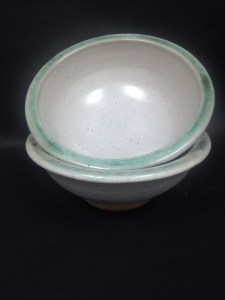
We will provide a limited amount of mats and props. At least one (1) meal and one (1) meditation/yoga practice may be held outdoors. Events are intended to be communal; however, quiet spaces will be reserved for anyone wishing to retreat in silence – and conversation pits will be reserved for anyone wishing to continue dialogue during the silent portions of the weekend.
** St. Luke’s is around the cornder from Mind Body Solutions and less than 2 miles from The Marsh. Contact The Marsh directly if you are interested in reserving a hotel room or utilizing their spa facilities. **
~ We are grateful for your presence ~
Saturday, October 22nd (tentative schedule):
10:30 AM – 12:00 PM Heart Opening Yoga
12:30 PM – 1:45 AM LUNCH & “Guided” Conversation (1 space designated for silence)
2:15 PM – 3:30 PM Journey Meditation (1 space designated for silence / journal writing)
4:00 PM – 5:30 PM YOGA
6:00 PM – 7:15 PM DINNER & “Guided” Conversation (1 space designated for silence)
7:30 PM – 9:00 PM Closing Celebration & “Leave” Taking with Music & Breath by Kalyani (Colleen Buckman)
~ NAMASTE ~
2016 Kiss My Asana #24: Guiding and Pulling (In) the Light February 26, 2016
Posted by ajoyfulpractice in Bhakti, Books, California, Changing Perspectives, Confessions, Daoism, Depression, Dharma, Donate, Faith, Fitness, Food, Gratitude, Healing Stories, Health, Hope, Karma, Karma Yoga, Kirtan, Kundalini, Life, Loss, Mantra, Minneapolis, Minnesota, Mirabai Starr, Music, Mysticism, Oliver Sacks, One Hoop, Peace, Philosophy, Qigong, Religion, Science, Suffering, Tai Chi, Tantra, Taoism, TV, Twin Cities, Volunteer, Wisdom, Women, Writing, Yoga.Tags: answers to tragedy, community, donation-based events, faith, Karma Yoga, KISS MY ASANA, laughter, Mind Body Solutions, music, peace, personal crisis
add a comment
“Music can lift us out of depression or move us to tears – it is a remedy, a tonic, orange juice for the ear.”
– Excerpt from Musicophilia by Oliver Sacks
“When you squeeze an orange, orange juice comes out – because that’s what’s inside. When you are squeezed, what comes out is what’s inside.”
– Wayne Dyer
Yogi #24 (Marilyn) gave me some amazingly delicious oranges once. She told me a little of their back story – they had been given to her by a friend who, if I remember correctly, has a grove in California. Eating the oranges gave me great joy (as she intended) and thinking of their back story filled me with awe and gratitude – but it also made me realize that, in reality, I knew very little of their back story.
How many people were responsible for the planting, the nurturing, the harvesting, and the transporting? How were their lives affected by the oranges? Who even had the idea to start all these endeavors? There was just no way to know. In the end, I could only be grateful.
“Gratitude is our ability to see the grace of God, morning by morning, no matter what else greets us in the course of the day. That has the effect of making us gracious as well.”
– Excerpt from Hustling God: Why We Work So Hard for What God Wants to Give Us by M. Craig Barnes
Marilyn herself is a lot like those oranges: Bright sunshine on a cold January day and present after long journeys, she is delightful, joyful, and fills me with awe and gratitude – yet I only know bits and pieces of her back story. I know she teaches; I know she heals; I know she loves animals, travel, and bicycling. Bottom line: I know just enough about Marilyn to know she has seen amazing places, people, and things in the world and encountered the very best and, possibly, the very worst that the world has to offer. Yet, she is always kind and graciously grateful, for the smallest things, even when someone has wronged her. And her smile lights up a room, even when she is frustrated.
“No other light, no other guide,
Than the one burning in my heart.
This light led the way
More clearly than the risen sun
To where he was waiting for me
– The one I knew so intimately –
In a place no one could find us.”
– Excerpt from Dark Night of the Soul by Saint John of the Cross (translated by Mirabai Starr)
“Every human life is made up of the light and the dark, the happy and the sad, the vital and the deadening. How you think about this rhythm of moods makes all the difference. Are you going to hide out in self-delusion and distracting entertainments? Are you going to become cynical and depressed? Or are you going to open your heart to a mystery that is as natural as the sun and the moon, day and night, summer and winter?”
– Excerpt from the introduction to Dark Nights of the Soul: A Guide to Finding Your Way Through Life’s Ordeals by Thomas Moore
Marilyn practices qigong as well as yoga, which means she’s one of the people who get’s my little energetic puns when I describe one set of arm movements as “Gathering Prana” and the complimentary set of movements as “Gathering Qi.” Both qi and prana are words used to describe the life-force energy that is within us and all around us. Like ruach, pneuma, and spiritus, these are also words which were once used to simultaneously define breath and spirit.
Our ancestors, from all their different cultures, didn’t distinguish between spirit and breath – they were both divinely given and received. Our ancestors, from all their different cultures, believed spirit/breath was the light of the world – it was in them and all around them. Now, the modern mind turns to quantum physics to confirm the Truth our ancestors already knew: We can gather it, guide and pull it; dance with it and in it. Like Marilyn. Or not.
“Of the deities presiding over light, I am the one for January, loved by all for turning the world’s course toward warmth. Of the wind gods who bring immense good in the world, I am the whirlwind. Of the daytime luminaries I am the radiant sun, and of the lights of the night I am the moon.”
– Bhagavad Gita 10:21
“Of David: YHVH is my light and my salvation; whom shall I fear? YHVH is the strength of my life; of whom shall I be afraid?”
– Tehillim (Psalms) 27:1
Jesus said, ‘I am the light that is over all things. I am all: from me all came forth, and to me all attained. / Split a piece of wood; I am there. / Lift up the stone, and you will find me there.’”
– The Gospel of Thomas 77
“I sit in my own splendor. / Wealth or pleasure, / Duty or discrimination, / Duality or nonduality, / What are they to me? / What is yesterday, / Tomorrow, / Or today? / What is space, / Or eternity? / I sit in my own radiance.”
– Excerpt from Heart of Awareness: Translation of the Gita by Thomas Byrom 19:2 – 3
One of my favorite sacred texts is the Ashtavakra Gita (The Song of the Man with 8-Bends in His Limbs). It presents the wisdom of a person whose outside is considered less than ideal, by the people around him. According to one of Ashtavakra’s back stories, he was 12-years old when he walked into the court of the King (who would eventually become his pupil) – and everyone laughed at him. Ashtavakra also laughed, and then he started to cry.
When the King asked why he first laughed, as everyone laughed at him, and then cried, Ashtavakra said, “I started laughing because you saw only my outside. I started crying because I crawled all this way to discuss the Truth with great scholars and all I find here are shoemakers and leather workers.” When the King took great offense and proclaimed his court a court of great scholars, Ashtavakra shook his head and said, “It is only shoemakers and leather workers who are so concerned with the quality of the outside that they can’t see the Truth within.”
I’d like to believe that, in these modern times, we’re not so one dimensional that a shoemaker and a leather worker can’t also be great scholars. Yet, too often, people in a position to teach the Truth get caught up with the quality of the outside. Too often, people in a position to receive the Truth get turned away because their outsides are considered less than ideal. Too often we all forget that we are in bodies together – and these bodies are the ideal vehicle for our spirits. The work being done by Matthew Sanford and Mind Body Solutions allows more people to experience the Truth of who we all are and how we are all connected. KISS MY ASANA if you see the Truth – or the light.
My donation-based KISS MY ASANA class on Saturday, February 27th is full; however, I still have spaces available for March 5th (6:30 – 8:00 PM at Flourish). Contact Myra at a joyfulpractice.com to reserve a spot (or two.)Space is limited. Bay Area yogis, don’t forget: Sandra Razieli’s KISS MY ASANA class is in Oakland on Sunday, February 28th.
~ “If the family were a fruit, it would be an orange, a circle of sections, held together but separable – each segment distinct. – Excerpt from Family Politics: Love and Power on an Intimate Frontier Letty Cottin Pegrebin ~
2016 Kiss My Asana #23: This Yogi is No Slouch! February 25, 2016
Posted by ajoyfulpractice in 40-Day Challenge, Bhakti, Books, California, Changing Perspectives, Confessions, Dharma, Donate, Faith, Fitness, Food, Gratitude, Healing Stories, Health, Hope, Karma, Karma Yoga, Life, Mantra, Meditation, Men, Minneapolis, Minnesota, Music, Mysticism, One Hoop, Peace, Philosophy, Religion, Science, Sukkot, Twin Cities, Volunteer, Wisdom, Women, Writing, Yoga.Tags: awareness, community, donation-based events, faith, Karma Yoga, KISS MY ASANA, laughter, Mind Body Solutions, Mindfulness, peace, union
add a comment
“Be Yourself. Have Fun.”
– Seane Corn on “the best advice she’s been given as a teacher
“Find your struggle, learn your lesson, and then know your purpose.”
– a “Monaism” (saying by Mona Miller, as quoted by Seane Corn)
People who come to my classes always talk about how the experience (of practicing asana with philosophy) is different from their other yoga experiences. From day one, my original teachers all included some aspect of the philosophy into their classes, so that’s the only practice I knew. It’s a practice that resonated with me, because even as a child I was preoccupied with the idea that we are connected to something more than ourselves, something divine.
Early in my life, I assumed everyone was a little preoccupied with issues of theology and existentialism. But, over time, I’ve realized everyone doesn’t consciously question and struggle with philosophical and spiritual matters – even when they crave the answers to that struggling and questioning.
In listening to feedback from people, I’ve now started to realize that every teacher doesn’t teach the way I teach. So, last year when I was ready to host my first yoga practice, I wanted someone who could teach the kind of classes I teach: alignment focused classes with spirit! Two teachers immediately came to mind – and Yogi #23 (Sandra) was one of those teachers.
“Ben Zoma would say: Who is wise? One who learns from every man. As is stated (Psalms 119:99): ‘From all my teachers I have grown wise, for Your testimonials are my meditation.’”
– Excerpt from Ethics of the Fathers (Pirkei Avot) 4:1
“The student is not above the teacher, but everyone who is fully trained will be like their teacher.”
– Luke 6:40
Sandra and I met almost five years ago at a Seane Corn vinyasa teacher training in Minneapolis. Unlike some of the other teachers in the training, we were already spirit-focused in our teaching. We had lunch together the first day, touched base throughout the week, and stayed in touch after she returned to California. One of the many reasons Sandra left such an impression on me is that she obviously teaches from her experiences – one of her specialties is Yoga for Scoliosis because she is a little curvy and has first-hand knowledge of how yoga benefits physical well-being. Another reason she left an impression on me is that she gave me her CD, “Morning Blessings”.
“The tent that houses you / houses your soul. / The Mischan, the hollow dwelling place / Be a vessel / for the love-song of God”
– Excerpt from “Morning Blessings” by Sandra Razieli (with reference to Hanna Tiferet)
“Do you not know that your bodies are temples of the Holy Spirit, who is in you, whom you have received from God? You are not your own; … Therefore honor God with your bodies.”
– 1 Corinthians 6:19-20
I spent the week of Thanksgiving 2011 practicing with Sandra’s “Morning Blessings” CD. Even though my annual trip to Texas is always busy, that year it felt like a retreat. Years later, when I was thinking about the takeaway experience I wanted people to have on a retreat I hosted, I thought about how I felt after practicing with Sandra’s CD.
Sandra is an Iyengar teacher, as well as a certified Yoga for Scoliosis Trainer, as well as a Yoga and Jewish Spirituality teacher, as well as an Anthropologist, a spiritual leader, and…I could keep going with her accomplishments; because, bottom line, she’s no slouch. Sandra is a person of integrity and honor, a true mentsch.
A mentsch is someone who respects the needs and wishes of others—especially the desires of those in his care.
In the care of each of us is entrusted a divine soul. She has a terrible allergy to all those messy deeds that darken her world, and desires only those beautiful deeds that will bring in more light.”
– Based on the teachings of the Rebbe, Rabbi M. M. Schneerson
I can only imagine what a delight it would be to practice with Sandra on a weekly basis. What I know first-hand is that every time I am in her presence I learn something. Sometimes what I learn is obviously information inside me, just waiting for a way to be articulated; however, sometimes it feels like the information is just outside of myself, waiting to be invited in. Sandra has a way of inviting inspiration, grace, and spirit in – and she does it in a way that even someone who has refused the information in the past, suddenly is open to the invitation.
There are two ways to hug somebody. The first is to grab them and draw them in, but the second, perhaps a more refined approach, is to open your arms and create space for the other person. This opening is a passive energy of Hod (humility/gratitude) that makes room for others.”
– Excerpt from The Kabbalah Sutras: 49 Steps to Enlightenment by Marcus J. Freed
(words in parenthesis are mine)
I will always be grateful for the lessons I learned from collaborating with Sandra last year. We definitely enhanced what we each already bring to the table – and, in the process, we strengthened each other’s weak spots. However, Sandra once again upped my game when (at the end of our Sukkot/Gratitude retreat) she gave me a copy of The Kabbalah Sutras: 49 Steps to Enlightenment. I started the practice during my annual Thanksgiving trip, finished on my birthday, and experience a transformation I am still processing.
“Rabbi Ishmael the son of Rabbi Yossei would say: One who learns Torah in order to teach, is given the opportunity to learn and teach. One who learns in order to do, is given the opportunity to learn, teach, observe and do.”
– Excerpt from Ethics of the Fathers (Pirkei Avot) 4:5
I get a little goose-pimply when I think about all the ways my life-journey and Sandra’s life-journey have mystically, energetically, and spiritually overlapped. Take this weekend for example: We’re both leading donation-based classes which benefit Mind Body Solutions and the adaptive yoga program. My KISS MY ASANA class is in Minneapolis on Saturday, February 27th; Sandra’s KISS MY ASANA class is in Oakland on Sunday, February 28th. (Click on each of the KISS MY ASANA links above to find out more information about each class, as well as information about my second Minneapolis class on Saturday, March 5th.)
Just in case you’re not convinced Sandra is no slouch, you can also see her here in another Kiss My Asana video.
~ SHANTI, SHALOM, SALAAM, PEACE ~
2016 Kiss My Asana #19: And Now For Something Completely Different / Various Positions February 20, 2016
Posted by ajoyfulpractice in Books, Changing Perspectives, Donate, Faith, Fitness, Food, Gratitude, Healing Stories, Health, Karma Yoga, Life, Minneapolis, Minnesota, Music, Mysticism, One Hoop, Peace, Philosophy, Science, Twin Cities, Volunteer, Wisdom, Women, Yoga.Tags: Bikram Yoga, donation-based events, Karma Yoga, KISS MY ASANA, Mind Body Solutions, music, peace
add a comment
“The rhythm of the body, the melody of the mind & the harmony of the soul create the symphony of life.”
– B. K. S. Iyengar
“Yoga is almost like music in a way; there’s no end to it.”
– Sting
The physical practice of yoga (Hatha Yoga) regardless of style or tradition has a lot in common with the song mentioned by Yogi #19 (Mary D.). In relation to each, people experience and express sorrow, joy, ecstasy, confusion, and/or spiritual transcendence. Maybe that’s why, as the songwriter puts it, so “many different (ones) exist.” Maybe that’s why so many different people try to put their spin on both. And maybe that’s why pretty much everyone who has ever heard the song, or practiced yoga, has a favorite version – and can be fairly fanatical about that favorite. Ironically, after the songwriter edited down at least 80 verses of the aforementioned song, his record label didn’t want to release the album containing the song because, he said, “They didn’t think it was good enough.”
“It was the first time I could really see and intuitively feel what it was I was doing, making or creating in that enterprise. After a long period of barrenness, it all just seemed to click. Suddenly, I knew these weren’t discrete songs I was writing…I could see – I could sense a unity. Various Positions had its own life, its own narrative. It was all laid out and all of a sudden it all made sense. It was almost painfully joyful, if that makes some sense. The pulling and the putting of the pieces together coherently, the being inside of that process and knowing, once I’d done that, it would be finished and I would have to leave it and go back to the world.”
– Leonard Cohen in a Globe and Mail 2000 interview
Underlying all the different types of yoga practice is a sense of unity. In fact, the Sanskrit word “yoga” means union. Of course, there are lots of different ways to experience yoga. Patanjali defines one way in the Yoga Sutras, when he highlights three (3) of the internal observations (niyamas) as a prescription for union through purification (Kriya Yoga). You could experience Tapas (heat/discipline/austerity), Svadyaya (self study), and Ishvara Pranidhana (surrendering efforts) in any number of practices. However, physical yoga practices like Ashtanga Yoga and Bikram (Hot Yoga) are deliberately built around the Kriya Yoga rubric. Each has a sequence of specific poses, practiced in a specific order and manner – Hot Yoga, in particular, has that “minor fall, and the major lift…” And, each guarantees 90 minutes of internal focus and heat, lots and lots of heat.
Keep in mind, tapas (heat) isn’t always about the temperature of the body. It can just as easily be defined as the focus on alignment found in Iyengar as the external (physical heat) found in Bikram Yoga or the internal (physical heat) found in Ashtanga Yoga. One thing is for certain, however, as a person experiences tapas on the mat, that person has the opportunity to study themselves as they encounter challenges and let go of anything that doesn’t serve them.
You put yourself into it, go through your hard work – or if you want to take it easy , you take it easy as much as you can, but you’re still moving. The body carries emotional baggage and you’re just getting rid of this baggage.”
“One thing is this – people should see the result. If the result is effective and positive in their life, they should stick with it. I always say my Guru is my heart because I always listen to my heart – is it mentally, spiritually, and physically enhancing me, or not? If I see I am growing and it is helping me, then I’d rather stick with it.”
“Bikram’s method is really consistent with people in building their personality; their perspective of life, their will power, and self esteem is helped by the 26 2.”
– Rajashree Bikram
Mary D. and I have only met once, in passing, several months ago. I had no idea at the time that she practiced any kind of yoga, let alone Bikram. When my housemate (who facilitated the video) asked her, Mary D. didn’t hesitate to participate in my Kiss My Asana challenge. My housemate said, “She likes yoga. She likes to help people.” Hmmm, based on the little bit I know about this Hot (Bikram) Yogi, I think what she really likes to do is to feed people – and it doesn’t matter if she’s feeding their bodies, their minds, or their souls. It’s all one.
When Mary D. “retired” a few years back, in order to start her own business, people at a certain university in St. Paul missed what she had to offer. But, pay attention and one starts to notice that while people obviously missed the food she prepared, those same people are just as likely to mention her personal engagement. She not only knew their favorite sandwiches (and how they liked them), she knew bits and pieces about their lives. Just as she knew it’s not a sandwich if it’s only bread on the outside, Mary D. knew no person is complete without their insides. After all, it’s the “guts” (physically and metaphysically speaking) that make us human. Mind Body Solutions offers people an opportunity to unleash what makes us human – regardless of what’s on the outside. KISS MY ASANA and you’re taking advantage of the opportunity to feed someone’s mind-body.
Want to KISS MY ASANA while you practice? Contact Myra at a joyfulpractice.com to reserve a spot (or two) at a donation-based class on Saturday, February 27th (3:30 - 5:30 PM) or Saturday, March 5th (6:30 - 8:00 PM). Space is limited.
###
FROM THIS BROKEN HILL / ALL YOUR PRAISES THEY SHALL RING / IF IT BE YOUR WILL / TO LET ME SING (Leonard Cohen, again)
###
2016 Kiss My Asana #16: Peace Like A Gardener/Farmer February 17, 2016
Posted by ajoyfulpractice in Bhakti, Books, Changing Perspectives, Confessions, Dharma, Donate, Faith, Fitness, Food, Gratitude, Healing Stories, Health, Hope, Jane Hirshfield, Julian of Norwich, Karma, Karma Yoga, Life, Loss, Love, Men, Minneapolis, Minnesota, Movies, Music, Mysticism, Pain, Peace, Philosophy, Science, Suffering, Tantra, Tragedy, Twin Cities, Volunteer, Wisdom, Women, Writing, Yoga.Tags: community, finding hope, God as Mother, KISS MY ASANA, Mind Body Solutions, peace, personal crisis, yoga therapy
add a comment
“When peace like a river, attendeth my way,
When sorrows like sea billows roll;
Whatever my lot, Thou hast taught me to know,
It is well, it is well, with my soul.”
– “It Is Well With My Soul” by Horatio Spafford
“All shall be well, and all shall be well and all manner of thing shall be well.”
– Excerpt from A Revelation of Love – in Sixteen Shewings by Julian of Norwich
Towards the beginning of the Yoga Sutras, Patanjali emphasizes that cultivating friendliness/loving-kindness, compassion/mercy, gladness/goodwill/joy, and acceptance/equanimity creates a calm, peaceful, and undisturbed mind (1:33). A bit later, he states that a person can be so firmly grounded in non-injury (ahimsa) that other people lose their hostility just be being in the vicinity (2:35). Towards the middle, he indicates that samyama (the collective practice of focusing, concentrating, and meditating/becoming) on these qualities produces the great strength or power of these attitudes (3:23). Finally, towards the end of the sutras, he explains that in order to realize great power through the practice, a yogi has to be like a farmer or gardener (4:3, although he hints at this throughout).
Some people read about the siddhis (great powers) described in the Yoga Sutras and think them as “supernormal” or psychic powers – while others reference quantum physics or Jedi Knight tricks. And, some people just think the whole text is an extended metaphor. How ever one thinks about siddhis on paper, there’s no denying the power of being in the presence of someone grounded in love. Considering Julie (Yogi #16) is a gardener, it should come as no surprise that being around her is a little like being hugged by love.
The moment you walked inside my door
I knew that I need not look no more,
I’ve seen many other souls before – ah but,
Heaven must’ve programmed you”– “Heaven (Where True Love Goes)” by Yusuf Islam
“More and more I have come to admire resilience.
Not the simple resistance of a pillow, where foam returns over and
over to the same shape, but the sinuous
tenacity of a tree: finding the
light newly blocked on one side,
it turns in another.”
– Excerpt from “Optimism” by Jane Hirshfield
Julie is one of my favorite people and part of another one of my favorite yoga couples. I met her and her husband within my first year of teaching – and I am always thrilled to see them. Every once in a blue moon one will come without the other; but, more often than not, they come together. (And, spoiler alert! I started writing their posts in tandem because I think of them as my two anchors, or touchstones, in the corner of the room.) They come when it’s cold; they come when it’s hot; they come when they’re tired; they come when they’re busy; and sometimes they come when they’re not feeling 100%.
Julie mentions me helping her adapt her yoga practice during one of those times when she wasn’t at 100%. However, I wasn’t her only resource. She also practiced with the amazing Michelle P-W who, in addition to being a world-class yoga therapist, has practiced and taught with Matthew Sanford.
There are lots of people in the world who could benefit from a yoga practice if they had the resources to facilitate their practice. Sometimes the necessary resource is a knowledgeable teacher, sometimes it’s an accessible studio, and sometimes it’s just the awareness that there is more than one way to practice yoga. Either way, if you KISS MY ASANA, you help create more resources and opportunities for more people to discover and continue practicing yoga.
~ Forever, and ever, Amen. ~
2016 Kiss My Asana #10: What Happens When You’re Full of Grace? February 10, 2016
Posted by ajoyfulpractice in Books, Changing Perspectives, Confessions, Depression, Dharma, Donate, Faith, Fitness, Food, Gratitude, Healing Stories, Health, Hope, Karma Yoga, Life, Loss, Love, Minneapolis, Music, One Hoop, Pain, Peace, Philosophy, Science, Suffering, TV, Twin Cities, Volunteer, Wisdom, Women, Yoga.Tags: community, donation-based events, Karma Yoga, KISS MY ASANA, Matthew Sanford, Mind Body Solutions, utut
add a comment
“You shall treat the stranger who sojourns with you as the native among you, and you shall love him as you love yourself….”
– Leviticus 19:34
“And when was it that we saw you a stranger and welcomed you, or saw you naked and gave you clothes? Truly I tell you, just s you did to one of the least of those who are members of the human family, you did it to me.”
– Matthew 25:38
“…and do good to orphans, those in need, neighbors who are near, neighbors who are strangers, the companion by your side, the wayfarer that you meet, and those who have nothing.”
– Qur’an 4:36
At least 7 yogis walk into a bar…. I know, it sounds like the beginning of a really silly joke. But seriously, if it weren’t for Yogi #9, I wouldn’t know Yogi #10 (and a few other yogis down the line).
Friday, February 5th, Yogi #9 (Elizabeth) invited me and my housemate to a fundraiser for a tutoring program at a school in St Paul. It was cold on the first Friday of Kiss My Asana, I’d just finished teaching, and I had stuff to do. But, I could hear Elizabeth in my head saying, “Come on. It’s kids; it’s for a good cause. You don’t have to stay out all night. I mean, you could, but….” (Note: She didn’t actually say this, but I could hear what it would sound like if she did.)
I acquiesced, in my own mind, and we headed over to the Urban Growler. It was not my usual scene, but it was super cool – and packed! We made our way around the pub until we found Elizabeth with a table full of her family and friends. She proceeded to introduce us to (drum roll, please) Yogi #10 (Molly S).
“Yoga changed my life!” Molly S exclaimed when she heard I teach yoga. My housemate asked how, and Molly left no doubt that yes, indeed, a single introductory course in yoga not only changed her outlook on her mind-body, it changed the way she engaged her mind-body. As a prelude to asking her, a perfect stranger, if she’d answer my 7 questions, I mentioned what I’m doing for Kiss My Asana and how the yogathon benefits Mind Body Solutions –
Before I got anymore words out of my mouth, Molly S delivered the Universe’s punch line:
“Wait, Mind Body Solutions in Minnetonka? Matthew Sanford was my first teacher!”
Yep, turns out, it wasn’t just yoga that changed Molly’s life. It was Matthew Sanford.
When grace happens, generosity happens. Unsquashable, eye-popping bigheartedness happens. “
– Max Lucado
“Let the beauty of what you love be what you do.” – Rumi
As if it wasn’t beautiful enough that she let me video tape her, on the fly (questions unseen), Molly left the fundraiser and proceeded to Kiss My Asana. (Thanks Molly!)
(NOTE: There’s still time for you to be like Molly!)
Don't forget, you can turn on and tune in with me this Saturday (5 PM & 7 PM) at the Walker! And February 27th is a Pucker Up and Kiss My Asana Saturday!
~ OM NARAYANA SHANTI OM ~
2016 Kiss My Asana #2: What Kind of Warrior Are You? February 2, 2016
Posted by ajoyfulpractice in Bhakti, Books, Buddhism, Changing Perspectives, Confessions, Dharma, Donate, Faith, Fitness, Food, Gratitude, Healing Stories, Health, Hope, Karma Yoga, Life, Love, Meditation, Men, Minneapolis, Minnesota, Movies, Music, Mysticism, Peace, Philosophy, Science, Twin Cities, Vipassana, Volunteer, Women, Writing, Yoga.Tags: community, Karma Yoga, KISS MY ASANA, Mind Body Solutions, Movember, music
add a comment
“Without curiosity, none of this would have happened.
More than intelligence or persistence or connections, curiosity has allowed me to live the life I wanted.
Curiosity is what gives energy and insight to everything else I do.
For me, curiosity infuses everything with a sense of possibility.“
– Brian Grazer in his introduction to A Curious Mind: The Secret to a Bigger Life
One might describe today’s yogi as a peaceful warrior, a mindful warrior, a handy warrior, or even a loving and kind warrior. There could even be some times in his life when he’s a fierce warrior. However, I most often think of Kevin as a curious and insightful warrior. And curiosity and insight go hand in hand.
While he did not directly inspire my Kiss My Asana questions, I knew I was on the right track when – soon after I made my decision to ask these questions – I heard Kevin telling a mutual friend about A Curious Mind: The Secret to a Bigger Life by Brian Grazer and Charles Fishman. Grazer’s weekly “curiosity conversations” have inspired him to create and produce TV shows like 24 and Arrested Development, and movies like A Beautiful Mind and Splash. I haven’t read the book (yet), but I love the results.
The goal of A Curious Mind is simple: I want to show you how valuable curiosity can be and remind you how much fun it is. I want to show you how I use it, and how you can to use it.
Life isn’t about finding the answers, it’s about asking the questions.” – Brian Grazer
My conversation with Kevin continued long after the camera stopped rolling. (Wait; does that idiom even make sense when I’m using a smart phone?)
Part of our continued conversation included questions he had for me, but most of it centered around the Movember classes I do on Men’s Health. So, as a thank you to Kevin and a KISS MY ASANA extra, today’s video includes one of my Movember playlists. Can I get a “Woop woop!” on YouTube?
NOTE: If you donate and purchase a Kiss My Asana t-shirt, you can embody Warrior II, while wearing Warrior II. And, if you donate today through the page of one of my teammates, she’s matching donations!

