“Happy Carnival!” to those who are celebrating! Many blessings to everyone, and especially to anyone celebrating Rosa Parks Day*.
Peace, ease, contemplation, and simplicity throughout this “Season for Nonviolence” and all other seasons!!!
“There is a sacred simplicity in not doing something—and not doing it well. All the great religious leaders have done it. The Buddha sat still under a tree. Jesus sat still in a garden. Muhammad sat still in a cave. And Gandhi and King and thousands of others have brought sitting still to perfection as a powerful tool of social change. Passive resistance, meditation, prayer—one and the same.”
— quoted from It Was On Fire When I Lay Down On It by Robert Fulghum
Several people — including Rosa Parks, who was born today in 1913, in Tuskegee, Alabama — have been quoted as saying some variation of “The beauty of life is in the simplicity of it.” Additionally, lots of people (including Robert Fulghum) have described Rosa Parks and her life as simple. Such descriptions are not meant in a derogatory way. No, they are meant to highlight how one person, one single human being, has the ability to do something that is simultaneously simple, beautiful, and extraordinary.
That beauty and that simplicity are on full display in Our Town, which had it’s Broadway premiere at Henry Miller’s Theatre today in 1938. In the play, Thornton Wilder wrote a monologue (actually, a whole play) about something that — if not “unique to being human” — is at least an essential part of being human. Something simple, something beautiful, and something extra-ordinary.
“STAGE MANAGER….. – Now there are some things we all know but we don’t take’m out and look at’m very often. We all know that something is eternal. And it ain’t houses and it ain’t names, and it ain’t earth, and it ain’t even the stars . . . everybody knows in their bones that something is eternal, and that something has to do with human beings. All the greatest people ever lived have been telling us that for five thousand years and yet you’d be surprised how people are always letting go of that fact. There’s something way down deep that’s eternal about every human being.”
— quoted from Act III of Our Town by Thornton Wilder
“Simplicity” is the “Season for Nonviolence” principle of the day. In previous years, “preparation” has popped up as a principle around this time in the season. Both ideas play a part in the simple, yet extraordinary true story of how Rosa Parks became a household name.
“I believe we are here on the planet Earth to live, grow up and do what we can to make this world a better place for all people to enjoy freedom.”
— Rosa Parks
Please join me today (Wednesday, February 4th) at 4:30 PM or 7:15 PM for a yoga practice on Zoom. You can use the link from the “Class Schedules” calendar if you run into any problems checking into the class.You can request an audio recording of this practice via a comment below or by emailing myra(at) ajoyfulpractice.com.
Wednesday’s playlist is available on YouTube and Spotify. [Look for “02042024 Sitting, Breathing… on a Bus”]
NOTE: The before/after music is slightly different on each platform, as the YouTube playlist includes videos of some featured songs. Both playlists also include Margaret Bonds’s Montgomery Variations and a podcast episode about the women who started the Montgomery Bus Boycotts; however, the Spotify playlist does not include the short (below) from one of my favorite [haa-vahd] professors. (Neither playlist includes the extra video included in the post excerpted above.)
If you are thinking about suicide, worried about a friend or loved one, or would like emotional support, you can dial 988 (in the US) or call 1-800-273-TALK (8255)for the Suicide and Crisis Lifeline. You can also call this TALK line if you are struggling with addiction or involved in an abusive relationship. The Lifeline network is free, confidential, and available to all 24/7. YOU CAN TALK ABOUT ANYTHING.
White Flag is an app, which I have not yet researched, but which may be helpful if you need peer-to-peer (non-professional) support.
In the spirit of generosity (“dana”), the Zoom classes, recordings, and blog posts are freely given and freely received. If you are able to support these teachings, please do so as your heart moves you. (NOTE: You can donate even if you are “attending” a practice that is not designated as a “Common Ground Meditation Center” practice, or you can purchase class(es). Donations are tax deductible; class purchases are not necessarily deductible.)
*NOTE: Rosa Parks Day is currently celebrated today in Missouri and Massachusetts; on the first Monday after her birthday in Michigan and California; and on the anniversary of the day she was arrested (December 1, 1955) in Ohio, Texas, Alabama, Tennessee, Oregon and several cities and counties.
Many blessings to everyone, and especially for anyone celebrating the Holy Theophany of Jesus (Baptism of the Lord) May everyone breathe deeply and savor the richness of living a three dimensional life!
May you be safe and protected / May you be peaceful and happy / May you be healthy and strong!
This is a short post-practice post for Monday, January 19th (with excerpts).It includes some links that will direct you to a site outside of this blog.The 2026 prompt question was, “‘…which age would you like to live in?’” You can request an audio recording of this practice or a previous practice via a comment below or (for a slightly faster reply) you can email myra (at) ajoyfulpractice.com.
In the spirit of generosity (“dana”), the Zoom classes, recordings, and blog posts are freely given and freely received. If you are able to support these teachings, please do so as your heart moves you. (NOTE: You can donate even if you are “attending” a practice that is not designated as a “Common Ground Meditation Center” practice, or you can purchase class(es).
Donations are tax deductible; class purchases are not necessarily deductible.
“Something is happening in Memphis; something is happening in our world. And you know, if I were standing at the beginning of time, with the possibility of taking a kind of general and panoramic view of the whole of human history up to now, and the Almighty said to me, ‘Martin Luther King, which age would you like to live in?’ I would take my mental flight by Egypt and I would watch God’s children in their magnificent trek from the dark dungeons of Egypt through, or rather across the Red Sea, through the wilderness on toward the promised land. And in spite of its magnificence, I wouldn’t stop there.”
— quoted from the “I’ve Been to the Mountaintop” speech, delivered Wednesday, April 3, 1968, at Mason Temple (Church of God in Christ Headquarters), Memphis, Tennessee by Rev. Martin Luther King Jr.
In anticipation of Martin Luther King Jr. Day — which is the third Monday in January for most of the United States1 — the January 17th episode of Code Switch featured B. A. Parker interviewing Nicholas Buccola, the historian and author of One Man’s Freedom. The book uses the activism and political engagement of Martin Luther King and Barry Goldwater to examine the concept of freedom and the interview discussed the ways in which these two public figures had different concepts of freedom.
The idea that “freedom” means something different to different people — and/or different groups of people — is something I have considered before. Of course, in philosophies like Yoga and Buddhism, freedom (and liberation) are related to the end of suffering; with pain being something physical and suffering being something mental and/or emotional. Physical pain can lead to mental and emotional suffering, and vice versa; however, one does not automatically lead to the other. Suffering, ultimately, comes down to attitude — even when someone is intentionally inflicting pain and suffering on others.
This is why someone very rich and (politically) powerful can be miserable, while someone financially and/or physically poor can have a good time.
This is why, as the Reverend Dr. Martin Luther King Jr. illustrated in his “I’ve Been to the Mountaintop” speech, someone can be happy even as they are struggling — and, sometimes, specifically because they believe their suffering will ultimately lead to the end of suffering.
Click on the excerpt titles below for other sermons that I have highlighted on MLK Day and for more about MLK.
“Strangely enough, I would turn to the Almighty, and say, ‘If you allow me to live just a few years in the second half of the 20th century, I will be happy.’
Now that’s a strange statement to make, because the world is all messed up. The nation is sick. Trouble is in the land; confusion all around. That’s a strange statement. But I know, somehow, that only when it is dark enough can you see the stars. And I see God working in this period of the twentieth century in a way that men, in some strange way, are responding.
Something is happening in our world. The masses of people are rising up. And wherever they are assembled today, whether they are in Johannesburg, South Africa; Nairobi, Kenya; Accra, Ghana; New York City; Atlanta, Georgia; Jackson, Mississippi; or Memphis, Tennessee — the cry is always the same: ‘We want to be free.’”
— quoted from the “I’ve Been to the Mountaintop” speech, delivered Wednesday, April 3, 1968, at Mason Temple (Church of God in Christ Headquarters), Memphis, Tennessee by Rev. Martin Luther King Jr.
Today’s prompt question might seem strange and out of place in the context of a practice about being present, right here and right now. And I debated using it — even though I lifted it directly from Reverend King’s final speech. It is interesting to note that, like MLK’s answers, the answers on Monday night were related to change and, more than once, to times when people were struggling for civil rights and civil liberties.
It seems many people dream of change and, also, of being part of making those dreams come true.
“And I knew that as they were sitting in, they were really standing up for the best in the American dream, and taking the whole nation back to those great wells of democracy which were dug deep by the Founding Fathers in the Declaration of Independence and the Constitution.”
— quoted from the “I’ve Been to the Mountaintop” speech, delivered Wednesday, April 3, 1968, at Mason Temple (Church of God in Christ Headquarters), Memphis, Tennessee by Rev. Martin Luther King Jr.
Speaking of dreams, this year (2026), the third Monday in January happens to fall on the birthday of another dreamer, seeker, and preacher: the “Dolly Lama”!
Click on the excerpt title below for more about Dolly Partin, born January 19, 1946.
If you are thinking about suicide, worried about a friend or loved one, or would like emotional support, you can dial 988 (in the US) or call 1-800-273-TALK (8255)for the Suicide and Crisis Lifeline. You can also call this TALK line if you are struggling with addiction or involved in an abusive relationship. The Lifeline network is free, confidential, and available to all 24/7. YOU CAN TALK ABOUT ANYTHING.
White Flag is an app, which I have not yet researched, but which may be helpful if you need peer-to-peer (non-professional) support.
NOTE: 1While the third Monday in January is a federal holiday observed in all 50 states and the United States territories, not everyone observes it simply as “MLK Day”. Some states include “Civil Rights”, “Human Rights”, or “Equality” in the name. Other states (umm, specifically states in the South), have historically named the day after King and at least one Confederate general. While some of those Confederate observations have been eliminated, some were simply moved to other dates.
CORRECTION: During the 2026 practice, I erroneously said that Nicholas Buccola wrote about Martin Luther King Jr. and Bull Connors, as opposed to MLK and Barry Goldwater.
May your mind-body-spirit be well, be great, and be in harmony with your thoughts, words, and deeds.
“Well, you wonder why I always dress in black Why you never see bright colors on my back And why does my appearance seem to have a somber tone Well, there’s a reason for the things that I have on”
— quoted from the song “The Man in Black” by Johnny Cash
Today in 1968, Johnny Cash, June Carter (who wouldn’t become a Cash until March 1, 1968), Carl Perkins, The Tennessee Three, and the Statler Brothers performed and recorded two (2) concerts at Folsom State Prison in Folsom, California.
“I wear the black for the poor and the beaten down Livin’ in the hopeless, hungry side of town I wear it for the prisoner who is long paid for his crime But is there because he’s a victim of the times”
— quoted from the song “The Man in Black” by Johnny Cash
Please join me today (Tuesday, January 13th) at 12:00 PM or 7:15 PM for a yoga practice on Zoom. You can use the link from the “Class Schedules” calendar if you run into any problems checking into in the class.You can request an audio recording of this practice via a comment below or by emailing myra(at) ajoyfulpractice.com.
Tuesday’s playlist is available on YouTube andSpotify. [“01132021 Karma Cash I”]
“Each week we lose a hundred fine young men
And I wear it for the thousands who have died Believin’ that the Lord was on their side I wear it for another hundred-thousand who have died Believin’ that we all were on their side
… Well, there’s things that never will be right, I know And things need changin’ everywhere you go But ’til we start to make a move to make a few things right You’ll never see me wear a suit of white
Ah, I’d love to wear a rainbow every day And tell the world that everything’s okay But I’ll try to carry off a little darkness on my back ’Til things are brighter, I’m the man in black”
— quoted from the song “The Man in Black” by Johnny Cash
If you are thinking about suicide, worried about a friend or loved one, or would like emotional support, you can dial 988 (in the US) or call 1-800-273-TALK (8255)for the Suicide and Crisis Lifeline. You can also call this TALK line if you are struggling with addiction or involved in an abusive relationship. The Lifeline network is free, confidential, and available to all 24/7. YOU CAN TALK ABOUT ANYTHING.
White Flag is an app, which I have not yet researched, but which may be helpful if you need peer-to-peer (non-professional) support.
In the spirit of generosity (“dana”), the Zoom classes, recordings, and blog posts are freely given and freely received. If you are able to support these teachings, please do so as your heart moves you. (NOTE: You can donate even if you are “attending” a practice that is not designated as a “Common Ground Meditation Center” practice, or you can purchase class(es).
Donations are tax deductible; class purchases are not necessarily deductible.
These practices are open and accessible to all, regardless of experience.
*NOTE: In previous years, the evening practice has been Yin Yoga.
Please wear loose, comfortable clothing and make sure you are well hydrated before the practice. It is best to practice on an empty stomach (especially for the 108 ajapa-japa mala), but if you must eat less than 1 hour before the practice, make sure to keep it light. Make sure to have a towel (at the very least) for the 108 practice. For Restorative Yoga, a pillow/cushion or two, blocks or (hardcover) books, and a blanket or towel will be useful. I always recommend having something handy (pen and paper) that you can use to note any reflections (and will have some supplies handy).
IN-PERSON IS FULL! Use the link above for login information (or click here for more details about these practices and other practice opportunities related to the New Year).
The 108 playlist is available on YouTube and Spotify. [Look for “New Year’s Day 108 Ajapa-Japa Mala.”] NOTE: This playlist was revised for 2024, but should still sync up with the 2021 — 2023 recordings.
The Restorative playlist is available on YouTube and Spotify. [Look for “01072022 A Reflective Moment”]
Both practices are available in-person (if you are registered) and online. They are also donation based. If you don’t mind me knowing your donation amount you can donate to me directly. You can also email me to request my Venmo or Ca$hApp ID. If you want your donation to be anonymous (to me) and/or tax deductible, please donate through Common Ground Meditation Center (type my name under “Teacher”).
Please note that there is still no late admittance and you must log in before the beginning of the practice (so, by 9:45 AM for the 108 or by 4:45 PM for the Restorative Yoga+Meditation). You will be re-admittance if you get dumped from the call.)
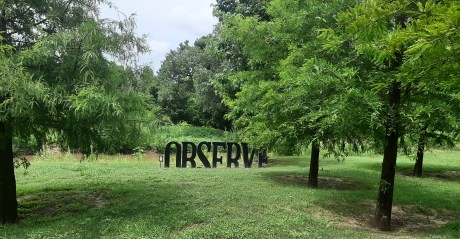
Part of the 6-piece “Monumental Moments” series
by Anthony Shumate, 2015
(located in Buffalo Bayou Park, along the Kinder Footpaths)
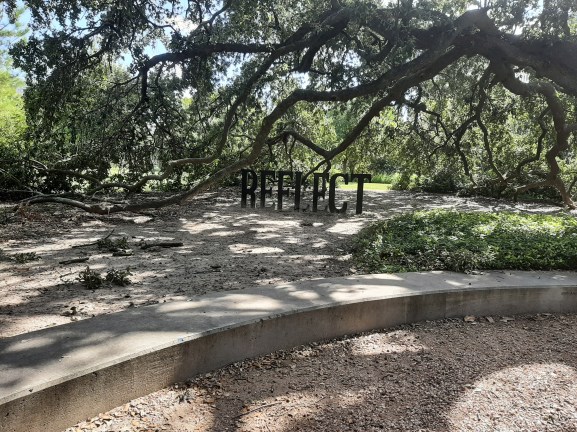
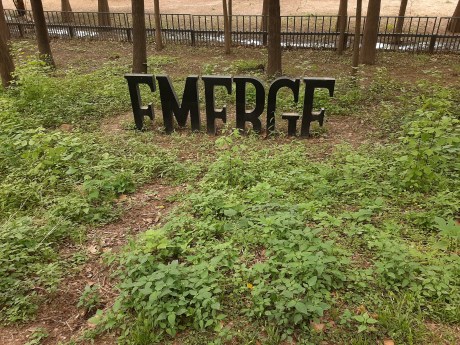
Part of the 6-piece “Monumental Moments” series
by Anthony Shumate, 2015
(located in Buffalo Bayou Park, along the Kinder Footpaths)
*Anthony Shumate’s “Monumental Moments” sculptures are located in Buffalo Bayou Park, along the Kinder Footpaths in Houston, Texas. They are unexpected reminders to “Explore,” “Pause,” “Reflect,” “Listen,” “Emerge,” and “Observe” – all things we do in our practice!
Many blessings to everyone and especially to anyone sitting (& speaking) with kindness, friendship, peace, freedom, understanding, wisdom, and gratitude.
May you be safe and protected / May you be peaceful and happy / May you be healthy and strong!
This is the “missing” post, for Sunday, November 23rd.One link embedded in the text will direct you to a site outside of this blog.You can request an audio recording of this practice or a previous practice via a comment below or (for a slightly faster reply) you can email myra(at) ajoyfulpractice.com.
In the spirit of generosity (“dana”), the Zoom classes, recordings, and blog posts are freely given and freely received. If you are able to support these teachings, please do so as your heart moves you. (NOTE: You can donate even if you are “attending” a practice that is not designated as a “Common Ground Meditation Center” practice, or you can purchase class(es).
Donations are tax deductible; class purchases are not necessarily deductible.
Check out the “Class Schedules” calendar for upcoming classes.
“For many of us, filling a segment of our day with a prescribed set of disciplines is practice. This type of practice is comprised of a list of techniques and injunctions, and we undertake it because we have been told it will bring us a specific result. It is a recipe for solving a problem. As a result, the value of the practice is dependent on when and to what extent it meets our expectations. If it does not meet our expectations, we dump it without hesitation.”
— commentary on Yoga Sūtra 1.20, from The Secret of the Yoga Sutra: Samadhi Pada by Pandit Rajmani Tigunait, PhD
We could make it complicated. However, when we really get down to it, this practice is simple. It’s not always easy, but it is simple. Combine your ethics, morals, and awareness; find a comfortable (and steady) seat; and, then, sit and breathe (with awareness). That’s it really. That’s the practice. In the Yoga Sūtras, Patanjali indicated that a “[continuous] practice” (abhyasa) and “non-attachment” (vairagya) ultimately lead to mental and physical vitality, as well as freedom and liberation from suffering. (YS 1.2 – 1.4; 1.12 – 1.15; 1.29 – 1.40; 2.18)
Our physical practice of yoga (hatha yoga, regardless of the style or tradition) is the way we get our mind-body ready for deep-seated meditation. Of course, we make it a little more complicated; because we move between seats. In a vinyāsa, we “place [things] in a special way” in order to flow in and out of poses/seats. So, that’s another complication. Some of the poses and sequences can be challenging — intense even — and one of my earliest yoga teachers use to say that our “yoga practice should be the most intense part of our day.”
Funny thing about my teacher Paul B’s statement: He never indicated the type intensity. Was the practice meant to be the most intense physically, mentally, emotionally, and/or spiritually? Was it meant to be intensely vigorous or intensely relaxing? Was it all of the above?
Or, was there some other level of intensity that we were missing? Could the intensity come from our devotion?
“Love for practice comes from knowing its importance.”
“The more convinced we are about the key role of our practice in enabling us to live a purposeful and meaningful life, the more we love and respect it. Love and respect springing from a true understanding of our practice is shraddha [faith]. We are joyful at the prospect of doing our practice. The reasons for delaying or dispensing with it become meaningless. We no longer care whether our practice lowers our blood pressure or relaxes our nervous system—we do it for the simple joy of doing it. According to Vyasa, shraddha is the joy that accompanies a practice. It is more than faith—it is the thrill of realizing that we are fortunate to have a practice that helps restore the pristine nature of our mind, takes us inward, and gives us a vision of life’s purpose.”
— commentary on Yoga Sūtra 1.20, from The Secret of the Yoga Sutra: Samadhi Pada by Pandit Rajmani Tigunait, PhD
According to Yoga Sūtras 1.20 – 1.22, there are five types of effort; nine ways to practice (the overall philosophy) based on our “…intensity of feeling, vigor, and firm conviction…”; and how long it takes us to reach our goal(s) will be based on how much time, effort, and intensity we put into the practice. Swami J, in the Himalayan tradition, compares this paradigm to the race between the tortoise and the hare and has a great breakdown of the different ways to practice (which you can find here).
You may also consider, as one of my teachers (Lisa B.) once explained, that you don’t have to believe in (or understand) every aspect of the practice for those aspects to work. However, if you believe (i.e., have firm conviction), you will be more diligent about what your actions — and you may spend more time doing the things that are beneficial.
Your diligence may also serve as a reminder to practice non-attachment and remember that the challenges in our practice — such as poses and sequences we aspire to achieve — can be a distraction or obstacle to our ultimate goal.
“‘To work without desire may seem impossible, but the way to do it is to substitute thoughts of Divinity for thoughts of desire. Do your work in this world with your heart fixed on the Divine instead of on outcomes. Do not worry about results. Be even tempered in success or failure. This mental evenness is what is meant by yoga…. Indeed, equanimity is yoga!’”
— Krishna speaking to Arjuna (2.48) in The Bhagavad Gita: A Walkthrough for Westerners by Jack Hawley
The dangers of an achievement simultaneously being an impediment is reinforced in texts like the Yoga Sūtras and the Bhagavad Gita (the “Song of the Lord”), which emphasize “non-attachment” (vairagya) and “non-grasping”/“non-hording” (āparigrahā). In fact, Yoga Sūtra 3.38 explicitly states that “They are powers/achievements in the worldly state, but the are obstacles to samadhi.” Both the Yoga Sutras and the Bhagavad Gita (as noted above) instruct us to offer our efforts up (with trustful surrender) as if our very efforts are a gift to the Universe.
And, surely, that much gratitude multiplies the joy.
“‘I accept with joy whatever I am offered in true devotion: fruit or water, leaf or flower. The gift is love, the dedication of your heart. Devotion alone gains access to Divinity.’”
— Krishna speaking to Arjuna (9.26) in The Bhagavad Gita: A Walkthrough for Westerners by Jack Hawley
Throughout the Bhagavad Gita, Krishna (as an embodiment of the Divine) breaks down different yoga paths and, in doing so, highlights the fact that everything we do can be an gift/offering. I thought about this idea as I was reading The 6 Types of Working Genius: A Better Way to Understand Your Gifts, Your Frustrations, and Your Team by Patrick Lencioni, which was recommended by my yoga buddy Carl (in a discussion that included a similar book that I love). The parallels between these modern books on management and these ancient texts made me think about how often we express (or neglect to express) gratitude for the things someone else does that we’re glad we don’t have to do.
It also made me think about how often we take those things (and people) for granted — and how, in taking people (and things) for granted, we miss an opportunity to give thanks.
“And in the Gita [9.27], we read:
Whatever your action, Food or worship; Whatever the gift That you give to another; Whatever you vow To the work of the spirit:… Lay these also As offerings before Me.”
— quoted from the commentary for Yoga Sūtra 1.23 – 1.24, in How to Know God: The Yoga Aphorisms of Patanjali, translated and with commentary by Swami Prabhavananda and Christopher Isherwood
Sunday’s playlist is available on YouTube and Spotify. [Look for “09012024 Deep Listening”]
NOTE: The playlist contains John Metcalfe’s album Tree (with the remixes); however, one track has been moved. The story behind the album is beautiful. Additionally, I encourage you to deeply listen to Track #11 (which was the inspiration for the playlist and the September practice).
If you are thinking about suicide, worried about a friend or loved one, or would like emotional support, you can dial 988 (in the US) or call 1-800-273-TALK (8255)for the Suicide and Crisis Lifeline. You can also call this TALK line if you are struggling with addiction or involved in an abusive relationship. The Lifeline network is free, confidential, and available to all 24/7. YOU CAN TALK ABOUT ANYTHING.
White Flag is an app, which I have not yet researched, but which may be helpful if you need peer-to-peer (non-professional) support.
Correction (& Errata &): During the 2025 practice (& on the music post) inadvertently cited the wrong Yoga Sūtra chapter for YS 1.23-1.24. (11/23/2025)
NOTE: In anticipation of the holiday(s), I have cancelled classes on November 26th – December 3rd.
Many blessings to everyone and especially to anyone sitting (& speaking) with kindness, friendship, peace, freedom, understanding, wisdom, and gratitude.
May you be safe and protected / May you be peaceful and happy / May you be healthy and strong!
“‘I accept with joy whatever I am offered in true devotion: fruit or water, leaf or flower. The gift is love, the dedication of your heart. Devotion alone gains access to Divinity.’”
— Krishna speaking to Arjuna (9.26) in The Bhagavad Gita: A Walkthrough for Westerners by Jack Hawley
Please join me today (Sunday, November 23rd) at 2:30 PM for a yoga practice on Zoom. You can use the link from the “Class Schedules”calendar if you run into any problems checking into the class. You can request an audio recording of this practice via a comment below or (for a slightly faster reply) you can email myra(at) ajoyfulpractice.com.
Sunday’s playlist is available on YouTube and Spotify. [Look for “09012024 Deep Listening”]
NOTE: The playlist contains John Metcalfe’s album Tree (with the remixes); however, one track has been moved. The story behind the album is beautiful. Additionally, I encourage you to deeply listen to Track #11 (which was the inspiration for the playlist and the September practice).
“And in the Gita [9.27], we read:
Whatever your action, Food or worship; Whatever the gift That you give to another; Whatever you vow To the work of the spirit:… Lay these also As offerings before Me.”
— quoted from the commentary for Yoga Sūtra 1.23 – 1.24, in How to Know God: The Yoga Aphorisms of Patanjali, translated and with commentary by Swami Prabhavananda and Christopher Isherwood
If you are thinking about suicide, worried about a friend or loved one, or would like emotional support, you can dial 988 (in the US) or call 1-800-273-TALK (8255)for the Suicide and Crisis Lifeline. You can also call this TALK line if you are struggling with addiction or involved in an abusive relationship. The Lifeline network is free, confidential, and available to all 24/7. YOU CAN TALK ABOUT ANYTHING.
White Flag is an app, which I have not yet researched, but which may be helpful if you need peer-to-peer (non-professional) support.
In the spirit of generosity (“dana”), the Zoom classes, recordings, and blog posts are freely given and freely received. If you are able to support these teachings, please do so as your heart moves you. (NOTE: You can donate even if you are “attending” a practice that is not designated as a “Common Ground Meditation Center” practice, or you can purchase class(es).
Donations are tax deductible; class purchases are not necessarily deductible.
Many blessings to everyone and especially to anyone gathering friendship, peace, freedom, understanding, and wisdom.
May you be peaceful and happy / May you be healthy and strong!
“A gag, to be any good, has to be fashioned about some truth. The rest you get by your slant on it and perhaps by a wee bit of exaggeration, so’s people won’t miss the point.”
— Will Rogers (b. 1879)
It’s officially Movember! Since there was no online practice yesterday, I mou’ you an extra excerpt (just to explain what’s up, to the uninitiated).
“When the Oakies left Oklahoma and moved to California, it raised the I.Q. of both states.”
— Will Rogers
For Those Who Missed It: The quotes and the following note with excerpts were previously posted.
Born October 4, 1879, in Oologah, Cherokee Nation, Indian Territory (now Oklahoma), Will Rogers was a symbol of the self-made man and the common man, who believed in working hard, progress, and the possibility of the American Dream. One of his jokes is the reason why stage migration is known as “the Will Rogers phenomenon”.
“There are three kinds of men. The ones that learn by readin’. The few who learn by observation. The rest of them have to pee on the electric fence for themselves.”
— Will Rogers
Please join me today (Tuesday, Movember 4th) at 12:00 PM or 7:15 PM for a yoga practice on Zoom. You can use the link from the “Class Schedules” calendar if you run into any problems checking into in the class.You can request an audio recording of this practice via a comment below or by emailing myra(at) ajoyfulpractice.com.
Tuesday’s playlist is available on YouTube and Spotify. [“Look for “Mov 4th & Will Rogers 2020”]
NOTE: An instrumental playlist (with a focus on light) is also available on YouTube and Spotify.[Look for “Diwali 4 on Movember 5 2021”]
If you are thinking about suicide, worried about a friend or loved one, or would like emotional support, you can dial 988 (in the US) or call 1-800-273-TALK (8255)for the Suicide and Crisis Lifeline. You can also call this TALK line if you are struggling with addiction or involved in an abusive relationship. The Lifeline network is free, confidential, and available to all 24/7. YOU CAN TALK ABOUT ANYTHING.
White Flag is an app, which I have not yet researched, but which may be helpful if you need peer-to-peer (non-professional) support.
In the spirit of generosity (“dana”), the Zoom classes, recordings, and blog posts are freely given and freely received. If you are able to support these teachings, please do so as your heart moves you. (NOTE: You can donate even if you are “attending” a practice that is not designated as a “Common Ground Meditation Center” practice, or you can purchase class(es).
Donations are tax deductible; class purchases are not necessarily deductible.
Blessings, light, love, and peace to everyone, everywhere! Many blessings to everyone and especially to anyone looking out for others in the name of friendship, peace, freedom, understanding, and wisdom.
May all of us together be safe and protected / May we be peaceful and happy.
“Violence is clearly destructive. It springs from fear, one of the fundamental afflictions. According to this sutra, the practice of non-violence requires us to arrest our violent tendencies by cultivating thoughts opposite to violence.”
— quoted from the commentary on Yoga Sūtra 2.33 from The Practice of the Yoga Sutra: Sadhana Pada by Pandit Rajmani Tigunait, PhD
“No, don’t give up I won’t give up ‘Cause there must be angels”
— quoted from the song “Angels” by Tom Walker (written by Emma Davidson-Dillon / James Eliot / Thomas Alexander Walker)
Please join me today (Wednesday, October 29th) at 4:30 PM or 7:15 PM for a yoga practice on Zoom. You can use the link from the “Class Schedules”calendar if you run into any problems checking into the class. You can request an audio recording of this practice via a comment below or (for a slightly faster reply) you can email myra(at) ajoyfulpractice.com.
Wednesday’s playlist is available on YouTube and Spotify. [Look for “10292022 Angels, Devils, Mischief, Cabbage”]
NOTE: This playlist has been updated in a way that may slightly change the timing when paired with previous practices (prior to 2023).
If you are thinking about suicide, worried about a friend or loved one, or would like emotional support, you can dial 988 (in the US) or call 1-800-273-TALK (8255)for the Suicide and Crisis Lifeline. You can also call this TALK line if you are struggling with addiction or involved in an abusive relationship. The Lifeline network is free, confidential, and available to all 24/7. YOU CAN TALK ABOUT ANYTHING.
White Flag is an app, which I have not yet researched, but which may be helpful if you need peer-to-peer (non-professional) support.
In the spirit of generosity (“dana”), the Zoom classes, recordings, and blog posts are freely given and freely received. If you are able to support these teachings, please do so as your heart moves you. (NOTE: You can donate even if you are “attending” a practice that is not designated as a “Common Ground Meditation Center” practice, or you can purchase class(es).
Donations are tax deductible; class purchases are not necessarily deductible.
Many blessings to everyone and especially to anyone cultivating friendship, peace, freedom, understanding, and wisdom on Intersex Awareness Day.
May everyone be healthy and strong; may everyone be peaceful and happy; and may everyone recognize their whole self.
For Those Who Missed It: The following was originally posted in 2024. Class details have been updated.
“[A monk] then applies this perception to his own body thus: ‘Verily, also my own body is of the same nature; such it will become and will not escape it.’
Thus he lives contemplating the body in the body internally, or he lives contemplating the body in the body externally, or he lives contemplating the body in the body internally and externally. He lives contemplating origination-factors in the body, or he lives contemplating dissolution factors in the body, or he lives contemplating origination-and-dissolution-factors in the body. Or his mindfulness is established with the thought: ‘The body exists,’ to the extent necessary just for knowledge and mindfulness, and he lives detached, and clings to nothing in the world. Thus also, monks, a monk lives contemplating the body in the body.”
— quoted from Satipatthana Sutta (The Foundations of Mindfulness) translated by Nyanasatta Thera
Prāņāyāma — the awareness of breath (and the extension of breath) — is a big part of the physical practice of yoga (haṭha yoga, regardless of the style or tradition). As we bring awareness to our breath, on and off the mat, we may start to notice the things that take our breath away. We can experience things that take our breath away because they are surprising and beautiful. We can experience things that take our breath away because they are surprising and terrifying. Then there are things that take our breath away because they are just surprising, unexpected….
We may rush to qualify them with some adjective or another and, in doing so, rush to some conclusion about what we need to do… when, really, we just need to breathe (that’s today’s first step); recognize what is (that’s today’s second step); and repeat the first two steps (that’s the third step).
CLICK ON THE EXCERPT TITLE BELOW FOR THE RELATED POST (& VIDEO).
According to experts, around 1.7% of the population is born with intersex traits – comparable to the number of people born with red hair.”
— quoted from the Amnesty International article “Its Intersex Awareness Day – here are 5 myths we need to shatter”
October 26th is Intersex Awareness Day, which highlights and raises awareness about human rights issues faced by intersex people. It also raises awareness around the fact that there are people — all around the world — who are born with one or more sex characteristics that “do not fit typical binary notions of male or female bodies.” According to the Office of the United Nations High Commissioner for Human Rights, these characteristics include chromosome patterns, gonads, and/or genitalia.
While there may be just as many people in the world with red hair as there are people in the world with intersex traits, the latter are not as easy to spot. Estimates on how many people are born with intersex traits may vary (depending on the traits and/or conditions) from 3% to 0.0009%. Aside from the fact that I’m referencing statistics related to over 40 intersex conditions, the wide variation in estimates is related to the fact that some people are not initially identified (medically) as intersex. Additionally, some people may never be identified as intersex. Lack of diagnosis can be the result of something relatively small — like the fact that a baby’s chromosome patterns (and/or gonads) are not typically tested. However, lack of diagnosis can also be the result of something fairly major — like the fact that sex (and gender) are typically assigned at birth based on the external appearance of a baby’s genitals.
And, here’s the kicker: If a baby’s genitalia appears ambiguous (to a medical practitioner) and/or atypical, a common practice has been to surgically alter the genitalia. Sometimes, even a baby’s internal sex organs (gonads) will be altered. Again, these surgeries and medical treatments happen to babies, as well as to children and young adults, who are too young to consent and/or may not be informed about their options. Sometimes, even their parents are not informed!
Medical attitudes and practices related to people with intersex characteristics are changing, in part because of people like Morgan Holmes and Max Beck, who both participated in the first public demonstration of intersex people (and their allies) in North America, today in 1996. Dr. Holmes (a Canadian sociologist) and Mr. Beck (who died in of cancer in 2008) attended the American Academy of Pediatrics annual conference in Boston, Massachusetts, with the intention of delivering a presentation on the long-term outcomes of “fixing” intersex infants through cosmetic surgery. However, they were met with what they described as “hostility” and escorted out of the venue. They later returned, outside of the venue, to demonstrate and advocate for better medical awareness. In 2003/2004, Betsy Driver (who was mayor of Flemington, New Jersey, January 2, 2019 – January 3, 2023) and artist and activist Emi Koyama organized the first official Intersex Awareness Day on the anniversary of that first public protest. Since then, people like Morgan Carpenter and Laura Inter have advocated for self-determination, while also providing peer support and education for and about people who have intersex traits.
For the next two weeks — up until November 8th, which is Intersex Day of Remembrance (also known as Intersex Solidarity Day) — grassroots organizations around the world will host events related to intersex visibility. Some of these events will be celebrations and opportunities for networking. Some of these events will be moments of reflection and remembrance. Some of these events will be all about political action and advocacy. All of these events will be about putting an “end [to] shame, secrecy and unwanted genital cosmetic surgeries on intersex children.”
“The flag is comprised of a golden yellow field, with a purple circle emblem. The colours and circle don’t just avoid referencing gender stereotypes, like the colours pink and blue, they seek to completely avoid use of symbols that have anything to do with gender at all. Instead the circle is unbroken and unornamented, symbolising wholeness and completeness, and our potentialities. We are still fighting for bodily autonomy and genital integrity, and this symbolises the right to be who and how we want to be.”
— quoted from the creator statement entitled “The intersex flag” by Morgan Carpenter, PhD.
Please join me today (Sunday, October 26th) at 2:30 PM for a yoga practice on Zoom. You can use the link from the “Class Schedules”calendar if you run into any problems checking into the class. You can request an audio recording of this practice via a comment below or (for a slightly faster reply) you can email myra(at) ajoyfulpractice.com.
Sunday’s playlist is available on YouTube and Spotify. [Look for “10272020 Pranayama II”]
If you are thinking about suicide, worried about a friend or loved one, or would like emotional support, you can dial 988 (in the US) or call 1-800-273-TALK (8255)for the Suicide and Crisis Lifeline. You can also call this TALK line if you are struggling with addiction or involved in an abusive relationship. The Lifeline network is free, confidential, and available to all 24/7. YOU CAN TALK ABOUT ANYTHING.
White Flag is an app, which I have not yet researched, but which may be helpful if you need peer-to-peer (non-professional) support.
In the spirit of generosity (“dana”), the Zoom classes, recordings, and blog posts are freely given and freely received. If you are able to support these teachings, please do so as your heart moves you. (NOTE: You can donate even if you are “attending” a practice that is not designated as a “Common Ground Meditation Center” practice, or you can purchase class(es).
Donations are tax deductible; class purchases are not necessarily deductible.
“Chag sameach!” (“Happy Festival!”) to everyone observing the High Holidays. “Nine days and nine nights of blessings and happiness if you are celebrating Sharada Navaratri!” Many blessings to everyone and especially to anyone cultivating friendship, peace, freedom, understanding, and wisdom during International Week of Deaf People.
Stay safe! Live well! Hydrate and nourish your heart, body, and mind.
This is the “missing” compilation post for Wednesday, September 24th, features new and previously posted content.As noted, some links will take you to sites outside of WordPress.
You can request an audio recording of this practice or a previous practice via a comment below or (for a slightly faster reply) you can email myra(at) ajoyfulpractice.com.
In the spirit of generosity (“dana”), the Zoom classes, recordings, and blog posts are freely given and freely received. If you are able to support these teachings, please do so as your heart moves you. (NOTE: You can donate even if you are “attending” a practice that is not designated as a “Common Ground Meditation Center” practice, or you can purchase class(es).
Donations are tax deductible; class purchases are not necessarily deductible.
“Alison Gopnik, Ph.D.: Learning begins literally from the time babies are born and there’s even some evidence there’s learning inside of the womb. So when babies are born, for instance, they discriminate between the sounds of the language that they’ve heard and sounds of another language. So they’re already seeing, hearing, making sense of what’s going on around them.”
— quoted from the “Transcript of ‘When do babies begin to learn? — What you can do to support your child’s development.’” in the “Parenting” section of the UNICEF website
Think back to when you first started to learn. Or, since some research indicates that we start learning in the womb, take a moment to remember the first learning situation you remember. Maybe it was in a school setting or maybe you remember learning something at home or on a playground. Just take a moment to remember everything you remember about that moment.
My guess is that, even if you remember great details — or pick a memory you remember in great detail, there is a “little” detail you might not mention if you were asked to recount the moment. My guess is that you wouldn’t mention the language. Unless the memory you picked was related to learning a language other than your first known language, you probably take the language itself for granted. It was a “little”, easily over-looked detail.
If, however, you were forced or required to learn in a language other than your first language, that “little” thing can become a big deal. Being in an environment where you have a hard time understanding and/or struggle to understand the words — even before you get to the subject matter — can limit your ability to learn and limit your possibilities. As an adult, you may be able to find some work-arounds, especially if there are other people around to give you context clues.
But, what if those people are also using a different language? What if you are a child who doesn’t have the life experience to figure out context clues?
This would be frustrating (and infuriating) — especially if people treated you like you were dumb and/or not worth the energy it would take to teach you.
Now, I know, given what’s happening in the United States (and other places in the world), that someone may think I’m talking about an immigration (or even a colonization) issue here. Or, since I included an embedded link to a post about literacy, that I’m talking about that issue. But, no. This time, I’m talking about that fact that millions of people around the world communicate with one of at least 300 sign languages and, for many of them, a sign language is their first language.
“1. States Parties recognize the right of persons with disabilities to education. With a view to realizing this right without discrimination and on the basis of equal opportunity, States Parties shall ensure an inclusive education system at all levels and lifelong learning….”
“3. States Parties shall enable persons with disabilities to learn life and social development skills to facilitate their full and equal participation in education and as members of the community. To this end, States Parties shall take appropriate measures, including:
a) Facilitating the learning of Braille, alternative script, augmentative and alternative modes, means and formats of communication and orientation and mobility skills, and facilitating peer support and mentoring;
b) Facilitating the learning of sign language and the promotion of the linguistic identity of the deaf community;
c) Ensuring that the education of persons, and in particular children, who are blind, deaf or deafblind, is delivered in the most appropriate languages and modes and means of communication for the individual, and in environments which maximize academic and social development.”
— quoted from “Article 24 – Education” of the Convention on the Rights of Persons with Disabilities (CRPD)
As I previously mentioned, this week is International Week of Deaf People (IWDP) and the 2025 theme is “No Human Rights Without Sign Language Rights”. The Wednesday focus was “Multilingual education for deaf learners”, which “advocates for the implementation of Article 24 of the CRPD, which requires that deaf learners receive education in environments that are both linguistically and culturally appropriate: quality inclusive multilingual settings alongside other deaf peers.”
As I highlighted in a 2024 post (and as explained in the video below), the Declaration on the Rights of Deaf Children consists of ten articles. Those ten articles are not only valid with regard to Deaf Children, they are also valid (and important) with regard to children from all over the world — and especially those who are dealing with trauma, loss, and disabilities, while also navigating a new language (or two).
“4. In order to help ensure the realization of this right, States Parties shall take appropriate measures to employ teachers, including teachers with disabilities, who are qualified in sign language and/or Braille, and to train professionals and staff who work at all levels of education. Such training shall incorporate disability awareness and the use of appropriate augmentative and alternative modes, means and formats of communication, educational techniques and materials to support persons with disabilities.
5. States Parties shall ensure that persons with disabilities are able to access general tertiary education, vocational training, adult education and lifelong learning without discrimination and on an equal basis with others. To this end, States Parties shall ensure that reasonable accommodation is provided to persons with disabilities.”
— quoted from “Article 24 – Education” of the Convention on the Rights of Persons with Disabilities (CRPD)
“Little” things are like little kids: They can become really big problems when we’re not paying attention or they can become really big deals, who make big, positive impacts on the world, when we pay the correct amount of attention. “Little” are transformative! Since this is true on and off the mat, I dedicate at least one practice during the High Holidays to the “little” things that can come together to make a big deal. These are things we do all the time. They come together to make our practice and to take us deeper into our practice and deeper into our lives. They can also take us come together to help us reach our goals.
The following revised excerpt is from a 2023 post (with a slightly different context). Due to the sequences, the order of the “little things” is different each year.The order in the this linked post is the 2021 order.The order below is from this year. Some embedded links connect outside of this blog.
“And then we spoke about Rosh Hashana… finally.
People always talk about making big changes – New Year resolutions.
‘I want to lose 50 pounds.’
‘I want to finish the entire Talmud.’
‘I’m going to spend 90 minutes of quality time with my daughter every night.’
It doesn’t work. It never does. And if it does, it peters out. You have no choice. You must start small.”
— quoted from “Preparing for Rosh Hashana: The secret to an inspiring new year” by Rabbi Yaakov Salomon
If you are anything like me, there’s a good chance that when you decide you want to do something (or stop doing something), you want one of those handy-dandy “time slips” — not because you don’t want to do the work, but because once you make up your mind you’re ready for the change. However, we can’t snap our fingers and “skip to the good part”. We do not have a magical, fantastical (theoretically possibly) way of skipping ahead. Even if we did, it wouldn’t be advisable, because we wouldn’t (necessarily) be ready on every level. Just because some part of our mind is ready, doesn’t mean our whole being is ready. We get ready during the time that we’re taking the steps to make something happen (or to make something stop happening).
Those steps — even when they are little baby steps — make a big difference.
“The key to getting the most out of any experience is preparation before the event. You cannot expect to leap from the shower to the shul and instantly feel holy. It just doesn’t work that way.”
— quoted from “Preparing for Rosh Hashana: The secret to an inspiring new year” by Rabbi Yaakov Salomon
Just as you can’t jump up off the coach and run a marathon, without some training, Rabbi Yaakov Salomon once pointed out that the desire for a deep spiritual connection requires some preparation. The means he mentioned included introspection, meditation, and prayer — all methods also mentioned in other traditions, including in Indian philosophies like yoga. A lot of people, however, aren’t familiar with all 8-limbs of the Yoga Philosophy; they just know about the two limbs that form the postural practice: āsana and prāņāyāma. But, just practicing those two little things can take you deeper into the overall practice and help cultivate big connections.
In many ways, hatha yoga (the physical practice of yoga, regardless of the style or tradition) is all about little things and about bringing awareness to the little things. The way we sit or stand determines how we breathe; the way we breathe in different positions determines how we feel. When we bring our awareness to how we feel we can go deeper into the pose as well as into ourselves. It all starts with little things. Little things, like how we place our hands or engage our core, can make the difference between going deeper into a pose and deeper into ourselves versus getting injured.
Although, sometimes we learn a lot about ourselves from getting injured; but that’s another story for another day.
Using the practice to notice little things can give us insight into why we think the way we think and do (and say) the things we do (and say) — on and off the mat. It can also help us bring awareness to how little things get us ready for the big things. For instance, next time you’re on the mat, give yourself the opportunity to notice these “little things” — one at a time and then all together:
Āsana (“seat” or pose): Notice what’s touching the mat, touching the floor, touching a prop — even a chair — and how does everything else stack up from there.
Prāņāyāma: Notice your breath. Can you breathe deeply in and breathe deeply? (If not, adjust your āsana.)
Notice what you notice; bring your awareness to your awareness. (Where is your focus?)
Notice the the sensation/information that informs your practice. (Is your mind-body ready for what you’re doing or do you need to do less? Could you, safely and mindfully, do more?)
Notice the “L” of your hands, especially when you have weight in your hands and arms. (In grade school you might have learned that one “L” on your forehead means loser, but if you put two “L”s together you have a shot at a goal; if you tip the ends out, you have a “W” — which means winner.)
Find the balance within the imbalance, because the practice is all about balance: balancing effort and relaxation; balancing strength and flexibility; and there is also balancing on one limb (and balancing both sides).
Dance Break! (Every once in a while, everybody needs to loosen up and wiggle.)
Remember your intention and your dedication. We set these early in the practice and then remember them as we go so that we stay focused on our goals. On or off the mat, you can think of this as your “WHY”.
Practice vinyāsa krama (“place things in a special way, for a step-by-step progression”). As Dr. Beau Lotto said, “…your brain can only ever make small steps in its ideas.” So, what is the next logical step from where you are to where you want to be?
Express gratitude for what you’ve done and what you’re about to do.
Lifting the corners of your mouth up towards your ears, is usually one of the little things we do.
This practice featured the personal story of Rabbi Yaakov Salomon (from the Aish website). It’s a story about little things and is a great reminder that while we may not always notice the little things until they become the big things, the little things matter. In fact, every little thing we feel, think, say, and do is the possibility of a big thing we’re in the habit of feeling, thinking, saying, or doing.
“Transformation is not something that accidentally happens to us. Like every part of the Navaratri cycle. It is something we initiate and experience again and again during our lives. For myself, day 3 of this cyclical practice (or week 3 or month 3, depending on how you structure your own Navaratri practice) is an opportunity to do something outside my comfort zone.”
— quoted from the “Cultivating Transformation” section of “Chapter 3 — Igniting the Fire of Transformation” in The Way of the Goddess: Daily Rituals to Awaken Your Inner Warrior and Discover Your True Self by Ananta Ripa Ajmera
EXCERPT: The following slightly revised excerpt was originally posted in a slightly different context.
In addition to being the second day of the High Holidays and the third day of the International Week of Deaf People (IWDP), Wednesday was also the third day and night of Sharada Navaratri, the “nine nights” celebrating Divine feminine energy in various manifestations. Some people see the manifestations as nine different women; however, they are also seen by some as the same woman at different points in her story. For instance, her third form is Chandraghanta, whose name “one who has a half-moon shaped like a bell” comes from the image of the newly-wed Parvati. She is depicted as a combination of beauty, grace, and courage, with her third eye open — the result of all the (yoga) preparation performed by Her previous manifestation. That open third eye means that she is always ready to fight evil and demons. In fact, she is sometimes known as the “Goddess Who Fights Demons”.
Here, “demons” can be a metaphor for anything that ails you physically, mentally, emotionally — even energetically, spiritually, and religiously. They can be challenges and hurdles that need to be over come. They can even be mistakes… sins… or vows (as I refer to them during the High Holidays) that can be absolved or forgiven. In fact, the faithful of all the different religions believe that there are ways (and even special times) when mistakes, sins, and broken vows are turned away… or washed away.
“I find a lot of similarity between Goddess Kalaratri, who symbolizes the spiritual power of transcendence, and Goddess Chandraghanta, who represents the power of transformation (in chapter 3). While transformation happens from taking strong, consistent action to overcome our fears, transcendence results from applying spiritual knowledge to see traumas we have experienced through the eyes of wisdom. This ensures we never see ourselves as helpless victims at the mercy of a cruel world but rather as powerful manifesters of our own destinies.”
— quoted from the “Cultivating Transcendence” section of “Chapter 7 — Transcending Trauma with Wisdom” in The Way of the Goddess: Daily Rituals to Awaken Your Inner Warrior and Discover Your True Self by Ananta Ripa Ajmera
Wednesday’s playlist is available on YouTube and Spotify. [Look for “High Holidays: Little Things”]
(My apologies for not posting the music before the 4:30 practice.)
If you are thinking about suicide, worried about a friend or loved one, or would like emotional support, you can dial 988 (in the US) or call 1-800-273-TALK (8255)for the Suicide and Crisis Lifeline. You can also call this TALK line if you are struggling with addiction or involved in an abusive relationship. The Lifeline network is free, confidential, and available to all 24/7. YOU CAN TALK ABOUT ANYTHING.
White Flag is an app, which I have not yet researched, but which may be helpful if you need peer-to-peer (non-professional) support.
 ###
### A Joyful Practice