CAPTAINING BODY AND SOUL – 2018 Kiss My Asana Offering #17 April 18, 2018
Posted by ajoyfulpractice in 31-Day Challenge, Abhyasa, Baseball, Basketball, Books, Buddhism, Changing Perspectives, Confessions, Depression, Dharma, Donate, Faith, Fitness, Gratitude, Healing Stories, Health, Hope, Karma Yoga, Life, Loss, Love, Meditation, Men, Minneapolis, Minnesota, Movies, One Hoop, Pain, Peace, Philosophy, Poetry, pro, Religion, Science, Suffering, Super Heroes, Surya Namaskar, Texas, Tragedy, Twin Cities, Vairagya, Volunteer, Wisdom, Women, Writing, Yin Yoga, Yoga.Tags: Healing Stories, inspiration, Invictus Games, KISS MY ASANA, Month of the Military Child, Prince Harry, Teddy Roosevelt, Warriors, William Ernest Henley
add a comment
“In the fell clutch of circumstance
I have not winced nor cried aloud.
Under the bludgeonings of chance
My head is bloody, but unbowed.”
– from Invictus by William Ernest Henley
“It is not the critic who counts; not the man who points out how the strong man stumbles, or where the doer of deeds could have done them better. The credit belongs to the man who is actually in the arena, whose face is marred by dust and sweat and blood; who strives valiantly;”
– from “Man In the Arena” by the then former U. S. President Theodore Roosevelt, Jr.
The psychiatrist M. Scott Peck started his most famous book (The Road Less Traveled: A New Psychology of Love, Traditional Values and Spiritual Growth) with the words “Life is difficult.” He then outlined the attributes of a fulfilled human being. Bottom line: Life requires a lot of work, discipline, non-attachment, love (as an action). In some ways, Peck highlighted the same values President Theodore Roosevelt emphasized in his “The Strenuous Life” and “Citizenship in a Republic” speeches. These same qualities are valuable on the mat, as well.
Yoga, the philosophy as well as the physical practice, can be hard. Our bodies and minds fall into the rut and the groove of our habits, building strength and flexibility that may also contribute to stiffness and weakness. Our bodies want to bend where they are already flexible and resist where we are strong. If, however, we continually and habitually engage our bodies in this way we develop imbalances which ultimately breakdown the body. Yoga is one way to transcend unconscious behavior patterns, because it brings active awareness to our personal tendencies. But, that awareness doesn’t magically appear when one steps on the mat. It’s not petrichor (the smell of rain on dry soil). One must work for that awareness.
“I wish to preach, not the doctrine of ignoble ease, but the doctrine of the strenuous life, the life of toil and effort, of labor and strife; to preach that highest form of success which comes, not to the man who desires mere easy peace, but to the man who does not shrink from danger, from hardship, or from bitter toil, and who out of these wins the splendid ultimate triumph.”
– from “The Strenuous Life” by U. S. President Theodore Roosevelt, Jr.
People who only like to do the things they are already good at doing tend not to appreciate their first yoga experience – unless they get really lucky. That said, people who only like to do the things they are already good at often benefit the most from yoga, because right off the bat they are being challenged.
Yoga has no shortages of challenges. Obviously, there are challenging poses and sequences in some styles and traditions. However, no one style or tradition has a monopoly on challenges. Yin Yoga and restorative traditions are also challenging, because one of the most challenging parts of yoga (especially for beginners) is staying present on the mat and in the body. Equally challenging, in this day and age, is being still and being quiet.
We live in an over-stimulated world that often values quantity over quality, and being right over everything. Being right looks different in different situations; but, ultimately, it compels people to look at others, on and off the mat, to find the epitome of everything. The problem – and thus the challenge – is that nobody else has your body, nobody else has your mind, and therefore nobody else has your practice.
Yes, absolutely, there are alignment principles, movement, and action related to every pose and every sequence – and this is valuable information a teacher passes to a student. But that’s only the beginning of the practice. Ultimately, the practice is what happens when the student starts to process, synthesize, and activate the information in their own body and mind.
Another big challenge is applying elements of the philosophy – which at first glance seem to have nothing to do with the mind-body. One of the reasons my early teachers said, “How you do yoga is how you do life,” is that each of us comes to the practice with instinctual and conditioned behavior. Whether we think about it or not, each of us also steps on the mat with a moral compass, which we use to guide us in the way to treat things, the way we treat other beings, and the way we treat ourselves. Starting with the beginning of the philosophy means we mindfully gut check out thoughts, our words, and our deeds on the mat. If we get in the habit of being mindful about our actions (karma) on the mat, we are conditioning ourselves to behave in a similar fashion when we are off the mat. Truly, it doesn’t matter which compass you use. It could be the 10 Commandments (which hold significance in all three Abrahamic religions) or the Buddhist precepts, just as easily as it could be yoga’s yamas (external restraints or universal commandments) and the niyamas (internal observations).
“It matters not how strait the gate,
How charged with punishments the scroll,
I am the master of my fate,
I am the captain of my soul.”
– from Invictus by William Ernest Henley
One of my favorite parts of practicing yoga is the opportunity to engage the story behind the poses. This can be a literal and energetic engagement, focusing on the inspiration behind the poses or it can be a symbolic engagement, focusing on attributes that come to mind based on the name of the pose.
Virabhadrasana is most often translated into English as “warrior pose.” This is fitting given the story that Shiva, in a fit of anger, tears out a lock of his hair and creates a great warrior. But, the word “virabhdra” literally means “hero friend.” So, when you move into a Hero Friend Seat, it is interesting to consider the qualities of a hero friend and those of a warrior, as well as the times when we recognize warriors as friends and the times when we do not.
Some people may feel a little odd or uncomfortable with the idea of embodying the qualities of a mythological or historical character. This way of practicing may feel too much like moving through the Stations of the Cross or observing Passover – and, in fact, these are similar ways of engaging the mind-body-spirit. These are also ways of practicing that move beyond the physical; which makes people uncomfortable. But, the practice is always more than physical. At the very least, it is physical and mental – at the very most it boundlessly extends into every aspect of our beings.
William Ernest Henley and President Theodore Roosevelt were both soldiers who, at different times in their lives, had to deal with physically debilitating dis-ease. Their words continue to inspire others, because they speak the truth about the human spirit. “Invictus” is Latin for “unconquered.” To paraphrase Prince Henry, it is knowing that, if you have the will, anything is possible. If nothing else, focus on that quality of yourself.
Invictus – by William Ernest Henley
(Practice Time ~30 – 35 minutes)
Standing on your hands and knees notice how the strength and power of your body at this moment. Focus on what you can do. Bring your big toes to touch and spread your knee as wide as feels comfortable. Play with the knees and then sink the hips to the heels and lower the forehead and nose to the mat. This is Child’s Pose (Balasana). Notice how you are supported – how the body rests between or on the legs. Make sure your knees are comfortable. You can always place a cushion under the knees, under the hips, or under the chest. Be grounded in order to create more space. Bring awareness to your hands and feet. No, reach the hands and feet further away from each other (without changing the overall position of the body).
Start to engage your locks (bandhas) on the exhale: spread the toes and press the feet down (in this case tops of the feet down) for the Foot Lock (Pada Bandha); squeeze the perineum muscles together, lifting the pelvic floor for the Root Lock (Mula Bandha) – which engages your lower abdominal cavity; belly button up and back for abdominal core lock (Uddiyana Bandha) – which engages your upper abdominal cavity; draw the chin towards the throat and chest, lengthening the neck, for the Throat Lock (Jalandhara Bandha). Notice your awareness of your body when the locks (bandhas) are engaged versus when they are released. You are engaging what is solid and true within you, what is solid and true all around you.
Once you’ve engaged your mind-body-spirit, move into Table Top: stack shoulders over elbows, elbows over wrists, hips over knees. Press down to lift up – as if you are going to spring off the mat, activating the arms, the legs, and the lower three (3) locks. Notice the length of the spine, and how you support it. Notice the air shifting around you. As you inhale, lift your heart and hips up for Cow Pose and, on an exhale, round your spine like a Halloween Cat. “Un-Cow” is another option – especially if you work hunched over a computer all day or have a lot of curve in your upper back. For the “Un-Cat,” inhale to Cow (as described above) and then sink the hips to the heels (keeping the feet apart). Move through the sequence precisely matching the movement to the breath. Move from your core so that the gaze is the last thing to come up and the last thing to turn down. Make this is your favorite part of the practice and you are savoring it.
Once your mind, body, and spirit are synchronized, curl your toes under and lift your hips up in the air as you exhale. This is Downward Facing Dog (Adho Mukha Svanasana). Check your engagement of the pose. Make sure all your fingers are spread wide, with the majority of the weight/pressure in your hands moving into the thumb and first finger. (So that, there is less weight/pressure applied to your outer wrists.) When you relax your head and shoulders, make sure your big toes are parallel to each other and at least a foot apart. Big toes can be behind the thumbs or behind the middle fingers. Hips are high, heels are low (reaching, but not necessarily touching the mat); and neck is long. With the arms straight (but not hyper-extended) rotate the elbows towards the nose. Even if you have to bend your knees, find Cow Pose in this position (so that you have a straight line from your middle fingers all the way up to your hips and then a second straight line from your hips to the back of your knees). Eyes are on your nose, your belly button, or the space between your toes. Engage your locks (bandhas) as you are able. Engage the air between your arms, between your legs, and in the space beneath your body. Find something to appreciate about your mind-body at this moment and as you explore the moment.
Notice the feeling of your entire back body (including legs and feet). Push through your hands and feet to stretch the full body in this position. Spread your legs a little wider (finding similar alignment as described above) and notice how the energy changes. Again, adjust the legs bring them closer and notice where you feel the pressure of the body. Notice, also, where and how you are working the hardest to keep the spine aligned. Separating the legs wider again, adjust the alignment of the spine. Notice where and how the body works in order to maintain length in the spine. Bring the big toes back behind the thumbs or the middle fingers. Align the spine with new awareness.
NOTE: you can skip the arm balancing, by sitting down with legs stretched out in front of you for Staff Pose (Dandasana). In Staff Pose, position the arms over the head as if you are in Downward Facing Dog. Other options include “Dolphin Dog” (forearms on the mat, with elbows right under the shoulders, and hands clasped.) or you can do the pose on the wall. Either way, strongly engage your legs and your core. Notice the feeling of your entire back body (including legs and feet).
Stretch back (meaning, push your spine towards your thighs) and on an exhale walk your hands to your feet or bring your hands and feet together. Once hands are in line with the toes and heels are flat to the mat, inhale to a Half Lift/Flat Back or Extended Forward Bend. (This pose may be called Ardha Uttanasana or Urdhva Uttanasana.) Place your hands on your thighs and use the hands on the thighs to press the shoulders into the metaphorical back pockets. Remember, you want to engage in a similar fashion to Cow Pose, Staff Pose, and Downward Facing Dog. In fact, inhale and find a little bit of Cow Pose (even if you have to bend your knees). Now, press the heels down and – as much as you are able without losing the extension of the spine – engage the quadriceps to extend through the knees and press the thigh bones into the wall behind you. Engage your locks (bandhas) as you are able. Again, notice the feeling of your entire back body (including legs and feet).
If you have unregulated blood pressure, low back issues, eye issues like glaucoma, or if this is already challenging, remember to stay here with knees bent. Otherwise, if it is not contraindicated, bend the knees and flex from the hips to prep Forward Bend (Uttanasana). Keeping the upper back extended, place the hands on the floor or a block and begin to extend through the legs while pressing the thigh bones into the backs of your legs. Do not force the extension. Use the exhales to settle the heart on the thighs (as much as you are able without losing the extension of the spine.) If your legs are completely straight, make sure the knee caps are lifted and that you are not hyper-extending the knees. Also double check to ensure that if the knees are straight the hips are over the knees, not behind the ankles. Remember to engage your locks (bandhas). Notice the length of the spine. Again, notice the feeling of your entire back body (including legs and feet). Allow feel the weight of your upper body being engaged by gravity. Let something roll off your back – and appreciate the process of releasing what no longer serves you.
Inhale to Half Lift / Flat Back and use the exhale to engage your core. With hands on the hips, maintain the length of the spine and press up to standing. Relax your arms by your sides. Balance the weight between all four corners of both feet. Feel free to move side-to-side or back and forth on the feet until you feel you are centered. Spread the toes, press big toes and little toes down, as well as both sides of the heels. (This establishes “all four corners of both feet.”) Engage the quadriceps in order to lift the knee caps and firm up the thighs. Sit bones point down so that the pelvic bones lift up. Engage your locks (bandhas). As you press down in order to lift the sternum up, use the core abdominal muscles to draw the lower rib cage down. Relax the shoulders and gaze straight ahead. This is Equal Standing / Mountain Pose (Samasthiti/Tadasana).
Changing as little as possible, stretch the arms out like the letter T. Once your arms are wide, root down through your feet and extend out of the center of your chest. Make sure shoulders, lower rib cage, and sits bones are reaching down. Notice the air above and below your arms. Embrace yourself on an exhale, inhale stretch the arms wide and then embrace yourself again (alternating the arms with each exhale).
Now, turn the palms up and inhale your arms overhead. (Many traditions refer to this as Arms Reaching Overhead (Urdhva Hastasana), but I tend to call this Tadasana). Make sure the lower rib cage drops down as the sternum lifts up and notice how that helps you engage your core. After several breaths, lower the arms to your sides on an exhale.
While maintaining the previously established alignment and awareness of breath, use the whole inhale to lift the arms overhead and the whole exhale to press the hands together through heart center. On the exhale of the third centering breath, walk to the front of the mat with hands through heart center.
Equal Standing is like a soldier in the “Ready” position. Appreciate the fact that you are prepared for the next sequence. Moving through half of a Sun Salutation (Surya Namaskar), inhale arms over head into Arms Reaching Overhead; exhale and stretch the arms out wide as you dive between the hands into a Forward Bend; inhale to a Half Lift / Flat Back; exhale back to Forward Bend. Keeping the knees bent and the core engaged, inhale to reverse swan dive and then exhale hands back to your sides. Repeat the sequence until you feel your movement and breath are seamlessly fluid.
After the final exhale into Forward Bend, inhale into a Half Lift/ Flat Back and then step your left leg way back into a Low Lunge. Now is the time to really appreciate this moment and this pose. Make sure the feet are in two separate lanes. Inhale and extend the spine as if you are in Cow Pose of Half Lift / Flat Back. Press the right hip towards the left heel, so that the hips and sacrum are as neutral as possible. As you inhale, isometrically engage the adductors by squeezing the thighs towards each other for external stability and then engage the locks (bandhas) for internal stability. Appreciate the effect of the effort: Allow the weight to come out of the hands. Make sure your back thigh is firmly engaged and lifting away from the floor (unless, you are modifying for stability). Appreciate that you are building strength and preparing your lower body for what’s to come.
Inhale to lengthen the spine and then exhale the back knee to the mat. Give yourself cushion under the back knee, as needed. Pressing down evenly into both feet, lift your torso up and place hands on your right thigh for a variation of Crescent Lunge (Anjaneyasana). This pose is sometimes referred to as “Anointed Warrior,” indicating the warrior is blessed, prepared, and ready.
Use an exhale to slide the hips over the back knee and then place the back of the right hand on your sacrum (the flat part of your bum/hips) and place your left hand on the front of your pelvic bones. Your hands are now bracketing your hips. Slide the back hand down in order to direct the sit bones down. You may feel the front hand lifting as the pelvic bones lift. Notice the length of your spine, especially your low back. You may also feel engagement in your left hip and thigh. Stay here or bend the front knee deeper into the lunge – remembering to maintain the space in your low back. Hands can come to your front thigh or reach the hands over head. Again, engage your locks (bandhas). Focus on the stability of the feet, legs, and hips. Focus, also, on the extension of the front of the back hip and thigh. This is the beginning of a backbend
When you are ready to move on, place the hands on the mat and step back to Child’s Pose. From Child’s Pose, you may inhale to Cow Pose or, first time through, slide your body forward so that the legs stretch out behind you. Press the tops of the feet down, push the hands into the floor beneath your shoulders and inhale into Cobra Pose (Bhujangasana). Elbows should be bent behind the back like grasshopper legs (unless you are working on a baby cobra.) Thighs are strongly engaged and pushing into the floor. Hips stay on the ground. Keep the shoulders down the back and either isometrically engage the arms – by pushing the hands down and engaging the arms as if you’re going to pull your body forward – or let your hands hover (breathing into the space between your hands and the mat). Notice how your support your heart with your feet. After a few breaths, consider extending your Cobra by pressing the hands and feet down and lifting the body up until the arms straighten. Once the arms are straight, become aware of the isometric engagement of resisting the mat. Shoulders and hips are still pressing down. Notice the difference between how the front of your lift hip and thigh feel versus the right hip and thigh.
On an exhale, curl your toes under and press back to Downward Facing Dog. Repeat the sequence of standing poses (starting with the first Forward Bend after Downward Facing Dog, substituting left for right). After the Child’s Pose, you may inhale to Cow Pose, Cobra Pose, or, second time through, glide your body up and forward so that the legs stretch out behind you with the arms straight and the hips lifted away from the mat. Press the tops of the feet down, push the hands into the floor beneath your shoulders and inhale into Upward Facing Dog (Urdhva Mukha Svanasana). Thighs are strongly engaged and lifting up towards the ceiling. Kneecaps lift up towards the hips – again, so that the thighs are firm. Again, compare the feeling at the front of the hips and thighs. Again, notice how the engagement of the feet supports your heart. Notice the isometric engagement of your hands and arms.
After the second side of standing poses and backbends, move into Downward Facing Dog. While in Downward Facing Dog, point the right toes behind you so that the tops of the toes are on the mat. Lift the leg just enough to flex the ankle so that the toes point down instead of backwards. Now, balancing the weight with both arms and the left leg) making sure you do not dump on the left side) start to mindfully lift the right heel up – as if you are drawing a line up the space behind you. Keep the outer thighs rotated in towards the space beneath the body so that the right knee and toes point down. Pause when you notice the right hip rotating the knee and the toes out to the right; then adjust to find that internal rotation and make sure weight is still balanced in all 3 standing limbs. (Note: If the left elbow starts to bend or the right hand wants to lift up, you are probably dumping the weight on the left.) Continue to lift the heel, pausing as needed, until you can no longer balance the weight and/or control the alignment of the hip. Once you reach your edge, push the hands and left foot into the earth to create more space. Then push through the hips and both heels so that you create more space between the right hip and heel and more space between the left hip and heel. After a few breaths in Three-Legged Dog, consider exhaling into Tinkling Dog by bending the right knee and externally rotating the right hip. Still, keep the weight balanced. Play, explore, investigate how gravity pulls on the lifted leg and then extend the knee and rotate the hip down to return to Three-Legged Dog.
If you move into Staff Pose, the leg lifts up in front of you and your awareness is focused on keeping the hips grounded and the back straight. Cues for lifting the leg in “Dolphin Dog” or when on the wall are basically the same as in the original cues above.
Exhale and step the right foot in between your hands for Low Lunge. If the foot needs help reaching the space between the hands, lower the back knee so that you can use your hand to scoop the leg forward. (NOTE: Never go back with the hands, as this will cause you to crawl off the mat as you move through the practice.) Take a deep breath in to extend the spine and then use the exhale to heel-toe the right foot towards the right. At the same time you are creating space for the hips, lower the back heel down to the mat (even if that means you have to step the back foot up). Remember, the hips will go where the toes point them; so, place your feet in the position that allows the hips to be parallel to the short/front edge of your mat. One your feet are flat on the floor, inhale your arms and heart up for Warrior I (Virabhadrasana I).Let your hands melt down if you are manually adjusting your hips. As you inhale, isometrically squeeze the thighs towards each other. As you exhale, use the front foot and leg to push the front hip back. Use the back foot and leg to push the back hip forward. Press down to inhale arms and heart up. Make sure the sits bones are pointed down. You can even repeat the earlier hip adjustment from Crescent Lunge/Anointed Warrior. Engage your locks (bandhas). After several breaths, exhale hands to the mat and step back to Downward Facing Dog or step forward into a Forward Fold.
From Downward Facing Dog, firmly push your hands and feet into the ground, glide your body forward until the shoulders are over the wrists and the arms are perpendicular to the ground. Lengthen your neck so that your cervical spine continues the line of the rest of your spine and your head is lifted, eyes forward. This is the beginning of Plank Pose. You can always bring your knees down for extra support, but keep the thighs firm. If you are skipping the arm balances, repeat Half Lift / Flat Back or Extended Forward Bend with arms reaching forward and wrists flexed so that palms face away from the body. This can also be done seated in Staff Pose.
Lengthen the spine so that it is parallel to the mat and you have similar engagement to Half Lift/Flat Back or Extended Forward Bend. Spread your fingers and toes, push into your thumb and first finger. Resist the earth and use that resistance to push the shoulders into your metaphorical back pockets. Rotate your elbows towards your belly button and broaden across the collar bones. Find Equal Standing/Mountain pose in this position. Resist the urge to lift your hips away from the mat or let them flop down. Engage your locks (bandhas). After several breaths, exhale to Child’s Pose, inhale to the backbend of your choice, and exhale to Downward Facing Dog and repeat the sequence on the left side, starting with the Three-Legged Dog.
After the second set of Warrior I and Dog poses, use an inhale to lift your gaze and hips (by standing on your tip toes if you are in Downward Facing Dog). Exhale to bend your knees deeply and quietly step or “float” your feet to the outside of your hands. Turn your toes out to a 45 degree angle so that toes are down and out and heels are down and in for a squat. Knees bend deeply so that you are in a Yogi Pray Squat (hips close to the ground – or even on a block) or you can stay up high for Horse/Goddess Pose. Notice that the upper body and lower body have similar construction. Spread your fingers and press the hands together. Do the same with the toes. Push the hands together and the feet down to create more space between the elbows and the wrists, as well as with the hips and the knees. Elbows and knees are pressed back. Drop the sits bones down toward the Earth, and simultaneously lift the pubic bone and heart. This could be the beginning of several other poses: Empty your mind of those poses and focus on the current inhale and the current exhale.
Staff Pose (Dandasana). As gracefully as possible, sit down sitting down with legs stretched out in front of you. This pose is not disposable. Consider the length of your spine and how you use your locks (bandhas) to maintain it. Eyes are on your nose.
Keep the left leg extended and bend the right knee in order to set up the Sage Twist. Remember to keep the left heel and the right foot flat on the floor. You can place the right foot next to the inside or the outside of the left leg, as long as the knees are comfortable and the right foot is flat on the floor.
On an inhale, lift your right arm up and, as you watch it, reach the right arm back to the floor behind your hips. As you settle into the twist, adjust your left arm to provide additional support wherever you need it. You can always sit on a block and/or place a block under your hand if you’re hips and low back are really tight. If you don’t have a block, substitute a book.
Watch how you engage your base, your core, and your breath in order to lengthen your spine. Remember to start the twist in your base (not in your neck). Do not allow your body to collapse or untwist until you complete 3 – 5 complete breaths. Notice how the air moves within you and all around you. Pay particular attention to how you isometrically engage the feet and legs, pressing down and squeezing into your center.
After the third or fifth exhale, inhale to center, give the lifted knee a squeeze, and return to Staff Pose. Repeat the Sage Twist instructions for the Sage Twist (replacing right with left).
After the third or fifth exhale on the left, inhale to center and give the lifted knee a squeeze. Bend both knees, placing the feet flat on the floor. (NOTE: If you’d rather not balance on your sits bones, lie down on your back and follow the cues.) Reach the arms forward with elbows next to the knees. Press down as if you are going to jump forward – and notice that gravity keeps you grounded, but allows more engagement. Spread your toes, squeeze your perineum muscles together, belly button is up and back, press your shoulders down, and draw the chin towards the neck. Look up and press down to lift the ribs up on the inhale. As you exhale, lean back until the feet are off the ground and you are balancing on your tail bone. Bring legs up parallel to the ground. Check in with your locks (bandhas) – maybe even lifting the corners of your mouth up towards your ears for a smiling bandha. Begin to extend the legs by engaging the quadriceps and pushing through the heels. Keep your nose up and your eyes on your nose. This is Boat Pose (Navasana).
Find your edge, making sure your core works harder than your jaw or your arms. Captain this boat and give thanks. Give A LOT of thanks!
Then, lower down onto your back (with gratitude) for Corpse Pose (Savasana). Find a place where your body and mind can be still. Breathe into the space between your soles, your heart, and your soul. Follow the breath in and follow the breath out. Allow yourself to be held by the breath and float within its embrace.
This opportunity to explore a poem is part of my offering for the 2018 Kiss My Asana yogathon. It is freely give it. I encourage you to set aside at least 5 minutes a day during April, to practice with the poem as inspiration. You can practice in a class or on your own, but since the Kiss My Asana yogathon raises resources as well as awareness, I invite you to join me at the donation-based class on April 28th.
I also challenge you to set aside a certain amount every day that you practice with a poem in mind. It doesn’t matter if you set aside one dollar per practice or $25 – set aside that amount each time you practice and donate it by April 30th.
Founded by Matthew Sanford, Mind Body Solutions helps those who have experienced trauma, loss, and disability find new ways to live by integrating both mind and body. They provide classes, workshops, and outreach programs. They also train yoga teachers and offer highly specialized training for health care professionals. By participating in the Kiss My Asana yogathon you join a global movement, but in a personal way. In other words, you practice yoga. Or, as this year’s tag line states….
### do yoga. share yoga. help others. ###
REMEMBERING THE MOON – 2018 Kiss My Asana Offering #8 April 8, 2018
Posted by ajoyfulpractice in 31-Day Challenge, Abhyasa, Bhakti, Books, Buddhism, Dharma, Donate, Faith, Fitness, Gratitude, Healing Stories, Health, Hope, Japa, Japa-Ajapa, Karma, Karma Yoga, Life, Loss, Love, Mala, Mantra, Meditation, Men, Minneapolis, Minnesota, Music, Mysticism, One Hoop, Pain, Peace, Philosophy, Poetry, Religion, Suffering, Tantra, Twin Cities, Vairagya, Vipassana, Volunteer, Wisdom, Women, Writing, Yoga.Tags: Avett Brothers, Barbara Kingsolver, Catholicism, Hanuman, inspiration, Islam, Judaism, KISS MY ASANA, Matthew Sanford, Moon, The Ramayana, vinyasa, Vipassana, yoga
add a comment
“Remember the moon survives,
draws herself out crescent-thin,
a curved woman. Untouchable,
she bends around the shadow
that pushes himself against her, and she
waits.”
– from Remember the Moon Survives, by Barbara Kingsolver
Barbara Kingsolver, born today in 1955, always seems to point her pen in the direction of struggle and suffering. Sometimes the struggle is within a single community, sometimes it involves multiple communities; sometimes it involves an individual struggling to find balance between a community; and other times the struggle is between man’s desires and the needs of the natural world. But, always, there is struggle, suffering…and hope.
The Buddha, whose birthday is also celebrated today by some Buddhists, pointed his heart towards struggle and suffering as well. Unlike Kingsolver, Prince Siddhartha Guatama didn’t grow up with awareness of the suffering of others. However, once he was aware of it, he started considering how to alleviate it. And so, like Kingsolver, the Buddha’s work includes the promise of hope.
The Buddha outlined Four Noble Truths: There is suffering/suffering exists; suffering is caused by desire and an attachment to ignorance; there is an end to suffering; and there is a path to the end of suffering. (Specifically, he points to the Noble Eightfold Path.) So again, there is suffering, there is struggle, and there is hope. However, in the middle of struggling and suffering, it is easy to get stuck in the middle of that second noble truth and forget all about the promise. In the middle of suffering, it is easy to forget all about the hope, and be filled with doubt – even when you’re on the road that promises freedom.
Just the other day, a friend of mine mentioned her rosary. “In Islam,” Mya said, “using the rosary [for prayer/meditation/contemplation] is called dhikr (“remembering”).” As the devoted move through the beads, they are constantly “remembering” God and the nature of God.
The words may be different, but this practice of “remembering” is the same in Catholicism. Hindus and Yogis use mala beads, also a rosary, to count out a mantra – this too is “remembering” what the practitioner views as important.
The Jewish tradition does not include beads; instead, some wear a prayer shawl (tallit) or small tallit (tallit katan) with a knotted fringe or tassels of blue (tzitzit). Jews do not count with them, but the tassels are intended as a reminder of what is important within the Jewish tradition.
Whether you are on the mat, on the cushion, on the pew, or on the rug, part of the practice is to remember. The question is: What are you remembering? Go back to that José Ortega y Gasset statement from the 6th offering, “Tell me to what you pay attention and I will tell you who you are.”
“You are the one who knows, behind
the rising, falling tide
of shadow, the moon is alwayswhole.”
– from Remember the Moon Survives, by Barbara Kingsolver
Remember the Moon Survives – by Barbara Kingsolver
Remember how to move into Child’s Pose (Balasana), but also remember it is the beginning and full of possibilities. Remember to soften into the breath and allow the breath to flow freely in and ebb gently out. Remember your intention.
When you move into Table Top remember to move with full awareness of your mind and body in the present moment. Remember to check your alignment. Press down so that the shoulders and shoulder blades are even with the rest of the back and your belly is firm. Engage your locks (bandhas) if that is part of your practice. Remember this is an opportunity to remember the connection between your mind, body, and spirit.
Remember to move through Cat/Cow or the “Un-Cat” sequence precisely matching the movement to the breath. So that, as the breath gets long and fine and deep, the movement gets richer – whatever that means to you in this moment.
On an inhale, stretch the right leg back, remembering to keep the hips level – even and equal to each other so that the low back doesn’t struggle. On an exhale, step the right foot in between the hands so that the foot is flat on the floor (with the right toes pointed forward). If the foot doesn’t easily land between the hands, scoop it forward with your hands. If needed, add a knee pad under the back knee. Pressing down evenly into both feet, lift your torso up and place hands on your right thigh. This is a form of Crescent Lunge (Anjaneyasana).
Use an exhale to slide the hips over the back knee and then place the back of the right hand on your sacrum (the flat part of your bum/hips) and place your left hand on the front of your pelvic bones. Your hands are now bracketing your hips. Slide the back hand down in order to direct the sit bones down. You may feel the front hand lifting as the pelvic bones lift. You may feel space opening up in your low back. You may also feel engagement in your left hip and thigh. Stay here or bend the front knee deeper into the lunge – remembering to maintain the space in your low back. Hands can come to your front thigh or reach the hands over head. If you have Hot Half Moon (Ardha Chandrasana) in your practice, feel free add it by lifting the left arm up and reaching it towards the right.
Remember to breathe. Remember to breathe into the heart. Crescent Lunge is one of the poses inspired by Hanuman, the monkey king in the epic poem The Ramayana. In the great adventure, Hanuman is asked to take giant leaps to save or rescue others. He hesitates, he doubts…and then he leaps. Again and again, he does what needs to be done to help others. At the end of the poem he revels what is in his heart: a devotion to God. Take a moment to remember what is in your heart.
After a few breaths, place the hands on the mat and step back to Child’s Pose. From Child’s Pose repeat the sequence again (from Cow Pose) , this time on the left side.
Once you’ve completed the second side and returned to Child’s Pose, inhale to Cow Pose and then exhale into Downward Facing Dog (Adho Mukha Svanasana).
Remember your can skip the arm balancing, by moving into Staff Pose (Dandasana) and positioning the arms accordingly or using “Dolphin Dog.”. Another modification would be to do the pose on the wall. Either way, remember to check your alignment – make sure your body is in the shape of capital A.
Remember to make sure all your fingers are spread wide, with the majority of the weight/pressure in your hands moving into the thumb and first finger. (So that, there is less weight/pressure applied to your outer wrists.) When you relax your head and shoulders, remember to place your big toes are parallel to each other and at least a foot apart. Big toes can be behind the thumbs or behind the middle fingers. Notice if you feel lighter or heavier when your feet are spaced further apart. Hips are high, heels are low (reaching, but not necessarily touching the mat); and neck is long. Even if you have to bend your knees, remember to find Cow Pose in this position (so that you have a straight line from your middle fingers all the way up to your hips and then a second straight line from your hips to the back of your knees). Remember, eyes are on your nose, your belly button, or the space between your toes.
Remember Downward Facing Dog is simultaneously an arm balance and a standing pose; a forward bend, as well as a back bend; and an inversion.
Stretch back (meaning, push your spine towards your thighs) and on an exhale walk your hands to your feet or bring your hands and feet together. Once hands are in line with the toes and heels are flat to the mat, inhale to a Half Lift/Flat Back or Extended Forward Bend. (This pose may be called Ardha Uttanasana or Urdhva Uttanasana.) Place your hands on your thighs and press the shoulders into the metaphorical back pockets. Remember, you want to engage in a similar fashion to Cow Pose, Staff Pose, and Downward Facing Dog. In fact, inhale and find a little bit of Cow Pose (even if you have to bend your knees). Now, press the heels down and – as much as you are able without losing the extension of the spine – engage the quadriceps to extend through the knees and press the thigh bones into the wall behind you. Engage your locks (bandhas) as you are able.
If you have unregulated blood pressure, low back issues, eye issues like glaucoma, or if this is already challenging, remember to stay here with knees bent. Otherwise, if it is not contraindicated, bend the knees and flex from the hips to prep Forward Bend (Uttanasana). Keeping the upper back extended, place the hands on the floor or a block and begin to extend through the legs while pressing the thigh bones into the backs of your legs. Do not force the extension. Use the exhales to settle the heart on the thighs (as much as you are able without losing the extension of the spine.) If your legs are completely straight, make sure the knee caps are lifted and that you are not hyper-extending the knees. Also double check to ensure that if the knees are straight the hips are over the knees, not behind the ankles. Remember to engage your locks (bandhas).
On an inhale, extend to Half Lift/Flat Back and on an exhale fold into the Forward Bend. If you are modifying and using the Half Lift throughout, keep the back in the position that feels similar to an intense Table Top and use the breath to extend the knees on an inhale and flex/bend them on an exhale. Remember to precisely match the movement to the breath. Remember all the ways you are mimicking your body’s natural tendencies (e.g., extending/flexing, lifting/grounding, creating/engaging, rising/falling, etc.).
Move into Staff Pose. Keep the left leg extended and bend the right knee in order to set up the Sage Twist. Remember to keep the left heel and the right foot flat on the floor. You can place the right foot next to the inside or the outside of the left leg, as long as the knees are comfortable and the right foot is flat on the floor.
On an inhale, lift your right arm up and, as you watch it, reach the right arm back to the floor behind your hips. As you settle into the twist, adjust your left arm to provide additional support wherever you need it. You can always sit on a block and/or place a block under your hand if you’re hips and low back are really tight. If you don’t have a block, substitute a book.
Watch how you engage your base, your core, and your breath. Remember to start the twist in your base (not in your neck). Do not allow your body to collapse or untwist until you complete 3 – 5 complete breaths. After the third or fifth exhale, inhale to center, give the lifted knee a squeeze, and return to Staff Pose. Repeat the Sage Twist instructions for the Sage Twist (replacing right with left).
After the third or fifth exhale on the left, inhale to center and give the lifted knee a squeeze. Bend or extend both, as needed, and lower down onto your back for Corpse Pose (Savasana). Remember, just as the end of the inhale is the beginning of the exhale and the end of the exhale is the beginning of the inhale, this final pose is a beginning and an ending. Remember you are on the right path.
This opportunity to explore a poem on the mat is part of my offering for the 2018 Kiss My Asana yogathon. I encourage you to set aside at least 5 minutes a day during April, to practice with the poem as inspiration. You can practice in a class or on your own, but since the Kiss My Asana yogathon raises resources as well as awareness, I invite you to join me for a donation-based classes on Saturday, April 28th.
I also challenge you to set aside a certain amount every day that you practice with a poem in mind. It doesn’t matter if you set aside one dollar per practice or $25 – set aside that amount each time you practice and donate it by April 30th.
Founded by Matthew Sanford, Mind Body Solutions helps those who have experienced trauma, loss, and disability find new ways to live by integrating both mind and body. They provide classes, workshops, and outreach programs. They also train yoga teachers and offer highly specialized training for health care professionals. Thank you to everyone who attended the class on April 7th, and thank you to everyone who has already donated. By participating in the Kiss My Asana yogathon you join a global movement, but in a personal way. In other words, you practice yoga. Or, as this year’s tag line states…
## do yoga. share yoga. help others. ##
JUST VISITING – 2018 KISS MY ASANA OFFERING #2 April 2, 2018
Posted by ajoyfulpractice in 31-Day Challenge, Abhyasa, Buddhism, Changing Perspectives, Donate, Faith, Fitness, Gratitude, Healing Stories, Health, Hope, Karma Yoga, Life, Meditation, Minneapolis, Minnesota, One Hoop, Pain, Peace, Philosophy, Poetry, Suffering, Twin Cities, Vairagya, Vipassana, Volunteer, Whirling Dervish, Wisdom, Writing, Yoga.Tags: inspiration, KISS MY ASANA, meditation, Mind Body Solutions, poetry month, Rumi, yoga practice
add a comment
“Embrace sorrowful thoughts for they / sweep the heart of your house clean”
– Rumi translated by Maryam Mafi (page 16)
“Welcome and entertain them all! / Even if they’re a crowd of sorrows, / who violently sweep your house / empty of its furniture,”
– Rumi translated by Coleman Banks
Every time we step on the mat and move into a pose we are sitting. Asana, literally means “seat” and if we refer to the “poses” in Sanskrit, almost everything we practice ends in the word asana, seat. So, here we are – sitting and breathing on a mat, not unlike so many other meditation practitioners who sit and breathe on a cushion.
As we sit, and breath, sensation/information bombards us. We are met with physical information in the form of physical sensation. Then, just as we get comfortable, we are met with mental and emotional information in the form of thoughts and memories. The mind wanders; the breath gets shallow; the body shakes or slouches; we judge the moment and then remember, “Oh, yes, I’m sitting and breathing. Get back to the breath!”
We have a moment of peace – maybe a second, maybe a minute, maybe more, maybe less – and then the sensation/information calls to us again and again. Again and again, we do what we need to do to focus our awareness back on the breath. That is the practice.
Too often, we forget that the sensation/information is part of the practice. Too often, we forget to be grateful for the sensation/information. Too often we take for granted our ability to feel and think.
What happens if we sit, breathe, and express gratitude not only for the breath, but also for everything that pulls our awareness away from the breath?
It is a blessing to feel – anything. It is a blessing to smell, to taste, to see, to feel, to hear, to think. On the mat, it is a gift to notice where you feel strong, flexible, able, or not able, powerful, or weak; because, that information informs our practice and brings awareness to what needs to happen in order for us to find balance. It brings awareness to what needs to happen in order for us to breathe deeply in, and breathe deeply out.
This body is a guest house / This being human is a guest house – by Rumi (see 2 translations above)
Move into Balasana, the Seat of the Child, as if you are moving into a new house. Notice what you notice; bring your awareness to your awareness. Take a moment to be grateful for how you feel in this moment. Allow your-self to shift around; get more comfortable; be more grateful.
After a few minutes, prepare yourself to move into Savasana, the Seat of the Corpse. Find a position on your back where you can be still and quiet. Get rid of your physical fidgets, even if that requires some shifting, micro-movements, or the addition of props. Then, get rid of your mental fidgets by fixing your eyes on something that’s not moving: your third eye (the space between your eyebrows, about an inch into your forehead, and half an inch above there), your heart center, or the tip of your nose.
Again, notice what you notice. Bring awareness to your awareness. Express gratitude for your sense organs: nose, mouth/tongue, eyes, skin, ears, and mind. Count how many different things you sense and express gratitude for your ability to experience all this sensation. Visualize your body as a guest house and greet each sensation/information warmly.
Just as the beginning of life is full of possibilities the end of life means leaving everything behind. Consider Savasana to be the death of your practice. As you relax your body and deepen your breath, visualize each part of your body (and the accompanying sensation/information) as a guest going to bed or leaving your guest house. Relax, release, breathe, bid them rest or adieu – with gratitude for their visit. Here is one possible order:
- Toes, feet, ankles, shins, knees, thighs – sense of smell
- Hips (back and front), genital organs – sense of taste
- Belly, low back, abdominal organs – sight
- Chest, upper back, organs of the torso, fingers, hands, wrists, forearms, elbows, upper arms, shoulders – sense of touch
- Neck, mouth, tongue, lower face, ears – speech / hearing
- Nose, eyes, forehead, temple – mind
- Crown of head – consciousness
Breathe, and remember, we are just visiting these bodies. We are just visiting these minds.
Part of my offering for the 2018 Kiss My Asana yogathon is to post a poem, which you can explore on the mat. I encourage you to set aside at least 5 minutes a day during April, to practice with the poem as inspiration. You can practice in a class or on your own, but since the Kiss My Asana yogathon raises resources as well as awareness for Mind Body Solutions, I invite you to join me at one of the donation-based classes listed (April 7th and April 28th).
I also challenge you to set aside a certain amount every day that you practice with a poem in mind. It doesn’t matter if you set aside one dollar per practice or $25 – set aside that amount each time you practice and donate it by April 30th.
Founded by Matthew Sanford, Mind Body Solutions helps those who have experienced trauma, loss, and disability find new ways to live by integrating both mind and body. They provide classes, workshops, and outreach programs. They also train yoga teachers and offer highly specialized training for health care professionals. By participating in the Kiss My Asana yogathon you join a global movement, but in a personal way. In other words, you practice yoga. Or, as this year’s tag line states….
do yoga. share yoga. help others.
###
Going With The Flow, When There’s An Obstacle In The Way December 31, 2017
Posted by ajoyfulpractice in 108 Sun Salutations, Abhyasa, Books, Changing Perspectives, Faith, Fitness, Healing Stories, Japa, Japa-Ajapa, Life, Mala, Meditation, Minneapolis, Minnesota, New Year, Peace, Philosophy, Science, Surya Namaskar, Tantra, Twin Cities, Vairagya, Vipassana, Whirling Dervish, Wisdom, Yoga.Tags: 108, Alex Lickerman, inspiration, Marcus Aurelius, New Year, obstacles, Ryan Holiday, Sun Salutations, Surya Namaskar, WBYeats
7 comments
If we learned nothing else in the last year, it was that things don’t always go according to (our) plan. 2017 was a year that, for some of us, seemed to go awry even before it started. There were times when we fell down and wanted to throw our hands up. But, instead, many got up…and kept moving forward. There’s merit in that.
I didn’t think I needed a personal reminder of the merit of moving forward, no matter the obstacles. But then I started confirming my plans for the New Year’s Day 108 Sun Salutations and well…let’s just say William Butler Yeats had it right:
Turning and turning in the widening gyre
The falcon cannot hear the falconer;
Things fall apart; the centre cannot hold;
In 2013, I started leading a New Year’s Day morning japa-ajapa mala practice of 108 Sun Salutations. A year later I added an afternoon practice. At times I thought about renting a space and combining the two, but I ignored the writing on the wall. I was in the flow of my own making, totally and utterly attached to the momentum that worked for me.
So, this year I was thrown into a bit of a tailspin when I discovered I needed to relocate the morning practice. I kept moving forward, confirmed a new location, and, for the sixth year, the practice is full.
Then, on Wednesday, I learned about a scheduling issue that resulted in the cancellation of the afternoon 108 practice at the Downtown Minneapolis YMCA. Thankfully, anyone who was planning to attend that practice can scroll to the end of this blog post for options which will allow them to keep moving forward.
And there’s merit in that. Not just merit in the idea that we keep moving forward, no matter the obstacles. There’s something to be said for letting go of our attachments and going with the flow.
Don’t get me wrong. I’m not suggesting that we rollover and play dead when things don’t go our way. Nor am I suggesting that we jump on a band wagon headed for Hades just because there’s a lot of momentum pushing us in that direction. Instead, what I’m suggesting requires going a little deeper – into ourselves and into the situation – in order to leverage the momentum in a skillful manner. What I’m suggesting requires understanding the powerful dynamics of movement(s).
Vinyasa, a popular form of Hatha Yoga (the physical practice of yoga) is often referred to in English as “Flow” or “Yoga Flow.” Three (3) of the 12 poses in Surya Namaskar (Sun Salutation) are so ubiquitous in the West that some practitioners think those poses are what makes something a vinyasa practice. All of which contributes to people overlooking a key element of the style and tradition: the meaning/intention underlying the practice.
The word “vinyasa” comes from the words “nyasa, “ which means “to place, to touch, to apply” and “vi,” which means “in a special way.” In a Vinyasa yoga practice, poses are placed so that, in theory, the movement matches the human body’s natural tendencies (to extend/expand on an inhale; to flex/contract on an exhale) and practitioners can move one breath (to) one motion (i.e., flow). When we match the movement to the breath, the movement becomes seamless and very much like a dance – or a moving meditation.
Similarly, the name of the insight meditation technique and tradition “vipassana” literally means “to see or to recognize” (“passana”) “in a special way” (“vi”). In Insight Yoga, Sarah Powers wrote, “So vipassana is the art of seeing or relating to life freed from the mesmerizing power of our entrenched prejudices and preferences. This unconstricted view breeds insight into the underlying nature of things.”
Therefore, if we can see and/or recognize the underlying nature of ourselves and our surroundings (causes and conditions), if we have insight into the evolution of ideas (starting with the desires, which are the seeds of these ideas), then we may place or apply ourselves in a way that works with the flow of energy, rather than against it. The very thing that stood in our way (the obstacle) becomes our way. Or, as Marcus Aurelius wrote is his personal notebook, “Our actions may be impeded, but there can be no impeding our intentions or dispositions. Because we can accommodate and adapt. The mind adapts and converts to its own purposes the obstacle to our acting. The impediment to action advances action. What stands in the way becomes the way.”
In a 2014 Psychology Today review of Ryan Holiday’s The Obstacle is the Way (which is a great handbook on old fashioned stoicism), Dr. Alex Lickerman refers to situations that train us to deal with challenges, stating, “… when victory over external barriers is contingent upon victory over internal ones, the greatest benefit a situation has to offer us is training—by which I mean a challenge that forces us to grow in a way that makes achieving our goal possible.”
To me, the physical practice of yoga (any style or tradition) or a seated meditation practice are ways to train the body and mind for the challenges of life. Each practice comes with a different set of challenges, and a different set of obstacles. Every practice, in its own way, pairs internal barriers with external barriers, and (because so many of my practices are vinyasa practices) a different set of ways to go with the flow.
2018 promises to be a year full of challenges.
Let’s start it off with a practice, or two.
Monday, January 1st – New Year’s Day:
9:00 AM – 11:00 AM 108 Sun Salutations with Susan (Yoga Center of Minneapolis, St. Louis Park – REGISTRATION)
10:00 AM – 1:00 PM 108 Sun Salutations with Myra (reservations required – THIS PRACTICE IS FULL)
10:00 AM – 12:30 PM “Set Your Course!” with Nora Gordon (Big River Yoga – REGISTRATION)
10:30 AM – 1:00 PM New Year’s Day Practice with Nancy Boler (reservations required – THIS PRACTICE IS FULL)
12:00 PM – 2:00 PM 108 Sun Salutations & Restorative Yoga with Vie Boheme (Radiant Life Yoga – REGISTRATION)
12:00 PM – 2:30 PM 108 Sun Salutations with Aubrey Weger & live music (Yoga Sanctuary Mpls – REGISTRATION REQUIRED)
12:00 PM – 2:00 PM 108 Sun Salutations with Kate L and Rachel R (CorePower Maple Grove)
1:00 PM – 2:30 PM New Year’s Day with Ian M (Downtown Minneapolis YMCA, members & their guest)
1:30 PM – 4 PM “Sankalpa Shakti: The Power of Inspired Intention” with Ben Vincent (Vincent Yoga at One Yoga – REGISTRATION REQUIRED)
2:00 PM – 3:45 PM 108 Sun Salutations with Jennifer Davis (Blaisdell YMCA, members & their guests)
Tuesday, January 2nd – “What’s In A Name?”
Wednesday, January 3rd – “New Beginnings”
Saturday, January 6th – Epiphany / “Manifesting Your Intention”
~ SEE YOU ON THE MAT ~
###
2017 Kiss My Asana Question #2: Why 108? April 3, 2017
Posted by ajoyfulpractice in 108 Sun Salutations, 31-Day Challenge, Baseball, Bhakti, Books, Buddhism, Chicago Cubs, Depression, Dharma, Donate, Faith, Fitness, Gratitude, Healing Stories, Health, Hope, Japa, Japa-Ajapa, Karma, Karma Yoga, Kirtan, Life, Loss, Love, Mala, Mantra, Mathematics, Meditation, Men, Minneapolis, Minnesota, Music, Mysticism, Pain, Peace, Philosophy, Qigong, Religion, Science, Suffering, Surya Namaskar, Tai Chi, Tantra, Texas, Tragedy, TV, Twin Cities, Volunteer, Wisdom, Women, Writing, Yoga.Tags: anger, awareness, Beyond Disability, community, compassion, fear, grief, inspiration, kindness, Kiss M, Mind Body Solutions
add a comment
“The number of words you use to answer these questions is going to be divisible by 108? Why 108?” – the obvious questions
The significance of 108 is something pondered pretty much whenever people get ready to practice 108 Sun Salutations (for New Year’s Day, Spring/Fall Equinox, and Summer/Winter Solstice). It is considered an auspicious number in a variety of disciplines and traditions. So much so that if I listed 108 reasons, I might still be missing some. Swami J has a pretty comprehensive list; however, here are some of my favorites:
- 108 is a harshad (or, “great joy” bringer) number in mathematics, meaning that it is divisible by the sum of its parts (1+0+8=9; 108/9 = 12)
- Note also 1+2 = 3; 12/3 = 4 and 108/3 = 36; 3+6 = 9; 36/9 = 6
- 108 is a prime example of numbers being exponentially powerful {(1, raised to the 1st power) multiplied times (2, raised to the 2nd power) multiplied times (3, raised to the 3rd power), i.e., 1*4*27}
- 108 suitors pursue Penelope in Homer’s Odyssey.
- In Buddhism, the 108 feelings or sensations humans experience result from external/physical and internal/mental stimuli (2) being received through our senses and consciousness (5+1) multiplied times our perception of sensation as positive/pleasant, negative/painful, or neutral (3) multiplied times our ability to experience feelings or sensations in the past, present, and future (3). {2*(5+1)*3*3}
- In Eastern religions and philosophies, a mala used to count repetitions during meditation contains 108 beads – or a fraction of 108, and this coincides with an old school Catholic rosary which allows you to count out 10 decades, and provides 8 additional beads (for mistakes). The cross would be considered the guru bead.
- In some religions there is only one God; however there are 101-108 names for God.
- In an Indian creation story, God as Dance (Nataraja) creates the universe through a dance containing 108 steps or poses; and, there are 108 forms of dance in Indian traditions.
- Some martial arts forms contain 108 steps or poses.
- According to some yoga texts, there are 108 nadis (energy rivers carrying the bodies vitality) intersecting at the heart chakra.
Since I’m writing this on opening day 2017:
- The 108 double stitches on a Major League baseball are hand stitched; AND
- It took 108 years for a much loved baseball team to break a curse (that may or may not be real) – and they did it in the 10th inning with 8 runs!
Finally, it would be seriously auspicious if a couple of people (2) Kiss(ed) My Asana by clicking here and donating $54 each. Or, you know what would be a real joy bringer? If a certain number of individuals (108) clicked above and donated $108 each.
For those of you doing the math: $25 shares a “Beyond Disability” DVD with a home-bound person living with a disability; $250 provides four yoga classes at a battered women’s shelter or veterans center; $500 provides full tuition for an Opening Yoga Teacher Training Workshop; and $1000 transforms the life of someone living with a disability by providing them an entire year of adaptive yoga. While these numbers focus on the people directly receiving the service, consider how yoga affects not only the individual on the mat, but everyone that individual encounters off the mat.
~ LOKAH SAMASTAH SUKHINO BHAVANTU ~
Seriously, Is That All You’ve Got? December 31, 2016
Posted by ajoyfulpractice in 108 Sun Salutations, Books, Changing Perspectives, Depression, Faith, Fitness, Gratitude, Health, Hope, Japa-Ajapa, Karma, Life, Loss, Mala, Meditation, Minneapolis, Minnesota, Mysticism, New Year, One Hoop, Pain, Peace, Philosophy, Science, Suffering, Surya Namaskar, Texas, Twin Cities, Whirling Dervish, Wisdom, Yoga.Tags: awareness, community, confidence, devotion, gratitude, inspiration, kindness, New Year, recovery, yoga practice
6 comments
It is New Year’s Eve eve. And, while I still have things to do in anticipation of the New Year, I am more than ready for the arrival of 2017. Funny thing is, all of us who are “D-O-N-E, stick-a-fork-in-it, done” with 2016, have to admit that it hasn’t all been bad. There have been some memorable and very personal highlights and there have been many changes for the better. Oh, then there’s the fact that this whole “new year” thing is completely arbitrary.
Yes, yes, there are reasons and explanations for why the Western world celebrates a beginning and an ending at this time of year. But, in some ways those reasons and explanations are beside the point. What’s important is that change is always happening – and most of it is beyond our control. Since being out of control can be psychologically uncomfortable, we take control by choosing a transition to celebrate. The celebration is a reminder that everything, including hard times, ends and that the end of one thing marks the beginning of another thing.
We can only hope the new thing is better than the old thing.
Even when, it’s the same thing over and over again.
Throughout history, different cultures have had different ways of marking transitions. One yoga tradition is to practice 108 Sun Salutations (Surya Namaskar) when the seasons change on the equinoxes and solstices. Here in the West, we have also taken to practice this yoga variation of a marathon when the calendar year changes. (I am again leading the Surya Namaskar malas at Nokomis Yoga (this practice is full) and at the Downtown Minneapolis YMCA (3 PM – 6 PM).)
Sun Salutations (Surya Namaskar) are a moving meditation consisting of 12 poses. The series of poses are linked with breath so that we mimic our bodies’ natural inclination to extend the spine and open the heart as we inhale, to flex the spine and engage the core as we exhale. Or, you could think of it symbolically: as reaching for the sun as you inhale, drawing its energy to the earth as you exhale. Or, you could reach to the Source of all the things as you inhale, surrender to that Source as you exhale. Or…you get the idea. Whether you come to the practice from a physical-mental, psychic-symbolic, or emotional-energetic perspective, this series of poses engages your whole being: mind, body, and spirit.
Since the practice mirrors the cycle of time – the beginning of each breath marking the end of another, the end of each pose marking the beginning of the next – we inevitably find ourselves appreciating it, enjoying it, and then wishing it were done. We can be lost in/absorbed by the effortless repetition (ajapa japa), but then find our brains want a delineated break.
We seek the break, not because we’re tired, per se, but because it’s a way for our brains to absorb the pattern. And, in that moment, we may create the break by asking the question that has been coming up a lot in my practice: Is that all you’ve got? Seriously, is that all you’ve got?
I can’t remember if it was during an interview or during a teacher training, but I very clearly remember Seane Corn describing a conversation where she said to the Universe, “Bring it; but, bring it gently.” I love that sentiment. It acknowledges that throughout our lives we are going to be faced with challenges, and it simultaneously reinforces the idea that we can be ready to meet those challenges head on. It is a statement sourced in strength, courage, and wisdom – without being braggadocios. In fact, it embodies the splendor of humility.
This secular calendar year, 2016, New Year’s Eve happens to fall on the 8th Night of Chanukah. (Therefore, New Year’s Day 2017 is the 8th Day of Chanukah 5777.) Hod (humility, splendor, surrender, or gratitude) is the eighth aspect of the Divine found on the Tree of Life (in Jewish mysticism, Kabbalah). Physically it is symbolized by the left foot and leg. Energetically it is directly connected to Gevurah (Strength, discipline), Tiferet (Balance, Compassion), Netzach (Endurance), and Yesod (Foundation or Bonding). It can also be energetically connected to the 3rd Chakra, our physical core, which is related to our personality, our sense of self, and our self esteem.
I could go on, but what I’m getting at here is that the question (Is that all you’ve got?) isn’t something I’m asking the Universe. I know the Universe has more in store for us. I know it’s going to bring it (hopefully, gently). What I’m really doing, at those moments when I want to throw in the towel, is asking myself the question: Is that all you’ve got? Seriously, is that all you’ve got?
My early teachers often said, “How you do yoga is how you do life.” Whether we are in the middle of 1 hour, 90 minutes, or 3 hours of yoga – or anything else – we all have that moment where we want to throw in the towel. But, if we pace ourselves, we inevitably get a second wind. And, while I don’t always feel this way after I other physical things I do, in yoga and in life I almost always feel like I could have handled a little bit more. Not that I want to or need to – but, that if I had to, I could dig deep and pull up a little bit more of whatever I need to face the challenge.
The first day of 2017, is just another day on the calendar; just another day in our lives. It’s a beginning and it’s an ending. So, yes, celebrate, set an intention, and move on.
But, don’t forget that this liminal or transitional moment is also a middle. And, ultimately, the most significant thing that’s changing is your awareness and your perspective. Start noticing what you’re doing when you ask a question like “Is that all you’ve got?” Start noticing what you’re doing when your answer to the question changes.
Feel free to share your experiences by commenting below!
~ Happy New Year, Happy New Perspective ~
Take the Deepest Breath You’ve Taken All Day – All Day, On Retreat! September 30, 2016
Posted by ajoyfulpractice in Art, Bhakti, Books, Changing Perspectives, Depression, Donate, Faith, Fitness, Food, Gratitude, Healing Stories, Health, Karma, Karma Yoga, Kirtan, Life, Love, Mantra, Meditation, Men, Minneapolis, Minnesota, Music, Mysticism, Peace, Philosophy, Religion, Science, Sukkot, Twin Cities, Wisdom, Women, Writing, Yoga.Tags: community, gratitude, heart, inspiration, kindness, laughter
2 comments

What if you had a day, just a day? A day away from your regular routines, worries, and fears…. A day where everything you need is provided. Would you still worry? Would you still fear? Would you grumble and complain?
Or would you express a little gratitude?
Scientists, meditation practitioners, monks, and nuns have proven a link between gratitude and happiness. Even considering the possibility that there is something in your life for which you can be grateful, can affect your well-being in a positive way. So, what happens if you spend a day giving thanks for what you have – as well as for what you may have in the future?
Be joyful at your festival – you and your son, and your daughter, and your manservant, and your maid-servant, and the Levite, and the stranger, and the orphan, and the widow who live within your city.
For seven days you must celebrate the Festival to YHVH*, your God, in the place which YHVH* shall choose, because the Lord, your God, will bless you in all your produce, and in all the work of your hands, and you will only be happy.
(*NOTE: YHVH is commonly translated as “the Lord” in English.)
– Deuteronomy 16:14 – 15
Every cultural has rituals, meaningful traditions, marking liminal or threshold moments throughout the year. The Hebrew Bible / Old Testament outlines a series of ritual “holidays,” times when people are to gather for reflection, remembrance, and thanksgiving. Sukkot, the Festival of the Tabernacles, is the seventh and final holiday outlined in Deuteronomy, which some people view as a mandate for happiness. In fact, it is sometimes referred to as the Season of Happiness.
But, what is happiness? How is it defined by the sages of various cultures? And how do we make ourselves happy? For that matter, how can we “only be happy” for any given period of time?
The answers to all those questions (and more) are within you. You just have to go deeper.
At the end of Sukkot 2016, join Myra K. Rucker, Meghan Murray, and special guest Kalyani for a day of community, ritual, harvest focused meals, and yoga – all centered around the link between gratitude, mindfulness, and happiness.
WHEN: Saturday, October 22, 2016, 10:30 AM – 9:30 PM (see below for full schedule)
WHERE: St. Luke’s Presbyterian Church (3121 Groveland School Road, Minnetonka, MN), approximately 40 minutes outside of downtown Minneapolis.
WHO: Everyone (sons, daughters, neighbors, strangers) are welcome.
WHAT: Myra will lead two (2) alignment and breath focused yoga practices focusing on gratitude and the ritual of Sukkot, a walking meditation, and conversation to cultivate gratitude. Meghan will prepare yoga-friendly, vegetarian, gluten-free fall harvest meals guaranteed to tantalize the taste buds. Special guest Kalyani (Colleen Buckman) will close out the festival with breath work and music, including selections from her new album Fertile Ground.
HOW: Register online (or offline with Myra) by October 15th.
FULL PACKAGE A (Includes all events and meals*): $125, 10% discount available for senior.
+ Meals are not certified Kosher. Refrigeration is available for any attendee.
….and no one shall appear…empty-handed.” – Deuteronomy 16:16
In addition to being a phenomenal chef and baker, Meghan is also an amazing potter, who annually donates bowls to the Powderhorn Empty Bowls fundraiser. You can support this great fundraiser during our retreat by bringing a bowl to donate, purchasing a bowl to donate ($10), or purchasing a bowl as a keepsake ($20, includes donation). Either way, we will use the bowls and fill them with gratitude!
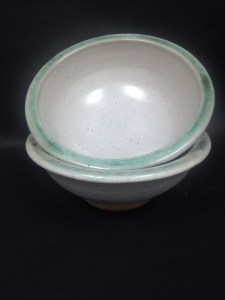
We will provide a limited amount of mats and props. At least one (1) meal and one (1) meditation/yoga practice may be held outdoors. Events are intended to be communal; however, quiet spaces will be reserved for anyone wishing to retreat in silence – and conversation pits will be reserved for anyone wishing to continue dialogue during the silent portions of the weekend.
** St. Luke’s is around the cornder from Mind Body Solutions and less than 2 miles from The Marsh. Contact The Marsh directly if you are interested in reserving a hotel room or utilizing their spa facilities. **
~ We are grateful for your presence ~
Saturday, October 22nd (tentative schedule):
10:30 AM – 12:00 PM Heart Opening Yoga
12:30 PM – 1:45 AM LUNCH & “Guided” Conversation (1 space designated for silence)
2:15 PM – 3:30 PM Journey Meditation (1 space designated for silence / journal writing)
4:00 PM – 5:30 PM YOGA
6:00 PM – 7:15 PM DINNER & “Guided” Conversation (1 space designated for silence)
7:30 PM – 9:00 PM Closing Celebration & “Leave” Taking with Music & Breath by Kalyani (Colleen Buckman)
~ NAMASTE ~
2016 Kiss My Asana #27: You’re a Wonder, Wonder Woman! February 29, 2016
Posted by ajoyfulpractice in Art, Books, Changing Perspectives, Confessions, Dharma, Donate, Faith, Fitness, Gratitude, Healing Stories, Health, Hope, Karma, Karma Yoga, Life, Love, Men, Minneapolis, Minnesota, Movies, Music, Mysticism, Pain, Peace, Philosophy, Religion, Science, Suffering, Super Heroes, Texas, Tragedy, TV, Twin Cities, Volunteer, Wisdom, Women, Writing, Yoga.Tags: community, donation-based events, finding hope, Karma Yoga, KISS MY ASANA, Mind Body Solutions, music, Wonder Woman
add a comment
“Not even girls want to be girls so long as our feminine archetype lacks force, strength and power. Not wanting to be girls, they don’t want to be tender, submissive, peace-loving as good women are. Women’s strong qualities have become despised because of their weakness. The obvious remedy is to create a feminine character with all the strength of Superman plus all the allure of a good and beautiful woman.”
– William Moulton Marston in “The American Scholar” (1943)
If you had asked me, years ago, what I admired and found so endearing about a certain friend of mine, I would have floundered a bit. Oh, it wasn’t that I couldn’t have come up with hundreds, maybe thousands, of platitudes – after all, she’s authentic, fun and funny, quirky, one half of an amazing couple, emotionally intelligent, beautiful and strong, driven, unexpectedly deep, full of grace and love …. See, the list goes on. No, the issue wouldn’t have been finding words to describe Amber K. (Yogi #27); the issue would have been capturing her essence. The issue would have been describing the multidimensional heart beneath the surface.
“Make a hawk a dove,
Stop a war with love,
Make a liar tell the truth.”
– “Wonder Woman Theme” by Charles Fox (music) and Norman Gimbel (lyrics)
“… beautiful as Aphrodite, wise as Athena, as strong as Hercules, and as swift as Hermes.”
– attributes of Diana Prince, as described in “Wonder Woman (Vol 1) #159”, April 1959
People back in 1941, had some of the same concerns we have right now: debates over gun control and birth control; struggles with equality in the work place; war around the world, especially between people with different ethnicites and religious beliefs; politics and economy being driven by the war efforts; and immigration issues related to the war. The list goes on. What’s different, perhaps, is that towards the end of 1941, psychologist William Moulton Marston, inspired by his two wives, gave the world the hero they so desperately needed: Princess Diana of Themyscira, aka Diana Prince, aka Wonder Woman. She was a role model – not just for women, but for everyone.
NOTE: The original Wonder Woman was not born an American, but she defended the United States and all its inhabitants. She had a strong relationship with the divine – which was the source of her powers. She was so dedicated to the truth that she had a “Lasso of Truth” – along with a healthy physique, indestructible bracelets, and a tiara (cause, duh, princess). I’m pretty sure her invisible plane had a nonexistent carbon footprint. And, unlike other classic superheroes, she wasn’t from outer space – or tasered by an alien race, she wasn’t poisoned by something (like a radioactive spider), she didn’t have mutant DNA, and she wasn’t driven by childhood traumas or struggling with dark triad psychosis. Wonder Woman was just all human – unapologetically strong, fierce, proud, beautiful, intelligent, humble, and compassionate. When she faced challenges (like losing her powers) she found a solution (learning martial arts). She focused on restoration rather than retaliation and believed people could be redeemed.
If you look at Amber K. and see Wonder Woman, you’re getting closer to the truth.
“Stop a bullet cold,
Make the Axis fold,
Change their minds,
and change the world.”
– “Wonder Woman Theme” by Charles Fox (music) and Norman Gimbel (lyrics)
I’m convinced Wonder Woman was a yogi. Look at the evidence: She consistently exhibited strong mental focus and clarity, plus her agility was a sign of balance between strength and flexibility. Also, her capacity for turning loving-kindness into a game changer was reminiscent of the siddhis (so-called “supernormal powers” outlined in Patanjali’s Yoga Sutras). Finally, consider how the world would be a really different place if more of us interacted with each other the way Wonder Woman interacts with the people around her.
By the same token, Amber K. is a verified yogi as well as a belly dancer. She is generous with her comments – both positive and negative – in a way that is constructive and insightful. She works with and around her limitations with grace – never complaining, always breathing through what comes up. Her interactions with herself and the people around her imply a certain level of respect for herself and the people around her. Her personal and professional interactions also require a certain level of awareness about the rhythm of life, how things ebb and flow. I guarantee you, the world would be a really different place if more of us related to each other the way Amber K. relates to the people around her.
Oh, and did I mention that I’ve never seen Wonder Woman/Diana Prince and Wonder Woman/Amber K. in the room together? Makes me wanna go, “Hmmm.”
“Steve is impressed with Diana’s understanding, compassion, and belief that people can change. ‘Yes,’ she says, ‘Where I was raised we were taught that good must triumph over evil; and that women and men can change.’”
– Excerpt from Ink-stained Amazons and Cinematic Warriors: Superwomen in Modern Mythology By Jennifer K. Stuller
“I did nothing! It was Wonder Woman!”
– Captain / Major Steve Trevor in the Wonder Woman series
Amber K. is one of those people who consistently reminds me that we don’t have to stop practicing yoga just because our bodies and minds (or even our personal situations) change. But, changes in our mind-body may sometimes require a change in the way we practice. And, ultimately, that’s the beauty of yoga: it meets us where we are, accepts us as we are, and embraces all that we are.
Mind Body Solutions and the KISS MY ASANA yogathon raise awareness about the fact that our physical practice of yoga can change to accommodate our needs. If we (or a teacher) have the knowledge base to change and grow within the practice our yoga practice will advance – which doesn’t always mean we’re doing more “advanced” poses. Sometimes the challenge is accepting our limitations with grace. Sometimes, to get the most benefit out of the pose (and our practice) we have to fully commit to the modification. William Moulton Marston said, “Every crisis offers you extra desired power…. Besides the practical knowledge which defeat offers, there are important personality profits to be taken.” Our time on the mat allows us to cultivate life skills we can use off the mat – but, here again, we have to turn inward and be honest about what we find. We have to keep moving, keep breathing, and keep flowing.
Please, KISS MY ASANA if you are grateful for what you find in your yoga practice! Your donation will help others find a practice for which they too will be grateful – and the circle will be unbroken. Remember, Lynda Carter said, “You know that if you can affect one person’s life in your entire lifetime in a positive way, that your life is worth living.”
A big giant thank you to the 15 yogis who held the space and shared the practice my donation-based KISS MY ASANA class on Saturday, February 27th(details coming soon). If you’re interested, there are still spaces available for March 5th (6:30 – 8:00 PM at Flourish). Contact Myra at a joyfulpractice.com to reserve a spot (or two). Space is limited.
2016 Kiss My Asana #24: Guiding and Pulling (In) the Light February 26, 2016
Posted by ajoyfulpractice in Bhakti, Books, California, Changing Perspectives, Confessions, Daoism, Depression, Dharma, Donate, Faith, Fitness, Food, Gratitude, Healing Stories, Health, Hope, Karma, Karma Yoga, Kirtan, Kundalini, Life, Loss, Mantra, Minneapolis, Minnesota, Mirabai Starr, Music, Mysticism, Oliver Sacks, One Hoop, Peace, Philosophy, Qigong, Religion, Science, Suffering, Tai Chi, Tantra, Taoism, TV, Twin Cities, Volunteer, Wisdom, Women, Writing, Yoga.Tags: answers to tragedy, community, donation-based events, faith, Karma Yoga, KISS MY ASANA, laughter, Mind Body Solutions, music, peace, personal crisis
add a comment
“Music can lift us out of depression or move us to tears – it is a remedy, a tonic, orange juice for the ear.”
– Excerpt from Musicophilia by Oliver Sacks
“When you squeeze an orange, orange juice comes out – because that’s what’s inside. When you are squeezed, what comes out is what’s inside.”
– Wayne Dyer
Yogi #24 (Marilyn) gave me some amazingly delicious oranges once. She told me a little of their back story – they had been given to her by a friend who, if I remember correctly, has a grove in California. Eating the oranges gave me great joy (as she intended) and thinking of their back story filled me with awe and gratitude – but it also made me realize that, in reality, I knew very little of their back story.
How many people were responsible for the planting, the nurturing, the harvesting, and the transporting? How were their lives affected by the oranges? Who even had the idea to start all these endeavors? There was just no way to know. In the end, I could only be grateful.
“Gratitude is our ability to see the grace of God, morning by morning, no matter what else greets us in the course of the day. That has the effect of making us gracious as well.”
– Excerpt from Hustling God: Why We Work So Hard for What God Wants to Give Us by M. Craig Barnes
Marilyn herself is a lot like those oranges: Bright sunshine on a cold January day and present after long journeys, she is delightful, joyful, and fills me with awe and gratitude – yet I only know bits and pieces of her back story. I know she teaches; I know she heals; I know she loves animals, travel, and bicycling. Bottom line: I know just enough about Marilyn to know she has seen amazing places, people, and things in the world and encountered the very best and, possibly, the very worst that the world has to offer. Yet, she is always kind and graciously grateful, for the smallest things, even when someone has wronged her. And her smile lights up a room, even when she is frustrated.
“No other light, no other guide,
Than the one burning in my heart.
This light led the way
More clearly than the risen sun
To where he was waiting for me
– The one I knew so intimately –
In a place no one could find us.”
– Excerpt from Dark Night of the Soul by Saint John of the Cross (translated by Mirabai Starr)
“Every human life is made up of the light and the dark, the happy and the sad, the vital and the deadening. How you think about this rhythm of moods makes all the difference. Are you going to hide out in self-delusion and distracting entertainments? Are you going to become cynical and depressed? Or are you going to open your heart to a mystery that is as natural as the sun and the moon, day and night, summer and winter?”
– Excerpt from the introduction to Dark Nights of the Soul: A Guide to Finding Your Way Through Life’s Ordeals by Thomas Moore
Marilyn practices qigong as well as yoga, which means she’s one of the people who get’s my little energetic puns when I describe one set of arm movements as “Gathering Prana” and the complimentary set of movements as “Gathering Qi.” Both qi and prana are words used to describe the life-force energy that is within us and all around us. Like ruach, pneuma, and spiritus, these are also words which were once used to simultaneously define breath and spirit.
Our ancestors, from all their different cultures, didn’t distinguish between spirit and breath – they were both divinely given and received. Our ancestors, from all their different cultures, believed spirit/breath was the light of the world – it was in them and all around them. Now, the modern mind turns to quantum physics to confirm the Truth our ancestors already knew: We can gather it, guide and pull it; dance with it and in it. Like Marilyn. Or not.
“Of the deities presiding over light, I am the one for January, loved by all for turning the world’s course toward warmth. Of the wind gods who bring immense good in the world, I am the whirlwind. Of the daytime luminaries I am the radiant sun, and of the lights of the night I am the moon.”
– Bhagavad Gita 10:21
“Of David: YHVH is my light and my salvation; whom shall I fear? YHVH is the strength of my life; of whom shall I be afraid?”
– Tehillim (Psalms) 27:1
Jesus said, ‘I am the light that is over all things. I am all: from me all came forth, and to me all attained. / Split a piece of wood; I am there. / Lift up the stone, and you will find me there.’”
– The Gospel of Thomas 77
“I sit in my own splendor. / Wealth or pleasure, / Duty or discrimination, / Duality or nonduality, / What are they to me? / What is yesterday, / Tomorrow, / Or today? / What is space, / Or eternity? / I sit in my own radiance.”
– Excerpt from Heart of Awareness: Translation of the Gita by Thomas Byrom 19:2 – 3
One of my favorite sacred texts is the Ashtavakra Gita (The Song of the Man with 8-Bends in His Limbs). It presents the wisdom of a person whose outside is considered less than ideal, by the people around him. According to one of Ashtavakra’s back stories, he was 12-years old when he walked into the court of the King (who would eventually become his pupil) – and everyone laughed at him. Ashtavakra also laughed, and then he started to cry.
When the King asked why he first laughed, as everyone laughed at him, and then cried, Ashtavakra said, “I started laughing because you saw only my outside. I started crying because I crawled all this way to discuss the Truth with great scholars and all I find here are shoemakers and leather workers.” When the King took great offense and proclaimed his court a court of great scholars, Ashtavakra shook his head and said, “It is only shoemakers and leather workers who are so concerned with the quality of the outside that they can’t see the Truth within.”
I’d like to believe that, in these modern times, we’re not so one dimensional that a shoemaker and a leather worker can’t also be great scholars. Yet, too often, people in a position to teach the Truth get caught up with the quality of the outside. Too often, people in a position to receive the Truth get turned away because their outsides are considered less than ideal. Too often we all forget that we are in bodies together – and these bodies are the ideal vehicle for our spirits. The work being done by Matthew Sanford and Mind Body Solutions allows more people to experience the Truth of who we all are and how we are all connected. KISS MY ASANA if you see the Truth – or the light.
My donation-based KISS MY ASANA class on Saturday, February 27th is full; however, I still have spaces available for March 5th (6:30 – 8:00 PM at Flourish). Contact Myra at a joyfulpractice.com to reserve a spot (or two.)Space is limited. Bay Area yogis, don’t forget: Sandra Razieli’s KISS MY ASANA class is in Oakland on Sunday, February 28th.
~ “If the family were a fruit, it would be an orange, a circle of sections, held together but separable – each segment distinct. – Excerpt from Family Politics: Love and Power on an Intimate Frontier Letty Cottin Pegrebin ~
2016 Kiss My Asana #23: This Yogi is No Slouch! February 25, 2016
Posted by ajoyfulpractice in 40-Day Challenge, Bhakti, Books, California, Changing Perspectives, Confessions, Dharma, Donate, Faith, Fitness, Food, Gratitude, Healing Stories, Health, Hope, Karma, Karma Yoga, Life, Mantra, Meditation, Men, Minneapolis, Minnesota, Music, Mysticism, One Hoop, Peace, Philosophy, Religion, Science, Sukkot, Twin Cities, Volunteer, Wisdom, Women, Writing, Yoga.Tags: awareness, community, donation-based events, faith, Karma Yoga, KISS MY ASANA, laughter, Mind Body Solutions, Mindfulness, peace, union
add a comment
“Be Yourself. Have Fun.”
– Seane Corn on “the best advice she’s been given as a teacher
“Find your struggle, learn your lesson, and then know your purpose.”
– a “Monaism” (saying by Mona Miller, as quoted by Seane Corn)
People who come to my classes always talk about how the experience (of practicing asana with philosophy) is different from their other yoga experiences. From day one, my original teachers all included some aspect of the philosophy into their classes, so that’s the only practice I knew. It’s a practice that resonated with me, because even as a child I was preoccupied with the idea that we are connected to something more than ourselves, something divine.
Early in my life, I assumed everyone was a little preoccupied with issues of theology and existentialism. But, over time, I’ve realized everyone doesn’t consciously question and struggle with philosophical and spiritual matters – even when they crave the answers to that struggling and questioning.
In listening to feedback from people, I’ve now started to realize that every teacher doesn’t teach the way I teach. So, last year when I was ready to host my first yoga practice, I wanted someone who could teach the kind of classes I teach: alignment focused classes with spirit! Two teachers immediately came to mind – and Yogi #23 (Sandra) was one of those teachers.
“Ben Zoma would say: Who is wise? One who learns from every man. As is stated (Psalms 119:99): ‘From all my teachers I have grown wise, for Your testimonials are my meditation.’”
– Excerpt from Ethics of the Fathers (Pirkei Avot) 4:1
“The student is not above the teacher, but everyone who is fully trained will be like their teacher.”
– Luke 6:40
Sandra and I met almost five years ago at a Seane Corn vinyasa teacher training in Minneapolis. Unlike some of the other teachers in the training, we were already spirit-focused in our teaching. We had lunch together the first day, touched base throughout the week, and stayed in touch after she returned to California. One of the many reasons Sandra left such an impression on me is that she obviously teaches from her experiences – one of her specialties is Yoga for Scoliosis because she is a little curvy and has first-hand knowledge of how yoga benefits physical well-being. Another reason she left an impression on me is that she gave me her CD, “Morning Blessings”.
“The tent that houses you / houses your soul. / The Mischan, the hollow dwelling place / Be a vessel / for the love-song of God”
– Excerpt from “Morning Blessings” by Sandra Razieli (with reference to Hanna Tiferet)
“Do you not know that your bodies are temples of the Holy Spirit, who is in you, whom you have received from God? You are not your own; … Therefore honor God with your bodies.”
– 1 Corinthians 6:19-20
I spent the week of Thanksgiving 2011 practicing with Sandra’s “Morning Blessings” CD. Even though my annual trip to Texas is always busy, that year it felt like a retreat. Years later, when I was thinking about the takeaway experience I wanted people to have on a retreat I hosted, I thought about how I felt after practicing with Sandra’s CD.
Sandra is an Iyengar teacher, as well as a certified Yoga for Scoliosis Trainer, as well as a Yoga and Jewish Spirituality teacher, as well as an Anthropologist, a spiritual leader, and…I could keep going with her accomplishments; because, bottom line, she’s no slouch. Sandra is a person of integrity and honor, a true mentsch.
A mentsch is someone who respects the needs and wishes of others—especially the desires of those in his care.
In the care of each of us is entrusted a divine soul. She has a terrible allergy to all those messy deeds that darken her world, and desires only those beautiful deeds that will bring in more light.”
– Based on the teachings of the Rebbe, Rabbi M. M. Schneerson
I can only imagine what a delight it would be to practice with Sandra on a weekly basis. What I know first-hand is that every time I am in her presence I learn something. Sometimes what I learn is obviously information inside me, just waiting for a way to be articulated; however, sometimes it feels like the information is just outside of myself, waiting to be invited in. Sandra has a way of inviting inspiration, grace, and spirit in – and she does it in a way that even someone who has refused the information in the past, suddenly is open to the invitation.
There are two ways to hug somebody. The first is to grab them and draw them in, but the second, perhaps a more refined approach, is to open your arms and create space for the other person. This opening is a passive energy of Hod (humility/gratitude) that makes room for others.”
– Excerpt from The Kabbalah Sutras: 49 Steps to Enlightenment by Marcus J. Freed
(words in parenthesis are mine)
I will always be grateful for the lessons I learned from collaborating with Sandra last year. We definitely enhanced what we each already bring to the table – and, in the process, we strengthened each other’s weak spots. However, Sandra once again upped my game when (at the end of our Sukkot/Gratitude retreat) she gave me a copy of The Kabbalah Sutras: 49 Steps to Enlightenment. I started the practice during my annual Thanksgiving trip, finished on my birthday, and experience a transformation I am still processing.
“Rabbi Ishmael the son of Rabbi Yossei would say: One who learns Torah in order to teach, is given the opportunity to learn and teach. One who learns in order to do, is given the opportunity to learn, teach, observe and do.”
– Excerpt from Ethics of the Fathers (Pirkei Avot) 4:5
I get a little goose-pimply when I think about all the ways my life-journey and Sandra’s life-journey have mystically, energetically, and spiritually overlapped. Take this weekend for example: We’re both leading donation-based classes which benefit Mind Body Solutions and the adaptive yoga program. My KISS MY ASANA class is in Minneapolis on Saturday, February 27th; Sandra’s KISS MY ASANA class is in Oakland on Sunday, February 28th. (Click on each of the KISS MY ASANA links above to find out more information about each class, as well as information about my second Minneapolis class on Saturday, March 5th.)
Just in case you’re not convinced Sandra is no slouch, you can also see her here in another Kiss My Asana video.

