(“Ramadan Mubarak, Blessed Ramadan!” to anyone who is observing Ramadan. I typically talk about Ramadan at the end of the season, so keep your eyes open.)
“We are kept all as securely in Love in woe as in weal, by the Goodness of God.”
“All shall be well, and all shall be well, and (in) all manner of thing(s) shall be well.”
– from Chapters 1 and 27 Revelations of Divine Love (Revelations of Love in 16 Shewings) by Julian of Norwich
Hurray! It’s finally here; one of my favorite days, devoted to one of my favorite people: the Roman Catholic feast day for St. Julian of Norwich. (Her Lutheran feast day is May 8th.) Julian (which may or may not have been her given name) was a 14th century anchoress who is always going to make my Top 10 list of favorite mystics/contemplatives. Scratch that, she always makes my ever-changing Top 5. Let’s be honest; she’s always in the Top 3. And her life and writing are very relevant – and very similar – to what we are experiencing today.
Julian is noteworthy not only because she is the author of the oldest surviving book written in English by a woman, but also because she lived an extraordinary life – most of it in seclusion. As an anchoress (sometimes referred to as anchorite or anchoret) she withdrew from the secular world, for religious reasons, and spent the majority of her life in a tiny cell in the “corner” of a church in the city of Julian. You can think of her as a hermit-in-place. Taking a vow of stability, as anchoresses did, and even being given a symbolic funeral – as anchorites would be considered “dead to the world” – were very common practice in the Middle Ages. Julian’s experience, however, was a little atypical.
While we typically think of anchorites as living in seclusion, with even more isolation than people who retreat into an abbey or convent, Julian lived in the bustling city of Norwich. As a spiritual counselor and model of devout life, she was permitted to engage with the populace through the window of her cell and provide people with what they needed, whether that be clothing for the poor, spiritual advice, and/or prayers. She could also accept alms, food, and other gifts as she served the community. We have it on great authority that not only did the locals take advantage of Julian’s spiritual guidance, but that she was sought out by mystics and others, like Margery Kempe, who would be remembered in their own right. Additionally, the city of Norwich was full of poverty, famine, social conflict, religious schism, and disease during her lifetime so, we can conclude that, for a hermit, Julian was quite busy.
“These Revelations were shewed to a simple creature unlettered, the year of our Lord 1373, the Thirteenth day of May. Which creature afore desired three gifts of God. The First was mind of His Passion; the Second was bodily sickness in youth, at thirty years of age; the Third was to have of God’s gift three wounds.”
– from Chapter 2 of Revelations of Divine Love (Revelations of Love in 16 Shewings) by Julian of Norwich
At some point in her life, Julian asked God for three gifts. At 30-and-a-half, Julian became so ill that she believed she was going to die. Her conclusion was based, in part, by the fact that in her short lifetime Norwich had experienced the Black Death three times – the first time when she was 6 years old and at one point resulting in the death of a third of the population. Also, she was very, very sick. She was so sick that she was given last rites on May 8, 1373. During these very scary and traumatic moments – moments all believed would be her last – Julian received her three gifts from God: (1) to experience the Passion (“suffering”) and love of Christ; (2) to experience personal suffering/illness in youth; and (3) to receive the spiritual wounds of true contrition, genuine compassion, and a sincere longing for God. She received her gifts in the form of 16 “shewings” and, when she recovered wrote them all down.
“He shewed me a little thing, the quantity of an hazel-nut, in the palm of my hand; and it was as round as a ball. I looked thereupon with eye of my understanding, and thought: What may this be? And it was answered generally thus: It is all that is made. I marvelled how it might last, for methought it might suddenly have fallen to naught for little. And I was answered in my understanding: It lasteth, and ever shall for that God loveth it. And so All-thing hath the Being by the love of God.”
“In this Little Thing I saw three properties. The first is that God made it, the second is that God loveth it, the third, that God keepeth it. But what is to me verily the Maker, the Keeper, and the Lover, — I cannot tell; for till I am Substantially oned to Him, I may never have full rest nor very bliss: that is to say, till I be so fastened to Him, that there is right nought that is made betwixt my God and me.”
– from Chapter 5 of Revelations of Divine Love (Revelations of Love in 16 Shewings) by Julian of Norwich
There are two official copies of Julian’s Revelations of Divine Love (A Revelation of Love in 16 Shewings), a short version (“short text”) and a longer version (“long text”). The Short Text is believed to be the one she initially wrote after her recovery and the Long Text is believed to have been written over time, and with some encouragement. Both versions were copied over time, during Julian’s lifetime, and sometimes given as gifts.
One might expect that Julian’s writings were scary and filled with doom and horror, but they are not. In fact, both versions are full of hope and trust in God’s goodness. Additionally, Julian comes across as intelligent, sensitive, and very much grounded in reality. Even though she includes theological points, like presenting God as Father and Mother, which were not authorized by the Church, Julian was neither sanctioned nor criticized as a heretic. In fact, like Saint Teresa of Ávila, another remarkable Christian mystic who happened to be a woman, Julian was encouraged by the church to write and distribute her work. Both women, within their texts, downplayed their intellect and influence and yet are remembered while some of the religious leaders of their time have been forgotten. Another curious thing to note is that, unlike other scholars and religious authors of the time, Julian wrote in English (not Latin).
“We shall suddenly be taken from all our pain and from all our woe, and of His Goodness we shall come up above, where we shall have our Lord Jesus for our meed and be fulfilled with joy and bliss in Heaven.”
“I saw that God rejoiceth that He is our Father, and God rejoiceth that He is our Mother, and God rejoiceth that He is our Very Spouse and our soul is His loved Wife. And Christ rejoiceth that He is our Brother, and Jesus rejoiceth that He is our Saviour. These are five high joys, as I understand, in which He willeth that we enjoy; Him praising, Him thanking, Him loving, Him endlessly blessing.”
– from Chapters 1 and 52 of Revelations of Divine Love (Revelations of Love in 16 Shewings) by Julian of Norwich
Over the years, my friend Lori and I have discussed Julian and her work, and the circumstances within which she worked her spiritual magic. We have, over the years, craved the ability to retreat while simultaneously still serving a purpose in the world. We have also, over the years, wondered at the mindset and fortitude required to not only ask for the gifts Julian requested, but also to receive them and utilize them as she did. This, to paraphrase the Rev. Dr. Cynthia Bourgeault (a modern day contemplative and mystic), is not for sissies.
Now, here we are, and Lori and I recently discussed – via the wonders of technology – that we are all experiencing some of Julian’s circumstances. The whole world is experiencing some of Julian’s circumstances and, while we may not request or even want her gifts, we can definitely appreciate her lessons and what they have to teach us. Regardless of our spirituality or religiosity, we can definitely benefit from her “shewings” of divine love.
“It is thus logical that God, being our Father, be also our Mother. Our Father desires, our Mother operates and our good Lord the Holy Ghost confirms; we are thus well advised to love our God through whom we have our being, to thank him reverently and to praise him for having created us and to pray fervently to our Mother, so as to obtain mercy and compassion, and to pray to our Lord, the Holy Ghost, to obtain help and grace.
I then saw with complete certainty that God, before creating us, loved us, and His love never lessened and never will. In this love he accomplished all his works, and in this love he oriented all things to our good and in this love our life is eternal.
With creation we started but the love with which he created us was in Him from the very beginning and in this love is our beginning.”
– from Chapter 59 of Revelations of Divine Love (Revelations of Love in 16 Shewings) by Julian of Norwich
Please join me today (Wednesday, May 13th) at 4:30 PM or 7:15 PM, if you are interested in seeing what may be “shewn.” Use the link from the “Class Schedules” calendar if you run into any problems checking into the class. You will need to register for the 7:15 PM class if you have not already done so. Wednesday’s playlist is available on YouTube and Spotify.
Kiss My Asana, the yogathon that benefits Mind Body Solutions and their adaptive yoga program is officially over. But, I still owe you two posts and you can still do yoga, share yoga, help others by donating to my KMA campaign through May 15th.
You can also check out the all-humanity, Kick-Off gathering featuring insights from MBS founder Matthew Sanford, conversation with MBS students, and a mind-body practice for all. If you’re not familiar with MBS, this will give you a glimpse into the work, the people, and the humanity of the adaptive yoga program which I am helping to raise $50K of essential support.
“’Speak to the entire community of Israel, saying, “On the tenth of this month, let each one take a lamb for each parental home, a lamb for each household. But if the household is too small for a lamb, then he and his neighbor who is nearest to his house shall take [one] according to the number of people, each one according to one’s ability to eat, shall you be counted for the lamb.”’”
– Shemot / Exodus 12:3-4
“’And this is how you shall eat it: your loins girded, your shoes on your feet, and your staff in your hand; and you shall eat it in haste it is a Passover sacrifice to the Lord.’”
– Shemot / Exodus 12:11
Every year, as we approach the end of Passover, I think about the first Passover Seder. What would that have been like? How would have felt to celebrate freedom? How would it have felt to give thanks to G-d for that freedom? Charlie Harary points out that while it is natural to think the first Passover Seder occurred a year after exodus, it actually happened the night before exodus. That’s right: G-d commanded the Jewish people to celebrate their freedom and give thanks for being delivered out of Egypt before they were even free – even before they knew their freedom was guaranteed.
Can you imagine doing that? Can you imagine how it would feel? Can you imagine the faith it would take to sit in the middle of your suffering, in the middle of your family and friends as they suffer, and give thanks for what’s to come?
There is a history of this kind of observation in the Hebrew Bible. Remember, in Exodus, Deuteronomy and Leviticus, the instructions for Sukkot are to celebrate what will be given – not what has been given. On a certain level, the High Holidays falls into this paradigm; as the 10 Days of Awe / 10 Days of Atonement are a period of reflection, but also a period of looking forward.
“If one thinks of onself as free, one is free, and if one thinks of oneself as bound, one is bound. Here this saying is true, ‘Thinking makes it so.’”
– Ashtavakra Gita 1:11
It seems completely backwards to the modern mind. Today we think we need to Have something, in order to Do something, in order to Be what or who we want to be. However, Harary, as well as Neale Donald Walsh in Conversations with God, point out that the Old Testament formula – the formula for success in the time of Moses – was very different. Instead of Have + Do = Be, Harary and Walsh say that the formula was Be + Do = Have. So, if we want to have certain experiences, certain relationships, and certain things in our lives, we have to conduct ourselves as the person that has the experiences, relationships, and things we want in our lives.
“This formula is infallible. There is no wish that has been fulfilled, nor any wish that has been denied, that does not adhere to the principle of the Creation Equation. Every time that you got what you wanted, your desire for it plus the energy you invested in achieving it were greater than the forces that resisted you having it. Each time they weren’t greater, you didn’t get what you wanted.”
– Rod Styker in The Four Desires: Creating a Life of Purpose, Happiness, Prosperity, and Freedom
Think about it for a moment. One of the things with which people struggle at times is what to Do in a situation. Other times, we don’t struggle. We know exactly what to do and everything falls into place. Successfully achieving our goals still takes effort, it still takes work. But, sometimes, we know exactly what steps to take. How do we know? Because we’re in the mindset of the person who is going to do the work, we take that first step.
In The Four Desires, Rod Stryker codifies a similar formula for success, which he calls “The Creation Equation:” Is + Iv > Ik = P. Here, the intensity (or energy) of desire (Is) combined with the intensity (or energy) put into achieving the goal (Iv), must be greater than the resistance to achieving the goal (Ik), in order for the goal to be achieved (P). It’s easy, straightforward, and makes perfect sense. The problem is that we don’t always realize how much resistance we have to overcome – or that a large bulk of resistance comes from not believing in our ability to achieve success; and/or, in others not believing that we can achieve our success. When we spend a lot of time focused on what we don’t have, we don’t do. When we wake up each morning knowing who we are (BE); we get to work, (DO)ing what we need; so that at the end of the day we HAVE what we need and want.
But, going back to that first Passover Seder for a moment, consider that there is also a contemplative history of imagining one’s self in a certain situation and considering how we would feel or act in that situation. In the Roman Catholic tradition, contemplation is imagining one’s self in the situations of the Gospels. This type of contemplation, along with discernment (noticing the interior movements of the heart), is a big piece of Saint Ignatius of Loyala’s “Spiritual Exercises.” Another example of contemplation in the Christian tradition is moving through the Stations of the Cross. In the 8-limbed philosophy of yoga, one of the niyamas (“internal observations”) is svādyāya (“self study” or “self reflection”). Svādyāya includes noticing how we physically, mentally, and emotionally react or respond to sacred text, music, or situations.
“The study of scripture is another way of putting the principle of self-study into practice…. Elaborating on the concept of svādyāya, Vyasa emphasizes that only those texts that embody indisputable knowledge showing us the path to ultimate freedom are an essential component of self-study. In other words, svādyāya entails the study of spiritual texts that are authentic, contain experiential knowledge, and are infused with the energy to guide us on the path of inner freedom.”
– commentary on Yoga Sutra 2:1 in The Practice of the Yoga Sutra: Sadhana Pada by Pandit Rajmani Tigunait
If you’re interested in practicing a little svādyāya, by “attending” the first Passover Seder, please join me for class today (Tuesday, April 14th) at 12 Noon or at 7:15 PM on Zoom. Some of the new Zoom security protocols are definitely kicking in; so, please use the link from the “Class Schedules” calendar if you run into any problems. Tuesday’s playlist is available on YouTube and Spotify.
If you are following the Orthodox Christian calendar and would like a recording of last week’s classes, please comment or email me.
For more ways you can offer yourself “small gestures of care, affection and prayer,” please join me and a special guest for “Lung Health and How We Cope Right Now (viewing COVID-19 through Traditional Chinese Medicine and YIN Yoga),” a discussion on the importance of the lungs in our overall wellbeing as well as how to just friggin’ cope right now. The conversation will include a brief overview of Traditional Chinese Medicine and YIN Yoga, as well as a brief Q&A followed by a little YIN Yoga.
If you are struggling with your physical or mental health, if you’ve always been curious about “alternative” medicine, and/or if you are missing your yoga practice, this special one hour event is for you. Please join us on YouTube, Wednesday, April 15th, 3:00 PM to 4:00 PM,
Also, mark your calendar for April 25th – the beginning of Kiss My Asana!
Speaking of Kiss My Asana…
Founded by Matthew Sanford, Mind Body Solutions helps those who have experienced trauma, loss, and disability find new ways to live by integrating both mind and body. They provide classes, workshops, and outreach programs. They also train yoga teachers and offer highly specialized training for health care professionals. This year’s yogathon is only a week long. Seven days, at the end of the month, to do yoga, share yoga, and help others. By participating in the Kiss My Asana yogathon you join a global movement, but in a personal way. In other words, you practice yoga… for 7 days.
Can you imagine Kissing My Asana?
You don’t need to wait until the end of the month, however, to consider how you might participate. Start thinking now about how you can add 5 minutes of yoga (or meditation) to your day, how you can learn something new about your practice, or even how you would teach a pose to someone close to you – or even to one of your Master Teachers/Precious Jewels.
To give you some ideas, consider that in past years my KMA offerings have included donation-based classes and (sometimes) daily postings. Check out one of my previous offerings dated April 14th (or thereabouts):
“Thank you, God, Look how misery has ended for us. The rain has fallen, The corn has grown, All the children that were hungry are going to eat. Let’s dance the Congo, Let’s dance the Petro, God said in Heaven That misery has ended for us.”
– “Merci Bon Dieu” by Frantz Casseus, sung by Harry Belafonte
“First and foremost, we believe creation of the world, G-d created a world in which he wanted the human being to actually be able to do something – that is to say, to exercise free will, to be like G-d, meaning to be a creator, not to be lab rats…. He wants us to have a relationship with Him. But to have a relationship with G-d requires that I have an exercise of my free will…. Free will means an environment in which not necessarily do I always have pleasure when I make the right decisions and not necessarily does someone always suffer when they make the wrong decision. Free will is having real power to create stuff. Free will is having real power to alleviate suffering.”
– Rabbi Mordechai Becher, in vlog explaining one of several reasons why suffering exists
If you look back over this last week of blog posts, you will see a lot of different takes on suffering. So much suffering, in the midst of so much that is holy. I could point back to any number of quotes from this week’s post, any number of quotes from various traditions and belief systems. But, just focus on something simple…a simple list, the Four Noble Truths from Buddhism:
Suffering exists
Suffering is caused by attachment, clinging, craving
There is an end to suffering
The Noble Eight-fold Path is the way to end suffering
In the Passover story, Moses has similar experiences and a similar journey as Prince Siddhartha has in relation to Buddhism. (Both also have parallels to Arjuna’s experience at the center of the battlefield during The Bhagavad Gita.) There are some obvious differences, but let’s focus on the similarities for a moment. Both were raised in wealthy households, lived lives of privilege, experienced the suffering of others, and – instead of turning away, as some would do – both took the opportunity to alleviate themselves and others from suffering.
According to an oft quoted proverb, G-d is in the details – or, in the detail. And, it turns out, that the element of G-d is one of the big differences between the two stories. Another big difference is that while both heroes were raised in wealth, Moses was born a slave – and knew his connection to the Jewish people, people who were suffering. Prince Siddhartha, who becomes the Buddha (or “Enlightened One”) was 29 years old when he left the palace gates and saw suffering for the first time. At 35, when he became enlightened, the Buddha codified the 4 Noble Truths and began teaching. He died at the age of 80. This all happened in India, during the 6th Century (~563) BCE.
On the other hand, Moses was born into suffering during the 14th Century (placing Exodus between 1446 – 1406) BCE. Not only are the Jewish people, his people, enslaved when he is born, but because Pharaoh declared that all baby boys should be killed, Moses was born during greater than normal suffering. Theoretically, he always knew some amount of suffering existed. He was 40 years old when he had to flee his home after stepping in to protect a Jewish man was being beaten; he was 80 when G-d in the form of the burning bush commanded him to return to Egypt and speak to Pharaoh about freeing the Jewish people; and, subsequently, when he received the Torah, G-d’s truth for his people. He was 120 when he died.
– “Ignorance (or lack of knowledge), false sense of identity, attachment (rooted in pleasure), aversion (attachment rooted in pain), and fear of death or loss are the afflictions.”
In the Yoga Sutras Patanjali outlined how the mind works and how to work the mind. The mind, he explained, has a tendency to wander, move around, and get caught up in those fluctuations. Those fluctuations are either afflicted or not afflicted – meaning some thoughts bring us pain/suffering and others alleviate or don’t cause pain/suffering. He goes on to describe how to afflicted thoughts cause nine obstacles, which lead to five conditions (or states of suffering). Eventually, he describes exactly what he means by “afflicted thoughts.” Throughout these first two chapters of the text, he gives examples on how to overcome the afflicted thoughts; on how to alleviate the suffering they cause; and on how to overcome the obstacles and painful states of suffering. His recommendation: Various forms of meditation.
One technique Patanjali suggests (YS 1.33) is to offer loving-kindness/friendliness to those who are happy, compassion to those who are sad, happiness to those who are virtuous, and indifference to those who are non-virtuous. (Metta meditation is a great way to start this practice.) Knowing, however, that everyone can’t just drop into a deep seated meditation, Patanjali offers physical techniques to prepare the mind-body for meditation; this is the physical practice.
I find the yoga philosophy particularly practical. But then again, I tell my own stories.
Historically speaking, Patanjali was in India compiling the Yoga Sutras, which outlines the philosophy of yoga, during the Buddha’s lifetime. I have heard, that at some point in his life, the Buddha was aware of yoga – but that doesn’t mean he was aware of the yoga sutras, simply that he was aware of the lifestyle and the codes of that lifestyle. Perhaps he even had a physical practice. The Buddha, however, did not think the yoga philosophy was practical enough. In theory, this explains some of the parallels between yoga and Buddhism. It also may help explain why there are so many lists in Buddhism and why the Buddha taught in stories.
I have no knowledge of (and no reason to believe that) Moses knew anything about yoga, the yoga philosophy, or the sutras. However, he can be considered a “desert brother” or Jewish mystic for much of his adult life – meaning that he undoubtedly engaged in prayer, meditation, and contemplation. Even if he didn’t attribute certain aspects of the body to the aspects of the Divine that are found on the Tree of Life, and even if he didn’t physically move his body with the intention of connecting with G-d, Moses spent much of his adult life as a shepherd. As a shepherd, moving around the hills with his ship, Moses connected with nature and with G-d, which is the ultimate dream of some philosophers and truth seekers.
“Then Job stood up, and rent his robe and tore his hair; then he fell to the ground and prostrated himself. And he said, ‘From my mother’s womb, I emerged naked, and I will return there naked. The Lord gave and the Lord took; may the name of the Lord be blessed.'”
– Job, upon learning that how much he’s lost in a single moment (Iyov / Job 1.20-21)
Moses probably didn’t know the story of the Buddha. He would have, however, known the story of Job. The Book of Job takes place around the 6th Century BCE – the same time as Prince Siddhartha’s evolution into the Buddha. It is the story of a man who endures great suffering. From Job’s perspective, there is a point when it could even be considered pointless suffering. But only to a point, because eventually Job’s suffering is alleviated and the way in which he endures the suffering is rewarded.
Job clings to his faith, believes that G-d is always with him. Moses, as I mentioned in yesterday’s post, is told by the burning bush that G-d will always be with him and with the Jewish people. So the lesson is, “[we] are not alone in this. / As brothers [and sisters] we will stand and we’ll hold your hand.”
Sometimes, when I sing-along to the Mumford and Sons’ Timshel (even when I embellish the lyrics, see above) I don’t point out that the title of the song does not translate to “you are not alone in this.” There is a reference in John Steinbeck’s East of Eden that refers back to Beresh’t / Genesis 4:7 and the story of Cain and Abel. Steinbeck translates G-d’s words to Cain as “thou mayest.” In reality, if you’re going to use Steinbeck’s reference, it’s “thou mayest rule;” but it is sometimes translated as “you can rule/master” or “you will rule /master” and the object of this command or explanation is “sin.” As in: You can (or will, or mayest) rule (or overcome, or master) Sin.
I’m not going to get into the various understandings and meanings of sin. Suffice to say, anything one would categorize as a sin can also categorized as an affliction and therefore something which causes suffering. The key part here is that many translations of “timshel” reinforce the concept of free will. We choose how we deal with suffering. Even when we don’t realize we are choosing, our choice can alleviate or increase our suffering.
The Buddha’s parables about the second arrow and the poisoned arrow brilliantly illustrate how this works. So too, do the stories of Cain and Able, Job, and Moses and the Jewish people during Exodus. Even the story of the Passion of the Christ – the story of Jesus and his last week of life – illustrates this same principle.
Yesterday, I finished class by quoting Pope Francis’s Easter vigil homily. Even though this week marks the end of Passover and takes us into Vaisakhi (in the Sikh tradition) and Ridvan (in the Hindu tradition), this is also the Holy Week or Passion Week in the Orthodox Christian traditions and so I’m going to end with that same bit of the Easter vigil homily.
“This year however, we are experiencing, more than ever, the great silence of Holy Saturday. We can imagine ourselves in the position of the women on that day. They, like us, had before their eyes the drama of suffering, of an unexpected tragedy that happened all too suddenly. They had seen death and it weighed on their hearts. Pain was mixed with fear: would they suffer the same fate as the Master? Then too there was fear about the future and all that would need to be rebuilt. A painful memory, a hope cut short. For them, as for us, it was the darkest hour.
Yet in this situation the women did not allow themselves to be paralyzed. They did not give in to the gloom of sorrow and regret, they did not morosely close in on themselves, or flee from reality. They were doing something simple yet extraordinary: preparing at home the spices to anoint the body of Jesus. They did not stop loving; in the darkness of their hearts, they lit a flame of mercy. Our Lady spent that Saturday, the day that would be dedicated to her, in prayer and hope. She responded to sorrow with trust in the Lord. Unbeknownst to these women, they were making preparations, in the darkness of that Sabbath, for “the dawn of the first day of the week”, the day that would change history. Jesus, like a seed buried in the ground, was about to make new life blossom in the world; and these women, by prayer and love, were helping to make that hope flower. How many people, in these sad days, have done and are still doing what those women did, sowing seeds of hope! With small gestures of care, affection and prayer.”
– Homily of His Holiness Pope Francis, Easter Vigil, Holy Saturday, 11 April 2020
If you are interested and available, please join me for the virtual Common Ground Meditation Center yoga practice on Zoom, today (Monday, April 13th), 5:30 PM – 6:45 PM. Some of the new Zoom security protocols are definitely kicking in; so, please use the link from the “Class Schedules”calendar if you run into any problems. There is no music for this practice.
If you are following the Orthodox Christian calendar and would like a recording of last week’s classes, please comment or email me.
For more ways you can offer yourself “small gestures of care, affection and prayer,” please join me and a special guest for “Lung Health and How We Cope Right Now (viewing COVID-19 through Traditional Chinese Medicine and YIN Yoga),” a discussion on the importance of the lungs in our overall wellbeing as well as how to just friggin’ cope right now. The conversation will include a brief overview of Traditional Chinese Medicine and YIN Yoga, as well as a brief Q&A followed by a little YIN Yoga.
If you are struggling with your physical or mental health, if you’ve always been curious about “alternative” medicine, and/or if you are missing your yoga practice, this special one hour event is for you. Please join us on YouTube, Wednesday, April 15th, 3:00 PM to 4:00 PM,
Also, mark your calendar for April 25th – the beginning of Kiss My Asana!
Speaking of Kiss My Asana…
Founded by Matthew Sanford, Mind Body Solutions helps those who have experienced trauma, loss, and disability find new ways to live by integrating both mind and body. They provide classes, workshops, and outreach programs. They also train yoga teachers and offer highly specialized training for health care professionals. This year’s yogathon is only a week long. Seven days, at the end of the month, to do yoga, share yoga, and help others. By participating in the Kiss My Asana yogathon you join a global movement, but in a personal way. In other words, you practice yoga… for 7 days.
Kissing My Asana is definitely a small gesture of care, affection, and prayer!
You don’t need to wait until the end of the month, however, to consider how you might participate. Start thinking now about how you can add 5 minutes of yoga (or meditation) to your day, how you can learn something new about your practice, or even how you would teach a pose to someone close to you – or even to one of your Master Teachers/Precious Jewels.
To give you some ideas, consider that in past years my KMA offerings have included donation-based classes and (sometimes) daily postings. Check out one of my previous offerings dated April 13th (or thereabouts):
PLEASE NOTE: This post involves a theoretical discussion on non-COVID related death.”
“People ask me how I find hope. I answer that I don’t believe in hope, and I don’t believe in hopelessness. I believe in compassion and pragmatism, in doing what is right for its own sake. Hope can be lethal when you are fighting an autocracy because hope is inextricable from time. An enduring strategy of autocrats is to simply run out the clock.”
– from Hiding in Plain Sight by Sarah Kendzior
“As spring is nature’s season of hope, so Easter is the Church’s season of hope. Hope is an active virtue. It’s more than wishful thinking….. My hope in the Resurrection is not an idle hope like wishing for good weather but an active hope. It requires something on my part – work. Salvation is a gift from God for which I hope, but Saint Paul told the Philippians to ‘work out your salvation with fear and trembling’ (2:12). My hope in the resurrection and eternal life in heaven requires work on my part.”
– from A Year of Daily Offerings by Rev. James Kubicki
Serendipitously, I received two texts from the same Austin suburb last night. One was from a friend, sharing the quote above. The other was from my brother, asking why people were celebrating the same thing at different times. The quote sharpened my focus. The question brings me to you.
Even though he didn’t ask the question in an all encompassing way, I am going to answer his question here in a broader sense, and in a pretty basic way. On Sunday, April 12th, Western Christians are celebrating Easter, Orthodox Christians are celebrating Palm Sunday (the Sunday before Easter), the Jewish community is observing Passover and there are some people in the world celebrating both Easter (or Palm Sunday) and Passover. When you consider that this observations and celebrations are occurring all over the world – and keep in mind different time zone – it can get really confusing. Hence my brothers question.
As you remember, Passover is a commemoration of the Exodus story, which is the story of the Jewish people being freed from slavery in Egypt. The Jewish liturgical calendar is lunar-based and therefore Passover happens at a slightly different time each year on the Gregorian (i.e., secular) calendar. According to all four canonical Gospels of the New Testament, Jesus spent the last week of his life preparing for Passover (and what he knew was coming in terms of the Crucifixion and Resurrection). Three of the four indicate that what Christians (and artists) refer to as the “Last Supper” was actually a Passover Seder – so we are back to a lunar calendar, although it’s a different lunar calendar. Orthodox Christians operate under the old-school Julian calendar, so now we have a third timeline.
Just to add a little spice to the mix, consider that, dogmatically speaking, the concept of a Messiah originates within Judaism and includes specific qualifications for how the Messiah would be identified. According to the Christian paradigm, Jesus meets the qualifications. According to most Jews, he does not. Most modern Christians focus exclusively on the New Testament and observe holy times accordingly. Some Christians, however, also follow the observations commanded in Deuteronomy and Leviticus.
Got it? Be honest. If you need a scorecard, I’m happy to provide one – especially since I’m about to go down the (metaphorical) rabbit hole.
Whenever I think about Easter, the waiting that happens on the Saturday between Good Friday and Easter, and the moment when the rock is rolled away to reveal the empty tomb, I think of one thing: Wigner’s friend taking care of Schrödinger’s Cat.
For those of you not familiar with physicist Erwin Schrödinger’s thought experiment (or paradox), it goes like this. The (imaginary) cat is closed up in a box with an unstable radioactive element that has a 50-50 chance of killing the cat before the box is opened. According to quantum mechanics, there is a moment when the cat is simultaneously alive and dead. This is called superposition and it could be considered the scientific equivalent of non-duality. When the box is opened, revealing the state of the cat, the superposition collapses into a single reality. (There is also the possibility that opening the box changes the percentage, but that’s a whole different tunnel.)
Physicist Eugene Wigner took things a bit farther by adding a friend. According to the Wigner’s thought experiment, instead of doing the experiment, the scientist leaves it all in the hands of a friend and waits for a report. Now, there is the superposition inside of the box and there is a separate superposition inside the lab, which means the wave (or superposition) collapses into a single reality when the box is opened (creating reality as the friend knows it) and collapses again when the (imaginary) friend reports to the scientist (establishing the original scientist’s reality). Let’s not even get into what happens if the friend opens the box and leaves the lab without reporting back to the original scientist, but has a certain expectation – i.e., understanding of reality – about what the scientist will find in the lab. Through it all, the cat exists (and ceases to exist) within its own reality. It never experiences the superposition others experience. It just is.
That state of being, existing, takes us back to Passover, and eventually to the Resurrection of Jesus.
“’And know also, Arjuna, that as the Divinity in all creatures and all nature, I am birthless and deathless. And yet, from time to time I manifest Myself in worldly form and live what seems an earthly life. I may appear human but that is only my “mya” (power of illusion), because in truth I am beyond humankind; I just consort with nature, which is Mine.’”
– The Bhagavid Gita: A Walkthrough for Westerners (4:6), by Jack Hawley
“And He said, ‘For I will be with you, and this is the sign for you that it was I Who sent you. When you take the people out of Egypt, you will worship God on this mountain.’”
– Shemot / Exodus 3:12
“God said to Moses, ‘Ehyeh asher ehyeh (I will be what I will be),’ and He said, ‘So shall you say to the children of Israel, “Ehyeh (I will be) has sent me to you.’””
– Shemot / Exodus 3:14
In the Exodus story, the Jewish people are slaves in Egypt and G-d commands Moses to go to Pharaoh and demand they be released. Moses takes his brother Aaron along and then, when their show of power doesn’t convince Pharaoh of the authority of G-d, everyone is subject to nine plagues: blood, frogs, lice, wild beasts in the streets, pestilence, boils, hail, locusts, and day(s) of darkness. Remember it’s not only Pharaoh and the Egyptians who suffer. The Jews, who are already suffering the hardship of slavery, also have to endure these additional hardships. On the evening of the tenth plague, the death of the first born male child, the Jewish families are told they are to smear lambs blood on their doors – so their households will be passed over. They are also commanded to celebrate and give thanks for their freedom – even though they are still slaves.
Yes, it is a little mind boggling, but what passes as the first Passover Seder happens in Egypt and during a time of slavery. Considering Pharaoh had changed his mind before, they had no way of knowing (with any certainty) that they would be freed immediately after the tenth plague. See where this is going? In that moment, the Jewish people are simultaneously free and not free.
Furthermore, Rabbi David Fohrman, quoting Shlomo Yitzchaki, the medieval French rabbi known as Rashi, points out that when G-d initial speaks to Moses and Moses asks for G-d’s identity, Moses is told three times that the One who speaks is the One who will be with Moses and the Jewish people always. Regardless of what they are experiencing, Rashi explains, G-d will be with them. This is the very definition of compassion, which literally means “to suffer with.”
“’Whenever goodness and “dharma” (right action) weaken and evil grows stronger, I make Myself a body. I do this to uplift and transform society, reestablish the balance of goodness over wickedness, explain the sublime plan and purpose of life, and serve as the model for others to follow. I come age after age in times of spiritual and moral crisis for this purpose.’”
– The Bhagavid Gita: A Walkthrough for Westerners (4:7-8), by Jack Hawley
Jesus (during his time), and future Christians, are kind of in the same boat. In the last week of his life, he is betrayed, crucified, dead, buried, and resurrected – and he simultaneously is not. However, most of that is semantics. What is critical is the dead/buried, and resurrected part. In those moments, even right after the tomb is opened and there is some confusion about what has happened, Jesus is essentially Schrödinger’s Cat – and Christians, as well as non-believers, are either the original scientist or the friend.
Yet, when everything is said and done (stay with me here), this is all head stuff. What people are observing, commemorating, and/or celebrating right now, isn’t really about the head. Faith never is. It’s all about the heart. It’s all about love. Specifically, in these examples, it all comes back to G-d’s love expressed as compassion.
“For God so loved the world that he gave his one and only Son, that whoever believes in him shall not perish but have eternal life.”
– John 3:16 (NIV)
“’Strange? Yes. It is difficult for most people to comprehend that the Supreme Divinity is actually moving about in human form. But for those few who dare to learn the secret that is I, Divinity, who is the Operator within them, their own Self, My coming in human form is a rare opportunity to free themselves from the erroneous belief that they are their bodies.’”
– The Bhagavid Gita: A Walkthrough for Westerners (4:9), by Jack Hawley
Please join me today (April 12th)for my first every Easter Sunday service/practice, 2:30 PM – 3:35 PM, on Zoom. Some of the new security protocols are definitely kicking in so, please use the link from the “Class Schedules” calendar if you run into any problems. The playlist is available on YouTube and Spotify.
If you are following the Orthodox Christian calendar and would like a recording of last week’s classes, please comment or email me.
For more ways you can practice pragmatism and self-compassion, please join me and a special guest for “Lung Health and How We Cope Right Now ((viewing COVID-19 through Traditional Chinese Medicine and YIN Yoga),” a discussion on the importance of the lungs in our overall wellbeing as well as how to just friggin’ cope right now. The conversation will include a brief overview of Traditional Chinese Medicine and YIN Yoga, as well as a brief Q&A followed by a little YIN Yoga.
If you are struggling with your physical or mental health, if you’ve always been curious about “alternative” medicine, and/or if you are missing your yoga practice, this special one hour event is for you. Please join us on YouTube, Wednesday, April 15th, 3:00 PM to 4:00 PM,
Also, mark your calendar for April 25th – the beginning of Kiss My Asana!
Speaking of Kiss My Asana…
Founded by Matthew Sanford, Mind Body Solutions helps those who have experienced trauma, loss, and disability find new ways to live by integrating both mind and body. They provide classes, workshops, and outreach programs. They also train yoga teachers and offer highly specialized training for health care professionals. This year’s yogathon is only a week long. Seven days, at the end of the month, to do yoga, share yoga, and help others. By participating in the Kiss My Asana yogathon you join a global movement, but in a personal way. In other words, you practice yoga… for 7 days.
Kissing My Asana is pragmatic and compassionate!
You don’t need to wait until the end of the month, however, to consider how you might participate. Start thinking now about how you can add 5 minutes of yoga (or meditation) to your day, how you can learn something new about your practice, or even how you would teach a pose to someone close to you – or even to one of your Master Teachers/Precious Jewels.
To give you some ideas, consider that in past years my KMA offerings have included donation-based classes and (sometimes) daily postings. Check out one of my previous offerings dated April 12th (or thereabouts):
“You ain’t got no kind of feeling inside I got something that will sho’ ’nuff set your stuff on fire You refuse to put anything before your pride What I got will knock all your pride aside”
– “Tell Me Something Good” by Chaka Khan and Rufus
For the first time in 11 years, I am not teaching on Good Friday. For the first time in 11 years, I am teaching on Easter. It’s a little surreal and bittersweet. Because, while I know some people appreciate a yoga practice that essentially mirrors the Via Dolorosa and walks through the Stations of the Cross; I also know it’s a little much for some folks. Every year, someone asks me if I’m going to do the Good Friday theme and, every year, someone thanks me and says that it’s meaningful, which is good.
Most people think of the word “good” in the modern context, as something that as desired, approved, right, pleasing, and welcome. Non-Christians have a hard time understanding why the day associated with the trial, persecution, crucifixion, and death of Jesus would be considered good. It becomes more obvious when you go a little deeper.
In the Old Testament time, the time in which Jesus lived, saying something was “good” meant that something was meaningful, it had a purpose. In the Christian tradition, Jesus is recognized as the Messiah, the Christ, the one who heralds and ushers in an era of peace and salvation. He serves his purpose, because he lives, suffers, is crucified, dies, is buried, and rises – in order for sins to be forgiven. There is no passion, no crucifixion, no death, no burial, nor resurrection, however, without the betrayal. Implying that the betrayal and Judas, by extension, are good, because they are meaningful (and have a purpose) is one of the things that gets me into trouble.
“And God saw that it was good.”
– Words that appear 7 times in the Creation Story found in Bereish’t /Genesis
Every year, with the exception of last year, someone complains to the YMCA management about one of my Passion Week classes. It doesn’t matter that the complaint often comes up in a class where I’ve also told the Passover story. It doesn’t matter that throughout the year, I talk about a variety of religions and religious observations. It’s always Passion Week that causes someone to say that what I teach and the why I teach are not appropriate.
Keep in mind, people will sometimes tell me that I made them uncomfortable (or even touched them) because of something that was personal only to them. Yoga can be very healing, but in the process it can bring up a lot of trauma. Religion, specifically religious fanaticism, has caused a lot of harm in the history of the world; so it is not surprising that some folks would be upset to hear me talking about a religious practice during a yoga practice – especially if they are not familiar with the history and original intention of the philosophy. On the religious front, though, the complaint always goes through management and it always involves Christianity and Passion Week. The irony is not lost on me that these classes were always at the Young Men’s Christian Association.
“That they all may be one. (John 17:21)”
– YMCA motto adopted, along with the “Paris Basis,” by international delegates at the First World Conference of the YMCA, 1855
I would like to think that I’ve become a little wiser and a little more conscious as a teacher. I definitely appreciate feedback and take it into consideration. That said, I still teach the themes I teach. I still teach with the understanding that everyone doesn’t believe what I believe. I still teach with the understanding that even when I teach from a historical, philosophical, and conceptual perspective, some people will think I am of a certain faith and have a religious agenda.
I hate breaking it to y’all, but I’m neither Jewish, Christian, Muslim, Buddhist, Sikh, Baha’i, Daoist, Hindu, Wiccan, Pagan, nor any number of things you might have considered. But, I do have an agenda.
“Yoga” means union. Throughout the 8-Limb philosophy there is a recognition of and belief in something Divine – G-d. Whatever that means to you at this moment, it is simultaneously that and not that (neti, neti). The end goal of the philosophy is sometimes referred to as “union with the Divine.” That, however, does not mean – or does not only mean – union with an anthropomorphic being. It does, however, mean a state of awareness and existence that understands how everything and everyone is connected. Being connected, working together, that is yoga. Being intentional about our thoughts, words, and deeds, because what we think, say, and do affects everything and everyone around us, that is part of the practice. As a yogi, that’s my agenda: yoga.
“We talk of becoming one with God and many seekers are looking to reach higher spiritual levels, but first we must unify the different parts of ourselves. To see that we are complex beings, often with apparent internal contradictions, but this too is also a form of oneness. Understanding the Divine begins by first understanding ourselves.”
– from the introduction to The Kabbalah Sutras: 49 Steps to Enlightenment, by Marcus J. Freed
While I am not teaching on Good Friday this year, I am teaching on what is considered Lazarus Saturday in the Orthodox Christian traditions and this Sunday (which is Easter in the Roman Catholic and Western Christian traditions and Palm Sunday in the Orthodox Christian traditions). I’m not sure how things will work on Sunday. I haven’t even decided how I will hold space for the practice. But, I would love for you to join me on Zoom, Saturday (12:00 PM – 1:30 PM) and/or Sunday (2:30 PM – 3:35 PM). Playlists will be available on YouTube and Spotify.
If you are following the Orthodox Christian calendar and would like a recording of last week’s classes, please comment or email me.
Meanwhile, I offer you a little taste of my personal practice (see meditation below) and a little peek at what’s to come (see Kiss My Asana “flashbacks” below). Stay tuned for a special YIN Yoga event this Wednesday, April 15th, at 3:00 PM
METTA MEDITATION (with relationships):
Prior to the quarantine, Metta Meditation was part of my daily commute. Part I gives you a little background and a partially guided meditation. Part II (coming soon) includes guided meditation for the cardinal and intercardinal directions. These meditations were recorded in the Spring of 2019.
KISS MY ASANA YOGATHON:
Founded by Matthew Sanford, Mind Body Solutions helps those who have experienced trauma, loss, and disability find new ways to live by integrating both mind and body. They provide classes, workshops, and outreach programs. They also train yoga teachers and offer highly specialized training for health care professionals. This year’s yogathon is only a week long. Seven days, at the end of the month, to do yoga, share yoga, and help others. By participating in the Kiss My Asana yogathon you join a global movement, but in a personal way. In other words, you practice yoga… for 7 days.
I know you wanna Kiss My Asana!
You don’t need to wait until the end of the month, however, to consider how you might participate. Start thinking now about how you can add 5 minutes of yoga (or meditation) to your day, how you can learn something new about your practice, or even how you would teach a pose to someone close to you – or even to one of your Master Teachers/Precious Jewels.
To give you some ideas, consider that in past years my KMA offerings have included donation-based classes and (sometimes) daily postings. “Flashback” to one of my previous offerings dated April 10th (or thereabouts):
“And how many times can a man turn his head And pretend that he just doesn’t see – the answer The answer, my friend, is blowin’ in the wind The answer is blowin’ in the wind”
– “Blowin in the Wind” sung by Joan Baez, lyrics by Bob Dylan
Every year, I say that May 1st is one of the hardest working days of the year, because so many people use that day to celebrate so many things. That being said, this year, April 8th may be the most revered day of the year as it coincides with several religious or philosophical observations: Spy Wednesday in the Roman Catholic and Western Christian traditions, the beginning of Passover (at sunset) in the Jewish tradition, Hanuman Jayanti in some Hindu traditions, and the Buddha’s birthday in some culturally Buddhist traditions (specifically in parts of Japan). These observations don’t always stack up like this since different traditions and cultures base their holy days on different calendars. This year; however, the super pink moon shines over the world in a way that is uniquely auspicious.
I am always up for a good auspicious story, one that is simultaneously inspiring and enlightening, and a reason to practice the splits. The question is: How do we honor so much in the short amount of time that is a 60-minute class? That’s an especially tricky challenge when some of these are not even remotely connected on paper. The answer, of course, is to find the common denominator.
When considering different people’s experiences with the divine – or even what is best in mankind – we start with what is universal to the human experience: doubt and fear, passion/suffering, faith, and change. Everything changes and, in moments of great suffering – in moments when we doubt and fear ourselves and those around us – it is important to have faith in the fact that things will change. That faith can, sometimes, bring hope – and the power of hope is another common denominator. But, let’s step back for a moment and consider doubt and fear plus passion/suffering.
“It’s not the case that when there is the view, ‘The soul & the body are the same,’ there is the living of the holy life. And it’s not the case that when there is the view, ‘The soul is one thing and the body another,’ there is the living of the holy life. When there is the view, ‘The soul & the body are the same,’ and when there is the view, ‘The soul is one thing and the body another,’ there is still the birth, there is the aging, there is the death, there is the sorrow, lamentation, pain, despair, & distress whose destruction I make known right in the here & now.”
– from Cula-Malunkyovada Sutta: The Shorter Instructions Malunkya (translated from the Pali by Thanissaro Bhikkhu)
The Buddha (whose birthday is celebrated in May by some traditions) said that he taught only two things: suffering and the end of suffering. In fact, the Four Noble Truths outline exactly that. “I have heard” two parables the Buddha used to differentiate between (physical) pain and (mental) suffering. Both parables also point to the ways in which we can alleviate our own suffering.
In one parable, a man is shot with a poisoned arrow. As the poison enters the man’s bloodstream, he is surrounded by people who can and want to help him, to save his life. The problem is that the man wants to know why he was shot. In fact, before the arrow is removed he wants to know why he was shot, by whom he was shot, and all the minutia about the archer and their life. While the information is being gathered, the poison is moving through the man’s body; the man is dying. In fact, the man will die before he has the answers to all his questions.
In another parable, a man is shot by an arrow (no poison this time) and then, in the very next breath, the man is shot by a second arrow. The Buddha explains that the first arrow is physical pain, and we can’t always escape or avoid that. The second arrow, however, is the mental suffering (or pain) that is caused when “the uninstructed run-of-the-mill person sorrows, grieves, & laments, beats his breast, becomes distraught.” How we respond to moments of pain and suffering determines how much more pain and suffering we will endure.
“How many ears must one person have Before he can hear people cry? And how many deaths will it take ’till he knows That too many people have died? The answer, my friends, is blowin’ in the wind The answer is blowin’ in the wind”
– “Blowin in the Wind” lyrics by Bob Dylan
When we look the observations that are happening around the world today (Wednesday, April 8th) from the perspective of the human experience (instead of looking at them from the perspective of cultural or historical differences), we find they are more alike than different. In these stories there are two recognized teachers of wisdom (Jesus and the Buddha) and two heroes who lack confidence in their own ability to shine and help to save others (Hanuman and Moses). All four experience great suffering. All four have great faith (although, arguable in the Buddha’s case, not in G-d, whatever that means to you at this moment). All four are known for their devoted service to their community. All four are the unlikely heroes in stories about freedom from suffering. All four are sources of great inspiration.
Finally, all four offer very practical lessons related to what we are all experiencing right now. If you’re interested in the stories, the lessons, and a little bit of the splits, join me for one of the following Wednesday yoga practices on Zoom:
4:30 PM – The Nokomis Yoga class is a 60-minute, open-level vinyasa practices using vinyasa karma, which means we will move with the breath and progress in intensity as we make our way to a final and/or peak pose. All are welcome!
The playlist for Wednesday is available on YouTube and Spotify.
As Zoom has changed some security protocols, please use the link on the “Class Schedules” calendar if you encounter any access problems. During this quarantine experience, you can make a donation through Common Ground Meditation Center, which operates on dana/generosity, or you can purchase a package on my Squarespace. Either option can be applied to any class. If you are worried about finances, do not add this to your worry list – I got you, just come to the virtual practice.
Speaking of our virtual practice, Kiss My Asana, the yogathon that benefits Mind Body Solutions and their adaptive yoga program is coming online at the end of this month. Founded by Matthew Sanford, Mind Body Solutions helps those who have experienced trauma, loss, and disability find new ways to live by integrating both mind and body. They provide classes, workshops, and outreach programs. They also train yoga teachers and offer highly specialized training for health care professionals. This year’s yogathon is only a week long. Seven days, at the end of the month, to do yoga, share yoga, and help others. By participating in the Kiss My Asana yogathon you join a global movement, but in a personal way. In other words, you practice yoga… for 7 days.
You can totally do that!
You don’t need to wait until the end of the month, however, to consider how you might participate. Start thinking now about how you can add 5 minutes of yoga (or meditation) to your day, how you can learn something new about your practice, or even how you would teach a pose to someone close to you – or even to one of your Master Teachers/Precious Jewels.
To give you some ideas, consider that in past years my KMA offerings have included donation-based classes and (sometimes) daily postings. Check out one of my previous offerings dated April 8th (or thereabouts):
“And what is declared by me? ‘This is stress,’ is declared by me. ‘This is the origination of stress,’ is declared by me. ‘This is the cessation of stress,’ is declared by me. ‘This is the path of practice leading to the cessation of stress,’ is declared by me. And why are they declared by me? Because they are connected with the goal, are fundamental to the holy life. They lead to disenchantment, dispassion, cessation, calming, direct knowledge, self-awakening, Unbinding. That’s why they are declared by me.
“So, Malunkyaputta, remember what is undeclared by me as undeclared, and what is declared by me as declared.”
– from Cula-Malunkyovada Sutta: The Shorter Instructions Malunkya (translated from the Pali by Thanissaro Bhikkhu)
Happy, happy birthday, to three amazing women – two of whom I know (and you know who you are) and one of whom is Barbara Kingsolver, today’s featured poet!
“For where two or three are gathered together in my name, there am I in the midst of them”
– Matthew 18:20
When I was growing up in the church(es) down South, I heard it all the time, “we are gathered here today” – and not just for weddings. For a minister or a preacher to mention that we were gathered was to remind us WHY we were together. It was an implied invocation, just as it is intended in Matthew 18:20. It is also a bit of a shibboleth.
West Wing fans will smile and tell you they understand, if not the word, at least the modern lesson: that being able to pronounce the word correctly was a password of sorts that distinguished one Tribe of Israel from another. Nowadays that meaning also extends to shared-experiences, like hearing or thinking the words “we are gathered here today” and imagining a Western wedding…or a tent revival.
Etymologist, linguists, rabbis, and Hebrew scholars will smile and nod, and perhaps point out that the Hebrew word itself refers to “ear of grain” or “the part of the plant that contains the grain.” So, when you sow (or plant) it is with the intention of reaping (or harvesting) the sibbolėt.
Sometimes, however, we miss the point – and start focusing on the word instead of the harvest or the fruits of our labor.
For weeks, months, (even a year for some), people have been getting ready for this month (and even for this time next year). This year, April brings all the things I mentioned in an earlier post, plus a plethora of religious and spiritual holidays. In fact, for many people around the world this month marks their holiest times – even though they are of different faiths from each other.
However, it’s not only the month that these different faiths have in common this year. From Chaitra Navaratri and Rama Navami to Hanuman Jayanti (in Hindu traditions); from 2 different Holy Weeks and Easter (in the Roman Catholic/Western Christian and the Eastern/Greek Orthodox traditions) to Passover (in the Jewish tradition) and Ramadan (in the Muslim tradition); from celebrations of the Buddha’s birth (in April and in May) to Sikhs celebrating the beginning of their faith with Vaisakhi and Baha’I commemorating Ridván, all of these holy celebrations are traditional observed in community. This year, of course, there’s an extra test of faith as people are figure out how to observe their faith and, simultaneously, practice social distancing.
Or not; because the reality is that some will not observe social distancing and that decision will come with consequences.
Those outside of a certain faith may not understand the compulsion of tradition and faith. Those within a certain faith may not understand what is most important. What is the grain? What is the original intention? Did Jesus say you couldn’t gather on Zoom or YouTube? (I’m asking for friends.)
“Who may ascend the mountain of the Lord? Who may stand in his holy place?
The one who has clean hands and a pure heart, who does not trust in an idol or swear by a false god.”
– Psalm 24:3-4
At the beginning of Lent, I often tell the story of “a little old lady” who goes to a fast food restaurant and almost forgets that it’s Lent. I tell the story to describe something I think we are currently seeing highlighted all over the world:
There was a time when everything people did had a purpose.
Over time, some of the meaning was lost and those rituals became traditions or customs.
Over time, some more meaning was lost and those traditions just became something we do because our ancestors and elders told us it was important to do.
As more time passes, and more meaning was lost, what once had a purpose just becomes something we say. Shibboleth.
If you are available, please join me for a (Western) Palm Sunday yoga practice on Zoom, today (Sunday, April 5th) 2:30 PM – 3:35 PM CST.You can find my Palm Sunday playlist on YouTube and Spotify.
Due to security concerns, Zoom has updated their protocols and additional security measures go into place today/Sunday. One of these features means you will be in a “waiting room” until I open the virtual doors of the virtual studio.
Please check the “Class Schedules” calendar for links to upcoming classes. You can use the same Meeting ID as last week’s class, however, if you are prompted to use a password, please try using the link from the calendar. If you were unable to attend last week, check out the access details in the calendar description for Sunday, April 5th. Feel free to text or email me if you run into a problem before the class begins.
“Faith is the key Open the doors and board them There’s room for all Among the loved and lost
Now there ain’t no room For the hopeless sinner Whose hard on mankind Just to save his own”
– from “People Get Ready” by Eva Cassidy
Don’t forget we’re getting ready for Kiss My Asana!
Kiss My Asana is an annual yogathon, to raise awareness and resources for Mind Body Solutions and their adaptive yoga program. Founded by Matthew Sanford, Mind Body Solutions helps those who have experienced trauma, loss, and disability find new ways to live by integrating both mind and body. They provide classes, workshops, and outreach programs. They also train yoga teachers and offer highly specialized training for health care professionals.
This year’s yogathon is only a week long. Seven days, at the end of the month, to do yoga, share yoga, and help others. By participating in the Kiss My Asana yogathon you join a global movement, but in a personal way. In other words, you practice yoga… for 7 days.
Are you getting ready?
You don’t need to wait until the end of the month, however, to consider how you might participate. Start thinking now about how you can add 5 minutes of yoga (or meditation) to your day, how you can learn something new about your practice, or even how you would teach a pose to someone close to you – or even to one of your Master Teachers/Precious Jewels.
To give you some ideas, consider that in past years my KMA offerings have included donation-based classes and (sometimes) daily postings. Check out one of my previous offerings dated April 5th (or thereabouts):
“You want it bad you want it oh so much There are some things that you should know Some things that someone like you just cannot touch
You weep and dwell on our loss Stand denied by the nails in the cross And I for one you for two Knows no one’s gonna do it for you No one’s gonna do it for you”
– “No One’s Gonna Do It For You” by The Hellacopters
A lot of people, most people I would surmise, have a moment when they wish all the hard stuff was over – that they could just go to sleep and wake up with their problems solved. Can you imagine what that would be like right now? Can you imagine what it would be like if you fell asleep tonight and, when you woke up, all of this was over? No more pandemic, no more social distancing, no more self-quarantines.
Now, can you imagine what it would feel like if you actually slept through all of this…and woke up to find the world changed? Everyone else has lived their way into a new normal and you are just discovering that the old normal is…history.
Yes, this would make a great story – but it’s not a new story; it’s actually a very old story. It’s a story that predates all the specific details of this present moment, but a story that endures because it touches on some very basic and universal truths:
Suffering happens (This is the first of the 4 Noble Truths from Buddhism.)
Change happens (Or, as Heraclitus put it over 400 years BCE, “You could not step twice into the same river” – which implies that we want things to stay the same.)
“We must be willing to get rid of the life we’ve planned, so as to have the life that is waiting for us.” (Joseph Campbell as quoted in Reflections on the Art of Living: A Joseph Campbell Companion by Diane K. Osbon)
As much as we want it to be otherwise, “no one’s gonna do it for you.” (The hard part of adulting, and lyrics from a song by The Hellacopters.)
Just to clarify, the four (4) items above are NOT the 4 Noble Truths, but it’s no accident that they mirror them or that I’ve pulled statements from what appears to be vastly different sources. And yet, and yet…. The reason why these elements can be found in philosophy, religions, comparative mythology, and rock music (even literature and mathematics) is that they are elements of the human experience. We find them everywhere; we find them inside of ourselves.
“You must unlearn what you have learned… No. Try not. Do. Or do not. There is no try.”
– Yoda in Star Wars: The Empire Strikes Back (and a quote I used during a 2019 Kiss My Asana donation-based class)
Kiss My Asana is an annual yogathon, to raise awareness and resources for Mind Body Solutions and their adaptive yoga program. Founded by Matthew Sanford, Mind Body Solutions helps those who have experienced trauma, loss, and disability find new ways to live by integrating both mind and body. They provide classes, workshops, and outreach programs. They also train yoga teachers and offer highly specialized training for health care professionals.
This year’s yogathon is only a week long. Seven days, at the end of the month, to do yoga, share yoga, and help others. By participating in the Kiss My Asana yogathon you join a global movement, but in a personal way. In other words, you practice yoga… for 7 days.
We’re doing this, right?
You don’t need to wait until the end of the month, however, to consider how you might participate. Start thinking now about how you can add 5 minutes of yoga (or meditation) to your day, how you can learn something new about your practice, or even how you would teach a pose to someone close to you – or even to one of your Master Teachers/Precious Jewels.
To give you some ideas, consider that in past years my KMA offerings have included donation-based classes and (sometimes) daily postings. Since it’s “Flashback Friday,” check out one of my previous offerings dated April 3rd (or thereabouts):
My next virtual practice is on Saturday.Use the same Meeting ID as last week’s class or, if you were unable to attend last week, check out the “Class Schedules” tab. You’ll find access details in the calendar description for Saturday, April 4th. I’ll post the playlists by Saturday morning.
Also, if you are interested in YIN Yoga, plan to join me and a special guest on Wednesday (April 8th) for a special webinar/mini-practice at 3 PM. Details to be announced.
“Musick has Charms to sooth a savage Breast, To soften Rocks, or bend a knotted Oak. I’ve read, that things inanimate have mov’d, And, as with living Souls, have been inform’d, By Magick Numbers and persuasive Sound. What then am I? Am I more senseless grown Than Trees, or Flint? O force of constant Woe! ‘Tis not in Harmony to calm my Griefs.”
– the opening line of The Mourning Bride (Act I, scene i), by William Congreve
Right about now, one of the most misquoted (and misattributed) lines in the history of live theatre*, has several people thinking I am not getting enough sleep (because clearly I didn’t type that quote correctly). But, when Almeria (daughter of the King of Granada) spoke the opening line of The Mourning Bride back in February or March 1697, no one anticipated confusion about the first line – they were anticipating laughter. Playwright and poet William Congreve was known for brilliantly engaging, high-brow, sexual comedy of manners with satirical dialogue (and sometimes mistaken identities). The idea that inanimate objects could be moved (or animated) by music while a woman in grief would be stuck with her emotions, could be played for laughs – and Congreve even follows the idea up with the suggestion that Almeria is being melodramatic – then, however, there is a turn in events and the audience is made aware that her emotions are very real, very valid, and very hard to endure (because she can’t change the events that led to the emotions).
We’ve all been there. In times like these, we find ourselves there again and again: stricken by very real, very valid, and very hard to endure emotions. We may have the desire to run from those emotions, maybe even to keep busy so that we don’t have to feel much or deal with the emotions. However, escapism only works for so long. And, it can be nearly impossible as people all over the world are social distancing and self quarantining. Rather than making it harder, consider settling in for a moment – just a moment – and breathe. You can do that 90-second thing. Notice how you’re feeling, how the emotion feels in your body. Notice what happens if instead of building a story around it – or running from it – you stay still, breathe, notice what changes and how it changes.
Yoga Sutra 1.2: yogaścittavŗttinirodaha
– “Yoga (or union) ceases the fluctuations of the mind”
I think of Mondays as Meditation Monday, because for several years now, I have led a YIN Yoga practice (which is very meditative in quality) followed by a vinyasa practice at Common Ground Meditation Center. The vinyasa practice is followed by Buddhist Studies and so I am constantly aware that many people in the group are using their physical practice (hatha yoga) as it was classically intended: as preparation for deep seated meditation. The movement in the physical practice not only helps to strengthen and relax the body, it also helps to strengthen and relax the mind, thereby enabling the mind to do one of the things it is made to do: focus-concentrate-meditate.
Patanjali begins the Yoga Sutras with the Chapter (or Foundation) on Concentration, in which he outlines several different concentration/mediation techniques. These include (but are not limited to):
focusing on the breath {YS 1.35};
focusing on the sensations being experienced by the body-mind (smell, taste, form, touch, and sound) {YS 1.35};
focusing on any sense of lightness or joy one may be experiencing {YS 1.36};
focusing on whatever “well-considered object” brings peace and ease {YS 1.39}
All of these techniques are intended to cultivate transparency in the mind, as well as clarity and ease in the body.
The second chapter of the Yoga Sutras in some ways acknowledges that not everyone can just drop down into a seated meditation for hours on end. Many people – most people even – need a little preparation. So, Patanjali then focuses on preparation (this is the practice). Along the way, he explains that when there is no clarity, peace, joy, and kindness in the mind-body we create more suffering, for ourselves and others – in this lifetime, and the next.
Yoga Sutra 2.13: sati mūle tadvipāko jātyāyurbhogāh
– “As long as the root cause exists [ignorance/lack of knowledge, false sense of self,-identity, attachment, aversion, and fear of loss/death]karma must bear fruit, such as birth in a particular species, life span, and life experience. ”
“Yes, thou shalt know, spite of thy past Distress, And all those Ills which thou so long hast mourn’d; Heav’n has no Rage, like Love to Hatred turn’d, Nor Hell a Fury, like a Woman scorn’d.”
– Zara (the Moor princess or queen) in The Mourning Bride (Act III, scene ii), by William Congreve
While The Mourning Bride was very popular back in 1697, and even featured some of the things for which William Congreve was famous, it was the playwright’s only dramatic tragedy and has pretty much faded into obscurity…except for those two misquoted (and often misattributed) lines.
The practice for today (Monday, March 30th), is inspired by an altogether different way of soothing the body and the mind – a way that can come with some significant side effects. Today in 1842, Dr. Crawford W Long used sulphuric ether as he removed a tumor from the neck of James M. Venable. This became the first successful surgical procedure using general ether anesthetic.
In honor of this anesthesia anniversary, March 30th became National Doctors Day back in 1933. Today, more than ever, is a great day to thank a doctor for their dedication, perseverance, and contributions to society. As we all are dealing with our emotions over the current pandemic, take a moment to also say thank you to the nurses, technicians, first responders, and personal caretakers, as well as to the administrators, cooks, servers, and medical custodial staff that are enduring so much right now. Notice how that gratitude feels in your mind-body.
If you are directly encountering any of the people listed above as you go about your day, one very small act of kindness (that has a huge impact) is to take three deep breaths before you engage in conversation.
Inhale love, exhale kindness.
Inhale patience, exhale compassion.
Inhale peace, exhale peace.
You can access tonight’s practice live (5:30 – 6:45 PM CST) via the ZOOM app, your internet browser, or your telephone. The ID for tonight is 111-660-355. (For additional details, check out the calendar.)
Ironically, there’s no playlist for today (because I rarely play music for the Common Ground practice). When, however, March 30th falls on a day other than Monday, I play “music to soothe the savage beast,” by some musicians who celebrate their birthdays on my anesthesia day. As you listen, wish them well too!
“Moments of great calm, Kneeling before an alter Of wood in a stone church”
– from “Kneeling” by R. S. Thomas, with accompanying music composed by Hilary Tann, featuring Guy Johnston
From the very moment we are born, we are moving towards stillness. Since the practice is a reflection of life (and “how we do yoga is how we do life”), it makes sense that the moment we hit the mat…we are moving towards stillness. Savasana, the seat of the corpse or Dead Man’s Pose, is the peak pose for almost every practice – even when it is not advertised as such – and despite the t-shirts, it is the pose that most often gets skipped (or shorted).
So, what are we missing?
To find out what we’re missing, let’s very intentionally and very deliberately move towards stillness. Join me on the Zoom mat, Sunday at 2:30 PM for a 65-minute practice featuring the poetry of R. S. Thomas (b. 3/29/1913), a man once described as ” a poet of…the unanswered prayer, the bleak trek through darkness….”

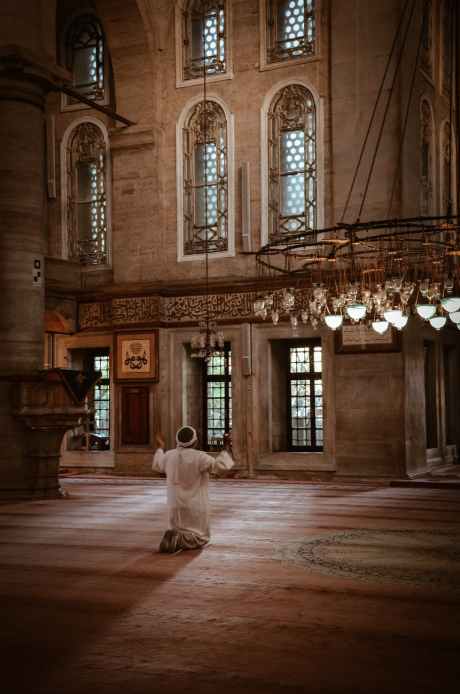
 A Joyful Practice