May all of us together be safe and protected / May we be peaceful and happy.
For Those Who Missed It: The following was originally posted in 2022. It includes history related to the next three (3) days/nights/practices. Class details (and some formatting) have been updated.
“Violence is clearly destructive. It springs from fear, one of the fundamental afflictions. According to this sutra, the practice of non-violence requires us to arrest our violent tendencies by cultivating thoughts opposite to violence.”
— quoted from the commentary on Yoga Sūtra 2.33 from The Practice of the Yoga Sutra: Sadhana Pada by Pandit Rajmani Tigunait, PhD
By all accounts, it started off simply and innocently enough. Just a few childish pranks at the end of Thanksgiving: knocking at the door that opened to reveal no one; random, unexplained noises, cabbage being uprooted and then tossed around; patio furniture inexplicably shifting and moving to a neighbor’s porch. You know, things that ghost, goblins, and devils might do when the veil between worlds was lifted. It was so simple and innocent, in fact, that in 1790, a headmaster at Saint John’s College in Oxford even ended a school play with a little encouragement: “an Ode to Fun which praises children’s tricks on Mischief Night in most approving terms.”
Mischief Night, the night before Halloween, is also known as Hell Night, Cabbage Night, Gate Night, Moving Night, Devil’s Night, and a variety of other names throughout the United Kingdom, Canada, and the United States. It was just supposed to be a little “trick” before the treats. References to Devil’s Night and Mischief Night in Michigan can be found as early as the 1910’s — when college students reportedly started bonfires and then handed cigars to the firefighters who came to put out the flames. However, the vandalism and arson increased in the 1930’s and 1940’s. By the 1970’s, the simple and innocent pranks in Detroit turned into criminal mischief and started extending into October 29th. From the 1970’s through the 1990’s, there was serious vandalism and arson that resulted in thousands of dollars worth of damage. In 1983, over 550 fires were reported. In 1984, the number of reported fires was more than 800. Some officials started theorizing that some people were using the reputation of Devil’s Night to commit insurance fraud. And, speaking of that reputation, by the mid-1980’s, people were not only driving into town from other states to watch the fires, they were flying in from other countries.
“Fire buffs, newspeople and just plain gawkers came to watch Detroit burn Wednesday night.
They even came all the way from Tokyo.
Director Nobi Shigemoto was here with an eight-person crew from Asahi national TV network. The crew planned to follow fire trucks Wednesday night and do a live shot from in front of Highland park fire headquarters before returning to Japan.”
“Shigemoto said Detroiters ask him why he is ‘looking at bad things.’
His reply:
This is the truth. US (is a) most rich country. When you look at Detroit, it looks nothing like rich.’”
— quoted from the Detroit Free Press article “Keeping the watch – Reporters, fire buffs, gawkers come to track night’s events” by Bill McGraw (printed in the “Devil’s Night” section, dated 31 Oct 1985, Thu)
In the mid-1980’s, then-Detroit mayor Coleman Young and city officials created the “No More Devil’s Night” campaign, which included a dusk-to-dawn curfew for teenagers, neighborhood watches, the opportunity to “adopt” empty properties, and a coordinated “patrol” effort by police officers, firefighters, and miscellaneous city workers. Over 11,000 volunteers participated that first year — and the number of reported fires was cut in half. Local cable television offered free access to premium channels so that more people would stay home. News outlets agreed not to air footage that might glamorize arson and/or encourage copycats — and the number of fires dropped. The number of volunteers rose (to ~17,000) in 1987, and again the number of reported fires dropped.
Detroit’s “No More Devil’s Night” campaign was so successful that when Dennis Archer was elected mayor, in January of 1994, he decided his predecessor’s official campaign was no longer needed. People warned him he was wrong. Unfortunately, those people were right. According to a New York Times article (dated November 1, 1994), there were 40,000 volunteers working to combat the arson and other criminal mischief in 1993 versus 8,000 in 1994. That difference in volunteers reflected a trend well established in previous years: more volunteers resulted in less arson and criminal mischief; less volunteers meant more arson. While there were significantly less fires in 1994 than there had been in 1984, one of those fires — set on October 30, 1994, in the same suburb Nobi Shigemoto filmed nine years earlier — resulted in the death of 1-year old Destiny Wilson and the serious injury of several others, including Destiny’s mother, 3-year old sister Ivory, and two older siblings. Then-mayor Archer and other city officials rebranded the original campaign and got more serious about cultivating the opposite energy; being angels instead of devils.
“However, if the process of non-violence is to be effective in counteracting violence, we must first describe and outline it clearly and methodically. Because violent thoughts always precede a violent act, an act of non-violence will be effective only if it is preceded by non-violent thoughts. Violence is an active phenomenon, whereas non-violence is mistakenly thought to be passive — simply the absence of violence. Non-violence must be as active as violence itself.”
— commentary on Yoga Sūtra 2.33 from The Practice of the Yoga Sutra: Sadhana Pada by Pandit Rajmani Tigunait, PhD
The rebranded Angels’ Night(s) encouraged volunteers to do what they could to actively combat the violence with non-violence, from October 29th – 31st. It was based on the idea that if everyone cared, everyone could do something to make a difference. Some people volunteered to patrol their neighborhood with flashing amber lights on their vehicles. Others agreed to wear orange ribbons and participated in neighborhood watches — even adopting an “empty” property. Still others agreed to leave their lights on and to enforce — or honor — the curfew. Official activities were organized at recreation and community centers. Bottom line, there was a way for everyone, regardless of age or ability, to stay alert and stay connected. In 1995, 40,000 – 50,000 volunteers agreed to be “angels.” As before, arson and vandalism steadily declined.
While there was a spike in arsons around Halloween 2010, the overall decline in “devilish” activity continued through the 2000’s and 2010’s. In 2005, official “Angels’ Night” activities were cancelled as the entire city mourned the death of Rosa Parks. In 2015, there were “only” 52 fires (with 24 appearing to be arson). Interestingly, this steady decline around Halloween was paralleled by a slight increase in fires around the 4th of July. In 2018, there were only three reported fires and the city officially ended the campaign. Citizens, however, continue to be angels.
“The earliest recorded instance of someone saying ‘Hurt people hurt people’ appears in the Feb. 26, 1959, edition of a local Texas newspaper, the Amarillo Globe-Times, in its review of a lecture program put on by the Parent Teacher Association of Fannin Junior High School. The Globe-Times attributes the line to a speaker named Charles Eads, who, judging from the article’s description, spoke in the manner of vaudeville satirist and cowboy Will Rogers:…’”Hurt people hurt people.’ So, maybe before I wound someone next time, I’ll stop and think if it’s because I’ve been hurt, myself.’”
— quoted from the article “The History of ‘Hurt People Hurt People’ – The adage has been credited to everyone from pastors to self-help gurus to Andrew Garfield. It’s much older.” By Matthew Phelan (posted on slate.com, Sept 17, 2019)
We’ve all been hurt. We all suffer. According to the Yoga Philosophy, dysfunctional/afflicted thought patterns create suffering. The question – which is also addressed in philosophies like Buddhism, and even in the major religions – is, “What do we do with our own suffering?” Do we alleviate it? That’s the next question, because the philosophies say that we have the ability to alleviate our own suffering? Of course, there’s always the flipside, where our hurt/suffering becomes the foundation for more suffering and “devilish” behavior?
To answer the questions, take a moment to do a little svādhyāya (“self-study”) or discernment — what some might call “metacognition.” Consider your own reaction to the aforementioned Devil’s Night, especially with regard to the arson and vandalism. Consider, who you think was responsible — not only for the problem, but also for the solution. Are you keeping in mind that the initial fires, even in Detroit, were set by college students? Have you thought about what was happening in the world when the arson first increased? Did you remember that the Wilson family lived in the suburbs?
Consider how you feel when you take it all in and then consider how those feelings translate into thoughts that precede your words and then your deeds. Given the opportunity to counteract violence and destruction, would your active response to the “devilish” behavior be functional and skillful – or would it be just another form of damage?
In the first section of the Yoga Sūtras, there are several different ways in which we can achieve transparency of mind. One way is to focus on the breath. (YS 1.34) Another way is to “focus on someone who is free from all desire.” (YS 1.37) This is what people are ostensibly doing when they ask themselves, “What would … do?” Of course, the commentary indicates that in the absence of resonating with some great figure — from religion, philosophy, or mythology — we could focus on the best version of ourselves: What would we do/say if we were free from desire? What would we do/say if we were not attached to a particular outcome?
“Then concentrate upon [the] heart. Try to imagine how it must feel to be a great saint; pure and untroubled by sense-objects….”
— quoted from the commentary on Yoga Sūtra 1.37 from How To Know God: The Yoga Aphorisms of Patanjali translated and with commentary by Swami Prabhavananda and Christopher Isherwood
Another method for achieving clarity of mind, according to Patanjali’s Yoga Sūtras, is to offer friendliness to those who are happy, compassion to those who are suffering, happiness to those who are virtuous, and indifference/non-judgement to those who (we consider) are non-virtuous. (YS 1.33) I personally love this idea, but I also know it can be challenging. Different parts may be challenging for different people — and under different circumstances — but the part that is usually challenging for me is the last part: offering indifference/non-judgement to someone (I consider) non-virtuous — or whose actions are not virtuous. Sure, ideally, we could ignore those non-virtuous people/actions and they would go away or stop their “devilish” behavior; but, life doesn’t always work that way. Sometimes we have to directly engage and actively combat the violence in a non-violent way.
My non-violent way is logic. While I often believe that (my) logic will resolve conflict and/or get people to do what I think is right, that is not actually how the world works — because that’s not how the human mind works. Remember, according to Yoga Sūtra 2.20, we can only see/comprehend what our mind-intellect is ready to show us. This is not an idea restricted to the people we think are wrong in their thinking; this also applies to each and every one of us.
Don’t get me wrong. I’m not saying that logic doesn’t work. I’m saying that if someone we consider to be non-virtuous, or acting in a way that is non-virtuous, were to think (and feel) the way we think (and feel) they would speak and act the way we do. So, applying our own logic on someone else does not work. They have to apply their own logic. While we may be able to help someone apply their own logic, we can only do so with a clear mind.
In other words, to truly alleviate suffering, we have to turn inward. We have to understand our own feelings and thoughts and how those become our words and deeds. In turn, we have to understand the impact/effect of our words and deeds. It is only then that we can effectively, as Patanjali said in Yoga Sūtra 2.44, be in the company of angels.
“No, don’t give up
I won’t give up
‘Cause there must be angels”
*
— quoted from the song “Angels” by Tom Walker (written by Emma Davidson-Dillon / James Eliot / Thomas Alexander Walker)
Please join me for a 65-minute virtual yoga practice on Zoom today (Sunday, October 29th) at 2:30 PM.Use the link from the “Class Schedules” calendar if you run into any problems checking into the class. You can request an audio recording of this practice via a comment below or by emailing myra (at) ajoyfulpractice.com.
Sunday’s playlist is available on YouTube and Spotify. [Look for “10292022 Angels, Devils, Mischief, Cabbage”]
2023 NOTE: This playlist has been updated in a way that may slightly change the timing when paired with previous practices.
In the spirit of generosity (“dana”), the Zoom classes, recordings, and blog posts are freely given and freely received. If you are able to support these teachings, please do so as your heart moves you. (NOTE: You can donate even if you are “attending” a practice that is not designated as a “Common Ground Meditation Center” practice, or you can purchase class(es). Donations are tax deductible; class purchases are not necessarily deductible.)
Wherever you are, wherever you roam, stay hydrated and open to possibilities!
FTWMI: The following was originally posted in 2022. Links and class details have been updated. A practice note related to 2020 and 2021 has been deleted from this version. This is part 2 in my “impossible people” series.
“This also, then, leads on to the idea of whether or not the brain ever does big jumps – or does it only ever do small steps? And the answer is that the brain only ever does small steps. I can only get from here to the other side of the room by passing through the space in between. I can’t teleport myself to the other side. Right? Similarly, your brain can only ever make small steps in its ideas. So, whenever you’re in a moment, it can only actually shift itself to the next most likely possible. And the next and most likely possible is determined by its assumptions. We call it ‘the space of possibility.’ Right. You can’t do just anything. Some things are just impossible for you in terms of your perception or in terms of your conception of the world. What’s possible is based on your history.”
– quoted from the 2017 Big Think video entitled, “The Neuroscience of Creativity, Perception, and Confirmation Bias by Beau Lotto
My idea to spend part of August focusing on “impossible people” – and by that I mean people who do things others believe to be impossible – started long before I had ever heard of neuroscientist Beau Lotto or his work with the Lab of Misfits. In some ways it started with an awareness of certain people’s lives and accomplishments and a curiosity about how they got from A (“impossible”) to Z (“possible”). I mean, on some level I knew about “the space of possibility” and I definitely understood the theory that we live in the past. It is, after all, the science of samskāras (“mental impressions”) and vasanas (the “dwelling places” of habits). I also understood the power of imagination and visualization; often referenced the idea that an epiphany (“striking appearance” or “manifestation”) happens because the mind-intellect is prepared for the revelation; and frequently highlighted how we can be like Emily Dickinson and “dwell in Possibility.”
All of that is backed up by Western science and the Yoga Philosophy. As Dr. Lotto pointed out in his book Deviate: The Science of Seeing Differently, and also in many of his talks and lectures, “We don’t see reality – we only see what was useful to see in the past. But the nature of the brain’s delusional past is this: The past that determines how you see isn’t just constituted by your lived perceptions but by your imagined ones as well. As such, you can influence what you see in the future just by thinking.” And that’s what I hadn’t really used as a point of focus: why some people’s imaginations allow them to think differently and know the baby steps that, to the rest of us, look like giant leaps.
If I were going to pinpoint a single starting point for my change in focus, it would be around July 31, 2016. It was the Feast Day of Saint Ignatius of Loyola and the eve of the anniversary of the birth of Miss Maria Mitchell (and Mr. Herman Melville), and while listening to Justin Timberlake (ostensibly) quote Muhammad Ali to a bunch of teens, I thought, “What combination of things in someone’s past makes their will and determination so strong? What makes someone recognize that “Impossible is just a word…?”
“Impossible is just a big word thrown around by small men who find it easier to live in the world they’ve been given than to explore the power they have to change it. Impossible is not a fact. It’s an opinion. Impossible is not a declaration. It’s a dare. Impossible is potential. Impossible is temporary.
Impossible is nothing.”
– quoted from a 2004 Adidas ad campaign written by Aimee Lehto (with final tag line credited to Boyd Croyner), often attributed to Muhammad Ali
A version of the following was originally posted as “A Brother’s Love” on August 2, 2020.
“Given the conditions in this country to be a black writer was impossible. When I was young, people thought you were not so much wicked as sick, they gave up on you. My father didn’t think it was possible—he thought I’d get killed, get murdered. He said I was contesting the white man’s definitions, which was quite right.”
– James Baldwin, quoted from the interview “James Baldwin, The Art of Fiction No. 78” by Jordan Elgrably (printed in The Paris Review, Issue 91, Spring 1984)
Born today in Harlem, New York, in 1924, the author James Baldwin was – by his own words – an impossible person. His life (and career) were, in so many ways, shaped by a combination of history and opinions. First, there was the history of the United States. Then there were the opinions of his stepfather David Baldwin (who he referred to as his father), regarding life in general, plus his stepfather’s opinion of how the world would view him, how the world actually viewed him, and his own ideas about what was possible – or, what was necessary. He spent the ages of 14 – 17 following his father’s footsteps into the ministry and then, when his father died, he took a giant leap. He said, “Those were three years [preaching] which probably turned me to writing.”
Leaping into writing was not Mr. Baldwin’s only leap. He leapt across the pond to Paris, France, twice, even as his writing challenged Western society’s conceptions about race, class, gender, and sexuality. His essays, novels, and plays include Giovanni’s Room, Notes of a Native Son, The Fire Next Time, If Beale Street Could Talk (which was recently made into a movie) and the unfinished manuscript Remember This House (which was adapted to create the 2016 Academy Award-nominated documentary I Am Not Your Negro). Mr. Baldwin first went to Paris with $40 and not a lick of French. He was 24 years old, coming to grips with his sexuality, and escaping what he viewed – what he had witnessed – was a death sentence at the hands of American society.
“Not so metaphorically. Looking for a place to live. Looking for a job. You begin to doubt your judgment, you begin to doubt everything. You become imprecise. And that’s when you’re beginning to go under. You’ve been beaten, and it’s been deliberate. The whole society has decided to make you nothing. And they don’t even know they’re doing it.”
– James Baldwin, quoted from the interview “James Baldwin, The Art of Fiction No. 78” by Jordan Elgrably (printed in The Paris Review, Issue 91, Spring 1984)
From Paris, he was able to not only gain perspective about his experiences of being Black in America (and of being Black and Gay in America), but also to offer those experience back to the United States – in the form of a literary mirror. In words that very much echo Miss Maria Mitchell’s words, he said wanted to see himself, and be seen as, more than “merely a Negro; or, merely a Negro writer.”
In his late 30’s/early 40’s, Mr. Baldwin briefly returned to the United States and physically participated in the Civil Rights Movement and Gay Liberation Movement that he had (from Paris) helped to literally inspire. He became friends with Langston Hughes, Martin Luther King, Malcolm X, Medgar Evers, Lorraine Hansberry, Nikki Giovanni, and Nina Simone (who he and Mr. Hughes convinced to become active in the Civil Rights Movement). He worked with Drs. Kenneth and Mamie Clark, as well as Lena Horne and Miss Hansberry, to discuss the importance of civil rights legislation with President John F. Kennedy.
His friendships, however, were not only with Black artists and activists. He worked with his childhood friend Richard Avedon, marched with Marlon Brando and Charlton Heston, collaborated with Margaret Mead and Sol Stein, and also knew Rip Torn, Jean-Paul Sartre, and Dorothea Tanning. In fact, to read a biography or autobiography of James Baldwin is to read a Who’s Who of activism and artistry in the 20th century. But, you don’t have to settle for a reading a measly biography. If you can get your hands on the 1,884 pages of documents compiled by the FBI, you would be in for quite a treat.
Yes, you read that correctly. For a little over a decade, the FBI collected nearly two thousand pages worth of documents on a man that many Americans may not realize helped convince President Kennedy to send federal troops to defend the civil rights activists marching from Selma to Montgomery. True, it’s not the well-over 17,000 pages they compiled on Martin Luther King (not including the wire-tap documents). Here, however, is some perspective: the FBI only collected 276 pages on authors like Richard Wright (Native Son) and 110 pages on authors like Truman Capote (In Cold Blood) and Henry Miller (Tropic of Cancer). Additionally, FBI Director J. Edgar Hoover showed a particular interest in Mr. Baldwin and actually worked with agents to figure out ways they could ban Mr. Baldwin’s 1962 novel Another Country.
Perhaps Director Hoover was concerned about the fact that James Baldwin started the novel while living in Greenwich Village and continued as he moved back to Paris and then back to the States again, before ultimately finishing the book in Istanbul, Turkey. Perhaps he was concerned about the novels depictions of bisexuality, interracial relationships, and extramarital affairs. It’s just as likely that J. Edgar Hoover was concerned about James Baldwin’s persistent efforts to depict a deep, abiding, almost Divine, brotherly love; a universal experience of grace and growth that would make more things possible for more people. Whatever the FBI Director’s objections might have been, the report of the Justice Department’s General Crimes Section “concluded that the book contains literary merit and may be of value to students of psychology and social behavior.”
“The occurrence of an event is not the same thing as knowing what it is that one has lived through. Most people had not lived — nor could it, for that matter, be said that they had died– through any of their terrible events. They had simply been stunned by the hammer. They passed their lives thereafter in a kind of limbo of denied and unexamined pain. The great question that faced him this morning was whether or not he had ever, really, been present at his life.”
– quoted from Another Country by James Baldwin
“I imagine one of the reasons people cling to their hates so stubbornly is because they sense, once hate is gone, they will be forced to deal with pain.”
– quoted from The Fire Next Time by James Baldwin
When so many of his friends, who were also the leaders of the Civil Rights Movement, were killed, Mr. Baldwin made his second leap back to Paris. Again, it was a leap made out of fear and the basic desire to survive. His grief, anger, horror, and disappointment are all on full display in later works like If Beale Street Could Talk, Just Above My Head, and the 1985 non-fiction book Evidence of Things Not Seen (about the Atlanta child murders). Yet, until his dying day he wrote about love and hope – even using a portion of the Epistle to the Hebrews, from the Christian New Testament, as the title of his book about the Atlanta child murders.
Another place where you can see Mr. Baldwin’s devotion to love, life, and humanity is in the words of his friends; people, who actually knew him, were inspired by him, and some of whom called him Jim or Jimmy. When he died in 1987, Maya Angelou wrote a tribute for The New York Times, entitled “James Baldwin: His Voice Remembered; Life In His Language.” In addition to describing how Mr. Baldwin introduced her to his family as his mother’s newest daughter, she explained that he “opened the [unusual] door” and encouraged her to tell her story.
“Well, the season was always Christmas with you there and, like one aspect of that scenario, you did not neglect to bring at least three gifts. You gave me a language to dwell in, a gift so perfect it seems my own invention….
The second gift was your courage, which you let us share: the courage of one who would go as a stranger in the village and transform the distances between people into intimacy with the whole world; courage to understand that experience in ways that made it a personal revelation for each of us…. Yours was the courage to live life in and from its belly as well as beyond its edges, to see and say what was, to recognize and identify evil, but never fear or stand in awe of it….
The third gift was hard to fathom and even harder to accept. It was your tenderness – a tenderness so delicate that I thought it could not last, but last it did and envelop me it did. In the midst of anger it tapped me lightly like the child in Tish’s womb…. Yours was a tenderness, of vulnerability, that asked everything, expected everything and, like the world’s own Merlin, provided us with the ways and means to deliver. I suppose that was why I was always a bit better behaved around you, smarter, more capable, wanting to be worth the love you lavished, and wanting to be steady enough to bear while it broke your heart, wanting to be generous enough to join your smile with one of my own, and reckless enough to jump on in that laugh you laughed. Because our joy and our laughter were not only all right, they were necessary.”
– quoted from “James Baldwin: His Voice Remembered; Life In His Language” by Maya Angelou (printed in The New York Times Book Review December 20, 1987)
Please join me today (Wednesday, August 2nd) at 4:30 PM or 7:15 PM for a yoga practice on Zoom. Use the link from the “Class Schedules” calendar if you run into any problems checking into the class. You can request an audio recording of this practice via a comment below or by emailing myra (at) ajoyfulpractice.com.
Wednesday’s playlist is available onYouTube and Spotify. [Look for “Langston’s Theme for Jimmy 2022”]
“I love America more than any other country in this world, and, exactly for this reason, I insist on the right to criticize her perpetually.”
“Love takes off masks that we fear we cannot live without and know we cannot live within. I use the word love here not merely in the personal sense but as a state of being or a state of grace – not in the infantile American sense of being made happy but in the tough and universal sense of quest and daring and growth….Love is a growing up.”
– James Baldwin
In the spirit of generosity (“dana”), the Zoom classes, recordings, and blog posts are freely given and freely received. If you are able to support these teachings, please do so as your heart moves you. (NOTE: You can donate even if you are “attending” a practice that is not designated as a “Common Ground Meditation Center” practice, or you can purchase class(es). Donations are tax deductible; class purchases are not necessarily deductible.)
Stay hydrated, y’all, and “may our hearts be open!”
This is a “missing” post for Tuesday, July 25th.NOTE: Some links direct to sites outside of this blog.You can request an audio recording of either practice via a comment below or (for a slightly faster reply) you can email myra(at) ajoyfulpractice.com.
In the spirit of generosity (“dana”), the Zoom classes, recordings, and blog posts are freely given and freely received. If you are able to support these teachings, please do so as your heart moves you. (NOTE: You can donate even if you are “attending” a practice that is not designated as a “Common Ground Meditation Center” practice, or you can purchase class(es). Donations are tax deductible; class purchases are not necessarily deductible.
“When we suffer, we tend to think that suffering is all there is at that moment, and happiness belongs to some other time or place.”
― quoted from from “1. The Art of Transforming Suffering: Suffering and Happiness are not Separate” in No Mud, No Lotus by Thich Nhat Hanh
How are you doing today?
Seriously. I really want know how you’re feeling and how you’re doing today.
I’m asking because I care.
I’m also asking because, in order to answer (honestly), you have to check in with yourself – and that’s an important part of the practice.
My personal practice includes this blog, my class notes (a. k. a. the notebooks full of hieroglyphics), videos and playlists, and my personal journals. All of those bits and pieces of the process give me the ability to look back and notice how the ways I’m feeling change: from one moment/day/week/month/year to the next. Nestled together are big changes and little changes that I might have missed if I didn’t have this type of practice. There are instances where I find myself experiencing the same things around the same time of year (or month). Similarly, there are times when an emotion/sensation that was simmering in the background comes to a boil.
Then, there are times when something like anger is still present, but no longer carries the same charge.
“Anger is a mental, psychological phenomenon, yet it is closely linked to biological and biochemical elements. Anger makes you tense your muscles, but when you know how to smile, you begin to relax and your anger will decrease. Smiling allows the energy of mindfulness to be born in you, helping you to embrace your anger.”
― quoted from “Two – Putting Out the Fire of Anger: Tools for Cooling the Flames” in Anger: Wisdom for Cooling the Flames by Thich Nhat Hanh
A couple of years ago, I was contemplating anger, because it was everywhere. As I do, I turned to my practice, which included a bit of history and the wisdom of teachers like Thích Nhất Hạnh and Pema Chödrön. I noted that external factors, like the “great heat, major heat”, can affect our emotions. I even dived into the tropes and stereotypes around “angry Black women” and I touched on the flip side of that – people thinking I shouldn’t feel strong emotions because I practice yoga and meditation. That last part is something that some men in certain cultures have also had to deal with because of tropes and stereotypes related to their gender and emotions.
I also mentioned how eastern philosophies and their medical sciences – like Daoism and Traditional Chinese Medicine (TCM) and Yoga and Ayurveda – view every emotion as an energetic experience (as well as a mental, psychological, physiological, biological, and biochemical experience) whereby energy is either in-balance or out-of-balance. Finally, I outlined some steps any one of us can take in order to move into balance. Keep in mind, as Dr. Beau Lotto pointed out, that what may seem like a baby step to me, may feel like a giant leap to you (and vice versa).
The thing is, all of the anger that I referenced, in 2021, is still present. For some people, it has even been magnified. However, anger is no longer on the top of the list of the things I’m feeling. Instead, I’m a little weary… and tired of the shenanigans that previously made me so angry. This feeling is something that I brought up this time last year, in a “9 Days” video* inspired by a map (that a little kid gave me back in 2008) and a Dermot Kennedy song.
“My sense of wonder’s just a little tired”
― quoted from the song “Lost” by Dermot Kennedy, co-written by Carey Willetts
Considering our emotional experiences from an energetic standpoint may help us accept our emotions as natural (which they are) – even if we don’t believe in the traditional sciences. First, they give us a place to start; a first and second step if you will. The eastern philosophies and their sister sciences can be useful processing paradigms, because every energetic experience has an opposite reaction (as well as what we can consider a near-peer) and we are encouraged to cultivate the opposites (when we are out of balance). As I mentioned on Sunday and Monday, heart (YIN) and small intestine (YANG) meridians have several associations, including joy (when in-balance) versus anxiety (when out-of-balance). The other big emotion pairs (based on Yin Yoga) include:
Anger and Frustration versus Kindness/Lovingkindness
Worry versus Peace, Faith, and Acceptance (or Trustful Surrender)
Grief and Sorrow versus Courage, Resilience, Tenacity (balanced with non-attachment), and Reverence
Fear versus Wisdom
Consider, for a moment, how your emotions shift when you are feeling angry and/or frustrated and then do something kind (for yourself and/or for someone else). Consider, also, what happens when cultivating a moment of peace/acceptance enables you to let go of a worry. Maybe, in that moment, of trustful surrender you find the wisdom inside of yourself that alleviates some fear.
Years ago, in a meditation group, my dharma and yoga buddy Lenice dropped a little wisdom during a particularly harsh winter: What if we were more like the trees? Think about it, as long as they are alive, they grow and blossom and let go of the things that no longer serve them. In the essay, “Africa,” published in the collection Even the Stars Look Lonesome, Maya Angelou wrote about trauma and stated, “An African proverb spells out the truth: ‘The ax forgets. The tree remembers.’” Another way to think about that is: the tree remembers it’s trauma, but keeps living; keeps blossoming and growing; keeps letting go of what no longer serves it.
Of course, Dr. Angelou and Victor Hugo also remind us that we are (or can be) like birds – and, sometimes the practice just comes down to knowing what we need in order to blossom, grow, sing, and let go of what no longer serves us.
“Be like the bird, who Halting in his flight On limb too slight Feels it give way beneath him, Yet sings Knowing he hath wings.”
– quoted from the poem “Be Like the Bird” by Victor Hugo
NOTE: In Abbie Betinis’s musical composition (which is on the playlists), “she” has wings.
Again, you might be having a moment where some (or all) of this feels like giant leaps. And, that’s OK. Maybe it’s too much to think about smiling, blossoming, singing, and flying. Maybe you just need to focus on the breathing! The key is to find the thing that makes sense for you in this moment.
Then, when it makes sense, consider what seems like the next logical step, given where you are and how you’re feeling. Maybe, what you need is a different perspective; so, you reach out to a friend or a professional. I recently heard of a new app, called “White Flag,” that cultivates peer-to-peer support. (Full disclosure, I haven’t checked it out or investigated it much, but I’ve heard good things.) Maybe what you need is to go back to that first step and breathe some more.
Maybe what you need is more movement or maybe less movement (depending on the weather). Maybe you don’t wanna move today (and there’s now a video on the Carry app for that). Either way, keep in mind that, as Sarah Powers pointed out in Insight Yoga: An innovative synthesis of traditional yoga, meditation, and Eastern approaches to healing and well-being, “All emotions associated with the organs are considered natural responses to life. Yet when they become compulsive or prolonged, they become injurious to our overall health.”
“If we can learn to see and skillfully engage with both the presence of happiness and the presence of suffering, we will go in the direction of enjoying life more. Every day we go a little farther in that direction, and eventually we realize that suffering and happiness are not two separate things.”
― quoted from from “1. The Art of Transforming Suffering: Suffering and Happiness are not Separate” in No Mud, No Lotus by Thich Nhat Hanh
So, how are you doing, in this moment?
While I hope you are doing well, I also recognize that you may be, simultaneously, feeling a certain kind of way about things and that you might label some of those ways as “not so well” and/or “not so good.” You might even be having one of the moments/days/weeks/months/years/lifetimes that you would describe as “mostly good.”
Or, maybe in this moment, you’re “good” and you’re taking everything a moment at a time.
I see all that. I care about that. May you be where you need to be; “[going] in the direction of enjoying life more;” moving towards your experience of happiness – whether that experience is an ecstatic kind of joy, not being miserable, or somewhere in between.
“Happiness is possible right now, today―but happiness cannot be without suffering. Some people think that in order to be happy they must avoid all suffering, so they are constantly vigilant, constantly worrying. They end up sacrificing all their spontaneity, freedom, and joy. This isn’t correct. If you can recognize and accept your pain without running away from it, you will discover that although pain is there, joy can also be there at the same time.”
― quoted from from “1. The Art of Transforming Suffering: Suffering and Happiness are not Separate” in No Mud, No Lotus by Thich Nhat Hanh
Due to technical difficulties, we used two different set of playlists for this practice. The evening playlist is the one specifically mixed for this date.
Tuesday afternoon’s playlist is available on YouTube and Spotify. [Look for “04102021 Si se puede & Birds”]
Tuesday evening’s playlist is also available on YouTube and Spotify.
NOTE: The evening playlist on YouTube contains additional videos. I was not aware of this “Birdsong” when I made the playlist, so it is not (currently) included on either format.
“Each morning I offer a stick of incense to the Buddha. I promise myself that I will enjoy every minute of the day that is given me to live.”
― quoted from “Five – Compassionate Communication: Nourishing Ourselves” in Anger: Wisdom for Cooling the Flames by Thich Nhat Hanh
If you are thinking about suicide, worried about a friend or loved one, or would like emotional support, you can dial 988 (in the US) or call 1-800-273-TALK (8255)for the Suicide and Crisis Lifeline. You can also call this TALK line if you are struggling with addiction or involved in an abusive relationship. The Lifeline network is free, confidential, and available to all 24/7. YOU CAN TALK ABOUT ANYTHING.
During the practice, I mention a new app (White Flag), which I have not researched, but which may be helpful if you need (non-professional) support.
“‘Their breathin’ was deep and smooth and regular. When they brought air into their bodies, they visualized suckin’ in as much energy and vitality as possible; when they expelled air, they visualized blowin’ out all the staleness and flatness inside o’ them.’”
— quoted from “Air” in Jitterbug Perfume by Tom Robbins
The following excerpt is from a 2020 post:
“I’m not much for beer, but I’m a huge fan of a well-made taco and I’m a huge fan of Tom Robbins’s fourth novel, Jitterbug Perfume. Born today in 1932, in Blowing Rock, North Carolina, Robbins is a self-described “hillbilly” who grew up in a Baptist household, went to a military college prep school, studied journalism in college, enlisted in the Air Force, and spent a year as a meteorologist in Korea and two years in Nebraska before being discharged. He returned to Richmond, Virginia (where his family had moved during his early childhood) and started reading poetry in a coffee shop.”
Please join me for a 90-minute virtual yoga practice on Zoom today (Saturday, July 22nd) at 12:00 PM.Use the link from the “Class Schedules” calendar if you run into any problems checking into the class. You can request an audio recording of this practice via a comment below or by emailing myra(at) a joyfulpractice.com
Saturday’s playlist is available on YouTube and Spotify. [Look for “07222020 The Perfect Taco”]
In the spirit of generosity (“dana”), the Zoom classes, recordings, and blog posts are freely given and freely received. If you are able to support these teachings, please do so as your heart moves you. (NOTE: You can donate even if you are “attending” a practice that is not designated as a “Common Ground Meditation Center” practice, or you can purchase class(es). Donations are tax deductible; class purchases are not necessarily deductible.)
Peace and blessings to everyone, and especially to those who are dealing with conflict.
This is a “missing” post for July 17, 2023 (and also for 2022). You can request an audio recording of either practice via a comment below or (for a slightly faster reply) you can email me at myra (at) ajoyfulpractice.com.
In the spirit of generosity (“dana”), the Zoom classes, recordings, and blog posts are freely given and freely received. If you are able to support these teachings, please do so as your heart moves you. (NOTE: You can donate even if you are “attending” a practice that is not designated as a “Common Ground Meditation Center” practice, or you can purchase class(es). Donations are tax deductible; class purchases are not necessarily deductible.
“I am getting ready to go see Stalin and Churchill…. I have a briefcase filled up with information on past conferences and suggestions on what I’m to do and say. Wish I didn’t have to go, but I do and it can’t be stopped now.”
– quoted from a letter dated July 3, 1945 addressed to his mother (Martha) and sister (Mary) by President Harry S. Truman
In Yoga and Āyurveda, as they come to us from India, the vital energy of the mind-body flows through the nadi like water flows down a river. In fact, nadi or nāḍī (“energy channels”) is also found in some texts as nādi or nadī and translated into English as “rivers.” So, while I sometimes encourage people to bring awareness to the sound of their own personal ocean, it would be more precise to say “your own personal river.” Furthermore, when we tune into the breath during our practice – and especially when we move to the pace of the breath in a vinyāsa practice – what we are really doing is floating (or swimming) down the river.
Peacefully, floating or swimming down the river; thinking peace in, peace out.
Just as it is helpful to breathe “peace in, peace out,” when we are on the mat or cushion, this little exercise in prānāyāma (awareness of breath) can be helpful when we’re off the mat – especially if someone is pushing our buttons and/or we have the expectation that someone will push our buttons. It’s a nice tool to have in your mindfulness-based toolkit… or briefcase. It would have been a really handy tool for certain world leaders today in 1945.
For that matter, it would have been handy for certain members of British royalty today in 1717.
“It is more pertinent to ask why the opera did not function; and the main reason for this was the chaos surrounding relations between George I and his son, the Prince of Wales, which had a profound impact on the social activities of the primary financial supporters of the opera, the aristocracy. The two Georges had never been on particularly good terms.”
– quoted from “8. Royal Academy of Music 1719–28) and its Directors” by Elizabeth Gibson, as published in Handel, Tercentenary Collection, edited by Stanley Sadie and Anthony Hicks
It is easy to forget, when someone is pushing your buttons, that your reaction has a ripple effect. Since it seems like no one can push a person’s buttons like family, I think that forgetting how one’s actions/reactions affect others is magnified when the family in question has a certain amount of power. Take the two Georges, for instance.
George I was King of Great Britain and Ireland (beginning August 1, 1714), as well as the ruler of the Electorate of Hanover, an electorate of the Holy Roman Empire (beginning January 23, 1698). While his positions afforded him some power and wealth, he may have been sensitive about the fact that times were changing. The power of the monarchy started to diminish under his rule and, to add insult to injury, people in London did not think very highly of him (or his intelligence). His son was not always viewed more favorably, but he did throw a good party – and people loved a good party. Additionally, George II, the Prince of Wales, presented himself as 100% English, something his father could not do.
According to the stories, the prince and heir apparent, felt a certain kind of way because his father was still alive and still on the throne. The idea that his own time to rule would be short pushed George II’s buttons and he reacted by throwing lavish parties and dinners – so that he would be the talk of the town. This, in turn, pushed his father’s buttons and the senior George needed a way to, quite literally, turn the tide.
King George I wanted to create an event more lavish and more extraordinary than any party or dinner his son could host. A concert on the river sounded like just the ticket and so, the elder George turned to the friend and personal composer of his son’s wife: George Frideric Handel, whose “Water Music” premiered on the River Thames today (7/17) in 1717.
“Many other barges with persons of quality attended, and so great a number of boats that the whole river in a manner was cover’d; a city company’s barge was employ’d for the musick, wherein were fifty instruments of all sorts, who play’d all the way from Lambeth (while the barges drove with the tide without rowing, as far as Chelsea) the finest symphonies compos’d express for this occasion by Mr. Handel….”
– quoted from a July 19, 1717, article in the Daily Courant
As reported by the Daily Courant, Britain’s first daily newspaper, one or two royal barges and a city barge started floating down the River Thames at around 8 PM that Wednesday, July 17th (according to the Julian Calendar). The royal barge(s) carried King George I and a ton of aristocrats. A City of London barge carried about 50 musicians. While there is some debate about the original order of the the three suites – as well as about which instruments were on the barge with the musicians – and while some modern composers doubt that George Handel composed all the music specifically for the concert on the Thames, there is no question that the composition was well received. The music was played as the barges floated (with the tide) from Whitehall Palace – towards Chelsea, where the king and his court debarked for dinner at around 11 PM – and then, again, as the barges were rowed back to the palace. A reference to music being played during the king’s dinner sounds like it was different music than what was played on the barge, however, there’s no additional information in the article. The article did note that the musicians played Handel’s music “over three times.”
What always strikes me is the image of all the regular people who came to listen to the music. I imagine some of those who were on boats heard the music from beginning to end. However, people along the shoreline would have heard bits and pieces. Perhaps the beginning and then, hours later, the very end. Someone else could have heard the end and then the beginning – or, the middle twice. It sounds like it could have been fun, and peaceful. Fun and peaceful unless, of course, you were the king – who would rule until his death in June 1727 – or the prince, who became king and elector at the age of 43.
King George II eventually lost popularity among the populace and became estranged from his own son. But, the conflict between the two Georges did not end with the elder’s death. The latter skipped his father’s funeral and hid his father’s will. Then, in 1749, he hired George Frideric Handel to compose “Music for the Royal Fireworks (HWV 351),” which was rehearsed in front of a paying audience on April 21, 1749 and performed in London’s Green Park (with fireworks) on April 27, 1749. It was a lavish and bombastic display – both musically and visually – meant to celebrate the end of the War of the Austrian Succession and the signing of the Treaty of Aix-la-Chapelle (Aachen) in 1748. People were severely injured and King George II’s father was long gone, but perhaps using the same composer made the younger feel like he had bested his father.
“We had a tough meeting yesterday. I reared up on my hind legs and told ’em where to get off and they got off. I have to make it perfectly plain to them at least once a day that so far as this President is concerned Santa Claus is dead and that my first interest is U.S.A….. Then I want peace – world peace and will do what can be done by us to get it. But certainly am not going to set up another [illegible] here in Europe, pay reparations, feed the world, and get nothing for it but a nose thumbing. They are beginning to wake to the fact that I mean business.”
– quoted from a letter to U. S. First Lady Bess Truman, dated “Berlin, July 20, 1945,” by U. S. President Harry S. Truman (as published in Dear Bess: The Letters from Harry to Bess Truman, 1910–1959, edited by Robert H. Ferrell)
The Potsdam Conference, held at Cecilienhof Palace in the then-Soviet occupied Potsdam, Germany, started on July 17, 1945. It was a meeting between “the Big Three” Allied leaders – United States President Harry S. Truman, United Kingdom Prime Minister Winston Churchill, and Communist Party General Secretary Joseph Stalin – to decide what to do with Germany after the Nazis unconditional surrender on May 8, 1945. The meetings were also attended by UK Prime Minister Clement Attlee (who replaced PM Churchill after the first nine meetings) and foreign ministers and aides, including Vyacheslav Molotov (for the Soviet Union), Anthony Eden and Ernest Bevin (who replaced Mr. Eden as Great Britain’s Secretary of State for Foreign Affairs), and James F. Byrnes (for the United States). While it was peace conference between allies and the leaders shared a love of music (over formal dinners), the meetings were not without tension and conflict.
An obvious point of tension and conflict came from the fact that the conference took place while World War II was still ongoing. Yes, Germany had surrendered, but Japan was still fighting. Some internal tension came from the fact that the conference involved several leaders new to their roles. Meetings were paused for a couple of days, because of British elections, and two key players were replaced. Additionally, Harry Truman had only been appointed as the U. S. president after the death of President Franklin Delano Roosevelt on April 12, 1945. Then there was the fact that France was included in the agreements, but General Charles de Gaulle was not invited to the the Potsdam Conference and previous peace conferences conferences (because of friction with the United States).
The shifting of leadership – especially in the middle of the conference – and friction between leaders would have been challenging no matter what. However, additional tension came from the fact that the Allied leaders had different opinions about Joseph Stalin. Although, to be blunt, there was a consensus: most believed that General Secretary Stalin could not be trusted.
“I just have a hunch that Stalin is not that kind of man. Harry [Hopkins] says he’s not and that he does not want anything but security for his country, and I think that if I give him everything I possibly can and ask for nothing in return, noblesse oblige, he won’t try to annex anything and will work for a world of democracy and peace.”
– President Franklin D. Roosevelt, speaking to American Ambassador to Moscow, William Bullitt, in 1941 (as quoted from the March 7, 1949 remarks of U. S. Representative Foster Furcolo, as printed in the United States of America Congressional Record: Proceedings and Debates of the 81st Congress, First Session, Appendix (January 3, 1949 – March 12, 1949)
Prime Minister Churchill compared the Soviet leader to the devil. His predecessor, Prime Minister Attlee, had initially considered communism as a political possibility, but ultimately considered leaders like Joseph Stalin as a cautionary tale. Clement Attlee approached the Soviet leader in a manner similar to President Roosevelt – who thought that the Soviet leader would be honorable – and believed that treating the Soviets as anything other than allies would become a self-fulfilling prophecy. He eventually changed his tune and agreed with Ernest Bevin, who also joined the conference after the election results were announced. Secretary of State for Foreign Affairs Bevin was publicly anti-communism, but not overtly hostile towards the general secretary. Within five years, however, both British leaders were not only against communism, they were also anti-Soviet.
President Truman, by his own admission, was nervous about being new to his role and about coming to an agreement with the other leaders. He thought his predecessor’s assessment of Joseph Stalin was categorically wrong. However, during the conference he wrote a letter to First Lady Bess Truman stating that he perceived the Soviet leader as he straightforward. In an earlier letter, he also indicated that he had a secret bargaining chip: news of the successful detonation of the first atomic bomb (at White Sands Proving Ground on July 16, 1945). Unbeknownst to the president, two spies were in New Mexico and witness the detonation firsthand. The spies had informed the general secretary before he arrived at the conference – possibly, before the president received the information through official channels.
“We are going to do what we can to make Germany a decent nation, so that it may eventually work its way from the economic chaos it has brought upon itself back to into a place in the civilised world.”
– quoted from the August 1945 speech, regarding the Potsdam Conference, by President Harry S. Truman
By the conclusion of The Potsdam Conference, on August 2, 1945, the Allies announced their intention to demilitarization, denazification, democratization, decentralization, dismantling, and decartelization Germany. Their plans included the repealing Nazi laws, especially those that allowed discrimination on grounds of race, creed, and political opinion; the organization of new judicial and education systems; the reversal of annexations; the elimination of Nazi officials in government; and the “Orderly and humane” expulsion of (ethnic) German citizens in Poland, Czechoslovakia, and Hungary (but not Yugoslavia). The Allied leaders also made plans for the arrest and trials of Nazi war criminals and post-war reparations (most of which went to the Soviet Union). Additionally, they created a Council of Foreign Ministers – made up of officials from the United Kingdom, the Union of the Soviet Socialist Republics, China, France and the United States – which would establish treaties with Germany allies like Italy and Bulgaria. Finally, the leaders at the Potsdam Conference divided Germany and Berlin into four occupied zones – a section controlled by each of “the Big Three” plus France. The division inevitably meant new (and different) standards of living and economic structures for those in the west versus those in the east.
The goals of the Potsdam Conference included eliminating the last vestiges of the Nazi party, establishing and ensuring peace, and figuring out a way for the whole world to heal after so much trauma and so much war. While it was successful on some levels, the decisions that were made during the conference also laid the foundation for more conflict and friction. In particular, the decision to divide Germany and the German economy resulted in ramifications that are still felt, even after the reunification of Germany (1989 – 1991). Also, the final declaration was that Japan surrender or suffer “prompt and utter destruction.” In the end, that declaration resulted in the United States dropping atomic bombs on Hiroshima (8/6) and Nagasaki (8/9). But, in some ways, the end of the war was just the beginning of the process. In fact, looking back, it seems we are still working to fulfill the goals of the Potsdam Conference – still working to remember that the ultimate goal is peace.
“I believe that we must assist free peoples to work out their own destinies in their own way.
I believe that our help should be primarily through economic and financial aid which is essential to economic stability and orderly political processes.
The world is not static, and the status quo is not sacred. But we cannot allow changes in the status quo in violation of the Charter of the United Nations by such methods as coercion, or by such subterfuges as political infiltration. In helping free and independent nations to maintain their freedom, the United States will be giving effect to the principles of the Charter of the United Nations.”
– quoted from the “Truman Doctrine” speech, as delivered to the joint session of the United States Congress by President Harry S. Truman (March 12, 1947)
There is no playlist for the Common Ground Meditation Center practices.
The playlist for previous years is available on YouTube and Spotify. [Look for “07172021 Water Music Peace”]
“The seeds of totalitarian regimes are nurtured by misery and want. They spread and grow in the evil soil of poverty and strife. They reach their full growth when the hope of a people for a better life has died. We must keep that hope alive.
The free peoples of the world look to us for support in maintaining their freedoms.
If we falter in our leadership, we may endanger the peace of the world — and we shall surely endanger the welfare of our own nation.”
– quoted from the “Truman Doctrine” speech, as delivered to the joint session of the United States Congress by President Harry S. Truman (March 12, 1947)
“Chag Sameach!” to everyone celebrating Shavuot. Many blessings to everyone everywhere!
“40. As the billows and waves, the surges and eddies, and their froths and foams, and bubbles and minute particles, are all formations of water in the great body of waters; so are all beings but productions of the spirit in the Infinite spirit. (All matter is reduced to the spirits, and the spirits are consolidated to material substances by chemical process).”
“78. The belief that I am the pure and all pervading intellect, is attended with the purity and holiness of the soul, and the knowledge of the Divine power as the cause of the union of earth, air and water in the production of the germ of creation, is the main creed of all creeds.”
– quoted from (Book 6) “CHAPTER XI. Ascertainment of Living Liberation.” of The Yoga-Vasishtha Maharamayana of Valmiki (translated from the original Sanskrit by VIHARI-LALA MITRA)
Last night, I experienced something just as fabulous as I expected and (unfortunately) just as horrible as I feared. But, in the middle of the horrible, I knew….
I knew, as the stoic Emperor Marcus Aurelius did, that I had “seen the beauty of good, and the ugliness of evil, and have recognized that the wrongdoer has a nature related to my own – not of the same blood and birth, but the same mind, and possessing a share of the divine. And so none of them can hurt me. No one can implicate me in ugliness.” And I knew – as he did, as Vasishtha did – that we are all connected. I also knew that, whether we liked it or not, I would have a hand in how things unfolded, how the world (in those moments) was created.
While I remembered the incident that I posted about in 2020, I had forgotten that I posted the post below. I did, however, remember the lesson… and that was the grace.
Grace in.
Grace out.
For Those Who Missed It: The following was originally posted today in 2020. I have updated class details and some relevant information.
“But it seems reasonable to believe — and I do believe — that the more clearly we can focus our attention on the wonders and realities of the universe about us the less taste we shall have for the destruction of our race. Wonder and humility are wholesome emotions, and they do not exist side by side with a lust for destruction.”
– Rachel Carson accepting the John Burroughs Medal (April 1952) and printed in Lost Woods: The Discovered Writing of Rachel Carson
“It had been Nashibitti who had taught Leaphorn the words and legends of the Blessing Way, taught him what the Holy People had told the Earth Surface People about how to live, taught him the lessons of the Changing Woman – that the only goal for man was beauty, and that beauty was found only in harmony, and that this harmony of nature was a matter of dazzling complexity.”
– from Dance Hall of the Dead (Navajo Mysteries #2) by Tony Hillerman
This week, as we step back and really take a look at “role models,” the roles of our ancestors and elders, and the lessons they’ve taught us about how to live and interact with ourselves and each other, I thought we might take a moment to consider how we’ve learned to live and interact with the planet we call home. Behavioral scientists, and people who are interested in the science of our behaviors, are quick to point to incidences of animal mutilation in childhood whenever someone perpetrates great violence against humanity. There were signs, you see. And, sometimes, we missed the signs or didn’t pay enough attention to the signs.
A recent incident in New York sheds an interesting light on this subject, especially when it is viewed through the lens of everything else that is happening around us. In a situation where one person is committing emotional violence against another person and physical violence against a pet, some people quickly turn their focus on the pet’s distress. Others condemn such a reaction. However, it’s a very real and honest reaction. Rather than condemning how someone else reacts to trauma, I suggest we go deeper.
“‘Don’t think a man don’t care about one goat because he’s got a thousand of ‘em,’ Hosteen Nakai would say. ‘He’s got a thousand because he cares more about goats than he cares about his relatives.’”
– from People of Darkness (Navajo Mysteries #4) by Tony Hillerman
People who react to the pet’s distress (what they can see as well as hear), as opposed to the other person’s distress (what they may not be able to hear or completely understand as they cannot see the person) are still expressing empathy. This is important, because when scientist, writers, and lay people talk about childhood instances of animal mutilation part of their focus is on a lack of empathy. So, first and foremost consider the importance of empathy. While empathy is a natural emotion , we learn lessons throughout our lives about whether or not to trust – let alone engage – emotions like empathy. If we don’t trust our own emotions and intuition, it’s harder – almost impossible – to trust the emotions of others.
EMPATHY [Greek > German] – The action of understanding, being aware of, being sensitive to, and vicariously experiencing the feelings, thoughts, and experience of another…without having the feelings, thoughts, and experiences fully communicated in an objective and explicit manner.
SYMPATHY [Greek >> Latin] – Feelings of pity and sorrow for someone else’s misfortune.
COMPASSION [Latin>> Old French > Middle English] – To suffer with.
There is a difference between empathy, sympathy, and compassion – and the difference is critical. Compassion and sympathy are a much older words than empathy. Compassion refers to our ability to understand another’s pain and suffering, and to simultaneously have the desire that the other’s pain and suffering ends. Sympathy holds multiple meanings, including “having an affinity, association, or relationship between persons or things wherein whatever affects one similarly affects the other” and “a feeling of loyalty; tendency to favor or support.” When we speak in terms of the emotional experience of sympathy, however, there is a layer of pity. That is to say, our feelings of sympathy are more often than not associated with the feeling that someone of something is beneath us: we feel sorry for them. Furthermore, while we may feel sorry for someone, we may not every feel or express the desire that their pain and suffering ends. We may not ever make the connection between what they feel and what we can feel.
Empathy, on the other hand, is the emotion that bridges the gap between what we are feeling and what another is feeling. Coined (from German) by English psychologist Edward Bradford Titchener, the word “empathy” was used in the early 1900’s to describe the process of projecting one’s own emotions (and thoughts) onto another person or object. This emotional projection was considered a kind of animation or emotional play that allowed one to feel kinship (or sympathy) with another. Over time (and thanks in part to the work of experimental psychologist and sleep expert Rosalind Dymond Cartwright, in collaboration with her mentor, sociologist Leonard Cottrell), the word “empathy” became associated with the final experience: feeling the same as another, without experiencing what the other experiences.
“‘I didn’t want to believe it. Too many old friends are dying. I didn’t really think I could learn anything about that diamond out here. I just wanted to see if I could bring back some old memories…. Maybe it would help me get into harmony with living with so many of my friends gone.’”
– from Skeleton Man (Navajo Mysteries #17) by Tony Hillerman
Some of Dr. Cartwright’s research focused on how empathy related to a patient’s “need to change” and ability to progress in therapy. So, there is the even deeper side to the conversation on empathy. The role empathy plays in allowing us to put ourselves in someone else’s shoes may also be the role it plays in our ability to change.
As you consider that, also consider the last time you paused and really considered why you react to what you can see more than what you feel?
Writers and other artists are in the business of creating work that cultivates empathy. It’s why most of us can say, would say, we have never been a dog – but on a certain level we can imagine a dog’s life (as there are plenty of books and movies that have encouraged that viewpoint). Rachel Carson (born today in 1907) started Silent Spring with a parable, in part to elicit empathy for Nature before she started getting into the science. Tony Hillerman (born today in 1925) was a veteran and a journalist who wrote 18 novels about Navajo police officers and their role in protecting the people, the heritage, and the landscape within their keeping. If you miss the fact that Joe Leaphorn and Jim Chee are environmental and cultural gatekeepers, you missed part of what made Hillerman’s work so emotionally compelling.
“‘Everything is connected. The wing of the corn beetle affects the direction of the wind, the way the sand drifts, the way the light reflects into the eye of man beholding his reality. All is part of totality, and in this totality man finds his hozro, his way of walking in harmony, with beauty all around him.’”
– from The Ghostway (Navajo Mysteries #6) by Tony Hillerman
“In these troubled times it is a wholesome and necessary thing for us to turn again to the earth and in the contemplation of her beauties to know the sense of wonder and humility. There is modern truth to the ancient wisdom of the psalmist: `I will lift up mine eyes unto the hills, from whence cometh my help.’”
– from Rachel Carson’s original submission to “Words to Live By” for This Week Magazine (1951)
The question now becomes, when was the last time you put yourself in the shoes of someone you perceive to be different from you? When was the last time you imagined the life of someone whose life experience and life lessons are very different – or may seem very different – from yours? When was the last time you empathized without sympathizing (or pitying) another?
These are tricky questions that lead to a tricky conversation. And, while I say “conversation,” understand that the conversation is mostly an internal dialogue. Discernment, recognizing the movements of one’s own heart, is an internal process. Sure, we can have conversation with one another, but that requires gut-wrenching honesty. In order to have that gut-wrenching honesty with another person, we must first have it with ourselves. And that’s the tricky part: gut-wrenching honesty is gut-wrenching for a reason; it’s painful and pain is one of those things we want to avoid at all costs. So, rather than truly feel another’s pain – rather than truly feel our own pain – we “pity the fool” and go on about our day.
“We stand now where two roads diverge. But unlike the roads in Robert Frost’s familiar poem, they are not equally fair. The road we have long been traveling is deceptively easy, a smooth superhighway on which we progress with great speed, but at its end lies disaster. The other fork of the road — the one less traveled by — offers our last, our only chance to reach a destination that assures the preservation of the earth.”
– from Silent Spring by Rachel Carson
“It was not a Navajo concept, this idea of adjusting nature to human needs. The Navajo adjusted himself to remain in harmony with the universe. When nature withheld the rain, the Navajo sought the pattern of this phenomenon – as he sought the pattern of all things – to find its beauty and live in harmony with it. Now Leaphorn sought the pattern in the conduct of a man who had tried to kill a policemen rather than accepting a speeding ticket.”
– from Listening Woman (Navajo Mysteries #3) by Tony Hillerman
In Coyote Waits (one of my favorite Leaphorn and Chee mysteries), Hillerman wrote, “‘I think from where we stand the rain seems random. If we stand somewhere else, we see the order in it.” The Sanskrit word vinyasa means “to place in a special way” and shares a root with vipassana, which means “to see in a special way.” The practice is all about order, and also about what we think (and see) because of where we stand. It also, gives us an opportunity to stand (and see) in another place/way and to find harmony. Remember, we cannot understand what our minds have not shown us.
Please join me for a 90-minute virtual yoga practice on Zoom today (Saturday, May 27th) at 12:00 PM.Use the link from the “Class Schedules” calendar if you run into any problems checking into the class. You can request an audio recording of this practice via a comment below or by emailing myra(at) ajoyfulpractice.com.
Wednesday’s playlist is available on YouTube andSpotify. [Look for “05272020 Carson & Hillerman”]
Don’t forget that you can request an audio recording of any class via a comment below. If you have been thinking about joining us, but haven’t been able to work it out, this is the week to request a class recording. If one of the themes from this week doesn’t immediately resonate, I am happy to offer a suggestion.
“‘Terrible drought, crops dead, sheep dying. Spring dried up. No water. The Hopi, and the Christian, maybe the Moslem, they pray for rain. The Navajo has the proper ceremony done to restore himself to harmony with the drought. You see what I mean. The system is designed to recognize what’s beyond human power to change, and then to change the human’s attitude to be content with the inevitable. ’”
– from Sacred Clowns (Navajo Mysteries #11) by Tony Hillerman
“Those who contemplate the beauty of the earth find reserves of strength that will endure as long as life lasts. There is something infinitely healing in the repeated refrains of nature — the assurance that dawn comes after night, and spring after winter.”
– from Silent Spring by Rachel Carson
If you are thinking about suicide, worried about a friend or loved one, or would like emotional support, you can dial 988 (in the US) or call 1-800-273-TALK (8255). You can also call the TALK line if you are struggling with addiction or involved in an abusive relationship. The Lifeline network is free, confidential, and available to all 24/7. YOU CAN TALK ABOUT ANYTHING.
In the spirit of generosity (“dana”), the Zoom classes, recordings, and blog posts are freely given and freely received. If you are able to support these teachings, please do so as your heart moves you. (NOTE: You can donate even if you are “attending” a practice that is not designated as a “Common Ground Meditation Center” practice, or you can purchase class(es). Donations are tax deductible; class purchases are not necessarily deductible.)
Many blessings to everyone, and especially to anyone Counting the Omer!
For Those Who Missed It: The following expanded and “renewed” post related to May 17, 2022, includes material from the 2020 post. A link for the 2021 post is embedded towards the end of the post. I have updated class details and some language referencing dates.
BEING GRATEFUL
“Just to be is a blessing. Just to live is holy.”
– Rabbi Abraham Joshua Heschel
“If you’re not happy with what you have, you’ll never be happy with what you get.”
– Rabbi Noah Weinberg
Yesterday, [the practice included] a philosophical reminder that life is precious and, some would argue, mathematically rare. It’s a simple idea that most people can agree upon (even when we can’t agree on when life begins – or ends). That’s why we have all those pithy statements life “life is a gift,” “this moment is a gift, that’s why it’s called the present (in English),” and – one of my personal favorites – “your presence in this present moment is also a gift.”
Here’s the thing about gifts though: When we receive them, we give thanks. Even when we don’t like or want the gift and even when we would prefer something else, we say thank you. When we really, truly, appreciate the gift, we might go into great detail about how much we appreciate the gift, why it is perfect for us, and/or how it will make our life better. We may even find ourselves giving thanks long after we have received the gift. In fact, every time we use it and/or think of it, we might express a bit of gratitude. And all of that gratitude is inextricably connected to our happiness and well-being.
What happens, however, if we are simultaneously receiving our blessings in one hand and having them taken away from the other hand? What happens if we are struggling to hold on to our blessings? What happens, if something was passed down to us and we not only took it for granted, we never really gave thanks?
I’ll tell you what happens. We struggle. We fear. We despair. We may even feel hopeless. In those moments, we may not think of expressing gratitude. Or, we may think giving thanks is too hard given our present challenges. And, sure, yes, it may be hard. But, it’s not impossible. In fact, I would argue that it is essential. It is essential that we give thanks for the rights and the blessings that have been given to us. It is essential that we express gratitude for the people (adults and children) who fought and struggled to get us where we are today. To do that, however, to really appreciate what was done for us, we have to know our history.
We also have to get/understand our history – something, I’ll admit, was sometimes beyond me. Even though I’m Brown. Considering I didn’t always get it, I shouldn’t be surprised that others (still) don’t get it.
BEING BROWN
The following was originally posted in 2020. You can practice svādyāya (“self-study”) with this post, by putting yourself in my shoes or the shoes of some of the other people mentioned. You can also practice svādyāya by noticing what resonates with you, what parallels your own experience, and what feels odd to you.
“I stopped explaining myself when I realized other people only understand from their level of perception.”
– Anonymous
“…we lived in an integrated neighborhood and I had all of these playmates of different nationalities…. I just couldn’t understand what was happening because I was so sure that I was going to go to school with Mona and Guinevere, Wanda, and all of my playmates.”
– Linda Brown, quoted in a “Black/White and Brown” produced by KTWU Channel 11 (May 3, 2004)
For a long time, most of my life, I didn’t get it. How could I get it, as odd as it is to understand, it was outside of my experience.
I am related to some of the smartest people I know – and I know a lot of really smart people. My father has a PhD and taught doctors, his mother was a school teacher, my maternal great-grandmother and both grandmothers taught Sunday school, and my mother worked with doctors and lawyers – so I didn’t get why they made such a big deal about my grades or my education. I appreciated it when my parents arranged things so I could enroll in special programming (like “Research and Development”), but sometimes I kind of took it for granted. Going to a private school, for instance, was just what my brothers and I did sometimes. Granted, one of my brothers ended up in private school after my parents were informed he would be bused to a “Black school” as part of a desegregation plan in the 80’s (which I thought was beyond silly, but I didn’t spend too much time thinking about why the plan existed (in the mid-80’s!!!). I didn’t get it; it was outside of my experience.
My maternal grandfather owned bars in Houston, like the Sportsman, and supper clubs, like The Club Supreme, which was part of the “Chitlin’ Circuit” (venues owned and operated by and for African-American audiences during segregation). I grew up hearing about the great talents he booked and about people like Sammy Davis, Jr., Harry Belafonte, and the Supremes stopping by the house for dinner. Sometimes I would walk into Club Supreme, look down the dark and dusty ballroom to the stage at the back and imagine what it was like in its heyday. When I walked next door to the Sportsman, owners/editors of newspapers, bankers, and business owners seemed to not only know my name, but also my GPA. Sometimes I thought it was weird – especially when they would tell me they were holding a job for me when I graduated from college – but mostly I just thought part of being a grandfather was being proud of your grandchildren; I figured he must talk about me to his customers because that’s what grandfathers did. I didn’t get it; it was outside of my experience.
“I was kind of afraid at first. I didn’t talk about it very much, I guess, because I was afraid it would get back to someone who would make trouble.”
– Linda Brown, age 17, in a 1961 New York Times interview
In May 2004, I finally started to get it. It was the 50th Anniversary of Brown v. Board of Education of Topeka and as people were celebrating, remembering, and producing documentaries, I was doing the math. In doing the math, I finally really understood that Black people not being able to go to the school of their choice wasn’t part of some distant history lesson. It was part of living history – it was part of my family history. The teachers, administrators, farmers, businessmen and businesswomen, police officers, doctors, nurses, insurance agents, authors, truckers, military personnel, farmers, and preachers in my family successfully did what they did – not because they had the economic and educational advantages that they gave me, but in spite of not having what I took for granted. My parents grew up in the South, in the shadow of Brown v Board, in a state where the Attorney General actively worked to keep school segregation legal despite the U. S. Supreme Court’s landmark ruling. The people who worked behind the bar and sat on the barstools at my grandfather’s clubs knew me not because my Paw-Paw was some random grandfather proud of his random grandchildren, but because they all understood what I did not: my brothers, cousins, and I were symbols of progress and change. We were proof that the world – or at least our little corner of the world – was getting better, more equitable and more just.
When my grandfather died, people seemed to come out the woodwork. I kind of expected the elders. What I didn’t expect were the people my age, people who wanted to remember and celebrate a businessman in the community who had financially supported the education of young people in the community. They came to celebrate and remember, because they got it.
“None of us got where we are solely by pulling ourselves up by our bootstraps. We got here because somebody – a parent, a teacher, an Ivy League crony or a few nuns – bent down and helped us pick up our boots.”
– Supreme Court Justice (and former NAACP chief counsel) Thurgood Marshall referencing his SCOTUS successor in a Newsweek interview (dated October 28, 1991)
Linda Brown, the student at the center of Brown v Board, was actually part of three school segregation related lawsuits: the one SCOTUS ruled on today in 1954; Brown II in 1955; and a case filed by the adult Linda Brown in 1978 (Brown III), which was re-opened and appealed through the late 80’s / early 90’s. The first case, officially filed as “Oliver Brown, et al v Board of Education of Topeka, et al,” was a class action lawsuit filed by Thurgood Marshall, the NAACP’s chief counsel, for thirteen parents on behalf of 20 school-aged children. However, the case itself was a test case and symbolic of several cases across the country. The case in Kansas was selected by the NAACP as the pilot case, because it was considered more Midwestern than Southern, the Brown’s neighborhood was desegregated (but the local school was not), and Oliver Brown was selected as the named plaintiff because he was a man. (The idea being that a male plaintiff might be considered more seriously by the courts and the ruling might carry more national weight if inequality could be proven outside of the South.)
While the unanimous 1954 ruling is celebrated as a landmark victory, it was more symbolic than anything else. The Supreme Court first ruled that there was no such thing as “separate, but equal” – at least not as schools existed at that time. Then, in 1955, SCOTUS ordered states to desegregate “with all deliberate speed” – but, here again there was no timetable and the interpretation of the very poetic phrase was left not to the NAACP or the plaintiffs, but to the states.
“It’s disheartening that we are still fighting. But we are dealing with human beings. As long as we are, there will always be those who feel the races should be separate.”
– Linda Brown, in a 1994 New York Times article (around 40th anniversary)
Look around today and you will see the legacy of Brown v Board. There is some positive, some signs of progress; there is also some negative. Were Linda Brown still alive today, she could easily file another lawsuit…on behalf of her grandchildren or even her great-grandchildren. Part of the legacy of Brown v Board is living in the shadow of the Plessy v Ferguson concept of “separate but equal.” We can say it’s the shadow that makes us appreciate the light; but, at some point we need more light.
“I didn’t understand what was happening then, but it was clear that Brown versus Board of Education was a necessary victory. It might have been a little flame, but it served to set off a mighty flame. To me, the impact of Brown is best seen in the increasing numbers of black professionals today. These are the people that, after 1954, were able to have some degree of choice. This surely made a difference in their aspirations and their achievements.”
– Linda Brown, in a April 29, 2004 speech (marking the 50th anniversary) at Chautauqua Institution
SVĀDYĀYA I: BEING LINDA
In 2021 and 2022, I started May 17th practice with a visualization exercise inspired by one that Shelly Graf (Associate Director of Common Ground Meditation Center) offered in 2021. As I explained in [the 2021] post (and in the practice), the exercises we offered are different, except in the fact that they provide an opportunity for svādyāya (“self-study”). My version of the exercise may land different (now that you have the background), but if you have another few moments, please check out the 2021 post to read about the visualization and related insights.
Please join me today (Wednesday, May 17th) at 4:30 PM or 7:15 PM for a yoga practice on Zoom. Use the link from the “Class Schedules” calendar if you run into any problems checking into the class. You will need to register for the 7:15 PM class if you have not already done so. You can request an audio recording of this practice via a comment below or by emailing myra (at) ajoyfulpractice.com.
Wednesday’s playlist is available on YouTube and Spotify. [Look for “05172020 Brown”]
“When they won, it set a lasting legal precedent. [Linda] Brown was attending an integrated junior high school by then, and she later recalled the initial desegregation of local elementary schools going smoothly. But over the course of her life, she saw the reality of school integration fall short, locally and nationally.”
– quoted from the 2018 Chalkbeat article entitled “In her own words: Remembering Linda Brown, who was at the center of America’s school segregation battles” by Sarah Darville (posted May 27, 2018)
In the spirit of generosity (“dana”), the Zoom classes, recordings, and blog posts are freely given and freely received. If you are able to support these teachings, please do so as your heart moves you. (NOTE: You can donate even if you are “attending” a practice that is not designated as a “Common Ground Meditation Center” practice, or you can purchase class(es).
Donations are tax deductible; class purchases are not necessarily deductible.
“Happy Riḍván!” to those celebrating “the Most Great Festival.” Many blessings to everyone, and especially to anyone Counting the Omer!
For Those Who Missed It: The following was originally posted in 2021. In addition to a few revisions, I have updated the class details and music links, as well as information related to this year’s Kiss My Asana yogathon. Some embedded links will direct you outside of this blog. Astronomical details related to April 26, 2021 have not been changed. WARNING: There is passing reference to people with mental health issues.You can request an audio recording of this practice via a comment below or (for a slightly faster reply) you can email me at myra (at) ajoyfulpractice.com.
“‘My main point today is that usually one gets what one expects, but very rarely in the way one expected it.’”
– quoted from a draft of Charles Richter’s 1970 retirement speech, as printed in the Appendix of Richter’s Scale: Measure of an Earthquake, Measure of a Man by Susan Elizabeth Hough
Over the last month (or so) I have developed a new guilty pleasure: watching the Lock Picking Lawyer’s YouTube videos. To be completely transparent, I will admit that I have known people who spent their down time at work picking locks from the “lost and found” (or locks that someone on staff had to break, because the owner locked themselves out). I will also admit that I found it an odd and eyebrow raising hobby – especially when they did it in full view of the very people who relied on locks for security. However, my previous opinions haven’t stopped me from getting hooked by these videos, starting with the first one I watched (which I will link at the end of this post).
The first video was the Lock Picking Lawyer’s annual April 1st video, which is slightly different from his regular offering (in that it is a joke); but still contains some of the same elements that are, frankly speaking, compelling and addictive. First, the videos are witty, logical, informative, and low-key ASMR. (ASMR stands for Autonomous Sensory Meridian Response and is used to describe content that provides a calming experience for the brain and spine; what some people call a “brain massage.”) Second, the videos are philosophical on several different levels and reinforce some critical elements of our physical practice of yoga.
“Philosophy is like trying to open a safe with a combination lock: each little adjustment of the dials seems to achieve nothing, only when everything is in place does the door open.”
– Ludwig Wittgenstein, philosopher
Born in Vienna, Austria today in 1889, Dr. Ludwig Wittgenstein was part of one of the richest families in Europe and (although he was the youngest of nine) he inherited his father’s fortune at the age of 24. Many people associate great wealth with great ease and comfort, but none of that wealth prevented Dr. Wittgenstein from suffering severe depression, contemplating suicide, or losing three of his brothers to mental health issues. He made anonymous donations to artists and writers (including Rainer Maria Rilke). Then he gave his entire fortune to his brothers and sisters. Throughout his lifetime, he worked in several different areas in an attempt to find some ease to his suffering, but he ultimately said that philosophy saved him and was “the only work that gave me real satisfaction.” His work in logic, the philosophy of mathematics, the philosophy of the mind, and the philosophy of language is recognized as some of the most important works of philosophy of the twentieth century.
As I have previously mentioned (specifically in the 2020 blog post on this date), “The word philosophy comes to us from Greek, by way of Latin, Old French, and Middle English, from a word that means “love of wisdom.” It is the study of the fundamental nature of knowledge, thought, reality, and existence. It provides a way to think about and understand the world, the universe, and everything. As stated in Wikipedia, it “is the study of general and fundamental questions about existence, knowledge, values, reason, mind, and language.” The most basic question being, “Why?” which spirals out as:
Who/What are you?
Why do you exist?
Where does the world come from? / Why does the world exist?
The philosophy of yoga addresses all of these questions, and the follow-up questions (like, “Why do we/I/other people do the things we/I/they do?” and “How do I find balance in my life/relationships/pose?”). Yoga addresses philosophical questions even when someone only practices the physical practice, because, ultimately, the physical practice is a container in which we can consider these questions.
One of the questions that we address – especially through the physical practice – is the question of security/stability and comfort/ease. Many commentaries on Patanjali’s Yoga Sūtras (in particular, commentary related to YS 2.46 – 49) point out that “stability and comfort go hand in hand.” We see this on and off the mat. There is a bit of a dichotomy, however, between what we think will bring us security/stability and comfort/ease versus what actually gives us those feelings. We could, for instance, have all the wealth of Ludwig Wittgenstein and, just as he did, suffer greatly.
One way people with stuff suffer is when they don’t feel their stuff is secure. For instance, consider the uncomfortable feeling some people have when they think they have forgotten to lock their front door after leaving home. Since the emotional (fear) response is connected to the perception of a threat, the feeling that they may have left the door unlocked is similar to returning home and finding the door wide open. Although the latter may, understandably, be more intense and acute – and combined with the fear that someone with nefarious intentions is inside – both sensations can be eliminated if we are secure in the knowledge that the door is locked (maybe because we checked before we left) and that the door is closed and locked upon our return.
What becomes very clear after a watching a few of the videos from the Locking Picking Lawyer is that in most cases locks are “easily” picked. On one level, they provide a deterrent, but – more importantly – they are manifested maya (“illusion”). And, philosophically speaking, because they can be opened by someone you may not want to open them, the lock and the closed door only give us the illusion of security – and that illusion (or perception) is what gives us the feeling of ease/comfort.
One of the things I appreciate about the Locking Picking Lawyer’s content is that while he readily “picks” apart the illusion, he also provides information that can make us better consumers. In being better informed – about the reality of locks – we make better decisions and, also, may experience more stable comfort and ease. Remember, in the Eastern philosophies, like Yoga and Buddhism, suffering comes from attachment and the end of suffering comes from the practice of non-attachment. No one wants someone to steal or mess with their stuff – that’s why people lock their stuff up! However, letting go of the illusion of the lock (and key or combination) can alleviate some suffering. Not only can letting alleviate mental and emotional suffering, it can be one of the keys to unlocking physical suffering.
“The human body is the best picture of the human soul.”
– Ludwig Wittgenstein, philosopher
I don’t know much about the Locking Picking Lawyer (other than the obvious and the fact that he’s married to Mrs. Lock Picking Lawyer, who apparently has no interest in picking locks). However, I definitely appreciate that his videos (unintentionally) reinforce the following critical elements which are directly applicable to our physical practice of yoga:
You need the right tools.
You can access almost anything with the right skills/knowledge.
You have to start with stability (i.e., secure what you’re accessing the way you would access it “in the wild”).
It’s important to access the core.
Take your time and go by the numbers / step by step.
It’s important to listen (and pay attention to what’s “clicking” and “binding”).
More knowledge comes from the inside than the outside.
Sometimes you have to turn things around.
Never underestimate the power of a good wiggle/jiggle.
It’s important to have a sense of humor.
Also, as an aside, you can do something again to show it wasn’t a fluke.
“The most remarkable feature about the magnitude scale was that it worked at all and that it could be extended on a worldwide basis. It was originally envisaged as a rather rough-and-ready procedure by which we could grade earthquakes. We would have been happy if we could have assigned just three categories, large, medium, and small; the point is, we wanted to avoid personal judgments. It actually turned out to be quite a finely tuned scale.”
– quoted from the Earthquake Information Bulletin (January- February 1980, Volume 12, Number 1) article, “Charles F. Richter – An Interview” by Henry Spall, U. S. Geological Survey, Reston, Va. (regarding the scale Mr. Richter developed with Beno Gutenberg)
With regard to those last two bullet points, today is also the anniversary of the births of the seismologist and physicist Charles Richter (b. 1900, Overpeck, Ohio) and the award-winning Carol Burnett (b. 1933, San Antonio, Texas). Mr. Richter, along with Beno Gutenberg, developed the Richter Magnitude Scale in 1935. Prior to their creation, shock measurement was based on The Mercalli intensity scale, which was developed by the Italian priest Giuseppe Mercalli and used Roman numerals (I to XII) to rate shocks based on how buildings and people were affected. The Richter-Gutenberg collaboration was designed to measure displacement in a non-subjective manner. The idea of using “magnitude” came from Mr. Richter’s interest in astronomy. (There’s a good possibility that if he were alive today he would spend some part of this evening and the next checking out the “Super” Pink Moon.) In addition to being remembered for his knowledge and ingenuity, Charles Richter is remembered as being a little prickly on the outside, but warm on the inside and for having a sense of humor – although he didn’t often laugh at himself.
Maybe Carol Burnett, one of the funniest people on the face of the Earth, could have helped Charles Richter laugh at the fact that a man who wasn’t planning to become a seismologist became synonymous with seismology. She has won 6 Primetime Emmy Awards (out of 23 nominations); 7 Golden Globe Awards (out of 18 nominations); 3 Tony Awards; and 3 Grammy Awards. An actress, comedian, singer, and writer, she has also received everything from 2 Peabody Awards to a Screen Actors Guild (SAG) Life Achievement Award; a Presidential Medal of Freedom; and the Mark Twain Prize for American Humor. She was even awarded the very first Golden Globes Carol Burnett Lifetime Achievement Award (for Television) and has a star on the Hollywood Walk of Fame. But, before all of that, she endured a lot of suffering as a child because of the instability of her first family – specifically her parents, who were alcoholics. Then she suffered as an adult when her oldest child suffered from drug addiction (and then died of pneumonia at the age of 39).
A natural born performer, even before she “went into show business,” Carol Burnett sang, created characters, and developed the imagination that would lead her to a career that has spanned 7 decades. One of the things that “saved” her from a life of complete misery and insecurity was her grandmother Mabel – who not only raised her when her parents moved to Hollywood, but also regularly took her to the movies. As a secret “I love you” to her grandmother, Ms. Burnett would tug on her left ear at the end of every episode of The Carol Burnett Show.
“The first time someone said, ‘What are your measurements?’ I answered, ’37, 24, 38 – but not necessarily in that order.’”
– Carol Burnett, comedian
Wednesday playlist is available on YouTube and Spotify. (Look for “04262020 Philosophy of Locks”)
If you are thinking about suicide, worried about a friend or loved one, or would like emotional support, you can dial 988 (in the US) or call 1-800-273-TALK (8255). You can also call the TALK line if you are struggling with addiction or involved in an abusive relationship. The Lifeline network is free, confidential, and available to all 24/7. YOU CAN TALK ABOUT ANYTHING.
The picture above is part of my 2023 offering for the 10th annual Kiss My Asana yogathon, which benefits Mind Body Solutions (MBS). This week (April 22nd – 28th), I’m dedicated to raising awareness and resources for MBS’ life-affirming work to help people living with disabilities – and you can help too! You can help by joining me as we practice with purpose, by sharing this page, and/or by making a donation that creates opportunities for more people to practice yoga.
Mind Body Solutions provides live, online resources to people living with disabilities, worldwide. In addition to 11 live online yoga classes a week, MBS has also created a comprehensive library of recorded adaptive yoga classes for students, instructional videos for adaptive yoga teachers, and insightful interviews between our founder, Matthew Sanford, and adaptive students. It all helps people with disabilities live more fully, where they are and how they are.
Each year, in addition to hosting a fundraising page and making my personal donation, I offer a blog post and/or a YouTube post – sometimes even a whole practice. This year, part of my offering is a series of poses I’m posting on the Community page of my YouTube channel. Of course, there’s more to the poses (and pictures) than meets the eye. So, keep in mind that they – like the classes I lead – are just the tip of the iceberg.
What happens at Mind Body Solutions is the whole enchilada!
Ultimately, MBS is all about people having better relationships with their mind-body and spreading the message that a greater connection between mind and body can help us all live with improved comfort and ease.
“Ramadān Mubarak, Blessed Ramadān!” to anyone who is observing the holy month of Ramadān. Blessings to anyone observing Lent or Great Lent!Many blessings to all during this “Season for Non-violence” and all other seasons!
“‘He told me his name was Hayden Finch, but he wanted to be called Sidd Finch. I said that most of the Sids we had in baseball came from Brooklyn. Or the Bronx. He said his Sidd came from “Siddhartha,” which means “Aim Attained” or “The Perfect Pitch.” That’s what he had learned, how to throw the perfect pitch. O.K. by me, I told him, and that’s what I put on the scouting report, “Sidd Finch.” And I mailed it in to the front office.’”
– quoted from the Sports Illustrated article (originally in the April 1, 1985 issue) entitled “The Curious Case Of Sidd Finch: He’s a pitcher, part yogi and part recluse. Impressively liberated from our opulent life-style, Sidd’s deciding about yoga—and his future in baseball.” by George Plimpton
During a conversation with one of my yoga-buddies this week, I mentioned that “context matters.” That statement can be taken in several different ways, but consider that – like kids during a spelling be – our understanding of a situation is based on context. Another way to say that is that our perception is based on context. Our perception is also based on expectation, which is based on our past experiences. This comes up in Yoga Sūtra 2.20, where Patanjali explained that we “see only what the mind-intellect shows [us].” This is also connected to what neuroscientists, like Dr. Beau Lotto, call our “space of possibility.” Politically (and socially), we can even think in terms of the Overton window (also known as the window of discourse) – just on a personal, individual level. How ever you look at it, it all boils down to one of the reasons why we humans make “bad” witnesses: We don’t always perceive The Truth; we perceive a truth (our truth).
In some ways, it’s like a Venn Diagram for “art,” where art is not an object, but, rather, the overlap between the artist’s intention and the audience’s perception. Similarly, if you have a subset of Facts in one circle and two other circles containing the understanding and/or awareness of two different people, there will be some overlap – which we will call the truth. But very rarely (if ever) will there just be one big, giant circle duplicated three times – which we can call The Truth. Yet, one of the yamas (external “restraints” or universal “commandments”), is a commitment / dedication to The Truth. (YS 2.30 – 31, YS 2.36)
Is that even possible? Especially today, in this day and age?
Please join me for a 90-minute virtual yoga practice on Zoom today (Saturday, April 1st) at 12:00 PM.Use the link from the “Class Schedules” calendar if you run into any problems checking into the class. You can request an audio recording of this practice via a comment below or by emailing myra(at) ajoyfulpractice.com.
Saturday’s playlist is available on YouTube and Spotify. [Look for “04012022 An “Important” Story”]
– “When a yogi is established in truthfulness, actions begin to bear fruit. [Truth is the foundation for fruitful action.]”
In the spirit of generosity (“dana”), the Zoom classes, recordings, and blog posts are freely given and freely received. If you are able to support these teachings, please do so as your heart moves you. (NOTE: You can donate even if you are “attending” a practice that is not designated as a “Common Ground Meditation Center” practice, or you can purchase class(es). Donations are tax deductible; class purchases are not necessarily deductible.)
### As far as I know,everything I’ve stated above is true ###
Happy Purim! Many blessings to all, and especially to those observing Lent, Great Lent, the Baháʼí 19-Day Fast, and/or Purim during this “Season for Non-violence” and all other seasons!
For Those Who Missed It: This “missing” post for Monday, March 6th, is an abridged version of a 2022 post about Purim. (But this is not the story you think it is!) A link to the original post is embedded below (at the point where I shortened it. There is also a lottery link that connects to an outside source. You can request an audio recording of any of these practices via a comment belowor (for a slightly faster reply) you can email me at myra (at) ajoyfulpractice.com.
In the spirit of generosity (“dana”), the Zoom classes, recordings, and blog posts are freely given and freely received. If you are able to support these teachings, please do so as your heart moves you. (NOTE: You can donate even if you are “attending” a practice that is not designated as a “Common Ground Meditation Center” practice, or you can purchase class(es). Donations are tax deductible; class purchases are not necessarily deductible.
“It is perfectly true, as the philosophers say, that life must be understood backwards. But they forget the other proposition, that it must be lived forwards.”
– quoted from Journals (IV A 164), 1843 by Søren Kierkegaard
You know how there are some stories, like the Star Wars movies, that begin as one thing and then over time and generations become something else? That question can be answered as it relates to the story, but here I am specifically talking about the sequence.* When the original movie came out in May of 1977, it was just Star Wars. When the next movies came out – in May of 1980 and May of 1983 – they had their own titles. However, if someone referred to them numerically, they would be first, second, and third (or 1, 2, and 3). Fast forward over two decades from the originally released movie and there were prequels, which (while I am loath to admit they exist) changed the order of things. Fast forward another decade (going on two) and there were (pretty amazing) sequels to the originally released movies. The story continues… and I love that.
I love of stories and storytelling. I think it’s fascinating that we meet each other in the middle of our stories and simultaneously work forwards and back. We don’t always think about it, but the way the Star Wars movies were released is actually how we meet and how most of the stories we read, hear, and watch work too. It’s very rare that we meet characters at the beginning of creation. A story usually begins in the middle or at the end. So, part of what I love about storytelling is how the storyteller (or the story) chooses to unfold the tale. In fact, part of the beauty of the story is watching it unfold.
One of my favorite stories – in part, because the way the story unfolds is part of the story – is the story people tell on Purim. It is the story in and around The Megillah or The Megillat Esther.
In case you are unfamiliar with the holiday and the story, Purim [פּוּרִים] is a Hebrew word meaning “lots” – as in “casting lots” or “lottery.” It is a Jewish holiday that commemorates the story told in the Megillah (“scroll”) of Esther, which is the story of how Queen Esther saved the Jewish people from the evil plot of a man whose actions are good examples of someone who was narcissistic, power hungry, and also anti-Semitic. The “Book of Esther” is not only found in the Hebrew Bible it is also one of the five megillot (“scrolls”) that make up part of the Christian Old Testament. Some people think of it as a great story about the power of a woman – and while it is that, it is also something more; because the story has a lot of “hidden” elements.
The story is quite literally about things that “someone” decided to “hide and hide” [הַסְתֵּ֨ר אַסְתִּ֤יר].
“Another approach, found already in rabbinic literature, takes the absence of God as a positive statement made by the author. The Rabbis, and numerous other readers since, understood the literary absence of God to be merely a surface-level fact, and in fact to be a subtle argument for the hiddenness of God, rather than his absence. A Talmudic comment (in B. Hullin 139b) playfully asks, ‘What is the source for Esther in the Torah?’ The answer given is that Esther was foretold in Deuteronomy 31:18: ‘I will indeed hide (haster astir) my face on that day.’ In part this is a pun, linking the name Esther to the Hebrew phrase ‘I will indeed hide’ (haster astir), but in part it is a serious theological claim: where did the Torah foretell a story with no God?”
– quoted from “8. Diaspora revisions: rethinking Exodus and rethinking God – Entering the fray: Esther as a political book” in Esther in Ancient Jewish Thought by Aaron Koller
People celebrate Purim by dressing up in costume – hiding one’s true identity – and having a party or feast. People may also have a parade and a pageant. The costuming and the party (even the parades and pageants) are all, symbolically, part of the story. To add yet another symbol from the story, the feasting includes hamantaschen, a yummy triangular shaped pastry that I always think of as Haman’s hat, but which literally means “Haman’s pockets.” In some Jewish communities they are referred to as “Haman’s ears.”
The story is symbolically reinforced in many different ways during the celebration of Purim, because the biggest part of the holiday is the story itself. In fact, listening to a public reading of the Book of Esther, in the evening (since the holiday starts at sunset) and in the morning, is one of four mitzvoh (“commandments”) related to Purim. The other three take place during the day and are sending food gifts to friends; giving charity to the poor; and eating a festive meal.
While I don’t read the actual text** to people during the practice, I do tell the story. And for years, I have used the music to help me tell the story – just like I do with all the other stories. Up until this year 2022, however, my Purim playlist was a little… shall we say, problematic. Because there was something hidden in my playlist – and not in a good way.
“This desert rose Whose shadow bears the secret promise This desert flower No sweet perfume ever tortured me more than this And now she turns This way she moves in the logic of all my dreams This fire burns I realize that nothing’s as it seems”
– quoted from the song “Desert Rose” by Sting
Some of my playlists have always reflected the culture behind the story or theme of the day. For instance, my Saint Patrick’s Day playlist is full of Irish musicians and musicians with Irish heritage, just like my Cinco de Mayo playlist is full of musicians with Mexican heritage. As I’ve previously mentioned on the blog, I’ve very deliberately made some playlists multi-cultural to highlight the fact that so many cultures celebrate things like light overcoming darkness. Then, years ago, a friend’s comment really made me consider why my playlists mostly featured men. Despite all that, I never really considered that there was something off about my Purim playlist.
And, that takes us back to why certain songs were popular, while other also very good songs were not as popular.
“It’s so not an accident that most of the kirtan and ‘yoga music artists’ on our playlists are NOT from within the tradition. (It is called erasure and happens to people of color in our own traditions ALL THE TIME.)”
– quoted from a January 2022 message entitled “What Are You Listening to? On Decolonizing Your Yoga Playlists” by Susanna Barkataki
Susanna Barkataki is a yoga advocate, a teacher, a public speaker, and the author of Embrace Yoga’s Roots: Courageous Ways to Deepen Your Yoga Practice. In her book, her articles, and her classes, she encourages students and teachers to (re)connect to yoga’s ancient roots. She strongly recommends that teachers consider why they do the things they do (and say the things they say) when teaching. She also suggests that teachers take a look at how some of the things we say and do are the result of colonization and cultural erasure. However, she does not simply point to how elements of our modern, Western-centric practice are problematic. She also offers tools and solutions. For instance, she specifically points to music and highlights the fact that those of us using kirtan – which is a form of bhakti or devotional yoga – are almost always using non-traditional musicians. Sometimes, even using musicians that mispronounce the Sanskrit words.
To be clear, Ms. Barkataki uses the words “cultural erasure,” but it’s a concept I’ve always known as whitewashing. And, above and beyond anything else, she encourages us all to be mindful about the choices we make. Being mindful meant that when I was getting ready for Purim this last year, I realized that in most of the ways that counted, my culturally-specific playlist was specifically the wrong culture.
In my effort to pick songs that told the story, I neglected to pick Jewish musicians. Even worse, given the context of the story, my original playlist included several songs with Arabic lyrics and/or Arabic-related references that had nothing to do with Jewish heritage. To be clear about my own hubris, I knew this… I just leaped over the issue. In some ways, my mental gymnastics included the fact that those songs could be about a Jewish woman like Esther. They could very easily have been songs written by people who didn’t know their beautiful “Persian” queen was born Hadassah. Anything is possible.
However, the reality was that they were just popular songs that were also really good, worked with the practice, and could fit the story. They were songs that I knew, because I had heard them on the radio.
“Erasure is when the originators of a particular tradition are surpassed, replaced or ignored. Why? Because it makes it easier to colonize and exploit our cultural and spiritual wisdom and wealth.”
– quoted from a January 2022 message entitled “What Are You Listening to? On Decolonizing Your Yoga Playlists” by Susanna Barkataki
I recently heard a young, up-and-coming artist compare achieving a huge milestone to winning the lottery. For sure, I can see that. Especially when you consider how many people commented on the fact that this artist hit this much deserved milestone before his much lauded collaborator. (Don’t misunderstand me, I’m a big fan of both artists, but there’s something more than talent at play here.) I think having a hit song is also like that. Because while there is a lot of hard work that goes into creating a hit song, there’s also a lot of luck. It’s like that old adage: you can’t win if you don’t play. Of course, most people who play, don’t win – at least not really big – and it’s the same thing with being a big star in music.
The existence of streaming services and social media means that a lot of hustle and marketing on the part of the artist (and their community) can get an artist noticed today, in a way they couldn’t get noticed 20-plus years ago. That attention can really push a song up the charts. However, we’re still in a time time when songs are hits (in part) because they are played on the radio. And for all that hustle, many songs are played on the radio because of the way the musician looks. This is true across genres. This is even more so when it comes to music in and from certain countries and cultures. Being talented and having the “right” size, complexion, ethnicity, and (on a certain level) gender and sexuality, is like hitting the Powerball®.
““The Multi-State Lottery Association encourages all lottery players to be responsible in their amount of play.
For some people gambling can become a problem. If you or someone you know has a gambling problem, there are a number of helpful resources listed below.
National Council on Problem Gambling 24 Hour Confidential National Helpline Call: 1-800-522-4700 Chat: ncpgambling.org/chat Text: 1-800-522-4700
– quoted from the “Play Responsibly” tab on the Powerball® website
While I’ve been known to play bingo in a church basement (for charity and the chance to win a homemade quilt), I’m not really one to play the lottery. My limited understanding is that there’s a lot of different ways you can win with a Powerball®. However, just like with music and other things that could make you wealthy beyond your dreams, you have to be responsible and avoid the scams. You have to balance the temptation and your desire with reality. The reality, again, being that if you don’t play, you don’t win; but most people don’t win… big.
If you’re talented and have the aforementioned equivalent of the Powerball®, you can do things other people can’t do. You can write songs that make people re-think the world. You can sing songs other people not only wouldn’t think to sing, but might be afraid to sing. You can inspire people to sing your songs… even when they don’t always understand you. To me, Bob Dylan and his eponymous first album are a great example of a musical Powerball®.
There is no playlist for the Common Ground Meditation practice.
The 2022 playlist is available on YouTube and Spotify. [Look for “Purim 2022”]
*NOTE: Here’s a funny aside (related to the original 2022 post). In 2020, just as we started locking down for the pandemic, I blogged and posted a playlist about stories and music. That would have been Part I, except that it was for March 22nd – which means that if I ever get everything posted in sequential order it would be Part III (after the Purim or Saint Patrick’s Day post and the Bob Dylan post).
**NOTE: Since I don’t actually read the Purim text during the practice, I almost always leave out the part where Haman is begging for his life and the King misreads the situation. In some ways, it is an important part of the cause-and-effect of the narrative – and it definitely brings up another aspect of how our perceptions affect our stories – but it’s comes at the end so I often overlook it.
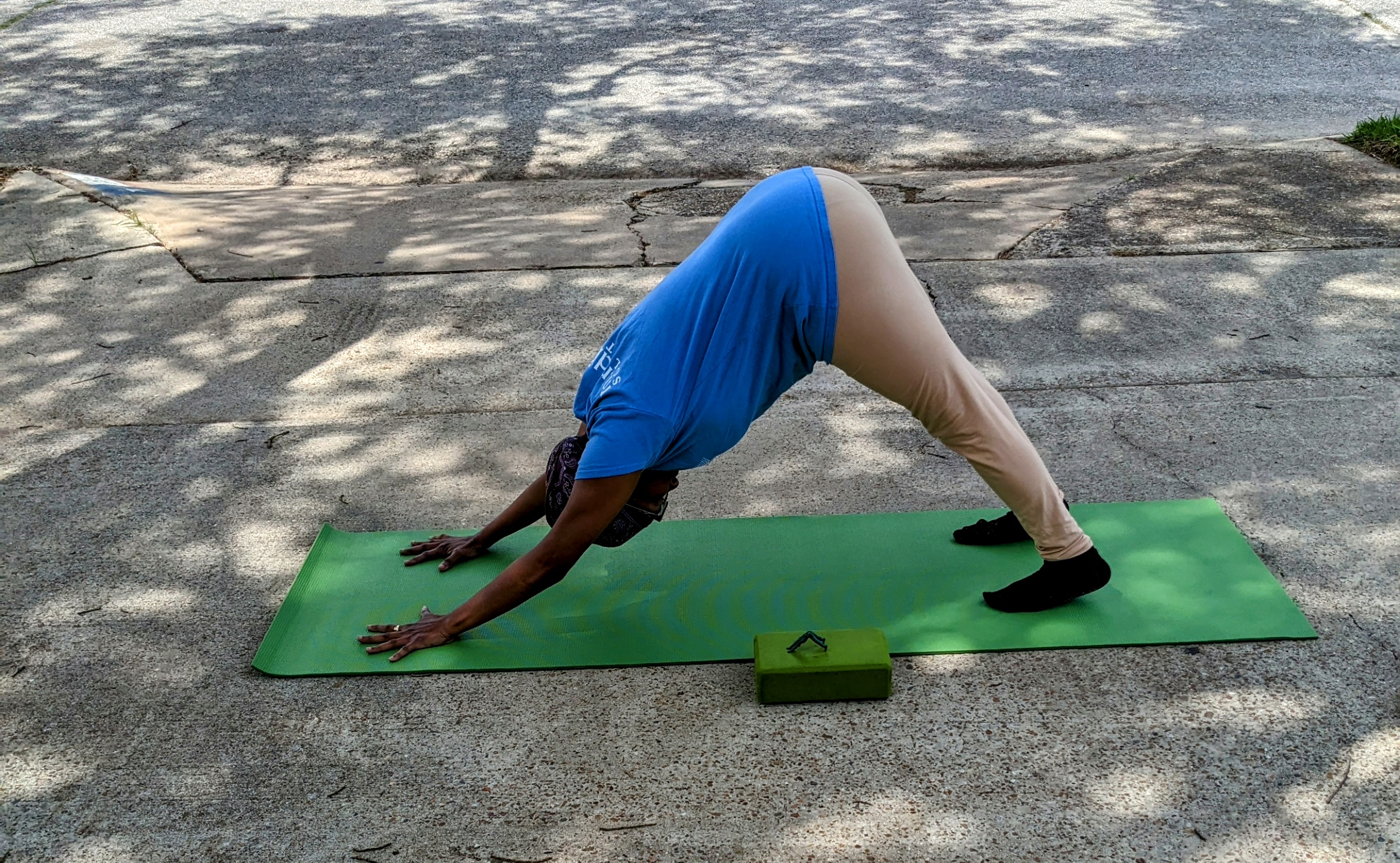
 A Joyful Practice