The Center of the Puzzle (the “missing” Tuesday post) July 18, 2021
Posted by ajoyfulpractice in Changing Perspectives, Healing Stories, Kundalini, Life, Mathematics, One Hoop, Philosophy, Science, Tantra, Vairagya, Wisdom.Tags: anatomy, chakras, Ernő Rubik, hatha yoga, kinesiology, Rubik's Cube, Rubik's Magic, Tantra, vinyasa, vinyasa krama, yoga
add a comment
[This is the “missing” post for Tuesday, July 13th. You can request an audio recording of Monday’s practice via a comment below or (for a slightly faster reply) you can email me at myra (at) ajoyfulpractice.com.
In the spirit of generosity (“dana”), the Zoom classes, recordings, and blog posts are freely given and freely received. If you are able to support these teachings, please do so as your heart moves you. (NOTE: You can donate even if you are “attending” a practice that is not designated as a “Common Ground Meditation Center” practice, or you can purchase class(es). Donations are tax deductible; class purchases are not necessarily deductible.
Check out the “Class Schedules” calendar for upcoming classes. If you are using an Apple device/browser and the calendar is no longer loading, please email me at myra (at) ajoyfulpractice.com at least 20 minutes before the practice you would like to attend.]
“How is life like a puzzle? Or not like a puzzle?”
– quoted from the beginning of the practices on May 19th and July 13th
If we really think about it, it is not just our lives that are like puzzles. Our practice, our mind-body, even our relationships are like puzzles. There are all these different shaped pieces that sometimes fit together and sometimes don’t fit together. There are all these pieces that look like they could fit together, but don’t actually fit. Then there are all those little clues – like hard edges and different color schemes or patterns – that indicate what fits and what doesn’t fit.
When you are solving a puzzle (especially if it has a lot of pieces and/or it has an intricate design), it’s always helpful to have a picture of the finished product. It’s also nice to know that you have all the pieces (or, at the very least, that you know what pieces you have and which pieces are missing). In this way, our physical bodies – and, therefore, our physical practice of yoga are very much like a puzzle. We know the ankle bone is connected to the shin bone; the shin bone is connected to the knee bone; the knee bone is connected to the thigh bone; the thigh bone is connected to the hip bone; the hip bone is connected to the back bone; and that this construction is duplicated in the upper body. We also know that the muscles, nerves, tendons, and other connecting tissues fit together (and work together) in certain ways.
For instance, we know that the hamstrings and quadriceps work together to extend and flex the knee when we walk. We also know that if one leg is shorter (or stronger) than the other that that difference will affect the way we walk and will affect other parts of our bodies – even parts we don’t automatically recognize as being connected. The same is true if we are missing all or part of one leg or if all or part of one leg isn’t mobile. Even if you consider yourself “able-bodied,” you have probably had an injury that affected your mobility – or maybe you went hiking and messed up your shoe in a way that affected your gait. Or, maybe, you just got a rock in your shoe. Either way, take a moment to think back and consider how the change in one area affected all your other areas as you moved.
“The Cube is an imitation of life itself – or even an improvement on life.”
– Ernö Rubik
When it comes to our physical practice of yoga, our sequencing considers how the mind-body is mentally and physically connected and we also consider the energetic aspects of how we are connected. By building each āsana (“seat” or pose) from the ground up, we are able to ensure maximum amount of stability so that we can stretch and/or strengthen with intention and integrity. Similarly, we build the sequence from the ground up so that the mind-body is prepared to do each subsequent set of āsanas. This awareness of how things are connected is particularly important when we are practicing vinyāsa and/or implementing vinyāsa karma in order to achieve a “peak pose.”
While vinyāsa is often translated into English as “flow,” it literally means “to place in a special way.” Classically speaking, the poses are placed so that we exaggerate the body’s natural tendencies and, therefore, engage natural movement (even when moving in a way we might not normally move off the mat). When we forget the intention behind the movement we may find ourselves moving in a way that is counterintuitive and contraindicated by our basic anatomy and the fundamentals of kinesiology. Moving “in a way that is counterintuitive” can be subjective and is not always a bad thing. We definitely learn and grow when we play around with different types of movement. Also, while doing the same practice over and over again can be a great way to gauge progress and master a certain skill, getting “outside of the box” can also highlight bad habits that we’ve been “practicing.” Ultimately, one should always listen to the teacher within and consider if they are really ready to do certain things – especially since, not being mentally ready to do something can be just as dangerous as not being physically ready to do something.
On the flip side, movement that is contraindicated may not always be obvious – especially if we move fast enough and use momentum, rather than alignment and breath, to “muscle” into a pose. However, moving too much and too fast often results in injury. This can be a problem with some “flow” (or even “vinyasa”) practices that are not alignment and breath-based. Remember, just because we can do something (if we do it fast enough and with enough muscular force), doesn’t mean we it’s a good idea. Ideally, a practice works its way towards a “peak.” Maybe that peak is Śavāsana and a deep-seated meditation or maybe it’s a “peak pose” – i.e., something that a random person couldn’t walk into a room and do without being warmed up. Either way, this is where vinyāsa karma comes in handy. Vinyāsa karma literally means “to place the step in a special way.” In other words, it is a step by step progression towards a goal and it is a practice that can be utilized even in sequences where there is no “flow.”
Naturally, we can come at the physical practice of yoga (hatha yoga, regardless of the style or tradition) from a purely physical viewpoint and sequence accordingly. However, the system of yoga includes a mental and subtle body awareness which can also be accessed and harnessed through the poses and movement. Kundalini, Tantra, and Svaroopa are some of the yoga systems that specifically engage the energetic and subtle body through the practice of āsana; however, there can be tantric elements in any yoga practice that considers the way the mind-body-spirit is “woven” together. For instance, when I mention how the energy of our “first family, tribe, and community of birth” contributes to how we cultivate friendships with people we may perceive as “Other,” that is an element of tantra. When we warm up the core in order to have more stability in balancing poses, that is an element of tantra. When we open up the body in order to loosen up areas that may be holding stagnant energy, that also is an element of tantra. Notice, (especially as it relates to the last example) that any of these examples can happen outside of a “vinyasa” practice. Notice, also, that there is no reference to balancing the different types of energy associated the difference sides of the body… although, that too is tantra.
“The problems of puzzles are very near the problems of life.”
– Ernö Rubik
So, you can see how our mind-bodies and, therefore our practice, are like puzzles – like a giant Rubik’s Cubes. On a certain level, however, our lives – and relationships – are different from a physical puzzle; because we don’t start with a picture of the finished product and we don’t know if we have all the pieces. Let’s be honest, we don’t even know if all the pieces we have are for a single puzzle. Despite these differences, we can take a page from the life of the creator of one of the most popular toys of the 80’s: we can visualize the picture we want; see what fits and what doesn’t fit; be open to the possibilities that are around us and inside of us; and use the tools at hand.
Born in Budapest, Kingdom of Hungary on July 13, 1944, Ernö Rubik started off as an architect and architect professor. He studied at the Secondary School of Fine and Applied Arts, the Budapest University of Technology and Economics (where he joined the architecture faculty), and the Hungarian Academy of Applied Arts and Design, also known as the Moholy-Nagy University of Art and Design (where was a member of the Faculty of Interior Architecture and Design). As a professor, he wanted to build a three dimensional model he could use to help his architecture students develop spatial awareness and solve design problems. He started off with 27 wooden blocks, which would have worked great if he just wanted a static three dimensional model. But, Rubik wanted something he could easily move into a variety of shapes. That was his vision.
Now, one thing to keep in mind is that this particular creator didn’t just have a background in architecture (with an emphasis on sculpture). He was also the son of two parents who were themselves creators: his father being a world-renowned engineer of gliders and his mother being a poet. Although, Rubik is quick to credit his father as one of his inspirations, it’s best not to ignore the fact that he grew up watching both of his parents creating things that delighted others.
So, he had a vision and he had pieces to his “puzzle.” He even knew how everything fit together. He just didn’t know how everything would move together. Then one day, while walking on a cobblestone bridge in Budapest, he looked down and realized if the core of his model resembled the cobblestones he could twist and turn the pieces accordingly. Violá!
Ernö Rubik had the vision (a “picture” of the final product); the pieces and how they fit together; and he was open to different possibilities so that when (metaphorically speaking) he stumbled on the cobblestone, he recognized the opportunity. Finally, because of his father’s experience as an inventor, he knew how to apply for a patent and what was needed to take something to market. Even though he ran into a few problems along the way – after all, he was doing all of this under a communist regime – he eventually licensed his invention, the “Magic Cube” to the U. S. based Ideal Toys. Invented on May 19, 1974 and renamed “Rubik’s Cube” in 1979, the toy was introduced to the world in 1980. The toy was so popular that it led Ernö Rubik to create more three dimensional puzzles, including Rubik’s Magic, Rubik’s Snake, and Rubik’s 360.
“If you are curious, you’ll find the puzzles around you. If you are determined, you will solve them.”
– Ernö Rubik
Even though all of Ernö Rubik’s puzzles can be viewed through a geometric and mathematical lens – and even though they mostly rely on the engagement of a central core – there are some differences between the puzzles. Rubik’s 360 requires a certain amount of manual dexterity that is not required to manipulate the other toys and Rubik’s Snake can be a bit like origami, in that the toy can be made into different shapes. But, perhaps the most puzzling of all is the original Rubik’s Magic.
The original Rubik’s Magic has eight interwoven black tiles with rainbow rings painted on the front and the back. In its “unsolved” (flat, rectangular) state, the front of the tiles show three rings side-by-side and the back of the tiles show pieces of three rings that will be interlocking when the puzzle is solved. The puzzle can be manipulated to make a ton of different shapes, like a star, a box, a bench, and even a toy chest. In fact, in the “solved” position, the rectangle becomes heart-shaped. The tiles fold and unfold horizontally and vertically, in tandem and individually – which means they flip into each other, over each other, twist, and can be rolled like a wheel. Later iterations of the puzzle featured images (like the Simpsons going to the beach, Harry Potter playing quidditch, and dinosaurs) that create a bit of a story.
Take a moment to consider what happens if your life is like the images on a Rubik’s Magic. Yes, you might see your life as disconnected circles or you might see yourself as separate from the other people around you. Consider, however, what twists and turns, flips and rolls, get you connected. Or, more accurately, get you to recognize that you are already connected. If you see one side of you Magic as the image of how your life is at this moment, consider that the other side is the image of some goal, desire, or experience you’d like to achieve. The pieces are there, again, you just have to flip, twist, turn, and roll things so that you’re relaxing on the beach or grabbing the golden snitch.
Again, the pieces are already there; it’s all just a matter of “placing things in a special way.” When we look at our lives – or even other people’s lives (if you check out the link above) – through the energetic system of our practice, we start to develop more awareness about the puzzle. We even might start to realize that we are the center of the puzzle.
“Our whole life is solving puzzles.”
– Ernö Rubik
Tuesday’s playlist available on YouTube and Spotify. [Look for the “06032020 How Can We See, Dr. Wiesel” playlist.]
“A good puzzle, it’s a fair thing. Nobody is lying. It’s very clear, and the problem depends just on you.”
– Ernö Rubik
### Only A Little Puzzling ###
A Strenuous, Deliberate “Photo” of You (the “missing” Monday post) July 14, 2021
Posted by ajoyfulpractice in Art, Books, Changing Perspectives, Confessions, Healing Stories, Life, Love, Men, Philosophy, Science, Wisdom, Writing, Yoga.Tags: Bradford Torrey, Common Ground Meditation Center, confirmation bias, David McRaney, film, Franklin Benjamin Sanborn, George Eastman, Henry David Thoreau, Madeleine A. Fugère Ph.D, Mere Exposure Effect, Mere-Exposure Effect, photography, psychology, Psychology Today, sound, svadyaya, The Decision Lab, vision, Walden, yoga
add a comment
[This is the “missing” post for Monday, July 12th. You can request an audio recording of Monday’s practice via a comment below or (for a slightly faster reply) you can email me at myra (at) ajoyfulpractice.com.
In the spirit of generosity (“dana”), the Zoom classes, recordings, and blog posts are freely given and freely received. If you are able to support these teachings, please do so as your heart moves you. (NOTE: You can donate even if you are “attending” a practice that is not designated as a “Common Ground Meditation Center” practice, or you can purchase class(es). Donations are tax deductible; class purchases are not necessarily deductible.
Check out the “Class Schedules” calendar for upcoming classes. If you are using an Apple device/browser and the calendar is no longer loading, please email me at myra (at) ajoyfulpractice.com at least 20 minutes before the practice you would like to attend.]
“The question is not what you look at, but what you see.”
– quoted from a journal entry dated August 5, 1851, as printed in The Writings of Henry David Thoreau: Journal, Walden Edition by Henry David Thoreau, compiled and edited by Franklin Benjamin Sanborn and Bradford Torrey
At the beginning of the Common Ground Meditation Center practices, before I start the recording, we do a little round robin of introductions that includes people’s names, pronouns, any requests they might have, and a prompt question (that people may or may not choose to answer). Even when the prompt question is, “How are you feeling today?” it is somehow (secretly) connected to the theme of the practice.
Sometimes, as I did this week, I ask a question that I couldn’t have asked 200 years ago; a question the answer to which would have been very different if asked 100 years ago or even 20 or 30 years ago. This week’s question: Are you a mental picture taker or an actual picture taker? The answer to that question has changed as photographic technology has, umm… developed.
Ten years ago, there was no Instagram. Twenty years ago there was no Facebook or YouTube. One hundred years ago, no one was going into the woods as Henry David Thoreau (born July 12, 1817) did and posting selfies or videos of how they lived deliberately and sucked out all the marrow of life. Two hundred years ago, one of the leading film innovators, George Eastman wasn’t even born yet. (He was born July 12, 1854.)
Monday’s class was all about Thoreau and Eastman, but it was also about taking mental snapshots – of ourselves, our bodies, our circumstances, and even people and things around us. Our memories are far from perfect and, even when our senses are taking everything in, we are not always consciously aware of what we are observing/sensing. Photographs and videos can do a better job of preserving a moment, but they aren’t perfect either. Even with the right lighting, the right angle, and panoramic camera feature, these recordings are only capture a reflection of a moment – which is not the same as the moment.
Sure, a picture can show us something we had forgotten or something we didn’t observe/sense in the moment. However, there can also be optical illusions created by the lighting, the angle, and the camera’s mechanisms. As much as we’d like to believe otherwise, we are only given a moment in that moment.
“I wanted to live deep and suck out all the marrow of life, to live so sturdily and Spartan-like as to put to rout all that was not life, to cut a broad swath and shave close, to drive life into a corner, and reduce it to its lowest terms, and, if it proved to be mean, why then to get the whole and genuine meanness of it, and publish its meanness to the world; or if it were sublime, to know it by experience, and be able to give a true account of it in my next excursion.”
– quoted from “Where I Lived, and What I Lived For” in Walden, or Life in the Woods by Henry David Thoreau
“What we do during our working hours determines what we have; what we do in our leisure hours determines what we are.”
– George Eastman
If you haven’t noticed, I’m a mental picture kind of person. Yes, pictures of me, places that I’ve been, and the people with whom I spend my time exist. However, I’m more likely to soak up a moment, in the moment, than I am to take an actual picture of the moment. I’m more likely to remind myself to “remember this” even as I recognize that I’m already in the process of “forgetting this.” And, even when I take a picture, I rarely go back and look at it.
My tendency to eschew photos has not always been my personal trend. One of my maternal great-uncles was an avid photographer and when one of my brothers and I lived near him he was constantly taking us around the Washington, D. C. area and photographing us at area landmarks. These photos are amazing and look like the kinds of pictures you would find in an advertisement. In fact, for many years, those photos and the experience of those “photo shoots” had me considered modeling. I actually did some modeling in my preteens and early teens – you know, back when I was a kid and my height was not considered an obstacle. But, overall, I wasn’t (and still am not) a fan of candid shots or random selfies.
Don’t get me wrong – I love photographs… of other people (and landscapes). But, like a lot of people, I’m not overly fond of pictures of myself. They almost always seem to catch me with my eyes closed, a funny expression on my face, and/or they just don’t look like I think I look. As I highlighted in last year’s post, there’s a little history behind the science of film that relates to this. There’s also a little science, similar to the reason why very few people like to hear recordings of themselves, behind why people may not like the way they look in photos.
“We are repeatedly exposed to ideas in the media that support social norms and stereotypes. This can facilitate our own adoption of these ideas, which can sometimes be harmful. A 2008 study found that exposure to faces of an Asian ethnicity led participants to develop positive attitudes towards other Asian faces shown to them. This indicates that the amount and nature of exposure different ethnicities receive influences their popular perception in society. It is commonly understood that minority populations are shown less in western media, and are often shown in ways that support racial prejudice.”
– quoted from The Decision Lab’s “Why do we prefer things that we are familiar with? The Mere Exposure Effect, explained.”
According to the “mere-exposure effect” (also known as the familiarity principle), people develop a preference for things with which they are most familiar. Psychologists have conducted studies about this phenomenon using words, Hanzi (Chinese characters), paintings, geometric figures, and even sounds (played for chicks before and after they hatched). Similar research has also been conducted with actual people and photographs of people. Time and time again, the research shows a preference for things with which we are familiar and a tendency to avoid things that are unfamiliar. The familiar brings “warmth,” a feeling of affection – even when we don’t recognize it as such. The unfamiliar brings confusion, sometimes fear and a strong desire to disassociate and/or avoid.
If you are thinking, “Wait, I look in the mirror and see myself every day. Wouldn’t the ‘mere-exposure effect’ support me liking pictures of myself?” As it turns out, the answer is no; because what you see in the mirror is not what you see in the photo. What we see in a picture is the version of us with which our friends, family, colleagues, and acquaintances are familiar. But, it’s the reverse of what we see in the mirror. Remember, we are mostly asymmetrical and our reflection is not our true image.
So, looking at pictures of ourselves is akin to what happens when someone listening to a recording of us hears us, but we hear something completely different. With sound, we often talk about “air conduction” and how our own voice reaches our inner ear in a different manner than external voices – and, therefore, the vibration that reaches the brain is different. However, studies have shown that physiology is only part of the reason we don’t like our own voices when we hear a recording. The other part is psychological: familiarity. In fact, studies have shown that if we hear a recording of our voice mixed in with unknown voices, we are likely to express a preference for our own voice (even if we don’t automatically recognize it as ours).
“If you drive, you probably see yourself as a competent, considerate, skillful driver, especially compared with the morons and [others] you face on the road on a daily basis. If you are like the typical subject, you believe you are slightly more attractive than the average person, a bit smarter, a smidgen better at solving puzzles and figuring out riddles, a better listener, a cut above when it comes to leadership skills, in possession of paramount moral fiber, more interesting than the people passing you on the street, and on and on it goes.”
– quoted from You Are Now Less Dumb: How to Conquer Mob Mentality, How to Buy Happiness, and All the Other Ways to Outsmart Yourself by David McRaney
Our voice and image are all tied to our sense of self and, on a certain level, our self esteem. According to a 2017 Psychology Today article by Madeleine A. Fugère Ph.D., one of the reasons we may not like our own pictures is because of self-enhancement bias, which is a psychological cocktail that results in people having a mental picture of themselves that is not 100% accurate. Self-enhancement bias is primarily a combination of “illusory superiority bias” (whereby we judge others harsher than we judge ourselves and view ourselves as special); the illusion of control (believing that we are more responsible for our successes than our failures); and “optimism bias” (the belief in the back of our minds that things will work out for the best).
Obviously, some people are more optimistic than others and – due to social and psychological conditioning – some people have more of each of these attributes than others. However, the bottom line is that, in the base case, a healthy human being believes they are slightly more attractive than others may find them. When we look in a mirror, we can move around and adjust things to engage our “confirmation bias.” But, there’s no changing a recording. Additionally, if we are already prone to disliking a picture – before it’s even taken – our “hindsight bias” kicks in along with our “confirmation bias.”
Of course, as Dr. Fugère points out, we can use these same psychological tendencies to become more familiar with images of ourselves. And, similar studies show that this also works with recordings. First, we can take and look at our pictures more often. Some people even suggest looking at older pictures of ourselves (which may actually fit our mental picture). Also, some research has shown that while other people may like regular pictures of us, we may prefer selfies. (Even though I didn’t come across evidence of this, it may be because the camera is flipped in reverse when we take our own picture.) Finally, the best pictures are, of course, the pictures we associate with a positive memory and emotional experience – and studies show that happy people are attractive people.
All of which contributes to why influencers may be inflating their self esteem – sometimes in a way that is healthy (but, sometimes in a way that becomes really unrealistic and, therefore, detrimental to themselves and their followers).
All of which also means that my tendency to avoid pictures, may not be serving me in every moment.
“A report in 2010 published in the British Journal of Social Psychology suggests that you even see yourself as more human than other people. The findings predict that no matter what country you come from, no matter your culture, if aliens chose you to represent the entire species as Earth’s ambassador, you would feel as though you could fulfill that role better than most. When asked, most people believed they exhibited the traits that make humans unique in the animal kingdom more than the average person. In 2010, UCLA researchers conducted a survey of more than 25,000 people ages 18 – 75 and found that the majority rated their own attractiveness as about a seven out of ten. This suggests that the average person thinks that he is better looking than the average person. About a third of the people under 30 rated themselves as somewhere around a nine. That sort of confidence is fun to think about considering that it is impossible for everyone to be better-looking than half the population.”
– quoted from You Are Now Less Dumb: How to Conquer Mob Mentality, How to Buy Happiness, and All the Other Ways to Outsmart Yourself by David McRaney
There is no playlist for the Common Ground practice.
[You can find last year’s blog post on Thoreau and Eastman’s birthday in the bolded links above.]
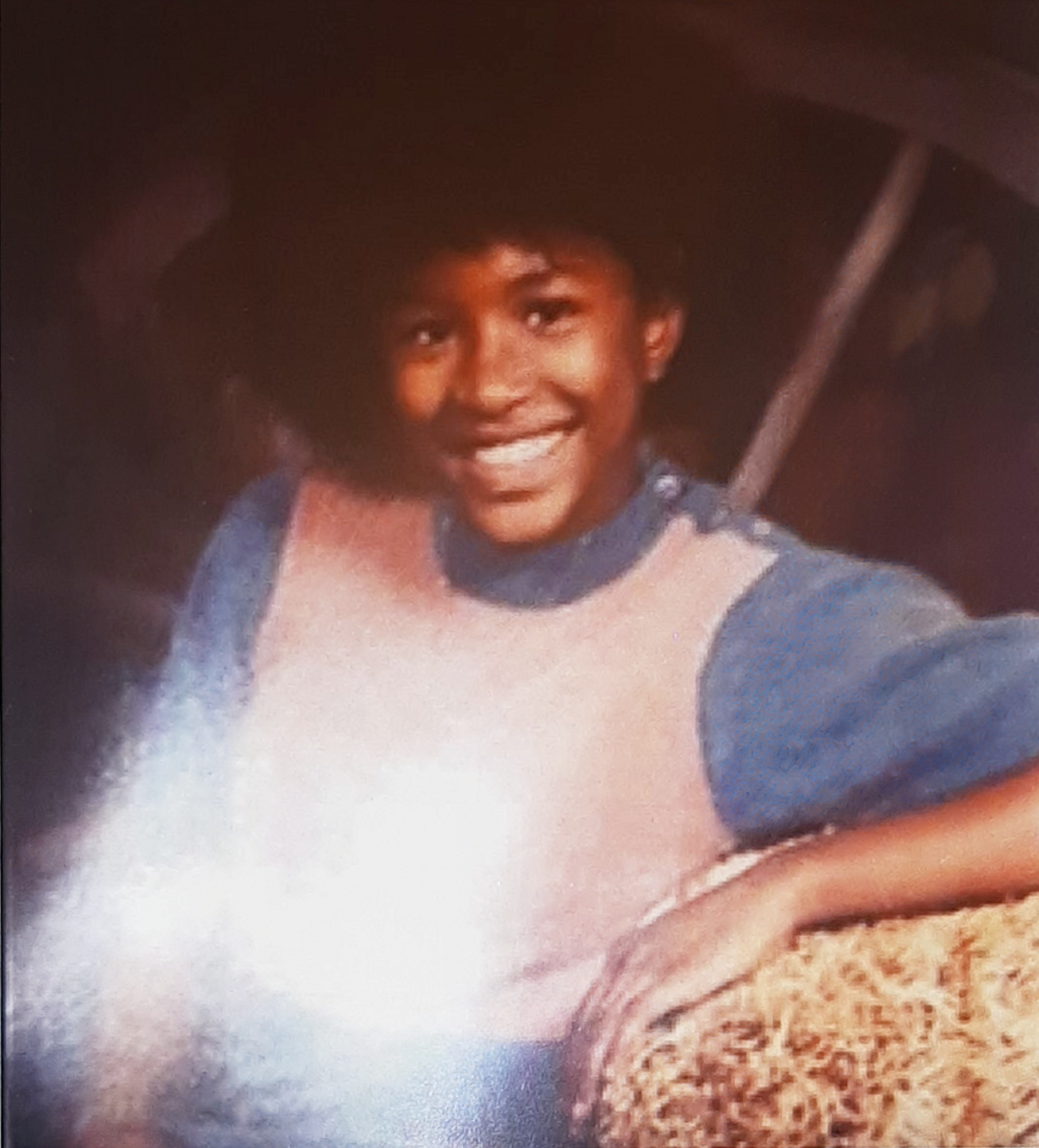
Back in the modeling days!
### “Light makes photography. Embrace light. Admire it. Love it. But above all, know light. Know it for all you are worth….” GE ###
Introducing….You (the “missing” Sunday post) July 13, 2021
Posted by ajoyfulpractice in Books, Changing Perspectives, Healing Stories, Life, Movies, Philosophy, William Shakespeare, Wisdom, Writing, Yoga.Tags: 8-Limbs, Bob Minzesheimer, Charlotte's Web, Cicero, Diogenes, E. B. White, Jhumpa Lahiri, Minke, Nathaniel Hawthorne, Nikolai Gogol, Pope John II, Rynx, samskaras, Socrates, svadyaya, Teresa Wiltz, The Elements of Style, The Namesake, Ursula Nordstrom, William Strunk Jr., yoga philosophy, yoga practice, Yoga Sutra, Yoga Sutra 2.28
add a comment
[This is the “missing” post for Sunday, July 11th. You can request an audio recording of Sunday’s practice via a comment below or (for a slightly faster reply) you can email me at myra (at) ajoyfulpractice.com.
In the spirit of generosity (“dana”), the Zoom classes, recordings, and blog posts are freely given and freely received. If you are able to support these teachings, please do so as your heart moves you. (NOTE: You can donate even if you are “attending” a practice that is not designated as a “Common Ground Meditation Center” practice, or you can purchase class(es). Donations are tax deductible; class purchases are not necessarily deductible.
Check out the “Class Schedules” calendar for upcoming classes. If you are using an Apple device/browser and the calendar is no longer loading, please email me at myra (at) ajoyfulpractice.com at least 20 minutes before the practice you would like to attend.]
“Saepe est etiam sub pallĭolo sordĭdo sapientia.
[English translation: Wisdom often is under a filthy cloak.]”
– Latin proverb (associated with Socrates, Diogenes, and Cicero)
Imagine, for a moment, that you are meeting someone for the first time. It is also the very first time you’ve seen them – and maybe you are meeting them in a cold place during winter or a rainy place during the rainy season. Either way, you are both wearing overcoats. You’re also both of a certain age, whatever that means to you at this moment. So, you’re meeting not at the beginning of your stories but in the middle, maybe even at the end.
We may not think about it, but this is how we most often meet – in the middle of our stories and without being able to see what’s inside.
We exchange names and, if we know someone else with said name, we start seeing this new person through the layers and layers of previously formed ideas, impressions, and opinions. That’s just the way the mind-body works. If, however, we are each the first person either of us has met with said names, we start forming ideas, impressions, and opinions about a person with said name. That’s just the way the mind-body works.
We may not even be consciously aware of it, but there it is. Our first sense of someone is based on an overcoat, samskaras (mental impressions), whatever is happening in the middle of the story, and a name – that may or may not be their given name (or, under certain circumstances, may or may not be the name by which most people know them). The overcoat in this case is, literally, an article of clothing – and also all the external factors like the samskaras, the name, and anything else we may know or assume based on the situation (like occupation, vocation, race, ethnicity, gender, and age range).
Over time, the overcoat comes off, literally and figuratively. We make more mental impressions, maybe we learn another name, and as we move through the rest of the story we also learn (in a backwards sense) about the beginning of a person’s story: why they are the way they are; think and do the things they think and do. Over time, we go deeper.
“Pleased to meet you
But I’m quick to judge
I hope you drop the grudge
I know I’m not what you want from me”
– quoted from the song “Pleased to Meet You” by Rynx (featuring Minke)
Every practice is an opportunity to introduce (or reintroduce) you to yourself. Every pose, every sequence, allows you to remove the layers and layers of overcoats until you reach the heart and core of who you are. That’s svādhyāya, “self-study.”
Sometimes, I also use the practice to introduce (or reintroduce) people to different philosophical aspects of the practice – as I did this time last year – and/or to various rituals and traditions. I also use the practice to introduce (or reintroduce) people to some of my favorite people. People like two writers who share a birthday and, obviously, an occupation. Both of these writers just happen to be Pulitzer Prize winners; have ties to The New Yorker magazine; and are mostly recognized by (first) names that are not on their passports and birth certificates.
Remember, their names are part of their overcoats.
Elwyn Brooks White was born July 11, 1899, in Mount Vernon, New York. Nilanjana Sudeshna Lahiri was born July 11, 1967, in London, England. While very different in some ways, their books prove that anyone can be the hero (or heroine) of a great story; that situations we’ve never personally encountered can be highly relatable when related by a good storyteller; and that fiction (like yoga) can be a great way to process difficult emotions.
“That’s the thing about books. They let you travel without moving your feet.”
– quoted from The Namesake by Jhumpa Lahiri
“Place yourself in the background; do not explain too much; prefer the standard to the offbeat.”
– quoted from “An Approach to style” by E. B. White published in The Elements of Style by William Strunk Jr. and E. B. White
Even though most readers know him by his initials, E. B. White was known to friends and professional colleagues as “Andy.” Ostensibly, the nickname came about because of a tradition at Cornell University whereby students with the last name “White” are renamed after the university’s co-founder Andrew Dickson White.
Jhumpa Lahiri’s birth name is not known to many of her readers – and for a similar reason: her name was also “changed” at school. However, in her case, the change came because her name was unfamiliar (rather than so familiar). Dr. Lahiri’s parents migrated from West Bengal, India to the United Kingdom. When the author was three, the family migrated to Kingston, Rhode Island – where at least one teacher was unfamiliar Bengali names and unwilling to learn how to pronounce them. According to an August 19, 2003, USA Today article by Bob Minzesheimer, “[A kindergarten teacher] said something like ‘That’s kind of a long name’ and decided it was easier to pronounce ‘Jhumpa’” – her nickname.
Remember, names are part of our overcoats. What we call each other makes a difference in how we see and understand each other.
“SOME PIG”
“TERRIFIC”
“RADIANT”
“HUMBLE”
– quoted from the messages in the web in Charlotte’s Web by E. B. White (illustrated by Garth Williams)
When Charlotte (the spider) comes up with her plan to save Wilbur, she says, “Why, how perfectly simple.” She then goes on to use her experience (as a master weaver) to introduce (and reintroduce) her friend (the pig) in a way that makes him more valuable alive, rather than dead. Her plan is, in fact, perfectly simple: write what you know… and change the overcoat. Even through their details are different, the stories written by both E. B. White and Jhumpa Lahiri are about their own personal experiences… and what happens when we get underneath the outer layers.
E. B. White is remembered as the author of beloved (and sometimes banned) children’s books like Stuart Little and Charlotte’s Web, but he started off as a journalist. He also worked for an advertising agency (and in some non-literary jobs) before submitting manuscripts for the then newly-founded The New Yorker. He eventually became a writer and contributing editor for the magazine. It was during his tenure at The New Yorker that he got a blast from his (Cornell University) past when he was asked to update work by one of his former professors.
The Elements of Style (sometimes called White & Strunk’s Elements of Style) was originally composed and self-published by William Strunk Jr. for his English students at Cornell University. It contained what Dr. Strunk Jr. considered the fundamentals: “Seven rules of usage, eleven principles of composition, a few matters of form, and a list of words and expressions commonly misused [and/or misspelled]….” When it was published by Harcourt, Brace & Howe in 1920, it included eight “elementary rules of usage,” ten “elementary principles of composition,” “a few matters of form,” a list of 49 “words and expressions commonly misused,” and a list of 57 “words often misspelled.” In the late 1950’s, Macmillan Publishers commissioned Mr. White to expand and modernize “the little book” (partially based on a 1935 edition by William Strunk Jr. and Edward A. Tenney). Since its 1959 publication, White & Strunk’s Elements of Style has been reprinted three times, illustrated, and served as the inspiration for an opera and a comprehensive history.
Mr. White won a Newberry Award, an American Academy of Arts and Letters Gold Medal, a Presidential Freedom Award, a Laura Ingalls Wilder Award, a National Medal for Literature, and a L. L. Winship/PEN New England Award. He was also awarded a Pulitzer Prize Special Citation for Letters, an award that actually recognized all of his work. In 2004, the Association of Booksellers for Children (ABC) even established an award in his honor for books that “embodied the universal read aloud standards that were created by [his work].” You might think all of those accolades meant that Mr. White always followed his own advice. But, let’s be real: talking farm animals, airplane-flying mice, and Public Relations specialists who just happen to be spiders wasn’t very standard in 1945 and 1952.
“No, I have never encountered any story plot like Charlotte’s Web. I do not believe that any other writer has ever told about a spider writing words in its web. Perhaps I should ask some of the children’s book ladies who go back even further in time than I do, but I am sure nothing even remotely like this has been written.”
– quoted from a letter addressed to “Andy” (E. B. White), from Ursula Nordstrom, Harper & Row publisher and editor-in-chief, Department of Books for Boys and Girls (dated April 2, 1952, as it appears in Dear Genuis: The Letters of Ursula Nordstrom)
“It used to be clear to me, slopping a pig, that as far as the pig was concerned I could not be counted on, and this, as I say, troubled me. Anyway, the theme of “Charlotte’s Web” is that a pig shall be saved, and I have an idea that somewhere deep inside me there was a wish to that effect.
As for Charlotte herself, I had never paid much attention to spiders until a few years ago…. Spiders are skilful [sic], amusing and useful, and only in rare instances has anybody ever come to grief because of a spider.”
“I haven’t told why I wrote the book, but I haven’t told you why I sneeze, either. A book is a sneeze”.
– quoted from a letter addressed to Ursula Nordstrom, Harper & Row publisher and editor-in-chief (Department of Books for Boys and Girls), from E. B. White (dated September 29, 1952)
The January 1948 issue of The Atlantic contained an essay by E. B. White entitled, “Death of a Pig,” which described the short life and “premature expiration of a pig” – as well as the burial and how the whole community mourned the occasion. In the essay, Mr. White said, “I have written this account in penitence and in grief, as a man who failed to raise his pig, and to explain my deviation from the classic course of so many raised pigs.“ While there is no mention of a spider in the essay – and he doesn’t specifically mention a pig dying in his September 29, 1952 letter to Ursula Nordstrom, his publisher / editor – many believed that the essay wasn’t enough and that he felt the need to write more in order to express his sorrow and regret, to process his feelings about his experiences. On the other hand, it doesn’t take a letter to an editor (or a fan) to see how Jhumpa Lahiri has also used fiction to process personal experiences.
“In Bengali the word for pet name is daknam, meaning, literally, the name by which one is called, by friends, family, and other intimates, at home and in other private, unguarded moments. Pet names are a persistent remnant of childhood, a reminder that life is not always so serious, so formal, so complicated. They are a reminder, too, that one is not all things to all people.”
– quoted from The Namesake by Jhumpa Lahiri
Despite having conflicted feelings associated with her name and schooling, Jhumpa Lahiri went on to earn a B. A. in English literature from Barnard College of Columbia University and four degrees from Boston University. A few years after completing her doctorial thesis, Jhumpa Lahiri’s Interpreter of Maladies became the seventh collection of short stories (in 82 years) to win the Pulitzer Prize in Fiction. (There have now been only nine collections to win the award in over 100 years.) Several years after her award-winning debut, The New Yorker published her short story entitled, “The Namesake.” It was the story of a Bengali boy living in a strange land with a strange name.
The story became a book and then a movie and, in the process, “Jhumpa Lahiri” became a household name.
In addition to winning a Pulitzer Prize, Jhumpa Lahiri’s accolades include a PEN/Hemingway Award, a Frank O’Connor International Story, and the National Humanities Award. She has also been a finalist for the Man Booker Prize and the National Book Award for Fiction. Her second collection of short stories, Unaccustomed Earth, debuted at number one on The New York Times best seller list – an achievement one book editor associated with her “newfound commercial clout,” but an achievement (I would humbly suggests) actually rests on the beauty and clarity of her storytelling. As one critic put it, “There is nothing accidental about her success; her plots are as elegantly constructed as a fine proof in mathematics.”
Unaccustomed Earth was also named number one by the editors of The New York Times Book Review’s “10 Best Books of 2008.” Perhaps, even more telling is the fact that when the collection won the Frank O’Connor International Story award that same year, there was no shortlist because, as reported by The Guardian on July 4, 2008, “The jurors decided that Unaccustomed Earth was so plainly the best book that they would jump straight from longlist to winner….” The Frank O’Connor award was one of the world’s richest awards for short story collections and normally had a longlist of approximately 60 books and a short list of three or four.
“In so many ways, his family’s life feels like a string of accidents, unforeseen, unintended, one incident begetting another…They were things for which it was impossible to prepare but which one spent a lifetime looking back at, trying to accept, interpret, comprehend. Things that should never have happened, that seemed out of place and wrong, these were what prevailed, what endured, in the end.”
― quoted from The Namesake by Jhumpa Lahiri
Jhumpa Lahiri is a polyglot who speaks Bengali, English, and Italian. She, undoubtedly, also understands a little bit of Spanish (and maybe Greek). Not only has she written and translated work in (and out) of all three of the languages she speaks, in 2015 she wrote an essay for The New Yorker stating that she was now only writing in Italian. Since 2015, she has published two books in Italian and edited and translated at least two collections of work by Italian writers.
Dr. Lahiri’s love of language is obvious not only in the languages she speaks and writes, but also in the connections that she makes through her writing. Both The Namesake and Unaccustomed Earth have ties to two of her literary predecessors: Nikolai Gogol and Nathaniel Hawthorne. Some people might be confused by her success with the “masses,” because she is so clearly erudite. However, above and beyond anything else, what a reader finds in Jhumpa Lahiri’s books are regular, everyday people navigating the spaces between two worlds and two identities – just like she does. (Just like E. B. White’s characters do.)
“Writing was also an escape [for Jhumpa Lahiri]. Growing up brown and ‘foreign’ in a town where white was the predominant theme had its challenges. There was the persistent feeling of other, not American enough, not Indian enough, of constantly straddling fences, stretching identities. She is amused, and slightly annoyed, by Indians who immigrate to the United States and eagerly embrace a Caucasian identity, excitedly reporting to their Indian friends that they’d moved into an all-white neighborhood, where there were no blacks. Thanks to her parents — her mother would often retort to these friends, ‘What do you think you are?’ — she said, ‘I was never into any sort of denial.’”
– quoted from The Washington Post article entitled, “The Writer Who Began with a Hyphen” by Teresa Wiltz (dated October 8, 2003)
Sunday’s playlist is available on YouTube and Spotify. [Look for “07112020 An Introduction”]
”His family name was Bashmachkin. It is evident from the name, that it originated in bashmak (shoe); but when, at what time, and in what manner, is not known. His father and grandfather, and even his brother-in-law, and all the Bashmachkins, always wore boots, and only had new heels two or three times a year. His name was Akakii Akakievich. It may strike the reader as rather singular and far-fetched; but he may feel assured that it was by no means far-fetched, and that the circumstances were such that it would have been impossible to give him any other name; and this was how it came about.”
– quoted from “The Overcoat” (as it appears in The Overcoat & Other Short Stories, Dover Thrift Editions) by Nikolai Gogol (story translation by Isabel F. Hapgood)
[Last year’s post for July 11th is linked above. Here’s different post related to the naming of things.]
### “Juliet: ‘Tis but thy name that is my enemy;” WS ###
The Effort to Free/Liberate Yourself – a philosophical perspective (a “missing” post) July 6, 2021
Posted by ajoyfulpractice in Books, Buddhism, Changing Perspectives, Depression, Faith, Gratitude, Healing Stories, Health, Hope, Life, Loss, Meditation, Mysticism, Pain, Peace, Philosophy, Science, Suffering, Tantra, Tragedy, Vairagya, Wisdom, Writing, Yoga.Tags: Anodea Judith, Ashtavakra Gita, Astavakra Gita, chakras, Common Ground Meditation Center, Denise Glasbeek, Edward Herman, Everlast, fear, freedom, Heinz Dieterich, independence, Jiddu Krishnamurti, John Richards, Julian Semphill, liberation, Mandukya Upanishad, Noam Chomsky, samskaras, Santana, Steve Ross, Swami Nikhilananda, Thich Nhat Hanh, Upanishads, Vedas, Wheels of Life, yama, yoga
add a comment
[This is the “missing” post for Monday, July 5th. You can request an audio recording of Monday’s practice via a comment below or (for a slightly faster reply) you can email me at myra (at) ajoyfulpractice.com.
In the spirit of generosity (“dana”), the Zoom classes, recordings, and blog posts are freely given and freely received. If you are able to support these teachings, please do so as your heart moves you. (NOTE: You can donate even if you are “attending” a practice that is not designated as a “Common Ground Meditation Center” practice, or you can purchase class(es). Donations are tax deductible; class purchases are not necessarily deductible.
Check out the “Class Schedules” calendar for upcoming classes. If you are using an Apple device/browser and the calendar is no longer loading, please email me at myra (at) ajoyfulpractice.com at least 20 minutes before the practice you would like to attend.]
“The liberating current brings us excitement, energy, and novelty, while the descending current brings us peace, grace, and stability. In order for either of these pathways to really be complete, all of the chakras need to be open and active. Liberation without limitation leaves us vague, scattered, and confused. We may have wonderful ideas and lots of knowledge, but we are unable to bring these fruits to any tangible completion. On the other hand, limitation without liberation is dull and stifling. We become caught in repetitive patterns, clinging to security and fearing change.”
– quoted from “Chapter 1 – And the Wheel Turns: Liberation and Manifestation” of Wheels of Life: A Users Guide to the Chakra System by Anodea Judith, Ph.D.
Sometimes in yoga, I talk about the inhale literally being an “inspiration” (from the Latin, by way of Old French and Middle English) whereby we are filled with spirit. The exhale is, by the same logic (Latin by way of late Middle English), an “expiration” whereby something is literally expiring, returning to the source. Some of you have even heard me say, “Inhale down your spine, in the direction of the manifesting current; taking all the possibilities of the Universe and making them your unique experience. Exhale back up your spine, in the direction of the liberating current, taking your unique experiences (and efforts) back to the source.” In Wheels of Life: A Users Guide to the Chakra System, Anodea Judith explores the fact that “we must limit” in order to manifest – and the ancient texts back her up in the idea that there are ways in which we are limited. There are ways we can have a lot, but we can’t have it all.
If we think of the source of all things – whatever that means to you at this moment – then we’re thinking of the source of unlimited possibilities. We’re thinking of something infinite and something limited only by our imagination/understanding – which is finite. On the flip side, we are not omnipotent and/or omnipresent. We can experience multiple sensations at one time, but we can only truly focus-concentrate-meditate on one thing at a time. While our initial possibilities are limitless, our whole lives are built around the experience of “narrowing things down.” So, we do.
There’s nothing wrong with narrowing things down and establishing boundaries. That’s all part of the human experience. Being human means we are constantly swinging like a pendulum between having everything and having nothing – in every area of our lives. We run into problems, however, when we don’t recognize (and appreciate) what we have; when we operate from a perspective of scarcity instead of a point of abundance. We run into problems when we are paralyzed by what we don’t have and/or by something that hasn’t happened.
“The more you can increase fear of drugs, crime, welfare mothers, immigrants and aliens, the more you control all of the people.”
– Dr. Noam Chomsky
“Optimism is a strategy for making a better future. Because unless you believe that the future can be better, it’s unlikely you will step up and take responsibility for making it so. If you assume that there is no hope, you guarantee that there will be no hope. If you assume that there is an instinct for freedom, that there are opportunities to change things, then there is a possibility that you can contribute to making a better world.”
– quoted from Latin America: From Colonization to Globalization by Noam Chomsky (in conversation with Heinz Dieterich, with additional collaboration by Edward Herman; introduction by Denise Glasbeek and Julian Semphill)
Like a lot of people associated with the United States, I spent the last week-plus thinking, contemplating, and discussing the concept of freedom, liberation, and independence. On a certain level, I do that all the time; but there is an acute awareness between PRIDE, Juneteenth, and the Fourth of July – and I start thinking about those concepts on a lot of different levels. The most obvious level in this context, of course, is the legal aspect. However, last Tuesday I referenced the nine obstacles (and their four accompanying physical-mental experiences) outlined in Patanjali’s Yoga Sūtras and, if you go back, those obstacles and ailments are kind of floating under all of this week’s posts, classes, discussions, and meditations. Because, as it turns out, our minds are one of the biggest obstacles to anyone of us experiencing true freedom, liberation, and independence.
Tonight (Monday, July 5th), as well as during the Juneteenth class and in the First Friday Night Special post-practice blog post, I shared the story of how circus elephants are trained not to move beyond a designated circumference. It’s a story I’ve seen and heard a lot of people tell, but I first came across it because of Steve Ross’s yoga practice. The story is a great reminder about how powerful the mind is, how it can literally stop us in our tracks. And, while we might name an endless list of things holding us down and holding us back, it really comes down to one thing: our relationship with fear.
Fear is an emotional response to a perceived threat. I say it all the time: The threat doesn’t have to be real, but the emotional and embodied experience is real. Additionally, a perceived threat can be in the past and yet the emotionally embodied experience can still actively experienced in the present (and, as Lisa Nichols points out, projected into the future). Both fear of failure and fear of success can paralyze us, because at a very early age we were taught that fear equals danger and, when we feel the associated sensations, we have to be still or turn back.
Yes, on a neurophysiology level, fear activates our sympathetic nervous system which activates our fight-flight-freeze response. However, adults teach children what to fear and how to respond to that fear. We know not to stick our hand in the fire or on a hot stove for the same reason we know to look both ways before crossing the street: someone taught us to fear the consequences. Similarly, we teach those who come after us. As we grow through life, we keep the tool of fear – sometimes even more than we use the tool that is our awareness. Eventually, these lessons in fear are just like everything else we experience in life; they hardwire our brains and create samskaras (“mental impressions”).
We view our experiences through previous experiences. Over time our reactions to certain sensations (including certain thoughts) feels instinctual – even though they’re conditioned. Over time, there’s very little (if any) difference between the way we react to the possibility of failing, falling flat on our face, and/or embarrassing our self and the we react to the possibility of a snake in our path.
“As a rope lying in darkness, about whose nature one remains uncertain, is imagined to be a snake or a line of water, so Atman is imagined in various ways.
When the real nature of the rope is ascertained, all misconceptions about it disappear and there arises the conviction that it is nothing but a rope. Even so is the true nature of Atman determined.”
– quoted from “Chapter 2 – Vaitathya Prakarana (The Chapter on Illusion)” (verses 17 and 18) of Mandukya Upanishad [English translation by Swami Nikhilananda]
Remember, I’m talking about the possibility here. I’m talking about the point when the brain goes, “What is that?” Someone can tell you, “Oh, that’s just a big hank of rope someone left out when they pulled their boat in,” but, if you’ve lived around water moccasins your whole life, the adrenaline might already be pumping. It may not even matter that you’re in a part of the world that doesn’t have cottonmouths. You’ve been conditioned – by yourself and others – to stay safe. Just the idea of something we fear can bring up the sensations. In fact, just reading the words above might have caused your body to tense up in preparation. (I know just typing it does the same for me!)
Sacred texts from India, like the Upanishads (“sitting near” devotedly) and the Ashtavakra Gita (The Song of the Man with 8-Bends in His Limbs), often use the idea of a snake to describe our experience with māyā (“illusion”). Interestingly, “Death” sometimes shows up in Hindu mythology as a snake called Yama, which can be translated into English as “binder” and is also the same Sanskrit word used for the first limb of the Yoga Philosophy (Yamas), which consists of five “external restraints.” In other words, the snake we see in the road is a limitation – even if it’s not a snake.
“It is not that you must be free from fear. The moment you try to free yourself from fear, you create resistance against fear. Resistance in any form does not end fear. What is needed, rather than running away or controlling or suppressing or any other resistance, is understanding fear; that means, watch it, learn about it, come directly into contact with it. We are to learn about fear, not how to escape from it, not how to resist it.”
– Jiddu Krishnamurti
I don’t think J. Krishnamurti was telling people to walk up on something that might be a snake and poke it with your finger – just as the writers of the Vedic texts were not necessarily telling people to put themselves in dangerous situations in order to confirm the nature of reality versus illusion. Instead, the practice is about going deeper into the mind-body experience. Where, for instance, do you hold your tension, discomfort, and dis-ease? Where do you hold your fear, anger, disappointment, grief, and confusion? Where, as I asked people on Zoom, do you not feel free, liberated, and independent?
Breathe into those spaces where you don’t feel free, liberated, or independent. Remember, your awareness and your breath are tools you carry with you everywhere. Don’t be a fool! Use those tools! Use the inhale to explore those places where you are holding tightness and create space around those places. Maybe imagine that you are blowing into those areas like you blow into a balloon and feel that expansion. Then, use your exhale to let something go. You may not be ready to let go of everything – and, it’s important to acknowledge that. Just release what you can release and let go of whatever is ready to go.
“There’s a darkness
Living deep in my soul
It’s still got a purpose to serve”
– quoted from the song “Put Your Lights On” by Santana and Everlast
One of my favorite songs, and one of the star-studded collaborations included on Santana’s record-breaking album Supernatural, was written by Everlast. The title comes from what we do when we’re driving as the sun sets, when we start driving at night, or when it starts to rain: We put our lights on so we can see and be seen. We put our lights on to avoid danger. We put our lights on so we can be less afraid. One of my favorite verses (quoted above) is a reminder that sometimes we need the limitation. Remember, fear is an important neurophysiological tool – that’s why it’s such a great teaching tool. However, we can’t let the tool rule our whole life. Sometimes we have to remember, as the angel in the song also reminds us, “I got nothing to fear.”
When we can, and when we are willing, letting go of something – some attachment to the past, some fear of the unknown – makes us like the elephant that looks down and realizes there’s no stake, no chain, and no shackle. We’re free!
I’ve heard stories about elephants that are considered “escape artists” and no amount of “training,” no matter how brutal, can keep them from testing the limits of their binds. Most elephants, however, never seem to look down. I’ll admit I don’t know a lot about pachyderms. I know the location of their eyes limits them in some way, as does bright lights; so, maybe they can’t see around their trunk and tusks. But, the most likely scenario (especially in cases where the shackle is removed) is that they have been conditioned to fear what happens if they go beyond the originally established boundary.
Ultimately, the circus elephants are limited by their mind-body connection. As are we; which means, if we want to be truly free, in a physical-mental and emotional-energetic way, we have to recognize our stakes to pull them up. We have to recognize our chains to break them. We have to recognize our shackles to release ourselves.
“‘You are the one witness of everything and are always completely free. The cause of your bondage is that you see the witness as something other than this.
…
If one thinks of oneself as free, one is free, and if one thinks of oneself as bound, one is bound. Here this saying is true, “Thinking makes it so.”’”
– quoted from the Ashtavakra Gita (1.7, 1.11) [English translation by John Richards]
There is no playlist for the Common Ground Practice.
Do you need your high beams or your parking lights (to see your chains)?
“We may think that if we ignore our fears, they’ll go away. But if we bury worries and anxieties in our consciousness, they continue to affect us and bring us more sorrow. We are very afraid of being powerless. But we have the power to look deeply at our fears, and then fear cannot control us. We can transform our fear….
Fear keeps us focused on the past or worried about the future. If we can acknowledge our fear, we can realize that right now we are okay. Right now, today, we are still alive, and our bodies are working marvelously. Our eyes can still see the beautiful sky. Our ears can still hear the voices of our loved ones.”
– quoted from “Introduction – Fearlessness” of Fear: Essential Wisdom for Getting Through the Storm by Thich Nhat Hanh
### Let Wisdom Speak Over Fear ###
Free to Be You (and Me?) What About Them? July 4, 2021
Posted by ajoyfulpractice in "Impossible" People, Books, Changing Perspectives, Healing Stories, Hope, One Hoop, Pain, Philosophy, Suffering, Yoga.Tags: Abigail Adams, Crosby Stills Nash & Young, Fourth of July, Frederick Douglass, freedom, independence, John Adams, July 4th, Martin Luther King Jr, Medgar Evers, Second Continental Congress, Thomas Paine
add a comment
“We hold these truths to be self-evident, that all men are created equal, that they are endowed by their Creator with certain unalienable Rights, that among these are Life, Liberty and the pursuit of Happiness.”
*
– quoted from “The Declaration of Independence” drafted by the Committee of Five and (eventually) signed by delegates of the Second Continental Congress
In the United States, a lot of people – one might even argue, most people – are celebrating the Fourth of July, Independence Day. They would have taken the day off from work (if it wasn’t already the weekend) and many will have Monday off. Since Covid-19 numbers are going down in most of the country, people are celebrating with picnics, get-togethers, parades, concerts, and – even when they’ve been advised against it – fireworks and gunshots in the air.
That’s how we do it in America. Right?
And, we have the freedom to do that. Right?
Except, such assumptions leave out the millions of Americas working today. Some (like me, as well as musicians and other performers, theatrical technicians, and a handful of pyrotechnics professionals) choose to work today and may even be excited to work today. Others, millions and millions of others, don’t have a choice. They work because they lack the financial freedom and/or they work in order for the rest of us to celebrate, freely.
In that last category are all the essential workers like people in healthcare, first responders, grocery workers, delivery people, and people in various forms of journalism – all the people who have kept us going over the last year-plus. Some of them are also in that penultimate category (just as are some in the first category).
And, since I’m being extra real here, the people who serve(d) in the military and their families sometimes fall in all three categories.
One of the questions I have today is: Do you picture these people when you think of what it means to be American? Do you give thanks for these people when you celebrate your freedom (assuming you feel free)? Has/Does your understanding of freedom, independence, “liberty and justice” for all change when you picture, express gratitude for, and even celebrate some of the people above?
Or, since I snuck it in there, do you think of those people when you say the Pledge of Allegiance?
“…Fellow-citizens, pardon me, allow me to ask, why am I called upon to speak here to-day? What have I, or those I represent, to do with your national independence? Are the great principles of political freedom and of natural justice, embodied in that Declaration of Independence, extended to us? And am I, therefore, called upon to bring our humble offering to the national altar, and to confess the benefits and express devout gratitude for the blessings resulting from your independence to us?
*
“…such is not the state of the case. I say it with a sad sense of the disparity between us. I am not included within the pale of glorious anniversary! Your high independence only reveals the immeasurable distance between us. The blessings in which you, this day, rejoice, are not enjoyed in common. The rich inheritance of justice, liberty, prosperity and independence, bequeathed by your fathers, is shared by you, not by me. The sunlight that brought light and healing to you, has brought stripes and death to me. This Fourth July is yours, not mine. You may rejoice, I must mourn….”
*
– quoted from the “What to the Slave is the Fourth of July?” speech by Frederick Douglass (July 5, 1852)
The Fourth of July, as a day of pomp and circumstance, is always slightly ironic to me, because it is simply a publishing date. Granted, it’s not the only publishing date I celebrate. While at least one of the documents I mention over the years is much more inclusive than the Declaration of Independence, it is not widely celebrated in the United States.
I know, I know, there are some people thinking, “Hold up a minute, the Declaration of Independence is inclusive.” To which, I would respond (as anyone familiar with the documents history would respond) that it was, actually, intentionally exclusive. However, it was also designed to be adjusted to, theoretically, become more inclusive – hence the amendments and the ability of the three branches of government (legislative, executive, and judicial) to add-on. However, the rights, provisions, and promise of this nation still aren’t extended equally to all citizens or to all within the nation’s borders. It’s not a perfect system, nor is it a perfect union.
Although, one could argue that despite – or because of – current events it is still “a more perfect Union.”
“The Second Day of July 1776, will be the most memorable Epocha, in the History of America.
*
I am apt to believe that it will be celebrated, by succeeding Generations, as the great anniversary Festival. It ought to be commemorated, as the Day of Deliverance by solemn Acts of Devotion to God Almighty. It ought to be solemnized with Pomp and Parade, with Shews, Games, Sports, Guns, Bells, Bonfires and Illuminations from one End of this Continent to the other from this Time forward forever more.
*
You will think me transported with Enthusiasm but I am not. — I am well aware of the Toil and Blood and Treasure, that it will cost Us to maintain this Declaration, and support and defend these States. — Yet through all the Gloom I can see the Rays of ravishing Light and Glory. I can see that the End is more than worth all the Means. And that Posterity will tryumph in that Days Transaction, even altho We should rue it, which I trust in God We shall not.”
*
– quoted from a letter John Adams wrote to Abigail Adams, with the heading “Philadelphia July 3d, 1776”
Going back to my reference to essential workers, service people, and all of their families; today’s practice is a celebration, but it is also a reminder. It is a reminder that, just as Medgar Evers said in 1963, “freedom is never free.” It is a reminder, just as Crosby, Stills, Nash, and Young sang in 1971, that you can “find the cost of freedom, buried in the ground” – and, sometimes, behind bars (or sitting on the bench).
It is also a reminder that stresses the importance, as the Reverend Martin Luther King, Jr. did during the commencement speech he gave at Oberlin College on June 14, 1965, of “remaining awake through” challenging and changing times. Some people think of pandemic and the events of the last year-plus as a wake-up call.
But, let’s be real. Some people are hitting snooze and going back to normal, I mean sleep. The thing we must remember about the events of 1776 is that when it comes to freedom, independence, “liberty and justice,” we all truly have it… or some of us are ignoring the elephant in the room.
“All I’m saying is simply this: that all mankind is tied together; all life is interrelated, and we are all caught in an inescapable network of mutuality, tied in a single garment of destiny. Whatever affects one directly, affects all indirectly. For some strange reason I can never be what I ought to be until you are what you ought to be. And you can never be what you ought to be until I am what I ought to be – this is the interrelated structure of reality.”
*
– quoted from the Oberlin College commencement speech entitled, “Remaining Awake Through a Great Revolution” by Reverend Martin Luther King, Jr. (June 14, 1965)
Please join me for a 65-minute virtual yoga practice on Zoom today (Sunday, July the 4th) at 2:30 PM. You can use the link from the “Class Schedules” calendar if you run into any problems checking into the class. You can always request an audio recording of this practice (or any practice) via email or a comment below.
Sunday’s playlist is available on YouTube and Spotify. [Look for “4th of July 2020”]
[NOTE: This playlist has been remixed since last year. It is still slightly different on each platform, but mostly with regard to the before/after class music. The biggest difference is that the videos from last year’s blog post do not appear on Spotify.]
In the spirit of generosity (“dana”), the Zoom classes, recordings, and blog posts are freely given and freely received. If you are able to support these teachings, please do so as your heart moves you. (NOTE: You can donate even if you are “attending” a practice that is not designated as a “Common Ground Meditation Center” practice, or you can purchase class(es). Donations are tax deductible; class purchases are not necessarily deductible.)
“Perhaps the sentiments contained in the following pages are not yet sufficiently fashionable to procure them general favor; a long habit of not thinking a thing wrong, gives it a superficial appearance of being right, and raises at first a formidable outcry in defense of custom. But the tumult soon subsides. Time makes more converts than reason.”
*
– quoted from the “Introduction” to Common Sense, signed by the “Author” (Thomas Paine, known as “The Father of the American Revolution”) and dated “Philadelphia, February 14, 1776
*
*
### LET FREEDOM RING (by lifting the bell & ringing it) ###
Free To Be You (and Me?), a sequel & a prequel July 3, 2021
Posted by ajoyfulpractice in Changing Perspectives, Depression, Healing Stories, Health, Hope, Life, Loss, Love, Meditation, Pain, Philosophy, Suffering, Super Heroes, Tragedy, Vipassana, Wisdom, Women, Writing, Yoga.Tags: Aki Hirata Baker, August Black, Black Hair, Claire Raymond, CROWN Act, Delilah, Elisa Goodkind, First Friday Night Special, Fractured Atlas, Freddie Harrel, Kiersey Clemons, Leon Ford, Lily Madelbaum, Lizzo, Mariel Hemingway, Mercedes Diane, Nadine Hanson, National CROWN Day, Nola Hanson, Samson, Soul Cap, StyleLikeU, Syd Miller, The What's Underneath Project
add a comment

Back in the day… (also, my reaction to some things happening today)
“No. This is the first time that I’ve known what my hair looks like, when it just grows out of my scalp. [Pause] How is it that I know what my pubes look like more than I know the hair on my head? [Laughing]
When I was younger my mom took really good care of my hair. She learned how to do my hair. Our hair textures are not the same. You know, even my mom tending to my hair – that in itself, that action acknowledges that my hair is beautiful and worthy. And I still was somehow brainwashed into believing otherwise. [Pause] But, that might also have been, because [pause]: my mom’s side of the family is white.
No one on my dad’s side was wearing their hair natural and – it was wigs or weaves – and that’s why when I grew up to take care of my hair, I assumed that’s what I’m supposed to do with this: I’m supposed to tuck it away.”
– Kiersey Clemons when asked if she has always worn her hair natural (as she did during the pandemic), in the February 11, 2021 StyleLikeU video entitled, “Actress Kiersey Clemons Accepts Her Mental Health Diagnosis and Stands Up To Racism in Hollywood”
If you think the Kiersey Clemons’s comment above is out of this world, odds are you’re not a Black woman in the Western world. But, just to make sure you appreciate the intensity of her reality, take a moment to put yourself in her shoes:
Imagine, for a moment, that you are a 27-year old woman who is considered a person to watch in your industry. Imagine that you’ve worked with some heavy hitters in your industry and that you’ve been nominated (and even won) some awards within your industry. Now imagine that your job constantly requires people to look at you and so you spend a good amount of time preparing yourself to be looked at, photographed, and filmed.
Ok, you got it?
Now, read her statement again.
If you attended the most recent First Friday Night Special and read the post-practice post, you might be surprised that very little of what was in the blog was in the practice. In all honesty, even though I started working on the blog before Friday night, I had intended to go in a different direction with the post. But, the practice was about freeing and liberating one’s self and being independent – and, after doing the practice twice, I decided to stop holding on to some things I was saving for a different post.
Not to mention the fact that the post was super timely since today, July 3rd, is the first official “National CROWN Day.” The fact that FINA’s announcement about the Soul Cap (swim cap) came this weekend seems like a weird coincidence, serendipity, an intentional insult, a PR stunt, and/or what afro-rocking Bob Ross might have called “a happy accident.” Because, whichever way you look at it, no one can deny the fact that the timing brought more international awareness to movement around natural (and textured) hair.
“According to [Schwartz, a natural hair company established in 1965], the average American spends approximately $89.95 USD on hair care products in a year. A year! How many black women do you know that have only spent $89.95 in a year on their hair? ‘[Mintel, a global market research and market insight company] values the black hair care industry at more than $2.5 billion, but that statistic doesn’t include products such as hair accessories, wigs or electric styling products. So, the industry is actually worth much more.’”
– quoted from the DGSpeaks blog post entitled, “The Black Hair Industry – A 2.5 Billion Dollar Business Built on Racism and Self-Hate” by Mercedes Diane (dated August 12, 2020)
“[Uncomfortable laugh] I think so…. It’s a pretty big insecurity for me. Like, y’all can see my thighs and my butt all day. But [pause], my hair is a secret.
The idea of what beautiful hair is, is completely, umm, warped – where I was from, like Houston [wipes her eyes]. It be like, you know, [makes voice higher], ‘Oh, I’m mixed.’ ‘I got silky hair.’ I got “good” hair.’ But “good” hair doesn’t exist. You know what I’m saying?”
– Lizzo’s response when asked why she’s taking off her pants before taking off her orange wig, in the October 20, 2014 StyleLikeU video entitled, “Lizzo: The Truth About Self-Acceptance” [the interviewer follows up by saying, “It’s a 90-billion dollar business to make Black women hate their hair.”]
If you are not familiar with StyleLikeU, let me begin by mentioning that it is not a Black organization or an organization specifically related to Black experiences. Instead, it is the creation of the mother-daughter duo Elisa Goodkind and Lily Mandelbaum. They call their brain-child “a radically honest storytelling platform” and it is a fiscally sponsored project of Fractured Atlas, a non-profit arts organization. The mother-daughter team states that their mission is “to inspire acceptance through revealing what’s underneath personal style” and that they are driven by a vision “to lead the fashion and beauty industries toward self-love, diversity, and inclusion.” Their YouTube content, podcast, and book feature people of different races and ethnicities; different sexes, genders, and sexualities; different ages, heights, and weights; and different abilities.
Some of the people featured are big media celebrities, like Lizzo (whose video was released in 2014) and Mariel Hemingway (whose video was released in 2019). Others are influencers, like Freddie Harrel (whose video was released in 2016) and Claire Raymond (whose video was released June of this year). Still others are professionals and regular ordinary people with whom you may or may not have some intersection, like Aki Hirata Baker (whose video was released in May), Syd Miller and August Black (whose video was released in June); and Leon Ford (whose video was released in February). The people interviewed talk about a lot of different subjects and deal with a lot of different experiences, but what all of these people have in common is a willingness to reveal their whole selves. They reveal themselves physically, mentally, and emotionally in an interview series called, The What’s Underneath Project, which is one of at least six ongoing series being produced and curated by the StyleLikeU team.
The What’s Underneath Project is like everyone’s worst public speaking nightmare. During the very raw and very personal interview, the featured people are asked a series of very intimate questions. As the person opens up – offering bits of their personal history and pieces of revealing information – the person being interviewed takes off bits of clothing. They take off their clothes, layer by layer, until they are left wearing nothing but their underwear and the wireless microphone pack. Even their jewelry comes off! What’s interesting isn’t (just) how uncomfortable some of the subjects are – even those who are use to speaking in public (even without a lot of clothing) – or even how uncomfortable one might feel while watching the video. What’s most interesting to me is when the people being interviewed appear most vulnerable, when they say they feel most vulnerable, and the personal insight that comes up when people allow themselves to be vulnerable.
Since I have watched more than a handful of videos from The What’s Underneath Project series – including the “It’s What’s Underneath” video featuring “Not-So-Identical Twins Nadine and Nola Hanson” – I was not surprised to find a new video show up on YouTube a few hours after I posted my last post. It is the video embedded below and it features clips from various StyleLikeU videos where Black women (from around the world) talk about their hair. The clip was put together in honor of National Crown Day and, if you pay attention, you will notice that the women come in different shapes, different sizes, and different ages. You will also notice that they have different natural hair types. You may also notice that their individual relationships with their hair developed over time. And, more often than not, that journey towards self-acceptance has come as a result of navigating through a world that has not historically recognized that Black hair is natural. Normal. Beautiful.
[NOTE: I’ve added this video to the “A Place To Start” playlist.]
“And he told her all his heart, and said to her, ‘A razor has not come upon my head, for I am a Nazirite to God from my mother’s womb. If I will be shaven, then my strength will leave me, and I shall become weak and be like any man.’
And Delilah saw that he had told her all his heart, and she sent and called to the lords of the Philistines saying, ‘Come up this time, for he has told me all his heart.’ And the lords of the Philistines came up to her, and brought the money in their hands.
And she put him to sleep upon her knees, and she called to the man, and she shaved off the seven locks of his head. And she began to afflict him, and his strength left him.
And she said, ‘The Philistines (have come) upon you Samson!’ And he awoke from his sleep and said, ‘I will go out as at other times, and I will shake myself,’ but he did not know that the Lord had departed from him.
And the Philistines seized him, and gouged out his eyes. And they brought him down to Gaza, and bound him with copper chains, and he did grind in the prison house.”
– Shoftim – Judges (16:17 – 21)
### Please don’t touch a Black person’s hair (or poke your finger through ANYBODY’s ear gauges] without their consent ###
First Friday Night Special #9: “The Effort to Free/Liberate Yourself from…” (a post practice post) July 3, 2021
Posted by ajoyfulpractice in Books, California, Changing Perspectives, Depression, Faith, Fitness, Healing Stories, Health, Hope, Karma, Karma Yoga, Life, Loss, Pain, Peace, Suffering, Traditional Chinese Medicine, Tragedy, Wisdom, Women, Yin Yoga, Yoga.Tags: Alia Atkinson, Alison Terry, Astavakra Gita, attachment, Caesar Rodney, Dan D'Addona, Declaration of Independence, elephants, Elizabeth Beisel, En Vogue, Enith Brigitha, freedom, independence, Inhale, Juneteenth, Kayla Greaves, Lia Neal, liberty, Malia Metella, Maritza Correla, Medgar Evers, NAACP, Natalie Hinds, Olympics, Oxygen Network, Restorative Yoga, Scott Blossom, Simone Manuel, Soul Cap, Steve Ross, Suffering, Swami Vivekananda, Sybil Smith, Thomas Byrom, Thurgood Marshall, Yin Yoga, yoga, Yoga Ranger Studio with Aprillle Walker
add a comment
[This is the post for the “First Friday Night Special” #8 from July 2nd. This was a restorative practice with opportunities with a lot of stillness and silence.
You can request an audio recording of Friday’s practice via a comment below or (for a slightly faster reply) you can email me at myra (at) ajoyfulpractice.com.
In the spirit of generosity (“dana”), the Zoom classes, recordings, and blog posts are freely given and freely received. If you are able to support these teachings, please do so as your heart moves you. (NOTE: You can donate even if you are “attending” a practice that is not designated as a “Common Ground Meditation Center” practice, or you can purchase class(es). Donations are tax deductible; class purchases are not necessarily deductible.
Check out the “Class Schedules” calendar for upcoming classes.]
“On June 7, [Medgar] Evers spoke at a rally in Jackson. The speech Evers gave was one of the most emotional of his career:
‘Freedom is never free… I love my children and I love my wife with all my heart. And I would die, die gladly, if that would make a better life for them….’
Five days later, Medgar Evers was dead.”
– quoted from “Chapter 2 – A Short but Heroic Life: The Jackson Movement” of The Assassination of Medgar Evers by Myra Ribeiro
Like a lot of people associated with the United States, this is the time of year when I my mind keeps thinking about Freedom, Liberation, and Independence. Since I was born in Texas, I’ve celebrated Juneteenth all my life. And, even though I don’t always mention it around this time, I often think about what it must have been like for Sengbe Pieh (also known as Joseph Cinqué) and the other enslaved Mende, West Africans who revolted on the Amistad around July 1, 1839 – and how John Quincy Adams (then a 73-year old former president and, at the time an active member of the House of Representatives) helped them secure their freedom through the U. S. Courts system. I think about how Caesar Rodney, a Delaware delegate of the American Continental Congress and Brigadier General of Delaware Militia (just to name a few of his roles), rode two days in – across muddy roads, rickety bridges, slippery cobblestones, and swollen streams; enduring extreme heat, dust, and thunderstorms; all while suffering from suffering from asthma and wearing a face mask to cover his cancer-ravage jaw – just to represent his constituents and “vote for independence” today in 1776. And, I know, he wasn’t specifically riding for me (or people like me), but that’s not the point.
My point in bringing him up every year is the same reason I think about (and want others to think about) why John Adams (who would go on to become president) thought people would be celebrating today, July 2nd, as “the most memorable Epocha, in the History of America” (according to a letter he wrote to his wife Abigail on July 3, 1776). It’s also why I talk about a descendant of slaves who was born today in 1908, given the name Thoroughgood Marshall, and grew up to become chief counsel for the NAACP and a United States Supreme Court Justice. Finally, it’s why I’ve been known to reference Medgar Wiley Evers, the Civil Rights activist who was born today in 1952, worked as Mississippi’s field secretary for the NAACP, and served in the United States Army during World War II – before he was assassinated because people objected to his efforts to overturn segregation and enforce voting rights for African Americans.
Within that last sentence is my ultimate point: Freedom, Liberation, and Independence require effort – effort that should be celebrated rather than taken for granted and/or forgotten. While I highlight the efforts that take place on a national, constitutional, and legal front, let us not forget that freed, liberation, and independence also have to be achieved on a personal front. And that too requires effort: physical, mental, emotional, and energetic effort.
“Who is free? The free must certainly be beyond cause and effect. If you say that the idea of freedom is a delusion, I shall say that the idea of bondage is also a delusion. Two facts come into our consciousness, and stand or fall with each other. These are our notions of bondage and freedom. If we want to go through a wall, and our head bumps against that wall, we see we are limited by that wall. At the same time we find a willpower, and think we can direct our will everywhere. At every step these contradictory ideas come to us. We have to believe that we are free, yet at every moment we find we are not free. If one idea is a delusion, the other is also a delusion, and if one is true, the other also is true, because both stand upon the same basis — consciousness. The Yogi says, both are true; that we are bound so far as intelligence goes, that we are free so far as the soul is concerned. It is the real nature of man, the soul, the Purusha, which is beyond all law of causation. Its freedom is percolating through layers of matter in various forms, intelligence, mind, etc. It is its light which is shining through all.”
– quoted from the commentary on Yoga Sūtra 2.20 from Raja Yoga by Swami Vivekananda
In Yoga Sūtra 2.18, Patanjali breaks down the composition of the “objective world” – that which we can sense – and explains that “has a twofold purpose: fulfillment and freedom. He goes on, in the subsequent sūtra, to further breakdown the range of the inherent forces that make up the world, thereby giving some explanation as to how one might understand (and even attempt to explain) the nature of things. However, in Yoga Sūtra 2.20 he throws a bit of a curveball – one he had already warned was coming: We can only see what our mind shows us.
In other words, we can only understand the freedom and fulfillment that is promised when we are ready to understand the freedom and fulfillment that is promised. Furthermore, as long as we are stuck between freedom and bondage, we will interact with others through that same paradigm. We will do things that create suffering and, therefore, create bondage. Here I am talking about physical and legal bondage as well as mental, emotional, energetic, and spiritual bondage. There are, after all, multiple ways to hold someone back or hold someone down. And, on a certain level, it doesn’t matter if that “someone” is our self or someone else. Ultimately, our belief in bondage goes hand-in-hand with our attachment to the things that cause suffering. Just as effort is required to break physical and legal shackles, effort is required to break mental, emotional, energetic, and spiritual shackles.
Just a few years before I did my first yoga teacher training, I was in a situation where most of my yoga practice was through an online practice group and via Steve Ross’s Inhale. Yes, it’s had for even me to imagine myself getting up for a yoga class that was broadcast (on the Oxygen Network) at 5 or 6 AM, but that’s what I did off and on for about 6 months out of a year. I loved the practice so much that at one point I looked up his book. Steve Ross’s Happy Yoga: 7 Reasons Why There’s Nothing to Worry About is where I first heard two of my favorite elephant stories – although one is really, really horrible.’
According to the horrible story, circuses train elephants by shackling them when they are very young. The metal shackle is first attached to chain (maybe about 12 feet long) that is driven into the ground with a metal stake. You can imagine what happens if the young elephant manages to pull the stake up and make a run for it. After some years, the metal stake is replaced with a wooden stake. Then, the stake is removed but the chain remains. Eventually, the chain is removed and then, finally, the shackle may be removed. Despite no longer being physically tethered, the adult elephant has been conditioned to stay within a 12-foot radius – and so it does.
“Forever and truly free,
The single witness of all things.
But if you see yourself as separate,
Then you are bound.”
…
“If you think you are free,
You are free.
If you think you are bound,
You are bound.
For the saying is true:
You are what you think.”
– quoted from The Heart of Awareness: A Translation of the Ashtavakra Gita (1.7 and 1.11) by Thomas Byrom
What is true about the elephant is also true about human beings (and the nature of human beings): effort is required to shackle someone and effort is required to be free of the shackles. The effort and the shackles can be physical. They can, simultaneously and independently, also be mental, emotional, energetic, and spiritual. As an example, consider something that has been in the news pretty much since the tignon laws were passed in New Orleans in 1786: Black people’s hair.
Tignon Laws required women of color to wear head coverings in public so that, no matter how fair (in complexion), how “elegantly” dressed, and/or how (legal) free the woman might be she could be identified as someone who could – under the “right” circumstances – be bought and sold at will (just not her will), and thus could be treated accordingly. A similar law, established in the French colony of Saint-Domingue in 1776, prohibited women of color from wearing shoes – again, with the intention of subjugating the women. In both cases, the women the laws were intended to shackle turned the restrictions into fashion statements that extended beyond the statutes. They kept their spirits up and took back some of their power… but they were still marginalized.
As integration moved into the workplace, some American corporations created employee manuals which included acceptable and unacceptable hairstyles and/or blocked the advancement of certain people based on their hairstyles. While many were (and are) quick to say that the hairstyles in question were “unprofessional,” the hairstyles were (and are) consistently traditional ways to manage and style Black hair. By traditional, I mean that you would see these hairstyles in pre-colonial Africa. Equally important, these are hairstyles that could/can be achieved without harsh chemicals. In other words, they are natural….yet, they were deemed unnatural by people with different hair textures and types.
On July 21, 1976, the United States Court of Appeals, Seventh Circuit, upheld an earlier ruling in favor of Beverly Jenkins (in Jenkins v. Blue Cross Mutual Hospital Insurance Inc.) – although they had previously restricted how far the ruling could be applied. Ms. Jenkins had sued her former employer (in Indianapolis) on the grounds that she had been denied “promotions and better assignments” and was ultimately terminated “‘because of her race, sex, black styles of hair and dress,’ in violation of Title VII of the Civil Rights Act of 1964, 42 U.S.C, 2000E et seq. and 42 U.S.C, 1981.” The basis of her lawsuit? She wore her hair in an afro.
Despite the aforementioned 1976 ruling, a New York court ruled against a woman who sued American Airlines in 1981, because (the court) decided that “an all-braided hairstyle is a different matter” than an afro, because it was an “artifice.” Strictly speaking in terms of word meanings, “artifice” is defined as “clever or cunning devices or expedients, especially as used to trick or deceive others.” Keep that definition in mind when you consider that the same New York woman who was told that she could not braid her natural hair and keep her job “even if [the hairstyle was] socioculturally associated with a particular race or nationality,” could use lye to straighten her hair (so it appeared a different texture) and then curl it (or even dye it) and still keep her job. She could do all of that even though it would result in a hairstyle “associated with a particular race or nationality”… it just happened to have been the politically acceptable race.
There are similar cases over the last forty years, including situations with school children and even student athletes who have been allowed to wear their natural hairstyles one week and then told they had to cut their hair – or not compete – another week. On July 3, 2019, the CROWN (Create a Respectful and Open Workplace for Natural Hair) Act (SB188) was signed into law under California’s Fair Employment and Housing Act (of 1959) and the California Education Code. New Jersey and New York adopted similar versions of the bill and other states, including South Carolina, are following suit. But, those laws don’t protect people in all over the country and they don’t apply outside of the country.
“Back in 1964, a hotel manager named James Brock dumped hydrochloric acid into a swimming pool that Black protesters had dived into as a form of protest against segregation, leaving the swimmers with chemical burns. In 2018, a white man demanded that a Black woman show her ID to swim at a private community pool in North Carolina, despite there being no official rules at the time stating that she needed to show any form of identification to enter the area. When she rightfully refused, he called the police.”
– quoted from the July 30, 2020 InStyle article entitled, “Olympic Swimmer Simone Manuel on Her Haircare Routine and Why More Black Women Should Get in the Pool” by Kayla Greaves
Recently, as in today/Friday, it was announced that swimming caps designed for natural Black hair will not be allowed at the Tokyo Olympics. This was decided by FINA (Fédération Internationale de natation; English: International Swimming Federation), the Switzerland-based governing body, who said (a) that the caps – designed in conjunction with an Olympic athlete – “[did not follow] the natural form of the head” and that to their “best knowledge, the athletes competing at the international events never used, neither require to use, caps of such size and configuration.” Now, if you don’t see a problem with this situation, I don’t blame you; however, I would encourage you to consider – visualize even – the makeup of the people making the decision and the makeup of the people being affected by the decision. Consider, also, the governing body’s “best knowledge” doesn’t really include a lot of Black bodies. Alice Dearing, the Olympian who worked with Soul Cap, will be the first Black woman to represent Great Britain in an Olympic swimming event. Ever.
Two-time Olympian Enith Brigitha, born on Curacao, swam for the Netherlands in the 1970’s and became the first woman of African descent to win an Olympic medal (bronze in the 100 and 200 freestyle at the 1976 Montreal Olympic Games). She also set five short course records and won a silver medal and two additional bronze medals at the World Championships (and some say she would have won an Olympic gold were it not for circumstances beyond her control). She was swimming during a time when, in America at least, de-segregated pools was still a new concept, and not one that was evenly enforced. She was also competing at a time when no one else looked her in the pools where she was competing. In pictures, her hair is cut short. If you look at a picture of her with her peers, all fresh from the pool, some of the other young ladies also have short hair; however, like today, the majority swam with ponytails or pigtails.
In 1988, Boston University’s Sybil Smith became the first African-American woman to score in a NCAA final and the first to be a first-team Division I All-American. In 1999, Alison Terry became the first Black woman to make a U.S. National Team when she qualified for the Pan American Games. In 2004, Puerto Rican-born Maritza Correla became the first African-American to represent the United States at the Olympics – she won a silver medal as part of the 400-yard freestyle relay team. That same year, a French swimmer named Malia Metella won a silver medal in the 50 freestyle – which was the highest individual Olympic placing for a Black female swimmer. Ten years later, at the 2014 World Short Course Championships in Doha, a Jamaican swimmer named Alia Atkinson became the first Black woman to win a swimming world title. Just a few months later, at the beginning of 2015, there was the first all African-American podium an NCAA swimming championship, when Division I athletes Simone Manuel, Lia Neal, and Natalie Hinds placed first, second, and third (respectively) in the 100-yard freestyle. Simone Manuel would go on to become the first Black woman to win Olympic gold as a swimmer (2016), setting an Olympic and an American time record in the process. Since 2016, she has won three additional individual world championship titles and is planning to compete defend her title in Tokyo.
“‘It is kind of emotional as well… Being a swimmer in a predominantly white sport just exacerbates it in my mind so I am just hyper aware of everything. I am the only Black swimmer on the deck every day. That is something I have always noticed, but now it affects me. All those feelings you suppress as a kid.’
[Natalie] Hinds said there are situations that she sees all the time from people comparing he hai to a poodle, to specific comments about her race.”
– quoted from the September 1, 2020, Swimming World article entitled, “Natalie Hinds Discusses ‘Fighting to be Equal,’ Using Her Platform in Fireside Chat With Elizabeth Beisel” by Dan D’Addona, Swimming World Managing Editor
Natural hair, regardless of race or ethnicity, is classified by curl type – typically ranging from “straight” which would theoretically fall in a 0 or 1 category to 3 graduating types of 2, 3, and 4. So, there are 6 types that are visually recognizable as “wavy,” “curly,” and/or “kinky.” As mentioned above, Enith Brigitha wore her hair short. In 1988, Sybil Smith’s hair was relaxed (i.e., chemically straightened) and in most pictures it appears relatively short. That same is true of Malia Metella. Alison Terry’s hair appears to be 2 (B or C, but maybe 3A) and Maritza Correla’s hair appears to be type 3; meaning they could both (theoretically) pull their dry hair into a ponytail and when their hair is wet it would still hang around their shoulders. This same seems to be true for Alia Atkinson and Lia Neal.
Natalie Hinds appears to wear her hair natural, sometimes with braids, (and possibly has a 4A curl); but, in most of her public facing pictures she’s wearing her swim cap – and her hair is clearly pushing the limits of the cap. Simone Manuel sometimes wears her hair long, and has been featured in articles about natural hair care where she said (in 2020), “…I’m someone who genuinely feels that if you want to be successful in something, then sometimes you have to make sacrifices. And for me, part of that is my hair.” No shade to my hometown-sister – and I get that chlorine is harsh on hair – but I can’t helping wondering when one of her peers had to “sacrifice” their hair for their ambitions. I also can’t help but think of a dear, dear friend of mine, who is slightly older than me, and who once said that when she was growing up (here in the States) she didn’t realize having natural (unprocessed) hair was an option.
Even if we disregard all of the stereotypes about Black people and swimming that have been perpetuated over the years, the bottom line is that this is the bulk of FINA’s “knowledge” related to Black hair and Olympic swimmers. Take a moment to really notice that even as I have grouped the ladies and their hair, I’ve left out some significant facts pertaining to why their hair is so different – even within those groupings. Even more to the point, I’m willing to bet money that most of the nine athletes mentioned above use completely different hair products than the other aforementioned athletes.
“Intelligence is connected with the brain, but behind intelligence even stands the Purusha, the unit, where all different sensations and perceptions join and become one. The soul itself is the centre where all the different perceptions converge and become unified. That soul is free, and it is its freedom that tells you every moment that you are free. But you mistake, and mingle that freedom every moment with intelligence and mind. You try to attribute that freedom to the intelligence, and immediately find that intelligence is not free; you attribute that freedom to the body, and immediately nature tells you that you are again mistaken. That is why there is this mingled sense of freedom and bondage at the same time. The Yogi analyses both what is free and what is bound, and his ignorance vanishes. He finds that the Purusha is free, is the essence of that knowledge which, coming through the Buddhi, becomes intelligence, and, as such, is bound.”
– quoted from the commentary on Yoga Sūtra 2.20 from Raja Yoga by Swami Vivekananda
Letting go of what binds us and restricts us requires effort. It often requires external as well as internal effort – although, more often than not, those two go hand-in-hand. However, we can’t begin the process without acknowledging our tethers: our shackles, our chains, and our metal or wooden stake. We have to recognize what is being done to us, what we are doing to ourselves, and what we are doing to others.
This can sound all theoretical and metaphorical, but one way to think about it is to just acknowledge where you are holding tension in your mind-body. What is limiting you physically? What mental and/or emotional limitations are in balance? Even if you don’t completely understand (or believe) the energetic and spiritual ramifications of those physical-mental-emotional blocks, take a moment to consider what freedom, liberation, and independence mean to you – and then go to your “Freedom Place” and feel those embodied qualities.
Just like people have “Happy Places” that we can visualize (or sometimes, remember), I think it’s a good idea to have a “Freedom Place.” Your Freedom Place might be your Happy Place. It might be a real place and/or a real memory. Of course, it could just be a feeling, a combination of sensations. No matter how you come to understand it, know that in your Freedom Place you can take the deepest breath you’ve taken all day, every day, because you are:
- Free of fear, doubt, anxiety, grief and anything else that shackles us (and others).
- Liberated from the bondage of judgement and strong emotions or passions – which, remember, comes to us from the Latin by way of Old French and Middle English, from a word that means “suffer.”
- Independent of responsibilities and burdens.
In your Freedom Place, you are carefree, but not careless. In your Freedom Place, there is no tension in your body or your mind and you recognize your possibilities. Of course, to feel this free we have change the condition of our hearts and minds – so that we change our understanding. To liberate ourselves from judgement (including self-recrimination), we must develop some insight into the attachments (shackles) that lead to suffering. Finally, being independent of our burdens requires us to lay our burdens down. When we lay our burdens down, we can either walk away from what no longer serves us – and maybe never served us – or we can choose to pick up our opportunities. Just so you know; opportunities are lighter than burdens. Furthermore, when we have a lighter load, we can share someone else’s load without feeling like it’s an imposition. When our load is light, we gratefully and joyful, can help others.
“None of us got where we are solely by pulling ourselves up by our bootstraps. We got here because somebody – a parent, a teacher, an Ivy League crony or a few nuns – bent down and helped us pick up our boots.”
– Supreme Court Justice (and former NAACP chief counsel) Thurgood Marshall referencing his SCOTUS successor in a Newsweek interview (dated October 28, 1991)
Even when we can’t name everything that holds us down and holds us back, even when we don’t find it particularly helpful to name things, we can come to the mat and start the process of releasing, relaxing, and breathing. Remember, breath is our ultimate (“pranic”) tool. We can use it to bring awareness to different areas in the body and then to release tension in those areas. We can use it to create space and then, also, to engage space. It can set our pace in a moving practice and allow us to stay centered and grounded in every practice. The way we breathe can affect our mood (and overall emotional state) in positive way or in a detrimental way. And, while the goal in yoga is always to take the deepest breaths you’ve taken all day, some practices cultivate a deeper breath right off the bat. One such practice is a Restorative Yoga practice.
You can think of Restorative Yoga and Yin Yoga as 1st cousins – in that they resemble each other on outside, but the internal experience is different. There are a lot of times in a Yin Yoga practice when people can’t wait to get out of a pose (and there may be a lot of groaning and moaning as they come out). With Restorative Yoga, however, sometimes people want to stay in a pose a little longer – even when the pose is held for twice as long as you would hold a Yin Yoga pose. There also tend to be more sighs than groans (and less cursing of my name). Both practices can be really prop-heavy, but it is (in some ways) easier to practice restorative without the props. The practice we did for the July “First Friday Night Special” featured three of the most common Restorative Yoga poses, a very soft twist, and a super sweet variation I recently learned from Aprille Walker, of Yoga Ranger Studio. (Because, like you, I’ve been practicing online.) There’s also a lot of silence and stillness!
“Practiced regularly, [Frog or Child’s Pose] also improves your breathing and your elimination…. The quality of our elimination is directly tied to the quality of our respiration. And, so, tension in the low abdomen and back can directly impact the quality of our ability to eliminate regularly.”
– Scott Blossom, explaining detoxification benefits of Mandukāsana
Friday’s playlist is available on YouTube and Spotify. [Look for “030521 Give Up, Let Go, Trustful Surrender” PLEASE NOTE: I recommend doing this practice in silence or using one of the first two tracks on the playlists. The first tracks are similar, but only YouTube has my original choice for the 2nd track.]
### “FREE YOUR MIND / AND THE REST WILL FOLLOW” ~ En Vogue ###
Needing to Move, a little or a lot (the Tuesday post) June 29, 2021
Posted by ajoyfulpractice in Abhyasa, Books, Changing Perspectives, Faith, Fitness, Healing Stories, Health, Hope, Life, Loss, Love, Pain, Philosophy, Suffering, Tantra, Tragedy, Vairagya, Wisdom, Yin Yoga, Yoga.Tags: Anodea Judith, asana, hatha yoga, Marcus Aurelius, Matthew Sanford, Pandit Rajmani Tigunait, Sandra Razieli, Savasana, Swami Vivekananda, Wade Imre Morissette, yoga
add a comment
“Some days or weeks when you are practicing, the mind will be calm and easily concentrated, and you will find yourself progressing fast. All of a sudden the progress will stop one day, and you will find yourself, as it were, stranded. Persevere. All progress proceeds by such rise and fall.”
– quoted from the commentary on Yoga Sūtra 1.30 from Raja Yoga by Swami Vivekananda
It happens to all of us, at one time or another: We hit a wall, an obstacle. In Yoga Sūtra 1.30, Patanjali names nine obstacles to the practice – which are really nine obstacles to anything: disease, mental inertia (or laziness), doubt, lack of enthusiasm (sometimes translated as carelessness, lethargy or sloth, clinging to sense cravings, false understanding, an inability to reach the goal of concentration, and an inability to maintain the goal. These nine obstacles coincide with four physical-mental experiences. Naming these obstacles (and the arising experiences), when we experience them, can be helpful in helping us (as Marcus Aurelius instructed himself) find the way forward.
However, there is a tendency, for some of us, to really dig into WHY we hit the wall. We want to know the “why” so that we can avoid it in the future – and there is merit in that. Such inquiry can benefit us, can directly and indirectly benefit those around us, and can also benefit people we have never met and will never meet. However, sometimes, all that digging into what was can itself become an obstacle. Sometimes, all that inquiry can keep us from moving forward.
Before I move forward with this line of thinking, let me point out that we can sometimes get stuck because of our perceptions about moving forward. Moving forward looks different to different people and/or in different circumstances. For example, I just heard about a junior Olympian who, for a variety of reasons, had to take a break from training. Moving forward for her looks like getting back to training. On the flip side, if you (or someone you know) were stuck in a toxic, maybe even physical and/or mentally abusive relationship, moving forward looks like staying out of that relationship. It also means staying away from similarly toxic relationships – because, otherwise, you’re stuck in the same pattern and not moving forward at all. Even if the people in these scenarios are getting unstuck at the same time, the way they move forward is going to look different.
So, clearly, to move forward we have to move. Right? Well…. Yes, and no.
Even before we get to the no; let’s talk about the yes. The human mind-body is designed to “flow” or move. Not only is the basic construction of the mind-body conducive to moving, one of its primary systems, the lymphatic system, functions through movement. The lymphatic system is part of the cardiovascular (or circulatory) and immune systems, and is also connected to the digestive system. It plays a crucial part in our overall health and requires muscular movement (contraction and release) in order to function.
Movement serves as the pump that moves lymphatic fluid through the lymph nodes strategically located throughout the body. The lymphatic fluid brings in the cells that kill abnormal cells and foreign substances (which cause disease); can re-circulate protein cells; washes away dead cells and debris; and carries that (liquid) waste to the kidneys so that it can be flushed out of the body. The lymphatic system also helps the body to absorb (nutritional) fat and removes excess liquid from the body, in order to prevent inflammation that can lead to disease. The very act of breathing facilitates the movement of the lymph. But, it moves it in a limited fashion; which means that, when someone is unable to move their muscles on their own, having externally provided manipulation/stimulation can be helpful (and that can occur in a lot of different ways).
So, yes, the human mind-body needs to move. The question is, on any given day, how much movement do you need? And how do you know what kind of movement you need? My friend and fellow yoga teacher Sandra Razieli once said that sometimes she starts moving and if she feels better she keeps going. On the flip side, if the movement she’s doing doesn’t make her feel better, even a little bit, she changes what she’s doing. (I identify Sandra as a “fellow yoga teacher,” but honestly she’s a movement facilitator and has a knowledge base of kinesiology and neurophysiology that exceeds a basic knowledge of āsana.) Sandra’s guideline is consistent with a similar one from Wade Imre Morissette, a Canadian yoga teacher and musician, who once said that if you finish your yoga practice and you don’t feel a little better than something went wrong.
“The nine obstacles described in the previous sutra rob the body of vitality, strength, stamina, and agility, and the mind of clarity and peace. The absence of these obstacles is the ground for joy. Their presence is the ground for pain, which in turn leads to four other debilitating conditions: mental agitation, unsteadiness in the limbs, disturbed inhalation, and disturbed exhalation.”
– quoted from the commentary on Yoga Sūtra 1.31 from The Secret of the Yoga Sutra: Samadhi Pada by Pandit Rajmani Tigunait, PhD
It makes sense that people who are, for the most part, in “the business of movement” would tell people to move. And, sometimes, you might come to a practice and be amazed that the teacher “magically” knows the kind of movement you needed to feel better. You might even be amazed when, a day or so later, you attend class with another instructor and they are “magically” leading a practice with similar elements. Of course, part of your amazement comes from (1) not considering that we all have mind-bodies that are subjected to similar external factors; (2) while there are a lot of different ways to access certain parts of the body, people in a similar region (who were trained in a similar style/tradition) are going to be most familiar with the same methods; and (3) certain things are needed in order to safe and mindfully access certain parts of the mind-body. People “in the business of movement” are also going to tell you that it’s important to be still, to not move – that’s why we have Śavāsana!
If you look at anything in nature, including your own mind-body, you will find evidence of Sir Isaac Newton’s Third Law of Motion: For every action, there is an equal and opposite reaction. This is how nature finds balance, by moving between extreme states of imbalance. Things ebb and flow; we inhale and exhale; muscles contract (eccentrically and concentrically) and then release. Just like a motorized vehicle, we have an accelerator and a brake in the form of our sympathetic and parasympathetic nervous systems.
The sympathetic nervous system, which is associated with the fight/flight/freeze response, is related to action. The parasympathetic nervous system, which is associated with our ability to rest/digest/create, is the opposite reaction. They go hand-in-hand. We need one in order to have the other. And, sometimes, we find that we are not fully engaging in one because we are not fully engaging in the other. We are out of balance. We are stuck.
Again, when we are stuck, we have to figure out what is going to move us. Maybe it’s a really vigorous vinyasa practice or a ViniYoga practice (where there’s movement, but it’s not inherently “super sweaty. ”Maybe it’s a more static “Power Yoga” vinyasa practice. That said, what we need might be a Yin Yoga practice, a Restorative Yoga practice, or something in between those aforementioned practices (like an Iyengar Yoga practice). Or maybe what we need is to dance or walk, play catch with the kids, and/or do some somersaults – and it has absolutely nothing to do with yoga. We may not always know what we need, but we know when we need something to move us forward.
“That man [my father], sitting on his plastic mat in 1970, was lonely. His search had brought him to a place he didn’t quite grasp, one that lacked the reassurance of a clearly traveled path in front of him. I have my own version of that loneliness. I, too, am searching for something transformative. While I do have a yoga teacher, we have never lived in the same city. While I do practice where yoga is more widely accepted, I do so from within a paralyzed body. I do not know where the work is going, or even what is possible. But, while the work may be solitary, the impetus comes from loving the world, from wanting to join it. I wonder if he knew this, too.”
– quoted from “Part Three: Yoga, Bodies, and Baby Boys – 12. Taking My Legs Wide” of Waking: A Memoir of Trauma and Transcendence by Matthew Sanford
Which, brings me back to yoga – or, really, any group activity (even on Zoom) – where you can tap into the collective momentum of the community. Taking a class on Zoom, YouTube, or any other virtual platform is not the same as taking a class in person. However, it can have similar advantages: there’s (still) a sense of community; someone else keeping track of time; someone keeping you accountable; and someone offering suggestions and (sometimes) “magically” knowing what you need. What happens, however, when you show up and the movement being suggested isn’t what you need?
First and foremost, it is important to remember that “This is your practice.” is not just something that we say. We say it because it’s true. Second, there are a lot of different ways to get into (and out of a pose); different ways to practice a pose/sequence; and most importantly, there’s more than one way to access a certain part of your mind-body. If your instructor/teacher doesn’t offer you options, ask for them! Finally, one of the advantages to a virtual practice, is that if you find that the movement isn’t exactly what you need in that moment, you can turn off your camera (if you’re live) and just take advantage of the other benefits to practicing in a community – and you can do so without the stigma or confusion that can sometimes occur when you do your own thing in a public setting.
“Self-nurturance is a key to taking care of the body. Resting when we need to rest, eating well, exercising, and giving the body pleasure all help to keep the first chakra happy. Massages, hot baths, good food, and pleasant exercise are all ways of nurturing ourselves and healing the mind/body split that results from the mind over matter paradigm. We cannot be integrated and whole if the two polarities are pitted against each other. Instead, through the body, we can have an experience of mind within matter.”
– quoted from “Chapter 2, Chakra One: Earth – The Body” of Wheels of Life: A User’s Guide to the Chakra System by Anodea Judith, Ph.D.
Please join me today (Tuesday, June 29th) at 12:00 PM or 7:15 PM for a yoga practice on Zoom. Use the link from the “Class Schedules” calendar if you run into any problems checking into the class. Give yourself extra time to log in if you have not upgraded to Zoom 5.0. You can request an audio recording of this practice via a comment below or by emailing myra (at) ajoyfulpractice.com.
Tuesday’s playlist is available on YouTube and Spotify. [Look for “10202020 Pratyahara”]
Last year’s post on this date came at the practice from a slightly different perspective!
In the spirit of generosity (“dana”), the Zoom classes, playlists, and blog posts are freely given and freely received. If you are able to support these teachings, please do so as your heart moves you. (NOTE: You can donate even if you are “attending” a practice that is not designated as a “Common Ground Meditation Center” practice, or you can purchase class(es). If you don’t mind me knowing your donation amount you can also donate to me directly. Donations to Common Ground are tax deductible; class purchases and donations directly to me are not necessarily deductible.)
If you are thinking about suicide, worried about a friend or loved one, or would like emotional support, you can call 1-800-273-TALK (8255). You can also call the TALK line if you are struggling with addiction or involved in an abusive relationship. The Lifeline network is free, confidential, and available to all 24/7. YOU CAN TALK ABOUT ANYTHING.
If you are a young person in crisis, feeling suicidal, or in need of a safe and judgement-free place to talk, call the TrevorLifeline (which is staffed 24/7 with trained counselors).
### You’ve Got To Move It, Move It! ###
Stonewall Was Not Televised (a “missing” post) June 29, 2021
Posted by ajoyfulpractice in Books, Changing Perspectives, Depression, Faith, Healing Stories, Hope, Life, Loss, Love, Men, Minneapolis, Minnesota, Music, One Hoop, Pain, Suffering, Twin Cities, Wisdom, Women, Yoga.Tags: Andrea Jenkins, Animal Farm, Changing Perspectives, humanity, Laverne Cox, PRIDE, yoga
add a comment
[This is the “missing” post for Monday, June 28th. You can request an audio recording of Monday’s practice via a comment below or (for a slightly faster reply) you can email me at myra (at) ajoyfulpractice.com. This post includes statistics that may be triggering for some.
In the spirit of generosity (“dana”), the Zoom classes, recordings, and blog posts are freely given and freely received. If you are able to support these teachings, please do so as your heart moves you. (NOTE: You can donate even if you are “attending” a practice that is not designated as a “Common Ground Meditation Center” practice, or you can purchase class(es). Donations are tax deductible; class purchases are not necessarily deductible.
Check out the “Class Schedules” calendar for upcoming classes. If you are using an Apple device/browser and the calendar is no longer loading, please email me at myra (at) ajoyfulpractice.com at least 20 minutes before the practice you would like to attend.]
“Unpopular ideas can be silenced, and inconvenient facts kept dark, without the need for any official ban. Anyone who has lived long in a foreign country will know of instances of sensational items of news — things which on their own merits would get the big headlines-being kept right out of the British press, not because the Government intervened but because of a general tacit agreement that ‘it wouldn’t do’ to mention that particular fact. So far as the daily newspapers go, this is easy to understand. The British press is extremely centralised, and most of it is owned by wealthy men who have every motive to be dishonest on certain important topics. But the same kind of veiled censorship also operates in books and periodicals, as well as in plays, films and radio. At any given moment there is an orthodoxy, a body of ideas which it is assumed that all right-thinking people will accept without question. It is not exactly forbidden to say this, that or the other, but it is ‘not done’ to say it, just as in mid-Victorian times it was ‘not done’ to mention trousers in the presence of a lady. Anyone who challenges the prevailing orthodoxy finds himself silenced with surprising effectiveness. A genuinely unfashionable opinion is almost never given a fair hearing, either in the popular press or in the highbrow periodicals.”
– quoted from an originally unpublished introduction to Animal Farm by George Orwell
The Civil Rights Movement started long before the events of Sunday, March 7, 1965 and the continued long after the other two “Selma to Montgomery” marches that followed. Some would even say that it continues to this day. Similarly, the movement to uphold the civil rights of the LGBTQIA+ community didn’t start (or end) with an unannounced raid in the wee hours of the morning on Saturday, June 28, 1969.
Unlike what happened in Selma, Alabama on “Sunday Bloody Sunday,” the events that took place in and around New York City’s Stonewall Inn 52 years ago today were not televised around the world. People did not see the brutality and, initially, they did not see the indomitable human spirit rising above the brutality. Bottom line, people did not see the humanity that some were trying to systematically erase and/or ignore. Therefore, it took a while for people to get it…. Although, some would say, there are still people who don’t get it. What people sometimes don’t get, is that regardless of which marginalized (or even non-marginalized) group you discuss, civil rights are human rights – and, last time I checked, we’re all human.
There are a lot of problems we could get into when it comes to how any one of us understands “humanity.” Like, what does the word even mean? I’m fond of Noah Webster’s 1828 American Dictionary of the English Language – because it’s so intentionally “American” and the Oxford English Dictionary (OED) – because it tends to be so comprehensive when it comes to the English language. That being said, Webster’s 1828 definition of “humanity” has religious overtones that could turn this into a very different conversation. It agrees with the OED, however, in the understanding that “humanity” relates to the human race and to “human beings collectively.” The OED (and other dictionaries) also point to “The fact or condition of being human; human nature.”
Think about that last bit for a moment. What are the conditions of being human? Are the conditions that you find acceptable for your existence being met for those around you? Who is around you?
According to the Williams Institute, a think tank at University of California, Los Angeles – Law, about 4.5% of American adults identified themselves as part of the LGBTQIA+ community. 29% of those within the general community are raising children. While the percentage of LGBTQIA+ people who identify as white (58%) is lower than the percentage of white Americans in general, other racial demographics are pretty much a mirror of the general population stats (21% Latino/a and 12% Black). While people under the alphabet umbrella reside all over the United States, Black LGBTQIA+ people are less likely to live in the South than the general Black populace.
When it comes to education, the statistics for LGBTQIA+ people are fairly close to those outside of the community. However, when it comes to people who have obtained a Bachelor’s degree or a post-graduate degree, the statistics flip and indicate a higher rate for people outside of the community. Prior to the pandemic, the percentages related to people who were unemployed, uninsured, food insecure, or earning an income below the poverty line were higher within the LGBTQIA+ community. This was especially true for Black and Asian and Pacific Islander (API) adults.
1.2M Black LGBTIA+ adults live in the United States, with 26% of them raising children and 56% having a low income household (which is, coincidentally, the same percentage of people who annually get tested for HIV). 26% of the Black LGBTQIA+ community have been diagnosed with depression; 79% reported experiencing verbal insults or abuse; and 60% reported being threatened with violence.
Additional studies conducted prior to the pandemic showed that people within the LGBTQIA+ community had as high or higher experiences of violence (in particular, intimate partner and/or sexual violence) than the general population. However, the “higher” statistics were related to women and People of Color – and, in most cases, people indicated that they did not always report the violence and/or assault. A higher percentage of transgender people (versus cis gender people, whose gender identity matches how they were designated at birth) indicated they had experienced intimate partner and/or sexual violence. That last statistic goes up again when specifically related to Black transgender women, who have an average life expectancy of 35.
According to a 2018 report from the Centers for Disease Control and Prevention (CDC), suicide was the 10th leading cause of death in the United States for the previous 10 years, but the 2nd leading cause of death for youth – and GLBTQIA+ youth were ten times more likely to attempt suicide than their peers. In fact, The Trevor Project (and this same report) indicated that almost half of the transgender population had attempted suicide, “many before age 25.”
Recent polls indicate that nearly 90% of Americans say they personally know someone who is lesbian, gay, or bisexual. However, GLADD, an American non-governmental media advocacy organization for the LGBTQIA+ community, published an online survey conducted by Harris Poll in 2015, which surveyed 2,000 U.S. adults (18 years and older) and pointed to a very different experience regarding transgender people. According to that survey, the number of people who said they knew (and/or worked with) someone who was transgender had doubled from 8% (in 2008) to 16%. More recent polls show that the numbers have gone up again – to 20%. What that means, however, is that the majority of Americans (polled), 80% only know about people who are trans because of something they see in the media. Additionally, what they see in the media (up until recently) was created by people who were not trans and who, given the statistics, may not have known anyone that was transgender when they started telling their story.
“The ways in which trans people have been represented have suggested that we’re mentally ill, that we’re that we won’t exist. And yet here we are. And we’ve always been here.”
– Laverne Cox, quoted in the trailer for her 2020 Netflix documentary Disclosure: Trans Lives on Screen
I’ve said it before (from a Black and female perspective) and I’ll say it again (here, as an LGBTQIA+ ally): If you don’t tell your story, someone else will. But, who knows how they will tell it or what they will tell. For a long time, People of Color (especially Black and Indigenous men), women, and people of living with disability have had their stories told and controlled by people who were not them. Furthermore, those stories were told to/for an audience that was not them. Thankfully, that is changing. But just as we can’t un-see what we’ve already seen, we can’t automatically stop thinking what we’ve been taught to think. We have to see what is right in front of our eyes. That’s why representation matters – and that’s why it still matters when a prominent figure, in the sports world or anywhere else, comes out.
“Living a full, vibrant and healthy life is a priority for [Vice President of the Minneapolis City Council Andrea] Jenkins, especially since some authorities estimate that the average life expectancy for a transgender woman of color is 35, primarily because of violence.
Her most recent volume of poetry is titled The T is Not Silent as a way to signify that the T (transgender) of LGBT can no longer be overlooked.
‘The only way we can change that horrifying statistic is through understanding. I have been able to live my life out, but not all transgender people have that opportunity,’ she said. ‘I realize that my age is a blessing, and I’m thrilled and grateful for my relative longevity. I try to advocate and lift up the narrative of my community every opportunity I get.’”
– quoted from the November 2, 2018 Minnesota Good Age article “Zen master – Andrea Jenkins talks poetry and politics – and shares why she never loses hope.” By Julie Kendrick
There is no playlist for the Common Ground practice (but there is a Stonewall PRIDE playlist, which we used on Sunday and I have updated it so the “forbidden” music should now play).
If you are thinking about suicide, worried about a friend or loved one, or would like emotional support, you can call 1-800-273-TALK (8255). You can also call the TALK line if you are struggling with addiction or involved in an abusive relationship. The Lifeline network is free, confidential, and available to all 24/7. YOU CAN TALK ABOUT ANYTHING.
If you are a young person in crisis, feeling suicidal, or in need of a safe and judgement-free place to talk, call the TrevorLifeline (which is staffed 24/7 with trained counselors).
*
Errata: Some typos have been updated and one link has been added.
### LOVE TO THOSE WHO ARE OUT & LOUD (and to those who are not so out and/or not so loud) ###
To Whom Are You/We Listening? (a “missing” post) June 28, 2021
Posted by ajoyfulpractice in Books, Buddhism, Changing Perspectives, Dharma, Faith, Fitness, Healing Stories, Health, Hope, Life, Loss, Meditation, Minneapolis, Minnesota, Music, Pain, Philosophy, Religion, Suffering, Tragedy, TV, Twin Cities, Wisdom, Women, Yoga.Tags: Anodea Judith, asana, Bridget Carpenter, chakras, compassion, courage, Dan Harris, Donna Eden, Indian Boarding Schools, John F. Kennedy, Langston Hughes, Martin Luther King Jr, Mary Annette Pember, meditation, Patanjali, Saint John of the Cross, Stacy McClendon, Ted Sorenson, Ten Percent Happier, yoga, Yoga Sutra 3.21, Yoga Sutra 3.22
add a comment
[Pardon me while I catch up! This is the “missing” post related to Saturday, May 29th. You can request an audio recording of the related practice(s) via a comment below or (for a slightly faster reply) you can email me at myra (at) ajoyfulpractice.com.
In the spirit of generosity (“dana”), the Zoom classes, recordings, and blog posts are freely given and freely received. If you are able to support these teachings, please do so as your heart moves you. (NOTE: You can donate even if you are “attending” a practice that is not designated as a “Common Ground Meditation Center” practice, or you can purchase class(es). Donations are tax deductible; class purchases are not necessarily deductible.
Check out the “Class Schedules” calendar for upcoming classes. If you are using an Apple device/browser and the calendar is no longer loading, please email me at myra (at) ajoyfulpractice.com at least 20 minutes before the practice you would like to attend.]
“And He said: ‘Go out and stand in the mountain before the Lord, Behold! the Lord passes, and a great and strong wind splitting mountains and shattering boulders before the Lord, but the Lord was not in the wind. And after the wind an earthquake-not in the earthquake was the Lord. After the earthquake fire, not in the fire was the Lord, and after the fire a still small sound.’”
– Melachim I / 1 Kings (19:11-12)
Like Patanjali, Saint John of the Cross recognized that the mind-body is constantly bombarded with information via sensations. Patanjali refers to cittavŗitti nirodhah (“ceasing the fluctuations of the mind”). Saint John of the Cross recommended “it is best to learn to silence the faculties and cause them to be still, so that God may speak.” In both cases, the ultimate aim is not to hear the noise of the “wind splitting mountains and shattering boulders,” nor is it to hear the sound of the earthquake or the fire; the ultimate goal is to hear the still quiet voice of the Divine, whatever that means to you at this moment. People have different beliefs about the source(s) of the quiet, and how you can know the good voices from the evil. But, I’m not going to get into all that today. I’m just going to ask some “simple” questions.
Are you listening to the obvious noise or are you listening to a small sound/whisper? To what little, still quiet voice inside of yourself do you listen? Just as importantly, to what little voices outside of yourself do you listen? By that I mean: To whom are you/we listening? And why are you listening to those the voices? Are they simply the ones that that get heard?
“We shall listen, not lecture; learn, not threaten. We will enhance our safety by earning the respect of others and showing respect for them”
– quoted from the “A New Vision” – 2008 Democratic Party Presidential Nominee Acceptance Address by Ted Sorenson (written for The Washington Monthly as “the speech of his dreams”)
I get asked some weird, bizarre, and wonderfully insightful questions – on and off the mat. Sometimes these questions are hyper-intrusive. Other times they are questions asked out of general curiosity and asked in ways that make me really curious, get me thinking. One of those really insightful questions, asked out of general curiosity, came from a dear friend who was a friend before really taking my classes. After taking a class one day, this friend approached me and essentially asked if I ever played female musicians. I do and I did. However, with a few exceptions (like on International Women’s Day), my playlists were (and sometimes still are) overwhelmingly male and, with a few exceptions (like on Cinco de Mayo), my playlists were (and sometimes still are) overwhelmingly white. I can break this down even more, but you get the point: I’m an “American” girl, living in an “American” world.
Even before I literally did the math, which surprised me, I told my friend that it would be naïve of me to say, “This is what I like and this is why I like it,” without pointing out that part of why I like what I like is because it’s what I hear – and what I hear is based on an industry standard that is based on a societal standard determined by a ruling class. Being an “American” girl, living in an “American” world means that I am subject to a white, male, heterosexual gaze (and ear) – and on a certain level, I’m comfortable with that. However, the main reason I’m comfortable with that is because that’s been my primary culture for most of my life. (Please keep in mind, that I put “American” in quotes, not because American culture is monolithic, but because the stereotype of what is American is pretty monochromatic.)
Now, here’s where things get a little twisted; because if the statements above resonate with you, you may not think twice about it (just as I didn’t think twice until questioned about it). If you resemble the statements above, then you’re probably pretty comfortable with my early (and even some current) playlists, because it’s also the music to which you are accustomed to hearing – especially if you are around my same age or slightly older. Even more to the point, you may not have ever questioned why I didn’t play more African-American, Latin, and/or more female musicians. You might have even accepted the fact that I’m from Texas as the reason why I play so much country.
But, the question wasn’t really about the “why.” I mean, it’s informative and can raise awareness, but we can’t go back and change history. I can’t go back and change the vinyl I listened to as a child and/or the first cassette tapes I received as a Christmas present. Ultimately, the question from my friend wasn’t about the past. Ultimately, the question for me was: How do you react/respond now that the question has come up?
“Speak up for those who cannot speak for themselves; ensure justice for those being crushed. Yes, speak up for the poor and helpless, and see that they get justice.”
– Proverbs 31:8-9 (NLT), under “The sayings of King Lemuel contain this message, which his mother taught him.” Proverbs 31:1 (NLT)
I could have been offended and even felt threatened by the question and the resulting self-inquiry. Instead, I did the math…. And, not gonna lie, I was a little shocked. Then I did a little more soul searching and decided I could do a little more “soul” searching when it came to the music I used to tell the stories I tell on and off the mat. I could do my part, in more little corner of the world, to ensure a few more voices are heard.
Ironically, the playlist for this particular practice is mostly instrumental. It may not be obvious when the composer is not male and it may not be obvious when a composer is not white. In fact, one of the female composers sometimes shows up on playlists as “Various Artists” – which, I guess, is akin to “Anonymous” in the literary world. Then too, there’s the whole issue of the orchestra’s demographics.
There was a time, not that long ago, when orchestras in the Western world were predominantly white and predominantly male. There was a definite bias in hiring and I can say that with a good degree of certainty because once orchestras started using blind auditions as part of their hiring process, the number of women in symphonies astronomically increased. Granted, sometimes this process to eliminate bias required musicians to not only play behind a screen, but to also to take off their shoes.
The exponential increase in female musicians started in the 1980’s, but has not been completely replicated when it comes to race. While women represented 5-6% of some major American orchestras in 1970, they now make up 30%, even 50%, of some orchestras. This is a statistical change that is not explained away by a change in orchestration. On the flip side, Black and Latino musicians are still not represented in American orchestras in a way that reflects the community around them. In fact, when it comes to race, some of the orchestra pits in American look pretty much the way they did in 1969.
For example, 52 years ago, when 2 Black musicians accused the New York Philharmonic of racial discrimination, the orchestra had only one Black musician, the first one they had ever hired: 30-year old Sanford Allen, a violinist who had started studying at the Julliard School of Music at age 10. This time last year, the Philharmonic still only had one Black musician: Anthony McGill, an internationally renowned clarinetist, who had performed as the Metropolitan Opera Orchestra’s principal clarinetist for 10 years BEFORE he was hired as the Philharmonic’s first Black principal. Notably, Mr. McGill’s older brother, Demarre McGill, is also a professional musician. In fact, the elder (by 4 years) Mr. McGill is the principal flautist with the Seattle Symphony – a position he previously held with BOTH the Dallas Symphony and the San Diego Symphony.
The McGill brothers were exposed to orchestral music at a young age and started playing at a young age. Additionally, they had talent, perseverance, the resources to audition, and access to private conservatories and summer programs. All of which put them in an industry “pipeline” designed to land in an orchestra pit. Some people have argued that there are other talented non-white musicians out there – but that they don’t have access to the pipeline or the resources to audition. Others argue that the talent is coming – slowly, but surely – into the pipeline. If the latter is correct, and it’s only a matter of time, then the question becomes when will they be heard? When will they have the resources to be heard?
Yoga Sūtra 3.21: kāyarūpasamyamāt tadgrāhyaśaktistambhe cakşuhprakāśāsamprayoge’ntardhānam
– “If one makes samyama on the form of one’s own physical body, obstructing its illumination or visual characteristic to the eyes of the beholder, then one’s body becomes invisible.”
Yoga Sūtra 3.22: etena śabdādyantardhānamuktam
– “By this same [practice] the suspension or disappearance of one’s own [spoken] words and other senses can be explained.”
I have heard that Yoga Sūtra 3.22 is a “thread” that doesn’t often get heard. That’s a little pun based on the fact that the sūtra in question is a continuation of the previous aphorism and asserts that the same practice that allows one to make themselves invisible can also be use to make one undetectable by the other senses – specifically, one becomes unheard. Ironically, this particular line is not included in all translations. Sometimes it is left out completely. In other cases, it is wrapped up in one of the other lines.
I’ll be honest, I mentioned it in the previous practice (on not being seen), because I really considered just bundling it all together with 3.21. In the end, however, I decided to let this power be heard for a few big reasons: (a) it is a siddhi that is based on shabda (“word”), which is itself a “power unique to being human;” (b) I was kind of amused by the irony of it getting left out (i.e., not heard); (c) I am consistently frustrated (even angered) by the voices that go unheard; and (d) I am consistently inspired when marginalized voices are heard.
Regarding those last two points, Saturday, May 29th was almost exactly a week before a “First Friday Night Special” when I was going to focus on the throat chakra, which is related to personal will/determination as it relates to universal will/determination. It is also related to expression – one’s ability to speak and be heard; to make one’s needs and desires known to the world. Furthermore, I knew that it was just a few days before the 100th anniversary of the Tulsa Massacre that decimated Black Wall Street. The anniversary (and events leading up to the anniversary) highlighted how voices (and stories) that had been silenced for years were finally being heard. What I didn’t foresee was that during that same week, at least three other events would bring awareness to moments when people are heard versus what happens when people are silenced.
First, the remains of 215 children were found buried at the site of the Kamloops Indian Residential School, which was the largest Indian “boarding” school in British Columbia Canada. It was operated by the Roman Catholic Church from 1890 to 1969 and by the Canadian government from 1969 until 1978, when it was closed. Although many people in the United States are unfamiliar with these schools – as they are not discussed in polite company (i.e., in most public and private school systems) – there were over 350 such schools in the United States and 130 such schools in Canada from the end of the 19th century all the way through the end of the 20th century. In Canada alone, over 150,000 First Nation children were placed in these schools – which were established with the specific intent of eradicating Indian culture and, in doing so, decimating the Indian populace as strong people, families, and communities.
Between me initially writing this post and actually posting it, remains of at least 751 more people have been discovered in unmarked mass graves at the location of a different school in Canada.
A friend who was helping an organization tell the stories of some of the children forcibly enrolled in these schools mentioned them a few years back and we talked about how little awareness there was around the schools and their mission. Like my friend, I was as appalled by the existence of these schools as I was by the fact that some of them were still in operation in 1996. According to an Indian Country Today article by Mary Annette Pember, Canada’s Truth and Reconciliation commission estimated “that up to 6,000 children died at the schools from disease, abuse, starvation, and other ills.” Read those Canadian numbers again and consider the ramifications when it comes to similar unheard stories in the United States (which had over 2.5 times as many schools).
“U.S. boarding schools were often woefully underfunded. Conditions at the schools — poor food, clothing, housing as well as close sleeping quarters — contributed to the spread of disease and sometimes death.
According to researchers, many schools failed to keep accurate records of student deaths. Parents of those who died were often notified after the child’s burial, if they were notified at all; few could afford travel expenses to pick up their children’s remains.
Additionally, school superintendents were urged to avoid incurring expenses related to returning children’s remains home to their families.”
– quoted from the June 6, 2021 Indian Country Today article entitled, “‘We won’t forget about the children’ – Additional unmarked graves likely at US Indian boarding schools” by Mary Annette Pember
Around the same time the news was filled with stories about the deaths of First Nations children, the valedictorian of Lake Highlands High School (in Dallas, Texas) was getting ready for her graduation ceremony. For a variety of reasons, the school’s protocol was that graduation speeches had to be approved and so, as was required, Paxton Smith sent her speech about TV and the media through the proper channels and it was included in the “podium book.” However, her graduation happened less than two weeks after Texas Governor Greg Abbott signed a new restriction into law that bans abortions “as soon as a fetal heartbeat can be detected,” which is at about six weeks. As Ms. Smith noted in the unapproved speech she ended up delivering, the law takes away a person’s choice before they may even realize they are pregnant – and this is true even if the pregnancy is the result of rape and/or incest. By her own admission, Ms. Smith expected her microphone to be cut – but it wasn’t. She was allowed to complete her short speech and express her concern about her future and the future of her peers.
On the flip side, the last thing retired Army Lieutenant Colonel Barnard Kemter expected was that his microphone would be cut during a Memorial Day observation in Hudson, Ohio. Just like Paxton Smith, the veteran who served in the United States Army for 30 years (including during the Persian Gulf War) submitted his speech to the appropriate channels. Even though the chair of the Memorial Day Parade committee and president of the Hudson American Legion Auxiliary asked him to remove a portion of his speech, the Lieutenant Colonel thought it was important for people to hear about the history of Memorial Day; the whole history, including how it got started. For a variety of reason, he expected his keynote speech to be heard in its entirety. Instead, when he reached the point in his speech where he talked about the first Memorial Day observation, retired Army Lieutenant Colonel Barnard Kemter’s speech was cut. In a single moment, he was denied his First Amendment Right. More to the point, he was denied one of the very rights he fought and served to protect. He was also denied the respect that some would say should come hand-in-hand with serving in the military. Why wasn’t he heard (clearly)? Because someone wanted the unheard story of freed Blacks having a parade after giving a proper burial to Union troops to stay unheard.
“The throat chakra has been referred to as the Holy Grail of the chakras because it holds information from all the chakras…. Within the sacred container of the throat chakra, all of this energy and information is ‘metabolized’ – broken down and put back together into a form that becomes your unique expression in the world.”
– quoted from “chapter 5: The Chakras – Your Body’s Energy Stations” in Energy Medicine: Balancing Your Body’s Energies for Optimal Health, Joy, and Vitality by Donna Eden with David Feinstein, Ph.D.
More often than not, when we talk about the neck and throat in our physical practice of yoga, we end up focusing on the heart and heart openers. Which means that a lot of time we access the throat chakra by accessing the heart chakra – and they are inextricably connected, physically and energetically. On the physical side, when we do back bends / heart openers, we are extending the spine. This extension includes the cervical spine, which can sometimes present a problem. Since the neck is usually the most flexible part of the spin it can get hyper-extended, over flexed, over extended, and over rotated. On the energetic side, it can get blocked.
Ideally, if the cervical spine is simply continuing the extension of the rest of your spine, then fully bending backwards (through your whole spine) would bring the top (or back) of your head to your feet and there would still be a hand’s-breadth worth of space at the back of your neck. Consider, however, how often you do a backbend and find your head collapsing back against the tops of your shoulders – essentially compressing the base of the cervical spine instead of extending it. It’s good, every now and again, to check in with your neck to see if it is in line with the rest of your spine or if it is doing its own things.
Checking the alignment of our neck is a good idea even when we don’t completely recognize that we are in spinal extension. Our head, on average, weighs about 12 lbs., but when we drop the head forward (or back) we compound the pressure on our neck. Drop your chin down and the weight/force on the cervical spine increases about 10 lbs. for every inch. In other words, look down so your head drops an inch and now there’s ~22 lbs. of weight on your neck. Look down another inch and now you’ve increased the load to ~32 lbs. – and so it goes. The angle may not seem like much; but, consider what happens when you spend hours looking down at a computer or a book – especially if you are also hunched over or slouching as you look down. For that matter, consider how much extra weight you’re adding to your upper body when you look down during a push up or plank!
Thinking about all that added pressure may remind you to take more breaks to roll out your neck and shrug your shoulders throughout your day – which is great – but don’t forget that all that looking down is also shortening some of your neck muscles and weakening some of your neck muscles. The result of that imbalance in the front and back of your neck may mean your muscles are straining when you’re in a neutral position, because they are not in the habit of holding your head up properly. This can result in neck and shoulder pain, which may in turn cause (stress) headaches. All that looking down and hunching over also means that we are, essentially, hiding our hearts.
“This is a vulnerable place, because the throat chakra is where the inside comes out.”
– quoted from “Chakra Five: Sound – The Communication Chakra” by Anodea Judith, PhD
In learning about the energetic connections between the mind-body-spirit, as outlined by Yoga and Āyurveda as the come to us from India, I was taught that when addressing a particular area make sure you address the areas directly above and directly below. In other words, if you are focusing on the 5th chakra (throat), you would also address the 4th (heart) and 6th (third eye). Inevitably this brings awareness to the whole mind-body – especially when your focus is something like the 5th chakra, which pretty much requires you to address the whole body. And I mean that symbolically as well as energetically, physically, and mentally.
Remember, each part of the (physical) mind-body is metaphorically and energetically connected to one of 7 major energy wheels (chakras)*, which in turn are metaphorically and energetically connected to part of our lived experience. The 1st chakra is related to our lower body, our roots – metaphorically and energetically associated with our first family, tribe, and community of birth. Just as we can be biologically connected to people we have never met and will never meet, we can also be energetically connected to people we have never met and will never meet. Hence, an adoptee may deal with genetic and energetic situations related to people that don’t “recognize” as family.
The 2nd chakra, the sacral chakra (lower abdominal and pelvic regions), is the associated with our sacred relationships – in particular, the relationships we make outside of our tribe and community of birth; people we might think of as our “chosen family.” (NOTE: All relationships are sacred; awareness of this simply highlights connections we may overlook. It can also include relationships we make with our first family grouping once we are an adult.) Moving into our upper abdominal cavity, we encounter the 3rd chakra (solar plexus) – metaphorically and energetically associated with our personality, our sense of self, and our self-esteem (ego). These are all tangible and describable parts of our lived experience and, for the most part, fall into the category of being “specific” in nature/manifestation.
The 4th chakra, the heart chakra, is related to our ability to embrace others, ourselves, a moment, and the world. This area is also related to the way we give and receive love, as well as the way we offer our gifts to the world… or not. When we start moving into manifestations of the heart, we start moving into emotional experiences that may or may not be tangible. In fact, we start moving into a category of things that are “unspecific” in nature and towards a category of things that manifest in a way that is “barely describable” – or, only indicated by signs.
Remember, we may not be able to touch a parent’s love for their child, but we can see it and we can experience the feeling of it. Because of this, we often marry these emotional experiences to the outward expressions of what is felt on the inside – which brings us to the 5th chakra, the throat chakra. When we start going deeper into the energetic dynamics of the throat, we find that we are not exploring how we express our needs, desires, and will/determination in a vacuum. No, the throat chakra is connected to how we express our needs, desires, and will/determination as we engage, interact, and/or surrender to (or balance) the needs, desires, and will/determination of others.
The third eye center, or 6th chakra, is the “seat of intuition” and related to one’s ability to perceive the Truth. The crown chakra, or 7th chakra, is related to the present moment. Both of which are “real,” but not tangible (as in touchable) or perceivable through the senses. When it comes to the throat chakra, we want to be able to perceive the Truth, in this present moment, so that we can speak the Truth, right here and right now.
In summary, I often point out that where we come from or start in life plays are part in how we make friends and with whom we make friends (even when it comes down to geography and logistics); where we come from and the friends we make along the way plays a part in how we see and understand ourselves and our place in the world; how we see ourselves and the support we get (or don’t get) from our family and friends plays a part in how we embrace the world and whether or not we offer our gifts and unique expressions/viewpoints to the world – as well as how well we compromise or “play” with others – and all of that plays a part in our understanding of the Truth when we encounter it as well as our ability/willingness to stay in the present moment versus having a penchant for being stuck in the past or constantly daydreaming (without any effort to manifest those dreams).
So, let’s say you (or a person you know) have a strong foundation in life. As a child you had what you needed and, sometimes, you even got what you wanted. If someone told you “no,” there was an explanation that your 5-year old brain may not have completely understood, but trusted and accepted. You may have taken some things for granted, but you mostly appreciate what you had (and have). You have great, supportive relationships, and a solid sense of self that comes with self awareness. You know you have love, joy, and kindness to offer the world and so you offer it to the best of your ability. You may have some self doubt – that’s natural and human – however, for the most part, you are determined to do certain things in life. Now, consider how you (or this person you know) speak up for yourself and others. Think about how the person above “says something” when they “see something” and something needs to be said.
[*NOTE: Some systems describe a several layers of chakras beyond those physically connected to the mind-body, but still connected to our lived experiences. The first of these (purely) metaphysical wheels is the 8th chakra, which is sometimes associated with a sense of wholeness – as in, being fully connected with the Divine. Consider how not feeling you have a stable foundation in life, not feeling connected to others and/or yourself, and not pursuing your dreams (or speaking up for yourself) can make you gullible (i.e., easily fooled or tricked); more inclined to focus on the past or an unrealistic future; and/or consistently seek out ways in which you can feel more connected and more powerful.]
“What happens to a dream deferred?
Does it dry up
like a raisin in the sun?
Or fester like a sore—
And then run?”
– quoted from the poem “Harlem” by Langston Hughes
During this practice, I asked if not being heard is like Langston Hughes’s “a dream deferred.” Do those who go unheard eventually explode, as the poem concludes? My answer is yes; because, as uncomfortable as it might make us – and as much as we might not like to hear it or admit it – we can’t deny that there are a lot of voices we are just now starting to hear. We are just now starting to hear some voices from the hills and from the mountains, and we are just now starting to hear some voices from the cities. We are just now starting to hear these loud (explosive) voices, because we weren’t paying attention when they were quiet (or being silenced).
There may be some voices we wish we had heard sooner. We may appreciate what they have to say; we may feel enriched by their perspectives; and we might think they would be less angry if they had been heard sooner. And then there are those equally angry voices that we wish would shut up, because we don’t appreciate their perspectives; we don’t believe we will be enriched by what they have to say; and we may not understand why they are so angry.
My dharma-buddy Stacy was recently featured on a podcast (see below) where she talked about how uncomfortable it is to talk to someone who has recently, and/or over the years, expressed opinions you find abhorrent. Maybe it’s a racist uncle. Maybe it’s a misogynistic friend or a classist neighbor. Maybe it’s your radically-left leaning, militant aunt. Either way, we’ve all been there and we’ve all had that moment where we decide not to speak up, because we don’t want things to become more twisted and uncomfortable.
Then, because we (or someone) didn’t speak up, the situation gets worse and more people get hurt. People start asking why we (or someone) didn’t speak up; why we (or someone) let the pain and suffering continue to happen – maybe even causing direct harm to more people. We may even find ourselves in situations where the finger pointing becomes victim blaming and shaming and not only are we not addressing the original issue, we’re not even addressing the situation that manifested as people not feeling comfortable speaking up and speaking out. Some of the greatest leaders in the history of the world have indicated that it is our responsibility to speak up. If we accept that as gospel truth then we also have to acknowledge the responsibility of listening and making sure voices (including our own) are being heard.
“There are in the white South millions of people of goodwill whose voices are yet unheard, whose course is yet unclear, and whose courageous acts are yet unseen. Such persons are in Montgomery today. These persons are often silent today because of fear of social, political, and economic reprisals. In the name of God, in the interest of human dignity, and for the cause of democracy, I appeal to these white brothers to gird their courage, to speak out, to offer the leadership that is needed. Here in Montgomery we are seeking to improve the whole community, and we call upon the whites to help us…. If you fail to act now, history will have to record that the greatest tragedy of this period of social transition was not the strident clamor of the bad people, but the appalling silence of the good people.”
– quoted from the December 3, 1959 Address at the Fourth Annual Institute on the Nonviolence and Social Change of Bethel Church, Montgomery Alabama by Reverend Martin Luther King, Jr.
What does it take to be heard? Well, first you have to speak. What does it take to speak? You have to have fortitude; which can come from that strong foundation, strong support, and that strong sense of self. You have to recognize that you’re not going to change every heart and every mind. Simultaneously, you have to know your heart and mind so that, even if what you say makes people uncomfortable, it is said from the heart, with love and kindness. Part of that practice of speaking from the heart – expressing your heart – is recognizing that everyone won’t agree with you or even understand you. And, that’s ok. As one of my sister-in-laws has said, repeatedly, “Sometimes it’s not for you to understand.”
You have to be aware that sometimes you’re going to get it wrong. Maybe your basic premise is flawed or maybe you have the right idea, but express it in a way that’s not wise, skillful, or wholesome. You have to recognize that other people’s needs and desires are based on their lived experiences – which are different from your lived experiences. But, with all that, you have to be determined to be heard. Finally, you need someone who is willing (determined even) to listen – and maybe even to give you their platform.
“SM: …I just talk with her about how, I imagine how difficult that will be; given that she has not been able to make her voice heard with someone that she is close to, with someone that she knows. And that that is a great place to start. It’s like metta practice: Don’t doubt the power of such a seemingly small interaction – that the impact ripples out. So, talk to your friends and family, who articulate a perspective or viewpoint that is different than yours; without trying to convince them that their way is wrong, without trying to change their mind. Again, genuinely engaging with interest: How did you come to have that perspective? How do you imagine that impacts these people? Like, genuinely, with interest to understand.
DH: So courage doesn’t necessarily mean flipping tables or, you know, throwing cutlery. It can just be inquiring with real interest, as opposed to just an outright confrontation.
SM: Absolutely. And it may have that same intensity for that friend as it would for me, say, in my workplace proposing a whole anti-racist curriculum.”
– quoted from the Ten Percent Happier with Dan Harris episode “#350: How to Be Courageous” – featuring Stacy McClendon
Ultimately, there are lots of things – physically, emotionally, and energetically speaking – that keep us from…well, speaking. Sometimes there’s too much energy, too much engagement, and at other times there is not enough. Sometimes when we want to talk about a certain subject or be heard on a certain issue, we find we have a scratchy throat or that we’re losing our voice. Other times, we just can’t seem to find the right words… or we can’t get the words out and we stutter. Sometimes another person’s will/determination to be heard is stronger than ours – sometimes because they believe they should be (and/or have the right) to be heard.
Going back to the Patanjali’s sūtra, the “ability” to not be heard can feel like a loss of power, but what if it enables a transfer of power? What if enables more to be heard? What if it enables more understanding?
May 29th is the anniversary of the birth of President John F. Kennedy. Born in 1917, President Kennedy is credited with writing Profiles in Courage while recovering from back surgery during his tenure as a United States Senator. He even won the 1957 Pulitzer Prize for Biography, despite the fact that the book was not included in a list of finalists. The short book features profiles of eight United States Senators who spoke up for what they believed to be right, even though their actions, words, and deeds were not necessarily popular with their constituents and/or party. They spoke for what they believed to be right even when they found themselves under attack and without a position. Heart openers and the idea behind the book are usually my focus on President Kennedy’s birthday, and might even seem to be a good point of entry for Yoga Sūtra 3.22 – except for that really inconvenient part of the story people don’t often mention.
At the beginning of 1953, Ted Sorenson became the chief legislative aide to the then-freshman Senator John F. Kennedy. Eventually, he would become President Kennedy’s special counselor, adviser, and primary speechwriter. Along with Georgetown University professor Jules Davids, he was initially (and publicly) recognized as someone who aided the Senator in writing Profiles in Courage. He even received some remuneration for his “research” and assistance. These days, however, many historians acknowledge that while the idea was Kennedy, the final product was almost all Sorenson. Likewise, a poem featured in the miniseries 11.22.63 is almost always credited to Stephen King, who wrote the book of the same name – even though the poem does not appear in the book. The original poem was, in fact, written by Bridget Carpenter and then edited by Stephen King as he reviewed her script.
It is nice to get credit where credit is due, but these examples are also a good reminder that we all have a voice – even if we are using sign language, even if we are using a computer – we have a way to be “heard,” to share the power of our words. So remember, you have been invited in and honor what you have to say, and honor what those around you are saying.
“We did not ask for this room or this music. We were invited in. Therefore, because the dark surrounds us, let us turn our faces to the light. Let us endure hardship to be grateful for plenty. We have been given pain to be astounded by joy. We have been given life to deny death. We did not ask for this room or this music. But because we are here, let us dance.”
– a poem by Bridget Carpenter and Stephen King, featured in the miniseries 11.22.63
Saturday’s playlist is available on YouTube and Spotify. [Look for “10202020 Pratyahara”]

